

Since the time immemorial, the Shivlings are being worshipped in the Indian subcontinent.These days, several excavations, conducted by the archaeological department, unearthed the life-size Shivlings from various sites. Some of them are- 1. A 9th century Shivling from Vietnam. 2. A 5 feet tall Shivling from Ayodhya 3. A 4000 years old Shivling from Bhabhaniyav village near Varanasi 4. An 18 feet tall Shivling from Bhiraveswara Swamy Temple atop the Mopuru hillock in Kadapa district 5. An ancient Shivling from Faridpur village near Karnal 6. An ancient Shivling from Sinauli near Baghpat
With this link, I will today talk about Shivling and it’s concept in today’s era.
The Holiest Shivlings of India
There are 12 Jyotirlings and 5 Panchabhut-lings in India –
- Jyotirlings: Kedarnath, Kashi Vishwanath, Somnath, Baijnath, Rameswar, Ghrishneswar, Bhimshankar, Mahakaal, Mallikarjun, Amaleshwar, Nageshwar, and Trayambakeshwar
- Panchbhuta-lings:Kalahastishwar, Jambukeshwar, Arunachaleshwar, Ekambareshwar of Kanjivaram, and Nataraja of Chidambaram
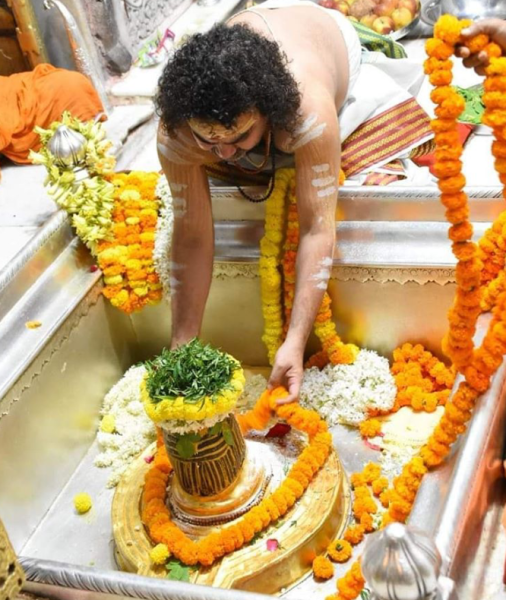
Let us now figure out what a Shivling is and what are the concepts associated with it. A Shivling is an aniconic representation of Lord Shiva – the Destroyer. The term aniconic means a symbol that is associated with a deity. For example, the Dharmachakra is associated with the Budhdha. Similarly, it’s identifiable that Shivling is associated with Lord Shiva only.
History of Shivling
The Shiva Purana describes the origin of the Shivling, as cosmic pillar or a stambh of fire and the cause of all causes, neither having a beginning nor an end. However, few scholars have thrown ample amount of light on the fact that Shivling was referred to ‘Prayapas’ by the Romans who introduced the worship of Shivling in the European countries. The statutes of Shivling have been also found in the site of Babylon, a city of ancient Mesopotamia. Furthermore, the archeological findings in Harappan Civilisation, which yielded numerous Shivaling statutes, have disclosed the existence of a highly evolved culture existing before the immigration of the Aryans in the subcontinent.
https://www.speakingtree.in/allslides/little-known-facts-about-shivalinga

The concepts associated with Shivling
The Shivling represents the Brahmanda (the cosmic egg). It signifies that the creation is acquired by the union of the male (Purush) and the female (Prakriti) powers of nature. Scholars have identified the ling as a Phallic representation of Shiva, associated with fertility in some sense. Further, it has been analysed that Shivling has a scientific concept. The structure of the Shivling is extremely close to the construction of a nuclear reactor. It is composed of two parts :- the first part is a cylindrical structure, which is made of smooth black stone. The second part is the one that’s around the cylindrical structure.
The concept of Shivling and nuclear science- the above mentioned fact clearly highlights that the Shivling is actually the representation of a nuclear reactor.The Shivling has a pot of water hanging over the cylinder. It drips water upon the cylinder at a continuous pace. It flows out through the spout of the cylinder’s grooves.This water is not consumed as holy water in Shiva’s temple. The pot of water hanging above the cylinder is similar to the water that is needed to cool down a nuclear reactor.
This water is applied to the nuclear reactor as it heats up while generating energy.
The grooves around the cylinder of the Shivling signify the structures that are built to dispose of the polluted water from the nuclear reactor. Again, this water cannot be consumed, since it is polluted with nuclear waste and radiation.
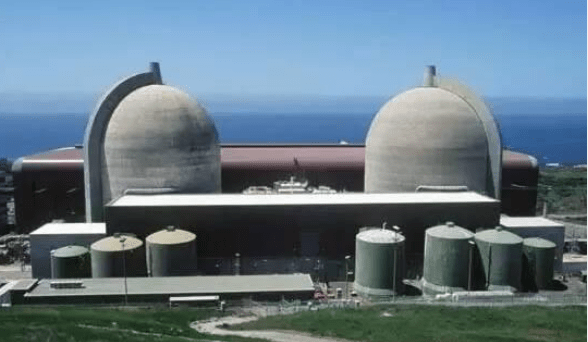
In this picture, it is crystal clear that the nuclear reactor depicts a Shivling-type structure. This also reflects the fact that perhaps the Shivlings were models of nuclear reactors, apart from having some religious, philosophical, metamorphical and aesthetic contexts, hence.

 Eduindex
You must be logged in to post a comment.