Absence Of Injury On Prosecutrix Implies Her Consent For Sex

In a clear, categorical and convincing observation, the Punjab and Haryana High Court in Union Territory, Chandigarh v Amit Kumar @ Rachu and others in CRM-A No. 1887-MA of 2017 (O&M) delivered just recently on October 16, 2019 minced no words in observing that absence of injury on the person of the prosecutrix would lead to an inference that she was a consenting party to sexual intercourse. The Punjab and Haryana High Court in this notable case refused to grant Leave to Appeal against the judgment of acquittal in a rape case. It has thus been made absolutely clear by the Punjab and Haryana High Court in this latest, landmark and extremely laudable judgment that to attract the offence of rape, the victim should not be a consenting party to a sexual intercourse and absence of injury on the person of the prosecutrix would palpably lead to the logical conclusion that she too was a consenting party and therefore rape charges would not be attracted in such case!

                 CRM No. 27600 of 2017

                                                      To start with, this noteworthy judgment authored by Justice Jaswant Singh for himself and Justice Lalit Batra of Punjab and Haryana High Court at the very outset points out that, “Present application has been filed under Section 5 of the Limitation Act read with Section 482 Cr.P.C. for condonation of delay of 53 days in filing the appeal. Upon notice, counsel for respondent No. 1 has filed a reply dated 27.05.2019 to the present application. After hearing counsel for the parties, the delay of 53 days in filing the application for grant of leave to appeal is condoned. Application stands disposed of accordingly.”

               CRM-A-1887-MA of 2017      

                                     Starting from scratch, para 1 first and foremost lays the groundwork by pointing out that, “Present application has been filed under section 378(3) of the Code of Criminal Procedure 1973 (in short “the Code”) for grant of Leave to Appeal against the judgment of acquittal dated 30.01.2017 passed by learned Additional Sessions Judge-cum-Judge Special Court, Chandigarh, whereby respondents accused have been acquitted for the offences under Section 363, 366, 120-B, 376-D, 342 Indian Penal Code (IPC).”

                                 While dwelling on the facts of the case, para 2 then says that, “Tersely put the facts of the case of the prosecution are that  PW-2 (Pappu son of Munshi Ram, father of the prosecutrix/victim) moved a complaint to the local police station wherein he stated that his daughter (prosecutrix) was found missing. He also alleged in the complaint that on 30.10.2015 at about 11/12 P.M. she went to attend a ‘Jagran’ but she did not come back to the house till morning. He made her frantic search but he failed to find out any clue of her whereabouts. Later on, he came to know that four boys, namely, Amit, Suraj, Kannu and Vikas (respondents/accused) abducted her in a car bearing Registration No. CH-01-AR-6944. On the basis of this complaint, a formal F.I.R. (Ex. P-17) was registered under Sections 363, 366, 120-B IPC. During investigation, all the accused were arrested and prosecutrix was also recovered. Her statement under Section 164 Cr.P.C. was got recorded by the Investigating Officer. Accused were medically examined and prosecutrix was also subjected to medical examination.”

                                       Needless to say, it is then pointed out in this same para 2 ahead that, “After completion of necessary formalities of investigation, the report under Section 173 Cr.P.C. was presented before the Court of Judicial Magistrate and thereafter the case was committed to the Court of Sessions. Copies of report as envisaged under Section 208 Cr.P.C. were supplied to the respondents accused free of cost. Finding a prima facie case, the accused respondents were charge-sheeted for the commission of offences under Sections 376-D, 366, 342 read with Section 120-B of Indian Penal Code.

                                     On the face of it, para 2 then further discloses that, “To prove its case against the respondents accused, the prosecution has examined the following Ten (10) witnesses which are as under:-

Prosecutrix as PW-1, Pappu, complainant/father of the prosecutrix as PW-2, HC Gulzar Singh as PW-3, HC Yash Pal as PW-4, Dr Parijat as PW-5, Sonu as PW-6, Dr. Chandrani as PW-7, ASI Rajvir Singh as PW-8, Constable Sonu Kumar as PW-9 and Sandeep Garg as PW-10.”

                                          Furthermore, it is then mentioned in this same para 2 that, “On completion of prosecution evidence, the statements of accused under Section 313 Cr.P.C. were recorded in which all the incriminating circumstances appearing by way of evidence of prosecution against the respondents accused were put to them and they pleaded their innocence and false implication. Accused-Amit Kumar @ Racha in a statement under Sectiion 313 Cr.P.C. put forth a stand that he has been falsely implicated by the parents of the prosecutrix, as there was love affair between the prosecutrix and him and the family members of the prosecutrix, in order to teach him a lesson, have concocted this false case. Chances of defence was given by the trial Court to the respondents accused but no defence evidence was produced. On the basis of weak evidence produced by the prosecution against the respondents, they have been acquitted of the charges for the commission of offences under Sections 376-D, 366, 342 read with Section 120-B of Indian Penal Code.”

                                         After hearing the version of both parties, the Bench then holds in para 3 that, “We have heard learned cousnel for the parties and have also gone through the paper-book very carefully with their assistance. We are of the view that the prosecutrix in this case was neither kidnapped nor abducted. The story of the prosecution put forward in the Trial Court looks to be highly improbable. The defence version is probable. Admittedly, the prosecutrix was running about more than 18 years of her age at the time of alleged incident. As per the alleged case of the prosecution, the prosecutrix was abducted by the accused from ‘Jagran’ at the knife point and the accused further took her to a hotel situated in Sector-42, Chandigarh. It is not established by the prosecution that how from assembly crowd of ‘Jagran’, the accused could manage to abduct her. It is not the case of prosecution that ‘Jagran’ was concluded at around 11/12 P.M. As such, the prosecutrix was supposed to sit in the gathering of ‘Jagran’ till its conclusion. It is not cleared by the prosecution how she came in the compnay of the accused and how the accused branded a knife on her in order to abduct her.”

                                             While continuing in the same vein, it is then further elaborated upon in this same para 3 that, “Further, prosecutrix has testified that she was kept confined in a ‘Jhuggi’ for two days. If the prosecutrix was wrongly confined at the house of accused Shanti wife of Balwant Singh for about two days, she should be the first person to raise hue and cry. It is not the case of prosecution that prosecutrix was given any intoxicant, by virtue of which she lost her senses for two days and was not in a position to raise noise. Therefore, in the absence of any intoxication, the prosecutrix was able to raise hue and cry in case she kept confined forcibly in the house of Shanti for two days. Medical examination has also highlighted that there was no injury on any part of the prosecutrix. Medical expert PW-5 (Dr. Parijat) has stated that there was chances of recent sexual intercourse with the prosecutrix. In cross examination, this Medical Expert has testified that no injury on the private part of the prosecutrix was noticed. Meaning thereby, the doctor did not find any injury on the person of the prosecutrix, from which it can be inferred that she was a consenting party to the sexual intercourse. There is no corroborative evidence to the testimony of the prosecutrix that she was victim of rape. Her testimony had not stood the test of credence and in these circumstances, we are inclined to extend the benefit of doubt to the respondents. The statement of other witnesses is formal in nature. The contradictions, as observed by the Trial Court in the impugned judgment, are itself sufficient to discard the case of the prosecution in toto. As such, the Trial Court has not committed any mistake in giving the benefit of doubt to the accused for want of cogent and convincing evidence.                  

                              Not less important is what is then stated unequivocally in para 4 that, “That apart, the scope of the Appellate Court, while dealing with the appeals against acquittal, is settled. Though there is no embargo on the Appellate Court to reverse the decision based on the evidence upon which the acquittal is based, generally the order of acquittal based on presumption of innocence of the accused, is further strengthened by acquittal. The Appellate Court, while considering an apppeal against acquittal, has to consider whether there are compelling and substantial reasons for reversing the order of acquittal. The Appellate Court can reverse the order of acquittal if the view taken by the Court is palpably erroneous and it could not have been taken by the Court of competent jurisdiction and is taken against well settled canon of criminal jurisprudence. Merely because the Appellate Court, on re-appreciation and re-evaluation of the evidence, is inclined to take a different view, interference with the judgment of acquittal is not justified. If the view taken by the trial Court is a possible view, even if two views are equally balanced it need not result in interference by the Appellate Court in the judgment of the trial Court of acquittal. The Appellate Court will have to see whether there is perversity in the decision if the conclusions are contrary to the evidence on record or the Court’s entire approach is patently illegal or it is based on erroneous understanding. If the order of acquittal is to be reversed, the Appellate Court must examine and discuss the grounds given by the trial Court to acquit the accused and must give cogent reasons to overturn the findings. Thus, while considering the order against acquittal, generally the Appellate Court should not interfere where view taken by the trial Court is not unreasonable or perverse. With the legal position in mind, we have considered the view taken by the trial Court is a possible view and it does not require any interference by this Court.”

                             Lastly, it is then held in the last para 5 that, “In view of the above discussion, this Court is of the opinion that the trial Court, while appreciating the entire evidence in its proper perspective, has rightly held that the prosecution has failed to prove its case beyond any reasonable doubt. Thus, no case for any kind of interference in the impugned judgment is made out. The view of the trial Court is hereby affirmed and is mainatained. The instant application is without any merit and, therefore, dismissed. Leave to Appeal is declined.”

                        In the ultimate analysis, what the foregoing discussion as we saw in different paras of this notable ruling boils down to is this: The absence of injury on the prosecutrix implies her consent for sex. In addition, there was no corroborative evidence that could substantiate the testimony of the prosecutrix that she was victim of rape. The bottom line is: Sex with consent without any injury anywhere on body and absence of any corroborative evidence cannot be considered rape at all! Very rightly so!

Sanjeev Sirohi, Advocate,

s/o Col BPS Sirohi,

A 82, Defence Enclave,

Sardhana Road, Kankerkhera,

Meerut – 250001, Uttar Pradesh. 

Mere Suspension Of Sentence Or Grant Of Bail To The Accused Cannot Imply That The Conviction Ceases To Operate

 It goes without saying that in a latest, landmark and laudable judgment titled Santosh Kumar vs Delhi Jal Board in WP (C) 10100/2017 & CM No 41286/2017 delivered just recently on October 15, 2019, the Delhi High Court has very rightly reiterated that suspension of sentence, pending an appeal, doesn’t imply a suspension of order of conviction. Justice Rekha Palli of Delhi High Court who authored this noteworthy judgment very rightly pinpoints that in a criminal trial, if a convict has been granted bail or suspension of his sentence pending his appeal, that doesn’t mean that his conviction ceases to operate! Very rightly so!

                                         To start with, the ball is set rolling first and foremost in para 1 wherein it is pointed out by Justice Rekha Palli of Delhi High Court that, “The present writ petition under Articles 226 and 227 of the Constitution of India filed by the workman assails the award dated 25.08.2017 passed by the learned Labour Court-XVII, Karkardooma Courts, Delhi in LIR No. 515/2017, whereunder the petitioner’s claim for reinstatement in service has been rejected.”

                                     To recapitulate, it is then laid bare in para 2 that, “The petitioner, who was working as an Assistant Pump Driver in the respondent Delhi Jal Board was involved in an incident leading to registration of a FIR No. 51/2010 against him under Section 363, 366, 368 and 376 of the Indian Penal Code, 1860 (IPC) at Police Station Kotwali Dehat, Bulandshahr, U.P. The petitioner came to be arrested on 22.09.2010 and consequently he was on 09.02.2011 placed under deemed suspension w.e.f. the date of his arrest, which suspension continued from time to time.”

                                           To be sure, it is then pointed out in para 3 that, “After trial, the petitioner was convicted on 05.12.2011 under Sections 363, 366, 368 and 376 IPC by the Court of the Additional District and Sessions Judge, Bulandshahr, U.P. and sentenced to life imprisonment. The petitioner thereafter preferred an appeal before the Hon’ble High Court of Judicature at Allahabad wherein, vide order dated 18.02.2013, he has been granted bail and stay of the fine imposed on him.”

                                    Truth be told, para 4 then postulates that, “In the light of his conviction the respondent, after issuing him a show cause notice, imposed the penalty of removal from service on the petitioner on 02.08.2013 and consequently relieved him on 20.06.2014.” 

                          Needless to say, para 5 then discloses that, “Aggrieved by his termination, the petitioner raised an industrial dispute which came to be rejected after the labour Court found that the disciplinary authority had, after considering the relevant factors, rightly come to the conclusion that the petitioner’s further retention in service was undesirable.”

                                      While explaining the intent behind filing the present petition, it is then stated in para 6 that, “The present petition has been filed assailing the aforesaid award passed by the Labour Court. Learned counsel for the petitioner submits that even though the petitioner’s appeal is still pending adjudication before the High Court, once his sentence stands suspended and he has been released on bail, the respondent is duty bound to take him back in service as the effect of the said suspension, would tantamount to the order of conviction and sentence being treated as non est. He, therefore, prays that the impugned award be set aside as the same has been passed without properly appreciating the effect of his sentence being suspended by the High Court.”

                           On the contrary, it is then pointed out in para 7 that, “Mr Rameezuddin Raja, who appears on advance notice on behalf of the respondent, while supporting the impugned order submits that in view of the settled position that mere suspension of sentence does not imply that the order of conviction has been stayed or that the employer should ignore the fact and effect of such conviction. He, therefore, prays that the writ petition be dismissed.”

                                        What follows next is what is stated in para 8 that, “I have considered the submissions of the learned counsel for the parties and with their assistance perused the record.”

                               Most importantly, it is then held in para 9 that, “In the light of the admitted position that it is only the petitioner’s sentence which had been stayed by the High Court and that there is no stay of the petitioner’s conviction under Section 363, 366, 368, 376 IPC, I find absolutely no merit in the petitioners’ contention. It is the settled legal position that mere suspension of sentence or grant of bail to the accused in criminal proceedings, cannot imply that the conviction ceases to operate. The only effect of such suspension, during the pendency of an appeal, is that the accused is protected from incarceration, and the same does not in any manner affect the conviction order.”

                                  Tersely put, para 10 then underscores that the Delhi High Court rejected the claim of the petitioner by relying upon the rule laid down by the Apex Court in Union of India vs Ramesh Kumar AIR 1997 SC 3531` which primarily says that, “If the Disciplinary Authority comes to the conclusion that the offence for which the public servant has been convicted was such as to retention in the public service prima facie undesirable, it canm impose upon him under Rule 19(1) of CCS (CCA) Rules, 1965, the penalty of dismissal or removal.”

                               It cannot be lost on us that it is then envisaged in para 11 that, “In the light of the aforesaid, it is evident that even though the petitioner’s sentence has been suspended during the pendency of his appeal, the conviction order against him continues to operate. The respondent, therefore, was justified in coming to the conclusion that further retention of the petitioner in service was undesirable. Needless to state that in case the petitioner is successful in his pending challenge to the order of conviction before the High Court, it will be open for him to approach the respondent with a request to reconsider his dismissal from service.”

                                   Now coming to the concluding paras, para 12 holds that, “For the aforesaid reasons, this Court finds absolutely no infirmity in the impugned award warranting exercise of its writ jurisdiction under Article 226/227 of the Constitution of India.”

                                      Lastly, it is then held in para 13 that, “At this stage, it is noticed that the present writ petition, which is wholly meritless, could not be taken up for preliminary hearing for the last two years mainly on account of non-availability of the learned counsel for the petitioner. The writ petition along with pending application is dismissed with costs of Rs 10,000/- payable to the Delhi High Court Staff Welfare Fund within four weeks.”   

                               No doubt, the long and short of this noteworthy judgment is what has also been very rightly reiterated by Justice Rekha Palli of the Delhi High Court that, “In a criminal trial, mere suspension of sentence or grant of bail to the accused cannot imply that the conviction ceases to operate.” It has also been rightly held that the only effect of such suspension during the pendency of an appeal is as mentioned in this laudable judgment that the accused is protected from incarceration, and the same does not in any manner affect the conviction order! Very rightly so!

Sanjeev Sirohi, Advocate,

s/o Col BPS Sirohi,

A 82, Defence Enclave,

Sardhana Road, Kankerkhera,

Meerut – 250001, Uttar Pradesh.   

KASHMIRI PANDIT: AN INNOCENT CULPRIT

-BY RAKESHITA

धर्मो रक्षति रक्षितः |

Dharma, when destroyed, destroys; Dharma protects when it is protected.

The discussion is on the murder of justice, home is heaven but only for those who can experience it, this is the story of pandit`s living in the paradise of earth called Kashmir, ironically the situation is vice -versa. Once they were treated as the ;

  • Representatives of Glorious Heritage & Legacy of Kashmir.
  • Symbols of Brotherhood and Peace.

Kashmiri Pandits have always been devoted to spiritual and academic pursuits. They have during their history of more than 5000 years nurtured values of peace, co-existence and tolerance. They are the original inhabitants of Kashmir. Kashmiri Pandits are progenitors of Kashmir Shaivism the philosophy of oneness of mankind. Hinyan and Sarvastivadin sects of Buddhism found the highest expression in Kashmir and Kashmiri Pandit’s spread their message to China and Central Asia. Kashmiri Pandits have contributed immensely to the evolution of human thought by contributing to almost all fields of creative human endeavour like literature (mainly Sanskrit), language, science and philosophy from times immemorial. Since the advent of Islam in the 14th century, Kashmiri Hindus have been subjected to extreme persecution. To escape religious fanaticism in the form of forced conversions to Islam they had either to embrace death or leave Kashmir more than once during the last six hundred years. The present exodus of Kashmiri Pandits is fourth mass exodus in the history of Kashmir since the advent of Islam in this part.

“Where we love is home- home that our feet may leave, but not our hearts.”

They were forced to leave their abode and struggle like vagabounds living in the refugee camps, the only sin committed by them was that they were pandits born in the beautiful valley.

Kashmiri Pandit: A height Of Tolerance

In spite of repeated rejection of co-existence and pluralism by Muslim society for the last six hundred years, Kashmiri Pandit have never given up their faith in their values. They did not reciprocate fanaticism with fanaticism and violence with violence.

In a world threatened with ethnic and religious strifes where various parties have invariably resorted to violence and force, to further their claims, Kashmiri Pandit is the only example who has totally rejected the violence as a means to fulfil socio-political aspirations.

It is 30 years since the “exodus” from the Valley of its minority Hindu Kashmiri Pandit community. The hotly contested circumstances of their departure between January and March 1990, the numbers, and the issue of their return are an important side to the Kashmir story that has fed into the Hindu-Muslim polarisation in India over the years, in turn fuelling the Hindu-Muslim chasm in the Valley. The exodus took place at the same time that the BJP was upping the ante across northern India, and over the years, the plight of Kashmiri Pandits has become a potent Hindutva issue.
Right now it is a call for humanity rather than a political or a religious issue, the struggle of 1980 which is still ongoing and here the new case of AJAY PANDITA 40-year-old Kashmiri Pandit sarpanch of the South Kashmir’s Anantnag was shot dead by terrorists on Monday evening. Ajay Pandita, sarpanch of Lukbawan village in Larkipora, was attacked at his orchard at around 6 pm, police said. Bharti, who was affiliated with the Congress, was taken to a hospital but did not survive, as reported by the local police.
Locals said that the family of the sarpanch had migrated from South Kashmir in the early 1990s but returned around two years back. He successfully contested the panchayat polls, which no one would be so short lasted.
The police and army have launched a search operation to track down the terrorists who killed the sarpanch.[1]

The organisations have been demanding better security for the Kashmiri Pandits and other minority communities in Kashmir. Kashmiri Pandit`s in the United States has also condemned this killing. The groups have been demanding arrests of the terrorists involved in the attack.
We hold immense pleasure in the fact that India is a secular country and all the communities are entitled to the same sort of securities, then too, why this is happening?

It is high time that we ask ourselves, are we really prepared for the laws we demand, blaming the authority is an easy thing to do but awareness regarding the same and the changes are a need of the hour.

The urge to attain justice; the hope is still intact

JUSTICE IS DELAYED NOT DENIED!

People have been quite vocal about rights every day on the social media, now it is the time that we put ahead of these unheard voices as well, as after all the point that needs be taken into the light is humanity, it is not some subtle sub-topic for discussion, but the main agenda that we all should focus on.

Believe and respect each other, support the right and stand for wrong. I request everyone to understand this principle of VASUDHAIVA KUTUMBAKAM, remember one effort and voice will be counted as a fight for justice.

All the authorities and lawmakers are requested to have a concern regarding the protection of the preamble of the Constitution of India and to provide justice to each and every citizen living in the country. Laws should be practised codification of them cannot just help, whatever aid given to Kashmiri pandit was the duty of government but was that sufficient enough?
Their suffering is not over, authorities have to be on guard and work for their justice, as their struggle has been long enough. Fighting this situation should be the concern and punishing the guilty mind. Take this hour to raise your voice, make sure that you put ahead the voice of your own people who have been suffering enough and still went unheard most of the times.

सुखदुःखे समे कृत्वा लाभालाभौ जयाजयौ।

ततो युद्धाय युज्यस्व नैवं पापमवाप्स्यसि॥

pain, gain and loss, victory and defeat as alike, gird yourself up for the battle. Thus, you shall not incur sin.

[1] https://www.hindustantimes.com/india-news/kashmiri-pandit-sarpanch-killed-by-terrorists-in-anantnag-parties-condemn-attack/story-KaeSpT9BYDYtn0wFHrCSdM.html

How to Stream Free HD Movies on Solar movies

Enjoying movies today is one of the most common needs for everyone, and the internet has made it even easier. Solarmovie is a free website to watch movies and game shows. Available on the internet many years ago, solarmovies is one of the pioneers of streaming online movies.

As one of the big names in the field of online movies, solarmovies is truly a leading film entertainment website in the world.

How to watch movies on the site with the most diverse content?

On the internet today, online movie websites are created all over the world, but to talk about an online movie website using English, it is impossible not to mention Solarmovies. With a selection of movies from many different countries with English subtitles in other languages, it is easy for viewers to watch these movies.

However, as one of the countless online movie watching websites on the internet, what makes solarmovies different and more prominent among the remaining competitors is the quality of the movies and especially the viewers do not need to register, and you can view and use all the features of the site without spending any money.

In addition, not only they can watch online, but Solarmovies also allows users to download movies directly from the home page, giving viewers the freedom to enjoy movies when being offline. With countless movies from many countries such as USA, Thailand, China, Hong Kong,…. with extremely diverse genres such as Horror, Adventure, Romance, Fantasy, …

What are the categories displayed on the Solarmovie menu?

Genre: When you move the mouse on the Genre on the Solarmovies menu, an information panel will appear and show you all the available movie genres on the website, so you can select your favorite movie genres, such as: Action, Musical, Mystery, Romance, Sci-Fi, Sport, Horror, Adventure, Animation, Biography, Comedy, …

Country: To serve all users around the world, Solarmovies has selected and released a list of movies from many different countries, and in this list you can see a list of countries and series from that country. For example: USA, India, China, …

TV Series: This is the place where users can find any drama from the first to the last episode of the series shown on TV or famous movie channels. This enables viewers to “plow” each episode without interruption or being affected by any commercials.

Top IMDB: Probably no movie fan is not aware of IMDB, the website that reviews and ranks the movies in the world in the most accurate way. And in this category, Solarmovies has selected the films with the highest rating, received the most positive reviews by IMDB itself voted and synthesized here. All viewers need to do is enjoy the best cinematographic works ever.

Cinema: Nothing could be more wonderful when being able to enjoy the latest blockbuster movies at home for free. That is all Solarmovies wants to bring to users when they click on this category. Huge collections with the latest movies being shown in cinemas around the world.

This is a user friendly and secure site!

A website with a large number of users like : Xmovies8, the issue of ensuring safety and prioritizing the interests of viewers is always the top priority of the website. With a carefully selected system, solarmovies always bring the best experience to viewers even while enjoying and after visiting the website.

In addition to a few quality ads, which are strictly censored, Solarmovie.mom absolutely does not have any ads or add-ons that are harmful to users. So you can feel secure when coming to Solarmovies to enjoy great movies after hours of hard work and study.

Solar Mirror Sites List Including solar reddit and solar alternative.

solarmovies movies, solarmovies to, solarmovies tu,
solarmovies id, solarz movies solarmovies reddit, solarmovies alternative.

Conclusion.

Some of the links lead to bad websites, but solarmovie.com is completely safe. … This is a great site to use if you are looking to watch bootlegged movies. Of course, you probably don’t want to do that at all, but if you’re going to, then this would be the site to use.

HOW MUCH THE CORONA OUTBREAK HAD AFFECTED OUR ECONOMY

COVID-19 cases in India have crossed 200000 mark and death toll crossed 8,000. First Corona case was reported in Wuhan in China on 31st December of 2019. Then it started spreading all over the world. Very swiftly it became a pandemic from an epidemic. Currently more than 200 countries and territories have been reported with novel corona virus pandemic. The corona outbreak has badly affected the world in many ways. The education system, social structure and specially the world economy have got severely affected by this pandemic. Even the first world countries are also suffering. Our country is a third world country which is also badly affected by this virus.

Corona Virus is a new kind of virus which has not been found in human body ever before. It is a large family of viruses that causes illness in human body and the symptoms are very ordinary such as fever, sneezing, respiratory problems etc. Many people are being diagnosed with this virus, who are not even showing any kind of symptoms. The doctors and the scientists are really working extremely hard to provide the vaccine as soon as possible. If the vaccine or medicine can not come any soon, many countries’ economy will be fully destroyed.

The impact of the pandemic has been felt across the industries and the outbreak got declared as a national emergency. Indian economy has got severely affected by this pandemic. The Indian government had issued the first lockdown on 25th March. The lockdown was necessary so that we can stop community spread of the virus in India. But due to the lockdown many business companies are suffering a lot. The poor people who do not have a stable job have lost their livelihoods since they do not have anything to earn anymore. So many poor people and migrant workers took their lives out of depression since they lost their jobs and have nothing to do anymore.

The well to do or the big companies are also suffering and struggling a lot to save their economy in this lockdown. The employers are not getting their salary to provide salary to their employees. So that some of the companies are eliminating some of their employees from the companies to reduce the load of clearing their payment. Some of the companies are even working in this pandemic because they have no options left for them, if they do not work the entire company can collapse. Many jobs are at high risk in this corona outbreak.

Though the government employees are getting their salary inspite of not working on site, there is no certainty how long they will be provided with this facility. Some of the government jobs are also at really high risk. After the government announced the economic package, some of the business sectors got some relief but there are still companies which are still suffering. If not very soon any relief fund is initiated or if they do not get the permission to work on sites then these companies will completely collapse, which will badly affect our economic system.

Abortion-a right or a choice?

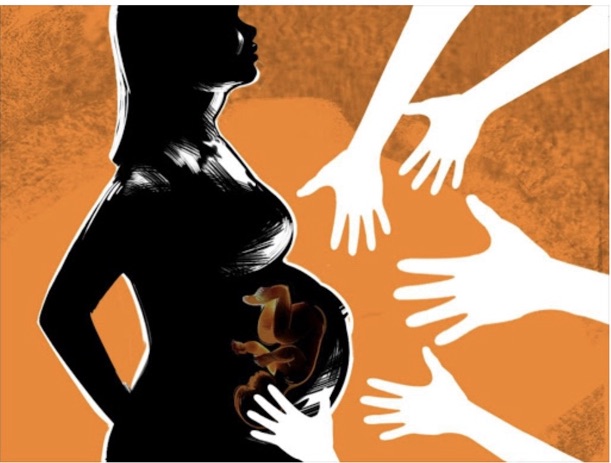
What happens when people take the decisions of your life? When an unborn child is murdered before even stepping into this world? Who gave them the right to do so? Is it legal or illegal when a young girl is murdered with her unborn child by her parents? These questions triggerd in my mind while reading a recent story which took place in Telangana, where a 20-year old girl was murdered overnight by her parents because she refused for abortion. Digging deep into this story, I found out that the young girl was in love with a man from another caste and this was also a reason because of which her parents committed an unlawful crime by killing her overnight because her actions were against them. Earlier she agreed with her parents on aborting the child but later on she changed her mind and wanted to bring the baby in the world but she didn’t knew what misfortune was coming in her way and the poor child died even before opening his eyes. Who among us will be the one like her parents? Will try to commit this false crime? Or who among us will take a stand and support her and who all will fight with her? Stories like this revolve around the world where again the society plays a major role, not allowing the people to live and breath. According to the WHO, every year an estimated 40-50 million people who face unplanned pregnancy decide to have an abortion in the world. What a strange thing which is a tabu in some parts of the world where men cause women to be pregnant but it is the woman who alone bears the child and goes through a difficult period of pain and suffering. I am not only talking about teenage pregnancies but also about the mothers who face early pregnancy or about the mother who does not want to perceive. I am neither against the abortion nor standing with it, but as a girl I want the society to let the mother decide what she wants and not force her to kill the child because of various reasons.

shutter stock.com

Medical Termination of Pregnancy(MTP)

Since the Medical Termination of Pregnancy Act allows women to seek abortion as a part of reproductive rights and gender justice. This amendment places India on the top league of the countries where a woman can make individual choices from their perspective. In India, abortions are legal in certain situations, as for unmarried girls, rape victims and for married women with different reasons. There has been a decreasing rate in abortion since India made it illegal to detect the sex of the foetus. But there is a time limit given to the woman for getting an abortion done. A woman should always make sure to have a safe abortion procedure inorder to keep her body safe and always ask the doctor before getting it done.

Reasons why women get this done

1.Peer pressure, the biggest reason for a woman to get her child aborted. Where society never lets the woman live and allow to make her own decision which makes the abortion as the only solution. 2.Female Foeticide, which comes under peer pressure, where the society never lets a girl child to step into this world and gets her killed before her birth. 3.Rape victims and differently- abled.

Since this is a very vague and wide topic, I would like to end it here with a quote “Abortion is a part of being a mother and caring for children because part of her caring of her children is knowing when its not a good idea to bring them into the world”-Katha Pollitt.

top yaps.com

https://timesofindia.indiatimes.com/city/hyderabad/honour-killing-parents-held-for-murdering-pregnant-girl-in-telangana/articleshow/76273724.cms

DEMISE OF ACTOR CHIRANJEEVI SARJA.

Death at a young age is very tragic and disheartening.


Chiranjeevi Sarja, born on October 17, 1984, in Bangalore was a Kannada actor. Coming from a family of South Indian film industry, he has played many authentic roles. Chiranjeevi Sarja made his acting debut with the movie ‘Vayuputra’ in 2009 and appeared in about 22 films. Chiranjeevi and Meghana got married on May 2, 2018 after dating for 10 years. He had a bright future. Shooting for three different films in which Chiranjeevi was to play the lead role comprising April, Ranam, and Khatreya, were discontinued due to the lockdown. His last released movie was Shivarjuna in March 2020. He has approved for four films which are currently undershooting but destiny had a different story to tell. He developed breathlessness in the night and complained of chest pain and died at an early age of 39 at the hospital on June 7, 2020.
Full story- Sarja was having a conversation with his father at 1:10 pm (IST) on Sunday before he began sweating and collapsed. Soon the family left the house towards Apollo Specialty Hospital. At 2:20 they reached the hospital but unfortunately, the actor left his breaths on the way. The doctors tried reviving but it didn’t work. The cause of death comes to be cardiac arrest. Though the samples of his throat swab were also taken to test for COVID as he suffered from symptoms of respiratory problems the previous day.“He was brought in an unresponsive state to the hospital at 2.18 p.m. All efforts to resuscitate him failed and he was declared dead,” said Dr. G. Govindaiah Yateesh, unit head, Apollo Speciality Hospital,Jayanagar. https://www.thehindu.com/entertainment/kannada-actor-chiranjeevi sarja-passes-away-at-39/article31772154.ece


Left his wife and child Actor Tara, who broke down at the hospital on Sunday evening, revealed that Ms. Meghana Raj was pregnant. “He was too young to go like this,” she sobbed. The news of her expecting her first child has pushed many on social media. Many fans have shown disappointment in his sudden demise.

Chief Minister B S Yediyurappa shared condolence on the actor’s death telling that the Kannada film industry has lost a good actor. “He was a shining star in the galaxy of artists. It’s disappointing that he died at a young age,” former chief minister H D Kumara…

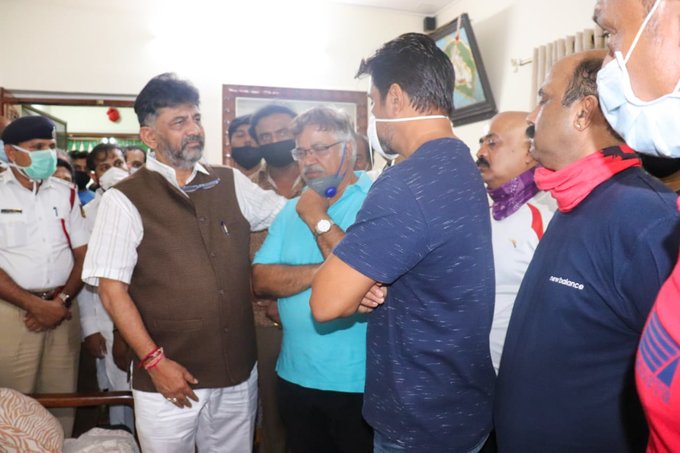
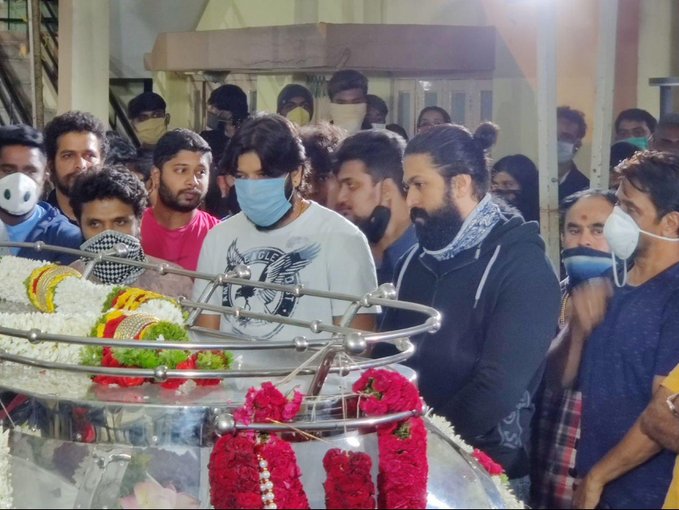
He was later taken to his residence in Bengaluru. His final rituals happened on Monday afternoon where his friends and colleagues paid esteem to the actor. Kiccha Sudeep, Yash, Shiva Rajkumar, and other actors also came up to show respect to Sarja. DK Shivakumar also attended the Sarja family with other politicians and tweeted, “Paid my last respect to Chiranjeevi Sarja and condoled Arjun Sarja, Sundar Raj, wife Meghana Raj & brother Dhruva Sarja. Strength to the whole family members & film fraternity. My prayers and thoughts to his whole family members during this time of grief.” “Shocked to hear about #chiranjevvisarja’s demise!!!” actress Priyamani tweeted. “Can never forget his smiling face.”

He has starred in films Shivarjuna(2020), Aadyaa(2020), Khakii(2020), Seizer(2018), Sinnga(2019), Amma I love you(2018), Chirru(2010) and many more.

HE HAS BEEN A GREAT ACTOR, MAY HIS SOUL SLEEPS IN PEACE!

If you want to live like somebody, who would you want to be and why?

David Rocco (@DavidRoccosVita) | Twitter
DAVID ROCCO.

well when it comes to the part to say this that I have the choice of changing the person I want to be then of course it would be someone I would look up to.

So basically, to answer this I would love to put up the name David Rocco a not very known name but he is a Canadian author, a travel chef and the host of several internationally syndicated television series, like the David Rocco’s dolce vita, David Rocco’s Amalfi getaway and David Rocco’s dolce Africa.

David Rocco was born in the neighbourhood of Scarborough in Toronto, Ontario, Canada to parents from Naples who immigrated to Canada from Italy in the 1950s. His parents were both hairdressers, and Rocco is the youngest of three children. Rocco later moved to Woodbridge, Ontario to pursue secondary school, where he eventually met his future wife Nina Rocco. The couple have three children: Emma, Giorgia, and Dante.

Named one of “Canada’s Top Ten Style Makers” by Flare Magazine, Rocco has been featured and is often quoted in major newspapers and magazines, including The Globe and Mail, The National Post, The Toronto Star, Hello! En Route, Food & Drink and Chatelaine. He also makes regular guest appearances on Global, CTV and CBC television as well as popular food competition programs including Top Chef Canada and Iron Chef America.

David Rocco’s Dolce Vita

Four seasons of David Rocco’s Dolce Vita launched worldwide, first in 2004, including Food Network Canada, Telelatino, BBC Food, Discovery Travel, Nat Geo Adventure Channel, India’s Fox Life, and in the U.S. on the Cooking Channel. In Dolce Vita, Rocco explores Italy with his wife Nina and his eclectic group of friends while teaching about the simplicity of Italian cuisine and culture, and showcasing the city life and countryside.

Several spin-offs of the show followed. Two seasons of David Rocco’s Dolce India launched worldwide, first in 2013, through National Geographic. In 26-episodes, Rocco explores the remarkable diversity of Indian cuisine and fuses it with his Italian foundations. Each episode presents an Indian theme; an ingredient, a dish, or a regional way of cooking. Having been shown how to prepare a challenging dish, Rocco then takes over a kitchen to prepare an “Indi-talian” fusion dish.

Other spin-offs include David Rocco’s Dolce Napoli, David Rocco’s Dolce Africa, and David Rocco’s Dolce Italia.

Other TV appearances

Rocco was the lead judge of the popular Scripps Television series Donut Showdown which premiered in 2013 on Food Network Canada on the Cooking Channel in the USA. Rocco can be seen as a guest judge on Top Chef Canada Season 3. Rocco has made regular appearances as a guest judge on Iron Chef seasons 9-11.

He was also the co-creator and host of Catalyst Entertainment’s food and travel hybrid series Avventura: Journey in Italian Cuisine, and was a featured host for Don’t Forget Your Passport.

In 2018, Rocco and Hong Kong singer Nicholas Tse co-host FOX Life’s Celebrity Chef: East vs West.

Cook books

Rocco has published four cookbooks, including two national best sellers: David Rocco’s Dolce Vita and Made in Italy, each receiving numerous awards and accolades including top honours from The Gourmand World Cookbook Awards and Taste Canada. His newest book, Dolce Famiglia, was released in Canada and Worldwide in November 2016.

•           Dolce Famiglia (Harper Collins; November 2016)

•           Made in Italy (Clarkson Potter, Harper Collins; October 2011)

•           David Rocco’s Dolce Vita (Harper Collins; November 2008)

•           Avventura (Bay Books; January 2001)

Other ventures

As well as his cooking projects, Rocco has ventured out into the world of winemaking by launching his own wine label, David Rocco’s Dolce Vita, featuring three varieties: Prosecco, Chianti and Pinot Grigio.

Well I chose his name because when I stepped into this field of choice, I wasn’t very prepared that I would end up here I was not informed in my mind that media is my space. I always used to write every literary piece I was always in touch with reading and writing and creating content but in my very personal space and not on a specific platform.

My dream was always to become someone like Gordon Ramsay or David Rocco to put it nicely I always wanted to become a Michelin certified chef or basically a celebrity chef who would travel all around the world in search of all those number one thing in that city or country.

 When I saw my future, I would always see it as waking up every morning in a different country in a different place or in a very different bed every morning regardless of the fact that whether it is a countryside , metropolitan city, or very remote village and it got to be a different place every single morning smelling of breakfast differently every morning .

And always waking up in a beautiful hotel suite and making some delicious breakfast in the lawn of the hotel in front of a rolling camera and make it for my entire crew.

So these were the factors that got me to this point that I want to lead a life like David Rocco that’s going to be my ultimate goal but I am also taught to be happy in whatever is given and what so ever is offered in the name of life I got to be happy and satisfied with that .

PLANT GROWTH PROMOTING RHIZOBACTERIA

Plant Growth Promoting Rhizobacteria or PGPR is a group of bacteria that can be found in the rhizosphere or it can be said that bacteria that colonize the roots of the plants that enhance plant growth. It is observed that the rhizosphere is the zone of maximum microbial activity. It is the rhizosphere region of the plant from where most of the essential mico and macro- nutrients are extracted. The different species of Bacteria, Fungi, Actinomycetes, Protozoa, and Algae can be found in the rhizosphere region, Bacteria being the most abundant.
The term PGPR was introduced by Kloepper and Schroth. They concluded that PGPR are not only associated with the roots to exert beneficial effects on plant development but also have positive effects on controlling phytopathogenic microbes. Therefore, PGPR is one of the active ingredients in biofertilizer.
Based on the interactions , PGPRs are of 2 different types :

  1. SYMBIOTIC or INTRACELLULAR BACTERIA (iPGPR) live inside plants and exchange metabolites directly by biofertilization, stimulation of plant growth, rhizoremediation, and plant stress control. While performing direct growth promotion, they behave as Biofertilizers.
  2. FREE – LIVING or EXTRACELLULAR BACTERIA (ePGPR) live outside plant cells and indirectly increases plant growth by reducing the impact of disease, by Antibiosis, induction of systemic resistance, and competition for nutrients and niches. While performing indirect plant growth promotion, they behave as Biopesticide.

PGPR shows an important role in sustainable agriculture industry.
Undoubtedly, there is an increased demand of crop production now-a-days and also a significant reduction of synthetic chemical pesticides and fertilizers which is a big challenge. So, the use of PGPR has been proven to be one of the best ways of increasing crop yields by facilitating plant growth.
PGPR show synergistic and antagonistic interactions with microorganisms within the rhizosphere and in bulk soil, which indirectly boosts the plant growth rate. PGPR also works as a biofertilizer for agricultural sustainability.
Agriculture is one of the human activities which leads to the increasing amount of chemical pollutants with the excessive and continuous use of chemical fertilizers and pesticides. This causes further environmental damage causing a serious risk for human health.
For e.g. N2O is excessively released by continuous use of nitrogen fertilizers which causes Greenhouse effect and finally Global Warming. Farmers apply a high concentration of nitrogen fertilizers in the form of ammonium nitrate to increase crop yield but continuous use of nitrogen fertilizers decreases the Biological Nitrogen Fixation in soil.

For Sustainable Agriculture fulfillment, crops which are produced must be grown with disease resistance, salt tolerance, drought tolerance, heavy metal stress tolerance, and better nutritional value. Also, the use of soil microorganisms is the one possible way. Soil microbes increase the nutrient uptake capacity and water use efficiency in the soil. Among these soil microorganisms, PGPRs are mostly used which are capable of performing all the activities without environmental contamination. PGPR include the species of Pseudomonas, Bacillus, Enterobacter, Klebsiella, Azobacter, Variovorax, Azosprillum and Serratia.
But it is found that agricultural industries worldwide still not use the concept of PGPRs. This is due to the inconsistent properties of inoculated PGPR which can greatly influence the crop production.

 A PGPR must :

  1. Possess its survival in soil by tolerating several environmental factors.
  2. Be compatible with the crops on which it is inoculated.
  3. Be interactive with the already existing microflora in soil.
  4. Have a broad spectrum of action.
  5. Be safe for the environment.
  6. Enhance plant growth.
    Another challenge is that all Rhizobacteria do not possess the same mechanisms which is a major disadvantage for the environment therefore, PGPR still are not used as a biofertilizer in global agricultural productivity.

Understanding University Rankings 2020-21

The present generation is said to be the generation of competition. Let it be student or the institutes they are enrolled, is having a fierce competition to top the list. Students get their list posted by the universities, likewise universities look to some rankings published worldwide and one national level. India has its personal college ranking system called NIRF(National Institutional Ranking Framework), launched on 29th September 2015, by MHRD. Similarly there are some international ranking system, for e.g. QS (Quacquarelli Symonds) ranking, Shanghai Ranking, Times Higher Education ranking, etc. Thus, every college wishes to top these ranking list issued by those ranking system. 
Today, the NIRF issued its list of college ranking in India, ranking IIT Madras with the score of 89.93 as the top college of the nation, followed by IISc Bangalore. This list came after a day QS Ranking released its world university ranking, which in contradiction to NIRF, listed IIT Bombay as top college of India. Though its not in even top 100 colleges, worldwide. MIT (Massachusetts Institute of Technology), has topped the QS world rankings, followed by Stanford and Harvard. 
Differences in NIRF and QS.
QS world University Ranking was first issued in 2004(in partnership with THE) and then in 2010(on its own). It is published from United Kingdom, whereas, on the NIRF part, it was launched in 2015, for the ranking of universities in India. Both the ranking system has different way of deciding the ranks of colleges. 
NIRF ranking is based on the following parameters:-
• Teaching
• Learning and Resources
• Research and Professional Practices
• Graduation Outcomes
• Outreach and Inclusivity
• Perception
Whereas QS ranks on the basis of the following parameters:-
• Academic Reputation- 10%
• Employer Reputation- 40%
• Family/Student Ratio- 20%
• Citations per Faculty – 20%
• International Faculty Ratio- 5%
• International Student Ratio- 5%
Several Asian countries have been criticising the QS ranking, for not listing their colleges on a better position. They say the western method of deciding the ranking won’t represent the South Asia Universities well. Thus this led to other ranking system like the Shanghai Ranking.
Shanghai Ranking was started to represent the Chinese Institutes, on a world level, they focus on research rather than user experience. Thus, India also felt that there’s a dire need to have its own ranking system as the western methodology wasn’t the parameter on which the Indian Institutes could do well, and have a bad representation. 
As NIRF is currently under a developmental phase, it has numerable faults and are not accurate. There is a possibility that institutes can change the data number and tamper its ranking inorder to get Government fundings. But, no such case of data tampering is registered. Though a random change of college ranking is observed in last few years. NIRF still needs to be standardised and optimised, to rely on world ranking systems like THE, QS, and Shanghai ranking.
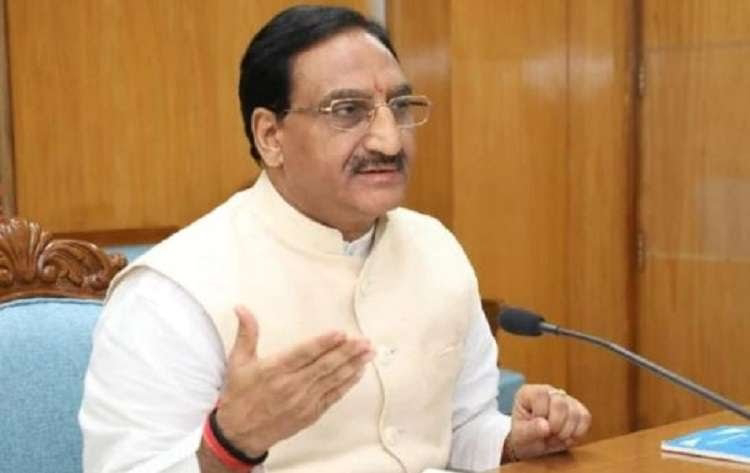
Statement given by Hon’ble HRD minister Ramesh Pokhrial Nishank, on the QS ranking is unacceptable, till NIRF itself is well organised. The minister said, “I don’t agree with QS and THE ranking. Graduates of our institutes are now heading the global leading organisations. They give us low ranking based on perception and I do not agree with it.” 
Though on logical ground, he might be correct but on a statistical one, MHRD needs to research on their part. 
Thus, if you are planning to join any college post lockdown, prefer the world rankings or if NIRF is to be preferred then see last year’s data, stability is the only assurance on our part.
The top Colleges ranked by NIRF are as follows:-
• IIT Madras
• IISc Bangalore
• IIT Delhi
• IIT Bombay
• IIT Kharagpur
• IIT Kanpur
• IIT Guwahati
• Jawaharlal Nehru University
• IIT Roorkee
• Banaras Hindu University
The Top 5 Indian colleges ranked by QS Ranking:-
• IIT Bombay- 172nd Rank
• IISc Bangalore- 185th Rank
• IIT Delhi-193rd Rank
• IIT Madras- 275th Rank
• IIT Kharagpur- 314th Rank

Impact of technology on children

In modern day, children are surrounded by technology since childhood. Now children don’t play with toys but they play games in mobile phone. Parents also leave their children with mobile so that children don’t trouble them and parents can live their life peacefully.

This increasing trend of technology lead to a greater impact on children’s life. Technology also has some positive effects but negative effects are also not less.

Today, children are so busy in playing with phone and computer due to which they don’t spend anytime in playing outdoors with peers. Due to this they don’t exercise also which leads to their poor health. The cases of obesity in children increases a lot in this decade. As they always remain inside on their home and do not go outside so it leads to the lack of vitamin D because they don’t spend time in sunlight which leads to weakening of their bones. As they are busy with mobiles, children don’t able to exposed to activities like cycling and playing other games with their peers which leads to lowering of frequency of children to interact with their peers.

Using mobiles or laptops for the long time causes headache and eye irritation. According to research sleep is also disturb by blue light when children is exposed to screen time in the evening due to the suppression of hormone melatonin which regulates the sleepwake cycle.

If the child see a lot of TV or play game, it leads to a decrease of attention span time if children as they want something new everytime, due to which children are not able to pay attention in classroom, textbooks and any other work. Overuse of technology by children also lead to frustation and self doubt.

We know use of technology has many negative effects but it doesn’t mean that we totally exclude this from the life of thr children. Apart from many negative effects there are some positive effects too but there is a need to make some rules while using technology so that your child can take full benefit of it.

It is necessary to set limit of screen time for children and avoid using mobile and laptop before sleeping. Encourage your child to go outside and play with their friends. If they want to watch TV or play video games, encourage them to play games through which they can learn something meaningful. Always keep a check on what the child is watching. Never let the child to watch program which is more agressive, this leads to frustation and anger in child. Encourage them to watch TV shows related to dance or any other physical activity and ask thr children to perform by seeing the artist. This lead to the good physical activity and child also learn something new. Keep a watch that the distance between the screen and the child’s eye is not too less, it may cause weakening of the child’s eye.

Everything has some positive and some negative aspects, so technology has. So instead of isolating the child from all these in the fear of negative effects,it is necessary to keep a check on what the child is doing, together make rules so that your child get benefit with these technology and not have to bear negative effects.

First American Woman to Walk in Space Reaches Deepest Spot in the Ocean

The geologist and former astronaut Kathy Sullivan, 68, is now also the first woman to reach the deepest spot on earth – challenger deep which is about about seven miles below the ocean’s surface.

She was the first American woman to walk in space and now has set another record to  become the first woman and the 8th person in the history  to reach the deepest known spot in the ocean on Sunday 7th June.

Kathryn Dwyer Sullivan (born October 3, 1951) is an American geologist and a former NASA astronaut. A crew member on three Space Shuttle missions, she was the first American woman to walk in space on October 11, 1984. She was Under Secretary of Commerce for Oceans and Atmosphere and Administrator of the National Oceanic and Atmospheric Administration 

Dr.sullivan always had a longing fascination for oceans and has participated in several oceanographic expeditions that studied the floors of the Atlantic and Pacific oceans.

In 1988, Sullivan joined the U.S. Naval Reserve as an oceanography officer, retiring with the rank of captain in 2006. Sullivan joined NASA in 1978 and was part of the first astronaut groups to include women.

Sullivan served as Payload Commander on STS-45, the first Spacelab mission dedicated to NASA’s Mission to Planet Earth. During this nine-day mission the crew through constant experiments obtained a vast array of detailed measurements of atmospheric chemical and physical properties, which will contribute significantly to improving our understanding of our climate and atmosphere.

After leaving NASA, Sullivan served as chief scientist of the National Oceanic and Atmospheric Administration (NOAA). Sullivan became Acting Under Secretary of Commerce for Oceans and Atmosphere and Acting NOAA Administrator on February 28, 2013, following the resignation of Jane Lubchenco. President Obama nominated Sullivan to serve as the Under Secretary of Commerce for Oceans and Atmosphere and NOAA Administrator on August 1, 2013 and she was confirmed by the Senate on March 6, 2014.

The challenges faced while getting to the challenger deep

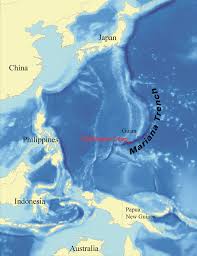
Challenger Deep — the deepest point in the Mariana Trench, which is itself the deepest part of the ocean — is therefore the deepest point on Earth, more than 36,000 feet below the ocean’s surface. For scale, if Mount Everest, the highest point on Earth, were dropped into Challenger Deep, its summit would still not breach the surface

Dr. Sullivan and Victor L. Vescovo, an explorer funding the mission, spent about an hour and a half at their destination, nearly seven miles down in a muddy depression in the Mariana Trench, which is about 200 miles southwest of Guam.

It took four hours to descend to the crushing depth of 35,810 feet (10,941 metres). They spent 1 1/2 hours on the ocean floor, then another four hours ascending. At those depths, the water is perpetually dark and barely above freezing. The pressure is a skull-crushing 8 tons per square inch – about 1,000 times the pressure at sea level.

After capturing images from the Limiting Factor, a specially designed deep-sea research submersible, they began the roughly four-hour ascent. Upon returning to their ship, the pair called a group of astronauts aboard the International Space Station, around 254 miles above earth.

As a hybrid oceanographer and astronaut this was an extraordinary day, a once in a lifetime day, seeing the moonscape of the Challenger Deep and then comparing notes with my colleagues on the ISS about our remarkable reusable inner-space outer-spacecraft

Dr. Sullivan said in a statement released by EYOS Expeditions on Monday.

What interests scientists in deep ocean areas ?

“Ocean exploration, however, is not randomly wandering in hopes of finding something new. It is disciplined and organized and includes rigorous observations and documentation of biological, chemical, physical, geological, and archaeological aspects of the ocean,” the NOAA website says.

Further, finding out more about the deep ocean areas can potentially reveal new sources for medical drugs, food, energy resources and other products. Significantly, information from the deep oceans can also help to predict earthquakes and tsunamis, and help us understand how we are affecting and getting affected by the Earth’s environment.

the Musical Sounds

The sounds that a musical instrument makes  when a professional is playing is always melodious. When a person who is first time touching the instrument would  not be able to play the instrument so as to get a melodious tune. The professional uses techniques so that the sound he produces is soothing. He also  applies some techniques because he knows the physics behind the sounds produced by the musical instrument. Not to forget he/she also plays the instrument with passion and love, which is something to be admired, but for now lets learn the how does a bunch of strings on a guitar  or a tight diaphragm on a tabla produces such tuneful music.

Sound waves

Sound is a longitudinal wave which require material medium to propagate, for many instruments this medium is the air. When we apply a vibrational force in the medium, the pressure increases at that point and it propagates in all the direction, that is the pressure is being transported. What actually produces sound is that  the disturbance we have created in the medium and  forms  standing waves these waves interfere constructively in order to produce sound waves.   Lets see in details how is this disturbance produced in some of the popular musical instruments.

1. Flute

A flute is made up of wood, circular cylindrical shaped and with holes in between. There are columns of air present inside the instrument. When a person blows air through one of the holes, it makes the air column inside vibrate. This disturbance such that it creates high pressure inside, and pushes the air near the hole outside. As this happens the pressure inside decreases which sucks air back inside.  This produces waves and makes the air near the hole go back and forth which produces the sound. Different tunes of sound can be created by shutting different holes and the pitch can be changed by altering the volume of air being pushed inside.

This same principle can be applied for instruments such as  clarinet, saxophone etc.


2. Guitar

This is the most popular instrument, the speciality of guitar is that it is relatively easy to learn. It has rows of strings, which is tightly roped in two edges of the guitar( we can loosen or tighten it as the tune we want to produce). The disturbance in the medium is produced by strumming or strucking these strings. Guitar uses the principle of resonance to amplify the sound. The different strings produces various pitches as the vibrating length of each string is different. The sound produced in various instruments such as sitar, violin and piano has the same principle. 


3. Drums

 This instrument has a stretched  diaphragm, which creates disturbance in the medium while patting on it by hands or using sticks. The disturbances makes the air molecules just above it vibrate and this is transmitted to the audience.  The pitch of the instrument can be changed by changing the tightness of  the diaphragm, but its not easy to change this as we see for the guitar string. The other instruments that functions with the same theory is Tabla, Xylophones  etc.

As one can see, how dynamically different each instrument is. Learning the physics can make one interpret how the instrument works to produce sound. It is always good to learn a musical instrument because It increases your patience level as playing an instrument requires  vey much attention and sincerity. It also provides calmness to the body and  the soul. Playing a musical instrument is as relieving as doing yoga ,it clears your mind with all the tensions and helps solve all the problems. One can also compose music for self, it would be like a treasure, something they enjoy to do without seeking for its benefits. Lets start doing something for ourselves so that we can enjoy every bit of our lives.


Is there a need for Cultural Heritage Law for India?

Introduction

Protection as well as preservation of our cultural property against the threats of damage and destruction is our sole duty to be performed. Cultural heritage along with environment is very essential to the well being and to the enjoyment of one’s own basic rights-even the right to life itself.The protection, preservation and conservation of the cultural heritages have become extremely crucial in order to pull back there lost essence. The entire human race is anxious enough to preserve and protect the world’s cultural along with natural heritage.

Cultural heritage has become a central concept of local and national identity, yet defining this heritage is always subjective. Cultural heritage can be defined as those objects or those intangible specifics that have been inherited from our ancestors, without losing its essence.

 The cultural heritage includes all those main aspects or values of culture transmitted to humans by their ancestors from generation to generation. They are cherished, protected and maintained by them with unbroken continuity and feel proud of it.

 Indian legislature has divided the cultural property into three categories-

  1. Archaeological sites
  2. Ancient monuments
  3. Art treasures and antiquities

The first two are the immovable properties while the last one is movable one.

Cultural heritage again splits into two types: Tangible heritage and Intangible Heritage.

The tangible heritage includes of those objects that have a physical appearance and can be touched. It can be either movable or immovable. For example, sculptures, potteries, ornaments, monuments and much more. The intangible heritage is something that lacks of any sort of physical appearance and can’t be touched. For example, rituals, oral poetries, thoughts, languages and much more.

Cultural Heritage Laws

Several laws have been enacted by the Indian government in order to protect the tangible as well as intangible heritages of India. Few of them are explained as below:

  1. The Ancient Monuments and Archaeological Sites and Remains Act (1958): it aims to provide the preservation of the ancient and historical monuments and archaeological excavations and for the protection of sculptures, carvings and other like objects. Under the provisions of this act, giving a two months prior notice, the Central Government can declare a monument or an archaeological site to be of the national importance. The cat further states that where there is no owner of the site, monument or the material Director General of the Archaeological Survey of India (ASI) becomes the owner.
  • The Antiquities and Art Treasures Act (1972) : it is an act to regulate the export trade in antiquities and art treasures, to provide for the preservation of smuggling of and fraudulent dealings in antiquities and to provide for the compulsory acquisition of antiquities and art treasures for preservation in public places. It is applicable to only those artifacts that are more than 100 years old (in case of paintings) and 75 years as the minimum age in case of any sort of manuscript. The central government has declared paintings including drawings,diagrams,sketches and the like and the objects of plastic art by Rabindranath Tagore,Jamini Roy, Sailoj Mukherjee, Ravi Varma,Abanindranath Tagore,Nadlal Bose, N. Roerich and Amrit Shergill as art treasure for the purpose of this Act. These all are human works of art, not being antiquities and have artistic and aesthetic values.
  • The Ancient Monuments and Archaeological Sites and Remains (Amendment and Validation) Act (2010): it is an act further to amend the Ancient Monuments and Archaeological Sites and Remains Act, 1958 and to make provision for validation of certain actions taken by the Central Government under the said Act. This act was an amendment to the similar Act of 1958 but the only difference is that few major aspects have been added into this new amended Act.

In the records of history, it was found that James Burgess, who succeeded Sir Alexander Cunningham as the Director General of Archaeological Survey of India (ASI) , showed a greater awareness about the legislative measures as tools to protect cultural legacy from ultimate decay by the human race. In the British era, it was found that not only the local people destructed the monuments without having a proper knowledge about the same, but it was the authority in power as well, who also destroyed the historical structures. For example, the Stupas of Sanchi.

After the promulgation of Constitution of India on 26th January 1950, the allocation of the historical and archaeological sites of importance was given to the following:

  1. List I (Union List), item 67 – ancient and historical monuments and records, and archaeological sites and remains declared by or under law by Parliament to be of national importance.
  2. List II (State List), item 12- libraries, museums and other similar institutions controlled or financed by the states; ancient and historical monuments and records other than those declared by or under law made by the Parliament to be of national importance.
  3. List III (Concurrent List), item 40- archaeological sites and remains other than those declared by or under law made by the Parliament to be of national importance.

These are enlisted under the Seventh Schedule of the Constitution.

So these were the major initiatives taken by the Indian government in order to serve for the protection and preservation of the ancient monuments and historical and archaeological sites in India. By these measures, the government is able to protect the cultural heritages of India. In addition to these facts, all the monuments under the supervision of the Archaeological Survey of India (ASI) have been protected under the act of The Ancient Monuments and Archaeological Sites and Remains Act (1958).

bhangarh – BolteRaho
This is how boards are put up by the concerned authorities (here, Archaeological Survey of India) near the site or monument.

Basically it’s the strict laws only that puts the people into a submissive and in a controlled form because without having a proper knowledge about their heritage, people start destructing not only the ancient marvels but also their cultural traditions. Because if the nation does not have a proper cultural heritage law, then the illiterate or unawared public would destroy all the cultural heritages and the consequence would be a complete degradation of the heritages, aftermath.

It is not like only the Cultural Laws that are focusing upon the degrading condition of the cultural heritages, but there a lot of institutions working upon the same. A few can be named as the Archaeological Survey of India (ASI) and Indian National Trust for Art and Cultural Heritage (INTACH). The Archaeological Survey of India (ASI), as an attached office under the Department of Culture, Ministry of Tourism and Culture, is the major organization for the archaeological researches and protection of the cultural heritage of the nation. Maintenance of ancient monuments and archaeological sites and remains of national importance is the prime concern of the ASI. Besides it regulate all archaeological activities in the country as per the provisions of the Ancient Monuments and Archaeological Sites and Remains Act, 1958. It also regulates Antiquities and Art Treasure Act, 1972. (Ministry of Culture).

In a very recent time, the Archaeological Survey of India (ASI) has taken the initiative of gathering and recording the number of people having artefacts are more than 100 years old. This is due to the reason that ASI wants to save, preserve and protect all the individual cultural heritages, so that the intangible heritage along with tangible one gets restored and the coming generations become aware of their culture as well. This is not only of national importance but also of personal cultural importance.

Apart from this, there is an institution named Aga Khan Trust, which took the initiative in the restoration work of the famous mausoleum of the Mughal ruler Humayun renowned as the Humayun’s Tomb. The latest conservation efforts on the site were confronted with the cultural essence of its preservation history. The present project aims at the revitalization of the architectural spirit and original intentions of the builder.

Speaking logically, generally people do not make a concern about their lost cultural heritages. It not only happens with the tangible materials but also with the intangible sources as well. For instance, a lot of people belonging to a specific region are found disrespecting towards their native language or mother tongue as they confess that they don’t know how to speak their mother tongue. So from here, they start losing their cultural identity and are also unable to keep their culture long lasting.

It also needs to be highlighted that the environmental factors also contribute to the sole degradation of the cultural heritage. For instance, the Ajanta cave paintings underwent such a serious fate and this was due to the negative consequences of the environmental factors that affected those paintings adversely.To restore their prominence, the conservators of the Department of Archaeology of the Government of Hyderabad took the step to preserve their essence.

As the concluding part of this topic, it would be rather extracted from all the given acts that it is important to have a proper defined Cultural Law for the preservation and restoration of the historical as well as archaeological sites under the dire supervision of the related authority in power, so that none of the ruthless human activities can make harm to the national cultural heritages, provided that these cultural laws are enacted properly on the very right time. In fact it is too a good idea to conserve and preserve the personal individual cultural property in order to restore culture of an individual household,which is useful in tracing the history of a particular tradition and family, therefore.

“Do Psychological Halt -limit Our Actions” ?

It’s believed since centuries that whatever man things off, becomes the same. Thoughts and actions define the personality of a person and give a true definition of his/ her character. It has been often linked to the fact of psychology and how it has affected our day today life. Whatever man watches around, whatever happens around him do have an impact over his thoughts and definitely reflects in the actions. But why do we humans act according to our surroundings more these days, and instead of analyzing what actually needs to be done. There are various scenarios where even one needs to do a particular act but restricts himself from doing the same. 

There are various psychological theories reflecting such behaviour of humans, but today we will analyze a few of them and how we actually are a part of these. These are really famous research based theories and define han behavior in day to day life. To these are:

  1. The Abilene paradox
  2. The Spotlight Effect

So describing each one of these initially we would try to understand what Abilene paradox and Spotlight Effect are. 

So to make it simple to understand, “The Abilene paradox” is a scenario where everyone performs An activity or agrees with each other on some point of discussion which actually no one wants to. It usually explains agreement of people or number of individual but in reality they have some other opinions and views and in the fear of separation from the group, just agrees with one another. This act of human is generally focused out of individuals:

  1. Fear of separation from the group. 
  2. Thinking of what other will think about the person, that how dumb he/ she is.
  3. Sometimes to limit the scenario of conflict.

These often lead to a result, where no one actually wanted to reach individually but just out of fear of separation from the group, they all agreed to conclude at a general consensus. 

“The Spotlight Effect” has an effect on individual’s way of performing any task. The spotlight effect generally focuses as an effect which people usually visualize that everyone is watching them and noticing them. This effect usually has a greater impact on making any individual nervous whenever they are on stage, which they generally say as their stage fear. But as through the study and research in this field, it was acknowledged that other people usually pay less attention to others and the percentage is quite less, as compared to what the person thinks of it to be. It’s because other people are also under “The Spotlight Effect” and rather focusing on others, they have major focus on themselves being noticed. So whenever any individual feels nervous, he/ she may acknowledge this fact that they are just overthinking about their looks and performance and the other person is hardly concerned about it. 

So these psychological acts do affect our day to day activities and the way we perform, but what really matters is to step up for yourself and your views irrespective of what others may believe for the betterment. We all need to build  up the confidence to face the world without fear, and thus bring out the change we truly desire”.