

“Milon hobe koto dine aamar moner manushero shone, Oh aamar moner manushero shone! (When will I be united with the Man of my Heart?). ~ Lalon Shah
Also known as Lalon Fokir (a Bengali word for fakir Or saint), Lalon Shah belonged from Baul community of the 18th century Bengal. However, he’s the most respected personality of Baul community as most of the modern day Bauls are influenced from this great bard. In fact, although Baul sect had declared itself different from Sufi sect, Lalan Fokir organized the entire sect through his knowledge and poetic skills, spreading the real essence of this sect through his poetry only. He established his own hospice,which was known as Akhara that later became a tradition of the Baul sect.
Some of his major compositions are –
- Milon Hobe Koto Dine
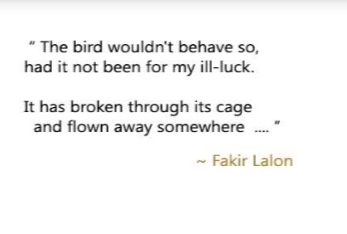
- Khachar Bhetor Ochin Pakhi
- Dhonno Dhonno Boli Taare
- Jaat Gelo Jaat Gelo Bole
- Shob Loke Koye Lalon Ki Jaat Shongshaare
- Bhakter Daare Bandha Ache Sai
- Dildoriyaar Majhe Dekhlam etc
However, what’s not known about him is regarding his birth. It’s really not clear whether he was a Hindu or a Muslim. Moreover, an anecdote is there about him, that goes as – Lalon Fokir was born in Bhanrara village in Kushtia district in Bangladesh in 1774,where his father was Madhab Kar and mother was Padmavati. According to another tradition, he was born on 17th October 1772 in Jhinaidah village in district Harishpur ,where his father was Daribullah Dewan while his mother was Amina Khatun.
Furthermore,it is pertinent to mention that Duddu Shah, one of the key disciples of Lalon, claims that his Murshid (Lalan Fokir) had told him not to make his personal details public, but he did so after Lalon’s death. Researchers have generated a doubt over the authenticity of this poem and believe that the poem actually wanted to display Lalon as a Muslim saint.
One story narrates that Lalon, during a pilgrimage to the temple of Jagannath with his companions, got smallpox and was abandoned by his companions on the banks of the river,due to the prevailing superstitions of the era. Later, Malam Shah and his wife Matijan, members of the weaver community in a Muslim-populated village, Cheuriya, took him to their home. They gave Lalon land to live where he formed a musical organisation and composed along with performing his songs, inspired by Shiraj Sain, a musician of the same village.
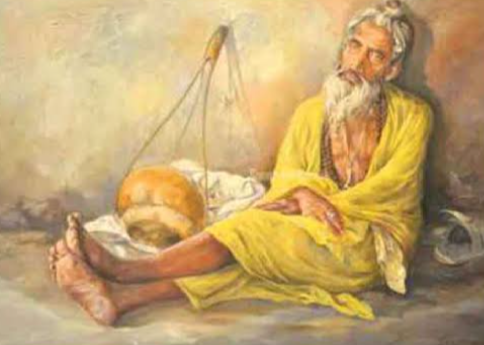
It was believed that Lalon had left no written work of his songs, as they were transmitted orally to his pupils. Later, his followers compiled all his compositions and preserved them by creating some copies of the same.
Also, Lalon was one of the greatest philosophers of his time and he deliberately criticised the casteism prevailing in the society.
Last year, a three-day programme was held to commemorate the 129th death anniversary of Lalon Shah, at Chheuriya in Kushtia district (Bangladesh). In the modern scenario, a Bengali movie named “Moner Manush” was released to depict the life of Lalon Fokir. Several musicians still create a base to sing his compositions. As a matter of fact, Lalon holds a respectable position in the history of Bengal, who’s in actual sense, a reflection knowledge and philosophy, hence.
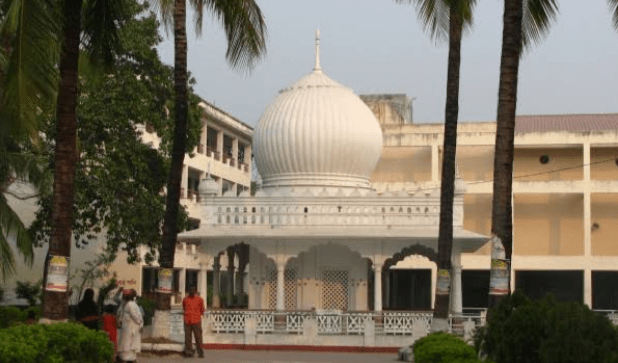
Unfortunately, the Baul king Lalon Fakir died at Chheuriya on October 17, 1890 at the age of 116 years. He was buried at his Akhara only (in Bangladesh).
https://thefinancialexpress.com.bd/national/country/lalon-shah-a-bard-a-philosopher-1571154750

 Eduindex
You must be logged in to post a comment.