Google Scholar

Google Scholar provides a simple way to broadly search for scholarly literature. From one place, you can search across many disciplines and sources: articles, theses, books, abstracts and court opinions, from academic publishers, professional societies, online repositories, universities and other web sites. Google Scholar helps you find relevant work across the world of scholarly research.

You can visit Google Scholar at https://scholar.google.com/

Features of Google Scholar

  • Search all scholarly literature from one convenient place
  • Explore related works, citations, authors, and publications
  • Locate the complete document through your library or on the web
  • Keep up with recent developments in any area of research
  • Check who’s citing your publications, create a public author profile

How are documents ranked?

Google Scholar aims to rank documents the way researchers do, weighing the full text of each document, where it was published, who it was written by, as well as how often and how recently it has been cited in other scholarly literature.

Google Scholar Citations

Google Scholar Citations provide a simple way for authors to keep track of citations to their articles. You can check who is citing your publications, graph citations over time, and compute several citation metrics. You can also make your profile public, so that it may appear in Google Scholar results when people search for your name, e.g., richard feynman.

Best of all, it’s quick to set up and simple to maintain – even if you have written hundreds of articles, and even if your name is shared by several different scholars. You can add groups of related articles, not just one article at a time; and your citation metrics are computed and updated automatically as Google Scholar finds new citations to your work on the web. You can choose to have your list of articles updated automatically or review the updates yourself, or to manually update your articles at any time.

Research Gate

ResearchGate is the professional network for scientists and researchers. Over 17 million members from all over the world use it to share, discover, and discuss research. We’re guided by our mission to connect the world of science and make research open to all.

It started when two researchers discovered first-hand that collaborating with a friend or colleague on the other side of the world was no easy task.Founded in 2008 by physicians Dr. Ijad Madisch and Dr. Sören Hofmayer, and computer scientist Horst Fickenscher, ResearchGate has more than 17 million members today. We strive to help them make progress happen faster.Here’s how it worksShare your publications, access millions more, and publish your data.

Connect and collaborate with colleagues, peers, co-authors, and specialists.

Visit Research Gate at https://www.researchgate.net/

Get stats and find out who’s been reading and citing your work.

ResearchGate and publishers will cooperate in educating users about their rights in relation to copyright-protected content by providing users with more and better information about how and when they may share their journal articles on the network

Ask questions, get answers, and solve research problems.

Publishers will get better visibility into the usage of new content on the platform that was originally published in their journals

Find the right job using our research-focused job board.

Accelerating science is what drives us – we’ve built a platform that gives the world’s scientists the tools and services they need to connect, collaborate, and advance their research.

Share updates about your current project, and keep up with the latest research.

We believe that learning never stops, and we help each other get better. You’ll get the autonomy, mentorship, and training you need to excel at what you do.

We’re a diverse group of like-minded individuals who have fun while working towards our goal. Together we enjoy cultural events, team outings, and celebrating our successes.

We make ResearchGate a great place for skilled and passionate people to thrive. Join us to find and keep the talent we need to achieve our mission.

https://www.researchgate.net/

Academia

Academia.edu is a platform for academics to share research papers. The company’s mission is to accelerate the world’s research.

Academics use Academia.edu to share their research, monitor deep analytics around the impact of their research, and track the research of academics they follow. Over 129 million academics have signed up to Academia.edu, adding 25 million papers. Academia.edu attracts over 63 million unique visitors a month.

Guided by a mission to accelerate the world’s research, Academia.edu aims to make every academic paper ever published available for free online and accessible by anyone in the world.  Academia.edu was founded in 2008 in San Francisco by Richard Price who recognized the need for open access of scholarly work while he was a doctoral candidate in philosophy at Oxford University.

Visit academia.edu at https://www.academia.edu/

Follow Academia.edu on Facebook, LinkedIn, and Twitter

Academia’s new mobile app represents a significant breakthrough in ensuring that scholarly research reaches beyond the Ivory Tower and into the real world where its true impact can be harnessed, all through the convenience and accessibility of a simple smartphone.

Mobile app users will be able to read millions of academic papers on over two million research interests, all for free. An Android version of the mobile app will be released in the coming months.

Academia.edu announced its acquisition of peer review platform Plasmyd, with the intention of proving that the two academic startups do indeed intend to generate an industry-wide shakeup.

Plasmyd is itself a peer-review platform, that has handled thousands of scientific papers and provided a space for scientists to discuss and critique each other’s work. Plasmyd sees itself as binding its scientific search engine platform with Academia.edu’s user base (which just hit 5 million yesterday). The two companies view this as a way to begin promoting new online academic platforms. “[Academia.edu has] built the largest online community of scientists while we’ve been working on building the next generation tools of peer review,” said Plasmyd’s co-founder Adnan Akil.

Research sharing platform Academia.edu is adding an analytics dashboard in order to allow measurement of the reach of academic papers shared on the site.

The new dashboard enables researchers to see who is accessing their research and how it is being referenced, both by academics and by non-academics. This information becomes invaluable when academics need to defend the merit of new research by noting, for example, that an individual’s research is being cited in Congressional hearings, public interest press releases, journal articles and news briefs.

The dashboard is now fully available for members after previously being available in a beta form.

Metrics available for members to browse include:

  • Total profile and research views for each member’s material;
  • Information on which search engines have driven traffic to a profile page;
  • Details on specific keywords that drive traffic; and
  • Breakdowns on which countries’ citizens are viewing specific research.

One of the things that might help such profile sites as Academia.edu grow is the presence of other researchers with whom you can network and whose work you can follow, as they maintain their profiles. Communities based around particular disciplines or research groups might well form around different sites like this one. I have chosen to “follow” a couple of my colleagues on Academia.edu and it works a bit like Facebook or LinkedIn or lots of other “Web 2.0” or social networking sites in the sense that my home page tells me about the activity of the people I have chosen to follow.

Apart from networking opportunities which are reliant upon community use, researchers could use this site as a place to promote their publications and their research expertise/interests. I uploaded my papers when I set up the profile and it was interesting to see recently that someone had viewed my profile after searching for keywords that are key to the topic of one of my papers. My own papers are of niche interest to librarians, so I won’t have a lot of activity to keep track of(!), but for researchers who are keen to monitor and to be able to demonstrate impact of their research, they could do worse than to see how often people are finding out about their work and which keywords are bringing people to their profile.

I do recommend that researchers put listings of their publications on lots of sites, but rather than uploading the full text of papers to external sites like this one, I think it best to put reference details up here and link back to the WRAP repository for the full text. I recommend this because it will boost the search engine ranking of a page if there are lots of links to it from an external domain, so you can use profile sites like this one to help the ranking of your paper at the web location you prefer most. Also, it makes sense if you want to collate statistics about those who read the full text of your work if you are always referring people to one source.

Planetizen

Eduindex News tries to bring in focus organisations working for the betterment of the society and institutions providing quality contents and services to scholars.

Planning

Planning is the professional practice and an academic study focused on the future of built environments and connected natural environments—from the smallest towns to the largest cities and everything in between.

Planning: A professional practice and an academic study focused on the future of built environments and connected natural environments—from the smallest towns to the largest cities and everything in between.

Planetizen: The independent resource for people passionate about planning and related fields.

Planetizen

Planetizen is a fiercely independent platform that creates, curates, and amplifies stories and resources to inform planning and people passionate about planning.

Scholars can visit the site of the Planetizen at https://www.planetizen.com/

Planetizen published its first story, by Anthony Downs, on August 1, 2000. The first Planetizen server ran on a used desktop computer connected to a telephone line in Chris’s house, and the site published 3-4 stories a day.

Within months, thousands were reading, and Planetizen expanded to cover news throughout California. By 2003, Planetizen contributors were submitting news from across the country, capturing the growing interest in the Internet and the need for an online community interested in planning.

Today, Planetizen reaches 90% of the U.S. urban planning community through news, editorial, job postings, online courses, books, and product sales. But one thing hasn’t changed: We are always looking for new ways to advance the field and work for healthier, more prosperous communities.

the mission of Planetizen Press is to provide innovative resources for students and professionals in the field.

Planetizen is the go-to news and information site for the urban planning, design, and development community. With a steady stream of fresh, relevant stories every day, our readers check in regularly to get the latest news on transportation, architecture, infrastructure, housing, economic development, and urban design. Our readers follow our influential bloggers and read original features from leaders in the field.


Publications
The Planetizen Press catalog currently includes a variety of titles available at the Planetizen Store.

Submissions
Planetizen Press accepts manuscripts for consideration from authors and opinion leaders. We favor manuscripts that are near completion on the subjects Planetizen covers on a regular basis:

  • Urban and regional planning and land use
  • Transportation and transit
  • Environmental issues
  • Energy and infrastructure
  • Historic preservation
  • Landscape architecture
  • Urban planning technology
  • Planning-related humor


We are open to ideas ranging from extended academic papers to popular non-fiction, like The Tipping Point. Our goal is to encourage debate and spread knowledge of the concepts and goals of urban planning. However, we are primarily interested in near-finished manuscripts. We are not seeking to develop books with authors from scratch.

Hope readers will be enrich themselves by visiting such resourceful forum. If you thing your organisation is working for the benefits of the scholars and community at large then let us know so that we can highlight their resource to our thousands of readers worldwide. For writing guest post and for informing about new and useful resources, write a mail to news@eduindex.org

We will try to give space in our News Portal free of charge. Keep reading and keep enriching yourself and keep helping others in getting good resources like Planetizen.

← Back

Thank you for your response. ✨

Planning Tank

Eduindex News tries to bring in focus organisations working for the betterment of the society and institutions providing quality contents and services to scholars.

We found that Planning Tank has a mission to create Happy, Healthy & Sustainable Human Settlements by means of education & awareness. They are active and providing quality educational resources for students, academicians & professionals covering their diverse needs. Scholars who are looking for articles to read on different topics of Urban Planning and the following sub aspects:

  1. Resources for Urban, Rural & Regional Planners
  2. Data Sources, analysis & presentation
  3. Geographic Information System (GIS)
  4. Academic Writing information
  5. Environment & sustainable development

Scholars can visit the site of the Planning Tank at https://planningtank.com/.

They keep on updating the latest information to the website and improving the existing information. The information provided is meant to cater to the needs of students, professionals, the general public, planning enthusiast alike. Apart from Urban Planning we frequently cover information related to:

  • Real Estate
  • Latest happening affecting human settlements
  • Job opportunity
  • Urban & Land Economics
  • Memes
  • Organizations & agencies dealing with Planning

Hope readers will be enrich themselves by visiting such resourceful forum. If you thing your organisation is working for the benefits of the scholars and community at large then let us know so that we can highlight their resource to our thousands of readers worldwide. For writing guest post and for informing about new and useful resources, write a mail to news@eduindex.org

We will try to give space in our News Portal free of charge. Keep reading and keep enriching yourself and keep helping others in getting good resources like Planning Tank.

← Back

Thank you for your response. ✨

Privatisation in India

The transfer of ownership, property or business from the government to the private sector is termed as privatization. The government ceases to be the owner of the entity or business.

In the privatisation process, somewhere it can be seen that a public traded company is taken over by a few people.

Here via a contract or franchise or lease or grant etc. the government keeps the ownership and the responsibility of an enterprise.

But the private company will handle the daily activities and deliver the product or service. The state will remain an active participant in this process.

Government can also hold the share but it would be a minority stackholder.

The aim of the privatisation is improve profitability and efficiency of public enterprises.

in private company employee is paid incentives on behalf of his/her service and work. Whereas the services provided in governmental control are good to an extent.

Through privatisation, government is free from most of the working resposibilities and it increases focus on administration and development of the country but some where government can keep an eye on the company.

But privatisation leads to rise in cost of the services in comparison to governmental services.

A brief look at the history of the Leaning Tower of Pisa

Monuments, a reminder of proud heritage or history as well as architectural wonders, they are present throughout the world. These sites are also a source of revenue for their respective cities or towns. Most of the monuments that fall under the category of architectural wonders are tourist places with a lot of monetary value, people tend to visit them to gaze upon the marvelous creations of man. One such monument is the leaning tower of Pisa. In 1990, the Italian government enlisted the help of the world’s finest engineers to stabilize the famous leaning tower. There have been many attempts in its 800-year history but this one was a race against time as the tower had already leaned on to a 5.5 degree whereas it had been projected that the tower would topple should it reach an angle of 5.44. It was a miracle that the tower was still standing but the crisis was still imminent.  

In the 12th century famous maritime town of Pisa, set about to turn its cathedral square to a magnificent landmark. So, in 1173, construction began on a free-standing campanile or bell tower and while the engineers and architects of the time were masters of their craft, they knew far less about the soil that they stood on. Pisa’s name had a Greek origin which meant “marshy land”, which clearly describes the clay, mud, and wet sand composition below the city’s surface. With a three-meter foundation to support the structure, it was no surprise that within less than five years the tower’s southern side began to sink beneath the surface. Such a mistake should normally have been a fatal flaw however, the construction halted for nearly a century while the tower was at the fourth story due to prolonged warfare that descended onto Pisa.  This long pause allowed the soil beneath the tower to settle and when the construction resumed in 1272, the workers saw the structure to be on slightly more stable ground. Under the guidance of architect Giovanni de Simone, the workers compensated the minor tilt by making the southern side slightly taller. But due to the extra weight of the masonry, the southern side continued to tilt even further. And by this time the tilt had increased to 1.6 degrees. For centuries engineers tried numerous strategies to address the lean, they even tried to dig a walkway to examine the sunken foundation but the removal of the supporting sand only worsened the problem, and thus with many such failed attempts all the engineers managed to do was worsen the ever-increasing tilt. However, in the years following WWII, researchers developed tests to examine the problem whereas, in 1970, engineers finally managed to calculate the center of gravity of the tower. Thus, with the modern tools at hand, the engineers could finally address the real problem and calculate different ways in order to stabilize the monument. They finally calculated the amount of excavation needed to stop the tilting of the monument and in 1992, a team drilled diagonal tunnels to remove 38 cubic meters of soil from underneath the tower’s north end, and temporarily balanced its weight with 600 tonnes of lead ingots and subsequently anchoring the base with steel cables. Thus, nearly six centuries after the completion of the tower, it had finally been straightened…to a tilt of about 4 degrees. The Italians didn’t want the tower to fall but they also didn’t want to lose the landmark’s most iconic feature. Today the tower stands at about 56 meters height and according to the estimates made by the engineers of the project, it should remain standing for another 300 years or so.

This is the tale of the monument that stands to show the beauty in imperfection. As Haruki Murakami wrote, “Don’t pointless things have a place too, in this far-from-perfect world”.

In Delhi Serological Survey Conduct for COVID 19……

In Delhi the cases of corona patients crosses 75,000 remark. And day by day the situation is going into critical phase. For the combat through it, Delhi government announced to conduct Serological Survey. In this survey basically government tries to investigate the movement of Corona patients before their report comes. Also young citizens also traced down.

Delhi will conduct 20,000 survey from today to 10 July.This will be a comprehensive assessment of the spread of virus in the state. It also helps govt to make a strategy for draw up this stage of contamination of virus.Survey can be used on people who have already been tested positive for the virus or even those who are asymptomatic, and can reveal insights on immunity against Covid-19.

This test is conducted jointly by the National Centre for Disease Control (NCDC) and Delhi government, to get down to a comprehensive analysis of coronavirus in Delhi. This Survey ‘s plan comes after the meeting of central home Minister Amit Shah with Delhi cheif minister Arvind Kejriwal.

This type of Survey may be help in decreasing the no of corona patients and also for finding the no of hidden peoples who have this virus but they are not aware about it. This types of tactics are aimed for the control of this pandemic disease. We should support this types of plan and also follow all the guidelines related to this too……

This too shall pass away

Art thou in misery, brother? Then I pray
Be comforted. Thy grief shall pass away.
Art thou elated? Ah, be not too gay;
Temper thy joy: this, too, shall pass away.
Art thou in danger? Still let reason sway,
And cling to hope: this, too, shall pass away.
Tempted art thou? In all thine anguish lay
One truth to heart: this, too, shall pass away.
Do rays of loftier glory round the play?
Kinglike art thou? This, too, shall pass away!
Whate’er thou art, where’er thy footsteps stray,
Heed these wise words: This, too, shall pass away.


Paul Hayne’s poem won wide popularity in his own day; and it has kept circulating ever since, continuing its influence on the afflicted, the distraught, the discouraged. Every now and then it makes a tour of the newspapers, or is featured in magazines. Sometimes it appears with a different title, or with lines changed to suit the times, or with verses added or subtracted. Many other poets have used the same theme, before and since; and occasionally a hodgepodge of verses from various sources is collected and published as “anonymous” or “author unknown.” But the philosophy is always the same, and always helpful to the troubled or despairing. This, too, shall pass away.


When Ray Stannard Baker was Ill and in great pain, he remembered the famous phrase and found it comforting. He wrote in his notebook: “Nothing lasts-not even pain.”


When Stevenson was suffering bodily torment, weakened and wearied by the long struggle against tuberculosis, he kept reminding himself of the famous phrase, hoping each morning would find him better. It helped him to put his suffering out of his mind, helped him to keep writing. “A chapter a day I mean to do,” he wrote to his friend William E.Henley- a man whose brand of courage matched his own.


When Lincoln was forced to endure the hatred of millions because of his steadfast loyalty to purpose and principles, when he was bitterly reviled and condemned for refusing to consider an unjust peace, he reminded himself that this, too, would pass in time … and that with God’s help he would weather the storm.


Countless other stories could be told of this inspiring phrase, these five magic words which legend says were engraved by wise men on a monarch’s ring many centuries ago. They are comforting words for all of us to remember in times of trial or trouble in times of hardship or affliction. When nothing else helps, it is comforting to know that no pain or grief can last forever, that whatever burden may be – this, too, shall pass away.


Taken from Light from many lamps by Lillian Eichler Watson.

How Emotional Intelligence contributes to IQ+EQ=SUCCESS.

When we visit our relatives, we often hear this child is so intelligent. But that’s not actually what they are defining. They basically complement the kid’s emotional intelligence and not on their IQ. Emotional intelligence is a slippery topic, people usually have misconceptions about it. We all have different ways to show our emotions and different ways to deal with them too. 

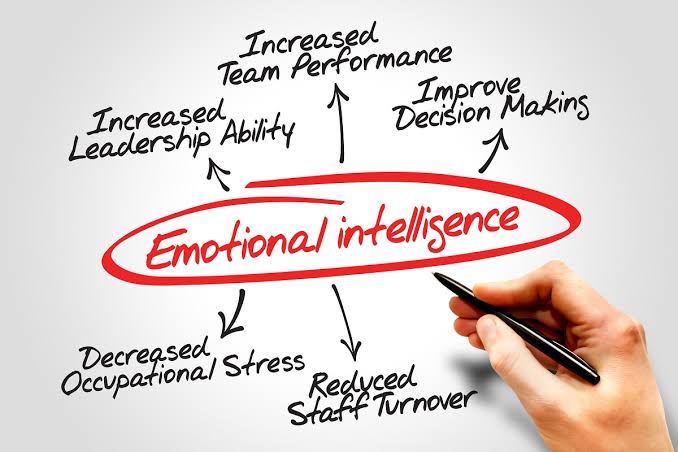
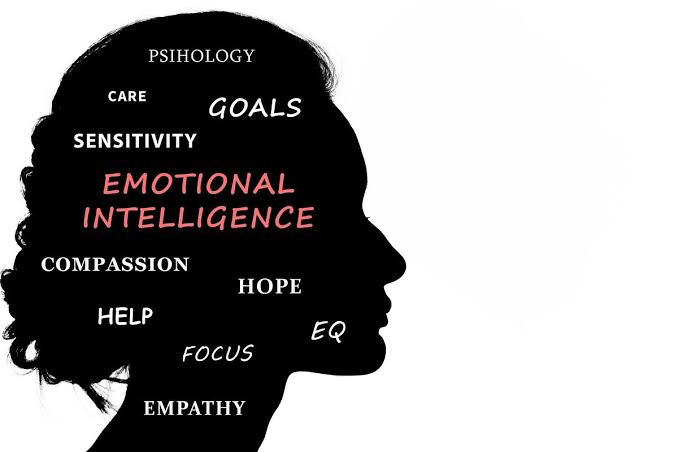
Emotional intelligence or emotional quotient (EQ) is the ability to understand and recognize your emotions and how to deal with numerous emotional situations of an individual. People with high emotional intelligence have more chances to become successful in most aspects of their life. If a job requires emotional labor, it is demanding to be emotionally intelligent.

Characteristics of Emotional Intelligence.

In a book titled “Emotional Intelligence – Why It Can Matter More Than IQ” 1995, Daniel Goleman, an American psychologist, expanded a framework of five components that characterize emotional intelligence:

  • Social skills– People find it attractive to talk with individuals with good social skills. People with emotional intelligence are good communicators too and are excellent in maintaining relationships.
  • Motivation– High emotional intelligence improves motivation. These people are usually motivated and make the surroundings too. These are productive and very effective in whatever they do.
  • Self-regulation– They can easily regulate their emotions which means they can control emotions and can tackle every situation and these think before they act. 
  • Self-awareness– These people understand their emotions and don’t let them rule them. These are super confident and believe in their intuition.

More the emotional intelligence, more maturity.

How to improve?

The biggest mistake that people make is that they are judgemental. They make a judgment without even knowing the whole story. This stuff should be avoided. Put yourself in their situation and then react. Humility can be a good thing and practicing this can make you confident about things. Just give opportunities to outshine others and don’t bother much to get applause for yourself. Self- evaluation also plays a crucial role. Admit your weakness and know where you have to work on in spite of giving false gratification that you’re perfect. In the business world or any other sector, it is highly necessary to be patient. Also taking responsibility, the responsibility of your work, or even hurting someone and apologizing. By being empathic and responding to their feelings we can make them feel comfortable. 

For example, if you ask an employee overtime and even if he agrees you may see a slight disappointment in his voice, so in spite of just ordering and walking off, appreciate his will to work.

What emotional intelligence affects.

Physical health – If you’re unable to manage your emotions probably you may affect your health by suffering from various diseases.

Mental health – Anxiety and depression can be a result of a lack of emotional intelligence.

Relationships – Communicating emotionally can be a booster in a relationship. Lacking this skill can also ruin your relationship.

Social intelligence – Tuning with your emotions may help you connect with the surrounding. Whereas being anti-social may cut your presence and make you feel less loved and less needed.

The basic idea of EQ:

  1. Identify your feelings.
  2. Identify other’s feelings.
  3. And then reacting accordingly.

Yes, of course, IQ matters but EQ enhances the value of IQ and every organization expects employees to be emotionally strong and intelligent.

Useful and widely used language to learn

Intro

The best we have been able to do is to narrow down the timeline for origin of language and studying human phycology to know when we developed mid-brain for language. Magpie is the name given to English language as it has a mix of many languages that picks up word from all other language. Some language has understandably widened vocabulary of English than others. Modern English dictionaries contain more of a geographical melting pot than ever before.

 Global lists that are famous worldwide are listed down. There are some seventy thousand languages in world that are famous worldwide also English has borrowed language from these different languages.  Here goes the list of six such important languages that are spoken worldwide in large number.

CHINESE: 1197 million native speakers

So far it is the widely spoken language in the world. According to the Oxford English Dictionary, Chinese words have been recorded in English since the mid-16th century, with the earliest examples including the likes of tai chi (1736), ginseng (1634), yin and yang (1671), kumquat (1699) and fang shui (1797). One of the earliest of all is lychee (1588). Chinese is a linguistic that is also referred as macro language that comprises many forms to derive a different form and dialects that together have of 1.2 billion native speakers

2. SPANISH: 399 million

Mainly spoken in Mexico, but other part of the world where this language is spoken as a major language is Colombia (41 million) Argentina (38.8 million), and Venezuela (26.3 million). They are many native speakers in the United States of America. In English, Spanish loanwords like weaponry and military in termed as guerrilla, flotilla, armada, machetealso the animals name are as follow like chinchilla, alligator, cockroach, iguana.

3. ENGLISH: 335 million

As per Ethnologies the English language has some 335 million native speakers, that incudes2 55 million in United States itself, 55 million in the United Kingdom and 19 million in Canada. Few other main countries have also 15 million in Australia and 5 million in New Zealand. Though English is spoken in almost every Asian countries of the world and is most wide spread it is recorded to be spoken in 101 different countries and territories worldwide.

Additionally, the number of people that has opted English as a second linguistic Franca included, the total no of speaker could rise globally to one billion.

HINDI: 260 million

Hindi is native language of the world’s 260 million speakers that are mainly found in India and Nepal. Although some 120 million projected people in India uses Hindi as a second language.  Also it is spoken in many part of the world such as in Mauritius, Fiji, Suriname, Guyana, Trinidad & Tobago and Nepal. Hindi is declared to be official language of the union. The Indian constitution in 1950 declared the Devanagari script and made it an official one. However, Parliament decided the use of English for an official purpose was announced fifteen years after the constitution came into effect, i.e. on 26 January 1965.

PORTUGUESE: 203 million

The population of Portugal is around 12 million but Portuguese is enjoyed and spoken in large belt and it has 187 million native speakers. People in many of these countries adopted these languages mainly forcibly and many took it over their own language.  Adopting these languages made it spread too many other communities in a country.

Poverty – A Global Concern

“Overcoming poverty is not a gesture of charity. It is an act of justice. It is the protection of a fundamental human right, the right to dignity and a decent life.” – Nelson Mandela, former President of South Africa.

Poverty is generally considered to be a measure of deprivation of the basic needs that a person, household or community requires to have a basic standard of living. Deprivation can be measured either in terms of a lack of resources (for example: income, other assets), capabilities (such as skills, knowledge, technology) or both. Children who grow up in poverty are more likely to be deprived of having health problems and shorter life expectancy , not attending preschool, dropping out of high school and having lower educational attainment.


People can be said to be in poverty when they are deprived of income and other resources needed to obtain the conditions of life such as diets, material goods, amenities, standards and services that enable them to play the roles, meet the obligations and participate in the relationships and customs of their society. Understanding and addressing poverty requires a dynamic view of how poor people and households fare overtime in terms of income and expenditure thresholds. Hence vulnerability is a risk for a person or a household of falling deep into poverty. The other factors include household demographics (which is the size of the household [number of people], the age structure, the dependency ratio and the geographical location which may be rural or urban) , and individual characteristics (such as a person’s sex, age, employment status, level of educational attainment, property owned and socio-economic profession.)

Poverty has various indications such as lack of income and productive resources sufficient to ensure sustainable livelihoods, hunger and malnutrition, ill health, limited or lack of access to education and other basic services, increased morbidity and mortality from illness, homelessness and inadequate housing, unsafe environments , social discrimination and exclusion and is characterized by lack of participation in decision-making and in civil, social and cultural rights. The root cause of poverty is considered to be the increasing population. Rising population is putting the burden on the resources and budget of countries. Governments are finding difficult to provide food, shelter and employment to the rising population. The other causes include lack of employment opportunities ( people who face situations of unemployment and joblessness are unable to fulfill the basic necessities of their family resulting in poverty), lack of education and skills ( limits people’s ability to access decent jobs to develop themselves and participate fully in society) , war, natural disaster, lack of infrastructure , political instability etc. Natural disasters like flood, earthquake also contribute to poverty.


Poverty encompasses not only material deprivation but also many other forms of deprivations in different aspects of life such as unemployment, ill health, lack of education, vulnerability, powerlessness, social exclusion etc. Hence, poverty should be viewed as the deprivation of basic capabilities rather than merely as low level of income and strong, effective economic and social policies should be taken to eradicate poverty and improve people’s lives and the economic productivity of the country.

Life hacks to be Successful!

Treat Failure Like a Scientist

When a scientist runs an experiment, there are all sorts of results that could happen. Some results are positive and some are negative, but all of them are data points. Each result is a piece of data that can ultimately lead to an answer.

And that’s exactly how a scientist treats failure: as another data point.

This is much different than how society often talks about failure. For most of us, failure feels like an indication of who we are as a person.

Failing a test means you’re not smart enough. Failing to get fit means you’re undesirable. Failing in business means you don’t have what it takes. Failing at art means you’re not creative. And so on.

But for the scientist, a negative result is not an indication that they are a bad scientist. In fact, it’s quite the opposite. Proving a hypothesis wrong is often just as useful as proving it right because you learned something along the way.

Your failures are simply data points that can help lead you to the right answer.

Failure Is the Cost You Pay to Be Right

None of this is to say that you should seek to make mistakes or that failing is fun. Obviously, you’ll try to do things the right way. And failing on something that is important to you is never fun.

But failure will always be part of your growth for one simple reason…

If you’re focused on building a new habit or learning a new skill or mastering a craft  of any type, then you’re basically experimenting in one way or another. And if you run enough experiments, then sometimes you’re going to get a negative result.

It happens to every scientist and it will happen to you and me as well. ‘ Failure is simply a cost you have to pay on the way to being right.’

Treat failure like a scientist. Your failures are not you. Your successes are not you. They are simply data points that help guide the next experiment.

To Boost Happiness, Stack the Pain

Here is an example…

On a normal day, you might have something annoying or painful to do (like paying the bills). And you also might have something good happen to you (like a friend sending you a thoughtful email).

If you read the email on your lunch break and then pay the bills when you get home from work, you will remember your day as going from a good experience to a bad experience. That’s the opposite of what you want.

However, if you decide to stack the pain early in your day — for example, if you pay your bills in the morning before you go to work and then read the email from your friend on your lunch break — you will remember your day as going from bad to good. As a result, you’ll feel happier because your brain likes it when experiences improve as time goes on.

Stacking the Pain for the Long-Term

It’s easy to worry about making the right choices with your life. However, if you choose to pursue things where the pain of the experience is largely in the beginning — like building a business, losing weight, or creating art — then you will tend to look back on those experiences fondly because they improve over time.

By comparison, doing things like trying to beat the stock market or become a professional gambler are very inconsistent. They can provide big wins, but they can also provide big losses at any time. The pain isn’t necessarily in the beginning. Because of this, these experiences are less likely to make you happy over the long-run.

­­

How To Build The Self-Confidence You Need To Win At Life

Do you ever feel dumb about yourself? Do you ever feel like you have zero self-confidence? It happens all the time to most of us. Although you are preparing for any compitative exam , you are doing job or planning something for your future . It happen when you are feeling very low and you don’t have confidence on your self.

Whether you want money, fame, travel, or none of that stuff, it doesn’t matter because it always comes down to this: How confident are you? Everytime your confidence decide your success. If you don’t have confidence on you, you can’t do anything. While giving any exam if your confidence is nill you became nervous and expoil your eaxm, while you work hard. So trust in yourself.

You see? Self-confidence is important if you want to win at life — no matter what you’re after, a lack of confidence will always hold you back. And you never grew up. You are always feel scary.

Research even shows that lack of self-confidence is associated with:

  • Depression
  • loneliness and feeling left out
  • Lower academic achievement
  • Lower life satisfaction
  • Never trying to follow dreams
  • Introvert person
  • Not taking own decisions
  • Always confused
  • Live lost

If you look up the definition of self-confidence, you always get more or less the same description. Moore describes it as “a trust in self, a faith in one’s ability to be able to meet situations as they may arise.”

But more importantly, she says:

“Self-confidence without competence is of as little use as is competence without self-confidence.”

It means this: Going to business school is competence. But using your business competence to lead a company is self-confidence plus competence. They are only useful when combined.

That analogy goes both ways. Just confidence in yourself, without the competence, is also useless — talking the talk is not a sustainable strategy.

You need the talk and bravado, but you also need to develop the skills to back up your talk.

Building Your Self-Confidence

So you become more self-confident if you become better at what you do. Enhance your confidence, if your confidence increase so your performance as well as success already increase. That’s the system, and it’s backed by research.

The process is easy—but completing the steps takes hard work. Confidence + hard work = success. This is the secret of success and formula to become a successful person.

It goes like this:

  1. Improve your competencies
  2. Put them into practice
  3. See results
  4. Grow more confident
  5. Repeat
  6. Focus on your drawbacks and improve side by side
  7. Never lose hope if any failure come

That’s the process.

“That’s great and all, but what if I don’t see results? Plus, I don’t have the time to practice.”

If you want to make excuses, that’s fine. It’s your life. But this method of building self-confidence is based on real, tangible steps, and not intangible stuff like affirmations. Confidence doesn’t appear magically by itself. You have to build it and it takes time. You have to stay positive, calm and trust in yourself. After practicing all these then your confidence build.

You can tell yourself every day that you’re confident, lucky to be alive, or whatever — but if you lack the skills to get shit done, you’ll never truly believe in yourself. Revise this sentence that you have trust on yourself, you are confident about your work.

And that’s my biggest issue with a lot of self-help theory and writers. Yes, affirmations, positive thinking, goal setting, is all great, but it’s NOTHING without execution. You have to apply it’s practically not only think or write theoretically. Implement whatever you think or want to do.

How can you expect to build confidence if you never do anything? It’s impossible.

“Nothing builds self-esteem and self-confidence like accomplishment.” — Thomas Carlyle

Don’t fool yourself into thinking that your life will be better as long as you wish for it. Don’t wish only work for it. Improve your skills. Be confident in any situation, never let down your confidence.

When you put in work and see the results — like a stronger body, more energy, more money, or whatever you’re after — you start believing in your ability to get shit done.

Now go out there, do things, get better at them, see results, repeat that process and grow more confident. 

Robbing Tune and Rhythm Out of Music: The Discordant Pandemic

Music industries have seen various ups and downs since the introduction of modern technologies. COVID-19 has recently contributed to the huge loss in the music and live entertainment industry globally. Shutdown of transport and maintenance of social distancing have forced several concerts and festivals to be cancelled or postponed. The artists are uploading several videos to entertain their fans on social media platforms. They have to use their family members to shoot the video at home. They are participating in several fun challenges and giving real talk advice to cut off the boredom and to stay connected with the fans. Live music concerts and gigs remain cancelled in the foreseeable future. But the industry is adapting to the ‘new normal’.  Greater number of people are tuning in radio channels.  Sensing this the musicians are focusing more on radio connectivity and creative performance suited to radio audience to bring a change.

The gig artists, bartenders, technicians, roadside artists and many more who earn their livelihood through live music concerts are facing a really hard time in the pandemic times. They are out of work for around three months and running out of savings. Popular celebrities can reach out to fans through innovative programmes. But those who are struggling to be in the industry do not have any clear idea of the road ahead. According to the members of the Indian Music Industry, several of them have started suffering because of lack of cash flows caused by absence of film releases and continuing ban on public performances. Many daily wage musicians are the worst sufferers due to the postponement of recordings. Smaller music labels need lot of public performances to earn  revenue and sustain themselves. They are now forced to seek financial help from different government sources.

Various artists are performing individual home concerts to entertain fans and also to raise funds for charity. Lady Gaga’s ‘One World: Together at Home’ has raised over $127million for the World Health Organization. John Legend, Justin Bieber and many more are playing their songs on Instagram Live. The Indian music community and Instagram conducted a live virtual music festival— ‘Live In Your Living Room’ with several artists like Armaan Malik, Naezy and Lisa Mishra performing. One of the popular music streaming apps, Spotify, has started working with a number of organizations as Spotify COVID-19 Music Relief. It is offering financial relief to creators around the world. YouTube Music and Amazon Music are also coming to the aid of music industry workers through the MusiCares’ COVID-19 Relief Fund.

In such crisis times the music industry all over the world is experiencing lesser productivity, slower work rate and uncertainty— not to speak of the declining curve in creativity. The dreaded virus has huge impact on the production, distribution, marketing and sales chain. It has taken a drastic hit of ten to fifteen per cent of the production and marketing of music in three months.

Come what may, everybody knows that we all need music to live life with jest. Not only that, we need it to have a healthy mental condition. Music is entertainment surely, but it is also a ‘medicine’ to save us from boredom, stress and alienation, the symptoms particularly evident in these trying times. It is a good sign that the music industry is fighting the bad times and trying to strategise its recovery. Didn’t Shakespeare write, ‘If music is the food of love, play on’?