Lockdown as Boon: Rising Growth of Indian Biscuit Industry

It is common knowledge that the lockdown has severely affected most industries in India. The pandemic struck with so much vigour and with so much surprise that industries were left shell-shocked and paralysed. But there are some exceptions to this trend. The biscuit industry in India seems to be one.

There are confirmed reports that not just the top-end branded biscuit producers but also the local brands have been able to register unexpected growth during the pandemic. Biscuits became a favourite item for buyers deciding to stock edible items since the beginning of the lockdown. Biscuits traditionally attract mass consumption. It is also undeniable that since the 1990s leading biscuit companies in India have come up with an astonishing variety. The components vary from wheat and flour to coconut and oats. Now biscuits in India come in very attractive packaging. No less important, there are packs costing as less as two rupees and five rupees. In yesteryears Britannia was the leading market brand enjoying near-monopoly. Gradually several companies gave Britannia a good competition and began occupying their own space in the biscuit market. Parle Products, ITC, Bisk Farm are some of the leading companies enticing Indians to have their biscuits and eat them too. The healthy competition is leading to more and more ‘innovations’ in the biscuit industry.

It is not only the brisk buying of biscuits for home consumption that leads to such jump in sales. The social sector also contributes to it in its own way. The NGOs, voluntary organizations and state agencies engaged in relief purchase biscuits in huge quantity to provide them to the distressed people facing the brunt of the lockdown in severest ways. The lighter weight, good taste and long shelf life make biscuits an attractive item for relief.

The plight of the migrant workers gave a boost to the biscuit industry. India enforced Lockdown 1.0 on 25 March, 2020. Its sudden announcement put migrant workers in great distress. Amidst the lockdown, they desperately wanted to reach home. For them, like everyone else, it was the safest option. They started their journey from the host states to home states across the country with a very small savings in hand. Many are forced to resort to long walk. Food became a major problem. They needed food to boost energy and sustain the struggle. Biscuits came in handy for them. Easy availability of biscuits in every part of the country facilitated the process. Incidentally, India also has a wide range in local biscuits and it is evident for anyone familiar with the roadside makeshift tea stalls.

According to reports in The Indian Express and The Times of India Parle G has been the biggest beneficiary of the lockdown-led sales in biscuits. March, April and May have registered an unprecedented growth in sales in eight decades though the officials have not disclosed the exact amount in public. The company reported that the manufacturing units are functioning with fifty  per cent of workforce keeping in mind the government rules and regulations to curb escalation of the coronavirus outbreak, but the production is happening in full force to serve the community with sufficient supply in the market. Britannia, which has fifteen manufacturing units in India, is ready to take up the challenge with 65 percent of its capacity. ITC also promises to do the same to sustain smooth functioning of the supply chain.

It seems biscuits are dear to all. For the upper class and middle class biscuits are linked to both style and wellness. For people down below, especially in crisis situations, biscuits are means of survival. With such utility value cutting across social strata biscuits shine amidst pandemic times.

Tips for a healthy monsoon

The most difficult season to maintain our lifestyles is the monsoon season. The city life is often triggered by hustle and bustle. Wheater we like it or not, the schedules during monsoons often turn erratic.

Here are some tips to maintain a healthy monsoon

Personal hygiene

This is the season when you need to take great care of yourself. Maintain personal hygiene and make that the first priority. Make an effort to keep things dry as additional moisture can attract more germs. This can slow down your immune system.

Hydrate

It is a fact that during the showers, people tend to feel less thirsty. Human bodies are made up of 90% water so the intake of water is essential during all the seasons. Water is the best source of eliminating all toxic wastes from the internal system, hence keeping our body healthy and skin fresh at all times.

Say no to street food

Avoid street foods during the monsoon as the food items sold on the roadside attract invisible and detrimental germs from the potholes.

Eat healthy

Make sure you have fresh fruits and vegetables daily in order to stay fit and healthy during this monsoon. Have boiled water as it reduces stomach infections.

Wear clean clothes

Make sure you follow a great hygiene routine and wear clean clothes. Wet clothes attract germs and bacteria on the skin.

Avoid going out

During the heavy showers, it is always perfect to stay indoors to follow good safety rules.

Have fun and enjoy 2020 monsoons. Always make your safety the first priority on the bucket list. Wear gumboots and raincoats to stay safe and sound.

Jonathan Dollimore’s Death, Desire, Loss in Western Culture: A brief Book Review

This is one of the most remarkable books when it comes to a detailed description of western literary and cultural tradition. Dollimore has done a great job of keeping the most essential cultural tendencies intact while still being quite meaningful and interesting at the same time.

The introduction of the book gives a clear picture of how the concepts and ideas of death, desire and loss have been portrayed and viewd in Western culture by innumerable writers, theorists and critics for several ages. Dollimore begins the introduction with the depiction of the protagonist Hugo from Oscar Moore’s “A Matter of Life and Sex” (1991) whose journey includes being a narcissistic erotic adult to dying from AIDS by the end. Dollimore compares this story with the supposed real life story of Foucault who after getting diagnosed with AIDS, wanted to infect as many people as possible before taking the last breath. The supposed link between homosexuality and death has been portrayed over and over by many writers and critics in literature and other forms of art as well. Moore along with other writers brought about a sense that gives rise of a certain feeling that sex, desire, death and disease go hand in hand.


This connection between death and desire perhaps found its most extreme statement during Renaisance but it is an endemic to Western culture whch later got associated with homosexuality. For Jacobeans, what connects death and desire is mutability.
In his poem “Logs on the Hearth”, Thomas Hardy recalls a childhood memory of his sister climbing the tree who is now dead. His sister hence, is recalled in a moment of unselfconscious happiness now frozen forever.


“To his coy Mistress” is one of the most famous of all carpe diem (sieze the day) poems that makes us keen to sieze the day and at the same time prevents us from doing so. This narrative is not only about seizing the day but it also makes the readers realize how time and change drive us towards a horizon of oblivion which makes it hard for us to sieze anything.


As Freud puts it “the aim of all life is death”, Western tradition has always been in crisis which is driven further by mutability and death.
Including Freud, there had been ,many critics and theorists who put forward an unusual image of death in a scandalous way, what the philosophers call the “principle of individuation”. Death has been famously eroticized in works like “Tristan and Isolde” and “Ode to a Nightingale”.


While discussing the representation of these concepts through gender, Dollimore brings forth how “The Second Sex” by Beauvoir brought a new direction in the field of feminist criticism. It not only changed lives of thousands of women but also posed each of the problems the feminists are dealing with today.
In Bronfen’s Over her Dead body, she draws an imaginary line to show the aesthetic connection between death and femininity. She also claims gender constructions are supplementary to the division between life and death.


Dollimore moves on to discuss a certain fear of failure that causes social death. The extinction questions caused by internal and mostly external forces generally cause this fear that leads to a certain anxiety of social death among people. Social historians also speak about the increasing tendency of denial of death in modern times. But when revolution fails, the preoccupation of death returns. Considering the wide angles of western tradition this book covers, it would be highly recommended to anyone who is willing to take a look at the “West world” in a brief yet a detailed account for the betterment of their vision of the world.

– Suvasree Bandyopadhyay

Global Managed File Transfer Software.

It is a type of technological platform which allows the global organizations to exchange high volume electronic data between the systems or in person which is considered as a secure way to comprehend their needs. This process can be carried out both internally and externally based on the severity and importance of the data. The main aim of this software is to carry out and process the data safely.

Benefits and importance of Global Managed File Transfer Software.

As we already know that artificial intelligence is taking over the world and different types of businesses are growing every day, everyday there are a lot various startups. Considering the fact that these business networks require a data exchange platform which managed file transfer offers precisely.

We know that data exchange is a basic need of any organization or company and without the managed file transfer software the precise data is officially on a threat to manipulation or loss. The software takes the responsibility to transfer the files from the internal systems to the external partners securely.

Qualities of Global Managed File Transfer Software.

  • The software takes Complete responsibility of the data security by consistent monitoring and by protecting the data at transit and reset. If the data security fails it could affect the reputation of the organization. This is where MFT helps and leads the operation.
  • As there are a lot of companies and organizations with large amount of data to be transferred globally and the numbers are increasing day by day this is where MFT is a reliable source for the movement of files securely.
  • The software assures that the data is transferred successfully.
  • Monitoring and visibility is a constant process.
  • The software meets all the required compliance requirements.

Global trends and developments in the Global Managed File Transfer.

It is expected that the market would grow significantly from 2019 till 2028. As the importance of cloud solutions, increasing in threats of cyber crime and increase in the artificial intelligence. The market of managed file transfer has become more significant as a need to adapt to the current situation. As managed file transfer includes file storage, file governance, data transfer and security, translation solutions and also file integration.

Key Industry Trends include:

Strategic collaborations and partnerships between international and local players.
High capital investments by major players in R&D activities.
High Penetration of cloud-based MFT solutions.
These trends are expected to gain traction and support market growth in the near future.

Analysis by Segment

By Deployment Type:

Among the deployment type segments, the on-premise segment is anticipated to account for larger revenue share within the global market. The cloud segment is expected to grow at a substantial growth rate owing to rising preference for cloud-based services and advent of 5G high-speed Internet connectivity.

By Solution Type:

Among the solution type segments, the application centric segment is anticipated to hold a dominant position in terms of revenue share in the target market. The other two segments, people centric and ad hoc, are estimated to account for moderate revenue shares in the market worldwide.

By Component Type:

Among the components, the software segment is anticipated to account for significant share in terms useful within the marketplace for managed file transfer. The professional services segment is anticipated to grow at a notable rate owing to constant need for services in terms of integration, maintenance, etc.

By Organization Size:

Among the two organization size segments, the large scale enterprises segment is expected to hold dominant position in terms of revenue contribution and the small & medium enterprises (SMEs) segment is anticipated to witness a higher growth rate owing to increasing adoption of cloud-based services by SMEs.

Regional Analysis

The managed file transfer market in North America is predicted to account for the very best share of the worldwide market. The market in North America is predicted to register significant growth, driven primarily by early and better adoption of latest technology, sizable amount of cloud-based enterprises and platforms owing to cost-cutting opportunities offered, and increasing awareness about benefits of digitalization. The Asia Pacific MFT market is expected to register the highest rate of growth over the 10-year period, driven by increasing initiatives by government for digitalization, rapidly developing end-use verticals such as BFSI, IT & Telecommunication, healthcare, and others

The report forecast global Managed File Transfer (MFT) Software & Services market to grow to reach xxx Million USD in 2020 with a CAGR of xx% during the period 2020-2025.The report offers detailed coverage of Managed File Transfer (MFT) Software & Services industry and main market trends. The market research includes historical and forecast market data, demand, application details, price trends, and company shares of the leading Managed File Transfer (MFT) Software & Services by geography. The report splits the market size, by volume and value, on the idea of application type and geography.

Conclusion

Top factors like revenue, supply-demand ratio, market status and market price is reflected.
All the top Global Managed File Transfer (MFT) Software & Services market players are analysed with their competitive structure, development plans and regional presence.
The marketing research from 2013-2020 and forecast analysis from 2020-2025 is conducted with the bottom year as 2020.
Top regions and countries which have huge growth potential are studied during this report.
The SWOT analysis of regions and players will lead to an analysis of growth factors and market risks.
The segmented market view supported product type, application and region will provide an easier market overview.
The market outlook, Managed File Transfer (MFT) Software & Services gross margin study, price and type analysis is explained.
The distributors, traders, dealers and manufacturers of Managed File Transfer (MFT) Software & Services are profiled on a global scale.
The forecast analysis by type, application and region is conducted to present the sales margin, market share, and revenue, rate of growth .
The information on mergers & acquisitions in Managed File Transfer (MFT) Software & Services, product launches, new industry plans and policies as well as the development status is analysed in the report.

Protect Children Labor, Now More Than Ever .

Children around the world are regularly engaged in hazardous activities that affect their mental, physical, social or educational development. Every year World Day Against Child Labor Day is celebrated on 12 June to provide a growing and developing environment for children to live a dignified life. In 1919, the International Labor Organisation (ILO) was founded and in 2002″World Day against Child Labour” was established to abolish child labor.

Impact of COVID-19 on Children

World Day against Child Labor 2020 focuses on the impact of COVID-19 on child labor. The COVID-19 pandemic has a huge impact on Livelihoods of the labor market and children are often the first to suffer. The economic slowdown has forced millions of children to left their school and opt for minimal jobs to support their parents for the livelihood. This year, the World Day Against Child labor is being conducted as a virtual campaign and organized jointly with the Global March Against child labor and the International Partnership for Cooperation on Child labor in Agriculture.  

If children are provided with a suitable environment to enjoy their life, surely they will contribute to the economic and social growth of the countrySo stop child labor, protect the right of children, and support them.

Startup Bubble is Bursting!

Eight years ago, all we could think of was the neo-modernity that came with the innovative concepts of Startups across the globe along with a plethora of opportunities and new perceptions. It was the prime subject of most of the investor conferences and the esteemed journals.
Multiple companies emerged with the new wave of ongoing startups and various evolutionary innovations took place as a result of the new wave. Gradually it established itself as the most promising business conception across the globe and people of the new generation found it inevitable to survive in the new world with all its modern technological advancements.

However, amidst this global expansion of the startup business, a shift in its global approach has started to take place.
Investors kept on investing, valuations kept on rising and falling and the start-up business started going towards its verge of collapsing from the scene.

The Research from venture capital First round suggests 47% start-up founders seem to believe that the current business scenario is residing inside a methodological tech bubble and 32% think that it is about to burst.

For months and years, people have tried to turn a blind eye to the possibility but eventually the idea of the bubble has started to strike a sense of fear and insecurity of in the hearts of tech lovers and those passionate about the future of start-ups. This sense of uncertainty tends to affect the production which eventually leads to a loss of technical and practical production in the long run.

The year 2000 saw various collapses of the internet businesses followed by Ciscos production value dropping by 86%, which led to the sense of uncertainty and insecurity in the minds of the investors and clients.

The main concern that led to the emergence of this doubt was the fact that not enough money was getting produced by the start-ups in the field of technological advancements compared to the capital that was being invested by the investors on a regular basis. For instance, apps like Snapchat went on causing huge amount of eyebrow raising and finger wagging despite the fact that millions of dollars had been invested upon its making!

A critical approach has to be taken into consideration in order to detect the exact location of the bubble, which will help in the probable steps that might be taken to dismantle the supposed decline of the start-ups in the new future. One of the main steps, according to the optimists, is to keep on believing in all its positive productivity which comes with a firm sense of confidence and trust in the process. It is like a long term plan is about to come to an end due to some unavoidable issues and problematic situations where the only option is to come up with more original rules and plans that will help the market to reestablish itself from its ashes.
However, many believe that the sense of unnecessary pessimism might be one of the leading factors that will lead to the supposed bursting of the bubble, if there is any. Therefore, no matter how hopeless and nonsensical it may sound, the belief and trust upon the field of start-ups should be intact.

Courage: Being Brave

WHO DOESN’T LOVE A TALE OF COURAGE?

They pop up in all cultures, traditions and eras. From shepherd-boy David facing giant Goliath, to Gilgamesh defeating the monster Humbaba, to Harry Potter and friends confronting deadly Lord Voldemort.

There’s something exhilarating about individuals, pitted against the odds, rising above fear and narrow concerns about self-preservation.

And when real life provides examples of valour, our faith in human nature, in the possibility of virtue, is enhanced.

SO WHAT IS COURAGE?

To Aristotle it was a virtue, the greatest quality of the mind. For Richard Avramenko, who teaches political science at the University of Wisconsin, courage is the primary means by which humans raise themselves out of their individualistic, isolated and materialistic existence.

He writes: ‘Courage… is the willingness to risk life and limb for the sake of something. In other words, courage reveals what we care about… It reveals that which inspires us to overcome ourselves. And it is the self-overcoming character of courage that makes it so poignant. When we are witness to real acts of courage, we know immediately what matters most fundamentally to the courageous actor – and it is not herself, not her own physical well-being.’

In praising fearlessness we may be making a virtue of deficiency

Physical bravery attracts most attention, winning honours and awards. But courage takes many forms – moral, intellectual, emotional, psychological, political, social, spiritual, financial…

You have to pluck up your courage to express ideas that are not majority opinion, or to face the hostility or ridicule that may accompany departing from social norms.

BRAVE IS NOT FEARLESS: THE SCIENCE

Often we call brave people ‘fearless’. But courage isn’t fearlessness. As Nelson Mandela recalled: ‘I learned that… the brave man is not he who does not feel afraid, but he who conquers fear.’

If there is no fear to start with, there is no need for courage.

Admitting we are afraid can make us feel small. But often the first step towards being brave is to feel fear – then do the thing we are afraid of anyway, to paraphrase Sheila Jeffers’ self-help classic.

Even those who feel no fear at the time of performing heroic deeds may find that the trauma catches up with them later – as was the case for Loyau Kennett, who became depressed in the months following the event.

In praising fearlessness we may be making a virtue of deficiency. There is, indeed, a rare medical condition called Urbach Wiethe disease that damages the amygdala – the part of the brain that processes fear – and may result in total fearlessness.

‘In biological terms,’ says science author Jeff Wise, ‘bravery emerges from a primal struggle between the brain’s decision-making hub, the prefrontal cortex, and the focal point of fear: the amygdala. When we find ourselves in an unexpected and dangerous situation, the amygdala sends a signal to the prefrontal cortex that interferes with our ability to reason clearly.’

It can be paralysing.

People who act bravely appear not to succumb to fear. Sometimes their calm, practical responses derive from intense preparation. Firefighters, airline staff, paramedics, soldiers and the like, will have been trained for dangerous, unexpected situations. Their responses may be like ‘muscle memory’.

In one 2009 study, Yale University psychiatrist Deane Aikins subjected soldiers to extremely stressful situations to see what happened to their body chemistry. He found those who remained calm produced less of the ‘stress’ hormone cortisol. They also made more neuropeptide Y, a compound that counteracts the effects of cortisol. His work suggests that by measuring hormone levels it is possible to predict who will keep their cool under pressure – and who won’t. 4 More recently, neuroscientists have identified a brain region called the subgenual anterior cingulate cortex (sgACC for short) as the part activated during courageous acts.

PASSION AND COMPASSION

But for many analysts, the cultivation of courage has more to do with emotions. ‘Follow your heart’ is how psychotherapist Melanie Greenberg puts it in her useful analysis of the six main attributes of courage, which provides the framework for this article. She quotes the pioneering, 20th century Japanese actor, Midori Komatsu: ‘Passion is what drives us crazy, what makes us do extraordinary things, to discover, to challenge ourselves. Passion should always be the heart of courage.’

And so should compassion.

In this magazine we feature half a dozen exceptionally brave people and their accounts are dominated by compassion, as well as passion.

Tatiana Vivienne braves daily violence in the Central African Republic to reach the most vulnerable girls and women; Alicia Cawiya, in Ecuador, defies authority at every level to defend her people and their environment from ruin by oil companies; Jlo Córdoba in Honduras, despite numerous attempts on her life, keeps challenging impunity for those who murder and abuse transgender people, because she ‘loves’ her community.

As the 6th century BCE Chinese philosopher Lao Tzu says, being loved gives you strength, but loving deeply makes you brave. He also says: ‘From caring comes courage.’

It’s a view that might be shared by Abdullah Al Khateeb, also featured in this edition, who will not be deterred from his humanitarian work with refugees though it has turned him into a target for both sides in the Syrian conflict. ‘When you care about people, your responsibility is total,’ he says.

STAND UP FOR WHAT IS RIGHT

Brave people are often those who take a moral stand and have a clear sense of purpose.

Environmental activist S Mugilan, like others we interviewed, ignores death threats to confront powerful business interests and their hired thugs who are ‘swindling and destroying’ the state of Tamil Nadu. He puts his courage down to being ‘the kind of person who is determined to change how things work’.

‘A hero is no braver than an ordinary man, but he is braver five minutes longer’

Today, some of the bravest people in the world are defenders of human rights. ‘Human rights activists in Saudi Arabia are an endangered species,’ said Amnesty International’s Lynn Maalouf recently. ‘One by one they are vanishing – prosecuted, jailed, intimidated into silence or forced into exile – highlighting the authorities’ zero-tolerance approach to freedom of expression.’

Whistleblowers, too, pay heavily for their efforts. Often they lose not only their jobs, but their friends, relationships, homes and liberty. Chelsea Manning, Edward Snowden and, more recently, Barrett Brown, have felt the weight of US government retribution for their exposures of abuses the state wishes to conceal.

In all these cases, solidarity, the existence of people out there who support the whistleblower’s actions, is vital.

PERSISTENCE IN ADVERSITY

‘A hero is no braver than an ordinary man,’ wrote poet Ralph Waldo Emerson, ‘but he is braver five minutes longer.’

Staying power in the heat of adversity is a frequent characteristic of the valiant engaged in long-term struggles for social justice.

Take Turkish lawyer and former newspaper editor Eren Keskin, hauled before the courts more than 100 times for her criticisms of the government, particularly its treatment of the Kurdish minority. Over the years she has been given several prison sentences. Following the failed military coup in Turkey in July 2016, her passport was revoked. Erin was to have been interviewed for this edition, but she is once again in court.

As artist and writer Mary Anne Radmacher puts it: ‘Courage does not always roar. Sometimes courage is like the little voice at the end of the day that says I’ll try again tomorrow.’

EXPANDING HORIZONS

In his seminal study The Hero with a Thousand Faces, mythologist Joseph Campbell identified key ingredients of the archetypal hero’s journey.

She or he leaves their familiar surroundings and passes into a special world where they must confront demons, face challenges and ordeals, and encounter their worst fears. They need to conquer their fear and will ultimately claim ‘treasure’ or reward. Then they return home to their familiar world, but they themselves will have changed.

The people we are featuring in this magazine have, in various ways, left their familiar surroundings, journeyed, and grown. For Angolan rapper Luaty Beirão, the journey has been literal, political, personal. While in prison for speaking out against a repressive government, he became stronger. He thought: ‘I won’t accept your threats. If you want to kill me, do it. With each step I found I could take one step further. I found out I had the guts for things I hadn’t imagined before.’

For all the physical privations the brave people in these pages have suffered, their actions have enabled them to overcome fear, to grow, and in a moral sense claim the ‘treasure’.

ULTIMATE COURAGE

Finally, there is what some people call ‘spiritual’ courage. This includes the bravery we may show when we endure suffering – and ultimately, face death. Deep down it’s the thing most of us fear most. I have witnessed people I love dig deep into their reserves of courage as they experience terminal illness. I have seen how their courage encourages those around them to be brave too. Courage does that. It encourages; it is positively infectious, even in the worst, most hopeless seeming of situations.

GOOD COURAGE, BAD COURAGE?

While scientific studies of courage are intriguing – one Israeli study puts the subject into an MRI tunnel, then exposes them to snakes! – they have some worrying implications.

It would be deeply troubling – if not plain immoral – if such research led to the development of a ‘courage pill’ that could turn soldiers into ‘perfect’, fearless fighters.

Fear can stop us taking necessary action. But it can also give us pause for thought. The trick is not to let it take hold, and to be able to transcend it when we need to. ‘There’s only one way with fear and that’s through it,’ says psychologist Noam Shpancer. It’s an ongoing, dynamic process, that will never be completed and that is essential for making change happen, in the individual and in the world.

Of course, bravery does not always involve virtuous action. It can be violent, militaristic, macho, tribal. ‘This is the paradox of courage,’ according to Avramenko. ‘On the one hand, it is about self-overcoming and commitment to others. On the other hand… it is exclusionary and violent.’

He sees the shift away from an ancient, martial conception of courage to one that is political and justice-based as a way through this theoretical conundrum. The kind of courage we are focusing on in this edition is the justice-based variety. It is empathetic and community minded, geared towards resisting and limiting harm.

One common theme in all the stories is caring, and the comradeship that courage fosters as it creates a virtuous circle of valour. Many of our interviewees point to the work of others, and the sacrifices they have made, as sources of inspiration.

Such courage is the lifeblood of a healthy individual and a healthy society. It’s what makes for meaningful, purposeful change, challenging the cynicism of that slick, fashionable, armchair elision of the word ‘brave’ with ‘stupid’.

It inspires and impels the human spirit towards building a better world.

INDIA AND CHILD LABOR!

Starting from accompanying maid to officially working as an underage child, supporting family, and taking over responsibilities on shoulders. A child goes through a lot when he is below the poverty line. In our country, the government shifts the poverty line in spite of making people move upward and releases stats stating there are fewer people below the poverty line in comparison.
For example, maids help in household works, sometimes they are accompanied by their children, the Chotu who brings tea at your working hours in the office.

What is child labor? Working at a young age is just an incomplete definition of child labor. Child labor implies the ill treatment or utilization of children through any aspect of work that binds children, obstructs their ability to give attention to schooling, and is mentally, physically, socially, or purely harmful. Poverty is considered as the basic reason behind the working of a child. Upscale nations like the US, Europe, and Canada account for just 1% of the crew whereas Asia accounts for about 22%.
History. In 1757, the battle of Plassey ie the British gained power in conquered states of Bihar, Bengal, and Orissa. The states were prominent for agricultural work in the country, so after the battle, the British took advantage of the innocence of children. Also, kids were unaware of their rights, they were forced to work as children due to poverty, unemployment, and many such crises. The demand for laborers was also at the peak and children were enrolled for fewer payments.

Stats of India. The country was the home to the highest number of illegal workings of children in 2015. As agriculture was one of the most active occupations in the country, so to cover-up family issues and financial crisis children we’re a helping hand. In the list of giving birth to India’s child labor hubs, Uttar Pradesh is on top and it accounts for approximately 20% of India’s child laborer. Combining Bihar, Uttar Pradesh, Rajasthan, Madhya Pradesh, and Maharashtra summaries for over half of India’s total child labor population. There are differences in urban and rural areas. Child labor is prominent in rural areas. About 80% of working children live in villages and most of them are part of agriculture practices while others are engaged in household industries and hazardous works. In fact, boys are pushed to do hazardous work compared to girls(according to the International Labour Organization’s World Report on Child Labour 2015).

The positive thing that was seen after decades was a spectacular fall in child labor in the last two decades. For example, there was a considerable 45% decrease in child labor between 2004-05 and 2009-10, due to plans like Right to Education, MNREGA, Mid-Day Meal, which gave children an encouragement to study. https://www.savethechildren.in/resource-center/articles/statistics-of-child-labour-in-India-st
ate-wise

Child labor affects the mental and physical condition of a child. It results in malnutrition, misuse, premature aging, increases drug dependency, sexual abuse, etc.
Child labor can have lifelong negative consequences on children’s physical, mental, and social
development, robbing them of a chance to play and learn,”
said UNICEF Executive Director
Henrietta Fore. “We need to address the root causes that push children to work, like poverty
and violence. We also need concrete solutions to ensure that families have alternative income
sources and children have access to quality education and protective services.”

https://www.ilo.org/global/about-the-ilo/newsroom/news/WCMS_728159/lang–en/index.html


Change in perspective can bring change in the country.

WHAT ARE THE OPTIONS FOR STUDENTS POST COMPLETING THEIR GRADUATION IN AUSTRALIA

Australian educational culture is very rich and has really high standards. Some of their universities are globally recognised. If any student is getting a graduation degree from any university in Australia it will be popular and well recognised among companies in Australia and in other countries too. This can definitely be an advantage for the students to secure a job. However, students often get confused about what should they do post completing their graduation in Australia. Here are few options for the students which they can do after their graduation.


Students who want to study further after achieving their graduation degree to gain higher qualification, they can start the Masters course. While starting post graduation programme, students need to get connected with the alumni groups for guidance because in the alumni group some can share their experience regarding works, employments, any new courses or social events, which can be extremely helpful for other students. Higher degrees or courses in Australia are highly competitive and to clear the entrance exams conducted by the universities, high standard of English language is a must. There are few categories in the post graduate qualifications offered by Australian universities, such as, diploma courses which involves two years of study and Masters degree and Doctoral degree or phD. Any kind of Doctoral degree requires three to four years of study. Doctoral degree is the most valuable and most desirable degree. For the students who are opting for Masters degree, there are three types of Masters degree –
1) Coursework masters – after completing bachelor degree students can go for this course which requires project work and research.
2) Research masters – students who have completed their bachelors can apply for this course which consists of researching and making thesis.
3) Profesional masters – students who are done with their graduation and have any sorts of work experience can go for this course which is a work based project. It requires professional experience.

These are few options for the students who want to study further after completing their graduation.


There are many fields to explore for the students who want to work after they complete their graduation. Newly grads can also try their hands in those fields, they are passionate about. Agriculture, tourism, mining and manufacturing these are the most strong industries in Australia. So, it is advised to the students to surely try in these fields. Students who are willing to work immediately after graduating should definitely join few courses and trainings for getting jobs in Australia. This will help them to secure a job successfully. To work in Australia after studies the students need to be very careful with their course selection. Most of the Australian companies and the employers do not run behind the name of the top class universities. So, students who have not graduated from renowned universities need not to worry. It is not always needed to chase behind the best college or university, instead they should focus more on the course they are choosing for themselves. The course should be profitable for them for a long run. An excellent communication skill specially in English language is required to get any job in Australia. The candidate should communicate clearly and effectively without hesitation. The professional skills of the candidate is extremely important to fetch a job. If the candidate has professional experience in his/her domain and have a proper portfolio to show them, that can be extremely helpful. Students who are planning to get a job in Australia after completing graduation, it is advised to them to apply for Australian PR or citizenship if they do not have it already. It is really hard to find the companies who hire the candidates without a permanent citizenship.


There are numerous options for studying further and for start working in Australia. It totally depends upon the students what they want to do after completing their graduation. Melbourne, Sydney, Brisbane, Canberra these are the few cities which are extremely student friendly. In Australia and even in other countries millennials are always in a cut throat completion both in academic fields and professional fields. So, the students have to be confident and stay focused in their lives whichever they want to do after graduating.

INDUSTRIAL FINANCIAL CORPORATION OF INDIA (IFCI)

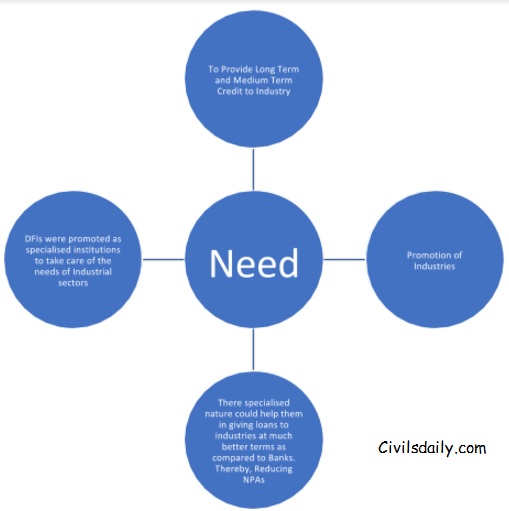
IFCI was the first industrial financing institution to be set up in India soon after independence. It was set up as a statutory corporation in July 1948 under the Industrial finance corporation of India Act 1948. It has now been converted into a joint-stock company with effect from July 1, 1993, under the Companies Act, 1956 because there was a high NPA increase and it was causing a huge loss to the government and now IFCI is a Non-banking finance company in the finance sector. IFCI is a company currently listed in NSE and BSE and currently has seven subsidiaries and one associate. Currently, it is allowed to access the capital markets only. IFCI has financed various projects such as airports, roads, telecom, power, real estate, manufacturing, services sector, and such other allied industries. During its financing term, it has financed mega-projects like Adani Mundra Ports, GMR Goa International Airport, Salasar Highways, NRSS Transmission, Raichur Power Corporation, and many more projects. The Government of India has placed a fund of Rs 200 crore with IFCI to promote entrepreneurship among the Scheduled Castes and to provide finance to these entrepreneurs at concessional rates.

OBJECTIVES OF IFCI

The main purpose or objective of IFCI is  “to make medium and long-term credits more readily available to industrial concerns in India, particularly in circumstances where normal banking accommodations are inappropriate or recourse to capital methods is impracticable”. IFCI provides financial assistance for the setting up of new ventures as well as for the modernization and expansion of existing enterprises. It gives priority to the dispersal of money to the industry, development of backward areas, etc. It pays special attention to the following types of projects:

  1. Projects located in backward areas.
  2. Projects based on indigenous technology.
  3. Projects likely to meet the growing demand for essential commodities.
  4. Projects promoted by new entrepreneurs and technocrats.
  5. Projects having potential for export and import substitution.
  6. Projects that provide plant and machinery, fertilizers, pesticides, and other inputs for agriculture.
-FROM CIVILDAILY.COM

FUNCTIONS OF IFCI

IFCI grants loans and advances to or subscribing to debentures of industrial concerns repayable within 25 years and these loans are guaranteed with the central government, loans raised from, or credit arrangements made by industrial concerns with any bank or financial institution outside India. The loans are raised by industrial concerns from the capital market, scheduled banks, or co-operatives, which are repayable within 25 years.IFCI underwrites the issue of shares sad debentures by industrial concerns that be disposed of within 7 years. IFCI provides guarantees for deferred payments for imports of capital goods manufactured in India.

IFCI acts as an agent of the central government and the world bank when loans are sanctioned by them to industrial concerns in India and subscribing directly to the shares of industrial concerns. IFCI also provides a guarantee in the foreign market for the purchase of capital goods. So, IFCI may act as a consultancy, in issue house, an underwriting agency, and a credit agency. IFCI is not merely a lending agency but has assumed the role of a development bank.

The story of a story: origin of rumour

People always try to create a story since it’s a story. Something which meant to happen will never be a story and something which happened will never become a story. Story has a separate value that lies within the truth of the incident.

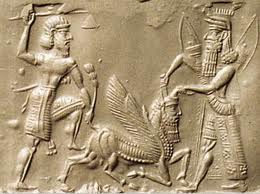
Gilgamesh (right) and Enkidu offending the gods by slaying the Bull of Heaven.

The greatest happening will never be treated as story because it’s already treated as something else known as history. The word “hiSTORY” itself has a story within it. The story is never a story when story is created as story. The story always lie in lies because the truth never unveils the story. The begging of the story is ending of the truth. The first story has no place in the history because it is told in the future.

Let me guess what you might guess,but neither Adam nor Eve’s did it. The first written story that has come down to us is “The Epic of Gilgamesh”. It is a mythologized account of an historical figure, Gilgamesh, a ruler of the Sumerian city-state of Uruk, believed to have ruled sometime between 2700-2500 BC.

Using the world’s most powerful tool namely the story people talk about it and make a way to gain popularity by faking it as reality. The story has a power to modify and manipulate the people to belive the story and make them to spread and thus develops the thread of stories and make it a reality. The story is always a story but it will not remain as a story. People believe the people not the story. People not only make the stories but aslo make them to believe it. People should stop believing in storytellers because they are stories.

The story is the origin of rumour. People became tired of believing the stories. So people started talking about people and eventually made stories out of people which turned into the people’s story. People never get bored to talk about people and hence stories. The people’s stories are framed as rumours. Rumour can be referred as a currently circulating story or report of uncertain or doubtful truth. No body like to gossip because it is not a rumour. Rumour spreads like tumour and we cannot control it once it’s out of the hand.

Humans always know what they do and always do what they not to. Humans talk to humans about humans. Talkin is good, gossiping is admirable, but spreading rumours is offensive. People should think before spreading about the news because after spreading there is no need to do it so. Think before you talk and don’t act after you did. Acting is so easy because that is what everyone does. The most difficult thing to do is to stop talking. People only stop talking is the moment before they start to talk. If you can’t stop talking then don’t start. If you start talking then don’t spread. Spreading the rumours is more dangerous than spreading a communicable disease like corona.

If we stop believing people then we stop believing stories. The deaf are more luckiest people because they don’t get a chance to listen to the conversations of wicked humans. Their thought process is free from thinking about the people who they might think might be thinking of them. Become deaf while hearing such rumours because it is the only way to do it.

PULSES- STRUCTURE, COMPOSITION AND PROCESSING

WHAT ARE PULSES?
Pulses are basically a fruit part of leguminous crops that are harvested solely for the seeds. Dried beans, lentils, and peas are the most common known and consumed pulses. Pulses do not include crops which are harvested green – these are the vegetable crops. Also excluded are those crops used mainly for oil extraction and leguminous crops that are exclusively used for sowing purposes.
Generally, all pulses have a similar structure, but differ in color, shape, size and thickness of the seed coat.
Mature seeds have three components – Seed Coat, Cotyledons and Embryo.
The seed coat or hull accounts for 7-15% of whole seed mass, cotyledons accounts for 85% of total seed and embryo for 1-4%.

STRUCTURE
The external structures of the seed are testa (i.e. seed coat), hilum, micropyle and raphe.
• The testa is the outer most part of the seed and covers almost all of the seed surface.
• The hilum is an oval scar on the seed coat where the seed was attached to the stalk.
• The micropyle is a small opening in the seed coat next to the hilum.
• The raphe is a ridge on the side of the hilum opposite to the micropyle.
When the seed coat is removed from the grain, the remaining part is the embryonic structure. The embryonic structure of the pulse consists of two cotyledons (or seed leaves) and a short axis above and below them These two cotyledons are not physically attach to each other except at the axis and a weak protection is provided by the seed coat to these cotyledons. Thus, the seed is usually vulnerable to breakage. The outermost layer of the seed coat is the cuticle, and it can be smooth or rough.
• Both the micropyle and the hilum are related to the permeability of the testa and to water absorption.

COMPOSITION
Carbohydrates – 55-65%
Proteins – 18-25%
Fat – 1-4%
Minerals – 1-3%
Fibers – 1-5%

PROCESSING OF PULSES

There are various steps involved in processing of pulses:

  1. SOAKING – Soaking in water is the first step in preparing pulses for consumption. It reduces the oligosaccharides of the raffinose family. It also reduces the amount of phytic acid in pulses.
  2. GERMINATION – It improves the nutritive value of food pulses. The ascorbic acid content of pulses increase manifold after 48 hours of germination. The germination process decreases or eliminates most of the anti nutritional and toxic factors in several pulses.
  3. DECORTICATION – It is a simple method to soak the seeds for a short time in water, the husk takes up more water than the seeds and may be easily separated by rubbing while still moist. In the alternative, the soaked grains may be dried and the husk is removed by pounding and winnowing. Roasting also renders the husk easier to separate.
  4. COOKING – It destroys the enzyme inhibitors and thus improves the nutritional quality of food pulses. It also improves the palatability of the pulse.
  5. FERMENTATION – This process increases the pulse digestibility, palatability and nutritive value. It also improves the availability of essential amino acids and thus, the nutritional quality of protein of the blend.
  6. PULSE MILLING – The removal of the outer husk and splitting the grain into two equal halves is known as milling of pulses.

Corona making destruction in India, Lockdown Tool re-generated.

In our country, the cases of Corona arises more than 2.25 lakh, with nearby 9,000 kills. The situation is drastically making the environment terrible. The show of Corona just go beyond the limit, and now it is going to make a socially transmitter in every state of India.

The state government are totally failed in handling it. Due to mis- management and lack of vigilant, the administration are totally missed out the control over Corona.Noew for this situation, LOCKDOWN is coming into action for controlling the no of cases. Maharashtra Government already decided to regulate it in a few weeks.

It is clearely determined that Unlocking of India is now giving the consequences of it. Lockdown is the someway the first and last tool that can slow down the speed of Corona and after 2.5 months lockdown period, we as a citizen really experience it. But Govt also have to make a plan for poor and labour class people for their survive in that period.

PRODUCTIVITY

Let’s define productivity. Productivity is a measure of efficiency of a person completing a task. We often assume that productivity means getting more things done each day. Wrong. Productivity is getting important things done consistently. And no matter what you are working on, there are only a few things that are truly important.

Being productive is about maintaining a steady, average speed on a few things, not maximum speed on everything.

Top Productivity Strategies
Eliminate Time Wasting Activities by Using the Eisenhower Box:

This simple decision matrix will help you take action, organize tasks, and get more done. The great thing about this matrix is that it can be used for broad productivity plans (“How should I spend my time each week?”) and for smaller, daily plans (“What should I do today?”).
Warren Buffett’s “2 List” Strategy: How to Maximize Your Focus and Master Your Priorities: This method comes from the famous investor Warren Buffett and uses a simple 3-step productivity strategy to help you determine your priorities and actions. You may find this method useful for making decisions and getting yourself to commit to doing one thing right away.
The Ivy Lee Method: The Daily Routine Experts Recommend for Peak Productivity: This productivity strategy is straightforward: Do the most important thing first each day. The Ivy Lee Method is a dead simple way to implement this strategy.
The 15-Minute Routine Anthony : There is one common problem with the approach of ranking your priorities and doing the most important thing first, though. After ranking your priorities for the day, if the number one task is a really big project then it can leave you feeling frustrated because it takes a long time to finish. Writer Anthony Trollope, however, developed a solution to this common problem.

Simple Ways to Be More Productive Every Day
Step 1: Manage your energy, not your time.
If you take a moment to think about it, you’ll probably realize that you are better at doing certain tasks at certain times. What type of energy do you have in the morning? Afternoon? Evening? Determine what tasks each energy level and time of day are best suited for.

Step 2: Prepare the night before.
If you only do one thing each day then spend a few minutes each night organizing your to–do list for tomorrow. When I do it right, I’ll outline the article I’m going to write the next day and develop a short list of the most important items for me to accomplish. It takes 10 minutes that night and saves 3 hours the next day.

Step 3: Don’t open email until noon.
Sounds simple. Nobody does it. It took me awhile to get over the urge to open my inbox, but eventually I realized that everything can wait a few hours. Nobody is going to email you about a true emergency (a death in the family, etc.), so leave your email alone for the first few hours of each day. Use the morning to do what’s important rather than responding to what is “urgent.”

Step 4: Turn your phone off and leave it in another room.
Or on your colleague’s desk. Or at the very least, put it somewhere that is out of sight. This eliminates the urge to check text messages, Facebook, Twitter, and so on. This simple strategy eliminates the likelihood of slipping into half–work where you waste time dividing your attention among meaningless tasks.

Step 5: Work in a cool place.
Have you ever noticed how you feel groggy and sluggish in a hot room? Turning the temperature down or moving to a cooler place is an easy way to focus your mind and body. (Hat tip to Michael Hyatt for this one.)

Step 6: Sit up or stand up.
When you sit hunched over, your chest is in a collapsed position and your diaphragm is pressing against the bottom of your lungs, which hinders your ability to breathe easily and deeply. Sit up straight or stand up and you’ll find that you can breathe easier and more fully. As a result, your brain will get more oxygen and you’ll be able to concentrate better.

Step 7: Develop a “pre–game routine” to start your day.
My morning routine starts by pouring a cold glass of water. Some people kick off their day with ten minutes of meditation. Similarly, you should have a sequence that starts your morning ritual. This tiny routine signals to your brain that it’s time to get into work mode or exercise mode or whatever mode you need to be in to accomplish your task. Additionally, a pre–game routine helps you overcome a lack of motivation and get things done even when you don’t feel like it.

You get one, precious life. How do you decide the best way to spend your time? Productivity gurus will often suggest that you focus on being effective rather than being efficient.

Efficiency is about getting more things done. Effectiveness is about getting the right things done. Peter Drucker, the well-known management consultant, once encapsulated the idea by writing, “There is nothing so useless as doing efficiently that which should not be done at all.”

In other words, making progress is not just about being productive. It’s about being productive on the right things.

But how do you decide what the “right things” are? One of the most trusted approaches is to use the Pareto Principle, which is more commonly known as the 80/20 Rule.

The 80/20 Rule states that, in any particular domain, a small number of things account for the majority of the results. For example, 80 percent of the land in Italy is owned by 20 percent of the people. Or, 75 percent of NBA championships are won by 20 percent of the teams. The numbers don’t have to add up to 100. The point is that the majority of the results are driven by a minority of causes.

Here’s another example:

Jeff Bezos, the founder of Amazon, worked on Wall Street and climbed the corporate ladder to become senior vice-president of a hedge fund before leaving it all in 1994 to start the company.

If Bezos had applied the 80/20 Rule in 1993 in an attempt to discover the most effective areas to focus on in his career, it is virtually impossible to imagine that founding an internet company would have been on the list. At that point in time, there is no doubt that the most effective path—whether measured by financial gain, social status, or otherwise—would have been the one where he continued his career in finance.

The 80/20 Rule is calculated and determined by your recent effectiveness. Whatever seems like the “highest value” use of your time in any given moment will be dependent on your previous skills and current opportunities.

The 80/20 Rule will help you find the useful things in your past and get more of them in the future. But if you don’t want your future to be more of your past, then you need a different approach.

The downside of being effective is that you often optimize for your past rather than for your future.

Here’s the good news: given enough practice and enough time, the thing that previously seemed ineffective can become very effective. You get good at what you practice.

The process of learning a new skill or starting a new company or taking on a new adventure of any sort will often appear to be an ineffective use of time at first. Compared to the other things you already know how to do, the new thing will seem like a waste of time. It will never win the 80/20 analysis.

Delhi’s mismanaged fight with Corona virus

Corona virus or as its scientifically referred as Covid-19 has brought the world to its knees. How it got here, who is responsible, when will the vaccine be created and many other questions regarding to it are up to debate. However, one thing that is definitely the need of the hour is to get this disease to a halt, to decrease the number of patients. What the world needs, is a game plan which can deliver successful results. We need to flatten the curve should we want to open up the country again. So far India hasn’t shown such promise, with the number of cases increasing every day, we see a sharp increase in the graph since the partial reopening. One such country that boasts xero cases is New Zealand.

New Zealand has been able to reduce its number of cases to the point where they were able to announce zero reported cases due to a number of reasons. They have a rather small population, only 5 million or so, which is much lesser than most of the worst hit nations, India included. Another major factor is the decisive and fast action that the New Zealand government took to ensure rapid containment of the disease. They also used stringent lockdown measures in order to decrease the rate of spread of infection. Their alertness and strict policies ensured that the disease slowed due to a near inexistent halt. However, they were lucky enough that their population was low, because for a country the size of India, with its population density its very difficult to pull this task off. What doesn’t help is the state and central government bickering in order to gain an upper hand and increase their public popularity. Many states aren’t yet equipped to handle the sudden increase of patients. In Delhi, patients have to wander from hospital to hospital for treatment of coronavirus. Some of those admitted to hospitals have also gone missing. In Covid-designated Lok Nayak Jai Prakash (LNJP) Hospital, the bodies could not be accounted for. Bodies of dead people are being piled up in hospitals such as state-run LNGP and centre-run Safdarjung hospital. With such ill-equipped state of various states across the country its hard not to feel disheartened and try to approach the courts. However, in many cases that too is no longer an option, as two advocates filed PILs in Delhi High court to ask for an extension of lockdown due to the increasing tread of number of cases. Both the PILs gave good points in favour of an extended lockdown in Delhi, as it would provide a much-needed breathing space to the facilities concerning the virus and also in some manner break the transmission cycle. The plea also gave forward estimates of one lakh COVID-19 cases in the national capital by end of June and the number would escalate to around 2.25 lakh by mid-July and over 5.5 lakh by July end which the Delhi government themselves admitted. Strict measures are of the utmost importance to stop the increasing graph. However, the Delhi HC declined the PILs and did not give reasons as to why they were not entertained.

What happens next is for all of us to see.