Coronavirus Symptoms in India: Diarrhea, Headache And Vomiting Could Also be Signs of Deadly COVID-19..

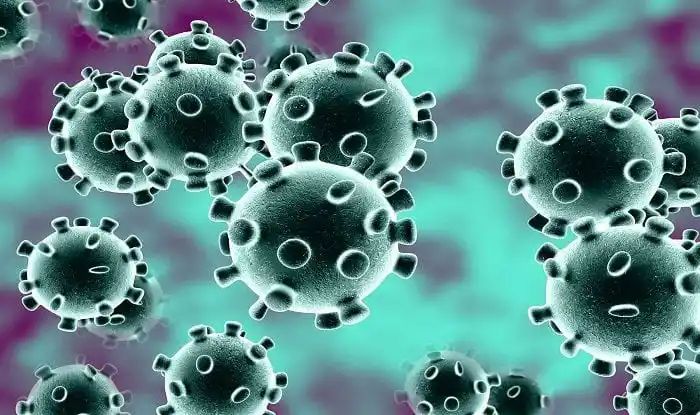
New Delhi: As the coronavirus has created havoc across the world, scientists at the Centre for Disease Control (CDC) and Prevention added three new triggers to the list of COVID-19 symptoms. Doctors at Chest and King Koti hospitals in Hyderabad have claimed that the new symptoms– Diarrhea, headache and vomiting are responsible for the delayed process of diagnosis and treatment.

“These cases are presented as caused due to food-poisoning and seasonal change leading to stomach upset. But it is the virus which is attacking gastro-intestinal track first instead of lungs.

It is presented in the form of severe diarrhoea and vomiting causing dehydration. This, in turn, leads to weakness, lower oxygen level, low BP, low sugar and sudden collapse”, leading portal Deccan Chronicle quoted a doctor as saying.

A few doctors underlined that the deadly virus is changing its genomic structure as per the season, in a bid to ensure its survival.

Earlier fever, cough and difficulty in breathing were said to be most common symptoms for the deadly virus. The list was updated in April and the CDC added chills, repeated shaking with chills, muscle pain, headache, sore throat and loss of taste or smell as the new symptoms.

Take a look at the coronavirus symptoms listed by the CDC so far:

Fever

Cough

Difficulty breathing

Fatigue

Muscle or body aches

Headache

New loss of taste or smell

Sore throat

Congestion or runny nose

Nausea or vomiting

Diarrhoea

Meanwhile, the World Health Organization (WHO) has reported a record hike in the number of global coronavirus cases, with the total rising by 212,326 in 24 hours in the highest single-day increase since COVID-19 broke out.

The biggest increase was reported in the Americas region with 129,772 new cases. Nearly half of the new cases were recorded in the US and Brazil, with 53,213 and 48,105 new infections, respectively.

After COVID19, China reports suspected bubonic plague case; alert sounded

At a time when the entire world is fighting against COVID19 pandemic, one suspected case of bubonic plague has been reported by a hospital in northern China’s Inner Mongolia.

The detection of the suspected case of bubonic plague has come to light in a statement issued by a local health commission on its website.

As per a media report, a third-level warning alert was issued on Sunday.

The warning period will reportedly be extended to the end of this year.

The report said Bayannaoer health commission warned that there are risks of human-to-human infection from the plague.

The health commission urged the people in the city to take precautions to avoid infection.

According to another report, the alert forbids the hunting and eating of animals that could carry plague and asks the public to report any suspected cases of plague or fever with no clear causes, and to report any sick or dead marmots.

Bubonic plague is a bacterial disease that is spread by fleas living on wild rodents such as marmots.

According to the World Health Organization (WHO), the plague can kill an adult in less than 24 hours if not treated in time

On July 1, state-run Xinhua news agency said two suspected cases of bubonic plague reported in Khovd province in western Mongolia.

Bubonic plague is one of three types of plague caused by bacterium Yersinia pestis.

If someone is affected by Bubonic plague, flu-like symptoms develop, within one to seven days after exposure to the bacteria.

Bubonic plague symptoms include headaches, fever, and vomiting.

Swollen and painful lymph nodes occur in the area closest to where the bacteria entered the skin.

Wuhan, the capital of China’s central Hubei province, was the epicenter of COVID19 epidemic.

SUPERVISION OF MANAGEMENT

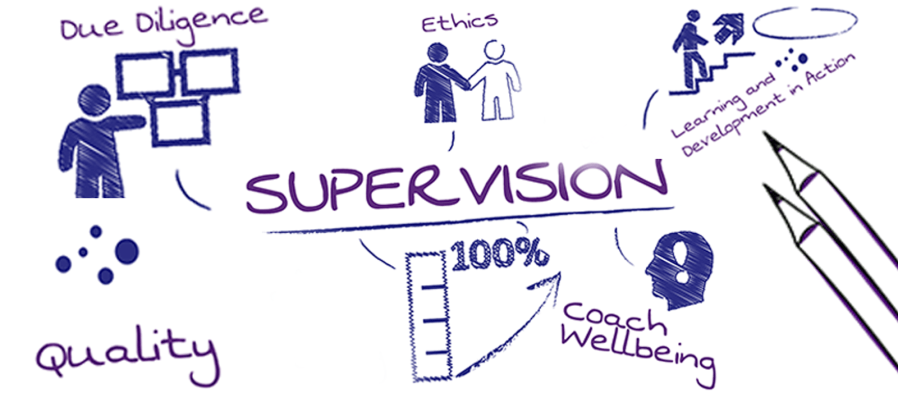
Supervision is an important aspect of the directing function and it involves the managerial task of observing the subordinates at work to ensure that they are working according to plans and policies of the organization, keeping the time schedule and supervision also includes helping subordinates to resolve their work problems. Managers at all level are in direct contact with subordinates and oversee their work performance and the top management supervises the work of middle-level managers, who in turn supervise the first-line managers or supervisors and the first-line managers are in direct contact with the operatives and thus, all levels of management are generally engaged in supervising the work of their immediate subordinates. According to R.C. Davis “Supervision is the function of assuring that the work is being done in accordance with the plan and instructions”. Supervision includes the following three elements:

  1. Commanding
  2. Guiding
  3. Controlling

This is the reason why, “Supervisors are known as a friend, philosopher, and Guide of workers”.

ROLE OF SUPERVISORS

Supervision has special importance only at the lower management level and the question which is now required to be discussed is to what role does a person working at the managerial level, the supervisor play in the organization.

1. Supervisor as a key man

 In every organization, the work of putting the plans into action is done by non-managerial staff who works under the guidance of a supervisor but however, at this level, even a little carelessness may cause the closure of the organization and that is why the supervision is referred to as the key man in the organization.

2. Supervision as a middle man

   In the organization, the supervisor plays the role of a middle man and he acts as a link between the higher-level managers and him workers, and his main job is to prepare a co-operative atmosphere among the two parties in order to facilitate the achievement of the goal of the organization.

3. Supervisor as a human relation specialist

A supervisor is likely to face a number of problems related to human behavior, for which one has to try and find out solutions and he can do so only if he is a human relation specialist.

FUNCTIONS OF SUPERVISOR

1. Planning the work or schedule activity

The supervisor is a low-level manager and he is required to study and analyze the work of his department and decide what, where, which, why, and by whom the work is to be performed. He has to chalk out daily and weekly program and he has also to arrange the raw materials, machines, tools, and equipment and the successful supervisor is an efficient planner.

2. Achieving the target

It is the most important duty of the supervisor to achieve the target prescribed for his department by the management and this can be achieved if the supervisor enables the best possible use of the available resources of the department towards the desired goal.

3. Enbaling standardized output through instruction and guidance

It is the supervisor, who ensures that the actual performance corresponds to the norms and standards laid by the management and the supervisor must satisfy himself as to the quality of the output and he should concentrate on both quality and quantity of goods. 

Opacity in PM Cares Fund putting lives at risk: Rahul Gandhi….

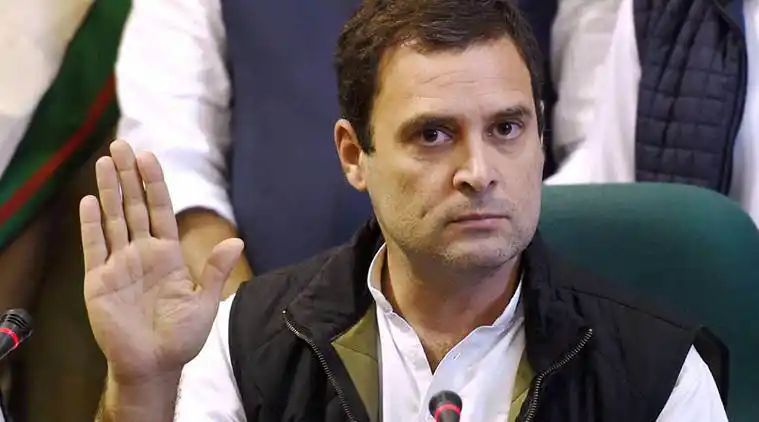
The Congress on Sunday accused the government of ‘wasting’ the lockdown by not ramping up health infrastructure and procuring ‘substandard’ ventilators that are crucial for critical COVID-19 patients, with Rahul Gandhi charging that ‘opacity’ in the PM Cares Fund is putting lives of Indians at risk.

Using the hashtag ‘BJPfailsCoronaFight’, Gandhi tweeted, ‘PMCares opacity is: 1. Putting Indian lives at risk. 2. Ensuring public money is used to buy sub-standard products.’

He also tagged a news report about a private firm providing substandard ventilators, procured using the PM Cares Fund.

The Prime Minister’s Citizen Assistance and Relief in Emergency Situations (PM CARES) Fund was set up in view of the COVID-19 pandemic.

Congress chief spokesperson Randeep Surjewala alleged a ‘scam’ in the purchase of ventilators.

‘The ‘Ventilators’ Scam! Out of Rs 2,000 crore allocated for 50,000 ventilators, only 1,340 ventilators delivered till 23rd June. No open tendering. Inferior Quality. Purchase Price of Rs 4 Lakh instead of quoted price of Rs 1.5 Lakh per ventilator,’ he said in a tweet.

Congress spokesperson Gaurav Vallabh questioned the government why only 1,340 ventilators could be procured till June 22 whereas it had placed order for 50,000 on March 31.

At a virtual press conference, he expressed concern over the rise in coronavirus infections in the country and accused the government of ‘wasting time’ by not utilising the lockdown period to ramp up the health infrastructure.

He said the actual procurement is against the claim made by BJP president J P Nadda that the country will have 60,000 ventilators by June-end.

Vallabh also alleged ‘confusion and delay’ in ordering ventilators, ‘financial impropriety’ and lack of transparency in spending PM Cares Fund, and supply of ‘substandard’ ventilators.

With a record single-day surge of 24,850 coronavirus infections and 613 fatalities, India’s COVID-19 case load zoomed to 6,73,165, while the death toll due to the disease climbed to 19,268 on Sunday, according to the Union health ministry.

With this, the country has recorded over 20,000 cases of the infection for the third consecutive day.

According to Johns Hopkins University, which has been compiling COVID-19 data from all over the world, India is the fourth worst-hit nation by the pandemic after the US, Brazil and Russia and at the eighth position in terms of the death toll due to the disease.

‘The way the corona cases in the country are rising, it is worrisome. I pray that the peak comes soon and this country is freed from the virus,’ the Congress spokesperson said.

‘Lockdown was a pause button and it should have been used to ramp up health infrastructure. But the government has wasted time and has indulged in mismanagement in procuring ventilators.

‘As per the government, only 1,340 ventilators have been procured till June 22, whereas the BJP chief claimed in a virtual rally that the country will have 60,000 ventilators by June-end. Why so few ventilators have been procured in more than 2.5 months. Who is responsible,’ he asked.

The Congress leader also said Rs 2,000 crore was allocated from the PM Cares Fund for procuring 50,000 ventilators with each costing around Rs 4 lakh, whereas a company is supplying ventilators to the government at Rs 1.5 lakh only.

‘Does the PM Cares order of 50,000 ventilators include 40,000 ordered by the government earlier. Where has the PM-CARES money gone and why is there an abnormal delay in procuring them…. Has PM Cares opted for open tendering to ensure transparency in government procurement. The PM Cares funds are also public funds,’ he said.

Alleging that substandard material and ventilators are being procured by the government from some private players, Vallabh asked, ‘Why the government is compromising with the health of people by bringing substandard material.’

He said in the interest of people of our country who are struggling to get out of these challenging and difficult times, the Congress would like to know the answers of questions which are directly related to the well being of citizens of our country.

The opposition leader said in the interest of people who are struggling for their health, the government should answer the questions raised by the Congress party.

He said neither is the government answering questions on the border tussle with China nor is it coming out with facts on the coronavirus pandemic.

‘The Prime Minister and the Health Minister should reply to these questions raised by us in the interest of the health of the people of the country,’ he said.

Vallabh hoped the government would look into the concerns raised by the party. ‘We can’t tolerate the iota of confusion, corruption and mistake at these critical times when the number of COVID-19 patients are every day breaking the record of the last day,’ he said.

COVID-19 vaccine: Britain nears deal for 60 million vaccine doses from Sanofi/GSK, says report…

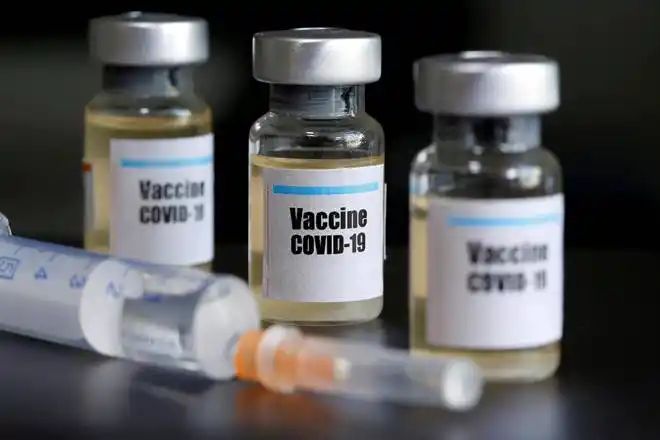
Britain is close to agreeing a 500 million pound ($624 million) supply deal with Sanofi and GlaxoSmithKline for 60 million doses of their potential COVID-19 vaccine, the Sunday Times reported.

The newspaper said that Britain was considering taking an option to buy the vaccine should it work in human trials, which are due to begin in September.

Sanofi was not immediately available to comment on the report, while a spokesman for GSK declined to comment.

A spokeswoman for Britain’s business ministry, which is handling Britain’s supply of potential COVID-19 vaccines, said talks were ongoing with different parties about access but did not confirm if the Sanofi/GSK project was among them.

‘The Government’s Vaccines Task Force is actively engaging with a wide range of companies both in the UK and abroad to negotiate access to vaccines,’ she said.

‘Appropriate announcements of these arrangements will be made as and when agreements with any of these companies are finalised and signed.’

Sanofi is working on two possible COVID-19 vaccines, one of which uses an adjuvant made by GSK to potentially boost its efficacy.

Its timeline for clinical trials is behind the likes of Moderna Inc, the University of Oxford in collaboration with AstraZeneca Plc, and an alliance of BioNTech and Pfizer Inc, whose projects all grabbed headlines by moving to human trials as early as March.

Sanofi and GSK have both said they are prioritising quality over speed in developing a vaccine.

The torture culture in India needs to end now

Just the individuals, including the Bar, the media, common society and understudy gatherings, can ascend against torment rehearses.

At this point, everybody has known about the deplorable passings of P. Jayaraj and J. Benicks, a dad child couple in a modest community in Thoothukudi. Jayaraj, 58, was captured by the police following a squabble with them on keeping his child’s cell phone shop open infringing upon lockdown rules. After Benicks was additionally arrested, the two were cruelly whipped to death.

Being seen as blameworthy of the ‘offense’ of keeping a shop open during the lockdown would have customarily conceded Jayaraj and Benicks a limit of just three months of detainment. The story, tragically, doesn’t end with the police alone. Before the two men kicked the bucket, the police looked for their remand, which an appointed authority sitting in a court complex precisely appears to have in truth, while never observing the two men, or appearing to scrutinize the reason for their remand. The arrangement of occasions, beginning with the barbarous lockdown requirement strategies and finishing up with the totally abhorrent and altogether avoidable passings, is an indication that we are living with a totally violated arrangement of law authorization.

Endemic to police culture

The Tamil Nadu Police has gained reputation throughout the decades for utilizing unbearable strategies for law implementation. During my residency as Chief Justice of the Madras High Court, a few cases in such manner were brought to the court. Be that as it may, this issue isn’t confined to Tamil Nadu alone. Torment is, truth be told, a vital piece of police culture everywhere throughout the nation. Without a doubt, it would not be out of order to contend that this culture in India today is suggestive of the mercilessness of the provincial police powers that we are so quick to overlook.

Official information additionally acknowledge that police torment is a reality, yet the nature of such information is consistently suspect. The inescapability of police torment is best comprehended in the convincing case found in reports made by NGOs and onlookers throughout the years, including by the Asian Center for Human Rights, Amnesty International and People’s Union for Democratic Rights.

The information on torment show that it isn’t just a fundamental piece of India’s policing society; in certain examinations, (for example, fear cases), it is treated as the focal point. The truth of the matter is that the current laws encourage such torment, for example, through the acceptability of admissions as proof under the Terrorist and Disruptive Activities (Prevention) Act and the Prevention of Terrorism Act, which proceeds repaired as the Maharashtra Control of Organized Crime Act. Shockingly, policing has additionally not mainstreamed the move up to more current innovations, similar to DNA examination, which can legitimately affect law authorization rehearses.

What some have named as India’s “open mystery” is tread lightly around in the worldwide field. The official situation on state-supported or state-embraced torment can be found in a 2017 statement by India’s then Attorney-General. In his initial discourse in Geneva at the nation’s all inclusive intermittent audit at the United Nations Human Rights Council, the Attorney-General summoned Gandhi and Buddha, expressing that “India… believe[s] in harmony, peacefulness and maintaining human nobility. In that capacity, the idea of torment is totally strange to our way of life and it has no spot in the administration of the country. ” This would be a typical case of bad faith, if at any point.

Without a doubt, the culpable officials in the Thoothukudi case are being indicted, and some pay will likewise be paid to the casualties’ families. Be that as it may, such piecemeal activity isn’t what is required. What we truly need is an acknowledgment that torment is endemic and a fundamental issue, and the main answer lies in severe legitimate structure that is lined up with and focused on the standards of worldwide law under the UN Convention Against Torture (UNCAT) to which India has been a signatory since 1997, and a watertight requirement instrument that dissuades such practices.

Indeed, even before India marked the UNCAT, our Supreme Court had achieved magnificent statute featuring the numerous issues with the nation’s torment culture. In Raghbir Singh v. Province of Haryana (1980), the Court was “profoundly upset by the wicked repeat of police torment bringing about a horrendous panic in the psyches of basic residents that their lives and freedom are under another danger when the watchmen of the law gore human rights to death. ” These assumptions were returned to in Francis Coralie Mullin v. Association Territory of Delhi (1981) and Sheela Barse v. Territory of Maharashtra (1987), where the Court denounced savagery and torment as violative of Article 21. This understanding of Article 21 is reliable with the standards contained in the UNCAT. The UNCAT intends to forestall torment and different demonstrations of savage, cruel, or corrupting treatment or discipline far and wide.

In spite of the fact that India marked the UNCAT in 1997, it is yet to confirm it. In 2010, a feeble Prevention of Torture Bill was passed by the Lok Sabha, and the Rajya Sabha later sent it to a Select Committee for audit in arrangement with the UNCAT. (I, as well, showed up before this council in 2010 after retirement from legal office). Be that as it may, the Committee’s suggested law, submitted in 2012, never fructified, as the then UPA government permitted the Bill to slip by. In 2016, Ashwani Kumar, a senior backer and previous Union Minister of Law, looked for the sanctioning of a torment law by means of a Supreme Court request. By 2017, the Law Commission had presented its 273rd report and a going with draft torment law. Be that as it may, the Supreme Court excused the request on grounds that the legislature can’t be constrained to make a law by mandamus; settlement sanction was a political choice; and that it was an approach matter. A second request on the issue documented by Mr. Kumar likewise met a similar destiny as the first.

This dismissal was an indication of the Supreme Court betraying its own sublime statute, and its endeavors to help law-production previously, regardless of whether in utilizing the Convention on the Elimination of all Forms of Discrimination Against Women to change the law around work environment inappropriate behavior; or standard global law in ecological cases; or the privilege to protection — this long and differed list is brilliant of a proactive Court that considers itself to be liable for pushing Parliament into authoritative activity.

EndTortureToday

Neither the Home Ministry nor this legislature is probably going to take up the torment law. To be sure, the way where the torment bill has been dealt with uncovers a double-crossing of the individuals of India by progressive governments. There have been open doors for a long time to sanction a law on torment, yet they have been contemplatively dodged. State conference likewise has no significance. It is clear that all legislatures appreciate the state of affairs, where the police are utilized as an apparatus for self-conservation. Any disequilibrium isn’t politically alluring.

As crippling as this may appear, everything isn’t lost. There is a lot of motivation around us. Days after George Floyd was killed in Minneapolis in the U. S. , when a cop held him in a 8-minute-46-second-strangle hold, the #BlackLivesMatter development rose, with numerous Indians joining in as well. The development, drove by the individuals, began a national discussion in the U. S. on policing, including radical changes, for example, defunding and incapacitating the police. Seemingly we need a people’s development at home too that will realize the important administrative changes that the Law Commission has proposed, and that urges organizations to #EndTortureToday. Just the individuals can ascend against these practices, similarly as they are doing in different pieces of the world. Furthermore, by individuals, I incorporate significant partners like the Bar, the media, common society and understudy gatherings. Each of these have significant tasks to carry out in realizing the change we need to see. It is simply a matter of who chooses to get the mantle first.


How to ensure Master Plan Implementation

 Implementation of plan proposals has direct implications on urban growth and development. For this, a vibrant, robust and coordinated network of institutions and information system is essential for full utilization of available financial and other resources judiciously. Besides, a set of tools are needed to implement plan properly. These tools include legal protection of plan, regulatory measures of land use controls, i.e., land and zoning regulations, building regulations etc., controls on development activities and capital enhancement programmes. Other subordinate tools like tax policy, township policy, land acquisition, institutional reorganization, incentives for public-private partnerships etc. must be attuned to the goals and objectives of the master plan. 

Further, the plan constantly need its translation into socio-economic and investment programmes. However, spatio-temporal variations in availability of planning tools and their limitations should be recognized during preparation of plan to ensure its successful implementation. For instance, land use zoning or compulsory purchase of land may well exist on paper or in legislation but are not effective in practice. Such exercise enhances effectiveness of master plans and their implementation on ground level. 

The execution of master plan is carried out either by municipality or corporation. For execution a team of experts in Engineering, Architecture, Public health, Sociology, Economics, Finance etc. headed by a Town Planner is required. After the master plan is accepted and approved by the concerned authority, the steps to be taken will be 

  1. To fix the broad policies in connection with various proposals. 
  2. To prepare the list of the urgent works according to their priorities. 
  3. To prepare the detailed estimates of work of top priority. 
  4. To prepare a financial programme. 

It takes many years to complete the works contemplated in the master plan. The cost is also very high amount. So the expenditure will have to be distributed over several years. Moreover, several modifications will have to be made as such no final estimate is made in the initial stage. The most important part of master plan is the reservation of land for road system, open spaces, and public amenities, which cannot be provided for at a later date. Once it is finalized, no building should be allowed to construct which will upset the street system. 

Following inputs from preceding stages and prevailing statutes, a seamless plan implementation schedule must be prepared for development plan. It should contain roles and responsibilities of all stakeholders, resource mobilization framework and phase‐wise implementation schedule for planned project activities. The key aspects to be covered in the Implementation framework should be in line with aims, objectives and prioritized projects and schemes. Implementation framework may include the following: 

  • Priorities of projects and research 
  • Phasing of developmental activities 
  • Proposal for land resource mobilization 
  • Investment strategy and promotion 
  • Institutional set‐up 

1) Priorities 

Classify various projects identified as a part of development proposals by priority as under 

  • Essentials (Top priority)
  • Necessary (2nd priority)
  • Acceptable and desirable (3rd priority) 
  • Deferrable (4th priority) 

Projects and research should be identified by phases and implementing agencies (including private and corporate sectors) to be given as per the institutional setup. 

2) Phasing 

Development plan should advisably be in phases of 5 years to coincide with the state five year plans. The targets set for each phase can be assessed as the mid‐term review against the achievements at the end of each phase. For greenfield area phasing could include a ‘zero’ period for approvals, institutional set‐up, initial land pooling and revisiting any strategy. 

3) Proposal for Land Resource Mobilization 

Implementation mechanism detailing approaches for land polling and development in lines with the suggested mechanism in the state perspective plan. 

4) Investment Strategy 

Proposals for fiscal resource mobilization including: 

  • Internal revenue 
  • Grants and aids 
  • Institutional finance 
  • Market borrowing 
  • Private sector finance 

5) Institutional Setup 

 To clearly provide Stakeholders’ role and responsibility and organisation chart.

“Agriculture” is the most healthful, most useful and most noble Employment of man.

Agriculture is the foundation of manufactures, since the productions of nature are the materials of art. -Edward Gibbon

Agriculture plays a critical role in the entire life of a given economy. Agriculture is the backbone of the economic system of a given country. In addition to providing food and raw material, agriculture also provides employment opportunities to very large percentage of the population. 

The main source livelihood of many people is agriculture. Approximately 70 % of the people directly rely on agriculture as a mean of living. This high percentage in agriculture is as a result of none development of non-agricultural activities to absorb the fast-growing population. However, most people in developed countries do not engage in agriculture.

Contribution to National revenue
Agriculture is the main source of national income for most developing countries. However, for the developed countries, agriculture contributes a smaller per cent age to their national income.

Agriculture was the first occupation of man, and as it embraces the whole earth, it is the foundation of all other industries.
Edward W. Stewart

Significance to the International Trade Agricultural products like sugar, tea, rice, spices, tobacco, coffee etc. constitute the major items of exports of countries that rely on agriculture. If there is smooth development practice of agriculture, imports are reduced while export increases considerably. This helps to reduce countries unfavorable balance of payments as well as saving foreign exchange. This amount may be well used to import other essential inputs, machinery, raw-material, and other infrastructure that is helpful for the support of country’s economic development.

The agriculture we seek will act like an ecosystem, feature material recycling and run on the contemporary sunlight of our star.
-Wes Jackson


The growth of agricultural sector contributes to marketable surplus. Many people engage in manufacturing, mining as well as other non- agricultural sector as the nation develops. All these individuals rely on food production that they might meet from the nation’s marketable surplus. As agricultural sector development takes place, production increases and this leads to expansion of marketable surplus. This may be exported to other nations.
The main source of raw materials to major industries such as cotton and jute fabric, sugar, tobacco, edible as well as non-edible oils is agriculture. Moreover, many other industries such as processing of fruits as well as vegetables and rice husking get their raw material mainly from agriculture.

Agriculture is the great art of directing and aiding nature in the performance of those functions which were designed by Providence for the comfort and subsistence of man.
Lewis Cass

Since agriculture employs many people it contributes to economic development. As a result, the national income level as well as people’s standard of living is improved. The fast rate of development in agriculture sector offers progressive outlook as well as increased motivation for development. Hence, it aids to create good atmosphere for overall economic development of a country. Therefore, economic development relies on the agricultural growth rate.

An agricultural life is one eminently calculated for human happiness and human virtue.
C. L. ALLEN

From the twentieth century, intensive agriculture increased productivity. It substituted synthetic fertilizers and pesticides for labor, but caused increased water pollution, and often involved farm subsidies. In recent years there has been a backlash against the environmental effects of conventional agriculture, resulting in the organicregenerative, and sustainable agriculture movements.

Agriculture for an honorable and high-minded man, is the best of all occupations or arts by which men procure the means of living.
-Xenophon

In spite of many commercial options coming up, many rely on agriculture for their income. Agriculture is a nature-friendly and most peaceful method of livelihood. It is a very reliable source of livelihood for mankind and also one of the honest sources of incomes. Many people from developing nations rely on agriculture for livelihood. Some people involved in other business or jobs still have agriculture as a side business. Agriculture does not limit to cultivation and farming alone. It also extends to dairy, poultry, fisheries, sericulture, beekeeping (honey insects), etc.

These are also dependent on agriculture cultivation in some or other way. Farming becomes more profitable when combined with these alternative methods.

Agriculture, manufactures, commerce and navigation, the four pillars of our prosperity, are the most thriving when left most free to individual enterprise.     

Thomas Jefferson

IQ tests and their history

Intelligence, it is what set us apart from our primate ancestors. Human evolution led to the emergence of anatomically modern humans, beginning with the evolutionary history of primates—in particular genus Homo—and leading to the emergence of Homo sapiens as a distinct species of the hominid family, the great apes. Now since intelligence is a major factor in the distinction of humans from all other animals, we must understand what intelligence is. Intelligence has been defined in many ways: the capacity for logic, understanding, self-awareness, learning, emotional knowledge, reasoning, planning, creativity, critical thinking, and problem-solving. And in order to measure a person’s intelligence we need a method to scientifically determine the amount of intelligence factor a person has which is usually measured in terms of IQ.

Photo by Startup Stock Photos on Pexels.com

In 1905, psychologists Alfred Binet and Théodore Simon designed a test for children who were struggling in school in France. Designed to determine which children required individualized attention, their method formed the basis of the modern IQ test. Beginning in the late 19th century, researchers hypothesized that cognitive abilities like verbal reasoning, working memory and visual-spatial skills reflected an underlying general intelligence or g factor. So, Simone and Binet designed a battery of tests to measure each of these abilities, and combine the results for a single score. Questions were made for each age group and a child’s score reflected how they performed relative to others in the same age group. Today a score of 100 is the average of a sample population, with 68% scoring within a 15-point radius. However, both then and now there is no single agreed upon definition of general intelligence. Which left the door open for people to use the test in service of their own preconceived assumptions about intelligence. What started as a way to identify those who needed academic help, soon became a tool to sort people in other ways, often in service of deeply flawed ideologies. One of the first large scale implementations occurred in the US during WWI when the military used IQ tests to sort recruits and screen them for officer training. However, that time people believed in Eugenics, the idea that desirable and undesirable genetic traits could and should be controlled in humans through selective breeding. This was a deeply flawed idea as it linked intelligence as not only fixed and inherited but linked to a certain race. This belief and results from IQ tests gave forth a wrong theory that certain races were superior than others, thus creating an erroneous intelligence hierarchy of ethnic groups. This not only influenced science but also policies in many countries. In 1924 Virginia ordered forced sterilization of anyone with low IQ scores, a decision that the supreme court of US upheld. We all know what happened in Nazi Germany due to such prevalent ideals, authorization of murder of children based on low IQ scores. Following the Holocaust and the Civil rights movement, the discriminatory usage of IQ tests was questioned on moral and scientific grounds. Scientists began gathering evidence as to how our environment impacts our IQ.

Today, IQ tests employ many similar design elements and types of questions as the early tests, though there are better techniques to identify potential bias in the tests. And due to many failed applications in the past they are no longer used to diagnose psychiatric conditions. And psychologists still use IQ tests to identify intellectual disability which can be used to determine educational support, job training and assisted living. As Alan Alda said “Be as smart as you can, but remember that it is always better to be wise than to be smart”.