Internet

We live in the age of the internet. Also, it has become an important part of our life that we can’t live without it. Besides, the internet is an invention of high-end science and modern technology . Apart from that, we are connected to internet 24×7. Also, we can send big and small messages and information faster than ever. In this essay on the Internet, we are going to discuss various things related to the internet.

Reach of Internet

It is very difficult to estimate the area that the internet cover. Also, every second million people remain connected to it with any problem or issue. Apart from that, just like all the things the internet also has some good and bad effect on the life of people. So the first thing which we have to do is learn about the good and bad effect of the internet. Good effects of the internet mean all those things that the internet make possible. Also, these things make our life easier and safer. Bad effects of the internet mean all those things that we can no longer do because of the internet. Also, these things cause trouble for oneself and others too You can access in any corner of the world. Also, it is very easy to use and manage. In today’s world, we cannot imagine our life without it.

Uses Of Internet

From the time it first came into existence until now the internet has completed a long journey. Also, during this journey, the internet has adopted many things and became more user-friendly and interactive. Besides, every big and small things are available on internet and article or material that you require can be obtainable from internet.Tim Berners-Lee can be called one of the main father of internet as he invented/discovered the www(world wide web). which is used on every website. Also, there are millions of pages and website on the internet that it will take you years to go through all of them.

The Internet can be used to do different things like you can learn, teach, research, write, share, receive, e mail, explore, and surf the internet.

Convenience Due To Internet

Because of internet, our lives have become more convenient as compared to the times when we don’t have internet. Earlier, we have to stand in queues to send mails (letters), for withdrawing or depositing money, to book tickets, etc. but after the dawn of the internet, all these things become quite easy. Also, we do not have to waste our precious time standing in queues. Also, the internet has contributed a lot to the environment as much of the offices (government and private), school and colleges have become digital that saves countless paper.

Although, there is no doubt that the internet had made our life easier and convenient but we can’t leave the fact that it has caused many bigger problems in the past. And with the speed, we are becoming addict to it a day in will come when it will become our basic necessity..I would like to say that the internet is very important in todays modern world and nothing can be done without internet

IT’S ALL ABOUT TECHNOLOGY

Welcome everyone today my topic is about Technology. So, you can see that now technology became a daily part of our life. Technology has changed our lives in many ways, like development in economics, or helps us to gain knowledge on machines or anything. As technology has advantages but also have disadvantaged to like influencing the value of society or deplete natural resources. Like it said, everything in the world has advantages and disadvantages likewise technology comforts our life, but internally it’s also causing disadvantage to us.

So what is the exact definition for technology? So technology is nothing but the sum of techniques used for production or services for our development. In current times we people produce desired products to solve our problems or fulfill the need for ourselves. The main problem caused by technology is unemployment. As we know that in every company and factory or any workplace the machines have been set up to finish the work fast and easy, so by using machines

the labor is having many problems so this leading to unemployment. Also, because of technology, there are social sites which are a very common problem in youngsters nowadays as it is increasing loneliness and depression among themselves. However, we should always remember that innovations had been made for our help not to make victims of technology. It always depends on how do we are going to use technology. The way we use the technology we get benefits in that way.

So how we should use the technology that will not harm us? There are some thoughts on how we can use technology without hurting ourselves or others.

First, the main point and most important point is we should use the right technology because this decision impact whether technology is a blessing or a curse to our productivity.

The second way is using automation tools as it can reduce more than half of our efforts that we are doing manually.

Third use the technology when you need it most because if we always use technology we will get dependent on it, and we will always seek help from technology.

Fourth point use your calendar app for organizing your time of using technology. For example, if I am social sites most of the time then, I should reduce the use of social sites as it has a slow and severe impact.

Hence, there are many details but these details are most valuable.

In the last, I want to say that it depends on us do we need to depend on technology or not. On the one hand, if it can save a life it can also take life. Thank you for reading my article I hope to find it useful and enjoyed it.

Please let me know in the comment what you think about technology. Thank you and have a nice day.

Breaking News: UP gangster Vikas Dubey arrested from Mahakal temple in Ujjain, Madhya pradesh.

Uttar Pradesh gangster Vikas Dubey, accused of killing eight policemen last week, was arrested from a temple in Madhya Pradesh after a nearly week-long chase involving the police across three states. Vikas Dubey was caught in Ujjain around the same time two of his aides were killed in separate encounters in UP. His closest aide, Aman Dubey, was killed yesterday.

Bihar police congratulated MP police for arresting Vikas Dubey.

Vikas Dubey was spotted at Mahakal temple around 8 am, according to the police. He was buying prayer offerings to take inside the temple when the shopkeeper recognized him and reportedly alerted security guards. When he emerged from the temple, the guards questioned him.

He first produced a fake ID card of a much younger man. When prodded further, he hit out at the guards, who dragged him to the police station.

Main Vikas Dubey hoon, Kanpur wala,” he shouted out, when he was beaten while being taken to the police van.

“It is a big success for the police, Vikas Dubey is a cruel killer. The entire Madhya Pradesh police force was on alert. He has been arrested from Ujjain Mahakal temple. We have informed Uttar Pradesh Police,” said Narottam Mishra, Madhya Pradesh Minister.

Dubey – charged in 60 criminal cases including murder, kidnapping, extortion and rioting – had allegedly been alerted to the raid by local policemen and had set up an ambush. When the policemen reached the village, Dubey and his men, armed with AK-47s, fired from rooftops.

UP police is informed about the arrest. However many say that it was planned surrender by Vikas Dubey who allegedly went to temple and made people see him. It is very positive for the state though.

Chess – the game that spanned millennia

Chess, a brilliant pass time to hone and develop out mental acumen, has been in our lives for more than a millennium. Chess is a two-player strategy board game played on a checkered board with 64 squares arranged in an 8×8 grid. Played by millions of people worldwide. However, it was not always the same kind of game that it is now, it has evolved immensely from the time that it was made. Over roughly one and a half millennia of its existence, chess has become a tool of military strategy, a metaphor for human affairs and a benchmark of genius. While our earliest records of chess are from the 7th century, legend has it that it was actually originated at sometime in the 6th century. So how did it start and evolve to the game enjoyed by so many today.

Photo by George Becker on Pexels.com

Supposedly when the youngest prince of the Gupta empire was killed in battle, his brother devised a way to represent the scene to his grieving mother. Set on an 8×8 ashtapada board used for other popular pastimes, a new game emerged with two new features, different rules for moving different pieces on the board and a single king whose fate decided the outcome of the game. The game originally called chaturanga, a Sanskrit word for four divisions was soon popularised and spread to Sassanid Persia and acquired its current name and terminology – “chess” derived from “shah” meaning “king” and “checkmate” from “shah mat” which means “the king is helpless”. After the 7th century Islamic conquest of Persia, chess got introduced to the Arab world. Thus, transcending its role as a tactical simulation and becoming a rich source of poetic imagery. Diplomats and courtiers used chess terms to describe political power, even ruling caliphs became avid players and historian al-Mas’udi considered the game a testament to human free will compared to the games of chance. Medieval trade along the silk road carried the game to east and south east Asia, where many local variants developed. In china, chess pieces were placed at intersections of board squares rather than inside them as in the native strategy game of Go. In the Mongol times, chess saw an 11×10 board with safe square called citadels while in japan shogi developed where captured pieces could be used by an opposing player. But it was really in Europe that the game acquired its modern form. By 1000 AD, the game had become a part of courtly education with chess becoming an allegory for different classes with different functions. At the same time church remained suspicious of games. Moralists cautioned against devoting too much time to it with chess even briefly being banned in France. Yet the game proliferated and the 15th century saw it cohering into the form we know today. With the enlightenment era, the game moved from royal courts to coffee houses. Chess was now seen as an expression for creativity, encouraging bold moves and dramatic plays. This “romantic” style of play reached its peak in the immortal game of 1851 which is hailed as the most dramatic and game so far.  With the emergence of formal competitive play in the 19th century, it saw the dramatic flair being squashed under the strategic calculation that the era had brought forth. This chess took on a new geopolitical stance with the Soviet Union dominating the rest of the century by devoting great resources to cultivate chess talent. But a player emerged who truly upset the Russian dominance and it wasn’t even human. The IBM computer called Deep blue triumphed over Garry Kasparov in 1997 and hailed the emergence of chess software with AI so advanced as to beat human players with ease.

However, these machines are the products of human ingenuity and the same ingenuity can perhaps help us get out of the apparent checkmate.

The city of lights

Welcome everyone today, we are going to know about the City of light. Do you have any guess about which city I am going to tell you about, well some of you have guessed right? The city of light is nor other than Paris.

It is the capital and most famous city in France. Paris is referred to as the City of light because, at the Age of Enlightenment, Paris was the one is first to use gas street lighting on a large scale on its masterpieces and streets. Paris is the most visited place in the world of course who doesn’t want to go to Paris. I love traveling, but I had never visited out of India if I would get to chance to visit Paris I would like to go to see the Eiffel Tower because this is the wish that I want to fulfill. I know some of you who are reading this article had visited Paris and some have not, so don’t get upset if you have not visited Paris one day will come you will surely visit Paris. So, I hope your wish come true.

You all have heard there is a bridge where the couples go and lock in the bridge, and throw the key into the water, well I feel that is the most romantic places in Paris. Recently the love locks have been removed from the bridge for some safety reasons.

I hope you enjoyed this article, let me know have you attended Paris or not and what do you think about Paris.

Thank you for reading my article and have a nice day.

God help those who help themselves.

God indeed has provided everything in the universe for our life and comfort. One has only to reach out and enjoy the spendlor so abundantly bestowed for us.

According to Hindu mythology, Karma or deed is of supreme importance and in the purpose of life. Lord Krishna in the Bhagwad Gita, extolling the virtue of ‘Karma’ inspired Arjun, to fight for his right, for that was his Karma as a Kshatriya. According to The Gita one should continue to do Karma (duty) and not wait for reward, for it is bound to follow sooner or later.

Undoubtedly ‘God help those who help themselves’, for one activities nothing without effort. We must therefore strive for our own betterment.

E-commerce sites to display country of origin on products to promote made in India and Atmanirbhar Bharat.

New Delhi: The government had taken yet another big step after ban on 59 Chinese apps to make it compulsory for E-commerce sites to display ‘country of origin’ tag so that users can identify Indian products and help make Atmanirbhar Bharat a success. The online shopping sites have agreed with government to display’country of origin’ and are cooperating with government.

The Government e-Marketplace (GeM) portal, which is used by government departments for public procurement, on Tuesday made it mandatory for sellers to enter the “country of origin” while registering all new products.

The Department for Promotion of Industry and Internal Trade (DPIIT) asked e-commerce players including Amazon and Flipkart to display mention ”country of origin” on each product sold at their platforms.

While GeM says it has taken this step to promote ‘Make in India’ and ‘Aatmanirbhar Bharat’ (Self-reliant India), the move also comes days after a deadly border clash between Indian and Chinese soldiers. Sub-standard and cheap Chinese products often make their way into the Indian market, more so through online platforms. The government has ramped up efforts to curb the inflows of such low-grade imports and their consumption here.

The government has taken such steps to reduce dominance of Chinese products in Indian market and make India self-reliant country. We must support the efforts of government and use as much as possible made in India products.

Child rights in India


Children are the most important assets of the nation because they shape the destiny of the nation as future citizens. The children have a right to protection against any kind of abuse, trafficking and exploitation. Children are easily gullible, vulnerable to abuse and exploited by the vested interests since they are tender in their age. Children are abused by their parents, guardians, teachers and other forces within and outside the family. The UN Convention on the Rights of the Child called upon the States Parties to take appropriate educational, social, legislative and administrative measures to protect the child from all forms of abuse, maltreatment and exploitation. The national governments have also provided various constitutional provisions, opportunities and facilities to safeguard the interest of children and facilitate their integrated development.

Millions of children are not fully protected. Many of them deal with violence, abuse, neglect, exploitation, exclusion and/or discrimination every day. Such violations limit their chances of surviving, growing, developing and pursuing their dreams.

Children rights under the constitution

Fundamental Rights:


Fundamental means Basic. All rights that are basic to every human being has been listed by the Constitution Under Fundamental Rights:

Right to equality


Right to Equality Before Law (Article 14)

Right against discrimination


Article 15(3) requires the state to make special provisions for children.

Right to education


Article 21-A of the constitution states that “right to education-the state shall
provide free and compulsory education to all children of the age of six to fourteen years in such a manner as the state may, by law determine.”

The Supreme Court in its liberal interpretation of life and liberty as under
Article 21 held that the term liberty not only includes liberty but also
includes livelihood but also the right of human beings to live with dignity and that also includes the right to education, and therefore, right to
education is a fundamental right under the constitution. The case of Mohini
Jain case came to be fortified by the supreme courts subsequent
constitution bench of Unnikrishnan’s case, which held that right to education can be restricted to primary educational level and not to higher secondary level.

Article 45 Provision for early childhood care and education to children below the age of six years-

The State shall endeavor to provide early childhood care and education for
all children until they complete the age of six years.

This article has been substituted by the Constitution (eighty-sixth amendment) act, 2002 which received assent of the President on Dec. 12 2002. By this amendment a new Article 21-A providing for right to education has also been inserted. This is in keeping with the hope expressed in the Supreme Court in Unnikrishnan and Mohini Jain that conversion of the State’s obligation under Article 45 into a fundamental right would help achieve the goal at a faster speed. This is now also a
fundamental duty of parents and guardians to educate such children as
provided in clause (k) of Article 51-A.

Article 45 states the “provision for free and compulsory education for
children- the State shall endeavor to provide, within a period of ten years
from the commencement of the Constitution, for free and compulsory
education for all children until they complete the age of fourteen years”. However this goal has not been achieved even after fifty years of the commencement of the Constitution. It was held that there was nothing to prevent the State from discharging that solemn obligation through the government and aided the schools, and Article 45 does not require the obligation to be discharged at the expense of minority communities. It was held in the case of Mohini Jain v. state of Karnataka and others.

The directive principles which are fundamental in the governance of the country cannot be isolated from the fundamental rights guaranteed under part III. These principles, have to be read into the fundamental rights. Both
are supplementary to each other. The state is under the constitutional
mandate to create conditions in which the fundamental rights guaranteed to
the individuals under part III could be enjoyed by all. Without making “right to education” under Art.41 of the constitution a reality the fundamental rights under Chapter III shall remain beyond the reach of large majority which is illiterate.

“Right to life” is the compendious expression for all those rights which the courts must enforce because they are basic to the dignified enjoyment of
life. It extends to the full range of conduct which the individual is free to
pursue. The right to education flows directly from right to life.

Rights against exploitation
Article 23 states that “prohibition of traffic in human beings and forced labour.-

(1)Traffic in human beings and beggar and other similar forms of forced labour are prohibited and any contravention of this provision shall be an offence punishable in accordance with law.

(2)Nothing in this Article shall prevent the state from imposing compulsory service for public purposes, and in imposing such service the State shall
not make any discrimination on grounds only of religion, race, caste or
class or any of them.

Traffic in human beings means to deal in men and women like goods, such as or to sell or let or otherwise dispose them of. It would include traffic in
women and children for immoral or other purposes. The immoral traffic
(prevention) Act, 1956 is a law made by parliament under Article 35 of the
constitution for the purpose of punishing acts which result in traffic in human beings.

In pursuance of Article 23 the bonded labour system has also been abolished and declared illegal by the bonded labour system (abolition) act, 1976. To ask a person to work against his will and not provide him remuneration can be a breach under Article 23 of the Constitution. In no circumstances can a man be required to work against is will.

The Indian penal code and the criminal procedure code have separate provisions prohibiting traffic in human beings. According to the penal code, selling, letting for hire or otherwise disposing of, or buying, or hiring or otherwise obtaining possession of any girl under the age of 18 years for the purpose of prostitution or for any unlawful or immoral purposes is also an offence. In 1958, by a central enactment organized prostitution as a profession has been abolished all over the country and the running of brothels has been made an offence.

Article 24-“prohibition of employment of children in factories,etc- No child below the age of fourteen years shall be employed to work in any factory or mine or be engaged in any hazardous employment”

To Enforce Fundamental Rights :

•File a petition in Supreme Court
•Petition in the High Court
•Writing a letter to the High Court or Supreme Court
•Asking someone to file a petition on our behalf
•Write a letter on our behalf if one is unable to (as may be the case with children)

Rights under directive principles

Right to be protected from being abused and forced by economic
necessity to enter occupations unsuited to their age or strength (Article
39(e))
Right to equal opportunities and facilities to develop in a healthy manner and in conditions of freedom and dignity and guaranteed protection of childhood and youth against exploitation and against moral and material abandonment (Article 39 (f))

Article 45. The State shall endeavour to provide, within a period of ten
years from the commencement of this Constitution, for free and
compulsory education for all children until they complete the age of
fourteen years.

• Right to early childhood care and education to all children until they
complete the age of six years (Article 45)

Article 46. Right of weaker sections of the people to be protected
from social injustice and all forms of exploitation

Article 47. Right to nutrition and standard of living and improved
public health

Fundamental Duties Article 51

who is a parent or guardian to provide opportunities for education to
his child or, as the case may be, ward between the age of six and
fourteen years.

JUVENILE JUSTICE ACT


The Juvenile Justice (Care and Protection of Children) Act, 2000 is the primary legal framework for juvenile justice in India. The Act provides for a special approach towards the prevention and treatment of juvenile delinquency and provides a framework for the protection, treatment and rehabilitation of children in the purview of the juvenile justice system. This law, brought in compliance of the 1989 UN Convention on the Rights of the Child (UNCRC), repealed the earlier Juvenile Justice Act of 1986 after India signed and ratified the UNCRC in 1992. This Act has been further amended in 2006 and 2010.
The Act is considered to be extremely progressive legislation and the Model Rules 2007 have further added to the effectiveness of this welfare legislation. However, the implementation is a very serious concern even in 2013 and the Supreme Court of India is constantly looking into the implementation of this law in Sampurna Behrua V. Union of India and Bachpan Bachao Andolan V. Union of India. In addition to the Supreme Court, the Bombay and Allahabad High Courts are also monitoring implementation of the Act in judicial proceedings. In order to upgrade the Juvenile Justice Administration System, the Government of India launched the Integrated Child Protection Scheme (ICPS) in 2009-10 whereby financial allocations have been increased and various existing schemes have been merged under one scheme.

The rights of a delinquent child


There is to be a sharp and basic focus on the procedural safeguards that guarantee a fair and just trial of every juvenile before a competent authority. Basic procedural safeguards such as the presumption of innocence, the right to be notified of the charges, the right to remain silent, the right to council. The right to the presence of parents, etc.. shall be guaranteed at all stage.

As justice Bhagwati has rightly quoted “the child is a soul with a being, a nature and capacities of its own, who must be helped to find them, to grow into the maturity, into fullness on physical and vital energy and most breadth, depth and height of its emotional, intellectual and spiritual being”[13]. Children require guidance and support. They do not know the technicalities of life. It is for citizens like us to take their hand and show them the right way. The social workers play an important role in eradicating social evils and thus they is need for stricter analysis on their qualification and professional capacity.


JAIPUR: -THE PINK CITY

Hello everyone Today, I am going to discuss the Pink City. From the title, you all must have known about which city I am going to tell. The city is nor other than Jaipur-The Pink City.

Jaipur is known as the Pink City the largest city of Rajasthan in India. Jaipur was founded in 1727, by the Rajput ruler Jai Singh II, who was the ruler of Amer. The city name happened by the Rajput ruler Jai Singh II. Jaipur is known as Pink City because of the dominant color scheme of its building. It is a particularly popular tourist section. Jaipur has grand places and haveli which is surrounded by mighty fortresses which make Jaipur a welcome respite from high rise malls and urban living. Jaipur is the most famous tourist destination forming a part of the Golden Triangle.

Jaipur is also popular for its ancient beauty which is enclosed by colorful markets, and their events. In Jaipur, you can find fascinating city scape which is completely covered in a smooth, glowing shade of blush, and that depends on the sunset of each evening.

Let see the most famous places in Jaipur City to witness the beauty of the city.

1.Hawa Mahal:- The most romantic Pink fortresses was originally built in 1799 for the ladies of the royal household. It is made up of 152 windows into rounded balconies which showing the beauty of Rajput architecture. In every sunset, it displays the statues the relics, and other historical memorials.

2.Jantar Mantar:- Jantar Mantar is one of the most lookout located in the heart of Jaipur. Maharaja Sawai Jai Singh II executed the whole idea of making Jantar Mantar.

3.City palace:- City palace is the centerpiece of Jaipur city and the heart of founder Jai Singh II leave. City palace is the combination of Rajput, Mughal and European styles which are made with highly trained architectural care. It showcases the historical monuments and art from the city and region.

4.Albert Hall Museum:- It is an industrial Art Exhibition which is located near the city center. This museum presents the history and arts of Jaipur and Rajasthan.

If you all like this article let me know. Let me know in the comments what do you think about Jaipur!

Thank you for reading this and have a nice day!

Chinas President Xi Jinping loses biggest Bazar, PLA faith in border row with India

The latest satellite pictures from the Line of Actual Control (LAC) show that China has vacated the Galwan Valley area, where on June 15 night the Indian Army and PLA troops had a violent scuffle. The Chinese army has also uprooted its tents, moved trucks, and other military equipment from the spot but at what cost. This DNA report will throw a light on China’s misadventure that cost dearly to President Xi Jinping, whose expansionist agenda has also been exposed.

In the border row with India, China appears to have lost on several other fronts, and President Xi Jinping’s vaulting ambition to emerge as the most powerful global leader has also been hit. On the contrary, Indian Prime Minister Narendra’s shrewd diplomacy has earned global respect. He is being seen as the leader who compelled China to come to a negotiation table, agreeing to contribute to the disengagement process in a positive way. 

The DNA analysis has summarised China’s loss in the following points:null

1. For the first time after 1979, China lost its troops in the border clashes

2. China has also lost a big market like India in the wake of the border dispute

3. Chinese companies will no longer be able to invest in Indian firms.

4. Chinese deception has broken India’s trust forever 

5. China has suffered a diplomatic debacle in the world, as no big country is currently standing with it

If countries like India, America, Europe, and China’s neighbouring countries completely boycott it then the Communist nation, whose factories are dependent on these big global markets, will be left with the support of countries like Pakistan and North Korea and will meet the similar fate in all likelihood. 

Notably, the withdrawal of Chinese troops is based on the available photos received through American satellite. One photo is from June 28, showing the PLA position at the Galwan Valley and the second picture is of July 6 in which the whole area is seen empty. 

On Monday, there were reports that the Chinese Army was moving its military equipment a few kilometers behind from the LAC in the ​​Galwan Valley, Hot Springs, and Gogra. It was, however, stated that the Indian Army will verify it for 72 hours because of the earlier breach of trust by China. The new satellite photos have been released by America’s Space Infrastructure and Earth Intelligence Company Maxar Technologies. 

Although China has lifted its tents, military and military equipment from the LAC, its propaganda machinery is very active in launching campaign against India’s aggressiveness on the border while showing China merely protecting its sovereignty.

A programme on China’s state-run TV channel CCTV Four on Monday telecasted as to how China protected its sovereignty in the Galwan Valley and how the situation has been stabilized.

Through this CCTV Four channel, one of the six TV channels of China Central Television, China wants to tell its people that it has responded to India’s aggressiveness on the border and also forced India to retreat. Apart from this, the TV channel programmes are also trying to restore the image of President Xi Jinping that has been dented to a great extent in confrontation with India.

HEAVEN ON EARTH

Welcome everyone, so, you might get a bit of confusing by reading the topic, well it is true, there is a paradise not for the people who is a die or something it is the place where the living person can also go there. Well, that place is so gorgeous to see and with the valley on the lap of the majestic Himalayas.

So, you must all have got ideas!

The place which I am talking about is nor other than Kashmir-The Heaven on Earth. Nature had made Kashmir such a magnificent place with unbelievable beauty. Do you know how the people knew that Kashmir was only heaven on earth? In the 17th century Mughal emperor Jahangir visited there and saw this beautiful and breathtaking place. He said this place as Heaven.

Kashmir is in the northernmost state of India is surrounded by the mountains, Kashmir signifies represented with, stunning Chinar trees turn into the entire valley into yellow at autumn, Silver lakes that turn into golden at the crack of Dawn, that all the natural beauty feels like we are in the sky. Kashmir is the land of flowers at the time of spring and winter season.

Do you know the story about Kashmir? I am not telling you about the division between India and Kashmir. There is another story about Kashmir which some of you may know, so there was a classical story that the place which is now known as Kashmir was a Lake. There was a demon who used to live there and was creating difficulty to the souls of that place. So later on, Goddess Parvati with Maharishi Kashyap killed that demon. So this was the story about Kashmir.

Now, I am going to describe you some extraordinary elements in Kashmir.

1.Srinagar:- The most famous place in Kashmir in Srinagar. In Srinagar, you can go trekking, boating, bird watching, we can also say that Srinagar is the mirror image of mountains. In Srinagar, you can visit at the time of June to October and if you want to see snow then you should go from December to January.

2.Gulmarg:- Gulmarg is also known as the Meadow of Flowers, as you can see there many vibrant colors of flowers. It is the best place for Mountain Biking, trekking, and skiing. In Gulmarg, you can visit the place from December to January as it is time for whitening.

3.Sonamarg:- The land of Gold of Kashmir. It is the place to visit at the time of summer for camping, trekking. It is the best place to enjoy the aroma of flowers.

4.Leh:- You all have viewed the movie 3 idiots, this is the place where 3 idiots last scene has been shot. This place is best for the bikers. In this place, you will never get disappointed as it offers breathtaking views. So these were the most famous places in Kashmir.

In Kashmir, they wear there Traditional dress which is known as Phiran. This outfit is both for male and female. This traditional dress benefits them to keep warm in the place.

So these are all about Kashmir.

Let me know in the comments how you feel about Kashmir and has you visited Kashmir or not. I hope you all enjoy reading my article!

Thank you and have a nice day!

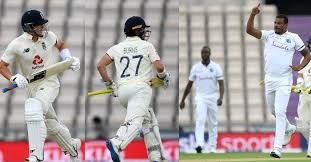
Southampton Test:West Indies ,England players take a knee to show solidarity with black lives matter movement.

The international cricket resumed after 117 days due to corona pandemic with all due precautions of safety. In this 117 days world witnessed many challenges besides impact of corona virus, one such major was the brutal killing of George Floyd by a us police officer for using counterfeit money to buy cigarettes. The officer knelt on neck of Floyd for almost 8 minutes, where Floyd pleaded the officer to leave him as he was unable to breathe,but to no mercy from officer he later chocked to death.This was most brutal act and against humanity, many protests were done against the officer and he was even suspended.

This led to disclosure of many incidents of racism ,discrimination on color many cricketers came forward to explain how they had faced such things.

England and West Indies cricketers took a knee to show their solidarity against racism and support the ‘Black Lives Matter’ movement before the start of the first Test of the three-match series here at the Ageas Bowl on Wednesday.

Cricketers take a knee to show solidarity with Black Lives Matter movement

A minute of silence was also observed before the start of play to pay respect to the victims of the coronavirus pandemic and West Indies legend Everton Weekes, who passed away last week at the age of 95.

The Premier League resumed its suspended season in June and all teams have been sending out a strong message to show solidarity with the ‘Black Lives Matter’ movement.All teams have been taking a knee to show their support, while jerseys of all teams have ‘Black Lives Matter’ written on them.

Central Railway workshop manufactured a narrow gauge locomotive

Amid the Corona virus-enforced lockdown, the Central Railway’s workshop at Parel in Mumbai has manufactured a narrow gauge locomotive which will be utilized for hauling passengers and good trains on the Kangra Valley. In a statement, the Central Railways informed that the ‘ZDM3’ type locomotive was manufactured while adhering to social distancing norms and limited resources due to the prevalent lockdown conditions.

This was the third of the 12 locomotives for which the Central Railway has received order. These Locos are provided with dual cab to drive from either end with good visibility of track ahead. Most importantly, the locos are equipped with a cold start system to enable their working in severe winter conditions in Northern India. The locos are provided with safety features such as automatic emergency braking, vigilance control device and electronic speedometer with recorder.

Cut down in syllabus for academic session 2020-21 is a one-time measure, clarifies CBSE

The Central Board of Secondary Education (CBSE) has clarified that topics mentioned in certain media reports as dropped from the syllabus are either being covered by the rationalized syllabus or are in the Alternative Academic Calendar of NCERT. In a press statement, CBSE informed that the Alternative Academic Calendar of NCERT is already in force for all the affiliated schools of the board. It said, the rationalization of syllabus of up to 30 per cent has been undertaken for nearly 190 subjects. The Board further highlighted that the cut down in syllabus from class 9th to 12th for the academic session 2020-21 is a one-time measure.

The Board maintained that the objective of the current rationalization is to reduce the exam stress of students due to the prevailing health emergency situation and to prevent learning gaps. CBSE has clarified that no question will be asked from the truncated syllabus in the Board Exams of 2020-21. CBSE informed that the schools have also been directed to follow the Alternative Academic Calendar prepared by NCERT for transacting the curriculum.

Railway Minister Piyush Goyal refutes claims of privatisation of Indian Railways

Railway Minister Piyush Goyal has refuted claims of privatization of the Indian Railways. In a tweet, the Minister said, all the current services of the Indian Railways will continue to remain operational and the Railways is not being privatized in any way. Mr. Goyal informed that 151 additional modern trains will be operational on 109 routes with private participation. He asserted, these additional services will not affect the functioning of other trains but will only create more avenues of employment in the country.

The Ministry of Railways has said that 151 trains proposed to be run by Private operators once the selection process is over, would be in addition to the existing trains. The Ministry in a statement said that these proposed trains will run on the routes where the demand for trains is already higher than the existing capacity. The Ministry has invited Request for Qualifications (RFQ) for private participation for operation of passenger train services over 109 Origin Destination (OD) pairs of routes.

The project would entail private sector investment of about 30 thousand crore rupees. This is the first initiative of private investment for running Passenger Trains over Indian Railways network.

The objective of this initiative is to introduce modern technology rolling stock with reduced maintenance and transit time as well as to boost job creation, provide enhanced safety and world class travel experience to passengers. The Ministry said, the driver and guard of the trains will be Railway officials and the safety clearance of trains will be done by Railways only.

The 109 Origin Destination(OD) Pairs have been formed into 12 Clusters across the Indian Railway network and each train will have a minimum of 16 coaches. The Ministry said, majority of trains will  be manufactured in the country  under Make in India and the private entity will be responsible for financing, procuring, operation and maintenance of the trains. It said, these trains will be designed for a maximum speed of 160 kilometres per hour.

The Private Entity will pay to Indian Railways fixed haulage charges, energy charges as per actual consumption and a share in Gross Revenue determined through a transparent bidding process.