

Road Transport and Highways Ministry has clarified that the heavy road making machinery are not motor vehicles and are not covered under MV Act. It has requested the States and UTs to not to insist upon registration and driving licence for these machines.
In a letter to the transport departments of all the States and UTs, the Ministry has informed regarding a number of representations received on Road Building and Rehabilitation Equipment, wherein concern regarding registration of cold recycling machines and soil stabilization machine under Central Motor Vehicle Rules 1989 has been raised.
The representations have clarified that cold milling machines are used to salvage the crust of the existing bituminous pavement to recover the asphalt material and re-use them to conserve aggregate and bitumen and save the associates costs of mining and crushing. Also the extracted bitumen leads to saving of bituminous material thus saving forex. The work awarded to the concessionaire by the employer is within a given range of chainage.
Therefore, these equipment work in a defined region and its operating speed is 5 to 10 kilometre per hour as well as these equipment are deployed at the work site through trailers.
The representation regarding Heavy Earth Moving Machineries (HEMM) – wherein concern regarding registration of the equipment and their operation has been raised. HEMM like Dumpers, Payloaders, Shovels, Drill Master, Bulldozers, Motor Grader and Rock breakers are also categorised as off the road operated and maintained within mine boundary under sole management, supervision and control of Mines Manager and are never used outside mine boundary.
Day: July 14, 2020
15th meeting of India-EU Summit to be held in virtual mode tomorrow
The 15th meeting of the India-European Union Summit will be held in virtual mode tomorrow. The Summit will be co-chaired by Prime Minister Narendra Modi, President of European Council Charles Michel and President of European Commission Ursula von der Leyen.
Sources said, COVID-19 pandemic, its impact on foreign trade, movement of people, and response to the pandemic are likely to be discussed by the two sides. Sources said, India-EU relationship, trade and investment and economic issues will also be discussed. They said, this meeting is taking place even as EU wants to play a more active role globally and also attaches high priority to relationship with India.
One point of significance of the summit is that the new Presidents of the European Commission and European Council had taken over in December last year. Sources said, the new leadership believes that EU needs to play a stronger role in the global platform and showed a lot of interest in India and also held telephonic conversations with Prime Minister Narendra Modi soon after taking over.
On scope of Free Trade Agreement with EU during the India-EU summit, sources said, there was a pause on the issue after intensive negotiations for years. In the year 2000 India and the European Union decided to institutionalise mechanism at the level of the Summit. This year marks 20 years of the Summit process between India and EU. The last Summit between the two sides took place in 2017.
AIIMS Patna starts human trial of Corona virus vaccine
In Bihar, AIIMS, Patna has started human trial of Corona virus vaccine on 10 volunteers selected by hospital authority. Several people offered to take part in trial, but only 10 people were selected for the process. The first dose has been given to selected people and after interval of 14 days, second dose will be given. Doctors are keeping strict vigil of the those people who have taken dose of vaccine. For this a team of doctors has been constituted.
After completion of scheduled period, check-up of people will be undertaken for after effects of vaccine. The vaccine jointly developed by the National Institute of Virology, Pune and Hyedrabad – based Bharat Biotech International Limited in collaboration with the Indian Council of Medical Research. It is the first indigenous vaccine developed in India. AIIMS – Patna is one of the 12 medical institutes in the country to have been shortlisted by ICMR for conducting human trial of the indigenous vaccine .
Meanwhile, positive cases in the state have risen to 17,421. Patients who have recovered are 12,364 while 4992 patients are undergoing treatment in hospitals. Recovery rate in Bihar stands at 71 per cent. The state recorded 14 deaths during 24 hours including the first Coronavirus death of a doctor, taking the toll to 134.
India is among the most open economies in the world: PM Modi
Prime Minister Narendra Modi has said that India is among the most open economies in the world. He was interacting with the CEO of Google, Sundar Pichai through video conferencing yesterday. The Prime Minister said that Indians are adjusting to and adopting technology at a rapid pace.
Mr. Modi and Mr. Pichai spoke on a wide range of subjects, particularly leveraging the power of technology to transform the lives of India’s farmers, youngsters and entrepreneurs. Mr. Modi also spoke about the recent steps taken by the government towards reforming agriculture and creating new job opportunities.
The Prime Minister explored the idea of virtual labs that can be used by students as well as farmers. On issue of data security and cyber safety, he said, tech companies need to put in efforts to bridge the trust deficit. Technological solutions to expand the scope of online education, access to technology in native language, use of augmented reality and virtual reality to give a stadium-like viewing experience in sports and progress in the area of digital payments were also discussed.
The Prime Minister said, he was delighted to know more about the efforts of Google in several sectors, be it in education, learning, digital payments and more. Sundar Pichai briefed the Prime Minister about new products and initiatives of Google in India.
He mentioned the launch of Artificial Intelligence Research Lab in Bengaluru while highlighting the benefits of Google’s flood forecasting efforts. Mr. Pichai also briefed about the efforts undertaken by Google in spreading awareness and providing reliable information about COVID-19.
He said, a strong step of lockdown initiated by the Prime Minister set up a very strong foundation of India’s battle against the pandemic. Mr. Modi appreciated the proactive role played by Google in battling misinformation and conveying information about necessary precautions.
WHO calls upon countries for comprehensive strategies to deal with Covid pandemic
World Health Organization has warned that the pandemic is worsening globally and that there will be no return to the old normal for the foreseeable future.
The Director-General of the World Health Organization, Tedros Adhanom Ghebreyesus, said that the virus’ spread is worsening in many countries.
He called for countries to come up with comprehensive strategies to deal with the pandemic, and noted that roughly half of all new cases are in the Americas.
His remarks came a day after Florida shattered the record among US states for the largest single-day increase in new confirmed cases, with more than 15,000.
19 States, UTs report higher recovery rate than national average of 63.01%
The total number of recovered people affected with coronavirus yesterday crossed the 5.5 lakh mark. The Central Government said, a total of 5, 53,471 people have recovered in the country so far and with this the recovery rate reached 63.01 per cent.
During the last 24 hours, 18,850 people have recovered from Covid-19. There are 19 States and Union Territories which have a higher recovery rate than the national average of recovery rate.
The Health and Family Welfare Ministry said a total of 28,701 new cases of Covid-19 have been reported in the country within 24 hours taking the total number of cases to 8,78,254. This is the highest number of fresh cases recorded in one day since the outbreak of Covid-19 pandemic in India.
Presently, the total number of active corona cases in the country is 3,01,609. In a single day, 500 deaths have been reported taking the nationwide toll to 23,174. With this the Covid fatality rate reached 2.63 per cent in the country. 30 States and Union Territories have the lowest fatality rate than the national average of fatality rate.
Meanwhile, Indian Council of Medical Research, ICMR said, that a total of 2,19,103 tests of corona virus samples were conducted by the various laboratories in the country within 24 hours. So far 1,18,6,256 tests have been conducted.Testing per million is 8,555 in the country.
ICMR is continuously scaling up its testing facilities for Covid-19 by giving approval to government and private laboratories. As of now, total 1,200 laboratories across India have been given approval to conduct the test for Covid-19 including 852 government laboratories and 348 private laboratories’ chains.
Govt aims to increase public health expenditure to 2.5% of GDP by 2025
The Union Health Ministry has pushed for an increased expenditure on public health. In a meeting with the 15th Finance Commission, the Union Health Minister Dr. Harsh Vardhan, yesterday highlighted that the government aims at gradually increasing the public health expenditure to 2.5 per cent of the nation’s GDP by the year 2025.
The Minister asserted that the outlay for primary health expenditure will also be made nearly two third of the total public health expenditure in the country. Reiterating the government’s target of the National Health Policy 2017, Dr. Vardhan emphasized on the importance of increasing the state’s health sector spending to nearly 8 per cent of their total budget.
The Health Ministry apprised the Finance Commission of the need to further strengthen the public health sector, surveillance and public health management, preventive and promotive health care system in the country.
The Health Ministry has also revised its requirement of around 4.9 lakh crores to 6.04 lakh crores in view of the COVID pandemic. It has asked for additional resources for the States which would be utilized for achievement of the National Health Policy targets.
Political crisis continues in Rajasthan; Congress calls another legislative party meet in Jaipur today
In Rajasthan, Congress calls another legislative party meet in Jaipur today. Yesterday, Congress Legislature Party has passed resolution supporting Ashok Gehlot-led government. The Congress Legislative Party, CLP meeting was held at Jaipur Monday afternoon amid differences in the Rajasthan government.
The Ashok Gehlot-led Congress Government plunged into crisis after Deputy Chief Minister Sachin Pilot declared open rebellion. Mr Pilot had claimed that the Gehlot Government has been reduced to minority as over 30 Congress MLAs are supporting him.
The CLP demanded strict disciplinary action against members of the party who are involved in anti-party activity. Apart from Congress, MLAs from CPI- M, Bharatiya Tribal Party and RLD also attended the meeting. The Bhartiya Tribal Party has directed both its MLAs to remain neutral.
Party President Hamesh Bhai Vasava has said in his letter that in case of the floor test, the both MLAs will not support either the BJP or the Congress. He said that disciplinary action will be taken if they violate the whip. The Congress has claimed that the government has an absolute majority and will complete five years term.
Earlier, Congress made an appeal to its rebellion MLAs and Ministers to attend the meeting of the party legislature. Meanwhile, state BJP president Satish Poonia told media that the party is keeping an eye on the entire development and the top leadership will take appropriate decisions when needed.
AIR correspondent reports, by showcasing the support of more than 101 MLAs, which is the magical figure in Rajasthan assembly, Chief Minister Ashok Gehlot claimed that the Congress government is safe and stable. On the other hand, Sachin Pilot is also talking about having the support of more than two dozen MLAs including some senior leaders.
In such a situation, the Gehlot government, though safe at the moment, is not taking any chances and has shifted all its supporting MLAs to a hotel amidst tight security. This is believed to be the reason for the soft stance of Congress towards Sachin Pilot. Despite Pilot’s rebellion, Congress has yet not taken any action against him. Overall, all eyes are now on Sachin Pilot who has not made his stance official as yet.
India, China to hold Corps Commander-level talks at Chushul in Eastern Ladakh today
The fourth round of Commander-level talks between India and China will take place today at Chushul Border post in Eastern Ladakh. The last meeting also was held at the same venue on 30th June. Army sources said, the talks mainly focus on the second phase of disengagement along the Line of Actual Control. AIR correspondent reports that to follow up the work in progress, the army commanders are meeting today.
The meeting between the Army commanders is important after the conservation between the National Security Advisor Ajit Doval and Chinese Foreign Minister Mr Wang Yi, on 5th July. In the meeting they have agreed that both sides should complete the ongoing disengagement process along the LAC, to de-escalate the tensions in the region. The PLA has already retreated back as per the agreement, by two kilometres in the friction points like Galwan valley, Gogra and Hot Springs. Similarly, the Indian side also has moved back as per the mutual disengagement agreed upon during the last Corps Commander-level talks.
However, the Army sources said that today’s talks mainly focus on complete disengament at Finger -4 and further at Pangong Tso and Depsang plains. Indian delegation will be lead by GoC of Fire and Fury corps Lt General Harinder Singh and South Xinjiang Military Province Commander Major General Liu Lin will lead the Chinese side.
Juvenile Justice
In order to achieve the objectives of the United Nations Convention on the Rights of the Child as ratified by India on 11 December 1992, the Juvenile Justice Act has been promulgated. The procedural guarantees applicable to children in conflict with the law are specified in this law. The current law addresses the problems of the existing law, such as delays in adoption processes, the high number of pending cases, the accountability of institutions, and so on.
The law also addresses the growing number of crimes committed by children aged 16 to 18 in recent years and by children in conflict with the law. Since January 15, 2016, the Juvenile Justice (Care and Protection of Children) Act, 2015 has come into force. It repeals the Juvenile Justice (Care and Protection of Children) Act, 2000.
Who is a juvenile as recognised by law?
In the Indian context, a juvenile or child is any person who is below the age of 18 years. However, the Indian Penal Code specifies that a child cannot be charged for any crime until he has attained seven years of age.
The Historical Evolution of Juvenile Justice Act in India
The United Nations Minimum Rules for Administration of Juvenile Justice of 1985 ratified by the United Nations Member States in Beijing in 1985, also known as the Beijing Rules, set out the rules, general principles and rules governing investigation and prosecution, adjudication, delivery, noninstitutional treatment and institutional treatment. Two essential concepts are explained in these principles. They are-
- Diversion– If children are treated in the criminal justice system, stigmatizing criminality increases the authority of the child, whose authority has been established from Rule 11 of the Criminal Code. Therefore, these principles aim at minimizing the contact of minors with the criminal justice system. To divert the child from the system, the second part of the rule legitimizes police officers, prosecutors and other authorities. This is why juvenile court judges do not wear the black coat and other judicial officials also try not to be as formal and put the child or minor at ease.
- Detention– A deliberate sentence imposed on minors but imposed for the shortest possible period and called “detention as a last resort”.
Juvenile Justice Act, 1986
Following the adoption of the United Nations Minimum Rules for Administration of Juvenile Justice of 1985, the term “minor” used in international law was coined for the first time. With the adoption of the Juvenile Justice Act of 1986, this change in terminology had a considerable effect on domestic law.
Before 1979, while Lakshadweep, Arunachal Pradesh, Tripura, Chandigarh and Sikkim had the Children’s Act but they did not apply it. In the case of Assam and Himachal Pradesh, although the laws have been enforced, no institution has been created to deal with the same thing and Nagaland does not even have a separate law for children. The Children’s Acts have been applied in 236 of the 334 districts in the case of other Indian states. In the mid-1980s, out of 444 districts, the number of children’s laws was increased to four hundred and forty-two.
As from October 2, 1987, the Juvenile Justice Act 1986 was applied by notification in all areas where it was extended. The need is for uniform laws over time for juvenile justice throughout the country and for the need to implement uniform laws that are fulfilled by the Juvenile Justice Act of 1986. In addition, there are States with no law in the area of justice of the sixteen, as well as uniformity at the national level. The Juvenile Justice Act, 1987 is nothing more than a full copy of the Children’s Act, 1960 which makes only minor and valueless changes here and there.
Juvenile Justice Act of 2000
The Indian legislator made a sincere effort in adopting the 2000 Act to inculcate the principles set out in the UN Conventions, such as the CRC, the Beijing Rules and the 1990 Rules. minors were promulgated to deal with offences committed by minors in a manner supposed to be different from the law applicable to adults according to the Supreme Court of India. The rehabilitation of the minor is the main concern of the Juvenile Justice Act, 2000 and not the adversarial procedure to which the courts are generally accustomed. A complete change in the mentality of those with the power to do so is necessary for its implementation, without which it will be almost impossible to achieve its goals.
Juvenile Justice Act of 2015
The increase in the number of crimes (including rapes) committed by juveniles (aged 16 to 18) was the main reason to introduce the new legislation. More retributive than reforming, the new law raised several questions. The new law is considered retributive because it contains provisions for teenagers who commit a heinous crime (punishable by 7 years or more) must be tried as adults but in the juvenile court. The child found guilty of the heinous crime is sent to a safe place until the age of 21, after which he is transferred to prison. The children’s court ensures it. This means that the benefit of a child is not granted to the minor when found guilty of committing a heinous crime.
Many protesters criticized the new law on minors for being unconstitutional. The Court noted that in Rule 4 of the United Nations Standard Minimum Rules for the Administration of Juvenile Justice, in the case of Pratap Singh v. the State of Jharkhand, one had to give all its importance to the moral and psychological elements even when responsible for a crime.
Many activists have raised another problem, namely that the 2015 law violates the spirit of article 21 (A), which states that a person can not be sentenced to a harsher sentence than that which would have been applied to him or her. by the law of the country. Under the new law, if a sentenced minor reaches the age of 21 but has not completed his entire sentence, he can be sent to prison if deemed appropriate. This new law undermines the spirit of Article 20(1).
What is the Institutional Care provided for the juveniles?
Rule 3 of the Juvenile Justice (Care and Protection of Children) Rules of 2007 states that “the institutionalization of a juvenile must be a measure of last resort after a reasonable inquiry and this also for the minimum possible duration.”
Observation Homes
Section 8 of the Juvenile Justice Act of 2000provides that the state government may establish and operate observation houses in each district or group of districts. A minor is temporarily received in these homes. For the duration of any investigation into them under the Juvenile Justice (Care and Protection of Children) Act 2000, minors are detained in observation houses. Minors are kept for a few weeks in the observation houses for the social study of minors.
Special Homes
Section 9 of the Juvenile Justice Act of 2000, states the state government may establish and maintain special homes in each district or group of districts. When the offence committed by a minor is proven and condemned by the competent authority, it is placed in the special home established by the state governments. In the special home, minors are treated for a long time or until their age ceases. Children’s Home
Section 34 of the Juvenile Justice Act of 2000 states “The state government may establish and maintain children’s homes in each district or group of districts.” The children’s home is a home where children in need of care and protection are placed on the order of a competent authority.
Shelter Homes
According to Section 37 of the Juvenile Justice Act of 2000, Shelters Homes as for children in need of urgent support. Shelter homes provide children with space where they can play and engage in creative activities. Children are engaged in music, dance, theatre, yoga and meditation, computers, indoor and outdoor games, etc, to spend their time productively. These creative activities are designed to encourage meaningful participation and interaction among peer groups.
What is the Non-Institutional Care provided for the juveniles?
Section 40 in The Juvenile Justice (Care and Protection of Children) Act, 2000 talks about the process of rehabilitation and social reintegration. The rehabilitation and social reintegration of a child must begin during his stay in a children’s home or special home monitoring organization.
Foster Care
Foster care is one of the non-institutional measures used for the temporary placement of children in accordance with Section 42 of the Juvenile Justice Act of 2000. Homeless, abandoned, neglected and deprived children benefit from a foster family. He replaces parents with others to provide care outside their own home. The child is placed in foster care when natural parents are faced with problems such as sentencing, life-threatening illnesses and being abroad.
The actual parents pay the corresponding price.
Adoption
Restoring family care for children deprived of their real family life Adoption is another non-institutional measure. Section 2(2) of the Juvenile Justice Act of 2015 defines adoption as the process by which the adopted child is permanently separated from his biological parents and becomes the legal child of his adoptive parents with all rights, privileges and responsibilities that are attached to a biological child.
Sponsorship
Another type of non-institutional measure called the Sponsorship Program provides additional assistance to families, children’s homes and special homes to meet the medical, nutritional, educational and other needs of children. Sponsorship is given to improve their quality of life. There are many types of sponsorship programs for children, such as individual-to-individual sponsorship, group sponsorship or community sponsorship.
After-care Organisations
The juveniles are taken care of in the organization of the aftercare, which is a transition home, after leaving the special homes and the children’s home. Minors in conflict with the law and children in need of care and protection, both categories are placed in aftercare organizations. Monitoring organizations allow minors to lead an honest and industrious life. Follow-up agencies are committed to the primary goal of enabling children and youth to adapt to society. In child care agencies, children and adolescents are motivated to stay in the wider society of their lives in institutional homes.
The increasing rates of juvenile crime in India in very concerning issue and need to be focused upon. Although government has laid various legislation and rules to stop the incidents of juvenile crimes but the present laws on juveniles is not creating a deterrent effect on the juveniles and thus the results are not fruitful and legislative intent is not accomplishing.
Russian Covid-19 immunogen still has miles to travel.
NEWS: Covid19
Do not pin your hopes thereon ‘successful’ Russian immunogen
On Monday evening, news portals and social media were suddenly flooded by the news that a Russian medical university has completed the trial of the world’s 1st Covid immunogen. folks were elated and quizzical at constant time because the news skint. therefore is that the wait extremely over for a good Covid-19 vaccine?
“A report by the TASS press agency of Russia on Gregorian calendar month ten aforesaid the clinical test clinical trials would endways Gregorian calendar month fifteen, whereas the second section would begin on Gregorian calendar month thirteen.”
Like all the opposite potential candidates, one being developed in Russia is additionally aloof from being prepared at this time. various reports on Sunday had claimed that clinical trials for a Russian immunogen had been “successfully” completed. What most of those reports didn’t specifically mention is that solely phase-I of the clinical trials had been completed. Phase-II trials area unit speculated to begin Monday, whereas there’s no clarity over phase-III trials.
Pakistanis sing ‘Vande Mataram’ alongside Indians during anti-China protest in London….
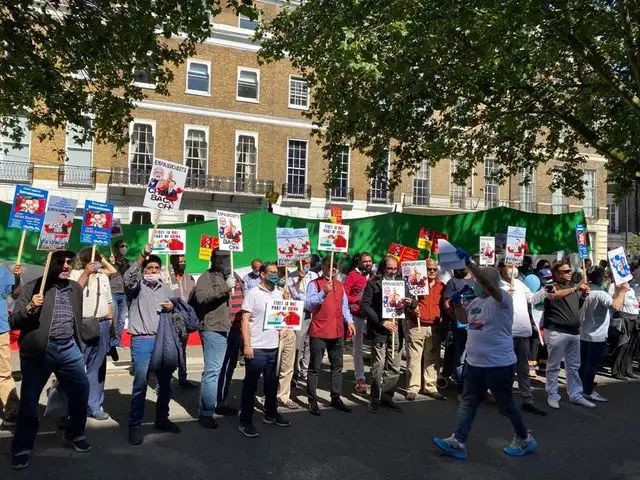
Arif Aajakia, a Pakistani human rights activist who believes in speaking “bitter and naked truth” about his country, shouted “boycott China” and “down with China” along with the members of several Indian diaspora groups protesting against China’s expansionist policies.
“Today was also the first time in my life that I sang Vande Mataram,” said Aajakia.
Joining him also was Amjad Ayub Mirza, who hails from Mirpur in Pakistan occupied Kashmir (PoK), a few others from Karachi and many from Iran, all pretty upset with China meddling in their affairs too.
“I have travelled all the way from Glasgow for this protest. I am from PoK, an Indian living under Pakistani occupation. The Chinese are wreaking havoc across Gilgit-Baltistan through CPEC (China-Pakistan Economic Corridor) and the Pakistani government continues to work for hand in glove with them,” said Mirza, who has been quite vocal against oppression and injustice meted out to the people of PoK by Pakistani authorities.
The Indians, who’ve organised similar protests against China in the US, Canada and other parts of the world, carried posters and placards against Chinese President Xi Jinping, asking him to control his over-ambitious power play.
The growing outrage against China is quite visible on the streets of London too. In fact, Saturday night saw an image reading ‘Free Tibet, Free Hong Kong, Free Uyghurs’ projected onto the Chinese Embassy building in central London.
With the US sanctioning the Chinese government and its officials for their connection to serious human rights abuse against ethnic Uyghur Muslim minorities in Xinjiang, the world condemning China’s ‘brutal, sweeping crackdown’ against Hong Kong’s people, Indians boycotting Chinese products after People’s Liberation Army intruded the Indian territory and killed Indian soldiers in Ladakh’s Galwan Valley and countries from Japan till Australia up against the dragon, the noose is gradually tightening around the authoritarian regime.
Beautiful soul is better than beautiful appearence
In today’s world, almost every individual is obsessed with fair complexion. The obsession of fair skin has led the companies producing fairness products to earn profit more than any other business in the market.
The obsession for fair complexion is mostly found in the youth, who waste their money in buying expensive products hoping for a fairer skin but end up harming it.
You must have seen that the matrimonial Columns seem to be incomplete without people showing their desire for fair complexion in their spouse. The colour discrimination leads to alot of mental health issues for many individuals. People commit suicide under societal pressure for fair complexion and outer appearance.
We must understand that “Beauty lies in the eyes of the beholder” and the colour of one’s skin is just concerned with the outer appearance and we cannot judge them because of it.
An individual is beautiful by their heart not by their appearance.
Cannabis should be legalised
According to me cannabis should be legalised again like how it was before around 35 years back.Yes seeing it use in medical purposes would glad anyone for it being illegal. The plant contains more than 120 components known as cannabinoids.In addition, it was identified as ‘one of the five holy plants’ by religious scholars in the ancient ‘Vedas’ scriptures. Marijuana belongs to a category of three psychoactive plants known as marijuana sativa, cannabis indica, and cannabis ruderalis. For centuries, cannabis was a component of India’s religious ceremonies and festivities. Ancient Indian Ayurvedic traditions used hemp in drugs as an active component, from digestive issues to blood pressure. In the Ayurvedic scriptures, almost 191 recipes and more than 15 treatment types have used cannabis as a main component. Which could also help us handle Covid 19
It was most sometimes connected with Shiva and believed to be a giver of happiness and a liberator.
Later Charas smoking in an earthen pipe called chili used to be a community activity. In reality, Sadhus or ascetics are assumed to be seeking the divine through cannabis.
Dr. Peter Grinspoon created the two generally recognized cannabinoids present in cannabis plants: Cannabidiol(CBD) and Tetrahydro Cannabidiol(THC)
THC is a controlled drug which includes psychotropic components that offer the patient a ‘high.’
CBD is non-toxic and has a variety of legitimate applications, including for medication, cosmetics goods , furniture and gasoline.While knowing a strong past People have still lawfully and industrially ignored cannabis in India. Of reality, several of the films and ads promoted make it appear like a product is harmful for wellbeing. So because of that misconception, actual consumers are often reluctant to dig at the more beneficial is effective uses. Let me explain some of the uses:
Uses:
Since time people have proposed that weed is the “penicillin of Ayurvedic medicine.
And that’s why numerous Indian medical practitioners are pressuring the government to remove the ban because they want to research the usage of cannaboids to manage cancer.chronic patients, anxiety patients.
Marijuana is also used in the manufacturing of body care goods and dietary additives, much as in the USA, a nation that has pressurized other nations to prohibit cannabis.
The second most significant aspect of this product is that it assists with our economies and unemployment by providing work prospects
By legalizing cannabis, all control will come into the hands of the government (transportation, regulation, supply , demand) which will stop illegal trading activities.
Quitting cannabis is better than tobacco since marijuana is rare. But then smoking is legal in today’s country.
It is very needed to create tax on marijuana and to control it for our nation, because even though it has completely failed to contribute to neither revenue nor trade, rather marijuana are still being used illegally, especially in Mumbai and Delhi.
Past experiences with prohibition:
Do you really think that after prohibiting drugs people have actually stopped using them?NOOOOOO
Infact prohibition makes illegal drugs stronger and more potent.
Prohibition eliminated a major amount of tax income and greatly boosted government expenditure. This also driven numerous users to turn to heroin, tobacco, proprietary drugs , alcohol, and other dangerous items that they may have been unable to find in the absence of prohibition.The numbers also show that stringent laws don’t deter people from using marijuana.
Recently, another study, ABCD’s ‘2018 Cannabis Price Index,’ revealed that Delhi is the third-highest cannabis consumer in the world, only behind New York and Karachi. Mumbai was also in sixth position on the list. They couldn’t make drugs go away, so it can be handled easier. If it is legal, there would be more options for customers, so authorities might demand, for example. insist on a high level of CBD.
Conclusion:
Cannabis regulations in india are outdated and require long awaited reconsideration.Although it has been a trusted ingredient in the treatment of serious illnesses for thousands of years , the usage of cannabis in conventional medicine remains limited due to such restrictive legislation..While legalization is still a long way off, it is promoting the rising number of cannabis and hemp start-ups and the growing mainstream encouragement for legalizing the product. Given the medicinal and economic arguments for legalizing cannabis, the maximum benefits that legalization will offer will not be long until the Indian government activates.
Censorship of the Internet
Nowadays, the internet has been gaining its popularity at an amazing rate. The internet has become an important communicative tool, which brings significant convenience and efficiency for people. However, the internet also has severe weakness. Although the internet is comprehensive and the internet is not easy to limit, many countries are working on the censorship of the Internet. The issue of internet censorship is a complex and controversial one. As a matter of fact, the censorship of the internet is a double-edged sword. The censorship can work in some instances, but in others it can be detrimental to society.
The internet censorship can be a protection measure. As the internet is open and comprehensive, the quality and authenticity of internet information is questionable. There are a lot of undue materials online, such as pornography and violence, which undoubtedly exerts a negative influence on people especially children physically and psychologically. Although there are several laws which regulate the illegal information and illegal activities, the laws are not complete enough to regulate all the illegal or immoral activities. It is very hard to charge a person for internet crimes, especially if the person is from a foreign website. Thus, the illegal activities and undue information are still rampant on the internet. Thus, internet censorship is needed for internet regulation. The censorship of internet can cleanse the internet information and protect people to some extent.
The censorship of internet can filter the inappropriate information online and protect children from disturbing websites, such as, child pornography, sexual violence and detailed instructions in crime or drug use. The undue internet information may weaken children’s moral consciousness and pollute children’s soul. Thus, the undue websites can have a severely bad effect on the healthy growth of children or even cause adolescent crime. However, children are easy to contact undue internet information. Since parents can not monitor the web pages that children browse in any time and at any place, the censorship of internet can help the parents to filter undue websites for children and protect them from the misguidance and negative influence of internet.
The censorship of internet can help women. In order to get more click rate and benefits, many “adult” websites advocate violent sexual abuse of women. Many women suffer from the hell made by the internet because the internet makes them sold into slavery through the international sex trade. The censorship of internet can block access to these websites, regulate or even shut down some of these websites, and thus reduce the sexual exploitation of women in the internet. Thus, the censorship of internet can protect women to some degree.
The censorship of internet can guard people from the disturbing email spam. For many net citizens, junk email is a troublesome problem. Some junk emails may have malware, and the malware will be activated when net citizens open the email. Some junk emails may be phishing schemes that attempt to steal net citizens’ identity and threatens the economic safety and privacy. Some junk emails may be fraudulent schemes or offensive material. Besides, there are a lot of annoying unsolicited advertisements. Spam filters can block junk emails for net citizens and make their internet life more safe and simple.
The censorship of internet can protect the privacy life of people. Besides, there are some net citizens or websites that make a malafide use of internet to diffuse others privacy, like other’s private video, private pictures and so on. The censorship of internet can prevent these duly. Thus, sometimes, in order to protect the privacy of people, the censorship of internet is necessary.
The censorship of internet can protect people’s economic interest. Some internet information can threaten people’s economic interest. Internet banking frauds happens frequently. The censorship of internet can filter a great deal of fraudulent information in the internet and enhance the supervision and control of internet banking. Due to internet censorship, a great number of financial frauds, phishing, identity thefts, credits card thefts and many other illegal activities are prevented. Therefore, the economic loss of internet users are reduced or avoided.
The censorship of internet can decrease internet violence and protect people’s personal security. In India or even the whole world, internet bullying and violence has become a serious issue. There are many suicide cases caused by internet bullying. The internet users are anonymous and the information spread fast on the internet. Some users take advantages of internet to carry on internet violence. The users may slander, abuse others and expose others’ privacy, which will bring about great harm to the victims. Some websites make use of internet illegally, which will give rise to baneful influence and threaten people’s life security. Internet murders happen. Through social networking sites, internet users deceive and murder other users. There are some suicide websites that abet suicide, communicate suicide knowledge and provide suicide methods. The occurrence of all these incidents and similar incidents make the internet censorship necessary. Internet censorship can prevent unjustified defamation, limit internet violence and protect people’s life security.
The censorship of internet can help to protect social stability and national safety. Since the internet censorship can help to curb the large number of illegal activities and internet crimes, it is good to the stability of society.
 Eduindex
You must be logged in to post a comment.