Thirukural is one of the most prominent literary works in Tamil, known for its excellent and timeless elucidation of ways and values of life. The work itself is one of the oldest works of literature known to man, authored around 2000 years ago. To students in Tamilnadu, Thirukural is a primary literary work that is taught pretty much in every class all the way till higher education. The poems serve multiple purposes such as moral exposition to students, learning tamil itself, and even to understand the grammatical structure of ‘venpas’. The Thirukkural is an ancient non-religious literature that guides people on better living. Though written over 2,000 years ago by Thiruvalluvar in Tamil, the way of life advised by Thirukkural is still relevant today.
Thirukkural is composed of 1,330 kurals in 133 sections of ten each. A Kural is a couplet and each Kural is composed of 7 words spread across 2 lines [4 + 3 words]. The work on wisdom is divided into three major chapters – those that speak about virtue, wealth and love.
From a personal finance perspective, there are a lot of lessons that one could learn from the chapters on virtue and on wealth.
Imagine the relevance to the current financial turmoil in developed countries to the Kural No: 113; ‘nandre tharinum naduvigandhuaam aakathai andre ozhiya vidal’
It says: ‘Even when apparently giving gains, ways which are not truthful are to be abandoned.’
The sub-prime crisis can be quoted as an example of one such activity. The lenders who got carried away by the real estate boom tried to make the most of the situation and ended up going overboard due to their greed. They wound up lending money to lower value assets.
Those borrowing were also in the same mental frame to make the most of some one who is ready to lend to them. They disobedyed every fundamental law that dictates basic economics and as the act was devoid of any logic and the ways of the people involved was not fundamentally truthful, it lead to a global crisis costing trillions of dollars.
It should be highlighted at this point that, Indian banks did not suffer because of the wisdom of the Reserve Bank of India and the Securities and Exchange Board of India in not allowing them to take more risk than warranted by their core businesses.
The fall of the Western financial institutions could be compared to the get-rich-quick-schemes doing the rounds regularly now and then making lives miserable for all the greedy investors. Wealth created by the righteous means will not only serve those who earn the wealth but also their future generations.
It means: ‘Wealth (children, financial wealth, friends, charity and fame) earned by a person using fair means will protect not only the person but also his future generations.’
Thinking retrospectively, we can definitely remember those who earned their wealth by their own hard work and dedication. Only a few of the infamous are also remembered as their deeds are truly devastating.
The Thirukkural also talks about the role of the family’s head in managing money.
It means: ‘Producing, saving, protecting, regulating and equitably sharing is the way to powerful governance.’
The context can also be applied to any businessman or statesman too. The power of this wisdom can be understood by those who are in financial trouble. Most people fail miserably in managing their finances due to a lack of balance in these five factors mentioned above in the Kural.
Many of us, in today’s generation and in our parent’s generation have dedicated ourselves to earning more money only. Our parents did save most of their earning. This is missing with most of us today. As a country we hardly take efforts to protect our wealth – to monitor it and to make wealth work for us.
AMAZING FACTS ABOUT THIRUKURAL:
You can find 1330 poems with not even a single poem exceeding or decreasing 7 words.
It is the book translated to most number of languages after Bible.
It starts with the poem about God but still speaks about no religion.
It was initially rejected during the pandian sangam age because the senior poets considered the 2 lined poems not so highlighting. It is said that, avvaiyar recommended the thirukkural later and the rest is history.
Thiruvalluvar statue touching the sky in the tip of India- kanyakumari . So what’s so special about it? It’s 133 ft tall ( 133- number of poem topics – adigarangal penned by valluvar)
It covers everything in a human life. – virtue life, wealth, love and sex life.
Thiruvalluva malai – special book which has collection of dedicated to laud thirukkural and it’s author by various authors of various centuries.
Thirukkural is referred as ulaga podhumarai (world common Veda), vayurai vazhthu (word Veda), mupaal ( book of virtue, wealth and love, sex) and many more.
Valluvar kottam – A place in Chennai where you can find all 1330 Thirukkurals sculptured in stones.
First letter of thirukkural poem – அ, last letter of thirukkural last poem- ன். These are the first and last letters of Tamil language.
Festivals are the celebrations of love the celebrations of being one of a crucial part of the family. Raksha bandhan is a major occasion which is celebrated all over India. It is the merriment of a very lovable bond between brothers and sisters.
Raksha Bandhan is the festivity of the innocent bond of love involving a brother and a sister. Raksha Bandhan is also called Nariyal Purnima or coconut full moon in the Western Ghats that consists of the states of Gujarat, Maharashtra, Goa and Karnataka. Here, Raksha Bandhan signifies the commencement of a fresh season for those reliant on the ocean.According to the ancient legend of Bhavishya Purana, once there was a fierce battle between Gods and demons. Lord Indra- the principle deity of sky, rains and thunderbolts who was fighting the battle on the side of Gods was having a tough resistance from the powerful demon King, Bali. The war continued for a long time and did not came on a decisive end. Seeing this, Indra’s wife Sachi went to the Lord Vishnu who gave her a holy bracelet made up of cotton thread. Sachi tied the holy thread around the wrist of her husband, Lord Indra who ultimately defeated the demons and recovered the Amaravati. The earlier account of the festival described these holy threads to be amulets which were used by women for prayers and were tied to their husband when they were leaving for a war. Unlike, the present times, those holy threads were not limited to brother-sister relationships.
rakhi is coming soon i am seriously excited for that the sister prepares the pooja thali with diya, vermilion (kumkum), rice grains, sweets and rakhis. She worships the god and goddesses, ties a Rakhi on her brother’s wrist and wishes for their well-being. The brother in turn blesses the sister and promises to protect her from the evils of the world. He gifts something to her as a token of his love and affection. The rakhis and the sweets are bought and arranged usually prior to the Purnima. As per the ritual the family members get geared up for the rituals before time. Raksha Bandhan is not far away and many brothers and sisters are eagerly awaiting this auspicious festival.
No matter how much they fight with one another, they always stand behind them in support. Brothers and sisters fight with each other over trivial matters. In other words, they share a bond which is full of teasing and love.The family members dress up for this occasion, usually in ethnic wear. We see the markets flooded with colorful rakhis and gifts. Every year, fashionable and trendiest rakhis do the rounds of the market. Women shop for the perfect rakhis for their brothers and the men go out to buy gifts for their sisters.
It is one of their most important festivals. In addition, sisters and brothers wait eagerly for it all round the year. People celebrate it with abundant zeal and enthusiasm in India.
Rakhi celebration
For the people of India it’s time to rejoice and feel excited as Raksha Bandhan the popular cultural festivals of India that speaks about the unconditional and most affectionate bond of love between brothers and sisters. Thus now when the festival of Brother-Sister love is approaching people of India are getting ready for a cheerful Raksha Bandhan celebration 2020
Most of us are familiar with the paintings and drawings of Pablo Picasso, but he also did many works in clay!
Picasso discovered ceramics in 1947 and continued creating ceramics until his death in 1973. His ceramic work stood out in his time due to its sense of freedom in brushwork, economy of line, and use of vibrant color.
Picasso produced more than 2000 ceramic pieces.
His pieces utilized new forms, techniques, and color that hadn’t previously been seen in ceramics.
Although ceramics are often deemed a craft, Picasso viewed the plates, jugs, vases, and other vessels he created as a type of canvas that curved. He playfully experimented with the union of decoration and form, and left his mark in the world of ceramic art.
Picasso turned to sculpture with particular rigor at several key moments in his career, using the medium as a testing ground for ideas that would catalyze crucial shifts in his practice at large. The sculpture Woman’s Head (Fernande) (1909), also on view, helped Picasso conceptualize the break of solid volume into shifting masses suggestive of varying perspectives, and served as a foundation for the development of Cubism.
Over the course of his long career, Picasso devoted himself to sculpture wholeheartedly, if episodically, using both traditional and unconventional materials and techniques. Unlike painting, in which he was formally trained and through which he made his living, sculpture occupied a uniquely personal and experimental status for Picasso. He approached the medium with the freedom of a self-taught artist, ready to break all the rules. This attitude led him to develop a deep fondness for his sculptures, to which the many photographs of his studios and homes bear witness. Treating them almost as members of his household, he cherished the sculptures’ company and enjoyed re-creating them in a variety of materials and situations.
Picasso kept the majority in his private possession during his lifetime. It was only in 1966, through the large Paris retrospective Hommage à Picasso, that the public became fully aware of this side of his work. Following that exhibition, in 1967 The Museum of Modern Art organized The Sculpture of Picasso, which until now was the first and only exhibition on this continent to display a large number of the artist’s sculptures.
While I was were researching Picasso and his art, I stumbled upon this site called Mr. Picassohead. I decided to play around with it and found that you could create some interesting art in the style of Picasso, adding color and all development of Cubism.
Picasso Sculpture focuses on the artist’s lifelong work with sculpture, with a particular focus on his use of materials and processes. The exhibition, which features more than 100 sculptures, complemented by selected works on paper and photographs, aims to advance the understanding of what sculpture was for Picasso, and of how he revolutionized its history through a lifelong commitment to constant reinvention.
The exhibition is organized in chapters corresponding to the distinct periods during which Picasso devoted himself to sculpture, each time exploring with fresh intensity the modern possibilities of this ancient art form.
the spread of Corona Virus and strict lockdown in the entire nation, everybody is looking for – Work from Home options. However due to the shutting down of businesses, Companies are not in hiring instead they are laying off employees due to recession. Many home-based businesses can be started with very little money and very little experience. How do I know? Because I’ve been there and I’ve done it.
You can begin small, even part-time. And then you can grow them at your own pace. You can make excellent profits even with a very small home-based business. And if you want you can grow it into a much larger enterprise. So even if you don’t have much experience or savings, you too can start your own home-based business and become highly successful.
The key behind a successful business is finding out the DEMAND in the market depending on the situation and customer needs. With Corona Virus being the topic of this year, the demand for related products like hand sanitisers and disinfectants have surged more than these manufacturing industries could ever imagine.
But what can I do sitting at home? It all starts with an idea, hence here are the Top 7 business ideas that can be executed from home during covid-19 pandemic:
Tiffin / Lunchbox Service:
After the entire Nation shut down, many students who lived in hostels and bachelors who were dependent on outside food were left hungry and starving. At such times starting a Dabba Service will not only earn profits but also blessings from these people struggling to find home-cooked food.
In order to run Tiffin service successfully, you will require more than a passion for cooking. Furthermore, you will need good planning and management skills as well as flexibility to successfully handle any last-minute changes required by customers.
How successful your Tiffin service will be will depend mainly on having good reputation. For this business setup to succeed therefore, you must be able to meet the needs of your customers and have the ability to work well under pressure.
Things you require for a Successful Take-off:
Table cloths
Kitchen facilities
Tables
Tiffin boxes
Serving equipment
Utensils – silverware, glassware
Simple but healthy home-cooked meals preparation
Online Tuitions & Tutoring:
Schools and Colleges have shut down leaving a big stress among everybody. Students are concerned with completing their portion without their teachers. At such times the need for online assistance for education is at a rise.
Online tutoring is a profitable business. This industry is developing rapidly with advent of innovations, technologies and wide spread usage of the internet. Parents and students are comfortable with online tutoring websites for their personalized learning requirements.
Things you require for a Successful Take-off:
Start a face-to-face video conferencing.
Speak to each other with high-quality and excellent voice.
Write, type, erase and draw in distinctive colours on digital advanced whiteboard.
Text chat via instant messaging.
Upload and share files.
Alter message progressively with other person seeing what you are doing. Access the session from all devices.
Mask Stitching and Selling:
The world has changed. Not only has the world economy shut down, but people are also on edge. This is likely because we can’t leave our homes, and this can lead to isolation. Nowadays you cannot spot a single person on the streets without a mask covering their face.
If one is good at stitching at home, then this is a golden opportunity to not only earn money but also get creative. People are bored of the old plain mask and hence are looking for designer and customised masks. One can use their own imagination and entice people with your unique masks.
Things you require for a Successful Take-off:
Face Mask Cloth
Mask Inner Ear Loop threads
Paints, beads, needle works
Stitching machine or sewing machine
Needle and thread
Online Fitness and Yoga Coach:
The threat of coronavirus has left the fitness industry ailing and barely able to stand with smaller gyms on the verge of shutting down, larger chains contemplating huge losses and unemployment becoming a very real prospect for many thousands of trainers and support staff.
However, if you have a laptop and good functioning internet connection you can become a fitness coach for everybody missing the gym and looking for services from home. With people wanting to keep themselves fit and improving their immune system, Yoga trainers are high in demand.
Things you require for a Successful Take-off:
Create a virtual workshop using online studio software
clean background
remove clutter and distracting objects
place select “yoga” objects in frame if desired
Use a tripod if you can
Test to make sure that the camera can capture you in all your poses
Use impeccable, clear language (don’t rely on video)
Embrace imperfections! Be human and carry on.
Cake Baking for Special Occasions:
Are you the one that makes killer cakes for every birthday? Do you churn out to-die-for donuts? If you’re ready to turn your talents into a profitable bakery, you’ve come to the right place.
No matter what the situation, the show must go on. Cakes have been the symbol of any kind of situation since centuries. But with all CAKE SHOPS and bakeries shut, one cannot access them for special occasions. If you are a good baker, then this is your time to shine. Homemade cakes will be a hit and people will be assured about its safety.
Things you require for a Successful Take-off:
Mixers
Oven
Dough proofer
Bakeware
Tools for measurement
Ingredients as per flavour
Refrigerator
Bread slicer
Dough mix
Cardboard boxes
Piping bags
Dairy products
Display case
Gardening and selling Organic Fruits & Vegetables:
If you are interested in gardening at home and have enough space to grow more for everyone then organic farming is a great business idea. With today’s vegetables being produced with pesticides and chemicals
Growing a garden for profit is something that definitely needs to be kept simple. The reason is that if you try and do a whole bunch at once, then you won’t be great at any of it. If you pick a few simple and small things to start out with, then you can work to perfect those things and be much more successful.
I learned that the hard way because I wanted to sell EVERYTHING out of my garden. Well let me tell you, that is impossible without a team of employees. You just can’t do it well, so don’t try it.
Things you require for a Successful Take-off:
Put them in baskets
Order personalized boxes with your logo/brand name on them
Make signs that tell about your unique produce
Include a recipe card for how to cook with it
Organize the different colours in patterns
Put the containers on their sides so they appear to be “overflowing” with fruits or vegetables
Incorporate wheelbarrows, gardening tools, flowers, etc. into your display
Build your own shelves to sell from that stand out
Design a logo or picture to use for your new “business”
Take attractive pictures of your produce for your display
Use tablecloths or nice napkins that make it feel more high end and less dirty.
Customised T-shirts and Dresses Painting :
Whenever people think about starting a business, a t-shirt company is probably one of the first five ideas that come to their mind. Why? Well, t-shirt printing business looks like fun and cool. To some extent, they are right. Being your own boss, having own t-shirt designs, selling them with your brand label, having people supporting your work – that’s happiness. Isn’t it?
If you enjoy T-Shirt painting, then there is a whole lot of millennial generation ready to throw all their money at your unique art and designs.
Things you require for a Successful Take-off:
Plain t-shirts
Fabric paints
Tracing paper
Sunlight
Innovative and creative designs
Trendy drawings
All size t-shirts
So there you have it in a nutshell- First you need to decide where you are going to sell your produce. Then you can decide what you are going to sell.
Remember your business will grow if people are happy with what they buy from you. Make it look nice, and only sell the best you have.
Wipro on Thursday announced to launch a 5G edge services solutions suite built on IBM technology that will enable seamless deployment of infrastructure in telecommunications, manufacturing, oil and gas and retail industries. The solution is designed to offer Wipro customers better data control, reduced costs, faster insights and actions, and more automated, secured operations.
A key module of the solution, primarily for the telecom ecosystem, provides a complete application suite to enable a secured gig economy around 5G-related services, the company said in a statement.
The 5G edge services solutions suite is designed to significantly enhance Wipro’s existing ‘Boundary Less Enterprise – Universal Edge’ portfolio.
The offering allows communications service providers and mobile tower operators to deploy their applications into dispersed edge devices.
“Our strong telecommunication domain capabilities coupled with leadership in cloud & infrastructure lifecycle and investment in the recently-launched ‘Wipro IBM Novus Lounge’ equips us well to deliver these industry-specific solutions,” said KR Sanjiv, Chief Technology Officer, Wipro.
Wipro is joining the IBM Edge Ecosystem, an initiative to help partners implement open standards-based cloud native solutions that can be deployed and autonomously manage edge applications at large scale.
Wipro’s solutions combined with ‘IBM Edge Application Manager’ and ‘IBM TRIRIGA’ is expected to address a range of concerns related to deploying and managing globally distributed services on devices, private edges and telecom operator’s Multi Access Edges.
The 5G edge services solutions suite integrates various edge computing solutions from IBM.
“The convergence of 5G and edge computing is set to spark new levels of innovation, and this, in turn, will fuel a broad ecosystem of providers to co-create for a growing set of edge opportunities,” said Evaristus Mainsah, General Manager, Cloud, Cloud Pak and Edge Ecosystem, IBM.
The two companies recently announced a collaboration to develop hybrid cloud offerings to help businesses migrate, manage and transform mission-critical workloads across public or private cloud and on-premises IT environments.
The recently launched ‘Wipro IBM Novus Lounge’ has been designed to accelerate client innovation and bring such industry-ready solutions from public and private clouds to the edge.
Introduction It is a landmark judgement that held the practice of conversion of religion in order to secure a second marriage which is against the principle of justice and equity even when the first Hindu Marriage is undissolved.
Facts
The case consists of 4 petitioners under article 32 of the constitution of India. The first one was Kalyani, a NGO that works for needy people and the women who are distressed. This NGO works for their welfare and is headed by Sarla Mudgal. Second petitioner was Meena Mathur, who married to Jitendra Mathur in 1988, one day Meena finds that her husband has converted to Islam and married to another women and her name is Sunita Narula and also known as Fatima. Sunita Narula is the 3 petitioner who states that Jitender after marrying her, under the influence of his first wife gave an undertaking he had reverted back into Hinduism and agreed to maintain his children and first wife. The fourth petitioner Geeta Rani married Pradeep Kumar as she was suffering from physical and mental violence by her husband. Later she finds out that her husband has been secretly converted into Islam and has had been married to another women in 1991. Issues
Whether a person married under Hindu law, solemnize a second marriage by embracing Islam?
Whether such marriage would be valid, without dissolving first marriage under hindu law?
Whether the apostate is guilty of bigamy under section 494 of IPC?
Judgment
Its judgment in 1995 laid down the principle of practicing second marriage by converting into Islam, without dissolving first marriage. This verdict discuss the issue of bigamy and it also discuss that practicing second marriage without being dissolved first marriage as this is not acceptable in HINDU MARRIAGE ACT 1955, and this is completely a violation of article 44 of Indian constitution and section 494 of Indian penal code. The court held that the first marriage has to be dissolved under the Hindu marriage Act, 1955. As it is said in the judgment that the man’s first marriage would therefore still be valid and under Hindu law ,and the second marriage is solemnized after his conversion that would be considered as illegal under sec 494 of IPC.
Advertising has been defined as the most powerful, persuasive, and manipulative tool that firms have to control consumers all over the world. It is a form of communication that typically attempts to persuade potential customers to purchase or to consume more of a particular brand of product or service. Its impacts created on the society throughout the years has been amazing, especially in this technology age. Influencing people’s habits, creating false needs, distorting the values and priorities of our society. Furthermore, the main aim of advertising is to ‘persuade’ to consumer in order to generate new markets for production. Language is the most powerful tool\key used for advertising to grabbing the attention of the customers.
However, on the other hand, advertising has had a positive effect as a help of the economy and society. In the business market, the main and principal key to get profit is by the active consume of a product in the marketplace. Nevertheless, firms have taken advantage of that and have created false needs to consumers. According to Leiss, “The only true need, it would appear, are for nourishment, clothing, and housing.” In other words, he states that people can live without television, internet, IPod, and so forth. But the impact of commercials have made people feel the necessity of something else than food and shelter.
Commercials works through the human emotions and vanity and it appeals toward the psychologically domain turning into a temptation for weak mind people. For instance, if a person is at home watching T.V., very comfortable and suddenly, a commercial promoting any kind of food and drink comes up, that person will be hungry and thirsty in a couple of minutes. The advertising influenced his mind, provoking an involuntary reaction to do what the commercial induced him to do.
People have certain types of wants and needs, and they are perfectly capable to discover it for themselves. People today just need food, clothing and shelter everything else is superfluous and additional stuff. Advertising are able to create demand that would not exist just by manipulating people’s min and emotions. Advertising is master in manipulate reality and fantasy, by creating “magic show.” It is true that advertising has been a powerful mechanism that distorts our whole society’s values and priorities. On the other hand, advertising educate people about several issues. In political terms, it moves mass of people and persuade them to vote for a candidate. And, of course, in terms of economy, contributes in the development through the consumption of the costumer.
Advertising is used to promote goods, services, images, and anything else that advertisers want to publicize. It is becoming a major part of mass media. At times, we may view it positively; at other times we may just skip or ignore it. In order to attract audience, advertisers use various techniques on their advertisement to make people aware of the firm’s products, services or brands. Although the methods used by advertisers are infinite, they have a common goal: to persuade those who may become their customers to buy their products. An excellent advertisement will create a deep impression on its potential customers. The impact of advertising on our society is a fiercely debated topic, and has been ever since the conception of advertising in its most basic form. There are negative and positive social and economic impacts upon society from advertising in its various forms.
In today’s world, advertising reaches and influences teens in both negative and positive ways. Teens are bombarded with ads through television, teen magazines, radio, and the internet. Advertisers know teen’s buying power and their willingness to spend their money. Many companies even hire teens to be “consultants” and trendspotters. They want to know what teens are thinking and their likes and dislikes. Advertisements are found everywhere in today’s world. They have a big impact on what the consumer buys. Commercials are often aimed towards children and teens because they will ask their parents to buy the product. Another reason teens are targeted by advertisers is because they have money to spend and are willing to buy unnecessary products, especially if it is the latest and greatest. Teens feel that they need the newest electronics, clothing, and other luxury items.
Advertising promoting public welfare has a positive social impact upon society. It has been used to increase awareness in society about particular issues, and in doing so becomes a form of education. Anti drug advertising such as “It’s OK to say NO” and the “STAND” anti smoking campaign are just two examples of how society uses the advertising industry as a means to promote public welfare.
The power of advertising should be used in a way which should not have negative influence on the people’s mind.
Airbag systems are made up of three basic components the bag itself, the inflator unit, and the crash sensor. The bag and inflator are housed together in an airbag module. In most cases, the sensor is located in the passenger compartment facing upwards, so in the event of an accident it is detected immediately.
When the crash sensor deteriorates rapidly, it causes the inflator to produce nitrogen gas as quickly as it raises the bag, causing the bag to escape its condition. The most commonly used type of sensor is the electromechanical ball and tube structure. This type of sensor is made of a tube with a rotating machine and a metal ball on one of them held in place by a magnetic field. In the event of a strong enough blow, the ball is removed from its place, pulling down the tube and hitting the switch. Blowing the switch causes the electrical circulation that overflows the airbag to close. With the circuit closed, the inflator inserts to install an airbag.
Inside the inflation device is a small, solid propellant that is completely different from the types of antagonists used in rocket boosters. The propellant used in most airbags is a combination of sodium azide (NaN3) and potassium nitrate (KNO3). When these two chemical compounds react, they heat up rapidly and produce the nitrogen gas that fills the bag.
Airbags should send a very high speed to properly protect car occupants from hitting the interior of the car. In fact, when the airbag throws off its module it reaches 322km / h. The whole process of airbag bottles rises from the time the accident is discovered when the bag is completely above holds about one twenty five seconds. Seconds after the bag has completely risen, the gas inside the bag begins to slowly leak from the small holes. This allows people inside the car to have a room after the accident. In addition, after an airbag pulls on people around it they may notice that a toxic substance has been released. This material either talcum powder or corn starch is harmless and is used to keep air layers soft while stored in the module.
Can air layers cause damage?
Airbags should strike a balance between speeding fast enough to prevent occupants from colliding with the inside of the vehicle and robbing at high speed which results in injuries. To protect the occupants of the vehicles, the airbags must be tightened immediately so that under certain conditions the force of the inflation itself could cause injury to the occupants of the vehicles. Therefore, drivers and passengers in the front seat should take care to ensure that they are not placed in a position that could put them at risk of injury in the event of an airbag deploy.
The position of the driver in relation to the airbag is a very important factor in whether you are injured in the air bag service. Transportation Canada notes that the only equivalent of eight people in 2001 who suffered injuries caused by airbags was that they were too close to the air bag while operating
The law on real estate has not been properly organisaed in the past, which has left the home buyers in lurch, as they ended up paying their hard earned money in the hands of fraudulent builders. We analyse various options under prevailing laws:
The Real Estate Regulation Act, 2016
The Insolvency and Bankruptcy Code, 2016
The Consumer Protection Act, 1986
PROVISIONS UNDER THE REAL ESTATE REGULATION ACT, 2016
RERA seeks to bring clarity and fair practices that would protect the interest of buyers and also impose penalties on errant builders. It enhances certain norms to enhance transparency in real estate sector. Gist of major benefits of RERA are as follows:
Standardized carpet area– in the absence of standard definition of carpet area, the builders followed biased policies and calculation method to their advantage. Sec 2(k) now defines carpet area to mean the net usable floor area.
Reduces the risk of insolvency– Earlier builders were free to divert the funds raised from one project to another or anywhere, in the absence of no end-use monitoring norms. But now, the builder is required to deposit 70% of the amount realized in a separated bank account to be withdrawn as per completion of project, and based on certificate of a civil engineer, architect or Chartered Accountant.
Rights in case of defected possession – in case of any structural defect or any defect in workmanship, quality, provisions or service is discovered within 5 years after the possession, such defect will be rectified by the builder at no extra cost within 30 days. Similarly, buyers have been given rights in case of false promises leading to refund + interest and compensation.
PROVISIONS UNDER THE INSOLVENCY AND BANKRUPTCY CODE, 2016
Under the code the creditors are categorized into two types: Financial or Operational. Financial creditors includes person who have lent money to the debtor against the payment of interest, whereas Operational Creditors includes person who have established certain types of relationship with the debtor company such as the provision of goods and services, employment or Govt. dues. Therefore prior to the amendment “Home buyers” were treated as an orphan as, they were considered to be neither financial creditors nor operational creditors. The delay or default could however be intentional or unintentional such as funding issues, demand and supply situation, developer’s negligence, delay in land clearance, labour availability, ground water, land. Now after this amendment, the allottee1 of home buyers are termed as Financial Creditors.
The sums paid by the Home Buyers to a builder will be considered as financial debt. This enables home buyers to file petition u/s 7 of the code to start insolvency proceedings against a defaulting builder company. Further, according to section 238 of the IBC, if there is any inconsistency between IBC and another law then the IBC will prevail. In the light of same provision both the enactments i.e. RERA and IBC shall be read harmoniously to provide relief to the homebuyers and in case of inconsistency, IBC shall prevail over RERA enabling the homebuyers to approach NCLT without any hesitation.
PROVISIONS UNDERTHECONSUMER PROTECTION ACT, 1986
The widely used Consumer Protection Act had been best choice for the consumers to seek redressal of their disputes. However, the pecuniary jurisdiction has always been a matter of debate. Sometimes consumer courts were found to be highly burdened with the complaints, resulting into unreasonable delay in disposal of complaints. This delay has not encouraged consumers to take up their disputes. The tendency of consumers is that whenever there is any urgency there must be fast remedy. The delay practice has made consumer courts at par with the civil courts. The object of creating special forum under special law has been defeated. Under the law exploring multiple options at a same time is not allowed, unless the additional remedy is a criminal proceeding starting from registration of FIR against the respondent for having committed a criminal offence.
Pecuniary jurisdiction: District commission will have jurisdiction over the cases where the value of goods and services and the compensation claimed does not exceed Rs. 20 lakhs. State Commission shall have jurisdiction if value exceeds Rs. 20 lakhs but does not exceed 1 crore[1]. The National Commission will have jurisdiction where value exceeds Rs. 1 Crore.[2] However, with the amended Act, the jurisdiction has increased to Rs. 1 Crore, and 10 Crore as against Rs.
20 lakhs and Rs. 1 Crore respectively.
Arbitration: An alternative
The consumers, particularly the home buyers started looking at arbitration as an alternative remedy. Arbitration is certainly a fast remedy and has proved to be effective in most of the cases. But in respect to disputes of home buyers, the arbitration clause is so twisted in favour of builders that the innocent home buyers cannot have say in appointment of arbitrator. The builders will usually appoint an arbitrator of their own choice; hence the controlling power is vested with the builder. Although, there has been an amendment in the Arbitration Act, 2015. The amendment has inserted 7th schedule which specifically prohibits appointment of related party as Arbitrator. So, be careful while drafting such clauses on Arbitration so that the contract can be enforced. This is generally a myth that the appointing party shall conduct the affairs of arbitration. Whereas the conduct of Arbitrator is regulated and the law puts various checks and balance so that the arbitrator does not deliver biased orders, in addition to decision of arbitrator called arbitral award can be challenged in certain situations, and if found week on the given parameters, the award can be set aside and not binding.
Therefore, with great initiatives of the current Govt. to promulgate new laws, buyers are expected to get effective remedies.
Social media platforms such as Instagram and Facebook have become very popular in the lives of many people. With adolescents and young adults, especially young women, being the first users of such platforms, it is an important question whether the use of social media contributes to self-esteem, self-esteem, body image, and physical dissatisfaction. Researchers have begun to question the intensity of these questions, and recent studies have shown mixed results. The current article attempts to review these findings and provide possible explanations for the effects of social media use on physical dissatisfaction, with a focus on Instagram, Facebook, and other popular photo-based platforms.
“Social media is not real life,” said Essena O’Neill, a 19-year-old Australian Internet star who quit social media in November 2015 to prove that social media is a way for self-promotion. Essena has been a star on Instagram, Tumblr, YouTube and other social media platforms, with more than 600,000 followers on Instagram alone (McCluskey, 2016). As soon as he was silent, his followers and friends were in a commotion. They called the Australian man and accused him of deliberately closing his social media accounts in order to attract more attention and attention. His followers, friends and acquaintances began posting blogs and videos in response to Essena’s withdrawal from social media, with some even sending death threats.
In the same week Essena left Instagram, The Guardian’s Mahita Gajanan (2015) asked some young women about their self-esteem and confidence and their experience with social media. His discovery was in line with Essena’s; most of the women interviewed felt insecure. Many young women have reported staring at the number of “likes” they get, fearing that they don’t look good with their photos, think people think they look different on social media than in real life, and ask what aspects of their lives people can get the glory of. It was a common theme for women to spend a lot of time thinking about what image they should upload, upload a picture and constantly look at their page to see calculations such as, “which in turn increases their self-esteem.” Although many women are aware of these practices, they are consumed by their need to enter social media and strive to disrupt their habits. Many young women have reported that they live their lives through social media and view media presence as more important than real life. This focus on social media sources and subsequent compulsive behavior may contribute to physical satisfaction. To date, however, the findings of the study have been mixed, and the exact relationship between social media behavior and physical dissatisfaction is unclear.
The Influence of the News
The use of social media in particular has grown significantly in the last decade and continues to be a problem. The Pew Research Center shows that 71% of 13- to 17-year-olds use Facebook, 52% use Instagram, and 41% use Snapchat in 2015. Young girls using social media platforms are more frequently used than their male counterparts; 61% of girls use Instagram compared to 44% of boys. This increase in social media use, particularly Facebook and Instagram, could negatively affect adolescent girls and young women in terms of their self-esteem and physical satisfaction (Lenhart, 2015).
Some researchers have suggested a link between physical dissatisfaction and eating disorders with exposure to fashion magazines or television shows for women (Grabe et al., 2008; Levine & Murnen, 2009). These studies examined the emergence of media forms and body image to show that there may be a link between looking at small body images and dissatisfaction with her body. Another study by Becker and colleagues (2011) shows that media effects can occur even externally. The authors have learned whether direct and indirect media exposure (e.g., television, videos, CD players, MP3 players, internet access, phone access) is associated with pathology diets in young Fiji girls. They found a link between direct media exposure (e.g., personal media exposure) and mass media exposure (e.g., media exposure to people in the same peer group) on pathology diets in Fiji girls. Although there are limitations, such as the question of whether the findings can be documented in general (Becker et al, 2011), this study suggests that at least in this case, social networks play an important role in media interactions and dietary pathology, which may increase media interactions and physical dissatisfaction.
However, these findings should be taken with the knowledge that some investigators did not find a link between viewing media-based images and physical dissatisfaction. Holmstrom (2004) conducted a meta-analysis on pre-existing literature and focused on general media exposure and body dissatisfaction, body image and dietary pathology. Holmstrom focused on 34 subjects that used the media as an independent variant and a dissatisfaction with body image as the reliability and size of the overall result were minimal. Surprisingly, research has shown that women report that they feel better about their bodies after looking at excessively fat photos and have no change in body image after looking at thin bodies. These findings undermine the relationship between the image and the media and suggest the need for further investigation.
A recent meta-analysis by Ferguson (2013) enhanced the work of Holmstrom (2004), Grabe and colleagues (2008) and other researchers, and included the findings from 204 studies. The main point Ferguson honored was the publication of choice; precisely, that significant statistical results are likely to be published and empirical findings are non-existent, by a meta-analysis of a collection of biased findings. Ferguson (2013) did not find a relationship between media and physical satisfaction for men, however, there was a high, but very small, increase in women, especially for those with a desire for body image problems. Overall, meta-analyzes have encouraged researchers to be more secure in their studies of the relationship between social media and physical dissatisfaction because of the magnitude of the impact effect, the design limitations of the study, and the bias bias.
In a Summary
The popularity of the media, especially the media, in its youth makes it a powerful force for good. The findings discussed above provide the basis for future research and open up important discussions on how the use of social media can influence physical dissatisfaction. However, a lot of research is related, and the mechanisms for triggering possible relationships are still unknown. Most of the findings may apply to one person and may not be available to the general public. More work is needed in the future to distinguish between possible annoyances such as peer pressure and image editing. Scientists have identified specific areas to focus on, such as the need to specify moderate formulations (i.e., whether the result may be foodborne illness, physical dissatisfaction, etc.) and design a comprehensive study based on the limitations of previous research (Holmstrom, 2004; Ferguson, 2013). All in all, apart from the mixed findings and limitations of previous studies, previous research seems to note the relationship between social media and physical dissatisfaction, even though the nature and strength of the relationship remains unknown.
The Code was enacted in 2016 following decades of recommendations suggesting improvements to the previous insolvency regime, which was fragmented, fraught with delays and resulted in poor recoveries for creditors. [1]
The insolvency resolution process in India has in the past involved the simultaneous operation of several statutory instruments.
These include the Sick Industrial Companies Act, 1985, the Securitisation and Reconstruction of Financial Assets and Enforcement of Security Interest Act, 2002, the Recovery of Debt Due to Banks and Financial Institutions Act, 1993, and the Companies Act, 2013.[2]
Broadly, these statutes provided for a disparate process of debt restructuring, and asset seizure and realization in order to facilitate the satisfaction of outstanding debts. [3]
As is evident, a plethora of legislation dealing with insolvency and liquidation led to immense confusion in the legal system, and there was a grave necessity to overhaul the insolvency regime.
All of these multiple legal avenues, and a hamstrung court system led to India witnessing a huge piling up of non-performing assets, and creditors waiting for years at end to recover their money. [5]
The Bankruptcy Code is an effort at a comprehensive reform of the fragmented regime of corporate insolvency framework, in order to allow credit to flow more freely in India and instill faith in investors for speedy disposal of their claims. [4]
The Code consolidates existing laws relating to insolvency of corporate entities and individuals into a single legislation.
The Code has unified the law relating to enforcement of statutory rights of creditors and streamlined the manner in which a debtor company can be revived to sustain its debt without extinguishing the rights of creditors[5]:-
1) The scheme of the Code marked a sea change from the previous regime. In respect of corporate entities, the Code introduced a creditor-in-control regime (with a focus on empowering financial creditors), a time-bound resolution process and reduced scope for judicial intervention, and established institutions such as the Insolvency and Bankruptcy Board of India, insolvency professionals and information utilities.[6]
Since the implementation of this new regime, the constitutional validity of various provisions of the Code has been challenged before various High Courts, and the Supreme Court.
Applicability
The Code provides creditors with a mechanism to initiate an insolvency resolution process in the event a debtor is unable to pay its debts. The Code makes a distinction between Operational Creditors and Financial Creditors. [7]
A Financial Creditor is one whose relationship with the debtor is a pure financial contract, where an amount has been provided to the debtor against the consideration of time value of money (“Financial Creditor”).
Recent reforms have sought to address the concerns of homebuyers by treating them as ‘financial creditors’ for the purposes of the Code. [7]
By a recently promulgated ordinance, the Insolvency and Bankruptcy Code (Amendment) Ordinance, 2018 (“the Ordinance”), the amount raised from allottees under a real estate project (a buyer of an under-construction residential or commercial property) is to be treated as a ‘financial debt’ as such amount has the commercial effect of a borrowing.[7]
The Ordinance does not clarify whether allottees are secured or unsecured financial creditors. Such classification will be subject to the agreement entered into between the homebuyers and the corporate debtor.
In the absence of allottees having a clear status, there may be uncertainty about their priority when receiving dues from the insolvency proceedings. [7]
An Operational Creditor is a creditor who has provided goods or services to the debtor, including employees, central or state governments (“Operational Creditor”). A debtor company may also, by itself, take recourse to the Code if it wants to avail of the mechanism of revival or liquidation. [7]
In the event of inability to pay creditors, a company may choose to go for voluntary insolvency resolution process – a measure by which the company can itself approach the NCLT for the purpose of revival or liquidation. [7]
What was the judicial approach to the Insolvency and Bankruptcy Code?
SERIES OF JUDICIAL PRONOUNCEMENT
With almost more than two years since the introduction of the Code, there have been various challenges in the effective implementation of the Code. However, constructive interpretation by the judiciary coupled with effective amendments to the Code has helped in eradicating most of these teething issues. [8]
Some of the key judicial pronouncements are discussed below:
The Insolvency and Bankruptcy Board of India which is the regulatory and supervisory body in charge of the IBC, has done a commendable job in proactively spreading awareness and regulating the space. [9]
Many important judgments were pronounced throughout the year, including certain landmark cases, where in the Supreme Court has tried to ensure that the spirit of the Code is given primacy over procedural requirements. [9]
Suspended Board of Directors of Corporate Debtor Entity are entitled to access the resolution plan and other related documents:-
In a significant judgments delivered on January 31, 2019, the Hon’ble Supreme Court of India decided on an important aspect with respect to the rights of the suspended board of directors of the Corporate Debtor Entity to receive and access the resolution plan and other related documents, whose case has been admitted by the Adjudicating Authority under the relevant provisions of the Code. [10]
Facts of the Case:
In respect of Mr. Vijay Kumar Jain, Director of Corporate Debtor (‘Appellant’) vs. Standard Chartered Bank and Ors. (As ‘Financial Creditors’), the NCLT had approved the appointment of Resolution Professional (‘RP’) to conduct Corporate Insolvency Resolution Process of Corporate Debtor Company i.e. Ruchi Soya Industries Limited (‘RSIL’). [10]
The appellant, being a member of the suspended board of RSIL, was given notice and agenda for the first meeting of Committee of Creditors (‘CoC’) and was permitted to attend the meeting of CoC. The appellant alleged that he was not granted permission to participate in subsequent meetings of CoC. [10]
As a result, the appellant filed a miscellaneous application before the NCLT to allow his participation in the subsequent meetings of CoC. The appellant also executed a Non-Disclosure Agreement (‘NDA’) to keep information received through participation in the CoC meeting strictly confidential and even undertook to indemnify RP. [10]
However, NCLT vide its order dated August 1, 2018 dismissed the said application of appellant with liberty to the appellant to attend the COC meetings, but not to insist upon the CoC or RP to provide information which is considered as confidential by the CoC or RP. [11]
Against the said order of NCLT, the appellant filed an appeal before the Appellate Tribunal, which recognized the right of appellant to attend and participate on the CoC meetings but Appellate Tribunal vide its order dated August 9, 2018 [12] denied the prayer of the appellant to have access to certain documents including sensitive resolution plan.
The appellant aggrieved by the order of the NCLAT, filed an appeal before the Hon’ble Supreme Court of India. [13]
Apex Court Observations and Findings:
On advertising relevant provisions of the Code and arguments of parties to the dispute, the Supreme Court opined that notice of each meeting of the CoC will have to be given to the suspended board of directors of the corporate debtor entity. [14]
The Supreme Court further noted that the statutory scheme of IBC makes it clear that though the suspended board are not members of the CoC, yet, they have a right to participate in each and every meeting held by the CoC and also have a right to discuss along with members of the CoC, resolution plan that are presented at such meeting. [14]
The Supreme Court further observed that Section 31(1) of the Code make it clear once the resolution plan is passed by the Adjudicating Authority, it shall be binding on the corporate debtor together with guarantors and other stakeholders. [14]
This being the case, it is clear that the erstwhile board of directors, which consists of persons who may have given personal guarantees for the debts owed by the corporate debtor, will be bound by the resolution plan, and therefore, have a vital stake in what ultimately gets passed by the CoC’s.[14]
The Supreme Court also made it clear that so far as confidential information is concerned, RP can take an undertaking in the form of NDA from suspended board of directors of the corporate debtor entity with an objective to maintain strict confidentiality in regard to resolution plan and other related documents. [14]
Further, according to Regulation 39(5) of IBBI (Insolvency Resolution Process for Corporate Persons) Regulations, 2016, the RP shall forthwith send a copy of the order of the Adjudicating Authority approving or rejecting a resolution plan to the participants and resolution applicant. The term ‘Participants’ includes members of the erstwhile Board of Directors of Corporate Debtor. [14]
Thus in view of the above, the Supreme Court allowed the appeal and set aside the impugned order of the Appellate Tribunal. [14]
What was the result of Insolvency and Bankruptcy Code in the present scenario? Also cite relevant case laws.
IBC came into being repealing SICA (Sick Industrial Companies Act), SICA was repealed with effect from 1 December 2016. [15]
To know the background of IBC, it is important to know more about SICA and why it failed to prevail as a law. [15]
This is the exact rationale for the existence of The Insolvency and Bankruptcy Code in India which has been into effect since 2016. [15]
To know the background of IBC, it is important to know more about SICA and why it failed to prevail as a law. [15]
The journey from SICA to IBC
The SICA, 1985:-
The name SICA, itself connotes the reason for its actuality. India witnessed an atmosphere of rampant industrial sickness in the 1980s in furtherance of which the Government of India came up with key legislation i.e. the Sick Industrial Companies Act to combat the issue. [15]
Widespread industrial sickness affects the economy in a number of ways, thus The Act came into being to spot the sick or potentially sick companies owning industrial undertakings and take speedy remedial measures for their revival or in a scenario where there is no such measure, close such units. [15]
This was an action to get the locked up investment in such industrial units released and use them in a more productive manner. SICA was repealed and replaced by the Sick Industrial Companies (Special Provisions) Act of 2003, which diluted certain provisions of SICA and filled certain gaps. [15]
One of the main changes to the new law was that, in addition to combating occupational diseases, it also aimed to reduce the growing incidence by ensuring that companies do not use a medical certificate simply to evade legal obligations and access concessions granted to financial institutions to receive. [15]
The comprehensive performance of the Act did not live up to the expected results and thus, IBC was notified as on 28th May 2016 and the repeal of SICA came into full effect from December 1, 2016. [15]
IBC Kicks In
Mistakes of the past were taken in view and The Insolvency and Bankruptcy code came into being with a wider scope and aiming to resolve the issues via more effective provisions and implementation. It is an act to consolidate and amend the laws having reorganization and insolvency resolution issues as the subject-matter. [15]
The provisions of the Act shall apply to the following in case of insolvency, liquidation, voluntary liquidation or bankruptcy; [15]
“An Act to consolidate and amend the laws relating to reorganisation and insolvency resolution of corporate persons, partnership firms and individuals in a time bound manner for maximisation of value of assets of such persons, to promote entrepreneurship, availability of credit and balance the interests of all the stakeholders including alteration in the order of priority of payment of Government dues and to establish an Insolvency and Bankruptcy Board of India, and for matters connected therewith or incidental thereto.
Whether the expression “and” occurring in section 8(2)(a) may be read as “or”?
The Court held that the expression “and” occurring in section 8(2)(a) may be read as “or” in order to further the object of the statute and/ or to avoid an anomalous situation – once the operational creditor has filed an application, which is otherwise complete, the adjudicating authority must reject the application under Section 9(5)(2)(d) if notice of dispute has been received by the operational creditor or there is a record of dispute in the information utility – So long as a dispute truly exists in fact and is not spurious, hypothetical or illusory, the adjudicating authority has to reject the application – A “dispute” is said to exist, so long as there is a real dispute as to payment between the parties that would fall within the inclusive definition contained in Section 5(6). [16]
2) Surendra Trading Company Vs. Juggilal Kamlapat Jute Mills Company Ltd. & Others- Supreme Court:
The time limit prescribed in IBC, 2016 for admitting or rejecting a petition or initiation of CIRP under proviso to sub-sec. (5) of Sec. 9, is directory. [17]
The question before the NCLAT was to whether time of fourteen days under section 9(5) given to the adjudicating authority for ascertaining the existence of default and admitting or rejecting the application is mandatory or directory. [17]
NCLAT hold that the mandate of sub-section (5) of section 7 or sub-section (5) of section 9 or sub-section (4) of section 10 is procedural in nature, a tool of aid in expeditious dispensation of justice and is directory. [17]
Further question (with which supreme Court is concerned) was as to whether the period of seven days for rectifying the defects under proviso to sub-section (5) of Section 9 is mandatory or directory. The aforesaid provision of removing the defects within seven days is directory and not mandatory in nature. [17]
3) Essar Steel India Ltd. Vs. Reserve Bank of India-
RBI is authorized to direct any banking company to initiate insolvency resolution process- Gujarat High Court. [18]
A long-drawn legal battle for Essar Steel ends with this Supreme Court judgment. In one of the most discussed cases under IBC i.e. the case of Essar Steel Limited, the Supreme Court delivered its judgment which would probably be the final judgment of the case. Key highlights of the Essar Steel Supreme Court judgment are as follows: [19]
The requirement of completing the corporate insolvency resolution process within 330 days from the insolvency commencement date as introduced by the 2019 Amendment Act was held as non-mandatory. [19]
CoC can delegate its administrative powers or power of negotiation with the resolution applicants to a smaller committee (sub-committee) since such acts would be ultimately required to be approved and ratified by the CoC. [19]
Prospective resolution applicant has a right to receive complete information as to the CD, debts owed by it, and its activities as a going concern and as such it cannot suddenly be faced with “undecided” claims after the resolution plan submitted by it has been accepted. [19]
To put an end to uncertainty, parameters were laid down for limiting the scope of interference of Adjudicating Authority and Appellate Authority with the commercial decision taken by the requisite majority of CoC. [19]
The Supreme Court has re-emphasized the primacy of the commercial wisdom of the CoC in relation to resolution of the corporate debtor as well as difference in treatment of unequally placed creditors based on its earlier decisions in Swiss Ribbons and K. Sashidhar cases. [19]
Why are the judgments of the Insolvency and Bankruptcy cases pending with court?
The judgments of the cases are pending with the Court due to the Causes for the delays which range from frivolous challenges by operational creditors and promoters to basic issues like shortage of judges. [20]
There is no stipulated time-line for operational creditors to challenge the rejection of their claim, shortage of members at the bench, allowing intervention by promoters at the admission stage and long gaps between conclusion of hearing and passing of written orders are all causing delays,” said Sapan Gupta, national head banking and finance practice at Shardul Amarchand and Mangaldas. [20]
To be fair, delays are not a peculiarly Indian phenomenon. Many advanced countries struggle to provide quick, high-quality justice to citizens. But in India the scale of the problem is unprecedented. Focusing on capacity alone won’t reduce delays. [21]
A pervasive reason for the delays is adjournments. Many advanced countries struggle to provide quick, high-quality justice to citizens. But in India the scale of the problem is unprecedented.[21]
Conclusion
In conclusion, the Insolvency and Bankruptcy Code, 2016, is a progressive legislation that is intended to improve the efficiency of insolvency and bankruptcy proceedings in India. The new legislation provides for the early detection of financial distress and a time bound process for resolution. [22]
However, many details on the IBC’s implementation need to be worked out in the regulations, and its success will depend to a large extent on how quickly a high quality cadre of insolvency resolution professionals will emerge and on whether the time bound process for insolvency resolution will be adhered to in practice. [22]
The IBC has taken its first steps to regularize the insolvency process in India. It has amended over 11 legislations in India, bringing about one of the most significant changes to commercial laws in India in recent times. However, the 22 months of this nascent legislation have been ridden with controversies and speedy resolutions. [23]
It has also become a very important tool for banks to regularize multitudes of non-performing assets plaguing the country’s economy. Within 7 months of the enactment of the IBC, the Reserve Bank of India released a list of 12 companies which held about 25% of the gross non-performing assets of the country.[23]
With more than 11% of all loans in India being terms as bad loans, the IBC has become the need of the hour. The IBC has brought a plethora of changes to insolvency laws in India and aims to reduce the amount of bad loans that has saddled the economy over the last few years. [23]
We are beginning to see this through various companies successfully concluding their insolvency process. The first successful case of a CIRP was that of Bhushan Steel wherein TATA Steel agreed to purchase Bhushan Steel for Rupees Thirty-Two Thousand Five Hundred Crores. [23]
With many more insolvency resolution processes in the pipeline, only time will tell if the IBC will prove to be a successful tool with its objective of streamlining the insolvency process in India. [23]
1) Bankruptcy Law Reforms Committee, The Interim Report of the Bankruptcy Law Reforms Committee (2015).
2) Rule 2.1.1. of RBI Master Circular – Prudential Norms on Income Recognition, Asset Classification and Provisioning – Pertaining to Advances defines an NPA as ‘An asset, including a leased asset, becomes non-performing when it ceases to generate income for the bank. A ‘non-performing asset’ (NPA) was defined as a credit facility in respect of which the interest and/ or installment of principal has remained ‘past due’ for a specified period of time.
3) It must be noted that creditors having outstanding debts continue to have the right to approach an appropriate forum like civil courts or arbitral tribunals for recovery of debts which would be a contractual right of recovery.
4) As cited in the “Abstract” of “Emerging Jurisprudence on Corporate Insolvency” by Shipra Sayal Institute of Law, Nirma University, Ahmedabad, Gujarat, India.
5) As cited in the “Introduction” Para of “A Primer on the Insolvency and Bankruptcy Code, 2016” by Nishith Desai Associates:- The Legal and Tax Counseling Worldwide.
6) As cited in the “Introduction” para of “Understanding the Insolvency and Bankruptcy Code, 2016:- Analysing the developments in jurisprudence” by “Vidhi Bankruptcy Research Programme” at the Vidhi Centre for Legal Policy and the Legal Division of the Insolvency and Bankruptcy Board of India.
7) As cited in the “Applicability” Para of “A Primer on the Insolvency and Bankruptcy Code, 2016” by Nishith Desai Associates:- The Legal and Tax Counseling Worldwide.
8) As cited in the “4th Para ,viz, Series of Judicial Pronouncement” of “Series of Judicial Pronouncement – Insolvency and Bankruptcy Code, 2016” written by Rushabh Ajmera on TaxGuru.
9) As cited in the “Introduction” Para of “Insolvency and Bankruptcy Hotline:- ANALYSING 2018 THROUGH THE LENS OF THE INSOLVENCY CODE” written on January 17, 2019 by Nishith Desai Associates.
10) As cited in the “4th Para” viz, Series of Judicial Pronouncement” of “Series of Judicial Pronouncement – Insolvency and Bankruptcy Code, 2016” written by Rushabh Ajmera on TaxGuru Website India 11 months ago.
11) As cited in “NCLT pronounced order on August1, 2018”.
13) As cited in “Facts of the Case Para” of “Series of Judicial Pronouncement – Insolvency and Bankruptcy Code, 2016” by Rushabh Ajmera 11 Months ago on TaxGuru India Website.
14) As cited in ” Apex Court Observations and Findings Para” in “Series of Judicial Pronouncement – Insolvency and Bankruptcy Code, 2016” by Rushabh Ajmera 11 Months ago on TaxGuru India Website.
15) As cited in “IBC (Insolvency and Bankruptcy Code, 2016) – The Bankruptcy Law of India” written by Vidushi Trehan, LL.M from Symbiosis Law School, Pune , Intern at Khurana & Khurana, Advocates and IP Attorneys.
16) As cited in “Brief about decision para” in ” “and” occurring in section 8(2)(a) may be read as “or”- Mobilox Innovations (P) Ltd. Vs. Kirusa Software (P) Ltd.- Supreme Court” written by IBC LAWSon September 21, 2017.
17) As cited in “Case Name: M/S. Surendra Trading Company Vs. M/S. Juggilal Kamlapat Jute Mills Company Limited and Others” written by IBC LAWS on September 18, 2017
18) As cited in “RBI is authorised to direct any banking company to initiate insolvency resolution process- Essar Steel India Ltd. Vs. RBI- Gujarat High Court” written on July 17, 2017 by IBC LAWS.
19) As cited in “The Insolvency And Bankruptcy Code In 2019 : Recent Amendments And Key Judgments” written by Mayur Shetty and Chintan Gandhi of Rajani Associates on 12th March 2020.
20) As cited in “Delay becomes the norm in insolvency & bankruptcy cases” by Joel Rebello & Saikat Das, ET Bureau on Aug 15, 2019 at 11:25pm.
21) As cited in “Hidden factors that slow our courts and delay justice” written by Arghya Sengupta.
22) As cited in “Insolvency And Bankruptcy Code” written on 12 September 2017 by Samvad Partners.
23) As cited in “2016: Overview Of The Insolvency And Bankruptcy Code, 2016” written by Namrata Bhagwatula , Senior Associate on 20 September, 2018.
Legal concepts of animal cruelty reflect the morality of our society regarding the rights of animals. These concepts especially expose dominant behaviour towards animal exploitation. Omissions in the law which permit abusive animal treatment without legal penalty or threat to prosecution indicate the unquestioning support of such abuse by society. However though our society has acknowledged the need for laws on animal protection, animal welfare is usually not the main focus of these laws. Too often the underlying reason for such legislation is a public interest in shielding property or in avoiding malicious and suspicious activities.
The terminology of anti-cruelty statutes, the implementation of such laws in court, and particular regulatory provisions resulting in the absence of legal prerequisites for practices such as animal laboratory experiments all lead to an obvious conclusion: animals may cherish some levels of immunity, but they do not have rights under the constitution. Unless the legislation acknowledges more than the human interests in avoiding animal cruelty, animals would have no right to be safe from human inhibited pain and suffering.
HISTORY
The very first scriptures of Hinduism, The Vedas (originating in the second millennium BCE), teach all living beings ahimsa or nonviolence. Killing an animal in Hinduism is considered a breach of the ahimsa and cause for bad karma, his prompted many Hindus to adopt vegetarianism. However, Hindu principles do not require vegetarianism and allow the sacrificing of animals in sacred rituals and ceremonies.
India’s first National Animal Welfare Act, the Prevention of Cruelty to Animal Act or the PCA Act (1960), forbids animal cruelty, with exceptions to animal treatment for medicinal or experimental purposes. Consequent legislation has imposed controls and limitations on the use of domestic animals, livestock transport, animal slaughter, animal experimentation and employment of performing animals. General requirements for breeding and usage of animals for research have been set by The Breeding of and Experiments on Animals (Control and Supervision) Rules, 1998. According to the amendment of 2006, animals “lowest on the phylogenetic scale” must be used for experiments. 95% statistical assurance in using the minimum number of animal species and justification should be given for not using non-animal substitutes. Use of living animals in medical education experiments is banned by amendment of 2013. In 2014, ban was imposed on all cosmetic testing done on animals and the import of animal-tested cosmetics products, with this India became the 1st country in Asia to bring out such change.
HOW THE LEGAL RIGHTS OF ANIMALS AGAINST CRUELTY ARE PROPOUNDED?
Animal cruelty is wilful harming, abusing and neglecting of an animal. It is subjecting any animal to cruel mistreatment. Some forms of animal cruelty consist of deliberately placing animals in conditions that harm them, frighten them, and terrorize them.
A precedent was released in 2014 by the Supreme Court of India. It extended the shield of Article 21 of the constitution of India, which safeguards human life and liberty, to all animals. The court said, “Having an inalienable right to live in a safe and clean environment, not to be battered, kicked, bitten, tortured, pried by humans with alcohol or forced to stand in small enclosures amid bellows and crowd groans.”[1]
SOME LEGAL RIGHTS
Article 51A (g) of Constitution of India: It is the fundamental duty of every citizen of India to have compassion for all living creatures.
IPC Sections 428 and 429: To kill or maim any animal, including stray animals, is a punishable offence.
3. Section 11(1) (i) and Section 11(1) (j), PCA Act, 1960: Abandoning any animal for any reason can land you in prison for up to three months.
4. Rule 3, of PCA Act (slaughterhouse rules) 2001 and Ch.4 Food Safety and Standards Regulations, 2011: No animal (including chickens) can be slaughtered in any place other than a slaughterhouse. Sick or pregnant animals shall not be slaughtered.
5. ABC Rules, 2001: Stray dogs that have been operated for birth control cannot be captured or relocated by anybody including any authority.
6. Section 11(1) (h), PCA Act, 1960: Neglecting an animal by denying her sufficient food, water, shelter and exercise or by keeping him chained/confined for long hours is punishable by a fine or imprisonment of up to 3 months or both.
7. Wildlife (Protection) Act, 1972: Monkeys are protected and cannot be displayed or owned.
8. Section 22(ii), PCA Act, 1960: Bears, monkeys, tigers, panthers, lions and bulls are prohibited from being trained and used for entertainment purposes, either in circuses or streets.
9. Rule 3, Slaughterhouse Rules, 2001: Animal sacrifice is illegal in every part of the country.
10. Section 11(1) (m) (ii) and Section 11(1) (n), PCA Act, 1960: Organizing of or participating in or inciting any animal fight is a cognizable offence.
11. Rules 148-C and 135-B of Drugs & Cosmetics Rules, 1945: Cosmetics tested on animals and the import of cosmetics tested on animals is banned.
12. Section 38(J), Wildlife (Protection) Act, 1972:Teasing, feeding or disturbing the animals in a zoo and littering the zoo premises is an offence punishable by a fine of Rs. 25000 or imprisonment of up to three years or both.
13. Section 9, Wildlife (Protection) Act, 1972: Capturing, trapping, poisoning or baiting of any wild animal or even attempting to do and disturbing or destroying eggs or nests of birds and reptiles or chopping a tree having nests of such birds and reptiles or even attempting to do so constitutes to hunting so is punishable by law, with a fine of up to Rs. 25000 or imprisonment of up to seven years or both.
14. Section 11(1) (d) Prevention of Cruelty to Animals, (Transport of Animal) Rules, 2001 and Motor Vehicles Act 1978: Displaying or carrying animals, either in or on a vehicle, in any manner or position that causes discomfort, pain or distress, is a punishable offense under the two Central Government Acts.
CONCLUSION
The claim that animals are not supposed to be mistreated rely upon the same moral values, which offer human beings several fundamental rights. There are not simply a utilitarian criterion for respecting those rights. For example, we don’t accept slavery, even though slaves as oppressed persons are not able to confront people holding rights. It would be safer, at least economically, to hold slaves in the field according to a utilitarian viewpoint. This gross inequality is reprehensible, and the law acknowledges it. Animals, however, are not humans. There are also absurd associations between the exploited people and animals. Today, the notion that animals should have civil rights seems progressive and radical. Therefore, law in all fields importantly take an active part in encouraging animal rights.
Reservation is a fiend that is present in the Indian system for ages now. Right from the education sector till jobs and recruitment, reservation is everywhere. In simple terms, reservation in India is all about reserving access to seats in the government jobs, educational institutions, and even legislatures to certain sections of the population.
Also known as affirmative action, the reservation can also be seen as positive discrimination. Reservation in India is a government policy, backed by the Indian Constitution (through various amendments).
What is the principle of reservation in India?
The two main motives to provide reservation as per the Constitution of India are:
1. Advancement of Scheduled Castes (SC) and the Scheduled Tribes (ST) OR any socially and educationally backward classes of citizens (E.g.: OBC) OR economically weaker sections (EWS) – Article 15 (4), Article 15 (5), and Article 15 (6),
2. Adequate representation of any backward class of citizens OR economically weaker sections (EWS) in the services under the State. – Article 16 (4) and Article 16 (6)
The extent of Reservation in India
In India, reservation is provided in:
1. Government Educational Institutions (like IITs, IIMs etc.) – as per Article 15 – (4), (5), and (6)
2. Government Jobs (like IAS, IPS etc.) – as per Article 16 – (4) and (6)
Before 2019, the reservation was provided mainly based on social and educational backwardness (caste). However, after the 103rd constitutional amendment in 2019, economic backwardness is also considered.
Apart from the reservation quota, additional relaxations like upper-age relaxations, additional attempts, and lower cut-off marks are also provided for various reservation categories.
A vacancy reserved for SCs or STs or OBCs cannot be filled by a candidate other than an SC or ST or OBC candidate, as the case may be.
As seen from the above table, about 60% of seats are reserved in India – for various sections like ST, SC, OBC, and EWS – for Government jobs and Higher Education Institutions. 3% of seats are also reserved for differently-abled persons across all categories.
This also means that only 40% of seats are available under merit. In the merit seats, not only the general category candidates but all other categories like SC, ST, OBC, and EWS can also compete.
History of Reservation System in India – Rectifying the Historical Injustice
To an extent, reservation as a policy is pursued by the State to correct the historical injustice done to certain castes by the so-called “upper castes”. The caste system prevailed in India had alienated many “lower castes” from the mainstream – hindering their development. To a great extent, the repercussions are still felt.
Original Constitution of India has provided reservation only for quota in legislatures – that too only for 10 years until 1960 (article 334). Subsequent amendments to the constitution extended the period of reservation for quota in legislatures.
Provisions of reservations in Educational Institutions and Government Jobs – article 15(4) and Article 16 (4) – were too created employing Constitutional Amendments later. No period is given for the validity of the reservations mentioned in article 15(4) and Article 16(4).
The initial reservations were only for SC and ST [article 15(4) and Article 16(4)]. OBCs were included in the ambit of reservation in 1991 [Article 15(5)]. In 2019, Economically Weaker Sections are also included [article 15(6) and Article 16(6)].
SC/ST Reservation
The objective of providing reservations to the Scheduled Castes (SCs), Scheduled Tribes (STs) in services is not only to give jobs to some persons belonging to these communities. It aims at empowering them and ensuring their participation in the decision-making process of the State.
Besides, the state is also keen to end practices such as untouchability.
Scheduled Castes (SC) are given 15% quota in jobs/higher educational institutions while Schedule Tribes (ST) is given 7.5% quota in jobs/higher educational institutions.
Reservation is provided not only concerning direct recruitment but also for promotions for SC/ST category (Article 16(4A)).
There is no concept of ‘creamy layer’ for SC/ST reservation. This means that irrespective of the income status or the government posts held by the parents, children of SC/ST parents will get SC/ST Reservation.
OBC Reservation
Reservation for Other Backwards Classes (OBC) was introduced based on the Mandal Commission Report (1991). The quota for OBCs is 27% in government jobs and higher educational institutions.
However, there is a concept of ‘creamy layer’ to the OBC reservation. Only those from OBC who comes under Non-Creamy Layer would get OBC reservation.
The creamy layer concept brings income and social status as parameters to exclude some of the privileged members of OBC from the extent of reservation. This concept also keeps a check to ensure that the benefits of reservation do not get extended to subsequent generations.
EWS Reservation
The Central Government of India recently introduced the EWS Reservation. 10% quota is provided for the Economically Weaker Sections (EWS) among General Category candidates in government jobs and educational institutions. This is done by adding clauses for the same in the Indian Constitution (103rd Constitution Amendment Act, 2019).
Reservation is one of the tools against social oppression and injustice against certain classes. Otherwise known as affirmative action, reservation helps in uplifting backward classes.
However, reservation is just one of the methods for social upliftment. There are many other methods like providing scholarships, funds, coaching, and other welfare schemes.
The way the reservation is implemented and executed in India is largely governed by vote-bank politics.
Indian Constitution allowed reservation only for socially and educationally backward classes. However, in India, it became a caste-based reservation instead of class-based reservation.
Initially, the reservation was intended only for SC/ST communities – that too for 10 years (1951-1961). However, it got extended ever since. After the implementation of the Mandal Commission report in 1990, the scope of the reservation was widened to include Other Backward Communities (OBCs).
The benefits of the reservation were successively enjoyed only by a few communities (or families), excluding the truly deserving ones. Even 70 years after independence, the demand for reservation has only increased.
Now, with the introduction of economic criteria for reservation, in addition to the caste-criteria which already existed, things have become more complicated.
Unequal’s should not be treated equally, but is reservation the only solution?
There is no doubt that unequal’s should not be treated equally. However, is the current system of unequal treatment perfect? Is it creating more injustice? Is it the only way out in a welfare-nation? It’s time to introspect.
Reservation based entirely on economic criteria is not an all-in-one solution, though family income can be one of the parameters. Also, it’s time to fix a period for the reservation system – rather than extending it to eternity.
Denying India, the service of the meritorious candidates, who see them being overtaken by others with lesser academic performance or brilliance, is also a crime and injustice.
Aren’t there any alternative mechanisms to uplift the marginalised so that everyone gets equal opportunities? How is affirmative action done in other countries?
A reform in the reservation system of India is the need of the hour. However, as the subject of reservation revolves around a lot of votes, parties are reluctant to disrupt the existing system.
Implications of the Judgement of the Supreme Court:
After this judgement, the members of the SC and ST communities, as mentioned in the Presidential List under Article 341 and 342 of the Constitution of India, will be presumed to be backward on account of their castes.
Such communities will be given reservation in job promotions without the need of any data to act as a proof of their backwardness.
• M Nagaraj vs Union of India, 2006: In this judgement, the Supreme Court ruled that if the state wishes to make a provision for reservation in promotions for SCs/STs, it must:
Collect quantifiable data showing backwardness of a particular class.
Prove inadequacy of representation of that class in public employment.
Prove that such a reservation in promotion would not affect the overall efficiency of public administration.
There is no second question that all castes/classes should be adequately represented in government services. However, which percentage can be called adequate – without compromising the merit or efficiency of the administration?
Is the current level of reservation adequate? Or is it less? Or has it already compromised the merit? What do you think?
Newspapers are one of the most important documents. They can be said to be the powerhouse of information. Moreover, they offer us other benefits as well which helps us in our lives. You become better informed through newspaper reading and it also broadens your perspective. However, newspaper reading is becoming a dying habit. As the world is moving towards digitalization, no one really reads the newspaper. At least not the present generation. The readership is maintained mostly because of the older generations only.
Benefits of Newspaper Reading
Newspaper reading is one of the most beneficial habits. It helps us get acquainted with the current affairs of the world. We get to know about the latest happenings through a reliable source. Similarly, we also get an insight into the different domains including politics, cinema, business, sports and many more.
Furthermore, newspaper reading also results in opening doors to new employment opportunities. Reliable companies post their ads in the newspaper for business and employment opportunities so we see how it is a good place to seek jobs.
Furthermore, we can easily promote our brands and products with the help of newspapers. The consumers learn about the latest deals and launch which connects them to businesses.
Most importantly, it also improves the vocabulary and grammar of a person. You can learn new words and rectify your grammar through newspaper reading.
In addition, a person who reads a newspaper can speak fluently on various topics. They can socialize better as they are well aware of the most common topics. Similarly, it also saves us from getting bored. You won’t need any company if you have a newspaper in hand.
The Dying Habit
Unfortunately, despite having so many benefits, newspaper reading is becoming a dying habit. As people are getting instant updates on their mobile phones and computer systems, they barely read the newspaper. Moreover, electronic gadgets are more convenient for them so they don’t bother to pick up the newspaper.
Moreover, we see that everything has become very convenient and instant now. You can learn about what is happening in the other part of the world as it is taking place. People do not wait for newspapers anymore, as they feel it only states what they have already been informed about. In addition, they do not wait for the next day to read the newspaper about current affairs, as they get it instantly thanks to the internet.
Most importantly, people are themselves running out of the habit of reading itself. Everything has become so visual now that no one bothers to read newspapers, books, novels or more. The internet has made it worse as now there is a video for everything. People won’t mind watching a five-minute video, but will however not prefer to read a five-minute-long article.
It just shows how we’re becoming so inactive and lazy. Everyone just needs things to be served on a platter. Therefore, we must not let this become a dying habit as newspapers are very reliable sources of news. In the absence of these, there will be hardly anyone left to verify the data and information we’re being fed.









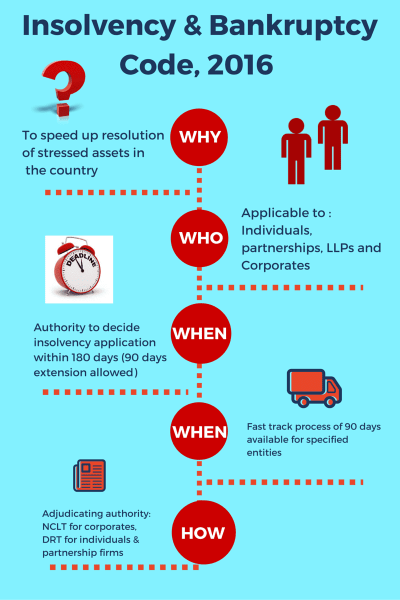



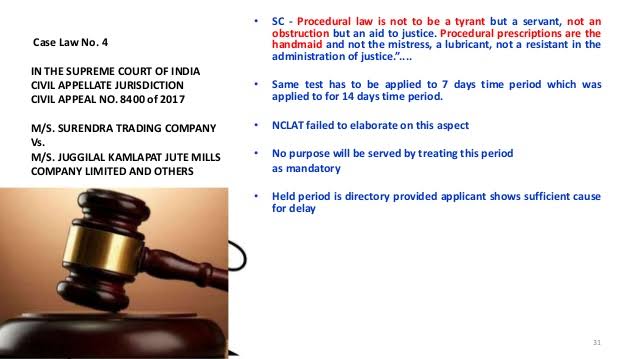
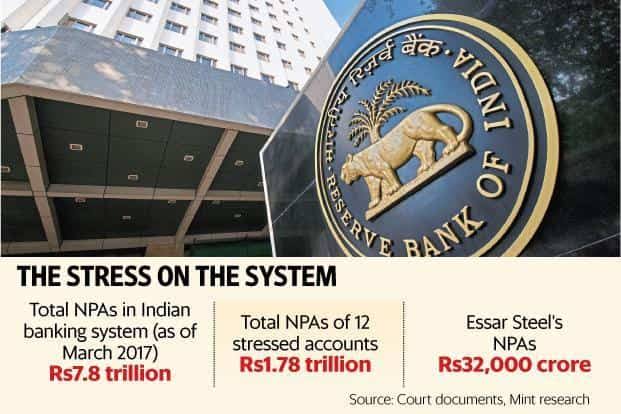

 Eduindex
You must be logged in to post a comment.