Your work is your identity, your work is everything.
I want to tell you that, your work ethics, the way you work is everything, a person is only identified by his or her actions, the things he or she has done, the values he or she has given to the society.
Life is like an illusion, no one has discovered the real meaning of life yet. We don’t even know why the God has created this world, and what is the purpose of life, but one thing I have observed so far is that your words are imperishable even after life, people will remember you by your work ethics by the values you have given to them, by the words you’ve spoken out, and it’s explicit that no matter how intelligent you’re unless you haven’t done anything no one would value your sayings.
A person is not identified by the cast he or she has born in, not by the amount of money he or she earns, not by the brands he or she wears, not by the phone he or she uses, a person is identified by his or her karmas only. There is no scale to measure one’s intelligence, like you can’t judge somebody’s intelligence based upon his or her English speaking skills, language is just a medium of conveying feelings or nothing else.
Now, I am sharing 2 examples down below to convey my message:-
(I) A.P.J. Abdul Kalam :- We always remember him as Missile Man of India, for his work and development of ballistic missile, as a visionary, a hardworking, a pragmatist, a great leader and as a person who has influenced the life of many. We never remember him by his cast, by his face, by the car he used to drive, or by the brand he used to wear.
Let’s take another example of an extremely popular writer named Premchand, he was famous for his modern Hindi- Urdu literature. He is one of the most honoured writer of the Indian subcontinent, and regarded as one of the foremost Hindi writers of early 20th century. Premchand’s writing are very famous till date, as you have definitely read some of his stories in your textbooks, many of the directors filmed Premchand’s stories as series and aired them on television. For your ease let me tell you that he was a very simple man, he never had the most expensive clothes, and a writer named Harishankar Parsai wrote a story named “Premchand ke phate joote” / Premchand’s torn shoes” about him, that story was an irony on Premchand, in which Harishankar Parsai wrote that Premchand was a very grounded and simple man, in the story Harishankar Parsai highlighted Premchand’s personality in a way as he wanted to show that Premchand wasn’t an ostentatious person, in simple words he wasn’t a show off favourite person. Once he got clicked a picture with his wife and in that picture his shoes were torn out, and the writer used that incident as the story he plotted as PREMCHAND’S TORN SHOES, eventhough he didn’t supported him if you will read it in depth you would understand that it was an ironical story, anyway I don’t want to bother you much about Premchand and Harishankar Parsai but my motive of stating it here was to make you understand that your personality builds with your work not with your dressing sense or the things and the stuff you have.
The world will never remember you by the things and stuff you have, people will always remember you by the work you’ve done. – Vaishali Singh.
Section 58 of transfer of property act defines the terms mortgage, mortgagor, mortgagee, mortgage money and mortgage deed.
Section 58 of transfer of property act. Mortgage is the transfer of an interest in specific immovable property for the purpose of securing the payment of money advanced or to be advanced by way of loan, existing or future debt, performance of an engagement which may give rise to a pecuniary liability.
What is a Mortgage ?
A mortgage or charge is granted by a borrower in favour of a lender to secure repayment of a loan. If the borrower fails to pay back the debt, the mortgage gives the lender the right to take possession or to sell the property. The mortgage must be registered against the property at the appropriate registry. Each province has its own mortgage and registration rules.
What is a mortgage discharge ?
A mortgage discharge (also known as a “release”) is the removal of a mortgage from the registry in which it was listed. Once the mortgage has been discharged, the lender loses any rights it had against the property under the mortgage. The borrower must pay the legal fees for preparing and registering the mortgage, as well as any administrative fees charged by the lender.
Conclusion
Mortgage is a legal instrument which is used to create a security interest in real property held by a lender as a security for a debt it is the lenders security for a debt. In other words the mortgage is a security for the loan that the lender makes to the borrower.
The case of Kanti Ram vs Kutubuddin is perfect to answer this question. Sale of mortgage property or suit for sale of mortgaged property without redeeming prior mortgage form of decree sections 48,58,60,86,88,96 and 97 of transfer of property act. The plaintiff is not entitled to bring to sale the mortgaged property without first redeeming the prior mortgages. The lower court have proceeded upon a mistaken view of the law on the subject, and that they are entitled to bring to sale the mortgaged property subject to the lien of the prior mortgages and that would be acquired by th purchaser under the sale is the equity or redemption which existed in the hands of the mortgagor at the time of the second mortgage. The right of the mortgagor to redeem the prior mortgages. And on the other hand it has been contended on behalf of the respondents relying mainly upon the case of mata din kasodhan vs Kazim Hussain.
Recently, the Indian government announced that it would ban 59 widely used apps (such as Tik Tok, ShareIt, Cam scanner etc.), which are heavily linked to Chinese companies. The Department of Electronics and Information Technology (MeitY), has requested the Information Technology (IT) Act, 2000 to address concerns about data security and the national sovereignty associated with these applications.
Although the government has proposed the ban from a data security and privacy perspective, the move is seen as part of a plan to retaliate against Chinese intrusion into Ladakh.
Given that the Indian digital economy is one of the largest markets in the world, such a ban will surely affect China’s corporate ratings. However, such a move is likely to contribute to the India-China border dispute.
The achievement of this Ban
No More Dependence on Passive Diplomacy: The decision to ban these applications, which comes amid ongoing tensions between India and China, is a clear message from India that it will no longer be a victim of China’s Nibble and Negotiate policy and will review China’s policies for participation.
Damaging the Chinese Desire: Prohibition could affect one of China’s most ambitious goals, namely the 21st century digital power.
Recognizing the Importance of Data: The banning of the Indian application, as well as the restrictions on telecom Hardware-related and portable devices, is based on the acceptance that data distribution and digital technology is a new global energy currency.
Combined Problems Data Privacy Issue is not restricted to Chinese applications: MeitY has blocked applications from reporting and sending unauthorized user data to servers located outside of India. However, data privacy and data security concerns are not limited to Chinese applications. Injuries Already Done: Banned apps were very popular in India and the blockchain move comes after these apps have already collected hundreds of millions of users in India. India’s Economic Downturn in China: The ban on China’s mobile applications is a soft target, as India remains dependent on Chinese products in a number of critical and technological sectors. From semiconductors and active pharmaceutical ingredients to the telecom industry, Chinese retailers are involved not only in India’s 4G network but also in ongoing 5G tests. Also, China’s finances are currently important in supporting India’s start-up economy. Many Indian Unicorns such as Paytm, Zomato, Byju have Chinese shareholders.
The Way Forward: Strengthening Data Security Building Releases Expired Rules: India’s digital applications are governed by obsolete, unsuitable rules in today’s digital environment. The Information Technology Act, 2000 (20-year law) is intended for the business process of cleaning up the environment, not modern applications or platforms. Similarly, copyright law, which provides incentives and protection for much of the content that resides at the heart of the digital economy, was last amended in 2012. Therefore, there is a strong case for reviving important laws and for their adaptation to change the digital environment. The Need for a Data Protection Act: Data privacy and security remains a major challenge from the ever-changing digital revolution. Therefore, data protection law was enacted for a long time. In this regard, the Indian parliament must expedite the enactment of the Data Protection Bill (PDP), 2019. The Need for Development Alternatives: The Indian government’s ban on access to citizen data is nothing new. Similar steps have been taken by China, as mobile apps like Whatsapp, Facebook have been banned in China for years. However, the Chinese government was quick to relocate billions of its users. Even today, with the same Chinese services like WeChat, Weibo is competing for a prestigious competition to establish digital global players. Therefore, the recent ban is a good opportunity for Indian intervention.
You can reduce your chances of becoming infected or spreading COVID-19 by taking simple safety measures:
Always wash your hands with alcohol-based soap or wash them with soap and water. Why? Washing your hands with soap and water or using an alcohol-based rub can kill germs on your hands.
Keep at least 1 meter (3 meters) between you and others. Why? When a person coughs, whispers, or speaks, they spray small droplets on the nose or mouth that may be infected. If you are too close, you can breathe droplets, including the COVID-19 virus if a person has the disease.
Avoid crowded places. Why? When people gather in crowds, you are more likely to meet someone with COVID-19 and it is very difficult to maintain a physical distance of 1 meter (3 meters).
Avoid touching your eyes, nose, and mouth. Why? Hands touch many places and can get germs. When contaminated, hands can transmit the virus to your eyes, nose, or mouth. From there, the virus can enter your body and infect you.
Make sure you and the people closest to you, follow good breathing hygiene. This means covering your mouth and nose with elle or your curved tissue when you cough or sneeze. Then immediately dispose of used tissue and wash your hands. Why? The droplets spread the virus. By following good respiratory hygiene, you protect people around you from infections such as colds, flu and COVID-19.
Stay at home and isolate yourself from even minor symptoms such as a cough, headache, mild fever, until you recover. Ask someone to bring you the goods. If you need to get out of your house, wear a mask to avoid infecting others. Why? Avoiding contact with others will prevent them from potentially COVID-19 and other viruses.
If you have a fever, cough and difficulty breathing, seek medical help, but call ahead if possible and follow the directions of local health authorities. Why? National and local authorities will keep up-to-date on this situation in your area. Calling early will allow your healthcare provider to direct you to the appropriate health facility. This will protect you and help prevent the spread of germs and other diseases.
Keep up to date with the latest information from trusted sources, such as the WHO or your local and national health authorities. Why? Local and national authorities are best advised on what people in your area should do to protect themselves.
Safe use of alcohol-based cleaners To protect yourself and others from COVID-19, wash your hands often. Use an alcohol-based sanitizer or wash your hands with soap and water. If you use an alcohol-based sanitizer, be sure to use it and store it carefully.
Keep alcohol-abuse barriers out of the reach of children. Teach them how to use the sanitizer and monitor its use. Put the amount of money in your hands. There is no need to use a large amount of product. Avoid touching your eyes, mouth and nose immediately after using an alcohol-based sanitizer, as it may cause irritation.
Hand sanitizers are recommended for the protective protection of COVID-19 from alcohol and therefore can be flammable. Do not use before handling fire or cooking. In any case, drink or allow children to swallow an alcohol-based sanitizer. It can be toxic. Remember that washing your hands with soap and water is also effective against COVID-19.
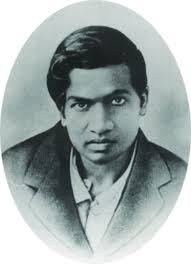
Srinivasa ramanujan (1887-1920) was born on 22nd Dec 1887, ThursdayKumbakonam city, Erode District atTamilnadu. Mother’s name was Komlattamal and father’s name was Srinivas Iyengar. He learnt bhajan, Ramayana and mahabharata stories from his parents. Srinivasa Ramanujan was an Indian mathematician who lived during the British Rule in India. He made great contributions in such areas as number theory, continued fractions, and infinite series, despite not having any formal education in math.
Ramanujan’s primary education was started on 1st Oct 1892 and day was Vijayadhashami. One day in maths class, teacher taught if you distribute 8 bananas into 8 children, each will get 1 banana. It means if you divide any number by same number then result comes out be 1.
Ramanujan :- What if we divide 0 from 0.
Teacher :- Obviously 1.
Ramanujan :- It’s not 1 sir, it’s undefined actually. If there is no banana and nobody then how it is possible to distribution of banana.
Teacher was baffled.
During school time, he had solved college level Mathematics. His estimated IQ was 185. Srinivasa was in such poverty that he often sustained on minimal foods and did not even have enough money to obtain paper for his studies. As a result, he used slates for his mathematics and cleaned them with his elbow, leading to bruises and marks. A child prodigy by age 11, he had exhausted the mathematical knowledge of two college students who were lodgers at his home. He was later lent a book written by S. L. Loney on advanced trigonometry. He mastered this by the age of 13 while discovering sophisticated theorems on his own. By 14, he received merit certificates and academic awards that continued throughout his school career, and he assisted the school in the logistics of assigning its 1,200 students (each with differing needs) to its approximately 35 teachers.
At the age of 15, Srinivasa Ramanujan obtained a copy of Synopsis on Elementary Results in Pure and Applied Mathematics, which contained 5,000 theorems, but had either brief proofs or did not have any. C Ramanujan then took to solving each of the theorems, eventually succeeding. Ramanujan had obtained a scholarship for the University of Madras, but he ended up losing it because he neglected his studies in other subjects in favor of mathematics.
On 14 July 1909, Ramanujan married Janaki ammal (1899 – 1994). After the marriage, Ramanujan developed a hydrocele testis. The condition could be treated with a routine surgical operation that would release the blocked fluid in the scrotal sac, but his family could not afford the operation. In January 1910, a doctor volunteered to do the surgery at no cost. After his successful surgery, Ramanujan searched for a job. He stayed at a friend’s house while he went from door to door around Madras looking for a clerical position. To make money, he tutored students at Presidency College who were preparing for their F.A. exam. In 1913, he sent a letter of 11 pages with 120 theorems to Cambridge University Professor G.H.Hardy. He invited him to England. Overcoming his religious objections, Ramanujan traveled to England in 1914, where Hardy tutored him and collaborated with him in some research.
some of his integration work
With the help of Hardy within 1 year he published 9 research papers. Just because of his research papers he got degree of B.A. and he was elected as Fellow of Royal Society. He was the youngest Indian to receive this honor.
Ramanujan’s knowledge of mathematics (most of which he had worked out for himself) was startling. Although he was almost completely unaware of modern developments in mathematics, his mastery of continued fractions was unequaled by any living mathematician. He worked out the Riemann series, the elliptic integrals, hyper geometric series, the functional equations of the zeta function, and his own theory of divergent series. On the other hand, he knew nothing of doubly periodic functions, the classical theory of quadratic forms, or Cauchy’s theorem, and he had only the most nebulous idea of what constitutes a mathematical proof. Though brilliant, many of his theorems on the theory of prime numbers were wrong.
In England Ramanujan made further advances, especially in the partition of numbers (the number of ways that a positive integer can be expressed as the sum of positive integers,for instance, (4 can be expressed as 4, 3 + 1, 2 + 2, 2 + 1 + 1, and 1 + 1 + 1 + 1). His papers were published in English and European journals, and in 1918 he was elected to the Royal Society of London. In 1917 Ramanujan had contracted tuberculosis, but his condition improved sufficiently for him to return to India in 1919.
Once a interesting incident took place. Ramanujan was ill and admitted at hospital. Prof. Hardy came to visited him. Then midst conversation Hardy said, i came from the cab and number of that cab was 1729.
“It is a very interesting number, it is the smallest number expressible as the sum of two cubes in two different ways.” He found a special property, and even tested that it was the smallest number with such a property, all in a few seconds.
1729 = (10)3 + (9)3 = (12)3 + (1)3.
After that this kind of numbers were known as Ramanujan Numbers.1729 is smallest Ramanujan number.
After contracting tuberculosis, eventhough the mathematician recovered enough in 1919 to return to India, but died the following year, without much recognition. However, the mathematics community recognized him as a genius without peer.The genius mathematician left as his legacy three notebooks and a huge bundle of pages, which contained unpublished result which were being verified by mathematicians many years after his death.
India was ruled by Muslims from 1206 to 1857. Their rule, however, was almost on the verge of end since Aurangzeb died in 1707. The British Empire in India was laid down by a company, the East India Company. The ultimate purpose of the company was to grow the British interests in the overseas countries. The representatives of the Company arrived first in the country in 1604.
By 1661, the Company had developed factories in Surat, Madras and Bombay in India. The Company started delivering justice arbitrarily which could be called as “traders’ justice” under the Charters. The Company’s officials, however, were all traders and had no legal background. Before 1726, judiciary developed in the three presidencies without any uniformity of laws. Then came in the Charter of 1726 which focused on this specific issue in all the three places. Importantly, this Charter derived authority of adjudication from just the Kings and not the Company officials.
Municipal institutions were established in the presidency towns which strictly followed the laws of England. Especially since the charter allowed disputes between natives to be heard by these institutions only on request by the Indians. This act of the Company gained the trust as it showed respect the sovereignty of local rulers. The main role of the company until 1757 was the facilitation of trade and commerce.
By 1717, the Company had secured the right to control and collect revenue of villages near Calcutta. After the battle of Plassey, the Company had installed Mir Jafar as the Nawab of Calcutta. He surrendered the Zamindari of the twenty-four Parganas to the Company which is around eight hundred square miles. It was called the “moffussil”. The Company then provided the adalat system for the administration in the moffussil.
In 1765, Shah Alam granted the Diwani also called revenue administration the three cities Bengal, Bihar and Orissa to the Company for an amount of twenty-six lacs of rupees per annum. Then came in the 1772 plan which provided for a Moffussil Diwani Adalat in each district. It comprised of a Collector as judge to decide civil cases. The court was to apply the Quran for the Muslims and for Hindus it applied the Shastras. The Regulations of 1793 later modified the same and referred them as “Hindu Law” and “Mohammedan Laws” instead of the Quran and the Shastra respectively. Similarly, the Collector took the advice of a Qazi for Muslim cases and in the case of Hindus, the advice of a Pundit.
The criminal justice system in 1790 was taken from the Muslim Qazis, Muftis and Maulvis and handed over to the Company’s English officials. The Muslim Law officers advise the courts. Subsequently, the Regulation of 1773 authorized the Calcutta Supreme Court to enroll English, Irish and Scottish advocates in law.
In 1793 Cornwallis created a regular profession by authorizing the Sadar Diwani Adalat to enroll pleaders or lawyers for all Company’s courts. It could be both Muslims and Hinds. The War of Mutiny also called the war of independence, 1857 changed the fate of India as the Bill of 1858 handed the entire possession of government of the Company of all the territories to the Crown. In 1833, the Privy Council was established. High Courts were established in 1861 in the presidency towns Calcutta, Madras and Bombay. Early Law reporting as a private enterprise was introduced for the evolution of the doctrine of precedent. Authentic law reporting began alongside the Indian Law Reports Act, 1875. Thus, Early Law reporting and Authentic Law reporting served as the two indispensable necessities for implementation of the doctrine of precedent. It also proved successful in drawing the hierarchy of courts and the emergence of authentic law reporting was positively executed in 1875.
In 1937, a Federal Court for India was established.
The Supreme Court of India was established on the same set of principles. An appeal from the federal court laid to the privy council which served as the ultimate court of request. But the system could not prevail for much time with the independence of India. The independence of India also made inescapable changes to the structure of the judiciary. The replacement of the Privy Council with the Supreme Court to serve as the ultimate court in India being the hugest of all changes. The Indian Legal System now, consists of various level of courts and one Supreme Court. The Supreme Court serving as the ultimate court of request.
Effectiveness in the firm just can’t be limited to the efficiency with which an association is able to meet its objectives and needs but also the new A game of organizations is based on its productivity. Effective contributions of individual employees and groups results in organizational effectiveness. The whole smart game in the tactics depends upon individual’s additional contributions like strategic choice , technological units , stocked up structure , processed date and organizational culture. Commitment to involvement in each of the firm’s business activities and tasks assigned results in productive hours of group or individual work which is captivatingly appealing to the coworkers under the chief subordinates. The whole subject of organizational effectiveness can be summed up as the degree of congruence between two ends of inputs and outputs that a firm has.
Mode of approach – Regardless of goal or system resource approach the firm needs more than just a resourcing aspect to it , which also entitles to the acknowledgement of small and unnoticed firms which are trying to collaborate with the reputed firms in order to share the limelight on business levels of management. The rational goal or goal attainment approach is the key to change any confused atmosphere in the organization irrespective of conditions applied. Since alternating between all the considerable and jotted down approached in a firm the organizations should start to work their A game in businesses.
The ghost of phone tapping in Indian Politics has returned, this time in Rajasthan. After releasing three audio clips by the congress, BJP has alleged the state government of doing illegal phone tapping. BJP spokesperson Sandeep Patra has asked for a CBI probe. Patra accused, chief minister Ashok Gehlot of “manufacturing lies” and undertaking “illegal measures like phone-tapping” to save his government. He said that, “The Congress has a history of phone-tapping.”
On the other hand Bahujan Samaj Party chief Mayawati named Ashok Gehlot, a serial offender and alleged him of acting illegally. Mayawati called for President’s rule in the state. While the Congress has refuted the claims of phone tapping and said that the audio clips were sourced from the social media.
Political History of Phone Tapping
Tapping of phones for political gain is illegal but not rare in Indian Politics. Be it in 2010 phone tapping case between then IPL Chief Lalit Modi and NCP supremo Sharad Pawar, in 2017 Kerala, in 2018 Karnataka or in 2019 Chhattisgarh. Even the phones of Rashtrapati Bhavan had also been bugged.
Last year hearing the matter of Chattisgarh Phone Tapping case, the Supreme court of India had remarked that, ‘No Privacy Left For Anybody’. The bench of justices Arun Mishra and Indira Banerjee, had sternly said that, ‘‘what is the need to do (things) like this? No privacy is left for anybody. What is happening in this country?”
Procedure for Phone Tapping:
Though the country has seen various infamous instances of phone tapping, but there are laws which allows phone tapping in certain circumstances legal. Under entry 31 of the Union List of the Constitution and Entry 7 of the Federal List of the Government of India Act, 1935, telephonic along with other communication devices is mentioned. And both the Central government and the State government has the right to tap phones of people under Section 5 (2) of the Indian Telegraphic Act, 1885.
Section 69 of the Information Technology Act, 2000, empowers the central government or a state government to intercept, monitor or decrypt or cause to be intercepted or monitored or decrypted, any information generated, transmitted, received or stored in any computer resource in the interest of the sovereignty or integrity of the country.
This power of interception is to be executed as per the provisions of law, rules and Standard Operating Procedures (SoPs), approved by the Union Home Secretary in case of central government and by the Home Secretary of the state concerned in case of the state government.
Only ten agencies are authorised for phone tapping: (i) Intelligence Bureau, (ii) Central Bureau of Investigation, (iii) Enforcement Directorate, (iv) Narcotics Control Bureau, (v) Central Board of Direct Taxes, (vi) Directorate of Revenue Intelligence, (vii) National Investigation Agency, (viii) R&AW, (ix) Directorate of Signal Intelligence and (x) Delhi Police Commissioner.
Such authorities must seek permission from the Home Ministry before they tap the calls of the person. In the application to the Ministry, the agency has to mention reasons and the needs for tapping the phone calls. In the case of State, the permission has to be taken from State Home secretary.
Remedies:
Unauthorized tapping or interception is a violation of the right to privacy, and the aggrieved party can file a complaint with the National Human Rights Commission.
The aggrieved party can also file an FIR against unauthorized tapping.
The aggrieved person can also move to the Court against the person doing any unauthorized act under Section 26 (b) of the Indian Telegraphic Act.
The population of a state is divided into two categories: citizens and non-citizens. A citizen of a state enjoys all civil and political rights. A non-citizen, on the other hand, doesn’t enjoy these rights.
Under the Indian constitution, certain fundamental rights are available only to the citizens, namely: Right against discrimination on the grounds of religion, race, caste, sex or place of birth (Article 15); right to equality of opportunity in matter of public employment (Article 16); freedom of speech and expression, assembly, association, movement, residence and profession (Article 19); cultural and educational rights (Article 29 and 30); and right to vote and become members of the union and state legislatures.
Several offices can also be occupied exclusively by citizens: president (Article 58(1)(a), vice-president (Article 66(2)), judges of the Supreme Court (Article 124(3)) and high court (Article 217(2)), governor of a state (Article 157), attorney general (Article 76(1)) and advocate general (Article 165).
Equality before the law or equal protection of the laws within the territory of India (Article 14 ) and protection of life or personal liberty (Article 21) are applicable to non-citizens as well.
Persons who were deemed to be citizens of India when the constitution was promulgated?
Citizenship by domicile (Article 5): A person who was born in India or either of the person’s parents was born in India or the person must have been an ordinarily resident in the territory of India for not less than five years immediately before the commencement of the constitution. Domicile of a person is in that country in which the person either has or is deemed by law to have his/her permanent house.
Citizenship of migrants to India from Pakistan (Article 6): Persons who have migrated from Pakistan to India have been classified into two categories: i) those who came to India before July 19, 1948, and ii) those who came on or after July 19, 1948.
Citizenship of migrants of Pakistan (Article 7): If a citizen of India has migrated to Pakistan after March 1, 1947, but returned to India on the basis of permit for resettlement in India, the person is entitled to become a citizen of India if he/she registers herself as a citizen of India, after residing for at least six months immediately before the date of applying for registration, by an officer appointed by the government of India.
Citizenship of persons of Indian origin residing outside India (Article 8): Indian nationals (whose parents or any grandparents were born in India as defined in the Government of India Act, 1935) residing abroad shall be conferred Indian citizenship, as if they have been registered by the diplomatic or consular representatives of India in the country where they are residing.
Provisions under the Citizenship Act, 1955
Citizenship by birth: Anyone born in India on or after January 1, 1950, would be deemed a citizen by birth. This limit was further amended to include those born between January 1, 1950 and July 1, 1987.
By the Citizenship Amendment Act, 2003, persons born after December 3, 2004, would be deemed to be citizens of India if either of the parents is Indian or one of the parents is a citizen of India and the other was not an illegal migrant at the time of the person’s birth.
Citizenship by descent: A person born outside India shall be deemed to be a citizen of India if either of the person’s parents was a citizen of India at the time of his/her birth provided that the birth is registered within one year of its occurrence or commencement of the Act, whichever is later, at the Indian consulate.
Citizenship by registration: A person may be registered as a citizen of India, if the person is married to a citizen of India or has been a resident of India for five years immediately before making an application for registration.
Citizenship by incorporation of territory: If any new territory becomes a part of India, the government of India shall specify the persons of the territory to be citizens of India.
Provisions in the Citizenship (Amendment) Act, 2019
The newly amended law provides for granting of Indian citizenship to Hindus, Sikhs, Jains, Buddhists, Parsis and Christians from Pakistan, Bangladesh and Afghanistan who came to India on or before December 31, 2014. The law will not be extended to Rohingya Muslims persecuted in Myanmar; Shia and Ahmadiyya Muslims in Pakistan; Hazaras, Tajiks and Uzbeks in Afghanistan; Tamils in Sri Lanka; and atheists in Bangladesh.
No matter where you live in world, one thing that you always count on is that you will be paying taxes to local government. Every person in country has to pay taxes in any form. It is said by one of the scholar that death and tax are very important for every individual.If a man is alive then he has to pay tax in any condition. Covid 19 has brought new challenges for India’s economic growth that has been slowdown since Lockdown. It is estimated that central government earns Rs 2.48 lakh crore annually from exercise duty on liquor. Due to lockdown the whole nation was shut down due to which there was an acute liquidity shortage. As Country walks to exit strategy from lockdown to unlock l , the highest taxes were imposed on liquors and fuels. Liquor is an important source of earning for both centre and state government. Taxes on liquor and petroleum girls have raised very high as government were running out of cash in this lockdown. They faced difficulties to pay salaries to public servants. Moreover, 40% part of salaries are cut down this month. Delhi increases the prices of liquor by 70% within this month after seeing liquor shops being overcrowded. Other states have also followed the same route. Some states like Haryana, Nagaland have increased the rates of petroleum fuels. All the states are pondering each other’s option to increase their revenue in this harsh time of COVID 19. Business are finding difficulty to run and they are not able to pay their income tax returns which is to by every individual. The rate of unemployment rises to 27.11 percent . Indian railways , metros , airlines,buses are most affected during this coronavirus lockdown. Indian Railways have stopped all train passengers services, metro which have more than 500 routes in Delhi only are closed since Lockdown that is most important source of revenue for state government. It is estimated that Indian Railways had great loss around Rs 12,500 core – Rs 6500 crore due to closure of Indian Railways since 2 months. Public Transport has zero revenue since coronavirus lockdown. The demand for transport has reduce as people take the practice of work from home, opt online shopping, online streaming movies and order food online through delivery apps. But to recover these losses government decided to jerk all trains and flight services in which they double the price of tickets of flights. But government realised that businesses also need some support in this worst affected time because many companies risk bankruptcy or their permanent closure . The COVID 19 crises had significant impact on business, market stock , government coffers. The government also being very supportive during this time, finance minister Ms Nirmala Sitharaman has announced various relief related to taxation, insolvency and bankruptcy code and many more. The deadline of taxpayers has increased to 30 June,2020 and late fee penalty have also been waived off. Now, there is no charges on cash withdrawal from other ATM banks .
Tax is a kind of vital ingredient which contributes huge amount to our economy . In this crucial time of disease like COVID-19 various steps were taken by Indian government to safeguard its people , lockdown was one of them . Due to lockdown country’s economy was at a break and as the time passed , it dropped at a very rapid rate . Revenue from various sectors of the society was unable to be generated but with passage of time the heads of the country are slowly unlocking it as it is really necessary to take care of the economical status for a country like India , which is yet in a developing stage
India is the largest democracy in the world. Elections are the most integral and important part of politics in a democratic system of governance. True democracy can function only when elections to the offices of power are held in a free and fair manner.
However, corrupt politicians with criminal records, caste- and religion-based politics, and allegations of vote-buying, have defeated the very purpose of such democratic process.
Issues in Electoral Politics in India
There are multiple issues plaguing the electoral process in India. Some of the most prominent ones are mentioned below.
Money Power
In every constituency, candidates have to spend crores of rupees for campaigning, publicity, etc. Most candidates far exceed the permissible limit of expenses.
Muscle Power
In certain parts of the country, there are widespread reports of illegal and untoward incidents during polling such as the use of violence, intimidation, booth capturing, etc.
Criminalisation of Politics and Politicization of Criminals
Criminals enter into politics and ensure that money and muscle power wins them elections, so that the cases against them are not proceeded with. Political parties are also happy as long as they have winnable candidates. Political parties field criminals in elections for funds and in return provide them with political patronage and protection.
Vote-buying:
The rise of illegitimate expenditure on vote-buying has become a matter of great concern as it is making only the rich to be more qualified to become an MP (Member of Parliament) or an MLA (Member of the Legislative Assembly) over a well-qualified public-spirited person.
As can be seen, out of 533 candidates elected to the 17th Lok Sabha (2019-present), 475 Parliamentarians (accounting for 88%) are ‘crorepatis’. This reflects the paradoxical situation of poor India with rich Parliamentarians raising concerns about the growing role of money power in politics.
Casteism
There are cases of certain caste groups lending strong support to particular political parties. Thus, political parties make offers to win over different caste groups, and caste groups also try to pressurize parties to offer tickets for their members’ elections. Voting on caste lines is prevalent in the country and this is a serious blotch on democracy and equality. This also creates rifts in the country.
Communalism
Communal polarization poses a serious threat to the Indian political ethos of pluralism, parliamentarianism, secularism and federalism.
Flaws in the Criminal Justice System
In India, an accused is presumed to be innocent unless pronounced guilty by the Courts. The rate of conviction for politicians is abysmally low, with just 6% in criminal cases. This implies that a large number of accused politicians with criminal background actually go unpunished from a Court of law, and are not disqualified from contesting elections further.
Systematic Voters’ Education and Electoral Participation Programme (SVEEP): ECI organizes voter awareness campaigns in order to educate the voters.
Measures by Judiciary
Supreme Court in following cases recommended various reforms:
In Union of India versus Association of Democratic Reforms 2002 case: Contesting candidates need to disclose all their assets and liabilities, criminal convictions, etc. at the time of filing their nomination paper.
In Ramesh Dalal versus Union of India 2005 case:A legislator is disqualified from contesting elections if, on the day of filing the nomination papers, he/she stands convicted in a Court of law.
In Lily Thomas versus Union of India 2013 case:The nature of disqualification for being a member of the House as provided under Article 101(3) & 190(3) is automatic and takes place with immediate effect.
In People’s Union of Civil Liberties versus Union of India 2013 case: Voters enjoy “Right to Negative Vote” in the election process and directed the ECI to include the choice of “NOTA” in the ballot paper.
Following are the Constitutional articles related to electoral reforms:
1. Article 324-329 deals with elections and electoral reforms.
2. Article 324 deals with the Superintendence, direction, and control of elections to be vested in an Election Commission.
3. Article 325 states that no person to be ineligible for inclusion in or to claim to be included in a special, electoral roll on grounds of religion, race, caste or sex.
4. Article 326 deals with the Elections to the House of the People and to the Legislative Assemblies of States to be on the basis of adult suffrage.
5. Article 327 provides power to the Parliament to make provision with respect to elections to Legislatures.
6. Article 328 provides power to Legislature of a State to make provision with respect to elections to such Legislature.
7. Article 329 provides to create a bar on the court to make any interference by courts relating to electoral matters.
Reforms needed:
Law Commission in its 255th Report on Electoral Reformsinter-alia recommended strengthening of the office of the ECI in order to provide more independence and tooth to the institution.
The ‘First Past the Post System’, in which a person with the highest votes (even with one extra vote) is declared winner, needs to be changed. Rather, a minimum percentage of total votes polled can be fixed for declaring a candidate as the winner. This could restrict the criminals from getting elected as not everybody in a constituency votes on party lines.
At Party Level
Limit on Party Expenditure: There must be a limit on the expenditure of the party. A time frame must be set for accounting the expenditure of parties and must be made public before the actual date of elections so that the voters and the concerned authorities could be priorly informed.
Consequently, audit of political parties accounts must be conducted in order to make them accountable.
Voters need to be educated regarding the significance of their vote. They should be made aware & well-informed about the candidate they seek to vote, thereby rejecting those who try to entice them with freebies.
Conclusion
In conclusion it can be said that the Election Commission of India needs to be stricter regarding the implementation of the election reforms. It is observed that the Election Commission is working on a “Chalta hai Attitude” which is not good for the development of the healthy democracy in the country.
A very fascinating development in indian constitution give dimension to article 21. Article 21 is considered as heart of fundamental rights. It includes right to privacy that is an intrinsic part of right to life and personal liberty guaranteed by part III of the constitution. Privacy- A state in which one is not observed or disturbed by other people. Legally it is right to be left alone or freedom from interference or intrusion. In 2012, Justice K.S Puttaswamy, a retired judge of HC , filed a writ petition in SC challenging the constitutional validity of Aadhaar scheme that violates right to privacy. Before, this in MP Sharma vs Satish Chandra,1954 (8 Judge bench) and Kharak Singh vs State of UP, 1964 ( 6 judge bench) government argued that there was no constitutional right to privacy in article 14, 19 and 21. This matter was first placed before 5 Judge Bench and subsequently reffered to 9 Judge Bench on 18 July, 2017. Issues- Whether Right to privacy is an intrinsic part of right to life and personal liberty under article 21
Whether decision in MP Sharma vs Satish Chandra and Kharak Singh vs State of UP is correct in law?? Judgment
A nine Judge bench upheld that right to Privacy is a fundamental right and is protected under article 21.
They overruled previous judgements i.e. MP Sharma vs Satish Chandra and Kharak Singh vs State of UP in which it was it held that there is no fundamental right to privacy.
Also , the triple test laid down in the judgement to check if it infringe privacy. 1) Existence of a law that would legalise the collection of data. 2) The purpose goal is national interest, security etc that justifies collection of data. 3) Test of proportionality to establish the connection between data collection and the objective which state is claiming to achieve.
The SC also said that sexuality or sexual orientation is also protected under privacy. Thus had an impact on SC judgement in one of the leading case i.e. Navtej Singh Johar Case that declare Section 377 of IPC unconstitutional and curtail Right to privacy.
The judgement also recognised the right to food as right under larger ambit of privacy.
The judgment also stressed on the need for a data protection law to keep data in privacy.
Based on triple test, Aadhar was declared constitutional. Conclusion In this judgement SC declared Privacy to be an integral part of the constitution which comes under the combit of Article 14 to 21 , part 3 and others. Article 14,19,and 21 is the golden triangle under which right to privacy is protected.
The COVID-19 pandemic is a major public health crisis which has affected the entire Economy and it’s stakeholders especially from the macro economy angle. Due to the novel coronavirus which spread widely the entire supply chain has been badly hit, not only has it disrupted and cut-off the Indian Economy but this has resulted in widespread economic losses across all the economies of the world.
It has caused widespread damages, hinderances and inconvenience especially in regards to the interruptions of people’s movement which has in turn halted and jolted the entire production line and activities which also poses as a serious risk to the macro economy.
Apart from having devastating and damaging effects on human lives, it has claimed over 543,605 lives and infected over 11 million people all around the world. The novel coronavirus (COVID- 19) has significantly knocked down not just the Chinese economy from where it emerged but also the global economy.
Kristalina Georgieva, Managing Director of the International Monetary Fund has officially confirmed that we have entered into a recession as bad as or even worse than that of 2009.
In order to revive the economy by 2021 we first must contain the virus at the earliest by hook or by crook. In Italy the number of confirmed cases are increasing and depicting a spiking up trend with over 1.8 million in the United States and also the number of deaths increasing in Italy and the UK which was under a 6 months long lockdown, this seems like a far blown possibility.
FACTORS REQUIRED TO DETERMINE THE EFFECTS OF COVID–19
There are 3 factors which is to be analysed and discussed in order to get a clear understanding about the plausible damages caused due to this pandemic, they are as follows:-
1) Demand
2) Supply
3) Finance.
On the demand side declining income, fear of contagion, reduced working hours, possible layoffs, absence of vaccine has detrimental effect especially in the service sector.
On the supply chain as the manufacturing line took a bad hit and almost came to a standstill, the manufacturing activities in the most affected regions were badly affected and this resulted in bottlenecks in the global value chain
China is reopening its factories but due to the COVID-19 pandemic the manufacturing companies abroad are finding it exceedingly difficult to purchase products in and ship them out of China.
The Covid-19 is posing an unprecedented Global Public Health Emergency and this has resulted in also creating financial distress in the form of drying up of liquidity, providing credit and meeting contractual obligations.
As a matter of fact, demand, supply or financial disruptions, might not directly affect but they do have a profound indirect effect on the legal field.
IMPLICATIONS OF COVID-19 PANDEMIC ON THE LEGAL FRATERNITY
The last two decades have seen an exponential growth in the legal field. As per the Bar Council of India( apex body of Indian Legal Professionals) the Indian legal profession consists of approximately 1.2 million registered advocates, around 950 law schools and approximately 400-500 thousand law students across the country and high numbers are seen across the world. This data is as per the Vision Statement of the year 2011-2013.
While the supply side of the legal education remains almost the same year after year, barring minor changes, this recession will surely contract the manufacturing and service sector. Thus, the demand for the new entrants in the legal industry might observe a sharp fall.
As the economy is in a recession due to COVID-19 pandemic, the legal industry will be affected by it, but How? In order to predict the future the past must be examined. In 2008 Global economic crises the event’s that took place need to be analysed and only then we will know how brave the 2020 recession shall be as the contours of legal landscape look more or less the same.
The impact of an economic recession on the legal profession has been disastrous as this has resulted in mass layoffs, hire freezing and salary decreases and this has in turn rendered an overwhelming amount of law graduates unemployed.
The legal field in the last decade witnessed methodical changes, remoulding and a tremendous shift of power from the hands of providers to the hands of consumers.
Also new skillsets have been developed, multi-disciplinary problem solving as well and technological adoption all of those has resulted in the rise of data and digital transformation.
The law firm dominance and an emerging global legal community in order to Analyze the industry trends it is easy to predict and also which category of lawyers will fare better or worse during this COVID-19 scenario is a must due to the consequent economic downturn.
VARIOUS NEW AVENUES AND AREAS OF OPPORTUNITIES OF LAW THE COVID-19 PANDEMIC HAS CREATED
People/Businesses will always require trained legal professionals in the long run. Certain areas of law will be in great demand in comparison to others.
With increasing health crisis all over the globe, there will be a great requirement for health care lawyers. High value mergers and acquisition areas of corporate law may dry up. A
Attention will turn towards restructuring, insolvency, bankruptcy and litigation work. Firms with varied practice areas are more likely to perform better during recession. Policy lawyers will be in favour as new companies will aggressively invest on policy lawyers to move far ahead from traditional industries.
With business downsizing, decline in job market and hire freezing there will be a lot of scope for Public Interest Litigation/Class Action, Labour and Employment lawyers. Global Environmental Catastrophe is not far away and Environment will be a highly litigated issue. Thereby creating a need for efficient Environmental and Animal Right Lawyers.
As part of Alternative Dispute Resolution, Conciliation, Mediation and Arbitration are effective ways of resolving a dispute. Parties to the dispute will lack the means viz., time and money to pursue litigation post the covid-19 pandemic and will prefer arbitration, mediation and negotiation.
International Arbitration is facing challenges during the COVID-19 pandemic due to the travel restrictions in place but, even with inhibiting factors of the currently available technology the post covid phase will see tremendous growth in usage of technological methods for dispute resolution i.e., online dispute resolution; video conferencing; chats; teleconferencing etc.
Lease disputes will burst at the seams, tenants are already serving notices invoking Force Majeure clause. Hence, Property Law will have scope for development.
SUPPLY CHAINS MOVING OUT OF CHINA
Due to existing trade war between USA and CHINA and thepending legal suit against China for the spread of COVID-19, hedging the risks of MNC’s corporations are mulling, moving their production out of China. The ongoing pandemic has only worked as a catalyst to this process.
Japanese, South Korean and Taiwanese multinational companies have already started moving their Chinese production facilities to countries with favourable business policy regime and friendlier International relations viz.Vietnam and other South East Asian Countries.
The warm ties between India and the USA pegs India as a potential production hub. In case of such an eventuality Asian transactional lawyers will benefit tremendously.
TECHNOLOGICAL ADVANCES
Providers that have embraced technological advances have a sure shot success through the recession period.
The Supreme Court of India has started hearing urgent matters via video conferencing. E-filings make the courts productive as it saves time from lengthy paperwork. Such circumstances will give young techno savvy lawyers an edge over the established lawyers.
JOBS
The Post Covid-19 phase will open the doors for a lot of young and aspiring lawyers as well as experienced lawyers who are open to the idea of juggling between different practice areas.
Senior Advocates who are otherwise experts in their respective fields but not adept at using technology will now be forced to employ younger and technologically savvy lawyers in their traditional offices.
The legal process analyst will have the job of analyzing a piece of legal work, subdividing the assignment into meaningful and manageable chunks, and identifying the most appropriate supplier of services for each. This task requires deep legal insight and experience. This individual will often be employed within an in-house legal department, rather than at a law firm.
Legal Risk Managers will emerge who will have to anticipate a problem and propose solutions.
AI/Algorithm/Blockchain Dispute Resolution will emerge to deal with matters related to Motor Accidents or Consumer Compensation etc.
Virtual law libraries will emerge and the experience of Senior Advocates or Lawyers will be necessary for writing monographs and book reviews.
Online Legal Services will throw open an array of a lot more new practice areas for lawyers, who were till now, practicing their skills using traditional methods.
CONCLUSION
We are living in an era of revolutionary changes and technological advancements and we must consider how vast and far stretched the paradigm shifts in information technology have taken place which is a boon for the entire legal fraternity.
Even biomedical research, genetic discoveries, biotechnological advances and nanotechnology have changed our world.
One must observe how deeply the LPG has influenced the exchanges of legal and other professional services. This has led to the homogenization of cultural trends and consumption patterns across the world.
What more, even the viruses of both biological as well as software kinds have become all pervasive. This has resulted in the reduction of the mortality rates across the country, as a by-product of which we are experiencing a massive population growth.
Due to the Global climate change and acute scarcity of resources which has resulted in mass migration of the humanity in search of better pastures, it has resulted in the shifts of each day which generates the fundamental questions and answers which shall alter the shape of the human experience.
It is certain that lawyers will play an indispensable role in tackling it with the help of these developments and harnessing the opportunities to secure an orderly change and which will in turn enhance the human welfare in the much larger context.
The period of Economic Downturn is critical for every field. It has a huge impact on global healthcare facilities and legal professionals around the world. Though, the legal profession is more resilient to the recession than many others but it hops in the economic downturn.
The law firms and individual practitioners who widen their horizons by welcoming the opportunities will adapt to and triumph the current situation.
The legal profession should take advantage of the ongoing paradigm shift to develop liberalized business structures that allow the firms to build and develop a sustainable and competitive practices so that it will result in the evolution of the market for legal services.
Till date no panacea exists for the situation at hand unless there is an immediate containment of the disease and invention of the vaccine, the world as we know it will never be the same again.
This will not only require targeted and active macroeconomic measures but a series of medical policies as well. Until a permanent solution is found, the legal fraternity has to proactively explore the fields of law for upcoming opportunities and sow seeds of progression, which will bear fruits for the generations to come. “
When in confusion, or when i am sad my only escape is music. Music takes me to the world where i literally forget all my sorrows and pain and feel as if i am on the cloud nine or in another dream world. Music has always been my best friend just as books and coffee. Even for a while it actually shuts the door of reality and makes everything clear and visible be it your imagination or dreamy world. There are varities of generes in music and different people have their different taste in music. From heartbreaks to celebration, from travelling to our evening walks music has always been there. Music always has strong impact on our day to life in the following ways: Memory: Sometimes if we hear a certain song it can bring back a lot of memories be it romantic, sad, happy or funny. Music can help us feel nostalgic and often helps us in reconnecting with moments and memories. Elderly people who are suffering memory loss, if they hear a favorite old song it can bring back happier times. Music helps to have a sense of continuity.
Anxiety: We all have a different inner peace or rhythm and anxiety disrupts this because it triggers the flight instinct. Anxiety amounts to bottled up unexpressed energy. The art lies in finding the right sort of music that connects with your mood. Thankfully, you don’t need to be musical or a skilled musician to use music to help your performance or to enhance your mood. Drums or beat boxing relieve tension or the symptoms of anxiety. Both mediums involve release through energetic, physical movement and sound and this can distract you from the repetitive worrying thoughts that come with anxiety.
Focus: Listen to your favourite playlist or learn an instrument. Listening to your favorite playlist can help to settle your heart rate and distract you from disturbing external noises. In this way you can take stock of your surroundings and feel more comfortable. Focus and resolve is improved through patiently discovering how to co-ordinate the different aspects of playing an instrument. Learning instrument demands a focus on your own music as well an ability to listen to how it all fits together so that you are aware of all that is going on around you.
Motor Skills: Try gentle singing as it involves rhythm which is central to the improvement of motor skills. Music is used in physical training to help with motor skills by working on diagonal coordination, balance, eye coordination and muscle memory by connecting the mental and physical processes.
Depression: Try classical music if you suffer from insomnia which may be may be linked to stress and anxiety or too early morning wakening which is a symptom of depression. If you wake up too early feeling afraid, sad or lonely, try putting the radio on for company – then you may feel less alone. Have the volume just low enough to hear and choose your favourite radio station.
Academic Performance: You could practice a musical instrument. This is associated with enhanced verbal ability, the ability to work things out and improved motor co-ordination. Individual instrumental lessons give a person confidence, better physical coordination and improved attention span and mental processing.
Exercise Motivation: Research has shown that music can sustain activity for longer as well as help distract from pain and fatigue. Choosing music you actually like and enjoy is the essential first step, research has found, perhaps because enjoying music will make you feel comfortable and this will help enhance performance and allow you to exercise.
Pets also need as much as care in rainy seasons as we humans need. As monsoon has arrived almost in every part of the country. I have a cat as my pet. I make sure that he is groomed well whenever he comes back home. I try to feed him with boiled water as they are also infection prone in this weather. I also avoid giving him excess meet and oily food as it makes their stomach upset. These fur buddies just need this extra little care and love. As all they have is us and being a pet parent it’s our responsibility to completely take care of them. And monsoon being the season of Diseases it becomes a little tough for our furry friends. Your pet can enjoy the rainy season as much as you if you follow these tips:
Ensure your pet’s fur is dry: A damp fur is a breeding ground for fungi and bacteria so make sure you give his fur a good rubdown before and after his walk. Blow drying the fur is also a good option. Your pet’s bath time can also get a bit difficult with the constant rains and no sunlight so you can use a dry shampoo for the time being instead of bath.
Clean the paws: Paws are always exposed to the ground and hence are very sensitive as they can contain pathogens which could cause illness. Since paws are easily prone to infection make sure you cover your pet’s feet with protective boots or shoes as it will ensure that grass, mud or insects do not get into its paws. If he refuses to use them you can always wipe and clean his paws after his walk.
Keep the bedding dry: Nobody likes to sleep in a cold damp bed, even your pet. Whichever part of the house your pet prefers to sleep, ensure it is dry and well covered, as a cold surface is bound to bring joint pain. Also the bedding should be changed frequently to make sure there is no bacterial growth.
Clean the ears: During the wet season, moisture gets easily collected in the ears. Due to this the ear wax and moisture collaborate and cause ear infections. So you must keep your pet’s ears dry especially after he finishes his walk. If your pet has long closed ears tie it up over his head so that it stays dry.
Keep your pet active indoors: Since it is wet outside you can cook up various games that your four legged chum can play indoors. If you have a flight of stairs make use of them, run up and down with your pet. If you have a spacious hall, clear the tables and sofas and play a game of ball or Frisbee with your faithful hound. Or you can create a treasure game by hiding away his favourite treats and toys and asking him to find it. He is bound to have lots of fun as it would test his sniffing and intelligence level.
Monitor his feeding: Since your pet is most often indoors during the rains you must add additional fiber to his food by increasing his intake of fruits and vegetables. This will ensure regular bowel movements even though his walking is cut down. If his activity levels have reduced you must reduce the portion of food in order to avoid overweight issues.
Watch out for infections: During the wet season pets are most often prone to infections. So if you catch your hound itching, scratching, constantly licking and having odorous ears you must take him to the vet.







 Eduindex
You must be logged in to post a comment.