Benefits of walking

Walking is the most beneficial activity or exercise to start with if you want to get a fit and healthy body, without much efforts. The only thing you need is a sturdy pair of shoes to start your day.
Some of the benefits of walking are as follows-
1) Assists in losing weight- If you are overweight and want to lose weight fast and effectively then you must start your day by going out for a walk. Starting with brisk walking is the best way to eliminate excess fats from your all over your body over a period of time.
2) Reduces heart disease- Walking at least 30 minutes a day, five days a week can reduce your risk for coronary heart diseases. Walking is a must for every individual to keep your heart healthy.
3) Can help lower your blood sugar- walking is very beneficial for those suffering from diabetes. It helps to lower down your blood sugar level. Walking also keeps you safe from getting type 2 diabetes. Walking after meals proves beneficial for many. So, if going out for a walk in the morning gets difficult then you should at least walk for 15mins every day after taking your meal.
4) Boosts immunity- walking boosts your immunity. Studies have found that walking helps to keep cold and flu at bay. Apart from it, a regular walking habit protects people from many other diseases and make one’s immune system stronger than before.
5) Refreshes mind- strolling in the morning is quite refreshing. It helps you set a happy mood for the entire day. You will be filled with positive energy, and thus would be able to work better and efficiently the entire day.
  Walking, therefore, offers numerous benefits which we might not even be aware of at times so all we need to do is just reap the benefits by taking the first step towards a healthy life today!

Are Online Classes Being Able To Replace Traditional Classrooms?

With the rise of the pandemic and the extended lockdown, educational institutions have been prompted to shift towards online teaching. While initially digital classrooms seem to be a great alternative, whether it can successfully replace traditional classroom teaching is a question yet to be answered. Online teaching has also posed a threat to students belonging to the economically backward sections of the society. In a country like India, a great percentage of students do not have the access to such means or find it difficult to avail those options.

Photo by Startup Stock Photos on Pexels.com

According to survey findings there is a noticeable change in behavior and habits following the forced lockdown among the school goers. The sleep cycle and sleeping pattern of nearly 50 per cent children have been disturbed. It also indicates that 13 per cent of children have no regular pattern of sleeping. As a result, 67 per cent of parents think that their child’s screen time has gone up by at least 50 per cent during the lockdown. Increased screen time is known to severely affect concentration levels and leading to insomnia and other sleep disorders. The fear of pandemic has affected children in the worst way, nearly 40 per cent of the children who were surveyed, have been known to have mental health and unaddressed anxiety issues.

Schools and Colleges have set timetable in such a way so that there are breaks in between classes but because of network connectivity issues, students have started logging in earlier, which have lessened the break times. A teacher said in an interview, “In the first month, things were fine but with time students are losing interest and a kind of boredom is setting in even for the bright kids. For students in senior classes or those who will appear for board exams there is pressure from teachers and parents which is taxing.” After attending classes online, many students are also sitting for online tuition or extracurricular activity classes.

Teachers of many schools have reported that students have become “more subdued” in class and their energy levels have decreased than before. According to psychiatrists and teachers, months of being inside and attending classes from within the screen has made students “fatigued” and “demotivated.” Even students who are academically strong have not been responding in class like before, teachers said. They have observed that the “naughty and mischievous” ones who would always be up to some mischief in classrooms have become “quiet and subdued” during online classes.

Photo by Yan on Pexels.com

Psychiatrist Jai Ranjan Ram said to a newspaper, “Teachers are trying but online classes are not the same as what school was for children. No wonder they are feeling demotivated and fatigued. They have to attend continuous classes on the screen, at times not on laptops but on phones. All this while there is monotony of the same environment. It’s difficult to maintain a sense of well-being. In an online class the nuances of non-verbal communication are completely lost.”

Sneha Priya S, Co-Founder & CEO of SP Robotic Works, has said, “Covid has proven to be the turnstile for education in India. The current situation has unearthed the immense potential of platforms with experiential and interactive learning which engage children in practical tasks and logical reasoning.”

In a physical classroom, students and teachers would even discuss things not related to academics and eagerly share their experiences. While there are downsides, there are also some positive aspects to it. Educational institutions have been closed for months at a stretch. With online classes there is the possibility to catch up with studies. Many students feel that at least in an online mode there is some form of interaction which helps them in these trying times. Online classes have made possible for students and teachers to get back to their routines within safe conditions. They also provide students with something to look forward to everyday. But amidst the current social conditions, students long to go back to their campuses. As we adjust to the ‘new normal’ many young people who are at the beginning of their career are also uncertain of what challenges they might face in the future.

Sale of Flowers Dip due to COVID-19 in Kerala

Waiting…

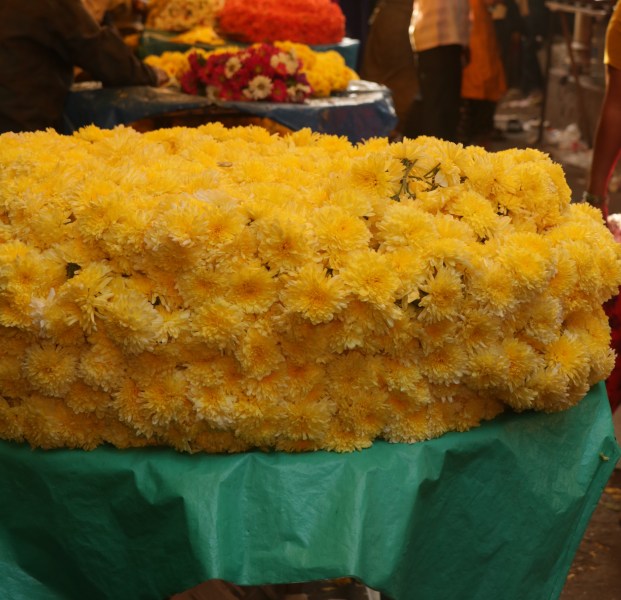
During Onam times flowers sell like hot cakes every year. But this year the market is seeing cold winds due to COVID-19. The flowers sellers said that COVID has dampened their most profitable season’s sale.

Flowers are used in decorations, making floral carpets and other purposes during Onam and every flower seller usually bags around Rs. 12000-15000 daily. But this year has turned into an adverse one as they are able to make sales of Rs 300 a day only which is a drastic effect of pandemic on these sellers.

Reminiscing last year, a flower vendor said that every year they were not able to manage the customers because of high rush but this year there are vacant roads and markets. Everyone is scared to come out of their homes in the wake of a virus.

Recently Kerala Chief Minister Pinarayi Vijayan announced barring all the flowers not being allowed to cross border which has also affected flower market as earlier vendors used to buy flowers from Coimbatore as there, they would get it in feasible price but this year the price for buying flowers for the vendors is also high.

The festival started on August 22 and will carry on till September 2 and is celebrated in the month of Chingam which is believed to be the first month according to the Malayalam calendar. The celebration is carried on for 10 days to start off the new year with a ceremonious feel and tenth day is the conclusion day which is named as Thiruvonam.

Bengaluru, The next Delhi!?

How toxic is Bengaluru air? It was ranked 63rd among 168 cities for PM 2.5 levels, titled “Airpocalypse”- on air quality. Tumukuru was ranked 67th. Bengaluru is in the grip of rising air pollution. Official ambient air quality monitoring has already shown 57% increae in particulate matter. With growing vehicle numbers and resultant congestion and dieselization, air pollution is a growing concern in the city. The city is losing its inherent advantage of dominant commuting practices – use of bus and walking at the cost of clean air and public health.

Bangalore needs stringent measures including leaffrogging emissions standards to Euro VI, curbing dieselization, scaling up of integrated public transport, car restraints and walking for clean air.

Centre for science and environment (CSE) released to results from its recent analysis of the official ambient air quality monitoring in Bengaluru as well as its own exposure very high level of pollution within the breathing zone of people. This indicates serious public health risk. Elder people and children below 10 years of age whose lung system are weak are succumbing to allergies or bronchitis due to air pollution. Fine dust that settles on the windows and tables at home is contributing to the increase in lung-related diseases. Particles less than 10 micrometer in diameter (PM 10) pose a health hazard because they can be inhaled and accumulate in the respiratory system.

According to the statistic obtained from the Karnataka State Pollution control Board (KSPCB), PM10 and PM 2.5 have exceeded national standards in almost all locations where ambient air quality stations are located. The KSPCB is monitoring ambient air quality in Bengaluru city at 16 locations as per the guidelines if Central Pollution Control Board covering industrial, residential, rural and other areas under National Ambient Air Quality Programme.

As per the data obtained for the year 2016-2017, out of 16 locations, 15 locations have exceeded the national limits of PM10, PM10 content in the city is 98.9 ug/m as against the national standard of 60 ug/m. Central Silk Board of Hours Road and Whitefield industrial area have the highest PM content with almost double the limit. Particulate matter invades human lungs at night and early in the morning. As a result, people with asthma and bronchits get affected during these times.

Apart from the pollution caused by the industries, the rising levels of vehicular pollution I’d also a cause of concern in Bengalore. Currently, 26 lakh vehicles ply on the narrow roads of Bangalore. 21 lakh are two and three wheelers.

There is no denying the fact that Bangalore had made its mark in the world map, thanks to the software boom, however this had come at a high price.

Respite for people of Delhi and Noida

There is good news for the people living around Delhi’s Kondli and its neighbouring places. They will now get respite from the the foul smell that comes from the Sewage Treatment Plant. For this the Delhi Jal Board in a report submitted to National green tribunal has stated that it has has decided to set up a Stink Control Unit. This unit will bring respite from the foul smell to the people residing in the areas of New Ashok Nagar, Vasundhara, Dallupura, Chilla Gaon, Mayur Vihar phase 3, Noida Sectors 2, 8 and 10, among other places. The Delhi Jal Board has stated in front of a bench led by NGT chief Justice A. K. Goyal that the work will be completed within 5 months after the tender is given for the unit. It also stated that two tiered biological odour control will be added to the current STP plant which will have online surveillance. NGT has asked the Delhi Jal Board to start work on it as soon as it can.

The Mughal Empire

The Mughal Empire administrated India and Pakistan In 16th and 17th centuries. They were Muslims who used to rule a country with Hinduism as majority tho they had given many rights to Hindus as well. Before their invasion India was divided into many small kingdoms of Hindus and Muslims and significantly the rich Jain businessmen were conscientious regarding the devotional arts and many beautiful manuscripts. Mughals fortified Islamic especially Persian Culture arts and beliefs in India.

The great grandson of Tamerlan and Genghis Khan was the first Mughal emperor in India. In 1526, he challenged and defeated Lodhi at the first Battle of Panipat, and then he came to establish the Mughal Empire in India. Babar ruled until 1530, replacing his son Humayun. The Mughal Dynasty developed out of the remnants of the Mongolian Emperor who lived in Turkestan in the 15th century. They have become Muslims and have assimilated the ideology of the Middle East, while retaining aspects of their Far Eastern origins.

They also maintained the great military ability and abilities of their Mongolian predecessors, and were among the first Western military figures to use weapons.

Mughals brought many significant changes in India and its administrative system such as:

  • They introduced centralized government that brought together many kingdoms under one flag.
  • Their one of the most germane contribution was Persian art and culture.
  • They gifted India a unique style of architecture(examples are Taj Mahal).
  • A system of education that took account of pupils’ needs
  • Mughals had given rights and freedom to women.
  • Akbar tried to put a ban on sati and encouraged widows’ remarriage and the creation of special markets for women to make them feel safe and more powerful.
  • Basically they promoted a delegated government with respect for human rights.

Babur, the first Mughal Emperor, was a son of Genghis Khan and Tamerlain. Babur succeeded his father as ruler of the state of Farghana in Turkestan when he was just 12 years old, but he was soon deposed by older relatives. In 1504, Babur traveled to Afghanistan and then returned to India, presumably at the behest of some Indian princes who decided to dispose of their rulers. Babur had disposed of the king, and he wanted to take over himself.

Babur preceded his son Humayun, who was a poor dictator, a great author, and a heroin user. He soon destroyed the kingdom. He finally regained the throne, but died shortly after breaking his spine down the steps. Although Humayan was definitely catastrophic as a monarch, his love of poetry and culture profoundly inspired his son Akbar, and helped to make the Mughal Empire both an artistic and a military force.

The Third Emperor, Jalal-ud-din Muhammad Akbar, is considered to be one of the great rulers of all time , regardless of region. Akbar ascended the throne at the age of 13, and proceeded to recapture the remaining territories lost from the Babur Dynasty. At the time of his death in 1605 he ruled much of northern, southern, and western India. Akbar has worked tirelessly to take over the hearts and minds of the Hindu community. While this may well have been for political reasons-he married a Hindu princess (and is said to have married several thousand wives for military and diplomatic purposes)-it was also part of his ideology.

Akbar ‘s son, Emperor Jahangir, re-elected Islam as a state religion and followed a policy of religious freedom. His court comprised a considerable number of Indian Hindus, Persian Shi’a and Sufis, and members of central heterodox Islamic sects. Jahangir also started constructing the majestic temples and gardens that the Mughals are often known for today, hiring hundreds of Persian architects to build palaces and construct splendid gardens.

The architectural accomplishments of the Mughals occurred between 1592 and 1666 during the rule of Jahangir ‘s son, Jahan. The Taj Mahal was commissioned by Jahan. The Taj Mahal stands for the pinnacle of the Mughal Empire; it symbolizes peace, strength and trust. The building is a mausoleum designed by Jahan for his wife Mumtaz, and has come to symbolize the love between two persons.

The time of the Great Moguls, which started in 1526 with the accession of Babur to the throne, ended with the death of Aurangzeb in 1707. Under Aurangzeb, the Mughal Empire achieved the height of its military strength, but the law remained chaotic. This was partially attributable to the indifference of the people to the bigotry and taxes of Aurangazeb, but also because the kingdom had actually been too large to be ruled effectively. And, some fifty years after his passing, the Mughal Rule disintegrated. Aurangzeb ‘s death was preceded by a war of succession between his three sons.

Highlights of Mann Ki Baat by PM Modi.

When PM Modiji was elected the Prime Minister for the first time in the year 2014 from that year in the month of October first episode of Mann ki Baat was held and till now our PM has done almost 68 talks through the radio programme.Mann ki Baat means Inner Thoughts which he started to connect with the audience and to share his thoughts on different things which happens in the country.This happens at the end of every month.

In todays Mann Ki Baat session held by PM Modiji he mostly focused on vocal for local,also explained the importance of Indian apps gaining importance,we will see some apps their work in detail.As the September month is witnessed as Nutrition month,so he highlighted some important points for that too.PM also spoke about the Made in India toys by taking into consideration for becoming Atmanirbhar and many other such topics like environment,festivals.

Atmanirbhar Innovation Challenge,which was launched by our PM on July 4th.In which 24 mobile apps were winners of the challenge.From these 24 apps PM took some name of the apps like Koo which is said to be the new Twitter in coming times,he also took the names of app like Zoho,Chingari which are gaining name and the fame for their respective roles.For this he also said about the importance of virtual games which has gained new popularity in recent times.

PM Modiji also said it is very important to build the toy sector in India.This is because India being the largest population country we just manufactures around 0.5% of the global toy market.It is really sad to see that despite being developing country we are lacking in some of the sectors.But it is assumed that in coming time India will definitely lead in this sector too.As PM took some name of toy manufacturing units such as “Channapatna in Ramnagram(Karnataka),Kondappli in Krishna(Andhra Pradesh),Thanjavur in Tamil Nadu,Dhubri in Assam,Varanasi in Uttar Pradesh there are many such places that we can count”.

In his talk he applauded the teachers for taking such great efforts in this lockdown and making student learn through different tricks despite everything being online.As September month is going to be celebrated as nutrition month he spoke that every person should have ample amount of nutrition so that he/she can do great work,be healthy and should take care of themselves.He also praised the efforts of the dog squad in the disaster management and also promoted to make your pets of Indian breed by considering the important point of atmanirbhar bharat.He also talked about one of the most beautiful festival of India Onam which is currently going on and also said there are many festivals which are related to the environment which brings great freshness to the society.

So in this was today’s Mann Ki Baat was held and many positive points were said by the PM.It is great to listen from him such things and it is proud moment for every citizen that India is progressing at a great speed and giving ample of opportunities to the young talent.So that the talent which we have does not get wasted.”Iss Naye Bharat Ki Nayi Pehchan“.

SPIRITUALITY :)

SPIRITUALITY IS THE PROCESS OF KNOWING YOURSELF MORE , IMPROVING YOU , ACCEPTING YOUR FLAWS AND MEET THE GLOWING YOU . IT FILLS THE VOIDS IN YOU WITH OPTIMISM , ALIVE YOUR HEART WITH PEACE AND RELAX YOUR MIND .

IT IS JUST LIKE YOU ARE MEETING YOUR SOUL AND RELISHING THE MOMENTS . THIS WORLD IS FULL OF NEGATIVITY , JEALOUSY AND POLLUTED MINDS , WHICH HAS LED MOST OF US IN DISTRESS . IT HAS SADDENED US FROM INSIDE AND FILLED OUR HEART AND MIND WITH FEAR .

THERE IS A THING WHICH I HAVE NOTICED MANY TIMES , IN EVERY PERSON I MEET , IS THE THINKING OF ‘ YOU ARE COOL , IF YOU DON’T BELEIVE IN GOD ‘ , AND PEOPLE ARE FOLLOWING THIS METHDOLOGY TO OUTSHINE THEM AND CREATE AN IMAGE OF ‘ PRO ‘ IN FRONT OF OTHERS . I DON’T WHAT THEY GET BY DOING SO , BUT , I KNOW THAT IT IS JUST A SATISFACTION AND HAPPINESS FOR FEW MOMENTS THAT FADES AWAY AND THE REALITY SOLIDIFIES .

THE PEOPLE WHO BELEIVES IN SPIRITUALITY , ARE THE ONES WHO LIVE IN REALITY . THEY ARE EMOTIONAL BUT NOT WEAK . THEY KNOW BIRHT AND DEATH ARE PRE DECIDED , WHT THEY HAVE TO DO IS JUST GOOD DEEDS TO GET THE REWARDS IN THEIR AFTER LIFE . ABOUT THOSE WHO THINK THAT SPIRITUALITY TARNISHES THEIR IMAGE , I THINK THEY HAVE ALEARDY TARNISHED THEIR IMAGE .

IN THE PROCESS OF BEING COOL , THEY FORGET THEMSELVES , THEIR HAPPINESS AND TRY TO IMPRESS OTHERS AND MAKE OTHERS HAPPY . AND YES ! , THIS MAY ENGAGE THEM IN BAD COMPANY.

I AM SPIRITUAL , YES ! I BELEIVE IN GOD BUT THAT DOES N’T MEAN IT IS BLOWING ME AWAY FROM THE PRESENT WORLD . THE DIFFRENCE BETWEEN ME AND THEM , IT CAN BE YOU AND THEM ALSO NO OFFENCE , IS THAT I KNOW THE ART OF LIVING AND HOW TO STAY HAPPY AND AT PEACE EVEN IN MY DARKEST OF TIMES . I DON’T NEED ANY OTHER ADDICTION TO FIGHT WITH NEGATIVITY AROUND . I HAVE AN ATTACHMENT WITH GOD , STANDING LIKE A WALL IN BETWEEN , PROTECTING ME FROM THIS EVIL WORLD WITHOUT ANY EFFORTS . MOST OF THE PEOPLE GIVE ME WEIRD EXPRESSIONS SEEING ME AS A SPIRITUAL SOUL AND THE FUNNIEST PART IS I FEEL PETTY WHEN I SEE THEIR CONDITION OF LIFE AND PRAY HELP FOR THEM TO GOD , THAT IS THE ART OF POSITIVITY , NOT EVERYONE IS DESTINED TO BE A PART OF .

PEOPLE FREQUENTLY ASK ME HOW ARE YOU SO CALM AND COMPOSED ? THIS IS SO MUCH DIIFICULT SITUATON FOR YOU ( IF THERE IS ANY LETS ASSUME ) STILL YOU ARE IN PEACE AND KNOW THE END WILL ALWAYS BE GOOD . THEY ARE SURPRISED TO SEE ME LIKE THIS . I SAY ,” I BELEIVE IN MY EFFORTS AND MY LORD , HE HAS SEEN ME TRYING , HE KNOWS ALL . IF ANYTHING BAD HAPPENED , IT WILL TEACH ME A LESSON FOR LIFE AND IF ANYTHING GOOD HAPPENED , IT WILL GIVE ME THE POSITIVITY THAT WHATEVER I HAVE DONE TILL NOW , MY ACTIONS ARE LOVED BY GOD . ”

LET ME TELL YOU ONE CERTAIN THING GOD LOVES US ALL , EVERY ACTION HE TAKES ON US IS THE EVIDENCE THAT PROVES HE LOVES US , BECAUSE HIS ACTIONS ALWAYS TEACH US PROMINENT LESSONS .

THIS IS THE POWER OF SPIRITUALITY !!

UNLOCK 4.0 !!

THE GOVERNMENT HAS INITIATED TO UNLOCK THE LOCKDOWN 4.0 BY RESUMING THE METRO SERVICES IN THE COMING DAYS . THE CASES ARE INCREASING IN DELHI AND REACHING THE HIGHEST PEAKS , TESTING IS GOING ON BUT NOT MORE THAN 6000 TO 7000 CASES PER DAYS , IT WAS DECIDED 11000 CASES PER DAY .

THE UNLOCKS ARE LISTED AS FOLLOWS :

  • METRO RAIL SERVICES WILL BE RESUMED FROM SEPTEMBER 7 WITH THE CEALING OF ONLY 100 PERSONS IN TOTAL , ALONG WITH ALL THE PRECAUTIONS TAKEN , LIKE WEARING OF MASKS , SANITISING ETC , NEED TO FOLLOW ALL THE SOCIAL DISTANCING NORMS .
  • THE POLITICAL RALLIES ARE ALSO PERMITTED FROM SEPTEMBER 21 , WITH ONLY THE SIZE OF 100 PERSONS PARTICIPATING IN THE RALLY.
  • SCHOOL , COLLEGES AND EDUCATIONAL INSTITUTIONS WILL STAND SHUT TILL THE END OF SEPTEMBER THAT IS 30TH OF THE SEPTEMBER MONTH .
  • IT IS IN THE NEW GUIDELINES THAT THERE WILL BE NO PROHIBITION ON THE CONSUMPTION OF ALCOHOL AND TOBACCO PRODUCTS IN PUBLIC PLACES , BARS ARE ALLOWED TO FUNCTION . IN MY OPINION , ALL THESE ARE INJURIOUS TO HEALTH , DUE TO THE CONSUMPTION BY THE PEOPLE , MOST , IT IS ADDING UP TO THE REVENUE . SOULD N’T WE STOP THE CONSUMPTION OF THESE KIND OF VENOMS ?
  • RESEARCH SCHOLARS AND STUDENTS OF TECHNICAL WHO ALL ARE IN NEED OF LABORATORIES , ALLOWED TO VISIT THE PREMISES WITH THE CONSULTATION OF DEPARTMENT OF HIGHER EDUCATION . DATES ARE NOT DECIDED YET .
  • STUDENTS OF CLASS 9 TO CLASS 12 CAN VISIT THE SCHOOLS VOLUNTARILY FOR THE GUIDANCE FROM THEIR RESPECTIVE TEACHERS , PROVIDED WRITTEN CONSENT FROM THEIR PARENTS . ONLY 50% OF THE FACULTY ALLOWED IN THE SCHOOL , IT INCLUDES BOTH TEACHING AND NON TEACHING STAFF , ALLOWED IN SCHOOLS OUTSIDE THE CONTAINMENT ZONES .
  • THE NUMBER OF PEOPLE HAS INCREASED FOR WEDDINGS FROM 50 TO 100 , SAME GOES FOR THE FUNERALS , THE NUMBER NOW IS AT 100 .
  • THEATRES CAN BE OPENED FROM SEPTEMBER 21 .
  • CINEMA HALLS AND SWIMMING POOLS WILL REMAIN SHUT ALONG WITH THE ENTERTAINMENT PARKS .
  • INTERNATIONAL AIR TRAVELS REMAIN SUSPENDED APART FROM THE FLIGHTS THAT ARE TAGGED AS SPECIAL FLIGHTS.

THEESE GUIDELINES WERE ISSUED BY THE HOME MINISTRY UNDER THE DISASTER MANAGEMENT ACT 2005 IN MARCH FOR THE FIRST TIME .

UNLOCK 4

India on Saturday issued fresh guidelines of lock down in ‘Unlock 4’, allowing opening up of more activities in areas outside the containment zones, marking gradual opening of the country and economy amid coronavirus disease (Covid-19) outbreak. Many features of this unlock down had changed or improved than previous ones. New guidelines had make many shut down industry to give a new start. According to MHA the new guidelines are based on feedback received from states and UTs and extensive consultations held with related central ministries and departments.

Here is the list of institutions which are free to have a start-

  • Metro trains will be allowed to resume services in a graded manner from September 7.
  • Open air theaters will be allowed to open from September 21.
  • Social, academic, sports, entertainment, political, cultural and religious functions and gatherings will be allowed with a maximum of 100 people from September 21. Face masks and social distancing are however mandatory in all such gatherings.
  • No restrictions on inter-state and intra-state movement of people and goods. No separate permission or e-permits will be required.
  • Schools and educational institutions will remain shut till September 30 and online classes will continue. However students of classes 9 to 12 may be permitted to visit their schools, outside containment zones only, to take teachers’ guidance. This will require a written consent of their parents.
  • 50 per cent of teaching and non-teaching staff can be called to schools at a time for online teaching.
  • Skill or entrepreneurship training will be allowed in institutes registered with the government.
  • Research scholars and post-graduate students of technical and professional programmers who need laboratory practicals will be permitted by the government.
  • Movie theaters, swimming pools, entertainment parks will remain shut.
  • International air travel of passengers will remain banned, except for those allowed by the centre.
  • Only essential services will be allowed in containment zones. Lock down will continue in the containment zones till September 30.

This is a huge step taken by centre to create an environment of safety and spirit to fight this virus. The wait for vaccine is still not known but one thing which we all can do is to follow these guidelines to keep our self and others safe.

Corona Virus And Civil Societies

The impact and spread of COVID-19 is unimaginable and one even can’t describe it in words. This public health emergency will likely result in a global economic crisis – which will hit the poorest and marginalized communities the most .These twin crises expose the widening inequality around the world and threaten to exacerbate the gap between rich and poor, sending us back decades in our progress we have achieved yet.

To be precise, in short term, the widespread closure of schools – now affecting minimum 90% of world’s children population – cuts children off from the vital services and protection that schools provide. It’s another impact on children from the poorest families will be most likely to have their health, nutrition and wellbeing impacted, their learning stopped, and their safety at risk because their school has closed. For many, especially first-generation learners, homeschooling may not be an option. For poor families, especially girls in them, school closures mean that they may never step foot in a classroom again – increased risks of domestic violence, sexual abuse, child marriage.

In the long term, Oxfam {international confederation of 20 charitable organization working on alleviation of global poverty} estimates that half a billion more people may be pushed into poverty as economies lose jobs, small businesses shut down and safety nets are lost in the wake of the pandemic. The lack of food, increased homelessness, and heightened insecurity will permanently let bright futures of millions of children suffer around the world. And the economic shock is likely to reduce education spending further, putting pressure on households to meet the growing financing gaps. Compounding these hardships, growing public fear, misinformation, spreading rumors may further lead to fuel discrimination, stigma, violence, injustice among society.

But, an excellent saying, reads,

“Helping one person might not change the whole world but it could change the world for that person”

The pressure to mitigate these impacts relies heavily on the ability of government to maintain its role and give voice to communities most likely to be left behind in the public emergency response. Yet the crisis will also hamper civil society’s ability to respond. Closing civic space, constraints in movement in many countries make the environment for advocacy and accountability an extremely difficult one to work in. The pandemic may result in a civil society collapse in many countries.

While this may be one of the most difficult environments for civil society, it is also a critical moment where its work has never been more important. There is an immediate role for civil society in monitoring the impact of school closures on the poorest, especially girls, and to advocate for effective responses to the pandemic.

Governments looking forward for new plans and need to know how decisions made are impacting citizens. Civil society can facilitate engagement with affected communities, a critical part of ensuring contextually relevant responses.

As COVID 19 puts even more pressure on the universality and quality of education systems – and on the capacity of governments to track and respond to those impacts – civil society can play an important role in ensuring that crisis response is targeted to the most vulnerable and sustained through the recovery phase.

To play this role, however, it is vital that civil society be supported to advocate for measures to protect and prioritize the most vulnerable – including using their influence to inform government priorities in the emergency and recovery phases of the pandemic response. Budget monitoring, grassroots social mobilization, and tracking the quality and reach of service delivery will all be important elements of civic engagement to rebuild education during and after the crisis

The future of country its economy, literacy rate, job security, unemployment, poverty all are dependent on how efficiently these society works. And, moreover depends on account of citizens how we control ourselves, how we behave ourselves, how we make our contribution worthy for future of ourselves? We can make this win happen “TOGETHER BY STAYING APART”

                    “WE CAN, WE SHALL OVERCOME”   

ANDAMAN &NICOBAR ADMINISTRATION ALERT TO THE SAFETY OF PVTGs AGAINST COVID PANDEMIC

The Andaman & Nicobar Administration has informed that it is alert to the safety of its tribes especially Particularly Vulnerable Tribal Groups (PVTGs). In a report submitted to Ministry of Tribal Affairs, the Andaman and Nicobar Islands Administration has informed that a number of steps have been taken proactively for the safety and protection of the tribes from mid March, 2020 onwards even before any case of COVID-19 was reported in the islands. There are six notified scheduled tribes in A&N islands. Except Nicobarese, rest of the 05 tribe viz., Great Andamanese, Jarawa, Sentinelese Onge and Shompen are recognized as PVTGs.

The Union Minister for Tribal Affairs Shri Arjun Munda in a Tweet has said that the Andaman & Nicobar Administration is alert to safety of its tribe, especially the Vulnerable Tribal Groups (PVTGs) through Integrated Tribal Development Authority and the Ministry of Tribal Affairs is in constant touch with the officials of A&N Administration in this regard.

MHA issues new Guidelines

The Ministry of Home Affairs (MHA) has issued new guidelines today for opening up of more activities in areas outside the Containment Zones. In Unlock 4, which will come into effect from September 1, 2020, the process of phased re-opening of activities has been extended further. The new guidelines, issued today, are based on feedback received from States and UTs, and extensive consultations held with related Central Ministries and Departments. 

Salient features of the new guidelines

  • Metro rail will be allowed to operate with effect from 7th September 2020 in a graded manner, by the Ministry of Housing and Urban Affairs (MOHUA)/ Ministry of Railways (MOR), in consultation with MHA. In this regard, Standard Operating Procedure (SOP) will be issued by MOHUA.
  • Social/ academic/ sports/ entertainment/ cultural/ religious/ political functions and other congregations will be permitted with a ceiling of 100 persons, with effect from 21st September 2020. However, such limited gatherings can be held with mandatory wearing of face masks, social distancing, provision for thermal scanning and hand wash or sanitizer.
  • Open air theatres will be permitted to open with effect from 21st September 2020.
  • After extensive consultation with States and UTs, it has been decided that Schools, colleges, educational and coaching institutions will continue to remain closed for students and regular class activity up to 30th September 2020. Online/distance learning shall continue to be permitted and shall be encouraged. However, following will be permitted, in areas outside the Containment Zones only, with effect from 21st September 2020 for which, SOP will be issued by the Ministry of Health & Family Welfare (MoHFW):
    1. States/ UTs may permit upto 50% of teaching and non-teaching staff to be called to the schools at a time for online teaching/ tele- counselling and related work.
    2. Students of classes 9 to 12 may be permitted to visit their schools, in areas outside the Containment Zones only, on voluntary basis, for taking guidance from their teachers. This will be subject to written consent of their parents/ guardians.
    3. Skill or Entrepreneurship training will be permitted in National Skill Training Institutes, Industrial Training Institutes (ITIs), Short term training centres registered with National Skill Development Corporation or State Skill Development Missions or other Ministries of Government of India or State Governments.

National Institute for Entrepreneurship and Small Business Development (NIESBUD), Indian Institute of Entrepreneurship (IIE) and their training providers will also be permitted.

  • Higher Education Institutions only for research scholars (Ph.D.) and post-graduate students of technical and professional programmes requiring laboratory/ experimental works. These will be permitted by the Department of Higher Education (DHE) in consultation with MHA, based on the assessment of the situation, and keeping in view incidence of COVID-19 in the States/ UTs.
  • All activities, except the following, shall be permitted outside containment zones: 
  1. Cinema halls, swimming pools, entertainment parks, theatres (excluding open air theatre) and similar places.
  2. International air travel of passengers, except as permitted by MHA.
  • Lockdown shall continue to be implemented strictly in the Containment Zones till 30th September, 2020.
  • Containment Zones shall be demarcated by the District authorities at micro level after taking into consideration the guidelines of MoHFW with the objective of effectively breaking the chain of transmission. Strict containment measures will be enforced in these containment zones and only essential activities will be allowed.
  • Within the containment zones, strict perimeter control shall be maintained and only essential activities allowed. 
  • These Containment Zones will be notified on the websites of the respective District Collectors and by the States/ UTs and information will also be shared with MOHFW.

States not to impose any local lockdown outside Containment Zones

State/ UT Governments shall not impose any local lockdown (State/ District/ sub-division/City/ village level), outside the containment zones, without prior consultation with the Central Government.

No restriction on Inter-State and intra-State movement

  • There shall be no restriction on inter-State and intra-State movement of persons and goods. No separate permission/ approval/ e-permit will be required for such movements.

National Directives for COVID-19 management

  • National Directives for COVID-19 management shall continue to be followed throughout the country, with a view to ensure social distancing.  Shops will need to maintain adequate physical distancing among customers. MHA will monitor the effective implementation of National Directives.

Protection for vulnerable persons

  • Vulnerable persons, i.e., persons above 65 years of age, persons with co-morbidities, pregnant women, and children below the age of 10 years, are advised to stay at home, except for meeting essential requirements and for health purposes.

Use of Aarogya Setu

  • The use of Aarogya Setu mobile application will continue to be encouraged.

PM inaugurates College and Administration Buildings of Rani Lakshmi Bai Central Agricultural University, Jhansi through video conferencing

The Prime Minister, Shri Narendra Modi, today inaugurated the College and Administration Buildings of Rani Lakshmi Bai Central Agricultural University, Jhansi, UP through video conferencing. He interacted with the students of the University.

PM congratulated everyone and expressed hope that students after graduating from this university will actively contribute in empowering the country’s agriculture sector. He hoped that new facilities provided due to the new building would encourage and motivate students to work harder.

Invoking Rani Lakshmi Bai’s Quote that “I will not give my Jhansi”, the Prime Minister urged the people of Jhansi and Bundelkhand to make Atmanirbhar Bharat Abhiyan a success.

The Prime Minister noted that Agriculture has a major role to contribute in Atmanirbhar Bharat Abhiyan. He said self reliance in Agriculture targets at making Farmers both- producer as well as entrepreneur. PM said in line with this spirit, several historic agricultural reforms were taken. Just like other industries, now Farmers can also sell their produce anywhere in the country, wherever they fetch better prices. He said a special dedicated fund of Rs 1 Lakh crore has been set up for providing better facilities and promoting industries in a cluster based approach.

Saying that steady efforts are continuing to connect farming with modern technology, the Prime Minister noted that Research Institutions and Agricultural Universities have a vital role to play. He said now there are three Central Agricultural Universities in the country, compared to just one Central University 6 years ago. Besides this, three more National Institutions viz. IARI Jharkhand, IARI Assam and Mahatma Gandhi Institute for Integrated Farming in Motihari, Bihar are also being established. He remarked that these institutes will not only give new opportunities to the students, but will also help in increasing their capacity, in providing technology benefits to the local farmers.

Speaking about use of modern technology in meeting agriculture related challenges, the Prime Minister gave an example of recent locust attack. He said the Government worked on war footing to control the spread of the attacks and to reduce the damage. He mentioned that dozens of control rooms were set up in several cities, arrangements were made to alert farmers in advance, drones to spray, dozens of modern spray machines used to kill locusts were procured and provided to farmers.

The PM said that in the last six years, the Government has endeavoured to establish a link between research and farming, and to provide scientific advice to the farmers, at the ground levels in the villages. He sought the cooperation of the universities in developing the ecosystem to streamline the flow of knowledge and expertise from campus to agriculture fields.

Stressing on the need to take knowledge related to agriculture and its practical application to school level, the Prime Minister said efforts are to introduce the Agriculture subject at Middle school level in villages. It will have two benefits- One, it will develop agriculture related understanding in the students and secondly, it will enable the students to give information about agriculture, its modern farming techniques and marketing, to their family members. This will promote Agro-entrepreneurship in the country, he added.

For Full Text of PM’s address at inauguration of the College and Administration Buildings of Rani Lakshmi Bai Central Agricultural University in Jhansi via video conferencing

Click https://www.pib.gov.in/PressReleasePage.aspx?PRID=1649484#.X0pe3jAecEg.gmail

Earlier in his welcome address, Union Minister of Agriculture & Farmers’ Welfare Shri Narendra Singh Tomar said that along with the the mantra of Sabka Saath Sabka Vikas, the efforts to correct the imbalances in the country under the leadership of Prime Minister Shri Narendra Modi since 2014 have now started showing results. Work on the Rani Laxmibai Central Agricultural University started in the year 2014 and now it has three affiliated colleges and students from 22 states are studying here. When it becomes fully operational, the whole country will benefit. Shri Tomar said that there is unlimited potential for organic farming in Bundelkhand area for which Central Government and UP Government are working together.

Speaking about the priority being given to expansion of agricultural education, Shri Tomar said that agricultural colleges are being opened all over the country including in the North East. Indian Agricultural Research Institutes have been opened in Jharkhand and Assam and have started functioning. Central Agricultural University, Imphal has been expanded by affiliating 6 new colleges with it. Giving importance to agriculture in bringing about development and security of livelihood in the North East, farming activities there are being strengthened by agricultural education and research. Scholarships for Ph.D. students have been increased to Rs. 31000 per month.

The Union Agriculture Minister said that to achieve the target of doubling farmers’ incomes by 2022, the Central Government is working in close coordination with the states.  Despite the lockdown due to Covid pandemic, there has been a bumper harvest, and kharif sowing has been done in 13 lakh ha more area as compared to last year. Under PM-KISAN scheme, about Rs 92000 crore have been deposited in the bank accounts of more than 10 crore farmers. For bringing about reforms in agriculture, several measures such as formation of 10000 FPOs, issuing Kisan Credit Cards to about 2.5 crore farmers, provision of Rs 1 lakh crore Agri Infrastructure Fund and bringing in new ordinances, have been taken under the leadership of the Hon’ble Prime Minister.

Chief Minister of Uttar Pradesh Shri Yogi Adityanath expressed gratitude for establishment of Central Agricultural University in the backward Bundelkhand region. He appreciated the efforts being taken under the Hon’ble Prime Minister for doubling farmers’ incomes, connecting farmers to technology, providing them basic infrastructure and good quality seeds.

Union Ministers of State for Agriculture Shri Parshottam Rupala and Shri Kailash Choudhary, Jhansi MP Shri Anurag Sharma, DG ICAR Dr Trilochan Mohapatra and other eminent persons and scientists were present during the function.


India withdraws from multilateral military exercise in Russia next month

India has announced that it is withdrawing from multilateral Military Exercise Kavkaz 2020 to be held in Russia next month. Defence Ministry said, Russia and India are close and privileged strategic partners and at Russia’s invitation India has been participating in many international events.
 
However, in view of Pandemic and consequent difficulties in exercise, including arrangements of logistics, India has decided not to send a contingent this year to Kavkaz-2020. The Ministry said, the decision has been conveyed to the Russian side.
 
India had earlier planned to send around 150 Indian Army troops, 45 Indian Air Force personnel and a number of Navy officers to the multilateral military exercise to be held in the Astrakhan region in southern Russia from 15th to 26th September.