
Healthy lifestyle: Important to fight Covid-19 and other diseases

The whole world is suffering from COVID-19 from last year. The pandemic is about to complete 1 year this December. And all of this happened just because of a small virus which isn’t even visible with naked eyes. This explains, how a small virus can do such a big disaster in human body.

Every nation is trying its best to prepare the vaccine for this disease and the government is requesting the people to wear mask, wash their hands and eat healthy food to increase their immunity.

In short, it’s all about living a healthy lifestyle to resist the disease and this pandemic has shown how important it is to care about the body, be it physically, mentally or emotionally.

There’s a lot of things a person can do to live a healthy lifestyle:

  • Drink more water – Water is needed to carry out our body functions, remove waste and carry nutrients and oxygen around our body.
  • Get enough sleep – When you don’t rest well, you compensate by eating more. Also, lack of sleep causes premature aging, and you wouldn’t want that.
  • Exercise – Not just a few times a week, but every day. Movement is life. Exercise offers many benefits including increase of life span, lowering of risk of diseases, higher bone density and weight loss. Increase activity in your life.
  • Never skip breakfast – Skipping breakfast might seem like it can lead to weight loss, but it’s doing just the opposite. Enjoying a high-protein, high-fiber breakfast keeps you energized throughout the morning, while forgetting breakfast actually slows down ur metabolism.
  • Eat more fruits – Fruits are a plethora of vitamins and minerals.Taking in synthetic supplements are not the same as consuming the foods direct from nature.
  • Eat more vegetables – Like fruits, vegetables are important for the well being of our health.
  • Purge negative people from your life – Positive mental healthy is an important part of a healthy life. You don’t need toxic people in your life.
  • Say no to oily food – Reduce your intake of fast food, fries, doughnuts, chips, wedges, and foods that have been deep fried.
  • Don’t drink alcohol – Like caffeine, alcohol is a diuretic. Not only that, alcohol is repeatedly proven to have negative effects on our body and health– impacting the proper functioning of our brain, liver, lungs, and other major organs.
  • Eat small meals – Choose several small meals over a few big meals a day. This balances out your energy distribution throughout the day.

These are few things one can do improve his body physically, mentally and emotionally.
ONLINE CLASSES : ONLY CONS

Those were the days when we all used to go to the college or schools through metro and bus , tasting every corner of the life . That happiness of chasing the bus just because we are getting late for the classes , still get late in the class . The adventure of travelling with sudden jolts in the bus has another important role in our journey . we used to go to college , meet and greet with our friends , enjoy and work on ourselves by participating in diffrent societies , physically . A wonderfull journey , it is . But , this covid -19 has ruined all the plans and everything has transformed from offline mode to online mode . At first , we all were excited to study through online classes as we are relieved from our hectic schedule and can do work just by sitting at home . But , it is not like that , rather it has increased more stress and anxiety in us , which is not good for our health.

The online mode is making us sit in front of our phone and laptop early in the morning as everything is work from home. Anxiety has increased among the people of every age and we have become lazy , a bad news it is . It is impacting on our eyes and causing us headache . We have to bow down in front of this situation as its about our life . It is giving us back aches . In my opinion , yes it is a smart move in this time but a reliable move .

The work is easy for teachers as they teach us using PPT’s and our doubts remained uncleared . Earlier , teachers were not used to put efforts and take the classes regularly , but , now classes are also happening regularly as it is really easy for them , not much efforts required for them to put in . The classes are not fruitful for us , as it is creating blur in our minds for most of the topics . On the other hand , the situation demands this kind of studying , at least we are studying.

I pray for the situation to get normal as soon as possible so that we can study they way we used to , with much more clarity.

Kabbadi in India


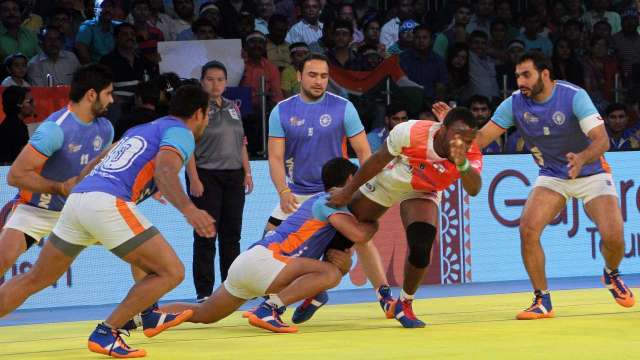
Kabbadi is team sport which is played between two teams consisting seven players each. Kabbadi originated in India and hence it is a game that is predominantly played in India and some parts of Asia. It is a sport that does not involve any sports equipment like a bat or a ball but rather involves full physical contact between the players. Though it is the national sport of Bangladesh, kabbadi is a sport which is widely played in many parts of India as their primary sport after it gained it’s popularity in the 20th century. It is the state game of the Indian states of Andhra Pradesh, Bihar, Haryana, Karnataka, Kerala, Maharashtra, Odisha, Punjab, Tamil Nadu, Telangana, and Uttar Pradesh.India takes the credit of popularising kabbadi to the world when it first organized the kabbadi competiton during the 1920’s and thereby adding it to the list of sports in the year 1938 which were a part of the Indian Olympic Games. After which the all India kabbai federation was set up in the year 1950 with kabbadi entering the Asian games in the year 1990 when kabbadi was demonstrated in the 1982 Asian games which was held in Delhi, India. The first Kabaddi World Cup was held in Mumbai in the year 2004 where national teams from Asia, Europe, and North America took part. India is the reigning champions of the Kabbadi world cup titles which was last held in the year 2016. India remains unbeaten throughout all the tournaments. The Indian kabbadi team has also won the Gold medal at the Asian Games in 1990, 1994, 1998, 2002, 2006, 2010 and 2014. The first Women’s kabbadi world cup was held in the year 2012 and the women’s kabbadi team of India have also been the reigning champions of the kabbadi world cup since then. Anupam Goswami, the league commissioner of the Pro Kabbadi league said that “Given our cultural diversity and sensibility, there was clearly room for an indigenous sport. We wanted to grow one and make it not just comparable to others, but to turn it into a world class model sport” but now kabbadi is not just a sport which has garnered the attention of the world but has also become a big time sport like football and cricket with hundreds of sponsors and celebrity attention.

Manufacturing in India

As India aims to become a top manufacturing hub, Indian is on the threshold of major reform. India is poised to rank among the tip three manufacturing locations by 2020. In light of India’s launch of the Make in India initiative (MIII) aimed at transforming the country into a global manufacturing hub. India is a vast country in South Asia in terms of population and geographical area – the second most populated country, after China, with an area about one-Third that of China. However, it’s per-capita income is about one-fifth of China’s, ensuring a good supply of low-cost labor for it’s manufacturing sector over the medium to long term. Labor supply know India is abundant in major manufacturing states. A booming Indian economy has helped create a strong demand for labor, with growing job opportunities in first – and second tier Indian cities including persistent rural-to-urban and inter-state migration. In India, lots of manufacturing occurs in the informal sector, which typically covers cottage household and village industries in areas such as handlooms, handcrafts and agriculture. In compassion, manufacturing in a factory setting and employing more than 10 people pertains to the organized employment sector, which I’d governed by the minimum wage law. Minimum wage standards in India are complex.

During the past decade, the Indian economy focused on services rather than manufacturing India is focusing on the development of its infrastructure, increasing and/or tailoring it’s talent pool to the needs of the manufacturing industry, attacking investment through aggressive foreign direct investment initiatived and increasing the ease of doing business through legal and tax reform.

Below is a brief description of the major manufacturing hubs in India. Although all of the areas discussed below need significant infrastructure, including roads, rail, airports I and power and water improvements, most are already attracting significant investment, which will increase their manufacturing power and capacity.

Greater Noida (Uttar Pradesh) is India’s best auto manufacturing hub. It’s location and Connectivity, on the outskirts of New Delhi and consistent supply of resources have attracted big international companies such as Yamaha, Honda Del cars and LG Electronics India.

Nashik (Mumbai) located approximately three (driving) hours northeast of Mumbai, has electrical engineering and auto components industries. This location is well connected to two roads and airstrips but no airport.

Manesar, Haryana (Chandigarh) located about an hour (driving) southwest of New Delhi, is another favoured auto manufacturing hub. It is well connected to roads and railway. Infrastructure reform us underway to increase it’s manufacturing power and capacity.

Hospet (Bangalore) located in South central India approximately five hrs north of Bangalore, is a major steel and iron manufacturing hub. Hospet has recently attracted huge investment that will continue to grow it’s manufacturing power and capacity. Apple recently announced it’s descision to set up a manufacturing plant in Banglore.

The Make in India campaign means the Indian government is putting a high priority and lots of attention on the manufacturing industry, including significant investment and development. This will make an India an even more attractive manufacturing choice. The Indian commercial law system is based on British common law, which is most similar to the US legal system. Although there are some regulatory hurdles, a similar system makes it easier to understand for people from other common law countries. Manufacturing labor is very cheap in India, even compared to China. In 2014 the average cost of manufacturing labor per hour was $92 in India and $3.52 in China. While this cost seems much lower, you have to take into account the extra costs you will incur due to India’s significantly worse and more expensive transportation, power and water costs. India has a huge labour force (nearly 500 million people), which included unskilled workers as well as researchers and engineers, capable of lending cost-effective research and development support to manufacturing operations.

Chosing where to manufacture is an important business decision that requires significant research and consideration.

Dr. Harsh Vardhan inaugurates a 10- Bedded Hospital at NDRF 8th Battalion Centre, Ghaziabad

A modern, durable, portable, fast installable, safe and varying weather compatible 10- Bedded Make-Shift Hospital was inaugurated by Dr. Harsh Vardhan, Minister (S&T, ES and H&FW) at NDRF 8th Battalion Centre, Ghaziabad. The make-shift hospital has been set up by CSIR constituent laboratory, namely, CSIR-Central Building Research Institute, Roorkee in collaboration with National Disaster Response Force (NDRF), Ministry of Home Affairs for demonstration purpose as well as use of NDRF. It would serve the purpose for disaster recovery stage including for use in long pandemic or emergency situation. Dr Shekhar Mande, DG, CSIR; Shri S.N. Pradhan, DG, NDRF ; Dr Gopalakrishnan, Director CSIR-CBRI were among the dignitaries present on the occasion.

Dr. Harsh Vardhan visited various units of the Make-shift hospital, interacted with hospital staff and witnessed Exhibition and Photo Gallery and also the Demonstration on Collapsed Structure Search & Rescue.  Later, he planted a sapling on the occasion as well.

PM greets people on Nuakhai Juhar

The Prime Minister, Shri Narendra Modi has greeted the people on the auspicious occasion of Nuakhai Juhar.

In a tweet, the Prime Minister said, “The special occasion of Nuakhai is about celebrating the hardwork of our farmers. It is due to their efforts that our nation is fed. 

May this auspicious day bring prosperity and good health for everyone. 

Nuakhai Juhar!”

Vice President calls for a national movement to empower women

The Vice President, Shri M Venkaiah Naidu today called for a national movement for women’s empowerment and to ensure that no girl child is left out of school.

While observing that the flagship scheme ‘Beti Bachao, Beti Padhao’ has undoubtedly created a positive impact, Shri Naidu said that much more needs to be done to change the societal mindset.

In a Facebook Post titled “End Discrimination, Empower Women”, Shri Naidu pointed out that with women constituting about 50 percent of India’s population, progress cannot be achieved unless they are given equal opportunities in all spheres, including the political arena. “We need to show in action and in deeds that gender discrimination no longer exists—that should be our goal”, he stressed.

Urging all political parties to arrive at a consensus at the earliest on the long-pending proposal to provide adequate reservation to women in parliament and state legislatures at the earliest, Shri Naidu also emphasized the need for giving equal property rights to women for their economic emancipation.

The Vice President recently released a report- ‘Status of Sex Ratio at Birth in India’ which mentioned that there has not been any change in the sex ratio at birth in India from 2001-2017–the number of girl children born is much less than what is the general or natural norm. It was brought out by the Indian Association of Parliamentarians for Population and Development (IAPPD).

Referring to the report, he said it is an alarming issue that needs to be addressed on a war footing by all the stakeholders—from the society at large to parliamentarians, government, policy makers, opinion leaders, media organizations and various organizations working to empower women.

Urging elected representatives at all levels to draw the attention of people in their respective areas to the alarming aspect of skewed sex ratio, Shri Naidu called upon every citizen to act as a warrior in completely eradicating social evils like dowry system and in eliminating ‘son preference’ mindset.

Stressing the need for rigorous implementation of Pre-conception & Pre-natal Diagnostics Techniques (PC & PNDT) law to bring about a balance in the sex ratio, the Vice President said there should be zero tolerance towards any kind of discrimination or violence against girls and women.

Calling upon the people to collectively declare a war on poverty, illiteracy and other social hurdles coming in the way of building a New India, Shri Naidu wanted every Indian citizen, particularly the youth to join in the Yagna of building a prosperous and happy India where there will be no discrimination of any kind.

Army Sports Institute, Pune awarded with Rashtriya Khel Protsahan Puraskar 2020

Army Sports Institute, Pune was raised as part of Indian Army’s “Mission Olympics” programme on 01 Jul 2001. The aim was to train the vast reservoir of talent in the Army in selected seven disciplines to include Archery, Athletics, Boxing, Diving, Fencing, Weightlifting and Wrestling with an ultimate aim of winningmedals at Olympics. The institute draws its sportsmen from the Army as well as from young raw and proven talent in ‘Boys Sports Companies’ (8-14 years age).

These sportsmen are supported by a team of Foreign, Indian coaches, physical conditioners, specialists in Sports Medicine, Physiology, Psychology, Biomechanics, Statistics and Nutrition.

In Army Sports Institute the sportsmen have been the ‘Centre of Gravity’ and ‘Team ASI’ is constantly inspired by these human bodies endowed with discipline, dedication, determination and devotion. The Institute has made spectacular progress and given an inspired performance in International competitions to include Olympics, Asian Games, Commonwealth Games and World Championships.

Shri Gadkari to lay foundation Stone and inaugurate 35 highway projects worth over Rs 9400 crore in Madhya Pradesh

Union Minister for Road Transport, Highways and MSMEs Shri Nitin Gadkari will lay foundation stone of and inaugurate 35 highway projects in Madhya Pradesh on Tuesday, the 25th of August, 2020. Chief Minister Shri Shivraj Singh Chauhan will preside over the virtual function, to be attended by Union Ministers Shri ThavarchandGehlot and Shri Narendra Singh Tomar, MoSs Shri Prahlad Singh Patel, Shri Faggan Singh Kulaste and Gen (Dr) V K Singh(Rtd), Ministers from the State, several MPs, MLAs and senior officers from the Centre and the State.

These projects for inauguration and foundation laying carry a Road length of 1139 kilometers, involving construction value of over Rs 9400 crore. Paving the way for development of MP, these roads will enhance better connectivity, convenience and economic growth in the State.

Maintaining daily testing spree of more than 8 lakhs, India tests more than 3.5 crore

Starting from one test in January 2020 through a single lab in Pune, India has exceeded cumulative tests of more than 3.5 crore today. Consistently testing more than 8 lakhs tests since the last six days, with 8,01,147 COVID-19 tests in the past 24 hours, the total has touched 3,52,92,220.

The steep rise in the testing is a result of effective implementation of the aggressive testing strategy of the Centre through a focussed and graded approach.

The rising average daily tests during the past three weeks present a strong depiction of the progress made in enhancement of COVID-19 tests across the country.

Department of Food &Public Distribution issues directions to States/UTs to include all eligible disabled persons under the National Food Security Act 2013


The Department of Food and Public Distribution under Ministry of Consumer Affairs, Food & Public Distribution has sent letters to States Governments/UTs to include all eligible disabled persons under the National Food Security Act 2013. Section 38 of the Act mandates that the Central Government may from time to time give directions to the State Governments for effective implementation if the provisions of the Act. The Department advised all States/UTs to ensure that all disabled persons, who are eligible as per identification criteria of beneficiaries under NFSA, are covered under the National Food Security Act 2013 and they get their entitled quota of food grains under NFSA & PMGKAY as per provisions of the Act.

It is stated that those not already covered should be covered with fresh ration cards to be issued as per the eligibility criteria. It is also reiterated that disability is one of the criteria for inclusion of beneficiaries under AAY households and as disabled persons are vulnerable section of the society. The letter further advised that it is imperative that they are also covered by States/UTs under the priority households as per the criteria of identification evolved by them

The Section 10 of the National Food Security Act, 2013 provides for coverage of persons under the Antyodaya Anna Yojana in accordance with the guidelines applicable to the said scheme and the remaining households as priority households in accordance with such guidelines as the States Government may specify.

The Atma Nirbhar Bharat Package of the Government of India is for the persons, who are not covered either under NFSA or any States Scheme PDS Cards. Hence, the disabled persons without ration cards are also eligible for getting benefits under Atma Nirbhar Bharat package. Since this scheme would lapse on August 31,2020 and there is still one week left for this, the Department requested to all States/UTs, that they may identify such disabled persons who do not have ration cards and provide them benefits under Atma Nirbhar Bharat Package. The letter also mentioned that the scheme started in May 2020 and it was presumed that all eligible beneficiaries without ration cards including the disabled should have been covered. It is understood that the ration lifted so far has been utilized by the States for distributing to eligible beneficiaries without ration cards including the disabled. States are requested to undertake proactive steps in this regard.

Department of Food &Public Distribution issues directions to States/UTs to include all eligible disabled persons under the National Food Security Act 2013

The Department of Food and Public Distribution under Ministry of Consumer Affairs, Food & Public Distribution has sent letters to States Governments/UTs to include all eligible disabled persons under the National Food Security Act 2013. Section 38 of the Act mandates that the Central Government may from time to time give directions to the State Governments for effective implementation if the provisions of the Act. The Department advised all States/UTs to ensure that all disabled persons, who are eligible as per identification criteria of beneficiaries under NFSA, are covered under the National Food Security Act 2013 and they get their entitled quota of food grains under NFSA & PMGKAY as per provisions of the Act.

It is stated that those not already covered should be covered with fresh ration cards to be issued as per the eligibility criteria. It is also reiterated that disability is one of the criteria for inclusion of beneficiaries under AAY households and as disabled persons are vulnerable section of the society. The letter further advised that it is imperative that they are also covered by States/UTs under the priority households as per the criteria of identification evolved by them

The Section 10 of the National Food Security Act, 2013 provides for coverage of persons under the Antyodaya Anna Yojana in accordance with the guidelines applicable to the said scheme and the remaining households as priority households in accordance with such guidelines as the States Government may specify.

The Atma Nirbhar Bharat Package of the Government of India is for the persons, who are not covered either under NFSA or any States Scheme PDS Cards. Hence, the disabled persons without ration cards are also eligible for getting benefits under Atma Nirbhar Bharat package. Since this scheme would lapse on August 31,2020 and there is still one week left for this, the Department requested to all States/UTs, that they may identify such disabled persons who do not have ration cards and provide them benefits under Atma Nirbhar Bharat Package. The letter also mentioned that the scheme started in May 2020 and it was presumed that all eligible beneficiaries without ration cards including the disabled should have been covered. It is understood that the ration lifted so far has been utilized by the States for distributing to eligible beneficiaries without ration cards including the disabled. States are requested to undertake proactive steps in this regard.

Indian Railways generates more than 6,40,000 mandays of work till 21 August 2020 under Gareeb Kalyan Rozgar AbhiyanThese mandays of work generated in 6 States viz. Bihar, Jharkhand, Madhya Pradesh, Odisha, Rajasthan and Uttar Pradesh

Indian Railways has generated more than 6,40,000 mandays of work under Gareeb Kalyan Rozgar Abhiyan in 6 States viz. Bihar, Jharkhand, Madhya Pradesh, Odisha, Rajasthan and Uttar Pradesh. 

Shri Piyush Goyal, Minister of Railways and Commerce & Industry is closely monitoring the progress made in these projects and generation of work opportunities for the migrant labours of these states under this scheme. Around 165 Railway infrastructure projects are being executed in these states. 

Till 21 August, 2020, 12,276 workers have been engaged in this Abhiyaan and the payment of Rs 1,410.35 crores has been released to the contractors for the projects being implemented. 

Railway has appointed nodal officers in each district as well as in the States so that a close coordination is established with the State Government. 

Railway has identified no. of railway works which are being executed under this scheme. The works are related to (i) construction and maintenance of approach roads for level crossings, (ii) development & cleaning of silted waterways, trenches and drains along the track, (iii) construction and maintenance of approach road to railway stations, (iv) repair and widening of existing railway embankments / cuttings, (v) plantation of trees at extreme boundary of railway land and (vi) protection works of existing embankments/ cuttings/bridges. 

It may be noted that Hon’ble Prime Minister Shri Narendra Modi launched a massive employment -cum- rural public works campaign named Garib Kalyan Rojgar Abhiyaan to empower and provide livelihood opportunities in areas/ villages witnessing large number of returnee migrant workers affected by the devastating COVID-19 on 20th June 2020. The Prime Minister announced that an amount of Rs 50,000 crores would be spent for building durable rural infrastructure under the Garib Kalyan Rojgar Abhiyaan. 

This Abhiyaan of 125 days, is being undertaken in mission mode, and involves focused implementation of 25 categories of works/ activities in 116 districts, each with a large concentration of returnee migrant workers in 6 states of Bihar, Uttar Pradesh, Madhya Pradesh, Rajasthan, Jharkhand and Odisha. Public works is being undertaken during this campaign will have a resource envelope of Rs. 50,000 crores. 

The Abhiyaan is a convergent effort between 12 different Ministries/Departments, namely; Rural Development, Panchayati Raj, Road Transport & Highways, Mines, Drinking Water & Sanitation, Environment, Railways, Petroleum & Natural Gas, New & Renewable Energy, Border Roads, Telecom and Agriculture, to expedite implementation of 25 public infrastructure works and works relating to augmentation of livelihood opportunities.

IIT Bombay Holds its 58th Convocation in Virtual Reality mode today

The 58th convocation of IIT Bombay was held today (August 23, 2020) from 1.30 pm onwards in Virtual Reality mode, keeping in view the safety measures during the ongoing pandemic. The Institute thought it best to arrange such a VR-convocation for the graduating students so as not to put their health at risk but at the same time, not deprive them of the sense of achievement and pride of passing out of India’s premier engineering Institute. The personalized avatar of each graduate received the degree certificate from the personalized avatar of the Director Prof. Subhasis Chaudhuri. All medal winners received their medals from the personalized avatar of the Chief Guest. The entire event was telecast on DD India and DD Sahyadri channels as well as YouTube and Facebook live.

The convocation is normally a chance for students to socialize with their friends and faculty one last time. This year the institute provided an opportunity for students to do so via virtual presence, allowing students to roam around a virtual campus, visit their hostels and departments virtually, and bump into/meet their friends and faculty.