There are many Wiki websites like WikiLeaks, wikiHow, wikitravel, wikibooks, Wikipedia which have been helping people for a long time. The most famous of them, Wikipedia, was founded by Jimmy Wales and Larry Sanger in 2001. it has been for a long time an online encyclopaedia used by people all around the world. But recently we have seen that Wikipedia has been asking us for donations. This is new thing in India. But not in the UK or US where Wikipedia already asks for donation. On the other hand Wikipedia also receives funding from US and UK since 2013.
This funding is handled by wikimedia a non-profit organisation based in California, USA. It has stated that Wikipedia requires funding to maintain International infrastructure to pay salaries and for many other expenses. It is to be noted that in June 2019 Wikipedia had total assets of $165 million with $110 million in cash. And its expenses were around $151 million. So it is clear that Wikipedia has enough money to support itself. Thus it has no need of immediate money without which it would shut down.
In India it is Wikipedia’s first fundraising campaign where in it asks it users for a contribution of ₹150 as compared to $15 in UK/US which amounts to around ₹1100. The amount is said to be decided to be less in India because of less spending power of Asian countries. Wikipedia necessarily doesn’t need the donations because it has enough money to sustain itself. Rather it should work more on increasing the neutrality and credibility of its website. Not all its pages are properly moderated which leads to people changing many facts which are misleading and out of context.
The coronavirus pandemic impacts relationships in several respects, the burden of imposed lockout has weakened others to the point of collapse. Yet, conversely, a number of people have moved back together.
After the pandemic, many witnessed dramatic changes in their marriages, be it together in lockdown or being isolated from each other. For others, establishing their relationship and strengthening the ties could be a wonderful moment. The lockout may have contributed to irreparable problems with some, contributing to possible break-ups or even divorces.
Not unexpectedly, the time together will either build or ruin a relationship; it just depends on individuals and their strategies. If a pair will exchange different activities and become together, such as participating in a joint activity or taking up a new interest together, such as cooking or planting, would be deciding variables.
Some couples have found the quarantine experience nourishing and enjoyable to a point that they want to extend it beyond the lockdown; many have made plans to live together or maybe even get married in the near future
Yet India is seeing a increase in domestic violence incidents and more people are filing for divorce in China.
Next, it’s necessary to remember that communities around the board are not the same either. Communities are the main causes to their mental health issues with certain individuals and some are members to emotionally dysfunctional families. Therefore this lockout is incredibly risky for these people.
There is a purpose that so many foreign workers want to return home, since you depend on your family in times of crisis. It is an extraordinary circumstance that lets you care of a lot about all that is significant in life and if your family is it for you; we can make effective use of the time we get with them.
In China, which was the world’s first nation to go into complete shutdown after the virus erupted there, and in Hong Kong – where classrooms were locked, shuttered stores, and workers sent home – the virus was put under control and life has returned to a sort of normality. But the pandemic has caused several Social Bond gaps.
Another survey showed that there were also beneficial effects, such as improving bonds with relatives and friends, with more than 60 percent of respondents claiming “they thought more for the emotions of their relatives members” during the health scare, and they had an intensified desire to concentrate on mental wellbeing.
This pandemic has shown us that the family is the greatest treasure. Any issue can be quickly solved with each other’s help. Ultimate joy resides in being with families. We all rely on each other in many respects and this pandemic has showed us our reliance either in the field of industry, or academics etc.This pandemic has shown us that the family is the greatest treasure. Any issue can be quickly solved with each other’s help. Ultimate joy resides in being with families. We all rely on each other in many respects and this pandemic has showed us our reliance either in the field of industry, or academics etc.
Yet this pandemic has instantly altered the entire situation. The busy human being has now instantly become workless. Entire human beings all over the world have lost their right to go anywhere. They are now restricted to homes. This danger has disrupted meetings of social and religious activities.So only the home remains to share ideas and views.
The iPhone is a line of touchscreen-based smartphones designed and marketed by Apple Inc. that use Apple’s iOS mobile operating system. The first-generation iPhone was announced by Apple co-founder Steve Jobs on January 9, 2007. Since then Apple has annually released new iPhone models and iOS updates. As of November 1, 2018, more than 2.2 billion iPhones had been sold.
The iPhone’s user interface is built around a multi-touch screen with a virtual keyboard. The iPhone connects to cellular networks or Wi-Fi, and can make calls, browse the web, take pictures, play music and send and receive emails and text messages. Since the iPhone’s launch further features have been added, including larger screen sizes, shooting video, waterproofing and the ability to install third-party mobile apps through an app store, as well as accessibility support. Up to 2017, iPhones used a layout with a single button on the front panel that returns the user to the home screen. Since 2017, more expensive iPhone models have switched to a nearly bezel-less front screen design with app switching activated by gesture recognition.
The first-generation iPhone was described as “revolutionary” and a “game-changer” for the mobile phone industry and subsequent models have also garnered praise. The iPhone has been credited with popularizing the smartphone and slate form factor, and with creating a large market for smartphone apps, or “app economy”. As of January 2017, Apple’s App Store contained more than 2.2 million applications for the iPhone.
The iPhone is one of the two largest smartphone platforms in the world alongside Google’s Android, forming a large part of the luxury market. The iPhone has generated large profits for Apple, making it one of the world’s most valuable publicly traded companies.
Development of what was to become the iPhone began in 2004, when Apple started to gather a team of 1,000 employees (including Jonathan Ive, the designer behind the iMac and iPod) to work on the highly confidential “Project Purple.” Apple CEO Steve Jobs steered the original focus away from a tablet (which Apple eventually revisited in the form of the iPad) towards a phone. Apple created the device during a secretive collaboration with Cingular Wireless (which became AT & T Mobility) at the time – at an estimated development cost of US $ 150 million over thirty months.
According to Steve Jobs, the “i” word in “iMac” (and therefore “iPod”, “iPhone” and “iPad”) stands for internet, individual, instruct, inform, and inspire.
Apple rejected the “design by committee” approach that had yielded the Motorola ROKR E1, a largely unsuccessful collaboration with Motorola. Among other deficiencies, the ROKR E1’s firmware limited storage to only 100 iTunes songs to avoid competing with Apple’s iPod nano.
Apple Incorporation is an American multinational corporation that has been successful all over the world. The brand has gained popularity, visibility and loyalty of its customers over the years and still goes strong even when it has tough competitors. Apple has many products under its umbrella that includes Mac, iPhone, iPad, iPod, Apple TV etc.
The brand has a nice market that caters to people who look for products that define luxury, utility and class at the same time. The most popular product of Apple is iPhone and is among the most desirable gadgets of all age group. The people who started using iPhone became loyal to it and could never compare the experience the Apple iPhone gives with any other competitive brand.
The reason behind the success of iPhone :
• Creating Niche : iPhone was launched under Apple brand in the year 2007 and since then the phone has released many variants in which the iPhone 5S is the latest one. The brand has never compromised on quality and always focused on giving its customers a unique experience with its exclusive features like iTunes, smart looks, operating software, retina display and much more.
• Marketing : Right from the beginning the brand has put in efforts to market its phone by means of emotions. A product like iPhone does not promises to be a quality device but ensures a whole new experience by attaching itself with your lifestyle, emotions, imagination, power in your hands, liberty, dreams, hopes, innovation and aspirations.
• Advertising : Early ad campaigns with tag lines like ‘say hello to iPhone’ that launched the product to ‘think different’ every tagline has been designed to tap the audience’s need for a unique and stylish product.
• Price : The brand has never shy away from presenting itself a brand with high price range but having said that it has clearly justified its price with high class features that the iPhone offers and therefore once the customers buy this product they turn into ‘blind loyal’ to the brand.
• Variants : The iPhone offers a series of products that majorly varies in device storage. In any series of iPhone you have options available like 4GB, 16GB, 32GB etc. for instance Apple iPhone 4 series offer multiple choice to its customers like iPhone 4 8Gb, iPhone 4S 16Gb etc. and accordingly the price varies.
• Accessibility : The brand has its exclusive stores all over the world. Apple retail stores offer its customers a friendly and no-pressure ambience where they can discuss and discover more about the Apple family and its products.
The Latest :
The brand has made a buzz all over the market by launching the most awaited Apple iPhone 5. The company also promised to offer 4G cellular service to its customers. With the launch of the iPhone 5S and iPhone 5C simultaneously, Apple set the new record for first-weekend smart phone sales as it sold over nine million devices in the first three days of its launch. The iPhone 5 series comes with extra ordinary features like body made from single piece of machined aluminum, mirror finish, finely textured, smooth edges, and sapphire crystal camera cover.
“The human body has been designed to resist an infinite number of changes and attacks brought about by its environment. The secret of good health lies in successful adjustment to changing stresses on the body.” – Harry J. Johnson
Coronavirus has become a worldwide concern for everyone. The virus not only demands to stay indoors but also to take precautionary measures related to hygiene and sanitation.
Added to the fear of contracting the virus in a pandemic such as COVID-19 are the significant changes to our daily lives as our movements are restricted in support of efforts to contain and slow down the spread of the virus. Faced with new realities of working from home, temporary unemployment, home-schooling of children, and lack of physical contact with other family members, friends, and colleagues, we must look after our mental, as well as our physical, health.
But every coin has two faces, if we consider the positive aspects of this virus we will find out that people nowadays are more health-conscious. Many people by standing indoors had started doing exercises and yoga. Cycling also had become a good pass time for people.
Regardless of the precautions, we need to take it had made us develop some good and essential habits like washing hands-on regular intervals, washing vegetables and fruits before cooking, and much more which was not kept in mind precisely before.
COVID-19 had increased us to risk of getting infected and sick but at the same time had taught us important things to make our immune system much stronger than before. We are getting to understand the importance of good health which we had forgotten due to work stress and restless manpower.
This pandemic had made us stronger than before both mentally and physically we can appreciate the healthy homemade food and its importance now. Fast food is missed though but this time had told us that we can survive to live a healthy and peaceful lifestyle.
If considered this hard time had made us realize the essence of a healthy body and a subtle mind.
As every country’s economy has faced a severe crisis and every country’s GDP number have been affected.It is not only UK but many other developed and developing countries are into it partially or completely.It is due to these Covid-19 scenario where everything came into stand still.Industries were closed,retail outlets went into lockdown,every market leaving essentials were on hit due to this pandemic.
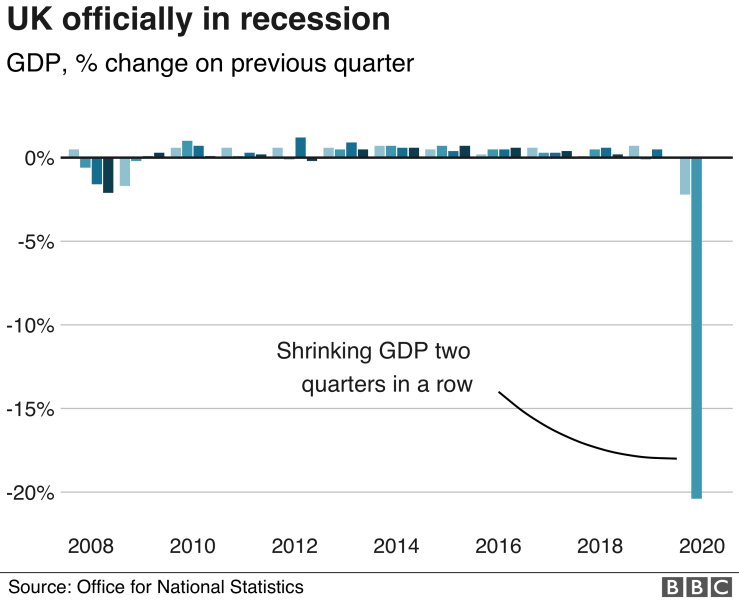
If we talk of UK in recent period it has been affected very badly as the government has claimed that 20.4% economy has shranked while comparing with the first three months.It is been on its biggest slum on record from mid April to June due to forced lockdown in this pandemic.As the household spending plunged as shops were to remain closed and factories and construction output also fell which pushed into its first technical recession since 2009.
Chancellor Rishi Sunak has said to the media that the government was “grappling with something that is unprecedented” and it was a very difficult and uncertain time.The teachers in the country are saying that they ensured that no student should be penalised as the exam were cancelled in the pandemic which is panicked and chaotic.
Due to the immediate lockdown and airlines being shut customers are saying that we are not receiving the refund.So,it seems that, the refund procedure has been slowed down too tremendously due to this pandemic.As still now the economy has been not unlocked completely everything is been working on phased manner.
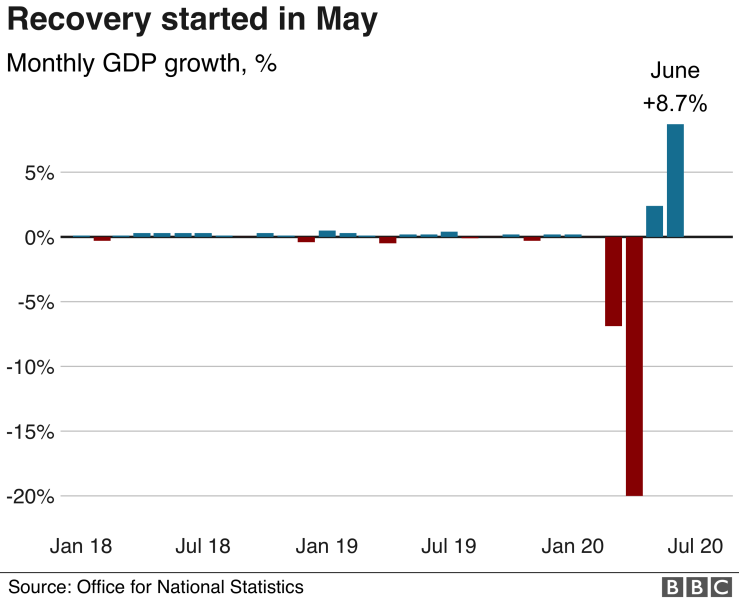
The office of the National Statistics said that the economy bounced back in the month of June when as the restrictions started to ease in the country.On a month on month basis,the economy grew by 8.7% in June after growth of 1.8% in May.
As the job figures presented by the government on Tuesday that the number of people who lost jobs were around 220000 between the period April to June.Chancellor said that it will be bot possible for the people to go back for the jobs they had earlier and we need to create new job opportunities in different areas.
Business People have urged to the government to provide their maximum support to the economy so that every things start to fall as the new future will evolve.The Bank of England has said that it does not expect the economy to be as the same as it was before the pandemic size until the end of next year.Other institutes in the country has stated the recovery will take even longer.
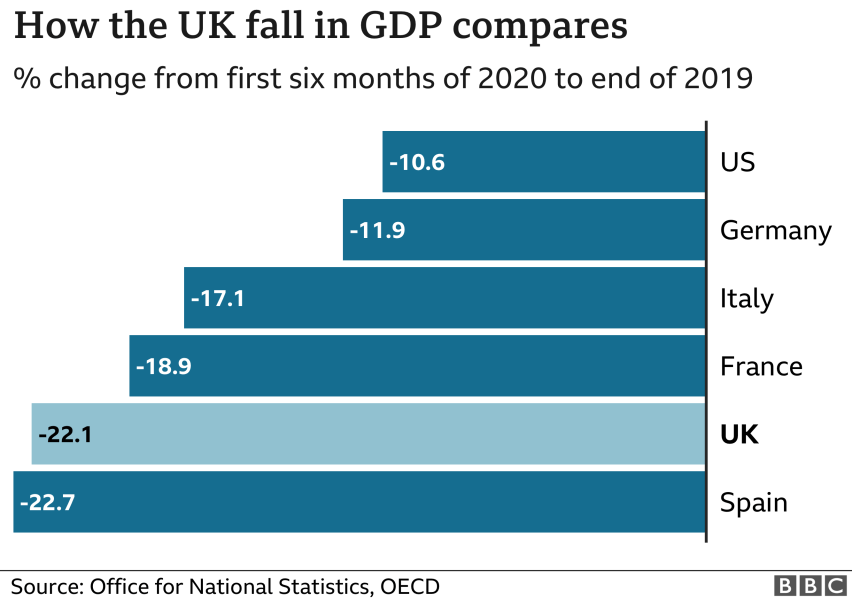
If we compare it with other nations the UK’s slump is worse than any other advanced economies.The economy has become fifth smaller as it was in the last year.It is not bad than Spain,but it is twice the size of Germany and US.
I WAS READINNG NEWSPAPER IN THE MORNING WHEN MY EYES STUCK ON THIS HEADLINE AND MY HAPPINESS KNEW NO BOUNDS.NOW , DAUGHTERS ARE EQUALLY INHERITABLE FOR THE INHERIT PROPERTY IN THE TRADITIONAL FAMILY BUSINESS THAT IS IN THE JOINT HINDU FAMILY SYSTEM . IT WILL HAVE RETROSPECTIVE EFFECT TO A 2005 AMENDMENT TO THE HINDU SUCCESSION ACT OF 1956 . IT IS THE BEST NEWS WHICH I HAVE READ TODAY AND NOT ABLE TO RESIST MYSELF FROM SHARING IT WITH ALL THE READERS . IN ADDITION TO THIS , I ALSO HAVE A THOUGHT IS N’T TOO LATE ? IF TI WOULD HAVE PASSED IN THE LAW WHEN IT WAS BEING MADE , THEN , DAUGHTERS HAVE HAD THIS RIGHT SO FAR , IS N’T ? . WELL , ITS VERY LATE BUT THE DECISION MADE IS THE BEST , SHOWING THE UPGRADATION IN THE LEVEL OF THINKING IN THE MINDS OF FEW PEOPLE.
IN THE HINDU SUCCESSION ACT OF 1956 , NOW , DAUGHTERS ARE THE COPARCENERS IN THE HINDU UNDIVIDED FAMILY AND HOLD THE COPARCENERY RIGHTS IRRESPECTIVE OF WHETHER FATHER IS ALIVE OR NOT. THIS AMENDMENT WAS MADE IN 2005 , AT PRESENT GIVING THE RETROSPECTIVE EFFECT FOR THE AMENDMENT MADE . MOST OF THE FAMILIES MUST HAVE PUZZLED OUT THE ACCOMODATION OF THE SHARE OF BUSINESS THAT IS TO BE GIVEN TO THEIR DAUGHTERS. THE ISSUE LIES WHERE THE FAMILY DOES N’T ACCEPT THE RIGHTS OF THE DAUGHTERS .IN THE TRADITIONAL SENSE , SOME OF THE FAMILIES MAY NOT GREET THEIR DAUGHTERS IN FAMILY BUSINESS WHICH IS DEFEATING THE OBJECTIVE . MR RAMACHANDRAN ALSO ADDED ABOUT THE JOINT AND LARGE FAMILY BUSINESS , SHOULD BE OPEN TO RECOGNISE THE RIGHTS OF THE DAUGHTER .
FROM NOW ONWARDS , EVERY DAUGHTER HAS EQUAL RIGHT IN BEING THE PART OF THEIR BUSINESS .
THE JUDGEMENT SAYS ”THE DAUGHTERS CAN NO LONGER BE DEPRIEVED OF THEIR RIGHTS T0 ANCESTRAL PROPERTY , NO MATTER WHEN THEY WERE BORN ” .
5 Latest Sustainable Development Goals in the Corporate World.
Sustainable Development Goals by private firms has increased noticeably since the last decade. Many big corporates like Google, Apple, Dell, Tech Mahindra, Hero MotoCorp, etc. are working with the view of sustainable development since the beginning. Let’s look at some recent sustainable development goals and initiatives by private firms.
1. Microsoft
Microsoft is setting multiple sustainable development goals and adopting different approaches to tackle environmental degradation. The company recently launched its initiative ‘Zero waste by 2030’ focusing on carbon, water, ecosystems, and waste.
Building Microsoft Circular Centers to reuse and repurpose servers and hardware in their data centers.
Eliminate single-use plastics in packaging.
Improve their waste accounting technology.
Invest in circular economy ventures.
Help employees to reduce their own waste footprints.
Microsoft headquarters, Redmond. Source: Microsoft
2. Vestas
It is the first renewable energy manufacturer verified by ‘Science-based target initiatives’ for its sustainable development goals. Vestas has earlier made many contributions to environment protection.
Vestas announced its green initiative to become carbon neutral, without using offsets, by 2030.
IPCC in a recent report, states that limiting the rise in the global temperature to 1.5°C, as stated in the Paris Agreement, will significantly reduce the risk of extreme affects from climate change.
Reduce greenhouse gas emissions by 45% within its own supply chain.
Carbon neutrality and minimize energy consumption.
100% renewable electricity for offices and data centers.
Remote jobs to reduce travel emissions.
Support other organizations in their climate actions.
Help employees to volunteer for environmental causes.
4. Crown
Packaging firm ‘crown’ laid out their initiative ‘Twentyby30’ containing 20 sustainable development goals aiming to get accomplished by 2025, 2030, and 2050. The initiatives include:
Send zero waste to landfill
Make aluminum and steel cans 10 percent lighter to reduce the usage of packaging material.
Increase the recycling of its plastic strapping by 10 percent.
5. Salesforce
The latest initiative of this AI-based CRM firm is to achieve 100% renewable power by 2022. This renewable energy deal is in collaboration with Bloomberg, Cox Enterprises, Gap Inc., and Workday, Inc. and with guidance from LevelTen. The sustainable development goal is to provide renewable energy at a small scale, available to everyone. Currently, renewable energy contracts are made at a high scale involving large investments which are not feasible for small-scale organizations and individuals.
Advertisement mainly is for communicating the message to the target audience, so now when we come to the segregation, there are the commercial advertisements and the non commercial one.
Non-commercial advertisements are non-profit and are only shown for giving some information or spreading awareness. Whereas, commercial advertisements are generally directed towards increasing the sale of a product or services or to increase the usage.
For instance, if you’re offering a distinctive product, service or value proposition to the customer, commercial advertising is a way to get the word out quickly and more broadly than through referrals from existing customers or waiting for people to find you by chance.
Reaching out to your audience via television and radio can let the public know about what you offer and how people can get your product or service.
It gives you the opportunity to tell potential customers about your attributes, which can have a positive result over time. Exposing them to the message once or twice isn’t likely to make a difference. Moreover, once customers have a positive impression of your brand, future commercial advertisements underscore that positive impression.
The purpose of advertising is to gain the interest and trust of consumers. Advertisers seek to increase interest in buying a product, visiting a place, or using a specific service.
One important aspect of commercial advertising is that it creates a demand or a perceived need for something. As soon as the consumer has a reason to want, advertising is there to offer a solution to that need.
All the advertisements between the TV serials or in between the websites and blogs are a form of commercial advertisements as the one showing the advertisement is promoting it’s product and getting the revenue.
A research shows that a moderate level of repetition of advertisements has the greatest effect. That’s the reason why we are exposed to a single advertisement several times by a particular company. Our minds, even starts to memorize these advertisement along with their taglines and that’s how these advertisements plays with human brains.
And then there were none is an enigma novel written by the queen of crime, Agatha Christie. It is one of the best seller novels which takes murder mystery to a next level.
It is a story of ten strangers who were sent invitations they could not refuse to the illustrious Soldiers Island by the wealthy Mr.Owen. All of them notice an unusual nursery rhyme framed and hung off the wall of every room titled TEN LITTLE INDIANS which goes as-
Ten little Indians standin’ in a line, One toddled home and then there were nine; Nine little Indians swingin’ on a gate, One tumbled off and then there were eight. Eight little Indians gayest under heaven One went to sleep and then there were seven; Seven little Indians cuttin’ up their tricks, One broke his neck and then there were six. Six little Indians all alive, One kicked the bucket and then there were five;
Five little Indians on a cellar door, One tumbled in and then there were four. Four little Indians upon a spree, One got fuddled and then there were three; Three little Indians out on a canoe, One tumbled overboard and then there were two Two little Indians foolin’ with a gun, One-shot t’other and then there was one;
One little Indian livin’ all alone, He got married and then there were none.
After supper, a gramophone record is played; the recording accuses each visitor of having committed murder and then asks if any of “the accused” wishes to offer a defense. This is not taken seriously by anyone. Later they find that the cook among them got dead after drinking. The next morning a lady corpse is found in her bed; she died in her sleep. One by one each one of them dies and the island becomes empty. For an instance, there were ten people and now there were none. Police inspector and crime branch do their investigations and found things, not of much importance. Later during the court hearing, one person found something which resolves the entire mystery of ten murders, and the murderer was found amongst those ten people only which is now dead.
The book completely binds thrill and suspense with an outstanding revival. The book deserves to get read once.
Today, life is moving fast and in this fast-moving life, we explode to more changes in lifestyle. Today the use of the internet is very frequent. The Internet helps everyone to connect with everyone around the world. There are many good uses of the Internet but as there are always two sides to the coin similarly Internet has its pro and cons. This time when social media matters more than real life. Social media has taught people to share their problems but also to show off their happiness which is only limited to social media. We are a generation that needs more likes on social media than in real life.
This concept of social media is in some way creating a distance between the real-life and the reel life. The people pretend to be someone else on social media the negative impact does not stop here these days social media also create mental problems for people because of a new trend called trolls. People hide their identity and write some comments which are not appreciated on a social platform. Since the constitution allows us all to share our thoughts freely but these liberties have their restrictions that need to be taken care of.
Let’s not only focus on the bad impacts of social media there are also some good uses of Social media like making people aware of the wrong happening around the world and appreciating good work done by people. This new concept of the hash tag is helping people to share problems and happiness with the world.
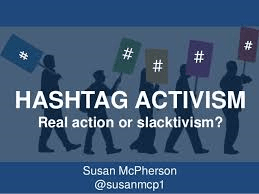
These days’ social media connect everyone directly to the politicians which creates an easy way to address your problem with the support of many people. The benefit of hash tag activism is very real. The Hash tag Raise awareness, build communities, give voice to everyone afraid to speak, educate more and more people.
This is the new way of getting public support from all over countries. The hash tag makes it easy to build huge public support with a public platform that is accessible by many. The growing trend of bringing socio-political changes with the help of social media in the real world is making it easy for people to raise their voices and share their experiences. This is a new concept but surely there are many agenda which have been successfully joined by people from all over the world. The hash tag activism helps to divert the attention of major population on issues like a human rights violation, abuse of any other right, fundraising, opposition against the government, and these days also to earn more and more votes.
There are a few campaigns that emerge to be successful because of major participation. This rise in social media has influenced communication and information of all kinds. People can be judged and appreciated on platforms like Facebook, Instagram, or Twitter. Naming a few famous examples of campaigns in recent times are #Blacklivesmatter, #oscarsowhite, #Metoo, and many more.
The discussion cannot be ended without discussing the problems in hash tag activism. There can be many problems in social media but surely these problems can be avoided by being a little more aware of the problem. These problems can be easily avoided by awareness. The major disadvantage can be misinformation or disinformation. This problem is faced to a very large extent.
The information provided on social media cannot always be true; people must check facts before sharing anything on social media. This is the time when misuse of anything and everything is common so social media is no exception.
People use social media as weaponization for Trolls, Cyber hacks, or mobilization. The major concern these days on social media is the Privacy of the user. The private information which is given to the apps impacts the jobs/ visas and even relationship. There are different complaints, censorship, and platform that register such complaints and take care of these concerns.
The conclusion of this topic can be done by this sentence given by Mark Kersten which says “we must understand that in this age of persuasion social media is one of the tools available to social activists. But when social media is effectively employed in campaigns, it remains the activists, revolutionaries and dissidents who deserve the credit for challenging the status quo- and social media itself.”
There is no doubt that Hash tag activism gets involved in social justice issues but it can also be seen as the endpoint to social activism. These steps seek to change our culture for better; this will become a step in introducing potential activists.
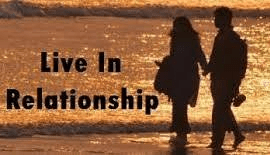
A live-in relationship gives the couple an opportunity to know the partner without having to engage into a legally binding relationship.
India has witnessed a drastic change in the way the present generation perceive their relationships. The taboo that used to haunt partners in live-in relationships has also started to fade away with society opening up about the idea of pre-marital sex and live-in relationships. This improved mind-set is a result of freedom, privacy, profession, education and also globalisation. Moreover, for most of us – it is not an escape from responsibilities but a way to understand our partner and to check if at all we are compatibility.
A live-in relationship not only gives the couple an opportunity to know the partner without having to engage into a legally binding relationship but also excludes the chaos of family drama and lengthy court procedures in case the couple decides to break up. It involves continuous cohabitation between the partners without any responsibilities or obligations towards one another.
There is no law tying them together, and consequently, either of the partners can walk out of the relationship, as and when they want.
How is live-in defined under Indian Law?
There is no law binding the partners together, and subsequently, either of the partners can walk out of the relationship, as and when they wish to do so. There is no legal definition of live-in relationship, and therefore, the legal status of such type of relations is also unconfirmed.
The right to maintenance in a live-in relationship is decided by the court by the Domestic Violence Act and the individual facts of the case. Though the common man is still hesitant in accepting this kind of relationship, the Protection of Women from Domestic Violence Act provides for the protection and maintenance thereby granting the right of alimony to an aggrieved live-in partner.
Is Live-In Relationship Legal in India?
Live-in relationship is one such concept that has entered into India in the millennial age. It’s not indifferent that people belonging to the previous generations usually question what a live-in relationship is. The main reason for this is because in earlier days no one would hear about such concepts, unlike today.
So be it any of the major metropolitan cities in India like Delhi NCR, Mumbai, Pune, Bangalore, Kolkata or Chennai. Or any other small modern city like Bhubaneswar, Ahmedabad for that matter, live-in relationship is becoming popular. More and more couples are feeling safe and confident in entering into such a relationship. The live-in relationship meaning has completely been revolutionised by the modern generation.
Laws Surrounding Live in Relationship in India
To have a live-in relationship, law in India is still not clear on that. It is, however, pertinent to mention here that even though there is no live in relationship act per se. Therefore, there is a lot of obscurity about the live in relationship in India legal status.
Regarding the legal status of live in relationship in India, the Supreme Court has ruled that any of the couples who are cohabiting together for a very long period of time, they will be presumed as legally married unless proven otherwise. As far as the modern generation is concerned, India has been witness to many drastic changes in terms of various perceptions. As far as this generation goes, the effects of live in relationship are viewed as much similar to any relationship in general.
Whether live in relationship is good or bad is totally dependent on the couple engaging in the same. The taboo which used to haunt couples entering into a live in relationship is slowly dissipating. The Indian society or the society, in general, is becoming more open to the concept of pre-marital sex and live in relationship. This is leading to slowly lifting-off the taboo surrounding it.
The live in relationship rules & regulations in regards to this matter is very stringent and strict. Live in relationship sex or cohabitation with any married party is completely illegal and criminal in nature. The aggrieved party can file for a criminal case of adultery under section 497 of the Indian Penal Code. The aggrieved party may also file for divorce on the grounds of his/her partner having an illicit relationship.
The Supreme Court judgement on live in relationship in the case Indra Sarma vs. V.K.V. Sarma states that co-living relationship can be broken down into five distinct ways:
Firstly, according to the court, any domestic cohabitation between an adult male and an adult female who are unwed is the simplest form of relationship.
Second, comes the cohabitation between a married man who is an adult and an unwed adult woman or vice versa.
It is important to mention about live in relationship, that cohabitation is taking place with mutual consent.
The Supreme Court has made it very clear that any domestic relationship with a married individual will tantamount to adultery. So, even if the cohabitation happens unknowingly can act as a ground for divorce.
Lastly, the apex court also speaks about the domestic cohabitation which takes place between homosexual partners.
Pros of co-living relationship include:
Lesser responsibilities: One of the major positives of being in a live in relationship is the fact that there are fewer responsibilities. There is no social or legal bond when it comes to living together. Marriage does involve a lot of compromises which can be avoided in this scenario.
Low legal Issues: There are lower legal issues when it comes to a living relationship. Divorce is one of the ugliest legal issues when it comes to marriage. As far as live in is concerned such legal hassles can be avoided. A couple can simply move on rather than being in a suffocating relationship.
Financial Freedom: Another excellent advantage of a live in relationship is the aspect of financial freedom. One can easily divide expenses when it comes to a live-in relation. This concept is rather difficult when it comes to marriage.
Cons of co-living relationship include:
Social Censure: One of the major cons of being in a live-in relationship is the fact that society scorns upon the whole concept. Live in relationships as of yet have still not been accepted in most parts of the society, especially in India.
Lack of Commitment: It can be stated that one of the biggest advantages of a live-in relationship is also one of its largest disadvantages. There is a lack of commitment when it comes to the co-living relationship. This is why most of them are so short lived. The likelihood of one getting out of a live-in relationship is as quick as one entering into one.
Live-ins is not a new phenomenon in India. Apart from it going on in hushed or open ways in cities, it has been the standard norm in many of our tribes, some of which believe that the contemporary marriage system brings with it “several impositions, especially on women.” In fact it was to secure the rights of tribal women in live-in relationships that the Madhya Pradesh State Women’s Commission had recommended that such unions be accorded legal status. That more and more people are opting for it due to their own respective reasons is attested by the fact that the internet has extended its matchmaking services to include finding live-in partners. In the year 2011, an NGO in Ahmedabad organized a first-of-its-kind event to help single senior citizens find companions. So clearly living together goes much beyond the simplistic notion of “the rebellion of youth.”
Contrary to popular belief, live-ins is not devoid of work but confer much more responsibility upon both the partners since in many ways they are on their own. In such circumstances, it is best to apprise oneself of the socio-economic-legal aspects (like the guidelines for when the relationship would be seen as being in the nature of marriage to be covered under the 2005 Act), and go in prepared.
India, as a country has always been a progressive country that has worked in the direction to fulfil the needs of its citizens. But, Abortion has always been a controversial topic in Indian society. In India, abortion has always been considered a taboo, and discussion regarding it is considered as a thing of disgust.
In Indian society, firstly there is no concept for a woman to have a pre-marital pregnancy because, if a girl conceives like that, then, the girl is considered as beige. And abortion after the marriage in Indian society is never been considered as a good option. India, being a patriarchal society always has preference over boy child. In fact even today in the twenty first century girls are been considered as a burden over the family, therefore, In India most of the abortions are female foeticides. It can be said that the high rate of abortion in India is the correct example of gender biasness.
Situation of Abortion before 1971-:
Before 1971 abortion in India was been considered a punishable offense without any exceptions. According to section 312 of Indian Penal Code “Whoever voluntarily causes a woman with child to miscarry, shall, if such miscarriage is not caused in good faith for the purpose of saving the life of the woman, be punished with imprisonment of either description for a term which may extend to three years, or with fine, or with both; and, if the woman be quick with child, shall be punished with imprisonment of either description for a term which may extend to seven years, and shall also be liable to fine.”
Shantilal Committee-:
Shantilal committee was the first committee that recommended making “Medical Termination of Pregnancy, Act, 1971”. Shantilal Committee focused on the socio, cultural, legal, and medical aspects of abortion.
Medical Termination of Pregnancy, Act, 1971
Protection of Doctors who perform Abortion -:
According to section 3 of Medical Termination of Pregnancy, Act,1971 “a registered medical practitioner shall not be guilty of any offence under that Code or under any other law for the time being in force, if any pregnancy is terminated by him in accordance with the provisions of this Act.”
According to section 8 of Medical Termination Pregnancy, Act “No suit or other legal proceedings shall lie against any registered medical practitioner for any damage caused or likely to be caused by anything which is in good faith done or intended to be done under this Act.”
Protection of Pregnant Women-:
1) – Only the consent of the adult women is been required for abortion, even the consent of the close relative will not be considered as a valid consent in such matters.
2) – In case of a minor girl or the girl or lady who is mentally ill in their case the permission of the parent or guardian is required for abortion.
According to section 5(2) of amendment Medical Termination of Pregnancy, Act, 2002 “Notwithstanding anything contained in the Indian Penal Code, the termination of pregnancy by a person who is not a registered medical practitioner shall be an offence punishable with rigorous imprisonment for a term which shall not be less than two years but which may extend to seven years under that Code, and that Code shall, to this extent, stand modified.”
Protection of Clinics -:
(1)-The Appropriate Authority shall, after holding an inquiry and after satisfying itself that the applicant has complied with all the requirements of this Act and the rules made thereunder and having regard to the advice of the Advisory Committee in this behalf, grant a certificate of registration in the prescribed form jointly or separately to the Genetic Counselling Centre, Genetic Laboratory or Genetic Clinic, as the case may be. (2) If, after the inquiry and after giving an opportunity of being heard to the applicant and having regard to the advice of the Advisory Committee, the Appropriate Authority is satisfied that the applicant has not complied with the requirements of this Act or the rules, it shall, for reasons to be recorded in writing, reject the application for registration. (3) Every certificate of registration shall be renewed in such manner and after such period and on payment of such fees as may be prescribed. (4) The certificate of registration shall be displayed by the registered Genetic Counselling Centre, Genetic Laboratory or Genetic Clinic in a conspicuous place at its place of business.
(2)-No person, including a specialist or a team of specialists in the field of infertility, shall conduct or cause to be conducted or aid in conducting by himself or by any other person, sex selection on a woman or a man or on both or on any tissue, embryo, conceptus, fluid or gametes derived from either or both of them.
(3)-No person referred to in clause (2) of section 3 shall conduct the pre-natal diagnostic procedures unless— (a) he has explained all known side and after effects of such procedures to the pregnant woman concerned; (b) he has obtained in the prescribed form her written consent to undergo such procedures in the language which she understands; and (c) a copy of her written consent obtained under clause (b) is given to the pregnant woman. (2) No person conducting pre-natal diagnostic procedures shall communicate to the pregnant woman concerned or her relatives the sex of the foetus by words, signs or in any other manner.
(4)-(a) no Genetic Counselling Centre or Genetic Laboratory or Genetic Clinic shall conduct or cause to be conducted in its Centre, Laboratory or Clinic, pre-natal diagnostic techniques including ultrasonography, for the purpose of determining the sex of a foetus; (b) no person shall conduct or cause to be conducted any pre-natal diagnostic techniques including ultrasonography for the purpose of determining the sex of a foetus.
Right to Protest-:
If the license of a registered clinic under the act gets cancelled then they have the right to appeal and protest. According to section 21 of THE PRE-NATAL DIAGNOSTIC TECHNIQUES (PNDT) ACT,1994 “The Genetic Counselling Centre, Genetic Laboratory or Genetic Clinic may, within thirty days from the date of receipt of the order of suspension or cancellation of registration passed by the Appropriate Authority under section 20, prefer an appeal against such order to— (i) the Central Government, where the appeal is against the order of the Central Appropriate Authority; and (ii) the State Government, where the appeal is against the order of the State Appropriate Authority, in the prescribed manner.
Conclusion-:
As, the need for the time, rules, and regulations in the Medical Termination of Pregnancy, Act, 1971, should be amended. Even today there are many things which are untouched by the law in the matter of legal abortion, and it’s not that these things are not been looked or touched by our lawmakers, Medical Termination of Pregnancy Bill, 2014 and Medical Termination of Pregnancy Bill, 2020 are still pending. But the law-making process in our country is to slow that for making a general it takes a minimum of 23 to 24 years. Countries like America, Russia, etc. have properly defined and have stringent laws regarding abortion. To improve the condition of abortion in India there is a need to make stringent laws.
Essay on Janmashtami – The Hindus celebrate Janmashtami for the birth of Sri Krishna. The festival usually occurs in August. Moreover, the Hindus celebrate this festival in the Ashtami of Krishna Paksha. Moreover, Lord Krishna is the most powerful incarnation of Lord Vishnu. It is a joyful festival for the Hindus. Furthermore, the Hindus perform different rituals to please Lord Krishna. This is one of the most joyous celebrations for the Hindus.
Lord Krishna was born on the 8th day of Dark Fortnight in the month of Bhadon. Bhadon is a month in the Hindu calendar. Moreover, he was born around 5,200 years ago approximately. Because he was one of the most powerful Gods. He was born for a special purpose on Earth. Lord Krishna was born to free the world from evil.
As a result, he played an important role in the book of Mahabharata. Also, Lord Krishna preached about good karma and the theory of Bhakti.
Lord Krishna was born in a prison. He was in the clutches if Kansa. But his father Vasudev gave him to his friend Nand to save him. Because he knew that Kansa was evil-minded. Furthermore after getting saved the upbringing of Sri Krishna was in a Gokul family. Sri Krishna after some time became strong. As a result, he was able to kill Kansa.
When I was a child I used to watch many shows on Sri Krishna. As a result, I know many things about him. First of all, Sri Krishna was very fond of eating Makhan. Because of that he always used to steal it from his mothers’ kitchen. Therefore his name was ‘Natkahat Nand Lal’. Sri Krishna was dark-colored. So he was always worried about his color. Moreover, Sri Krishna had a friend named Radha. Radha was of great importance to Krishna. So he always spent time with her. Radha was very beautiful and fair so Lord Krishna always feels color complex.
How is Janmashtami Celebrated?
People celebrate Janmashtami in mid-night. Because Lord Krishna was born in the dark. Moreover, people have a special way of celebrating the festival. Since Sri Krishna was fond of eating Makhan people play this sport.
The sport is, they tie an earthen pot(matki). The judge of the game ties the matki really high from the ground. Furthermore, a person fills Makhan in the matki. Also, what people do is they build a human pyramid to break the matki. Since the matki is too high they have to build a tall pyramid. As a result, many people have to take part in sport. Moreover, there are other teams too who stop them from breaking the matki. Equal chances are there for both the teams. Each team gets a chance for a particular time period. If the team is not able to do it in time then the other team tries it. This is an interesting sport many people gather to watch this sport.
Furthermore, the celebration is also done in houses. People decorate their houses from outside with lights. Moreover, the temples are full of people. They perform various rituals inside the temple. As a result, we hear the sound of bells and mantras the whole day.
Moreover, people perform a dance on different religious songs. Finally, it is one of the most enjoyable festivals in the Hindu religion.
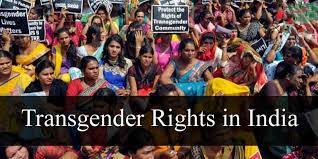
Transgender is an umbrella term used for persons whose gender identity and gender expression does not align with those assigned at birth. It can also refer to those who reject the gender binary of masculine and feminine. In India, they are often called Hijras, Aravanis, Jogtas and so on.
The transgender community has always been an integral part of historical India where their presence and blessings at ceremonies was considered auspicious. Under the Mughal rule, they enjoyed strong royal connections and held high positions. With the advent of British colonization, the status and acceptance of transgenders declined. The imposition of a Euro-centric world view led to transgenders being viewed as moral and sexual contagion to supposedly deviant Indian males.
The passing of the Criminal Tribes Act, 1871 (CTA) sought to further isolate transgenders by vilifying them as ‘habitual criminals’ and ‘sexual deviants.’
Newly independent India did little to better integrate transgender people into mainstream society. The census process, the most reliable source for data on demographic and literacy, omitted transgenders for the first 64 years. To relay the significance of this exclusion in numbers, when given the chance to identify themselves as transgenders in 2011, almost half a million out of 1.2 billion identified as transgenders.
Transgenders are usually rejected from any means of employment and hence, resort to entertainment, begging, extortion or prostitution. The culmination of low literacy rates, low skill levels and the reluctance to accept transgenders has pushed them further into sex work and has increased the probability of violence against them.
In terms of healthcare, the transgender community is 49 times more likely to be living with the Human Immunodeficiency Virus (HIV). The National Aids Control Organisation in (NACO) in India estimates HIV prevalence among transgenders to be 7.5%. The increased stigmatization makes it difficult for them to access adequate healthcare facilities.
The Ministry of External Affairs was the first official body that allowed transgenders to identify with a separate category ‘E’ while applying for passports. Not only was this categorization derogatory but it excluded a large spectrum of individuals who fell under the trans category. In case of competitive politics, transgenders are often provided positions as a means of tokenism rather than inclusion, 2014 was a turning point in the history of transgender rights in India.
The Supreme Court in NALSA v Union of India guaranteed the fundamental rights of transgender persons and promised provision of equal opportunities under the constitutional framework. Notably, the Court held that they had the right to decide their self-identified gender and vowed to uphold the ideals liberty, equality and freedom of expression. The Constitution must be interpreted in such a manner so that it ensures a dignified life for transgenders. Other directions to combat the societal stigma and sexual health issues faced by transgender persons, were also conveyed by the Court.
However, the judgement was not backed by a capable legislative framework to centrally aid the transgender community. Hence, the ongoing efforts to do so fructified in the passing of the Transgender Persons (Protection of Rights) Act 2019 (hereafter ‘the Act’) which came into force on 10th January 2020. The Act aimed at providing a statutory basis to better protect the rights of transgender persons and establish procedures to orderly recognize their self-identified gender.
Also, in the Act are provisions to prohibit discrimination against and secure the safety of the transgender community. Further, in April 2020, a Draft Transgender (Protections of Rights) Rules (hereafter, ‘the Rules’) under sub-section (1) and (2) of Section 22 of the Act was released by the Ministry of Social Justice and Empowerment. The Rules aim at strengthening the Act as well as focusing on the socio-economic hardships faced by transgender persons in the country.
Since its enactment, the Act has been challenged multiple times on the grounds that it violates the constitutional ideals recognized NALSA. For example, Section 6 and Section 7 of the Act have been criticized by members of the transgender community as violating guarantees against requirements of medical interventions for recognition of gender identity in NALSA.
Further, the Act discards forceful binary instead establishing a trinary where ‘transgender’ is the only other alternative. This does not take into consideration those transgenders who would identify as male or female, and those who may be gender queer. Not only this but the wording of the Act also seems to impose a binary with ‘son/daughter’ and ‘his/her’ rather than the gender neutral ‘child’ and ‘their’.
Even with specific laws to help ease the life of the transgender community into mainstream society, their interaction with the legal and justice system is still tainted with unfair power dynamics. Cases of harassment, intimidation and violence at the hands of police are plenty but they are rarely acted against and the NCRB fails to maintain a record of these atrocities against transgender persons.
The community often live with unrevealed sexual identities and this is taken advantage of by law enforcement. A study by the National Institute of Epidemiology among 60,000 transgender people across 17 states revealed that the biggest perpetrators of violence against transgender people were police and law enforcing authorities. One of the exceptions is the case of Jayalakshmi vs. Tamil Nadu, where the police was held accountable for the wrongful death of a transgender.
Implementation gap is most definitely the reason for deprivation of individual rights in India. While the Judiciary and Legislature have made efforts towards inclusion, the biggest challenge lies in better social acceptance and their integration normal, daily lives. We must aim grass-root level education that teaches that transgenders are not deviants and in fact, integral parts of our diverse society.
Sexual Harassment at Work Place’ As enshrined in the Preamble to the Constitution of India, “equality of status and opportunity” must be secured for all its citizens; equality of every person under the law is guaranteed by Article 14 of the Constitution. A safe workplace is therefore a woman’s legal right.
Indeed, the Constitutional doctrine of equality and personal liberty is contained in Articles 14, 15 and 21 of the Indian Constitution. Sexual harassment constitutes a gross violation of women’s right to equality and dignity. It has its roots in patriarchy and its attendant perception that men are superior to women and that some forms of violence against women are acceptable. One of these is workplace sexual harassment, which views various forms of such harassment, as harmless and trivial.
Often, it is excused as ‘natural’ male behaviour or ‘harmless flirtation’ which women enjoy. Contrary to these perceptions, it causes serious harm and is also a strong manifestation of sex discrimination at the workplace.
Not only is it an infringement of the fundamental rights of a woman, under Article 19 (1) (g) of the Constitution of India “to practice any profession or to carry out any occupation, trade or business”; it erodes equality and puts the dignity and the physical and psychological well-being of workers at risk. This leads to poor productivity and a negative impact on lives and livelihoods.
To further compound the matter, deep-rooted socio-cultural behavioural patterns, which create a gender hierarchy, tend to place responsibility on the victim, thereby increasing inequality in the workplace and in the society at large.
Though sexual harassment at the workplace has assumed serious proportions, women do not report the matter to the concerned authorities in most cases due to fear of reprisal from the harasser, losing one’s livelihood, being stigmatized, or losing professional standing and personal reputation. Across the globe today, workplace sexual harassment is increasingly understood as a violation of women’s rights and a form of violence against women.
The Sexual Harassment of Women at Workplace (Prevention, Prohibition and Redressal) Act, 2013 was enacted to ensure safe working spaces for women and to build enabling work environments that respect women’s right to equality of status and opportunity.
An effective implementation of the Act will contribute to the realization of their right to gender equality, life and liberty, equality in working conditions everywhere. The sense of security at the workplace will improve women’s participation in work, resulting in their economic empowerment and inclusive growth.
A Review of the Protection of Women Against Sexual Harassment At Workplace Bill, 2007
As mentioned in the preceding section, the Court in the Vishaka case had stepped into the law-making domain and suggested that in the absence of a law against sexual harassment, the guidelines suggested by the Court would be considered as the law.
The Court, however, also called for a legislation prohibiting sexual harassment to replace its injunctions subsequently. The Court ruled in the Vishaka case in 1999. Since then there have been demands for legislation on sexual harassment and several attempts at drafting and presenting a bill have been made.
The Bill also provides space for third-party harassment. Third-party harassment implies that the perpetrator is not the employer or colleague; an outsider, like a client or customer who comes in contact with the woman at the workplace or in relation to the workplace.
In 1992, a rural level change agent, Bhanwari Devi, was engaged by the state of Rajasthan as a Sathin to work towards the prevention of the practice of child marriages. During the course of her work, she prevented the marriage of a one-year old girl in the community.
Her work was met with resentment and attracted harassment from men of that community. Bhanwari Devi reported this to the local authority but no action was taken. That omission came at great cost – Bhanwari was subsequently gang raped by those very men. The Bhanwari Devi case revealed the ever-present sexual harm to which millions of working women are exposed across the country, everywhere and everyday irrespective of their location.
It also shows the extent to which that harm can escalate if nothing is done to check sexually offensive behaviour in the workplace.
Based on the facts of Bhanwari Devi’s case, a Public Interest Litigation (PIL) was filed by Vishaka and other women groups against the State of Rajasthan and Union of India before the Supreme Court of India.
It proposed that sexual harassment be recognized as a violation of women`s fundamental right to equality and that all workplaces/establishments/institutions be made accountable and responsible to uphold these rights.
In a landmark judgment, Vishaka vs. State of Rajasthan (1997), The Supreme Court of India created legally binding guidelines basing it on the right to equality and dignity accorded under the Indian Constitution as well as by the UN Convention on the Elimination of All Forms of Discrimination against Women (CEDAW).
It included:
A definition of sexual harassment
Shifting accountability from individuals to institutions
Prioritizing prevention
Provision of an innovative redress mechanism
The Supreme Court defined sexual harassment as any unwelcome, sexually determined physical, verbal, or non-verbal conduct. Examples included sexually suggestive remarks about women, demands for sexual favours, and sexually offensive visuals in the workplace. The definition also covered situations where a woman could be disadvantaged in her workplace as a result of threats relating to employment decisions that could negatively affect her working life.




 Eduindex
You must be logged in to post a comment.