Facts of National flags

All national flags are very colorful and very decorative with stars, stripes, etc. Those colors are not just colors but they contain some meaning or some information regarding that particular country. Now, let us know some facts about national flags.

1.India

The present flag of India had been adopted on July 22,1947 as free India National Flag. Indian flag contains three colors in equal horizontal portions and the centre of the middle portion has Dharma Charkha of emperor Ashoka. The three colors and the dharma chakra represents:

Saffron represents Courage and Sacrifice

White represents truth and purity

Green represents faith, fertility and growth

Dharma chakra is the wheel of virtue, also represents motion or growth

2.Pakistan
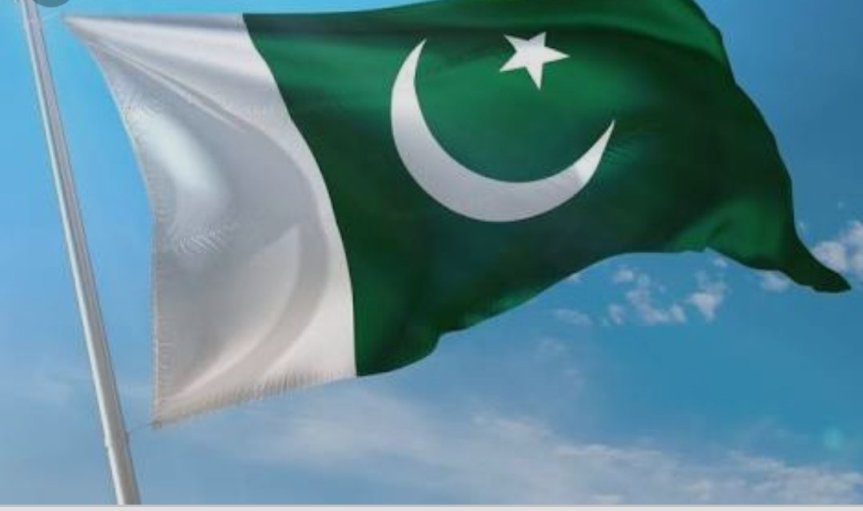
The present flag of Pakistan was adopted on August 11, 1947 as the Dominion flag of Pakistan, just before the 3 days of Country’s independence. The Pakistan flag consists of green, white colors with a moon and a star I it.

Green represents the Muslim population

White represents the minority population

Moon and Star represents the light & progress

3.United States of America
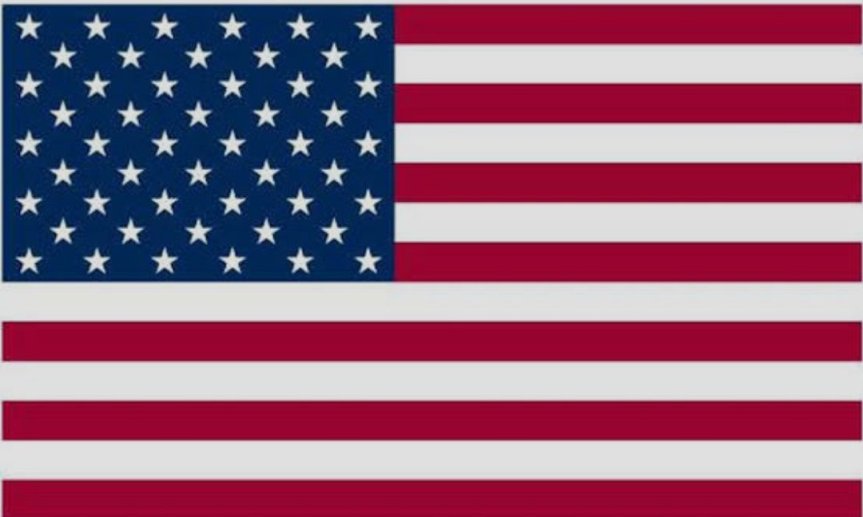
The present National flag of USA was adopted on July 4, 1960. It consists of thirteen horizontal strips of red alternating with white and 50 five pointed stars within a blue background.

The 50 stars represents the 50 sates of USA

The 7 red strips and 6 white strips represents 13 original colonies

Red represents hardiness and valor

Blue represents vigilance and justice

White represents purity and innocence

4.Brazil
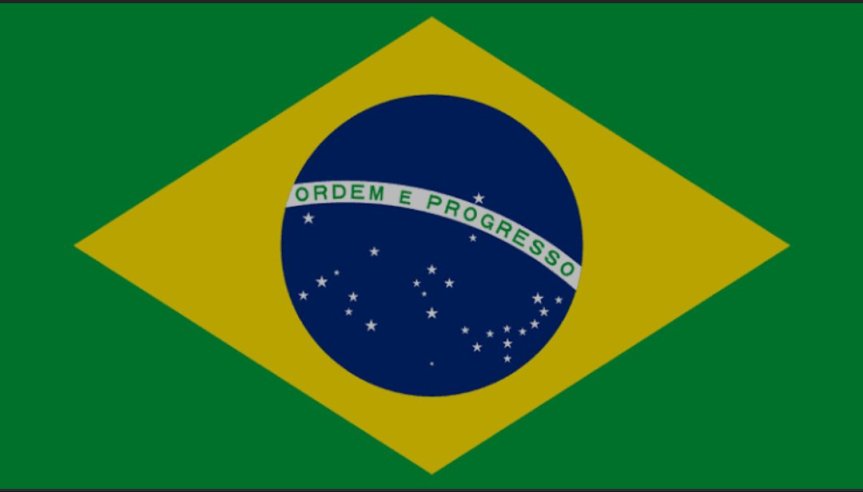
The present design of National flag of Brazil was adopted on May 11, 1992. It consists of a blue disc with 27 stars in it and a band with an inscription around the disc.

The blue disc represents the start sky

The stars represents the federal region

The inscription “ORDEM E PROGRESSO” is the national motto: Order and Progress

Green represents lush green fields and forests

Yellow represents Brazil’s wealth in Gold

5. Australia
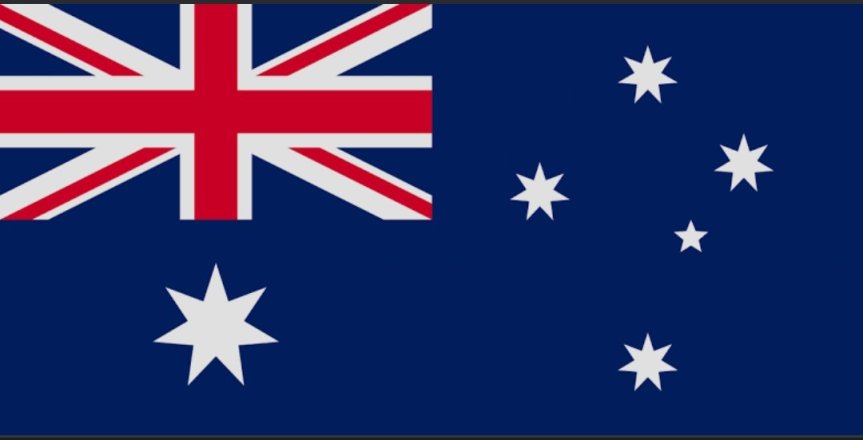
The present National flag of Australia was adopted on 8 December, 1908. It consists of a union flag, one big Seven pointed Star and five small seven pointed stars.

Union flag represents the history of British Colonization

One big seven pointed star represents the country’s 6 States and 1 territory

Small star represents the southern Cross constellation, visible from all over Australia

6. Iceland

The present National flag of Iceland was adopted on June 17, 1944 , the day Iceland became a republic. The flag consists of a Cross with red and white colors in a blue field.

The Cross represents Christianity

Red represents the volcanoes on the Iceland

White represents the snow and ice covering the Iceland

Blue represents the surrounding North Atlantic Ocean

7. South Africa
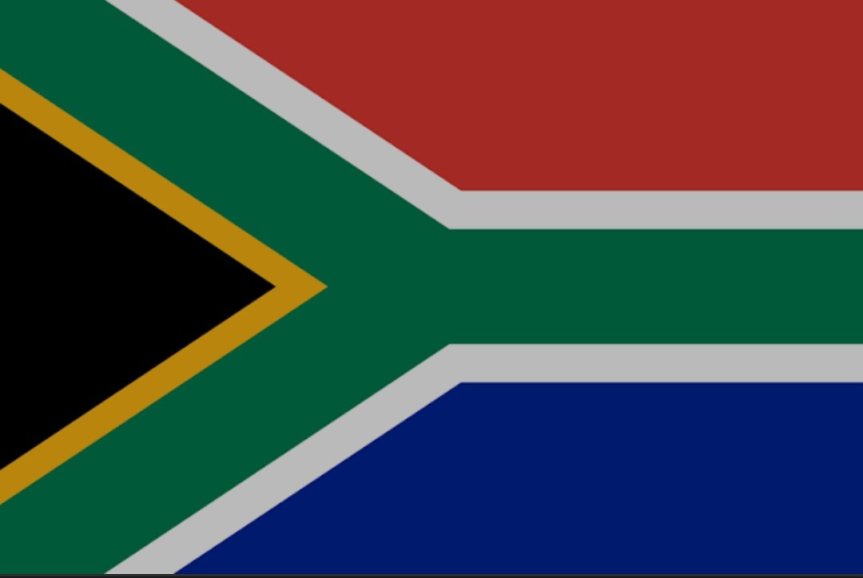
The present National flag of South Africa was adopted on 27th April, 1994. The flag forms letter Y with yellow,green and white colors.

The Y represents the unification of various ethnic groups

Black, Green and Yellow represents the country’s black population

White, Blue and Red represents the country’s white population

8. Bahamas
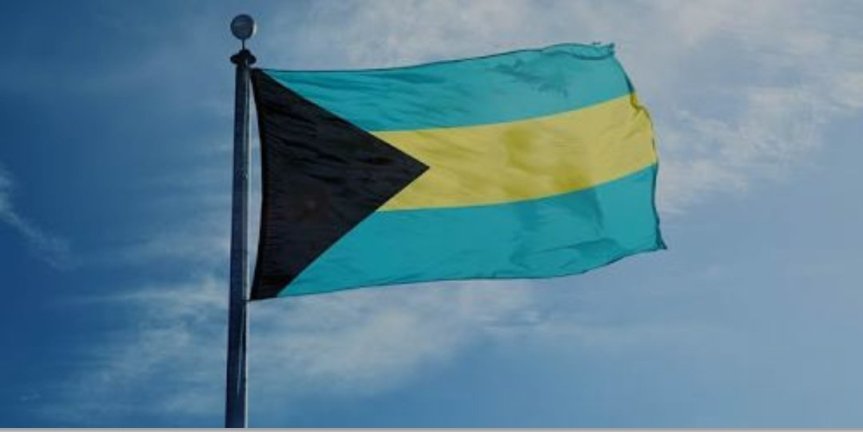
The present National flag of Bahamas was adopted on 10th July, 1973. It consists three colors Black, Blue and Yellow.

Black represents the people of Bahamas and their desire to develop

Yellow represents the sandy beaches of 700 Bahamian islands

Blue represents Water

9. China
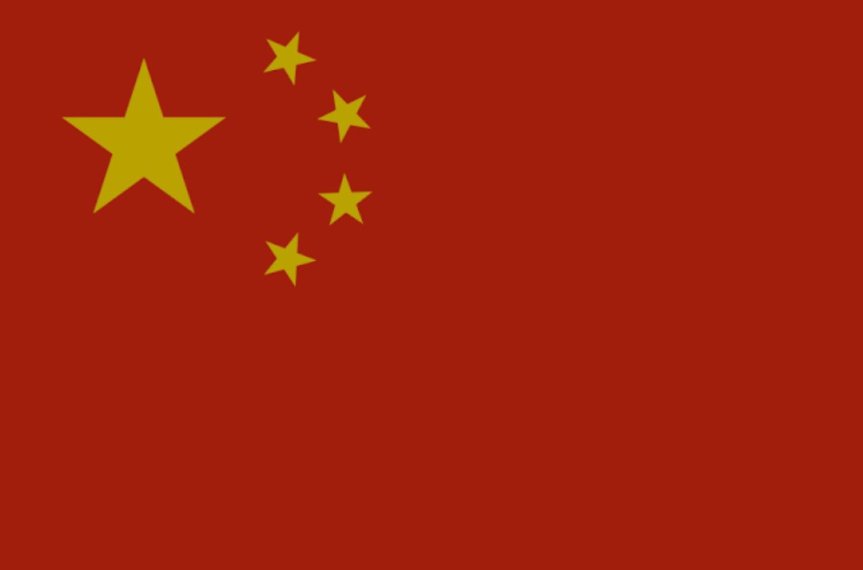

The present National flag of China was adopted on 1 October, 1949. The flag has a large golden star within an arc of four smaller golden stars, in a Chinese red field.

Red colour represents the communist revolution

Big star represents the communist Party

Small stars represents the 4 social classes: working class, peasantry, urban bourgeoise and national bourgeoise

10. France

The national flag of France was adopted on 15 February 1794. It is a tricolor flag with blue, white and red vertical wide strips.

White represents Clergy

Red represents nobility

Blue represents bourgeoisie
Self Love

Self-love is a state of appreciation for oneself that grows from actions that support our physical, psychological and spiritual growth. Self-love means having a high regard for your own well-being and happiness. Self-love means taking care of your own needs and not sacrificing your well-being to please others. Self-love means not settling for less than you deserve.For many people, the concept of self-love might conjure images of tree-hugging hippies or cheesy self-help books. But, as many psychology studies attest, self-love and -compassion are key for mental health and well-being, keeping depression and anxiety at bay. Self-esteem is a coveted “psychological accessory” that has spawned a billion-dollar industry. There are so many programs, articles, books, and products that promise to enhance your self-esteem, one might conclude that our understanding of the trait is quite advanced.Self-love can mean something different for each person because we all have many different ways to take care of ourselves. Figuring out what self-love looks like for you as an individual is an important part of your mental health.Self-love means accepting yourself as you are in this very moment for everything that you are. It means accepting your emotions for what they are and putting your physical, emotional and mental well-being first.

So do yourself a favor, take a deep breath, give yourself a little hug and start practicing the following:

Start each day by telling yourself something really positive. How well you handled a situation, how lovely you look today. Anything that will make you smile.

Don’t kill yourself trying to get rid of “weakness”. Understand that no one is good at everything and work on improving your strengths.

Most of the damage to our self-esteem is self-inflicted. Unfortunately, we often respond to rejections and failures by becoming self-critical, listing all our faults and short-comings, calling ourselves names, and basically kicking ourselves when we’re already down. We then use ridiculous justifications to justify damaging our self-esteem when it is already hurting—“I deserve it,” “It will keep me humble,” “It’s a way to keep my expectations low, or “It’s true; I hate myself!” If there’s one “program” we could all start that would do wonders for our self-esteem, it’s abolishing needless self-criticism and punitive self-talk—and that program, is free!

By staying focused on what you need, you turn away from automatic behavior patterns that get you into trouble, keep you stuck in the past, and lessen self-love.

Listen to our bodiesTake breaks from work and move/stretch.Put the phone down and connect to yourself or others, or do something creative.Eating healthily, but sometimes indulge in your favorite foods.

You will love yourself more when you take better care of your basic needs. People high in self-love nourish themselves daily through healthy activities, like sound nutrition, exercise, proper sleep, intimacy and healthy social interactions.

Mindfulness meditation, apart from its apparent benefits for our mental health, is also a great way to boost our self-awareness and esteem. It helps to reign in our anxieties and fears, makes us more open to new experiences, and brings us the much-coveted self-acceptance. It also quiets our minds and self-doubts—thus, removes our self-inflicted impediments to progress and improvement.

Get in touch with your inner dialogue. If it’s anything less than loving, encouraging and supportive, it’s time to make a change. You deserve to be spoken to in the same way you would speak to your best friend, sister, brother, daughter, or son.

Finally, be cognizant that to enhance our self-esteem is not the same as to feel superior to others. The whole process is merely a journey toward re-discovering our own worth as human beings, of what we stand for, and how we want to evolve. It’s that simple.People who have more self-love tend to know what they think, feel, and want.Finally, to practice self-love, start by being kind, patient, gentle and compassionate to yourself, the way you would with someone else that you care about.

Curiosity (animals)

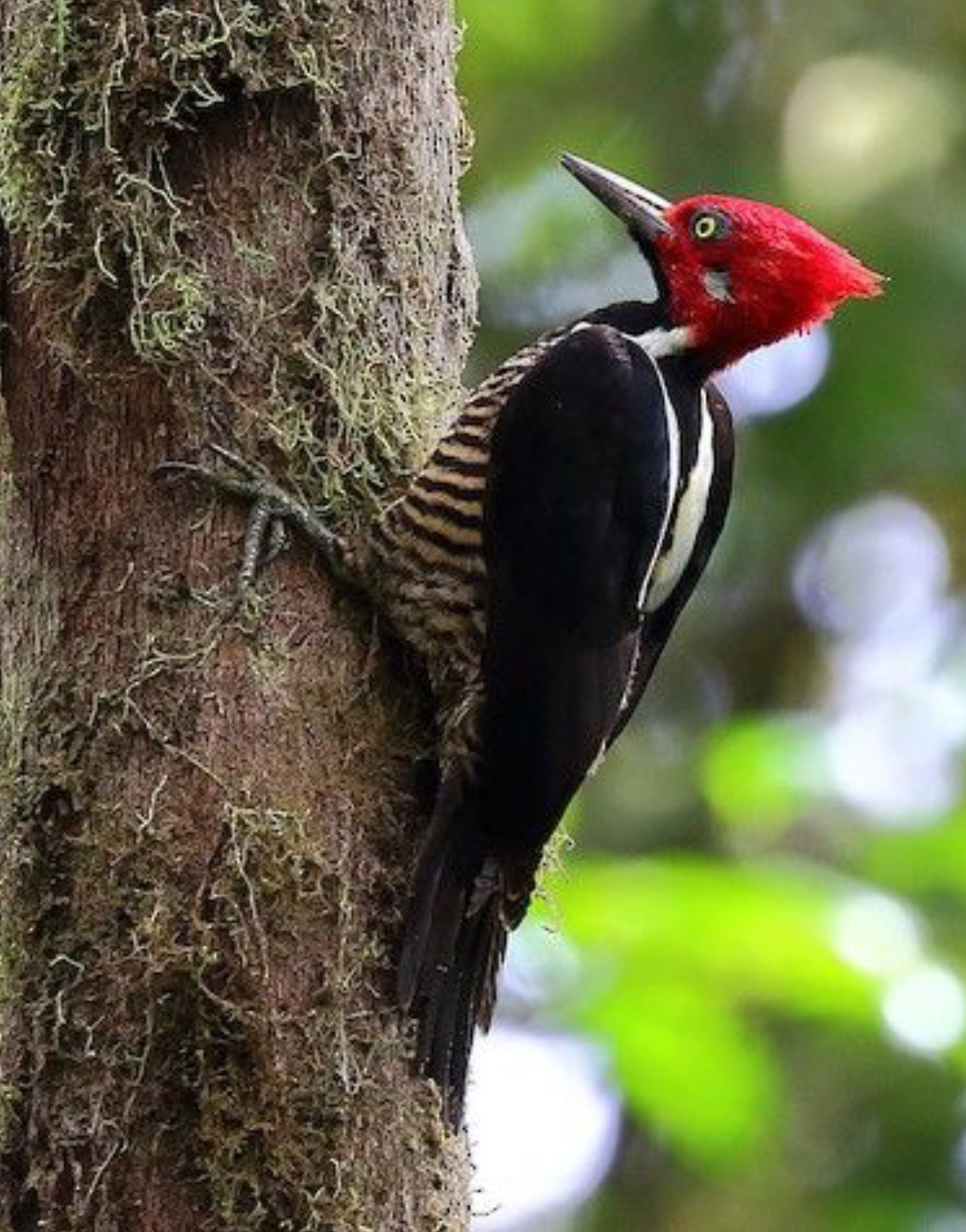
• Why don’t woodpeckers get a headache?

Have you ever seen woodpeckers striking trees with its long beaks? Woodpeckers hit the trees 20 times per second. Yet they don’t get a headache or any other head injury. The reason for thus is that woodpeckers are born with a helmet for the brain, which is formed of strong, thick muscles and sponge like bones in their skull. A woodpecker’s body too is specially designed to absorb the impact of the hit.

A millisecond before a woodpecker’s bill strikes on a tree dense muscles in the neck contract. Some of the force radiates down the neck muscles and protect the skull from a huge impact. A compressible bone in the skull offers a cushion effect too.

• Why aren’t spiders caught in their own webs?

Spiders spin their webs in a circular pattern that is spotted with sticky glue. When an insect brushes against these drops – each thread can carry several dozen per millimetre – it gets stuck and the spider rushes over to inject it with venom or cocoon it in silk. The question of course is how does the spider escape its own glue tracks? The answer lies in the fact is that the web is the spider’s home and it knows its way around the glue traps. There are some threads in the web that have no glue on them and the spider is careful to move only on these threads. It is also believed that spiders use an oily coating on their legs to protect themselves from getting stuck in their own webs!

Colourless rainbow

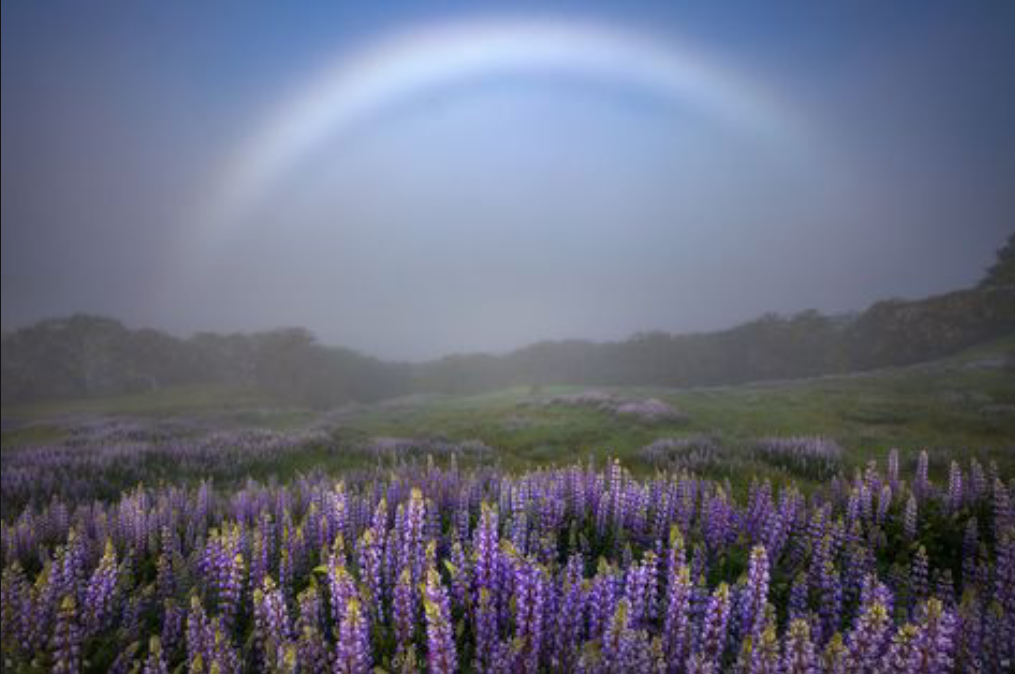
There are some rainbows that are colourless. They are called fogbows and are formed when the sun shines through a fog. The drops of water in the fog are too small to split up light into it’s different colours, so the fogbow is white in colour.

• What do we know about left handed animals?

Most people are right handed, though about one in ten among us is left handed. Animals like chimps, hump back whales and even toads favour one hand, paw, claw or fin over the other. Chimpanzees use both hands with ease, but have a preference for the right hand. Toads also prefer their right side to perform differ functions. Polar bears on the other hand, are left handed.

Some species of parrot such as the sulphur- crested cockatoo are entirely left handed, while others, including the king parrot are mainly right handed. The majority of parrots – including the budgie, galah and rainbow lorikeet use both claws comfortably. Female cats are more inclined to be right handed while male cats favour their left paws. The same is true for dogs. Interestingly, dogs wag their tails to the right when relaxed and to the left when agitated!

Thank you for reading. Have a nice day!🌼

CACHE MOVIE REVIEW- FRENCH THRILLER MASTERPIECE

Cache (Hidden) (2005) is about a middle aged Parisian couple, Georges and Laurent who find a couple of tapes at their front door. The tapes show surveillance of the exterior of their house. They get extremely distressed and gradually realise that the sender of the tapes may be someone from Georges’ past.

I loved the way Michael Haneke has told the story. This thriller is not supposed to entertain you, it’s supposed to make you think. It breaks down the life of this couple and examines how the western first world countries have been bad to the Eastern countries. The mystery of the tape sender is not even the main plot and we are not given a resolution even in the end. Haneke has used this mystery as a catalyst to talk about the themes of guilt, and the ill effects of French imperialism. He has shown how a man who’s done questionable things in the past is not even aware of the fact that he’s in the wrong. We see how his conscience is affected by the guilt that he carries. Here this man, Georges symbolises the people of the first world countries. This film gives a lot of food for thought and there is a lot to talk about.

The script is really nuanced and it’s great the way Haneke has hinted at things. I was really impressed by how he’s used the camera to often indicate things. The way, Haneke has fleshed out the lead character is also very subtle. There’s a scene in the first twenty minutes that you would think is not all that important, but in retrospect, you would realise that it actually establishes a lot about the character. Only a few great filmmakers like Haneke can add depth in these subtle manners. A lot of things are kept ambiguous, so this film would take MANY viewings to fully grasp everything. This is an extremely intricate film that’ll reward you with new details on every viewing.

No film has affected me the way Cache did. It’s a film that shows how powerful the medium of cinema can be. Films like Cache remind me why I love this art form so much. It’s filmmaking at it’s finest

NEET Exam : Today

Priya Yadav,

The National Eligibility cum Entrance Test (NEET) will be conducted across the country on 13 September i.e. today for admission to medical courses. States have also relaxed transport with corona virus restrictions in the wake of NEET exams. The conduct of the NEET exam in the midst of the Corona epidemic was challenged by some students and opposition-ruled states. He had said that the life of students would be put in danger by conducting these exams at this time. A petition to defer the NEET and JEE examination was filed in the Supreme Court last month. However, the court said that the examination can be conducted strictly following the rules of social distancing.

This time around 16 lakh students have registered for NEET exam. The NTA has changed the examination centers of some candidates due to the corona virus epidemic. Candidates whose examination centers have been changed keeping in mind the safety and convenience have been informed through message, email or phone. NEET exam will be held from 2 pm to 5 pm.
Security arrangements have been completed by the NTA to ensure the NEET exam 2020 in the midst of the Kovid-19 epidemic. In view of social distancing, the number of examination centers has been increased from 2,846 to 3,843 by NTA.
Candidates for NEET examination have started arriving at the examination centers. According to news agency ANI, ‘Neet is just a test. There is nothing to fear. If Neet is not successful in the exam this time, he will give the exam again next year.


9.25 AM- Special train for NEET candidates today

For the convenience of the candidates who take part in the Medical Entrance Examination (NEET), Railway Examination will run a special train. Tickets for the journey in special trains will meet the machine installed on the platform.
The candidates have to show the admit card before taking the ticket. Family will also be allowed to travel with the examinee. Train number 04304 will leave Bareilly at 04:15 am on Sunday and reach Lucknow at 8:45 am. In return, train number 04303 will leave Lucknow at 19:30 pm and reach Bareilly at 00.25 pm via Sandila, Balamau, Hardoi, Shahabad, Shahjahanpur, Tilhar, Pitambarpur.


8.50 AM-NEET 2020: Ministry gave these guidelines

The Ministry of Health and Family Welfare has made the rule of social distancing of masks and six feet mandatory for NEET examination. The university and exam conducting bodies are required to give masks and sanitizers to students and staff at exam centers.

8.30 AM- NEET 2020: Maharashtra government allows students to travel by local train

The Maharashtra government has allowed all students to travel in local trains. Students going to take the exam will have to show their ID and admit card to travel on special trains.

8.05 AM-NEET 2020: Self Declaration Certificate

There will be “isolation rooms” for candidates whose body temperature exceeds the prescribed limit. The NTA has also asked the candidates being part of NEET exam to show self declaration certificate in the exam center. In which it is said that the candidate does not have Kovid-19 symptoms and he has not come in contact with any infected person.

7.40 AM- Preparation of NEET exam in Siliguri

Now family pictures are replaced by selfies.

Family’ is a single word, with many different meanings. People have many ways of defining a family and what being a part of a family means to them. Families differ in terms of economic, cultural, social, and many other facets, but what every family has in common is that the people who call it a family are making clear that those people are important in some way to the person calling them his family.

Many people consider friends to be as close or even closer than extended (or immediate) family. People who have lost close family members may create a family unit of friends with similar interests and goals to become replacements or enhancements to a lacking family structure. This type of family unit, while untraditional, can be just as close, if not closer, than a traditional structure. 

Rather than simply defining family by a dictionary definition, each individual should look to define a family by his own standards, enriching the dictionary’s definition. You can have several families in your lifetime, even several families at once if you choose. Regardless of how you choose to define your family unit, whether it is traditional or unique, your definition is of the family unit that works for you. As the saying goes, “Family is what you make it.” Whether made of blood relatives, friends, or pets, or a combination of these, your family can offer you the support you need to thrive.

5 Ways to overcome low self-esteem

Do you often find your friends or your colleagues better than yourself? Do you often end up criticising yourself on baseless points and land up depressed? Well, this happens to many because of their low self-esteem.Some of the ways to boost and assist you overcome your low self-esteem are as follows-
1) Turn a deaf ear to your inner negative voice-people with low self-esteem often gives in to their inner judge. It is that inner voice of yours that observes and judges your thoughts and actions. It lowers our self-esteem consistently, when we listen to those terrible thoughts, ultimately hindering our self-worth. In order to overcome low self-esteem and get rid of our negative self-image, it is essential that you challenge these negative thoughts. You can do this by focusing on all the good qualities you have rather than constantly being worried about your flaws and focusing on all the negativities of life.
2) Self-acceptance – self- acceptance is essential for every individual to overcome their low self-esteem. You should learn to accept yourself first for others to truly accept you for who you are as a person. So try to treat yourself like a friend, silence your negative ideas and beleifs about yourself and accept yourself the way you are. Accept yourself with all the flaws you have,as no human alive is born flawless. This might not seem easy but this is vital for your mental well-being and for your overall personality development. Be kind to yourself always, no matter what! Always remember that “You” are unique and best in your own ways!
3) Stop comparisons- if you often find yourself comparing with others then it is the time to stop doing so.Comparison frequently brings in needless anxiety, and makes you feel worthless for no reason. As there’s a saying- “Comparison is the thief of joy!” What you have to apprehend is that there will always be people more beautiful, successful or smarter than you are, but it doesn’t necessarily make you an unsuccessful person.Everybody grows and moves towards success at their own pace and time. You will shine too, when your time comes, till then grow with your life experiences and enjoy the process of becoming your true self, harnessing your potential to the fullest. Keep chasing your dreams and you will soon be at your desired place in life.
4) Self-belief-  Belief in yourself against the world’s disbeliefs! If you have a dream, but you are unsure about achieving it or you find it unachievable and fear even taking a step forward,because of what your inner critic or the people around you says, then do yourself a favour by just silencing all the irrational thoughts and fears and better focus on what you really want out of your life. Keep following what your heart says, follow your passion, work hard to make your dream come true and eventually you will find your self-esteem increasing with every goal you have accomplished so far.
5) Seek meaning- strive to do something significant in life. Work for something or do something that is beyond yourself. The act of kindness is one way to reap contentment and inner peace in life. Be kind to others for no reason. Do good to others without ever anticipating anything in return, this would add a meaning to your life. Volunteering for a cause you believe in and you always wanted to, is another example, for boosting your self-esteem and living a fulfilled life.
   So dear readers, if you often struggle with low self-esteem, I hope the above mentioned ways would help you overcome your struggle. You are special in your own unique way, so don’t ever let the world or your own negative thoughts belittle you !

Dressing Sense and Clothing Categories

A dressing sense is nothing but common understanding of what to be worn in different kinds of environments and ambiance.The classification of these dresses depend basically upon the formality and times of the day. More specially dresses sense change according to nationality.At more formal events dress codes are specified.

Clothing Categories

FORMAL WEAR

Formal dress (UK) and formal wear(US) are the general terms for clothing suitable for men and women for formal
social events, such as a wedding,formal garden party, dinner, award program or dance party.
Formal dress is the grouping of all the dress codes which govern clothes worn to formal events. Formal attire is traditionally divided into formal day and evening attire; implying morning dress before 6 p.m.,and white tie (dress coat) afterwards.

Dress Code (For men)

Suit- The suit is single most important garment worn by business professional.

Shirt– The shirt must be white, grey or light colored.

Trouser– Trouser must be well stitched and properly ironed and matched with shirt.

Dress Code (For women)

Dark colored jacket with matching skirt or trouser

Floor length gowns with long gloves

Shoes with 2-3 inch heel

Well groomed hair or scarf and nails

CASUAL WEAR

Casual Clothing is a description for clothes that make a person look relaxed and at ease.In the European tradition, casual is the dress code that emphasizes comfort and personal expression over presentation and uniformity i.e. it does not require formal dressing and can be worn by all age groups at any time.

Examples

Blue jeans and a T-shirt have been described as the “casual uniform”. With the popularity of spectator sports in the late 20th century, a good deal of athletic gear has influenced casual wear. Clothing worn for manual labor
also falls into casual wear.

SPORTS WEAR

Sportswear is clothing, including footwear, worn for specific clothing is worn for most sports and physical exercise, for practical,comfort or safety reasons.Typical sport-specific garments include tracksuits, T-shirts, polo shirts and
trainers. Sportswear is also often worn as casual fashion clothing.

Steps to promote research in Ayurveda to develop treatment of cance

The Government has taken many steps to promote research in Ayurveda to develop treatment of cancer.  The Government has set-up Central Council for Research in Ayurvedic Sciences (CCRAS) as an autonomous organization, with the mandate to undertake research in Ayurvedic healthcare services.

The Central Council for Research in Ayurvedic Sciences (CCRAS) has undertaken research related to  Cancer also involved in drug development and documentation of medical practices as per following details:-

  • Development of AYUSH QOL2C for improving quality of life in cancer patients
  • Development  of Carctol S as Standalone therapy in Ovarian Cancer
  • Development of Comprehensive Integrated Format for Systematic Documentation of Cancer Management through Ayurveda Interventions
  • Screening of medicinal plants on Anticancer Activity
  • Ayurveda Interventions for Cancer: Systematic Review, Meta-analysis; and Revival, Documentation, Validation and analysis of data from practitioners, institutes

The Center for Integrative Oncology (CIO) has been established as a joint venture of All India Institute of Ayurveda (AIIA) and National Institute of Cancer Prevention and Research (NICPR-ICMR) with the intention of collaborative research activities in cancer.

All India Institute of Ayurveda (AIIA) has also signed MoU with Dr. BRA Institute Rotary Cancer Hospital (IRCH) and All India Institute of Medical Sciences (AIIMS), New Delhi, with similar aims and objectives.        

This information was given by the Minister of Health and Family Welfare Dr. Harsh Vardhan in a written reply in the Lok Sabha today. 

Ayurvedic Drugs and Protocol for COVID-19

A total of 247 proposals of Ayurveda interventions have been received under modified Extra Mural research (EMR) Scheme for SARS CoV-2 infection and COVID-19 disease. Out of 247 proposals, 21 research proposals recommended by competent authority on Ayurveda for SARS/COVID cases have been approved for funding.

Ministry of AYUSH has formed an Inter-disciplinary AYUSH R&D Task Force. Task Force has formulated and designed clinical research protocols for prophylactic studies and add-on interventions in COVID-19 positive cases through thorough review and consultative process of experts of high repute from different organizations across the country for studying four different interventions viz. Ashwagandha, Yashtimadhu, Guduchi + Pippali and a poly herbal formulation (AYUSH-64). AyushSanjivani mobile app developed by Ministry of AYUSH has also been launched to generate data on acceptance and usage of AYUSH advocacies and measures among the population and its impact in prevention of COVID-19 targeting 05 million population. All these studies are at various stages of conduction.

This information was given by the Minister of Health and Family Welfare Dr. Harsh Vardhan in a written reply in the LokSabha today. 

Illegal Immunity Drugs and Medicinal Formulas For covid-19

Ministry of AYUSH has received 154 misleading advertisements related to Ayush claims for COVID 19 from different parts of the country till August 2020. In this regard, Ministry of AYUSH has issued directives to the State/UT authorities to initiate necessary action against the defaulters and alleged manufacturers/ advertisers acting in contravention of the provisions of Drugs and Cosmetics Act, 1940 & Rules there under and Drugs and Magic Remedies (Objectionable Advertisements) Act, 1954 and Rules there under and to send the details of the clinical trials of Ayush medicines claimed for the prevention or treatment of Covid 19 for verification.  Ministry of AYUSH has also issued public advisories and guidelines for the practitioners about the use of Ayush remedies to meet the challenge of Covid-19 , details are available in the Ministry’s website www.ayush.gov.in

A number of medicinal products for immunity and health promotion have come in the market after Ministry of AYUSH issued public advisories of Ayush-based healthcare during COVID-19 outbreak and promulgated a generic formulation called Ayush Kwath/Ayush Kudineer/Ayush Joshanda comprising of Tulsi (Ocimum sanctum) leaves: 4 parts,  Dalchini (Cinnamomumzeylanicum) stem bark: 2 parts, Sunthi ( Zingiberofficinale)     rhizome: 2 parts and Krishna Marich (Piper nigrum) fruits:1 part.  State Licensing Authorities have started granting license or approval for commercial manufacturing of such formulations under the provisions of Drugs and Cosmetics Rules, 1945 as applicable to Ayurvedic, Siddha and Unani (ASU) drugs. 

Instances of adverse effects due to consumption of above-mentioned immunity boosting drugs are not reported from the States/UTs. But, the incidences of COVID-19 related exaggerated claims and misleading advertisements of AYUSH drugs have been reported by Pharmacovigilance centres and forwarded to  the concerned State Licensing Authorities / Drug Controllers and individual advertisers/manufacturers for corrective action.

As per the provisions of Drugs & Cosmetics Act, 1940 and Rules there under, approval of Ministry of AYUSH is not required to manufacture for sale of Ayurvedic, Siddha and Unani drugs and such medicinal formulations. Powers of regulation and quality control of these drugs and formulations are vested with the State Governments, for which State Licensing Authorities/Drug Controllers are appointed.

This information was given by the Minister of Health and Family Welfare Dr. Harsh Vardhan in a written reply in the Lok Sabha today. 

Steps taken by the Government to Promote the Indian System of Medicines

To promote the education of Indian System of Medicines and Ayurveda globally, Ministry has signed 13 MoUs for setting up AYUSH Academic Chairs with foreign Universities/ institutes under which AYUSH experts are deputed in  reputed Universities/ institutes to undertake teaching/ training / research activities. Country to Country MoUs have been signed with 23 countries for cooperation in field of Traditional Medicine and Homoeopathy in which, amongst others, research, education, training, etc.  are some of the areas of  cooperation.  Under Fellowship/ Scholarship Scheme of Ministry of AYUSH, 104 scholarships are offered every year to the eligible foreign nationals from 99 countries for pursuing undergraduate, postgraduate and Ph. D courses in AYUSH systems in premier Institutes in India. The Fellowship Scheme aims at achieving recognition and acceptance of Indian traditional medicine systems abroad.

The Ministry of AYUSH has launched a scheme for Voluntary Certification of Yoga Professionals which aims at certifying the competence level of Yoga professionals through certification process and promoting authentic Yoga as a preventive and health promoting drugless therapy.  Yoga Certification Board (YCB) has been established with the objectives to bring synergy, quality and uniformity in knowledge and skills of Yoga professionals across the world through certification programs.

Keeping in view the mythological and historical importance of Indian systems of Medicine, Ayurveda Day, Unani Day and Siddha Day are celebrated in the country every year.  International Day of Yoga is celebrated in 190 countries and Ayurveda day is celebrated in more than 35 countries. The Ministry has been organizing   International Yoga Conference every year since 2015.

Government of India is implementing Centrally Sponsored Scheme of National AYUSH Mission (NAM) in the country through State and UT governments for promotion and development of AYUSH systems.  Under the concept of AYUSH Gram, AYUSH based lifestyles are promoted through behavioral change communication, training of village health workers towards identification and use of local medicinal herbs and provision of AYUSH health services.

Under Central Sector Scheme for promotion of Information, Education and Communication (IEC) in AYUSH, the Ministry of AYUSH undertakes promotional activities like organization of AROGYA fairs at State and National level; multimedia campaigns; preparation and distribution of publicity material including audio visual material, etc.   The Ministry provides assistance for organizing seminar, conference etc. to eligible agencies and incentives to AYUSH industry for participation in AROGYA and other fairs.  In view of the COVID-19 pandemic, Ministry of AYUSH is making the optimal utilization of electronic and digital platforms for promotion and publicizing AYUSH systems. 

Under Central Sector Scheme for promotion of International Cooperation, (IC Scheme), the Ministry of AYUSH undertakes various steps to promote and publicize AYUSH systems of medicine including Ayurveda across the globe. The Ministry deputes AYUSH experts to foreign countries to participate in international meetings, conferences, training programmes, seminars and on special assignment of the Government of India for promotion and propagation of AYUSH Systems. Financial assistance is provided for presentation of AYUSH related scientific research papers in international conferences, workshops, seminar etc.

Incentives are provided to AYUSH drug manufacturers, entrepreneurs,  AYUSH institutions, etc. for (i) participating in International exhibitions, conferences,  workshops,  trade fairs, etc. for generating awareness amongst the public about the AYUSH systems of medicine and; (ii) registration of AYUSH products with regulatory authorities of the foreign countries. So far, more than 50 products (Unani and Ayurveda) have been registered in 08 countries namely Kenya, USA, Russia, Latvia, Canada, Oman, Tajikistan and Sri Lanka under the IC scheme of the Ministry.

33 AYUSH Information Cell have been set up in 31 countries to disseminate authentic information about AYUSH systems. The Ministry of AYUSH has deputed two experts (Ayurveda and Siddha) to Ministry of Health, Malaysia under ITEC Programme of Ministry of External Affairs for providing their services at Port Dickson Hospital, and Cheras Rehabilitation Hospital.

An Advisory Committee on formulation of Integrative Health Policy has been constituted  by the NITI Aayog to propose framework of comprehensive integrative health policy to achieve an inclusive,  affordable, evidence based healthcare; and roadmap  for   disease prevention and  health promotion in National programmes based on modern and traditional integrative approaches. Ministry of AYUSH has signed an MoU with Ministry of Railways for establishment of AYUSH wings at 5 Railway Zonal Hospitals. An MoU has been signed with Ministry of Defence for integration of Ayurveda under the Health establishments of Ministry of Defence/ Directorate General of Armed Forces Medical Services (DGAFMS).

This information was given by the Minister of Health and Family Welfare Dr. Harsh Vardhan in a written reply in the LokSabha today. 

In a first, eight beaches of India recommended for the coveted “Blue Flag” International eco-label.

On the eve of International Coastal Clean-Up Day which is celebrated across 100 countries since 1986, Union Ministry of Environment, Forest and Climate Change (MoEFCC) announced at a virtual event that for the first time eight beaches of India are recommended for the coveted International eco-label, the Blue flag certification. The recommendations are done by an independent National Jurycomposed of eminent environmentalists & scientists. Blue Flag beaches are considered the cleanest beaches of the world. The eight beaches are Shivrajpur in Gujarat, Ghoghla in Daman&Diu, Kasarkod and Padubidri beach in Karnataka, Kappad in Kerala, Rushikonda in Andhra Pradesh, Golden beach of Odisha and Radhanagar beach in Andaman and Nicobar.

Union Environment Minister, Shri Prakash Javadekar who couldn’t attend the event due to the ongoing parliament session, said through a video message that the government is committed to clean the beaches across the country. He said, clean beaches are the testimony to environment in the coastal area. He said, the issue of marine litter and oil spilling has caused disturbances to the aquatic life and the Government of India is undertaking various efforts for the sustainable development of coastal regions.

The event also saw the launch India’s own eco-label BEAMS by e-hoisting the flag -#IAMSAVINGMYBEACH simultaneously at these eight beaches. SICOM, MoEFCC in pursuit of promoting its policies for sustainable development in coastal regions have embarked upon a highly acclaimed program “BEAMS” (Beach Environment & Aesthetics Management Services) under its ICZM (Integrated Coastal Zone Management) project. This is one of the several other projects of ICZM that Govt of India is undertaking for the sustainable development of coastal regions, striving for globally recognized and the coveted eco-label ‘Blue flag”.

The flag hoisting program was conducted simultaneously at these 08 beaches virtually from MOEFCC and physically at the beaches by respective States/UTs through its MLAs and/or Chairman of Beach Management Committees (BMCs).

NCL Donates Rs. 5 Crores to Uttar Pradesh for Purchase of 50 Ambulances

In a big support to help fight Covid-19, National miner Coal India arm Northern Coalfields Ltd (NCL) has donated Rs. Five (05) crores to the state of Uttar Pradesh for procurement of 50 Ambulances. NCL CMD Shri Prabhat Kumar Sinha and Director (Personnel) Shri Bimlendu Kumar handed over a cheque of the said amount to the UP Chief Minister Shri Yogi Adityanathin Lucknowtoday.

“NCL’s coal operations are in UP and MP States. I have assured Hon’ble CM that NCL will keep supplying plenty coal to the thermal power plants of the state. Moreover, as a responsible corporate citizen we are committed for the inclusive development of the state and as a part of our corporate Social responsibility (CSR) we have made a contribution of Rs. 05 crores to the state for purchase of ambulances during these trying times.” NCL CMD Shri Sinha said.

NCL, a Miniratna Company, is one the three subsidiaries of Coal India that produce and supply over 100 million tonnes (MT) of coal annually. The company digs out coal from a total number of 10 coal mines out of which 4 mines are located in the Sonbhadra district of Uttar Pradesh that accounts over 20% of the company’s total coal production. 57% of the company’s coal goes out to the consumers located at Uttar Pradesh majority of them are power plants. Over 14% of the company’s coal is supplied to thermal power plants of Uttar Pradesh Rajya Vidyut Nigam Limited (UPRVUNL).

The company has taken up various CSR initiatives in Uttar Pradesh and has spent over Rs. 80 crores in last five years for various development projects in the state. These projects majorly include Solar power electrification of 80 Primary Health Centres, Financial aid for Solid Waste Management in 13 Panchayats of Varanasi, Construction of Eco Park near Banaras Railway Station, distribution of around 15000 furniture in 1800 government schools, smart classrooms in schools, construction of roads, developing skills of youths etc.

NCL had produced over 108 million tonnes of coal and its coal supply (despatch) remained over 107 million tonnes in the last fiscal. Both coal production and despatch of the company in the last fiscal had remained over and above the assigned targets of 106.25 million tonnes. The company has to produce 113.25 million tonnes of coal in the current fiscal, over 45% of which has already been achieved.

Indian monsoon can be predicted better after volcanic eruptions: Indo-German research team

Large volcanic eruptions can help to forecast the monsoon over India – the seasonal rainfall that is key for the country’s agriculture and thus for feeding one billion people. As erratic as they are, volcanic eruptions improve the predictability, an Indian-German research team finds. What seems to be a paradox is in fact due to a stronger coupling between the monsoon over large parts of South and South-East Asia and the El Niño phenomenon after an eruption. Combining data from meteorological observations, climate records, computer model simulations, and paleoclimate archives such as tree-rings, corals, cave deposits and ice-cores from past millennia of Earth history, the researchers found that a synchronization of the monsoon with the strongest mode of natural climate variability, the El Niño, makes it easier to anticipate the strength of seasonal rainfall in the Indian subcontinent.

“The tiny particles and gases that a large volcano blasts into the air enter into the stratosphere and remain there for a few years. While the volcanic matter in the stratosphere to some extent blocks sunshine from reaching the Earth’s surface, the reduced solar forcing increases the probability of an El Niño event in the next year,” says R. Krishnan from the Indian Institute of Tropical Meteorology in Pune. “This is because less sunshine means less warmth and hence a change of temperature differences between the Northern and Southern hemisphere, which in turn affects the atmospheric large-scale circulation and precipitation dynamics. Advanced data analysis now reveals that large volcanic eruptions are more likely to promote the coincidence of warm El Niño events over the Pacific and Indian monsoon droughts – or, in contrast, cool La Niña events over the Pacific and Indian monsoon excess.”

The year-to-year variability of the Indian monsoon rainfall strongly depends on the El Niño / Southern Oscillation – a climatic phenomenon in the tropical Pacific Ocean whose Spanish name means ‘the boy’, referring to the child Christ because the water near South America is often at its warmest near Christmas. “The synchronization between tropical Pacific Ocean and Indian monsoon is changing over time, with human-made global warming being one of the factors, worsening the accurate prediction of the monsoon,” says Norbert Marwan from the Potsdam Institute for Climate Impact Research (PIK). “This in fact confirms a hypothesis that our colleagues Maraun and Kurths advanced 15 years ago. The new findings now suggest a novel, additional path for monsoon predictions that is crucial for agricultural planning in India.” Previous research from PIK already substantially improved Monsoon prediction for years without volcanic eruptions.

The findings can also help further developing climate models and could in fact also help assessing the regional implications of geo-engineering experiments. To reduce global warming from human-made greenhouse gases, some scientists envision solar radiation management – basically to block a portion of sunrays from warming Earth’s surface by putting dust in the high atmosphere, similar to what the natural phenomenon of a volcanic eruption does. Artificially blocking sunshine, however, might dangerously interfere with a number of processes in the atmosphere. Understanding the mechanisms at play is thus important.

The findings have been published in Science Advances under the title “Fingerprint of Volcanic Forcing on the ENSO-Indian Monsoon Coupling”; read the article here. (Article: M. Singh, R. Krishnan, B. Goswami, A.D. Choudhury, P. Swapna, R. Vellore, A.G. Prajeesh, N. Sandeep, C. Venkataraman, R.V. Donner, N. Marwan, J. Kurths (2020) Fingerprint of Volcanic Forcing on the ENSO-Indian Monsoon Coupling. Science Advances)