Webinars on Best Practices and Success Stories from POSHAN Abhiyaan and Nutrient Requirement for Children and Mothers during first 1000 days organized as part of the celebration of Third Rashtriya Poshan Maah

The Ministry of Women & Child Development, Government of India, is organizing a series of webinars during the Third Poshan Maah being celebrated in September 2020. The first webinar on Best Practices and Success Stories from POSHAN Abhiyaan was organized on 7th September. The second webinar was held today on the topic of Nutrient Requirement for Children and Mothers during first 1000 days. The webinars were presided over by Smt. Smriti Zubin Irani, Union Minister of Women & Child Development and Textiles. Participants included Smt Debasree Chaudhuri, Union Minister of State for Women & Child Development, Shri Ram Mohan Mishra, Secretary, Women & Child Development, Government of India, representatives of Partner Ministries and State Governments, representatives from International Organisations and Development Partners, PRI members, ICDS functionaries, State WCD representatives, Domain experts, Nutritionists, Ministry officers and others.

Addressing the webinars, Smt Smriti Zubin Irani, Union Minister, appreciated the efforts of the coordinating ministries and appealed to all to promote Jan Bhagidari in making all-out efforts to make the POSHAN Abhiyaan a success. She said that the Ministry of Women & Child Development plans to compile best practices and success stories into an E-book.

The thematic agenda for the Webinar on Best Practices and Success Stories of POSHAN Abhiyaan yesterday included discussion on the need for renewed focus on nutrition during COVID-19, need for innovation and agro-diversity in nutrition, sharing of best practices and success stories in establishing Nutri-gardens in Lakshadweep Anganwadi Centres, online tracking and adoption of Severely Acute Malnourished (SAM) Children in Gujarat, revamping supplementary nutrition preparation & distribution and inclusion of Millets in Odisha, adoption of SAM children by Government officials in Uttarakhand, and identification drive for SAM children in the UTs of Dadra and Nagar Haveli and Daman and Diu, which have predominantly tribal population and high prevalence of malnutrition amongst the children.

The agenda for today’s webinar had guest lectures by two eminent medical professionals. The first lecture titled “Apt Nurturing: The First 1000 Days are Crucial” was delivered by Dr. H.P.S. Sachdev, Professor of Pediatrics and Clinical Epidemiology, in which he stressed that nutrition from the time of conception to two years of age is crucial for a good start to productive life. In the second lecture titled “Nutrient requirements for Children and Mothers: first 1000 days”, Professor AV Kurpad, former Head of Physiology, St John’s Medical College, advised that normal, affordable, diverse home cooked diets are adequate to meet nutritional requirements and the diet should be carefully designed to avoid the risk of both under- or over-feeding. He stressed on exclusive breast-feeding for the first 180 days of a new-born’s life.

‘Pledge to donate eyes and inspire others’ – Vice President appeals to all citizens

The Vice President of India, Shri M. Venkaiah Naidu today said organ donation was one of the noblest causes and appealed to everyone to participate in eye donation and inspire others.

Addressing the valedictory function of ‘National Eye Donation Fortnight’ organised by SAKSHAM (Samadrishti, Kshamata Vikas Evam Anusandhan Mandal), a charitable organization that works for the empowerment of the persons with disabilities, the Vice President described Netra Daan (eye donation) as Sreshth Daan (best donation).

Terming visual impairment as one of the major health challenges, the Vice President highlighted the fact that around 46 lakhs people suffer from blindness in India and most of them are in the 50+ age group.

Calling corneal blindness as the second leading cause of blindness after cataract with about 20,000 cases every year, Shri Naidu expressed concern as most of the people affected in this category were young adults and children. He called for adopting preventive measures, early treatment and corneal transplantation surgery to address the challenge of visual impairment.

As corneal transplantation surgery requires cornea donors, Shri Naidu emphasised the need to increase the number of eye donations to enable eventual eradication of corneal blindness in the country.

Drawing attention to the low numbers of organ donors in the country, he called for changing this mindset by spreading awareness as well as building adequate medical infrastructure for organ harvesting and transplantation at district level.

He cited the examples of king Shibi and sage Dadhichi who had donated their bodies for the welfare of others and called for redefining the values and narratives in modern context to inspire people and promote organ donation. By donating an organ, one sets an example for others to work towards the larger good of the society, he said and called upon every citizen, especially the youth to overcome apprehensions and pledge to donate their organs.

Shri Dharmendra Pradhan announces that Five Petroleum and Gas sector PSUs will join International Solar Alliance;

Five Public Sector Undertakings (PSUs) under Petroleum & Natural Gas Ministry will be joining International Solar Alliance (ISA)’s Coalition for Sustainable Climate Action (ISA-CSCA) as Corporate Partners. In his inaugural Speech at the First World Solar Technology Summit organized by ISA, Minister of Petroleum and Natural Gas Shri Dharmendra Pradhan said that Oil and Natural Gas Corporation Limited (ONGC), Indian Oil Corporation Limited (IOCL), Bharat Petroleum Corporation Limited (BPCL), Hindustan Petroleum Corporation Limited (HPCL) and GAIL (India) Limited will be contributing to ISA’s Corpus Fund.

Shri Pradhan said that increasingly and rightly so, Indian Oil & Gas companies are actively taking part in this clean energy transition.  “In order to reduce carbon footprint, these companies will be focusing more on green energy investments such as renewables, biofuels and hydrogen going forward. We are also actively encouraging industry in general, and Oil & Gas companies in particular, become participants to this solar transition.”, he added.

On the achievements made in the sector so far, Shri Pradhan said that our oil & gas companies are also making efforts to deploy solar panels across the value chain of their operations, and current installed solar power capacity is 270 MW. “Additional 60 MW solar capacity will be added in the coming year. We have taken up the mission of solarizing about 50% of fuel stations owned by Public Sector oil companies in the next five years. More than 5000 fuel stations of Indian Oil, the largest Public Sector Oil Marketing company, were solarized last year. A substantial amount of solar PV capacity was also added by Oil & Gas companies during the last few years.”

The Minister said that Oil & Gas PSUs are increasingly evaluating new opportunities in the solar and RE space for diversification. Recently, French major Total has also announced investments for buying about 2 GW operating PV plants in India. “Despite the Covid-19 pandemic presented challenges, we are in the process of overhauling India’s supply chains and reduce overdependence on imports for solar modules. Under the ‘Atma Nirbhar Bharat Abhiyaan’ or Self-Reliant India reforms announced by Hon’ble Prime Minister Narendra Modi, our country has received proposals from various players for over 10 GW of fresh solar equipment manufacturing. In line with Hon’ble Prime Minister Narendra Modi’s call to action for developing low-cost indoor solar cooking solutions, our company IOCL has tied up with M/s Sun Bucket System, a US-based start-up working in the niche area of solar energy-based products. We are encouraging Indian oil & gas companies to develop such innovative and scalable tie-ups in solar sector, which have the potential to make nationwide impact”, he added.

Lauding the role of the ISA for making rapid strides since its launch at the UN Climate Change Conference in Paris on 30 November 2015 by Hon’ble Prime Minister Narendra Modi and the then French President, Shri Pradhan said that as the latest inter-governmental international organization with its headquarters in India, ISA is not only a testament to India’s unwavering faith in multilateralism but also a commitment to a better, sustainable and greener future. He said that the Alliance reflects the vision and the firm belief that the beneficence of the Sun could be used to bring together the peoples of this planet for a shared solution to our energy needs.

Shri Pradhan said that there has always been a vision to make solar energy accessible and affordable for the poor by addressing the various financial and technological factors that currently impede such access. “The platform provided by ISA perfectly fits and matches growing energy needs of countries across the globe. The Oil & Gas companies in India will work closely with ISA to explore opportunities for implementation of solar-based projects within India as well as in other countries particularly other developing countries where ISA is focusing for faster development of solar energy infrastructure”, Shri Pradhan emphasized.  

Expressing the confidence that larger energy partnership of Indian oil & gas industry will pave the way for a new era of solar development not only within India but also outside, Shri Pradhan said that the key to this transformation and transition is advances in solar technologies and their deployment at affordable prices globally. He said that with a clear vision and augmentation of sufficient resources, there is a need for collective efforts at all levels -Governments, industry leaders, innovators and academia and technology developers, to ensure that benefits of solar revolution become accessible to all countries across the globe.

National Jal Jeevan Mission conducted webinar

National Jal Jeevan Mission, Ministry of Jal Shakti held a webinar today on the planning, implementation, and monitoring of outputs & outcomes of the flagship programme, Jal Jevan Mission. The webinar was attended by about 2,500 State, district and block officials of Public Health Engineering Departments/ Rural Water Supply Departments of various States/ UTs.

Jal Jeevan Mission is under implementation in partnership with States with an aim to ensure every rural household of the country gets assured drinking water supply in adequate quantity and of prescribed quality on regular and long-term basis at affordable service delivery charges leading to improvement in their living standard. The major objectives of the mission are to ensure water supply to every home as well as focus on functionality of water supply systems on long-term basis, decentralized operation & management arrangements and water quality surveillance by the local community.

The webinar held today used short audio-visual clips and power point presentations explaining the vision and ethos of Jal Jeevan Mission. The key note address was delivered by Additional Secretary and Mission Director, National Jal Jeevan Mission, Shri Bharat Lal, who elaborated the essence of the ambitious programme that aims to improve the lives of people living in rural areas.

‘This program is different from earlier programmes and requires innovation and a focussed approach’- mentioned Shri Lal and then stressed on the salient features of the mission thereby emphasising on the responsibility of various stakeholders. The Ministry officials made a detailed presentation on the targets & achievements of the Mission. It was noted that the country has around 5.35 Crore rural families enabled with tap water connection; and 100% tap connections in 47,00 villages, 351 blocks and 9 districts. In the whole country, more than 2 Crore households have been provided tap water connection in last one year since the launch of the mission i.e. 15 August, 2019. More than 1 lakh families are given tap water connections on daily basis. The speed and scale of work being done under Jal Jeevan Mission was discussed in detail. As of now, more than 28% rural homes are getting piped water supply, which has not only reduced the drudgery of rural women, but assured their security and dignity.

While all the States/ UTs are competing with each other to achieve 100% FHTC status; Bihar, Goa, Telangana and Puducherry are emerging as frontrunners to accomplish the target by 2021 itself.  The healthy competition among States/ UTs to outperform each other was discussed. The presentation also talked about the various issues, challenges as well as opportunities for the mission.

As envisaged under the mission, the local village community/ Gram Panchayats and or its sub-committee i.e. Village Water & Sanitation Committee/ Paani Samiti to be involved in planning, implementation, management, operation and maintenance of water supply systems in villages to ensure long-term sustainability of the ongoing efforts to achieve drinking water security. It was explained in details the importance of Village Action Plan, District Action Plan and State Action plan. Retrofitting and augmentation of existing Piped water supply (PWS) systems was highlighted and States were asked to start the works in all such villages in a campaign mode, so that the remaining households belonging to poor and marginalized people in villages/ habitations can get tap water at earliest. Officials were asked to focus on priority areas like aspirational districts, water quality-affected areas, drought & desert prone areas, SC/ ST dominated habitations, Sansad Adarsh Gramin Yojna villages, etc.

It was highlighted that every source needs to be tested once for chemical parameters and twice for bacteriological contamination in a year as a part of water quality monitoring. State was asked to carry out the testing of all water sources accordingly. It is required to upgrade and to obtain NABL accreditation of all the laboratories in the State, it was urged to plan for obtaining NABL accreditation for maximum possible number of laboratories during 2020-21.It was also told to open water quality laboratory facilities to general public.

The Department of Drinking Water & Sanitation has a robust integrated management information system (IMIS). It was explained in details how the JJM-IMIS can evolve as a potent tool for planning & monitoring. It was also mentioned that IMIS will be helpful to avoid wasteful expenditure and can be useful in measurement and monitoring of water service delivery. Further, it was presented in detail the relevance of IoT based sensors in measurement and monitoring of water supply. The importance and modalities of Public Grievance Redressal system was underlined. Few States like Kerala, Gujarat and Odisha are already using ‘1916’ helpline number; other States were urged to adopt similar mechanism to resolve various public grievances related to drinking water supply in rural areas.

MoRTH embarks upon taking concrete steps to strengthen contractors’ payment system

Ministry of Road Transport and Highways has undertaken settling of contractors’ issues, including dues, through arbitration in big way to not only ensure ease of doing business but also to boost stakeholder confidence in building quality road infrastructure in country. Conciliation Committees have been formed consisting of Independent Experts (CCIEs) for this purpose. All contractors are being called for conciliations for expeditious settlement of their claims and get their payments released immediately. 47 cases involving claims of Rs. 14,248 Crore have been settled during this year. Discussions are underway on another 59 cases.

The annual Annuity obligations for NHAI are approx. Rs 5000 crore. All Annuities payments are made in time. In HAM projects, NHAI provides 40 per cent of the Bid Project Cost as Construction Support based on achievement of Milestone. Whenever the milestones are achieved, payments are made quickly. The Grant /VGF towards BOT (Toll) Projects are paid as per the terms of the Concession Agreement and depends on many factors including physical progress, equity and debt infusion. There are no overdue payments pending with NHAI. Various systems have been introduced for immediate payment of dues. Special efforts were made and over Rs ten thousand crore were disbursed towards various payments in the first nine days of nationwide lockdown.

The payment structure has been further simplified under the Atm-Nirbhar Bharat scheme, and contractors’ payments are being made every month instead of Milestone achievement basis. This has proved extremely beneficial towards timely completion of National Highway projects in the country.

The Ministry has also extended a number of relief packages for its contractors and concessionaires owing to COVID-19 scenario. Retention money (which is a part of the Performance Security till construction period) is being released in proportion to the work already executed in accordance with the Contract specification, and retention money for upto six months’ period is not deducted from the Bills raised by the Contractor. For HAM/ BOT Contracts, Performance Guarantee is released on pro-rata basis. Out of total 1253 applications under 1155 projects for this relief, Rs 3527 crore has been released, while over Rs 189 crore is under process.

Extension of Time is being given to Contractor/ Concessionaire for meeting their obligation under the Contract for upto six months depending on site conditions. Out of total 207 applications under 196 projects for this relief, Rs 34 crore has been released, while Rs 15 crore is under process.

Relaxation is given in Schedule H to provide monthly payment to the Contractor for the work done and accepted as per the specification of the contract during the month EPC/HAM Contract. Out of total 863 applications under 774 projects for this relief, Rs 6526 crore has been released, while over Rs 2241 crore is under process.

Direct payment is made to approved Sub-Contractor through Escrow Account. Out of total 21 applications under 19 projects for this relief, Rs 241 crore has been released, while over Rs 27 crore is under process.

Waiver of penalty for delay in submission of Performance Security/ Bank Guarantee in new Contract entered into during March, 2020 to September, 2020. Out of total 17 applications under equal number of projects for this relief, Rs nine crore has been released.

Extension of Time is allowed to Consultants i.e, I.E/A.E for 3 to 6 months depending on site condition. During this Force Majeure Event, they may be considered as if they were on duty. Out of total 31 applications under equal number of projects for this relief, Rs two crore has been released, while Rs one crore is under process.

BOT/ TOT Concessionaire: Before CoD, the concession period of BOT contracts is being extended by a period equal in length to the duration of 3 to 6 months.  Further, for loss in collection of user fee, the concession period is extended by a period in accordance with the Contract till the time daily collection is below 90% of the average daily fee. An application for this relief of Rs two crore is under process.

For all National Highway Tolling Contracts, loss in collection of fee (remittances) is compensated in accordance with the Contract. An application for this relief is under consideration.

“More important today than before that we take precautions and follow COVID appropriate behaviours”

More than 5 crore tests have been conducted so far, which take India to the second highest position in terms of testing. More than 10 lakh tests have been conducted daily in this week. At the same time, the number of recovered patients is more than 33 lakhs now, and, the highest single day recovery of 73,642 patients has also been recorded in the last 24 hours. This has been stated by the Union Health Secretary Shri Rajesh Bhushan, in course of a media briefing on the actions taken, preparedness and updates on COVID-19, held at New Media Centre today. The Case Fatality Rate of the country is also continuously declining, added the Health Secretary.

Although the cases are on the rise in terms of absolute numbers, India still has 3,102 cases per million, which is one of the lowest in the world. Within a span of two weeks, the national average figure of tests per million has increased from 26,016 to 36,703. More than 10 lakhs 47 thousand 471 tests have been conducted in average on a daily basis, while more than 11 lakh tests have been conducted on the 3rd and 4th September. With the rise in testing capacity and also of recoveries, the gap between active and recovered cases is continuously widening. As on today, while there are around 8 lakhs 83 thousand active cases, the number of recoveries have crossed 33 lakhs. India’s death per million is 53, which falls amongst the lowest in the world. Along with this, the case fatality rate in the country is continuously declining and stands at 1.70% as on date. The Health Secretary gave full credit to the healthcare workers, including doctors, paramedics, treating clinicians, hospital support staff among others. Government of India has issued a standard treatment protocol for the benefit of health care workers and it is being followed in most of the states, stated the Health Secretary.

Maharashtra, Andhra Pradesh, Karnataka, Uttar Pradesh and Tamil Nadu are the five states which account for 62% of the active cases. Maharashtra’s share is around 27% of the total active cases, which in terms of absolute numbers is 2.37 lakhs. On the other hand, there are 14 states and UTs which have less than 5,000 active cases at present. There are also 20 states and UTs where the number of active cases are between 2,000-5,000. This apart, nearly 70% of the COVID-19 related deaths are also being reported from 5 states, that is, Maharashtra, Tamil Nadu, Karnataka, Andhra Pradesh and Uttar Pradesh. “The states where active cases are mostly concentrated are also, more or less, accounting for most of the deaths”, stated the Health Secretary. Hence, from the perspective of public health, it is important to take targeted actions in these states, both by the state and Central Governments. “That is why we specially remain in touch with these states. A detailed interaction through video conferencing was held on last Saturday with these states where the Health Secretaries and District Chief Medical Officers of the highly affected districts participated. Certain successful strategies for fighting against COVID-19 were shared with them”, stated the Health Secretary. This apart, 28 States & UTs have a Case Fatality Rate which is lower than the national average, further stated Shri Bhushan.

Dr. V.K Paul, Member (Health), NITI Aayog said, our COVID-19 case numbers are looking big since we are testing in a very liberal manner, which has in turn helped us to reduce mortality rate. He further said, we should create an environment where no one is afraid of testing, it is dangerous to the individual and also to the system if one does not test despite experiencing symptoms. “We should be afraid of the virus, not of testing; we should create a culture where everyone who experiences symptoms proceeds to get oneself tested”, appealed Dr. V.K. Paul.

The Member (Health), NITI Aayog further said, as economy has been opened, if we adopt lax behaviour and do not practise discipline, it makes it easier for COVID-19 virus to spread; hence, we all should wear masks, maintain social distancing, avoid large gatherings and take immunity boosting measures all the more. These still remain the key of slowing and controlling a pandemic.  “We are getting complaints from State governments that people have become lax in following COVID-appropriate behaviours”, he informed. It is even more important today that we continue to follow precautionary behaviours against COVID-19, cautioned Dr. Paul. He added, it is primarily an individual’s responsibility to keep the virus away from one’s self, while the system’s responsibility is to carry out containment measures, contact tracing, surveillance and so on. He further said, “Our treatment protocols have been evolved in a very good manner, based on our progressive understanding of the pandemic; we have now become confident of our protocol; hence, we appeal that the treatment protocol is followed meticulously by everyone. Especially for people residing in rural areas, it is more important that the patient and family take prompt action to do testing, on appearance of symptoms”. Dr. Paul also appealed to the media persons to spread this message further.

In reply to a media query, Dr. Paul said, Russia has requested India’s help in manufacturing of vaccine by Indian companies and conduct of Phase-III studies in India. India attaches high importance to the request from a special friend and on both fronts, there has been considerable progress. “We are working with this vaccine candidate for manufacture as well as trial and regulatory facilitation, in the spirit of partnership and science for humanity”, he said.  The outreach has been extended to the vaccine manufacturers in India. About four of them have already come forward, the others are in talks with the Russian counterparts and the Government is facilitating that process of creating a connect. There may be specific outcomes very soon in that regard. This is a win-win situation for India and the world, indeed. India can manufacture that vaccine in large and significant quantities. On the regulatory front, Indian scientists have looked at the data. There would be a need for Phase III trials in normal course of things, stated Dr. Paul.

Ministry of Tourism organises a webinar titled “Punjab- A historic perspective” under Dekho Apna Desh Webinar Series

The Ministry of Tourism’s DekhoApnaDesh Webinar series titled “Punjab- A historic perspective” on 05th September 2020 took the participants on a journey through the history and prominent tourist places in the state with focus on Virasat-e- Khalsa Museum, an architectural marvel commemorating the 550-years of culture and tradition of Punjab and Sikhism and the Partition Museum-world’s first museum on the largest human migration. DekhoApnaDesh Webinar Series is an effort to showcase India’s rich diversity under Ek Bharat Shreshtha Bharat programme.

Presented by Mr. Harjap Singh Aujila, Civil Engineer with extensive experience in Town Planning, Dr.Lipika Kaur Guliani, Assistant Professor, University Institute of Hotel and Tourism Management, Punjab University, Ms. Kishwar Desai, Chairperson, The Partition Museum/ The Arts and Cultural Heritage trust and Mr. Jaswinder Singh, Assistant Professor, the webinar showcased the charming Cities and towns of Punjab dotted with numerous ancient monuments, gurudwaras, temples, ashrams, serene lakes, sacred shrines, museums and wildlife sanctuaries.

Cabinet approves asset monetization of subsidiaries of Power Grid Corporation of India limited through infrastructure investment trust

The Cabinet Committee on Economic Affairs, chaired by Prime Minister Shri Narendra Modi, in a path breaking reform, has approved monetisation of assets of POWERGRID, a  Public Sector Undertaking (PSU) under Ministry of Power, through Infrastructure Investment Trust (InvIT) model. This is the first time any PSU in Power Sector will undertake asset recycling by monetising its assets through theInvITmodel and using the proceeds to fund the new and under-construction capital projects.

This approval would help POWERGRID to monetise in the first lot, assets with gross block value of more than 7000 crore. These assets, which are mainly High Voltage Transmission lines and substations, are held by POWERGRID in form of Special Purpose Vehicles (SPVs). The proceeds from the asset monetization would be deployedby POWERGRID in their new and under-construction projects.

Background

POWERGRID, a public limited company under the administrative control of the Ministry of Power, Government of India, started its commercial operation in the year 1992-93 and is today, a Maharatna company, engaged in the business of power transmission. The Company, along with its wholly owned subsidiaries acquired through the Tariff Based Competitive Bidding (TBCB)process,owns and operates a pan India transmission network. The Company meets its fund requirement for its Capital Expenditure (CAPEX) through its internal accruals and debt.

The Budget 2019-20 emphasized investment led growth and indicated that new and innovative financial instruments including Infrastructure Investment Trusts (lnvITs), have been launched as part of the brown field asset monetization strategy for augmenting infrastructure investment.

The Cabinet Committee on Economic Affairs has accorded approval to the POWERGRID to monetise transmission assets held in SPVs through InvIT model. The asset monetisation through InvIT by POWERGRID is a first for the Power Sector PSU.The proceeds from the asset monetization would be utilized by POWERGRID for its CAPEX and the premium generated would augment the net worth of POWERGRID.

In the first block, POWERGRID would monetize assets with gross block of more than Rs7000 crore. Based on the experience gained, further monetization shall be carried out in future.

Asset recycling is a key strategy of the Government of India to release the capital invested in operational assets and the proposed InvIT of POWERGRID would attract both domestic as well as global investors including Sovereign Wealth Funds. Sale of assets to InvITs is a way of accessing long term, relatively cheap finance required to fund infrastructure projects in Transmission Sector. The CAPEX plan of POWERGRID for next two years (2020-21 and 2021-22) is Rs. 20,500 cr. The Government of India has enacted an enabling regulatory and taxation framework for InvITs and the proposed InvIT by POWERGRID would deepen this market.

The InvIT would provide an opportunity to the general public and institutional investors such as Pension Funds, Mutual Funds, to benefit from this investment opportunity and participate in the growth of Indian Infrastructure Sector.

Technology holds the key to scale up the use of solar energy- PM’s message at First World Solar Technology Summit

Prime Minister Shri Narendra Modi in a message at the inaugural session of First World Solar Technology Summit read out by Shri R.K. Singh, the President, International Solar Alliance (ISA) Assembly and Minister of State (I/C) for Power and New & Renewable Energy, said, today, that technology holds the key to scale up the use of solar energy. Technological achievements have already brought about a significant reduction in the price of solar power. A further reduction in the cost will provide a major boost to the use and expansion of renewable energy. He expressed confidence that the summit will help in help in developing new technologies and ensure that they become available to all.

World Solar Technology Summit (WSTS) organised by ISA and FICCI today aims to bring together key stakeholders – leading academic scientists, technology developers, researchers and innovators to present and discuss the recent highlights of solar technologies, cost-wise; technology-wise, technology transfers, challenges and concerns in the field. The main objective of WSTS is to showcase to member countries the state of the art and next-generation solar technologies worldwide and to give an opportunity to decision-makers and stakeholders to meet, and discuss their own priorities and strategic agenda towards a larger integration.

Prime Minister re-iterated that Five years ago, world leaders had taken a pledge to restrict the rise in global temperature through a gradual reduction in the dependence on fossil fuels. Underlining India’s commitment lowering carbon footprints, he stressed that India has lowest per-capita carbon emissions in the world but we have still pressed ahead with deployment of renewable energy at a frenetic pace.”

Speaking on fast growth of Renewables in India, he further informed that India has enhanced its installed renewable capacity by 2.5 times and increased our solar installed capacity by more than 13 times. “Globally India now ranks 4th in terms of Renewable power,” Shri Modi said.

Prime Minister also informed that we have scaled our non-fossil fuel-based power generations to 134GW, which is about 35 % of our total power generation. We are confident of increasing it to 220 GW by 2022. “We want to take renewable energy to every village of our country. Our government has implemented a scheme named KUSUM that aims to replace the use of diesel in our farm sector with solar energy. Under this scheme, we have targeted the solarisation of 2.8 million irrigation pumps. Such schemes will not only benefit the environment, but also increase the income of our farmers.” he said.

Referring to India’s support to ISA member countries the Prime Minister said ”India is providing capacity building support to ISA member countries through its ITEC training programme. We have also set up a Project Preparation Facility to develop bankable Solar Energy projects in ISA member countries with the help of EXIM Bank of India.” He said that in 2018, our Government had announced about US $1.4 Billion worth of lines of credit (LOCs) for covering 27 solar projects across 15 countries. These projects are in various stages of implementation.

The Prime Minister also said, “The ISA is a part of “One Word One Sun One Grid” project, I firmly believe that this project can bring transformational benefits for the entire humanity.

Ministers from several of ISA’s member countries will be joined by high-Level dignitaries, National Focal Points and senior government functionaries; Representatives of  diplomatic missions, ISA Partners, business and industry leaders, solar project developers, solar manufacturers, R&D institutions, academia and think tanks, civil society, international organizations and donors, representatives of non-governmental and community-based organizations, academics, research and training institutes, international media, multilateral and bilateral agencies.

Nobel Laureate, Dr M Stanley Whittingham, winner of the Nobel Prize in Chemistry (jointly with John B Goodenough & Akira Yoshino) in 2019 for the revolutionizing discovery of the lithium ion batteries and Mr Bernard Piccard, Founder and Chairman of Solar Impulse Foundation, Switzerland also joined the summit virtually.

India’s Minister for Petroleum and Natural Gas, Mr Dharmendra Pradhan also addressed the inaugural.Shri Pradhan announced that five Public Sector Undertakings (PSUs) under Petroleum & Natural Gas Ministry will be joining International Solar Alliance (ISA)’s Coalition for Sustainable Climate Action (ISA-CSCA) as Corporate Partners. He said that Oil and Natural Gas Corporation Limited (ONGC), Indian Oil Corporation Limited (IOCL), Bharat Petroleum Corporation Limited (BPCL), Hindustan Petroleum Corporation Limited (HPCL) and GAIL (India) Limited will be contributing to ISA’s Corpus Fund.

Lauding the role of the ISA for making rapid strides since its launch at the UN Climate Change Conference in Paris on 30 November 2015 by Hon’ble Prime Minister Narendra Modi and the then French President, Shri Pradhan said that as the latest inter-governmental international organization with its headquarters in India, ISA is not only a testament to India’s unwavering faith in multilateralism but also a commitment to a better, sustainable and greener future. He said that the Alliance reflects the vision and the firm belief that the beneficence of the Sun could be used to bring together the peoples of this planet for a shared solution to our energy needs.

The International Solar Alliance (ISA) is a treaty-based international intergovernmental organization. ISA was jointly launched by India and France in the presence of Secretary General of the UN during CoP21. The Paris Declaration establishes ISA as an alliance dedicated to the promotion of solar energy among its Member Countries. The major objectives of the organization include deployment of 1000 GW of solar capacity and mobilization of US$ 1000 billion of investment in solar energy sector by 2030. As an action-oriented organization, ISA intends to bring together member countries to aggregate demand and realise economies of scale, resulting in reduction of costs of solar applications, facilitating deployment of existing solar technologies at scale, and promoting collaborative solar R&D and capacity. As on June 26 2020, the ISA Framework Agreement has been signed by 86 countries, with 68 having also deposited instruments of ratification. The ISA is headquartered at Gurugram in Haryana, India. Mr. UpendraTripathy is the Director General.

Mesa Community College

success
is our number one priority

Pursuing an education can change a student’s life in ways they could never imagine. In addition to obtaining a certificate or degree, our MCC students gain the knowledge and skills needed to enter the workforce or transfer to a college or university. Our faculty instruct students in a way that allows them to learn how to learn, engage in critical thinking, and teach content students need to succeed. By coming to MCC students are investing in their future, and we are dedicated to helping them on their journey.


achievements
throughout the years

Since MCC\’s establishment we have focused on continually innovating and enhancing our instruction and services. Whether it’s revising our student service processes, developing and offering accredited online degrees and certificates, or renovating buildings with the latest technology, our first goal is student success. To facilitate this success our objective is to continue improving so we can better assist students in reaching their goals. Click below to see some of the highlights of our achievements over the years.


1965

The MCCCD Governing Board changed the college’s name from Mesa Extension to Mesa Community College.

1966

The Southern and Dobson campus opened.

1967

MCC received institutional accreditation.

1974

The athletic mascot changed from Hokam to the Thunderbird.

1986

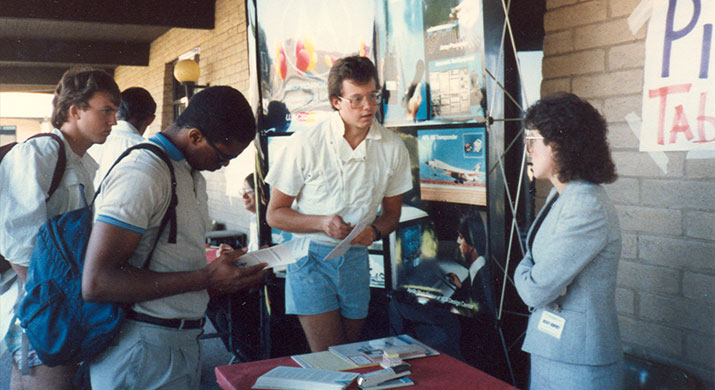
The first Career Fair was held, helping to connect students with employment options.

1987

Jinnett B. Kirk, the first Dean of Students, was awarded the Don Carlos Humanitarian Award.

1990

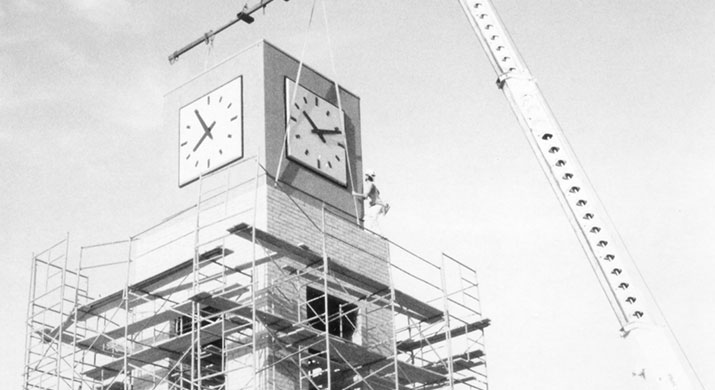
The construction on the Alumni Clock Tower was finished.

1997

The Rose Garden was finished and remains the largest public rose garden in the Southwest to this day.

2001

The Red Mountain campus opened for enrollment.

2004

President George W. Bush visited MCC to discuss a proposal for a federal grant for training programs.

2007

The Council for Higher Education Accreditation (CHEA) awarded MCC the CHEA Award for Institutional Progress in Student Learning Outcomes.

2014

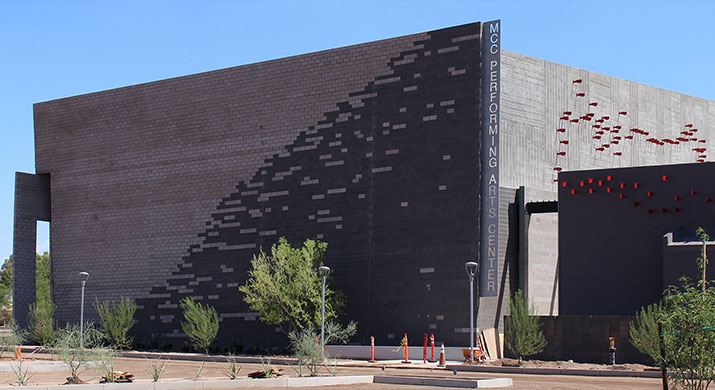
The Performing Arts Center and improved Kirk Student Center opened.

1965


2014

administration
leading the way to success in our local and global community

MCC is the largest of the ten colleges in the Maricopa County Community College District (MCCCD). While each college has a unique and recognizable role within its own community, the ten colleges also have a shared foundation in the vision and mission of the District.
Learn More

progress
on construction of our new buildings

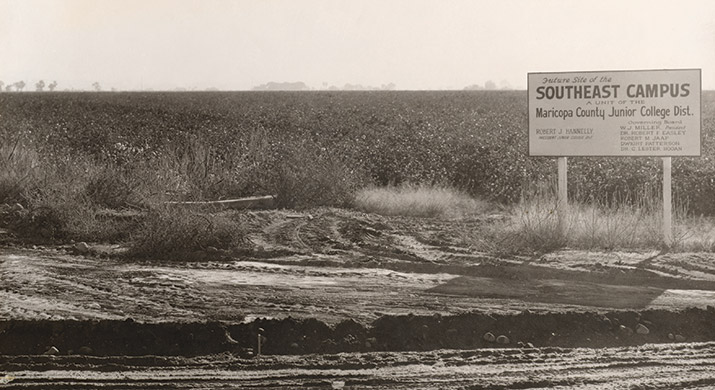
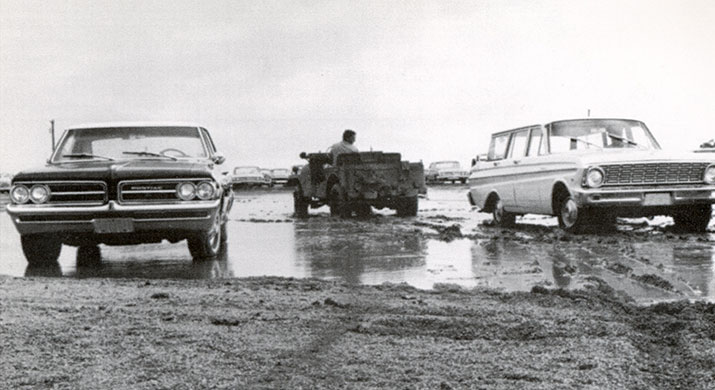
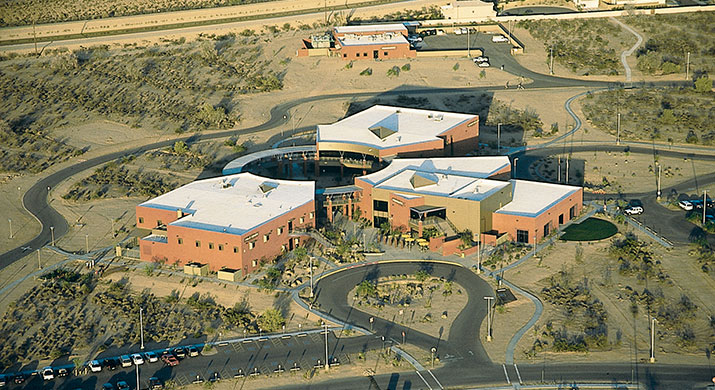
It has been over 50 years since MCC first opened with three buildings and two houses on ¾ of an acre surrounded by the expanse of undeveloped Mesa. Today MCC has two campuses and multiple locations and we continue to strive to improve, making our campuses more inviting, updating technology, and providing top-notch facilities. Click one of the tabs below to view some of our most recent improvements to our campuses.

Performing Arts Center
Art Gallery
Enrollment Center
Kirk Student Center

MCC Performing Arts Center

The Performing Arts Center is a multi-purpose facility designed to accommodate the wide range of performances of MCC’s talented music, dance, and theatre programs. Re-imagined to fit the needs of MCC, the large theatre holds 462 seats, performance classrooms, music practice rooms, faculty offices, and the scene shop.
Learn More

resources
to enhance communication and organizational success

Institutional Advancement

The Office of Institutional Advancement – or IA, as we call ourselves – promotes educational opportunities at MCC, enhances the image of the college, and connects us to our communities through communication. In other words, we’re the official voice and face of MCC.
Quick Links

Get the Word Out
Forms, Logos, & Maps
Brand Standards
Experts List
Staff & Contacts

Institutional Effectiveness

The Office of Institutional Effectiveness enhances student success by analyzing gathered institutional research and using it to benefit the college and its students. Such research allows us to make well-informed decisions to ensure MCC continues to improve upon and provide efficient, quality education.
Quick Links

Fast Facts
College Planning
College Statistics
Resources
Student Assessment

Maricopa Community Colleges

 Maricopa Community Colleges’ nationally recognized programs help more than 200,000 students each year achieve their goals. Our 10 accredited colleges offer a diverse range of programs at convenient locations across the Valley, but our goal is the same – your success.

History Of Mass Communication In India


https://in.pinterest.com/

   TV, radio, newspapers, magazines, movies, websites & portals are some of the widely known forms of communication that the Indian media uses. Indian media is one of the oldest in the world. The history stretches from writing manuscripts & cave paintings that can be spotted in Ajanta & Elora caves to weekly newspapers that took months to reach the rural areas to surfing on the internet to find information, it was a long way. 

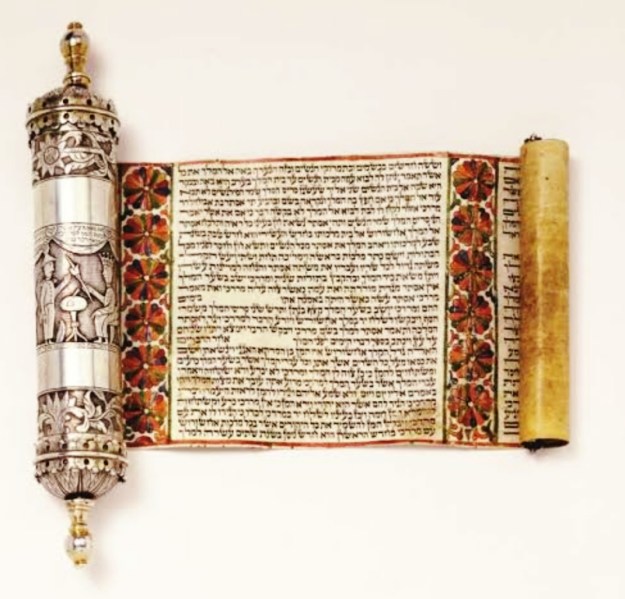
   Even when one looks back in the reign of Akbar’s era, where messages sent through messengers. They used to strike their drum amid the market to grab the attention of the people & then make their announcements. This was a mode of public communication. On the other hand, to meet the needs of the local people, such kingdoms used to have darbars to tackle the problems faced by the public. Similarly to send messages from one kingdom to the other, one used to send their messenger with a scroll to inform them. 

   Rolling back to recent times, when the technology was still lacking in the country, people used to communicate long-distance through letters & telegrams. And much later by landline phones. The primitive form of cellular phones was introduced much later in the scene after the optimum development of technology in India. And now is the era of sending messages just a tap away. The world is touching new heights with time, as technology & media go hand-in-hand. 

https://www.pexels.com/

   The Indian media has gone active since the late 18th century & since then there has been no turning back. Many of the media are controlled largely by profit-making corporations, which reap revenue by advertisements, subscriptions &, etc. 

   The print media started in India as early as 1780 while radio broadcasting began in 1927. Radio broadcasting was initiated in 1927 but became state responsibility only in 1930. In 1937 it was given the name All India Radio and since 1957 it has been called Akashvani. The Ministry of Information & Broadcasting owns it & is responsible for maintaining the audio-visual apparatus, including the television channel Doordarshan. Although later an autonomous body was established in the name of Prasar Bharti to take care of the public service broadcasting. 

    Now are the days of DTH & Android TV. While one can easily connect their cell phones to the TV or even laptop. Gone are the days when pigeons were used to sending letters. Also, fax machines are no longer in use. Rather have been replaced by printers & all. 

    So this is how everything changed down the lane. And even though times have changed with the advancements of all the modes. All this has lead to a drastic improvement in the face of the country. Directly or indirectly affecting the job sector & easing out the process altogether. Contented that the country is forging out towards a much brighter future. 

Why Pune tops in COVID-19 cases across the Country

Total no. of cases in Pune crosses tally of 2 lakh mark with total of 2,04,037 with active cases of 61,363 and recovered cases with 1,34,527. Pune is now top of the list in whole India. Pune has surpassed Delhi in recent days. As India as country is still not able to deal with the Corona Virus, in fact it is somehow struggling badly which has put India in leading no. is terms of cases in top with 1 other countries. These countries are trying everything to control the spread and reduce it somehow. India has surpassed Brazil with 67,007 new cases last day.

India is too giving many advices and steps to increase the effective check-ups and trials to get more hold on cases and minimize it by making every little effort. Now check-ups are happening at more faster rates. Daily tests conducted is reaching 4-5 lakhs in numbers.

Doctors have now called for more tests across the state’s rural areas and non-metropolitan zones to reduce patient load on hospitals in the major cities. There have been several instances of critical patients from rural areas being rushed to hospitals in the major cities after initial delays in treatment.

Every week, at least a dozen patients — with serious Covid-19 — are being moved from the rural areas to units such as Sassoon General Hospital, Yashwantrao Chavan Memorial Hospital or the Aundh Chest Hospital. And specialists said it’s these cases, which have already entered the critical stages of COVID-19 infection, that are some of the most difficult to treat
For example, in June, it was estimated that 20% of all admissions at most hospitals in Pune city were from outside Pune district. In past few days, frequency of corona positives has increased gradually as cases has started to come from rural areas. Earlier most of the cases were coming out of urban areas as there were not much contact with deeper village areas. However as effective ways for corona are reaching there so it is spreading,

In August, Pune’s first Sero survey found that over 50 per cent of residents from five high-incidence areas in the city have been exposed to the COVID-19 infection. Pune is also the only district in the country which has crossed the 50,000 mark in terms of active cases. The district now has 54,760 active cases with 1,23,292 declared recovered.


The senior Pawar’s intervention, in fact, seems to have been triggered by the death of a television journalist last week after he reportedly could not find an ICU on time. Pune authorities are blamed for failing to create adequate health facilities, with instances of coronavirus patients dying because of non-availability of ICU.

The survey, which is done to detect the presence of specific antibodies and assess the prevalence of a disease in the population, was conducted by taking samples of 1,664 respondents. The main reason behind this surge in Coronavirus cases is the increase in the number of COVID19 testing. Pune is having the greatest number of coronavirus testing in Maharashtra. The number is twice that of Mumbai. Pune authorities have ordered one lakh antigen test kits in July and have ordered another one lakh recently.

Lying: Does it give satisfaction?

Largely, lies hide truth, mystery or reality. A lie is something that is believed to be false and generally it carries a negative connotation. And it gives you a sense of success in doing that. By hoaxing the other you derive pleasure or fun out of that. Lying to another person acts as a solution to your mind’s turmoil. It gives the satisfaction of creating something new or non-existent. It is an attempt to get away with something that we don’t want to occur. You badly want to abstain from the unpleasant consequences of truth. Because you are afraid to face them, that’s why you prefer to lie. But why would someone get this feeling of achievement or kind of satisfaction after lying? Of course, it is because achievement is their top priority. Most do that out of their ignorance that they cannot get deeper and longer satisfaction by lying. At one point, when you manage to fool someone, you develop a hidden feeling of superiority complex (in clinical terms) and often lies get reflected on your face. Lies can serve as instrumental, interpersonal or Psychological ways for the individuals who use them. You get the joy of preserving the truth within your inside by not disclosing it. Some derive sadistic pleasure in duping the other by giving wrong information or creating improbity. Some do it because they are habitual of lying and then only lying can give them satisfaction. They do not understand that except instant contentment or insignificant satiety lying costs you your dependability, trustworthiness and goodwill. People tend to lying also to ensure harmony, security, freedom from fear. Do you know when you lie there is a weird feeling of achievement? It’s because we expect and wish that our excuse should be accepted by others because it is right. Sometimes people lie because they want to appear better than they are. Lying does not work every time, sometimes we get stuck badly in the situation where the only solution to get out is by telling the truth, Truth is preferable, but remember the corporate sector, as well as the business, which doesn’t work on a full truth policy. The outcomes of lying are transient that will fade away very soon. When the truth is highlighted, it makes you look miserable in your own eyes. So, if one is a self-critic, they must be careful before lying. But the one who are prudent, you cannot dodge them as they have ability to judge your false wordings. If you are lying to someone from words of mouth, your feelings/emotions and body language is expressing the truth. People come to know of the truth as you come to know of others. It is different that they would not let you know about it, as you also never disclose for not creating unpleasantness. Truth satisfies your trinity (mind, body and soul), which lying can never. Your one lie can make someone’s life hell or heaven. Learn! To tell a lie is to keep others in the dark. Lie can even seperate you from your family, friends and society. Lying can only give you satisfaction on a temporary basis but not for your whole life. So remember, do think about it before commuting.

The Organic Evolution: How Did The Current Biodiversity Reached Its Present Form

We see the actual spirit of diversity in Nature.But have things always been like this, barring a few minor change-in-scenes, since times immemorial? If not, how did and how much has life forms changed? So, let’s find out from where all this started.

The Beginning: Life on Earth

After formation, Earth was not exactly suitable for housing or nurturing any kind of organisms. After undergoing drastic changes -including solidification of crust, formation and accumulation of various gases (like nitrogen,ammonia,methane,oxygen,hydrogen etc.) in the atmosphere, gradual development of ozone layer and formation of water molecules- Earth became close to be able to support even the most basic forms of ‘life’.

The earliest organic forms, though did not really satisfy our definition of life, but are considered to be the most basic forms of living cells.Experiments by Stanley Miller (1953), Sidney Fox and Oparin (1936), gave the world some theories about the formation of living organisms. Another mention worthy point is that the first life forms originated in water, as for the longest time, Earth was what we can imagine as a giant sea, with no signs of land whatsoever. These organic forms might have developed into self replicating units, then into primitive organisms and at later stages, resulted into some distinct type of chlorophyll synthesizing bacteria, some 2.5-2.3 billion years ago. This gradual process of arising of life from non-living matter (such as simple organic compounds) is termed as abiogenesis.

Evolution of chlorophyll occured around 600 million years ago. With that, the production of oxygen and ozone (after chemical conversion under suitable circumstances) sped up and gradually accumulated in the atmosphere. Ozone layering encased the surface of Earth and provided protection against UV rays, which is detrimental for living organisms. Before that, all organisms developed in deep water, which provided protection against the UV rays. Only after the formation of ozone layer did life flourished on land surface.

The Precambrian age, that last from 4600 to 542 million years old, has very few fossil records. Hence, such a large period of time is not subdivided into further categories in terms of biological evolution. The fossil of this period mainly of cellular organisms.The first living organisms are believed to have developed around 3.8-3.6 billion years ago, from the primitive organic soup (accumulation of large number of complex organic molecule assemblages). Around 3.5 billion years ago,first organisms with prokaryotic cells (cells without true nucleus and having a rudimentary cell structure) are believed to have developed. Those cells were at similar cell complexity level like the present day bacteria.Skip to 2.4 billion years later, the eukaryotic cells are supposed to have developed. For the longest period of time, only unicellular life forms flourished on Earth. Then,evidences indicated that, around 700 million years ago, the first signs of multicellular organisms were traced. Since then, there has been a steady flow of evolution. 

The ‘Complex’ Evolution

The Cambrian period (542- 488.3 million years) is considered to be a milestone in evolution. Even the fossils have records from around 600 million years ago. It is widely assumed that around 600 million years ago, organisms had developed to be able to leave fossilized records. The transition of life forms from water to land had supposedly begun around 500 million years, when plants started growing on land.Later different varieties of plants and animals populated the lands.

The Carboniferous period was an important landmark, which lasted from about 359 to 299 million years in the past, is an important landmark in the journey of evolutionary history. The environ domain was actively dynamic during that period. Humid and warm climate, swampy large areas, changes in sea levels, flood, mud and sand were deposited over the vegetations, etc.

Due to compaction and incomplete decomposition of  plant material in swamps, they converted into peat bogs, and then, into coal. Hence the name carboniferous. In the late Carboniferous period (about 300 million years) tropical rainforests were present in the equator region of Euramerica. Later, ferns replaced the forests, which are present even today.These vascular plants are without seeds as they do not produce flowers and fruits, and are generally found in temperate to tropical parts of Earth. These plants can be mainly divided into stem, leaves and true root; reproduction being facilitated through special structures, known as sporangia (singular:sporangium), that contain spores, which are dispersed into different mediums and germinates on coming in contact with the soil with suitable conditions.

Next period in the geological time scale in the Permian period, which started off around 299 million years ago. This period witnessed major altering activities in the continental lithosphere (which are broken into tectonic plates) starting from the joining of Euramerica, Asia and Gondwana led to the formation of a single landmass called Pangea (Greek translation: All lands), which is considered to be a supercontinent. In terms of ecology, this period was mainly dominated by forests of conifers and tree ferns,large amphibians and reptiles habituating them, and a huge variety of fish and shellfish in the ocean. But, at the end of Permian period, a mass extinction took place, commonly referred to as the ‘Great Dying’. It occured around around 252 million years ago, and wiped out about 90% of all the species present on Earth.Also, trilobites (meaning: three lobes), which a group of arthropod (a group of invertebrate animals with exoskeleton, segmented body, and appendages) and sea scorpions, which had survived the tides of oceans and time for hundreds of million of years, went extinct. 

Next in the line, the Triassic period had set off around 240 million years ago.It is believed that true mammals first evolved during this period, more precisely, during late Triassic period. Also, a specialized subgroup of  Therapsids, which is a group of reptile-like animals that included mammals and their ancestors, also evolved. Early Therapsids demonstrated traits of the present day mammals, such as erect posture. First flying vertebrate animals are supposed to have originated around 215 million years ago, and lasted for 150 million years, vanishing at the end of the Cretaceous period. Another mention worthy occurence in the Triassic period timeline is the splitting of Pangea into two separate land masses. The northern one was named Laurasia and the southern one, Gondwana. Primitive forms of dinosaurs are said to have emerged around 231.4 million years ago.

The Jurassic period is known as the ‘Age of Reptiles’, as they were present in abundance and had a diverse variation throughout this period. The land animals included Stegosaurus, Ceratosaurus, Brachiosaurus and Allosaurus. The oceans were traversed by Ichthyosaurus and Plesiosaurus and the skies are believed to be dominated by the likes of Rhamphorhynchus and Archeopteryx. This period coincided with the emergence of first mammals and birds.

 The Cretaceous period, which started around 145 million years ago, is geologically characterized by separation of India from Gondwanaland, formation of Andes and Rocky mountains, and extensive volcanic activities. Dinosaurs dominated the face of Earth and were of different types. They lived through a period of 135 million years, that is , throughout the Jurassic and Createceuos period. The Cretaceous-Paleogene mass extinction is considered to be the main cause of dinosaurs disappearing from Earth. An important claim by the scientists, on the basis of fossil records, is that the birds evolved from the Theropod dinosaurs, and the development took place in the Jurassic period. Some birds lived through the extinction and their descendents continue to live presently. This period also marks the appearance of angiosperms; plants that could produce flowers. 

Next chapter

The next major development in the course of evolution is considered to be the evolution of humans. But that’s a story for another day. As for our evolution is anything but simple and short. As Carlo Rovelli said in his book, Seven Brief Lesson of Physics: “We are a species which is naturally moved by curiosity, the only one left of a group of species (the genus Homo) made up of a dozen equally curious species. The other species in the group have already become extinct; some, like the Neanderthals, quite recently, roughly thirty thousand years ago. It is a group of species which evolved in Africa, akin to the hierarchical and quarrelsome chimpanzees — and even more closely akin to the bonobos, the small, peaceful, cheerfully egalitarian and promiscuous type of chimps. A group of species which repeatedly went out of Africa in order to explore new worlds, and went far: as far, eventually, as Patagonia — and as far, eventually, as the moon.

It is not against our nature to be curious: it is in our nature to be so.”

Website References

https://en.wikipedia.org/wiki/Abiogenesis

https://www.goodreads.com/quotes/9344668-we-are-a-species-which-is-naturally-moved-by-curiosity

Bibliography

Extinctions: No Comebacks by M.A. Haque