

Month: January 2021
Determination of Biochemical Oxygen Demand Of Wastewater
Why SC Silent On Worst Discrimination In Judiciary?
Let me begin with a disclaimer: I am neither a member nor supporter of BJP or any other political party nor a member of any of BJP’s affiliated organizations like the RSS or VHP or any other organization. I stay miles and miles away from politics of any kind. It just doesn’t suit me and I very strongly feel that I can never be a good politician as it is just not my cup of tea!
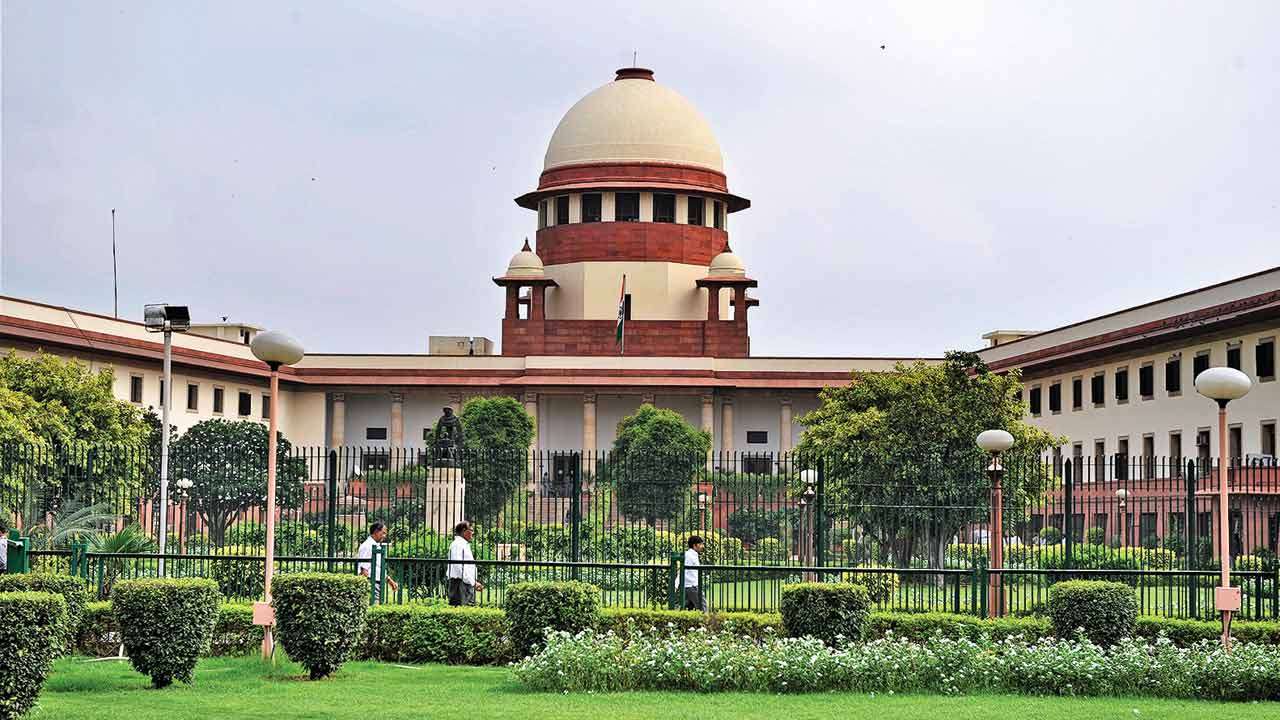
Having said this, let me now come straight to the key point. The Chief Justice of India – Sharad Arvind Bobde who is a product not of any High Court but of a High Court Bench at Nagpur in Maharashtra which has the unique distinction of having the maximum Benches of High Court in India at four along with Assam and who while hearing the petition on farm bill laws minced no words to tell the Attorney General KK Venugopal that, “We are extremely disappointed at the way government is handling all this (farmer’s protests). We don’t know what consultative process you followed before the laws. Many states are up in rebellion.” Without taking any sides and without going into the merit of the farm laws, we humbly submit to what the CJI says but it must be asked: Why has no CJI ever taken any note of the worst discrimination happening right under the nose of judiciary till now?
Why every CJI from 1947 till 2000 very strongly believed that there was nothing wrong in the people of hilly areas (erstwhile part of UP) from now Uttarakhand travelling thousands of kilometers all the way to Allahabad to get justice and it was in the “supreme interest of people” that the best decision to create a single Bench of High Court was taken by the then PM late Pandit Jawaharlal Nehru at Lucknow which is just about 200 km away from Allahabad where High Court itself is located and even though was nearer from Lucknow but again to protect the interest of the people of hilly areas who face such a tough life would be served better if the litigants from there would be required to travel all the way to Allahabad? Can on earth there be anything more ridiculous decision than this?
Anyway, as time progressed, the people of hilly areas and those from West UP unitedly started agitating for more separate High Court Benches as even from 26 districts of West UP, Allahabad is more than 700 km away on an average and even Lucknow is just about 500 km away yet they too were attached with Allahabad in “supreme interest of justice”! Can on earth there be anything more ridiculous decision than this? Let us think?
Yes, there is one more decision which is even more ridiculous and senseless than what is mentioned above! The daughter of Pandit Jawaharlal Nehru and former PM late Mrs Indira Gandhi who then was PM initially took the “extremely brilliant, blunt and bold decision” to set up a high powered Committee more High Court Benches headed by a former Supreme Court Judge – Justice Jaswant Singh to examine this most burning issue in detail and suggest where all Benches are needed in India in mid seventies and he brilliantly, boldly and bluntly recommended that 3 more High Court Benches should be created in Uttar Pradesh at Agra, Dehradun and Nainital and one in Maharashtra at Aurangabad, one at Jalpaiguri in Tamil Nadu and one at Madurai in Tamil Nadu! Just think what happened next?
No prizes for guessing the answer as we all know now that Centre most shamelessly, most senselessly and most stupidly decided not to create even a single High Court Bench anywhere in any hook and corner of UP but decided to create a Bench for Aurangabad in Maharashtra which already had Benches at Panaji, Nagpur and so also at other places as was recommended for other States! As if this was not enough, we saw once again one more High Court Bench was created at Kolhapur in 2018 due to which the lawyers of West UP even went on token strike in protest as it was felt strongly that this is the “worst discrimination” that has ever happened with them as the more than 9 crore people of West UP have to travel more than 700 km on an average all the way to Allahabad to get justice! Is Maharashtra “some special state” from where the incumbent CJI Sharad Arvind Bobde hails that it has been given High Court Benches time and again but UP has been left in the cold inspite of being the strongest contender as can be glimpsed from the “landmark, learned and laudable recommendations of Justice Jaswant Singh Commission?
No wonder that Maharashtra tops in the latest justice index ranking among States and UP figures at bottom with maximum pending cases which is more than ten states put together! It is this step-motherly and most disgraceful treatment accorded by Centre to UP which is most hurting and is biggest violation of Article 14 which talks about right to equality. It is because of this stupidity that the people of 26 districts of West UP are compelled to travel more than 700 km all the way to Allahabad to get justice and attend court hearings many times without reservation whole night to reach Allahabad which is even far away from Lucknow which is still just about 500 km away from West UP!
Bluntly put: Is this is what Article 14 which talks about right to equality stands for? What sort of equality is this? Is Centre not making an open mockery of Article 14 of Indian Constitution? Why is it going unnoticed since such a long time? Why even Supreme Court has never intervened on it? Why Supreme Court feels that the people of West UP, Bundelkhand and other needy areas should only hope that Centre does something which is just not ready to budge! Why Supreme Court itself is not ready to do anything on this? Most despicable!
It must also be asked: Are the people of West UP not entitled to get “speedy justice”, “justice at doorsteps” and “cheap justice” just like the people of Karnataka, Maharashtra, Assam etc? Why is it that the high court and benches of 8 states are closer to West UP as compared to Allahabad? Why even Lahore High Court in Pakistan is closer to West UP as compared to Allahabad High Court? Still should a high court bench not be created here?
Needless to say, Centre must clarify its stand and not maintain a conspicuous and deafening silence on it! Former Attorney General Soli J Sorabjee had clearly said in 2001 while he was Attorney General that, “Centre is fully empowered to create a bench in any of the districts in West UP without any recommendation from the Chief Justice or anyone else in this regard.” Former Supreme Court Bar Association Chairman Krishnamani had also said that, “Only by the creation of a high court bench in West UP will the people living here get real justice.”CJI Ranjan Gogoi while disposing of a petition on this filed by a lady advocate KL Chitra in 2018 had appreciated the dire need for a bench in West UP but also had said that it is for Centre to decide on it!
One hopes fervently that CJI Sharad Arvind Bobde will do something concrete on it before retiring in April 2021! He himself being a “bright gem” of a high court bench should certainly go into it deep and set up benches not just in West UP but also in other needy places in different states as was rightly recommended by 230th report of Law Commission of India also so that more talent comes to the horizon from the biggest populated state of India and we see that the “poorest of poor” people get “justice at doorsteps” and they are not compelled to travel a long way to get justice as it is they who have to spend more and suffer innumerable hassles! He must act as Centre has failed to act in last more than 74 years especially in case of UP and Bihar which inspite of being lawless states have just one bench and no bench respectively!
It is most shocking that peaceful states like Karnataka, Maharashtra, Assam, Madhya Pradesh among others have more high court benches but the most lawless states like UP have either just one or no bench at all as we see in Bihar! This what I find most disturbing and also most atrocious! This must be set right at the earliest!
Let’s hope fervently that CJI Sharad Arvind Bobde before retiring will act courageously on this score and do what none of his predecessors has ever dared to do and tended to play safe by always leaving the ball in Centre’s court which in turn has done just nothing at all even though the incumbent Law Minister of India Ravi Shankar Prasad is from Bihar and the PM Narendra Modi himself is from UP representing Varanasi! But so far he is not at all agitated on this! Is he not aware of the “law and order” situation in UP and Bihar?
It would be worth recalling that the former Chief Justice of UP – Dilip Babasaheb Bhosale who himself hails from Maharashtra while in office had candidly and courageously lambasted that “women in Maharashtra are safe even at night and can go anywhere alone” and this even I had seen myself while doing LLB from Symbiosis Law College in Pune but in UP he said that “women are not safe even with their family and that too in broad daylight on national highway while hearing a case on woman being beaten and molested and gang-raped and what not in Bulandshahr which is again in West UP”! Still Centre is not ready to create a bench!
As if this is not enough, the lawyers of West UP have been on strike for nearly 40 years every Saturday from May 1981 till now! Not just this, the lawyers of West UP have even gone on 6 months strike as we saw in 2001 and 3 to 4 months strike as happened in 2014-15 and many times on Wednesday and Saturday and many times for weeks! Why Centre is so adamant? Even Kapil Sibal as Union Law Minister had recommended High Court Bench at Meerut as was disclosed by former UPA Union Minister RPN Singh just like Sampoornanand who was the then UP CM had recommended in 1955 in Meerut apart from many others and former PM late Atal Bihari Vajpayee as Opposition leader had raised it in Parliament in 1986 still we see no bench anywhere not just in Meerut or in West UP or in Bundelkhand but in any hook and corner of UP except the one at Lucknow created in 1948!
No doubt, the clogged arteries of our legal system can only be declogged by creating more high court benches in big states as recommended by 230th report of Law Commission of India! It may well be argued that it is well nigh impossible to implement “justice at doorsteps” and “speedy justice” and “justice for all” as enshrined in various Articles in our Constitution without creating more high court benches in big states like UP! Centre must pay heed to what Dr BR Ambedkar had said that, “However good a Constitution may be, if those who are implementing it are not good, it will prove to be bad. However bad a Constitution may be, if those implementing it are good, it will prove to be good.”
“Let justice be done though heaven falls” goes a well known adage and it deserves to be implemented in UP by creating more benches so that the more than 9 crore people of West UP are not compelled to travel all the way to Allahabad to get justice! Centre must honestly introspect and ask itself: Why a state like UP which tops the state list of maximum pending cases has just one bench and that too so near to Allahabad and nowhere else due to which people of West UP of 26 districts are compelled to travel whole night time and again to attend court hearings and same holds true for other far away places like Bundelkhand and Purvanchal? Why another lawless state like Bihar has not even a single high court bench? This alone explains why even filmmakers crack mocking songs like “Mein Aayi hun UP, Bihar lootene” and never hear anyone saying that, “Mein Aayi hun Maharashtra, Karnataka or Assam lootene”! High time that Centre acts decisively in this regard instead of passing the buck to the Chief Minister or Chief Justice or Full Bench of Allahabad High Court as we have seen in past because it is the litigants of more than 26 districts of West UP who will benefit and so will the people of other far away places of UP and Bihar! This utter neglect of West UP in particular and UP in general and so also Bihar must be given a full stop now!
But Centre it seems is determined to do just nothing on this score. What is worst is that even the incumbent CJI Sharad Arvind Bobde seems not keen as he has not taken any initiative on this score! Still it is always better to hope than to despair! It is most shocking to see that just recently on 31 December 2020, a two Judge Bench of the Jammu and Kashmir High Court comprising of Justice Vinod Chatterji Koul and Justice Ali Mohammad Magrey in Abdul Qayoom Chalkoo v. Union Territory of JK & Ors in [LPA No. 123/2020 CM No. 4168/2020] while underlining the difficulties faced by the litigants of the Kashmir region in pursuing their cases before the Central Administrative Tribunal, Jammu Bench hoped that difficulties in the process of establishment of the Bench of the CAT at Srinagar are removed “as expeditiously as possible”. What is the distance between Jammu and Srinagar? It is just 266 km by road and 151 km by flight!
Just imagine this that the people of 26 districts of West UP have to travel more than 700 km on an average all the way to Allahabad to attend hearings at high Court as there is no High Court Bench in any of the 26 districts of West UP but still no one feels sorry for them just like we saw in the above case! Why no Judges of Allahabad High Court have ever similarly as we see above in case of Jammu and Kashmir ever ordered the creation of benches in West UP? Why even Supreme Court Judges said nothing on it? Why even the incumbent CJI Sharad Arvind Bobde who is a brilliant gem of a High Court Bench of Nagpur again in Maharashtra keeps a conspicuous silence on it? He can certainly take suo motu cognizance of it but will he? That only he himself can answer or will answer before he retires in April this year!
It is most shocking that UP which is among the largest States, has maximum population – more than 23 crore, maximum districts – 75, maximum constituencies – 80, maximum MPs – 80, maximum MLAs in Vidhan Sabha – 404, maximum MLAs in State Legislative Council at 100, maximum PM including Narendra Modi who represents Varanasi as an MP, maximum pending cases – more than 10 lakh and here too West UP accounts for more than half of pending cases as noted by Justice Jaswant Commission about 57%, maximum Judges both in High Court – 160 and also in lower courts, maximum vacancies of Judges about 60, maximum members in UP Bar Council more than 1 lakh and which is also the largest Bar Council in the world yet the former Chairman of UP Bar Council – Darvesh Yadav who was the first woman to get appointed to this post was murdered cold blooded right in court premises in Agra which is again in West UP on June 12, 2019 by pumping bullets on her head and stomach, maximum poverty, maximum villages more than one lakh the exact number being 107040, maximum gram panchayats at 74626, maximum fake encounters killings, maximum custody killings, maximum dowry cases, maximum bride burning cases, maximum cases of human rights violations, maximum robberies, maximum dacoities, maximum undertrials, maximum cases of crime, loot, arson and riots and here too West UP tops with Saharanpur riots, Meerut riots, Muzaffarnagar riots tarnishing our international reputation to the extent that former UN Secretary General Ban ki Moon termed UP as “crime and rape capital” of India and what not yet Centre till now end of 2020 from 1948 when a bench was created in Lucknow which is so close to Allahabad is not prepared to create even a single bench for not just West UP but for the entire UP? Area of West UP is 98,933 square km and accounts for 33.61 percent of total area of UP and has 26 districts yet no bench but Lucknow with just 62,363 square km and 8 districts has a bench!
Most baffling that why even BJP is emulating Congress on this key issue since last 6 years now and 6 years earlier in former PM late Atal Bihari Vajpayee’s term as PM even though he had himself raised the demand for a high court bench very strongly in Parliament in 1986? If Lucknow is capital then so is Bhopal of Madhya Pradesh but it has high court at Jabalpur and two benches at Gwalior and Indore, Trivandrum of Kerala but High Court is in Ernakulam, Bhubaneshwar of Odisha but High Court is in Cuttack, Raipur of Chhattisgarh but High Court is in Bilaspur, Dehradun of Uttarakhand but High Court is in Nainital, Dispur of Assam but High Court is in Gauhati etc still why they have neither high court nor bench?
How long will Centre ignore that only Karnataka and Maharashtra have gained from the recommendations of 230th Law Commission recommendations when 2 more Benches were created at Dharwad and Gulbarga for just 4 and 8 districts even though the pending cases of Karnataka are just less than 2 lakh and that of UP are more than 10 lkahs and that of West UP alone are more than 5 lakhs as Justice Jaswant Commission testified that West UP accounts for 57% of the total pending cases of UP still West UP most astoundingly has no Bench and UP has just one Bench? How long will Centre ignore that Karnataka has just 6 crore population and still it has High Court at Bangalore and 3 High Court Benches at Hubli, Dharwad and Gulbarga but West UP has population of more than 9 crores still it has not even a single Bench leave alone having High Court as was recommended by former UP CM Mayawati by making it a separate state? How long will Centre ignore that the High Courts and Benches of 8 states are nearer to West UP as compared to Allahabad High Court and even Lahore High Court in Pakistan is nearer to West UP than Allahabad? How long will Centre ignore that Allahabad High Court is the biggest Court in whole of Asia with maximum Judges at 160 and also among the lodest High Courts which completed its 150 years on March 17, 2016 yet has just one bench only?
Truth be told, Rajnath Singh who is Union Defence Minister and also former CM of UP while addressing a public gathering in Patiyali constituency of Kasarganj district is on record stating that in February 2017 that UP reported 7673 riots, 4660 murder, 4096 robberies and 260 dacoities in just one year alone and has pledged his unstinted support for a high court bench in West UP still why not a single created till now?
It is most shameful and most disgraceful that Allahabad High Court has the dubious distinction of accounting for 14,207, or 98% of a total of 14,484 appeals that are pending adjudication for more than 30 years as was noted by a Bench of Apex Court comprising of Justices LN Rao and S Ravindra Bhat and yet no Prime Minister starting from Jawaharlal Nehru to present Narendra Modi has ever dared to create one more Bench apart from the one at Lucknow created in 1948 which is so close to Allahabad! What a pity that an anguished Supreme Court said that, “These facts pose a challenge to the judicial system, inasmuch as the right to speedy trial would also include the right to speedy disposal of appeals of those convicted. If such appeals are not taken up for hearing within a reasonable time, the right of appeal itself would be illusory, inasmuch as incarcerated convicts (who are denied bail) would have undergone a major part, if not whole of the period, of their sentences!”
It is most shameful and most disgraceful that Allahabad High Court has the dubious distinction of accounting for 14,207, or 98% of a total of 14,484 appeals that are pending adjudication for more than 30 years as was noted by a Bench of Apex Court comprising of Justices LN Rao and S Ravindra Bhat and yet no Prime Minister starting from Jawaharlal Nehru to present Narendra Modi has ever dared to create one more Bench apart from the one at Lucknow created in 1948 which is so close to Allahabad! What a pity that an anguished Supreme Court said that, “These facts pose a challenge to the judicial system, inasmuch as the right to speedy trial would also include the right to speedy disposal of appeals of those convicted. If such appeals are not taken up for hearing within a reasonable time, the right of appeal itself would be illusory, inasmuch as incarcerated convicts (who are denied bail) would have undergone a major part, if not whole of the period, of their sentences!”
To be sure, Justices Rao and Bhat also noted that over 33,000 appeals were pending in these 10 High Courts for a period between 20 to 30 years, and again Allahabad High Court had the lion’s share accounting for nearly 20,000 of them. The appeals waiting their turn to be heard for the last 10 to 20 years numbered at 2,35,914 of which 88,732 were in Allahabad High Court! These are all facts and not concocted stories!
Needless to say, this alone explains why Nani Palkivala one of the most brilliant jurist this earth has produced once famously said that, “While it is true that justice should be blind, in our country it is also lame. It barely manages to hobble along. The law may or may not be an ass but in India, it is a snail; it moves at a pace which would be regarded as unduly slow in a community of snails.” Why then should all such steps not be taken to put our judicial system back on rails and not allow it to be in ventilator as most unfortunately we have shamelessly allowed in last 74 years and this holds true most for UP and here too West UP which accounts for more than half of pending cases and still has not even a single bench? Why can’t more high court benches be created in UP so that cases are expedited in different benches as was recommended by the 230th report of Law Commission of India as UP has maximum pending cases in India but which till now has been implemented only in peaceful states like Karnataka and Maharashtra which is most shocking?
Will this CJI ever dare to act on this or will he follow his predecessors and say nothing on this worst injustice with UP and Bihar? Let’s hope he dares to summon his courage just like he has shown now most recently due to which farmer leaders are eulogizing him most passionately! Also, why is it that so many vacancies in judiciary keep lying vacant right from lower courts to high courts even though we rarely see vacant posts in Apex Court? It certainly deserves prompt and proper judicial intervention by CJI Sharad Arvind Bobde! No delay!
Sanjeev Sirohi, Advocate,
s/o Col BPS Sirohi,
A 82, Defence Enclave,
Sardhana Road, Kankerkhera,
Meerut – 250001, Uttar Pradesh
IFFI announces its line-up for OTT platform; Bangladesh to be focus country this year
51st International Film Festival of India (IFFI) has announced a line-up of programmes that will be showcased on the OTT platform. The festival will be held in Goa from 16th to 24th January. Taking into account the Corona pandemic, IFFI is holding its first ever hybrid film festival.
This year, IFFI will organize a few of its events on the OTT platform for its audience. It includes Retrospective films like Live Flesh, Bad Education and Volver of Spanish Filmmaker Pedro Almodóvar and the Square and Force Majeure of Swedish Film Director Ruben Östlund. Besides, the festival will have Master classes and In-conversation Sessions at OTT Platform.
Bangladesh will be this edition’s Country in Focus. The Country in Focus is a special segment that recognizes the cinematic excellence and contributions of the country. This section at the 51st IFFI will showcase four films – Jibondhuli by Tanvir Mokammel, Meghmallar by Zahidur Rahim Anjan, Under Construction by Rubaiyat Hossain and Sincerely Yours, Dhaka by 11 individual directors, including Nuhash Humayun, Syed Ahmed Shawki, Rahat Rahman Joy, MD Robiul Alam, and Golam Kibria Farooki, Mir Mukarram Hossain, Tanvir Ahsan, Mahmudul Islam, Abdullah Al Noor, Krishnendu Chattopadhyay and Syed Saleh Ahmed Sobhan.
Govt notifies rules for renewal of International Driving License while traveling abroad
Ministry of Road Transport and Highways has issued a notification to facilitate the issuance of International Driving Permit (IDP) for Indian citizens whose IDP has expired while they are abroad. There was no mechanism for its renewal while citizens were abroad and their IDP expired.
After this amendment, Indian citizens can apply for renewal through Indian Embassies and Missions abroad, from where these applications will move to the VAHAN portal in India, to be considered by the concerned Road Transport Officers (RTOs).
The International Driving Permit will be couriered to the citizen at his or her address abroad by the respective RTOs. The Ministry said that the notification also removes the conditions of a Medical Certificate and a valid visa at the time of making the request for the IDP in India. The idea is that a citizen who has a valid driving licence should not have a requirement for another medical certificate.
Further, there are countries where the Visa is issued on arrival or Visa is issued at the last moment and in such cases, VISA is not available when applying for the IDP in India before travel. Therefore, IDP application can now be made without VISA.
Aerial ground survey of Delhi – Varanasi High Speed Rail Corridor begins from Greater Noida
The aerial ground survey for Delhi – Varanasi High Speed Rail Corridor began from Greater Noida yesterday. Railway Ministry said, a helicopter fitted with state of art Aerial LiDAR and imagery sensors took the first flight and captured the data related to ground survey. The Ministry said, LiDAR technology provides all the ground details and data in 3 to 4 months wherein this process normally takes 10 to 12 months.
The ground survey is a crucial activity for any linear infrastructure project as the survey provides accurate details of areas around the alignment. This technique uses a combination of Laser data, GPS data, flight parameters and actual photographs to give accurate survey data.
COVID-19 recovery rate in country reaches 96.43 per cent
The country’s COVID-19 recovery rate has reached 96.43 per cent as more than 16 thousand COVID patients recovered during the last 24 hours. The total number of recoveries has gone up to over one crore 92 thousand.
Health Ministry said, the actual caseload currently comprises only 2.13 per cent of the total positive cases. Presently, the total number of active cases in the country is around two lakh 22 thousand.
During the past 24 hours, 16 thousand 311 new cases were reported taking the total number of positive cases in the country to over one crore four lakh 66 thousand. The Ministry said, currently, India’s Case Fatality Rate is at 1.44 per cent, which is one of the lowest globally. During the last 24 hours, 161 deaths were reported taking the toll to one lakh 51 thousand 160.
According to Indian Council of Medical Research, more than six lakh 59 thousand tests were conducted during the last 24 hours. The total number of samples tested so far has crossed 18 crore 17 lakh.
PM Modi to interact with state CMs on nationwide rollout of Corona vaccine
Prime Minister Narendra Modi will interact with the Chief Ministers of all states today evening through video conferencing. During the interaction, the COVID-19 situation and the vaccination rollout will be discussed.
Emergency Use Authorisation or Accelerated Approval has been granted by the National Regulator, Drugs Controller General of India for two vaccines Covishield and Covaxin which have established safety and immunogenicity. On Saturday, the Prime Minister chaired a high-level meeting to review the COVID-19 status in the country.
The roll-out of COVID-19 vaccine will provide priority to the healthcare workers and the frontline workers who are estimated to be around 3 crore followed by those above 50 years of age and the under-50 population groups with co-morbidities numbering around 27 crore. The Co-WIN Vaccine Delivery Management System will provide real time information of vaccine stocks, their storage temperature and individualized tracking of beneficiaries of the COVID-19 vaccine.
The platform will assist the program managers across all levels through automated session allocation for pre-registered beneficiaries, their verification and for generating a digital certificate upon successful completion of the vaccine schedule. More than 79 lakh beneficiaries have already been registered on the platform.
More than 61,000 programme managers, 2 lakh vaccinators and 3.7 lakh other vaccination team members have been trained so far as part of trainings at States, Districts and Block levels. Three phases of dry runs have been conducted across the country.
Enact Right Now Most Strict Rules For MPs and MLAs
How long will politicians be given long rope and allowed to contest elections from jail itself? How long will MP and MLAs be allowed to misbehave in Parliament and State Assemblies and still be given long rope by not taking any action against them? How long will politicians be allowed to become MPs and MLAs even after having not dozens but hundred to two hundred criminal cases pending against them and still allowing them to continue as MPs and MLAs on one pretext or the other even when for other services like becoming a Judge or an IAS or even a police constable there is strict police verification and one case alone even if it turns out to be fake is sufficient to ruin the career of the concerned aspirant?
How long will this worst discrimination between politicians and others be justified on one pretext or the other? How long will tearing of rule books be dismissed off lightly? How long will tearing of any law like the “Farm Law” be allowed to be torn of and that too right inside Parliament or State Assembly and that too by prominent members just like we saw in Delhi and other States?
How long will they be even allowed to indulge in physical violence and still spared from being permanently debarred? Why are they let off by just a reprimand or suspension for a short period of a few days or sometimes even for just a day? Why are they not seriously taken to task ever?
What message is being sent by all this? Does this not send a message that if one is a politician and an MP or MLA, he can hold the law to ransom? For how long will this pathetic state of affairs be allowed to continue?
We all saw how just days after row and being brutally manhandled during a special session of the Legislative Council, the body of the Karnataka Legislative Council’s Deputy Chairman – SL Dharmegowda was found on railway tracks at Gunasagar village of Kadur Taluk in Chikmagalur district during a special session of the Council! Why no action taken against all those who manhandled him? His brother Bhojegowda while speaking to media said that, “There was no personal or financial reasons for him to take this extreme step. He was upset about what had happened [in the council], I and other party leaders had told him not to take things to heart as these are common in politics, but he seems to have taken it very seriously.”
Needless to say, rules need to be enacted now at the earliest because such type of uncivilized behavior has become very common in politics as the brother of the deceased Deputy Chairman of Karnataka Legislative Council very rightly pointed out! This cannot be delayed any further. Supreme Court must now take suo motu action if politicians themselves don’t take any action on this!
Truth be told, it was none other than the Lok Sabha Speaker Om Birla who has called for a “high-level probe” into the death of SL Dharmegowda. Om Birla rightly said that, “Anguished at the sad news of demise of Deputy Chairman, Karnataka Legislative Council, Shri SL Dharmegowda. My condolences to his family. The unfortunate incident in the House, when he was in Chair, is a serious attack on democracy. It is necessary to have a high level probe through an independent agency into his death.”
Bluntly put: Why no action against those who carried out this serious attack on democracy? Just because they are politicians? Are they above the law? Why have they been given such a long rope?
Needless to say, SL Dharmegowda was at the centre of December 15 high voltage drama in the Legislative Council which saw BJP-JDS and Congress members hurling abuses and pushing each other over a row on the no-confidence motion against Chairman K Pratapachandra Shetty. During the ruckus Gowda was pulled down from the Chair (Chairman’s seat) by some Congress legislators who accused him of occupying it as Deputy Chairman against rules as part of BJP’s plan to unseat Shetty who is from the Congress. All rules of decorum were thrown to the winds and he was hackled and mercilessly manhandled! This is what he took straight to his heart but for our politicians this is normal! For how long?
We must ask ourselves: How long will politicians be allowed to have a free run in all spheres of life? How long will politicians be allowed to scream and shout at each other in Parliament and State Assemblies without any fear of facing prosecution as they stand protected by Constitution? How long will they be not held accountable just like others? How long will they be allowed endlessly to decide their own pay package and have a free run?
We must also ask: How long will politicians who rule in the State be allowed to withdraw criminal cases against MPs and MLAs from their own party? Is this not a mockery of the “due process of law” and “equality”? Is this not a blatant violation of right to equality?
We must also not hesitate to ask: Why is it that a convicted politician is barred for a limited time and that too only when he has been convicted for an offence whose punishment is more than two years’ imprisonment? Why is it that for other government jobs like for becoming a civil servant or a Judge or even a police cop or a soldier in the forces do we see that there is a proper police verification and even if someone out of jealousy files a false case still he/she is debarred from getting the concerned job while on the contrary if that same person emulates Phoolan Devi then just like her, he/she still can contest elections even from jail and become an MP and MLA? How can this be wrongly justified as most unfortunately we see right now?
As if this is not enough, it must also be asked: Why is it that politicians alone are given the long rope? Why are they not held accountable for what they do and punished just like we see in case of others? Why are they encouraged to consider themselves as being free to take the law for granted?
Few more troubling questions are: How can it be ignored that the percentage of MPs and MLAs with pending cases are increasingly steadily with time? How long will we keep ignoring this steady rise in percentage? How can it be ignored that many of them are facing very serious charges of murder, rape and what not?
While continuing in the same vein, it must also be asked: How can it be ignored that the Supreme Court said just recently that it was “surprised”, “shocked” and “sorry” to know that over 4,000 criminal cases were pending against sitting and former lawmakers — both members of parliament (MP) and members of legislative assembly (MLA)? How can it be ignored that the Supreme Court said that some of these cases date to as far back as the 1980s? How can such a burning issue be left unattended, unaddressed and play havoc with our democratic system?
It must be mentioned here that what is mentioned above arose when a Bench of Apex Court led by Justice N.V. Ramana was hearing a PIL filed by an eminent and learned advocate Ashwini Kumar Upadhyay, who has sought a lifetime ban on politicians convicted in criminal cases, from contesting elections. It must be also mentioned here that Justice NV Ramana while expressing his serious concern didn’t shy away from remarking during the hearing in simple and straight language that, “So many cases are pending at the initial stage because of influence of legislators (FIRs are not filed) and they (legislators) hang the sword over investigations.”
Let us not shy away from asking: How can it be lightly dismissed that currently there are more than 4,500 cases that are pending against MPs and MLAs all over India? How can it be lightly dismissed that they are allowed to get away easily by terming them as “politically motivated”? How can they who are our law makers be allowed to continue to make a mockery of our democracy by allowing them immunity in spite of facing charge sheet in more than hundreds of criminal cases?
It must be mentioned here that the PIL which eminent lawyer Ashwini Kumar Upadhyay had filed seeking to set up exclusive courts in every district to complete the cases pending against politicians within one year and permanently bar convicted politicians from contesting elections, unlike in the present when a convicted politician is barred for a limited time and that too only when he has been convicted for an offence whose punishment is more than two years imprisonment is the crying need of the hour also. It must also be mentioned here that this PIL was filed in August 2016 in the Apex Court and the hearing of which is in the final phase as most of us know too well. It goes without saying that it is likely to give a massive push towards ensuring that politicians with criminal background are debarred from entering politics by contesting elections. But for this to happen it is the Apex Court Bench which is hearing this notable judgment which shall have the final say on this which has to catch the bull by the horns and which shall be decided within a short time in the days ahead! Which side the dice rolls will be decided by this Apex Court Bench and we must hope that we shall not be disappointed this time at last!
In hindsight, we also need to ask: How can this be allowed that Chief Ministers themselves are facing charge sheets in several cases and still be allowed to hold public office? How can it be allowed that even if convicted then they can again come back in active politics within a short span of time and again be back to business as usual? How long will the “Sab Chalta Hain” approach be allowed to carry on for MPs and MLAs?
To be sure, it must also be asked: Why is it that in the latest hearing of the case filed by eminent lawyer Ashwini Upadhyay, the Central Government too had shown its “unwillingness” to bar convicted politicians permanently from contesting polls while responding to Ashwini’s argument with regard to why politicians who in various court judgments have been considered as the “supreme public servant” should not be barred forever from contesting elections when a bureaucrat or a Judge was permanently removed from the service if he or she was convicted for an offence.
Adding more to it, it must also be asked: Why is it that an aspirant for a Judge or an IAS or any other government job is promptly barred even if there is one entry in any of the FIR in any police station but the same promptness completely disappears and vanishes in thin air when it comes to MPs and MLAs? It is high time and the time bound trial of pending cases against MPs and MLAs must be taken to their logical conclusion at the earliest! There can be no more dilly-dallying on such s serious issue anymore!
Of course, it is good to see that the Supreme Court Bench also directed the Chief Justices of the respective High Courts to ensure the urgent listings of such cases. But it is also concerning to see that in what can be seen as an unpalatable truth pertaining to the huge power wielded by such tainted politicians, the Supreme Court while hearing the case filed by lawyer Ashwini on 4 November 2020 while quoting from the records that it received from various High Courts lamented that, “The High Court of Kerala has specifically placed on record that the police officials are reluctant to arrest and produce the legislators. The same issue is also being faced by the Calcutta High Court.” It is high time and all this must stop now and for this to happen police must be freed from political clutches and made to function independently and their transfer, posting and promotions should not be in the hands of politicians any longer! This must be now made to happen to preserve our national interests and not political vested interests which till now most unfortunately are having the last laugh! Let’s fervently hope this happens!
Sanjeev Sirohi, Advocate,
s/o Col BPS Sirohi,
A 82, Defence Enclave,
Sardhana Road, Kankerkhera,
Meerut – 250001, Uttar Pradesh
POINTERS TO PREVENT MINDLESS EATING!!!!
Before we begin, let’s give credit to the researcher behind many of these ideas. Brian Wansink is a professor at Cornell University and he has completed a variety of studies on how your environment shapes your eating decisions. Many of the ideas below come from his popular book, Mindless Eating.
1. Use smaller plates. Bigger plates mean bigger portions. And that means you eat more. According to a study conducted by Wansink and his research team, if you made a simple change and served your dinner on 10-inch plates instead of a 12-inch plate, you would eat 22% less food over the course of the next year.
On a related note, if you’re thinking “I’ll just put less food on my plate” … it’s not that simple. The picture below explains why. When you eat a small portion off of a large plate, your mind feels unsatisfied. Meanwhile, the same portion will feel more filling when eaten off of a small plate. The circles in the image below are the same size, but your brain (and stomach) doesn’t view them that way.
2. Make water more readily available. Most of us mindlessly take a swig of soda or a sip of coffee as we do other tasks. Try this instead: buy a large bottle water and set it somewhere close to you throughout your day. You’ll find that if it’s sitting next to you, you’ll often opt for water instead and avoid less healthy drink options naturally.
3. Want to drink less alcohol or soda? Use tall, slender glasses instead of short, fat ones. In other words, taller drinks look bigger to our eyes than round, horizontal mugs do. And because height makes things look bigger than width, you’ll actually drink less from taller glasses. In fact, you will typically drink about 20% less from a tall, slender glass than you would from a short, fat glass.
4. Use plates that have a high contrast color with your food. When the color of your plate matches the color of your food, you naturally serve yourself more because your brain has trouble distinguishing the portion size from the plate. Because of this, dark green and dark blue make great plate colors because they contrast with light foods like pasta and potatoes (which means you’re likely to serve less of them), but don’t contrast very much with leafy greens and vegetables (which means you’re likely to put more of them on your plate).
5. Display healthy foods in a prominent place. For example, you could place a bowl of fruits or nuts near the front door or somewhere else that you pass by before you leave the house. When you’re hungry and in a rush, you are more likely to grab the first thing you see.
6. Wrap unhealthy foods in tin foil. Wrap healthy foods in plastic wrap. The old saying, “out of sight, out of mind” turns out to have some truth to it. Eating isn’t just a physical event, but also an emotional one. Your mind often determines what it wants to eat based on what your eyes see. Thus, if you hide unhealthy foods by wrapping them up or tucking them away in less prominent places, then you are less likely to eat them.
7. Keep healthy foods in larger packages and containers, and unhealthy foods in smaller ones. Big boxes and containers tend to catch your eye more, take up space in your kitchen and pantry, and otherwise get in your way. As a result, you’re more likely to notice them and eat them. Meanwhile, smaller items can hide in your kitchen for months. (Just take a look at what you have lying around right now. It’s probably small cans and containers.)
Bonus tip: if you buy a large box of something unhealthy, you can re-package it into smaller Ziploc bags or containers, which should make it less likely that you’ll binge and eat a lot at once.
8. Serve meals by using the “half plate” rule. You can design your eating environment as well. When you serve yourself dinner, start by making half of your plate fruits or vegetables. Then, fill the rest of the dish based on that constraint.
9. Use the “Outer Ring” strategy to buy healthier foods. The concept is simple: when you go grocery shopping, don’t walk down the aisles. Only shop on the outer perimeter of the store. This is usually where the healthy food lives: fruits, vegetables, lean meats, fish, eggs, and nuts. If you only shop on the outer ring, then you’re more likely to buy healthy foods. And that, of course, means you’re more likely to eat healthy foods when you get home.
10. And for the tenth strategy, let’s apply these concepts to some other areas of life…
Applying Environment Design to the Rest of Your Life
When you really break down each of these strategies, you’ll see that each one is a small tweak that puts more steps between you and the bad behaviors and fewer steps between you and the good behaviors.
For example…
- Wrapping unhealthy foods in tin foil adds another step. You have to see the dish, then open it to see what is inside, then decide to eat it. (Rather than just spotting some leftovers in plastic wrap and grabbing them.)
- Using small plates adds another step between you and eating more. If you want more, you have to go back for seconds and fill up again.
You can take this same approach to almost anything in life. If you want to make a bad behavior more difficult, then increase the number of steps between you and the behavior.
Meanwhile, if you want to make a good behavior easier, reduce the steps between you and behaviour. For example, if you want to make it easier to go for a run then lay out your shoes and running gear the night before you exercise. One less step between you and your workout.
HOW TO LIVE AN IMPORTANT LIFE RATHER THAN AN URGENT ONE
There are moments throughout our lives, and they happen almost every day, where we catch a glimpse of what we are capable of, a flicker of what we are destined to be, or a hint of what we desire to become.It could be a burst of inspiration for that book we always wanted to write. Or the yearning to finally lose the extra weight. Or the feeling of dissatisfaction with our job and an urge to build something of our own.
These are important desires and they call to us all the time. But right before we answer their call, the urgency of life tends to get in the way. Your phone rings. Your car is low on gas. Your boss drops a tight deadline on you. And so we delay our dreams one more day for the sake of putting out another fire.How do we get past this? How do we start living the life that’s important to us instead of just responding to the everyday emergencies?
The Next 10 Years of Your Life
Think about this: you’re going to spend the next 10 years doing something.Too often that something is responding to what is urgent instead of pursuing what is important.
Too often the need to make money (urgent) wins out over the desire to build something we’re proud of (important). Too often the urge to find a way to lose twenty pounds in six weeks (urgent) wins out over becoming the type of person who doesn’t miss workouts (important). Too often the craving to be noticed or appreciated (urgent) wins out over the ability to be present and satisfied (important).
Sure, we all need money. And yes, there are times when the world requires us to put important things on hold so that we can get the rest of our crazy lives under control. Handling responsibilities is part of life. But how long will you delay what’s important to you just so that you can handle the next urgent thing in front of you? How long will you put off what you’re capable of doing just to maintain what you’re currently doing?
Will you wait a year? Five years? Your whole life?Too often we live our lives based on what is urgent for us and not what is important to us. It’s dangerously easy to spend years constantly chasing the next urgent thing and never setting aside time to do what we know we should.
How to Overcome the Urgency of Everyday Life
If you want to start living an important life, then choose a clear direction for yourself. When you have the courage to say, “This is important to me and I’m going after it,” you don’t fall into the trap of living the life that other people expect you to live.
For example…If I know that my unwavering goal is to finish this article, then that goal gives me direction and purpose. Whenever I have a free moment, I write another sentence. Whenever I get a new idea, I automatically think about how it relates to accomplishing my goal of finishing this article. My life is organized around accomplishing this specific, important task.
We all have urgent tasks each day — a phone call we have to take, an email we need to respond to, a sick friend we have to help — but having a clear purpose and a specific goal allows you to get right back to what is important after you respond to the everyday emergencies. A specific goal gives you direction and prevents you from being sucked into a whirlwind of time–consuming, unimportant tasks.
A specific goal is different than a desire, and that’s crucial to understand. Wanting to get in shape is a desire, doing 100 pushups in a row is a specific goal. Wanting to start your own business is a desire, securing three paying clients is a specific goal. Wanting to write a book is a desire, finishing the first chapter is a specific goal.
Live an Important Life
Nothing worth working for will ever seem urgent. That’s the nature of important goals. They don’t demand attention right now. They require a sense of purpose, a clear direction, and consistency over the long haul.I propose that we stop letting the seeds of greatness slip through our fingers. I say that we abandon the frantic rush towards mediocre and start the slow march towards greatness.Pick one thing that’s important to you, set a specific goal for yourself, and get started today.
Never leave your dreams unfulfilled.
DISCOVER YOUR HIDDEN CREATIVE SELF!!
Nearly all great ideas follow a similar creative process and this article explains how this process works. Understanding this is important because creative thinking is one of the most useful skills you can possess. Nearly every problem you face in work and in life can benefit from innovative solutions, lateral thinking, and creative ideas.
Anyone can learn to be creative by using these five steps. That’s not to say being creative is easy. Uncovering your creative genius requires courage and tons of practice. However, this five-step approach should help demystify the creative process and illuminate the path to more innovative thinking.
To explain how this process works, let me tell you a short story.
A Problem in Need of a Creative Solution
In the 1870s, newspapers and printers faced a very specific and very costly problem. Photography was a new and exciting medium at the time. Readers wanted to see more pictures, but nobody could figure out how to print images quickly and cheaply.
For example, if a newspaper wanted to print an image in the 1870s, they had to commission an engraver to etch a copy of the photograph onto a steel plate by hand. These plates were used to press the image onto the page, but they often broke after just a few uses. This process of photoengraving, you can imagine, was remarkably time consuming and expensive.
The man who invented a solution to this problem was named Frederic Eugene Ives. He went on to become a trailblazer in the field of photography and held over 70 patents by the end of his career. His story of creativity and innovation, which I will share now, is a useful case study for understanding the 5 key steps of the creative process.
A Flash of Insight
Ives got his start as a printer’s apprentice in Ithaca, New York. After two years of learning the ins and outs of the printing process, he began managing the photographic laboratory at nearby Cornell University. He spent the rest of the decade experimenting with new photography techniques and learning about cameras, printers, and optics.
In 1881, Ives had a flash of insight regarding a better printing technique.
“While operating my photostereotype process in Ithaca, I studied the problem of halftone process,” Ives said. “I went to bed one night in a state of brain fog over the problem, and the instant I woke in the morning saw before me, apparently projected on the ceiling, the completely worked out process and equipment in operation.”
Ives quickly translated his vision into reality and patented his printing approach in 1881. He spent the remainder of the decade improving upon it. By 1885, he had developed a simplified process that delivered even better results. The Ives Process, as it came to be known, reduced the cost of printing images by 15x and remained the standard printing technique for the next 80 years.
The 5 Stages of the Creative Process
In 1940, an advertising executive named James Webb Young published a short guide titled, A Technique for producing Ideas. In this guide, he made a simple, but profound statement about generating creative ideas.
According to Young, innovative ideas happen when you develop new combinations of old elements. In other words, creative thinking is not about generating something new from a blank slate, but rather about taking what is already present and combining those bits in a way that has not been done previously.
Most important, the ability to generate new combinations hinges upon your ability to see the relationship between concepts. If you can form a new link between two old ideas, you have done something creative.
Young believed this process of creative connection always occurred in five steps.
- Gather new material. At first, you learn. During this stage you focus on 1) learning specific material directly related to your task and 2) learning general material by becoming fascinated with a wide range of concepts.
- Thoroughly work over the materials in your mind. During this stage, you examine what you have learned by looking at the facts from different angles and experimenting with fitting various ideas together.
- Step away from the problem. Next, you put the problem completely out of your mind and go do something else that excites you and energizes you.
- Let your idea return to you. At some point, but only after you have stopped thinking about it, your idea will come back to you with a flash of insight and renewed energy.
- Shape and develop your idea based on feedback. For any idea to succeed, you must release it out into the world, submit it to criticism, and adapt it as needed.
DO WE RETAIN EVERY BOOK WE READ!!!
There are many benefits to reading more books, but perhaps my favorite is this: A good book can give you a new way to interpret your past experiences.
Whenever you learn a new mental model or idea, it’s like the “software” in your brain gets updated. Suddenly, you can run all of your old data points through a new program. You can learn new lessons from old moments. As Patrick O’Shaughnessy says, “Reading changes the past.”
Of course, this is only true if you internalize and remember insights from the books you read. Knowledge will only compound if it is retained. In other words, what matters is not simply reading more books, but getting more out of each book you read.
Gaining knowledge is not the only reason to read, of course. Reading for pleasure or entertainment can be a wonderful use of time, but this article is about reading to learn. With that in mind, I’d like to share some of the best reading comprehension strategies I’ve found.
1. Quit More Books
It doesn’t take long to figure out if something is worth reading. Skilled writing and high-quality ideas stick out.
As a result, most people should probably start more books than they do. This doesn’t mean you need to read each book page-by-page. You can skim the table of contents, chapter titles, and subheadings. Pick an interesting section and dive in for a few pages. Maybe flip through the book and glance at any bolded points or tables. In ten minutes, you’ll have a reasonable idea of how good it is.
Then comes the crucial step: Quit books quickly and without guilt or shame.
Life is too short to waste it on average books. The opportunity cost is too high. There are so many amazing things to read. I think Patrick Collison, the founder of Stripe, put it nicely when he said, “Life is too short to not read the very best book you know of right now.”
Here’s recommendation:
Start more books. Quit most of them. Read the great ones twice.
2. Choose Books You Can Use Instantly
One way to improve reading comprehension is to choose books you can immediately apply. Putting the ideas you read into action is one of the best ways to secure them in your mind. Practice is a very effective form of learning.
Choosing a book that you can use also provides a strong incentive to pay attention and remember the material. That’s particularly true when something important hangs in the balance. If you’re starting a business, for example, then you have a lot of motivation to get everything you can out of the sales book you’re reading. Similarly, someone who works in biology might read The Origin of Species more carefully than a random reader because it connects directly to their daily work.
Of course, not every book is a practical, how-to guide that you can apply immediately, and that’s fine. You can find wisdom in many different books. But I do find that I’m more likely to remember books that are relevant to my daily life.
3. Create Searchable Notes
Keep notes on what you read. You can do this however you like. It doesn’t need to be a big production or a complicated system. Just do something to emphasize the important points and passages.
I do this in different ways depending on the format I’m consuming. I highlight passages when reading on Kindle. I type out interesting quotes as I listen to audiobooks. I dog-ear pages and transcribe notes when reading a print book.
But here’s the real key: store your notes in a searchable format.
I. Audiobook: I create a new Evernote file for each book and then type my notes directly into that file as I listen.
II. Ebook: I highlight passages on my Kindle and use a program called Clippings to export all of my Kindle highlights directly into Evernote.
III. Print: Similar to my audiobook strategy, I type my notes as I read. If I come across a longer passage I want to transcribe, I place the book on a as I type. (Typing notes while reading a print book can be annoying because you are always putting the book down and picking it back up, but this is the best solution I’ve found.)
Of course, your notes don’t have to be digital to be “searchable.” For example, you can use Post-It Notes to tag certain pages for future reference.
The core idea is the same: Keeping searchable notes is essential for returning to ideas easily. An idea is only useful if you can find it when you need it.
4. Combine Knowledge Trees
One way to imagine a book is like a knowledge tree with a few fundamental concepts forming the trunk and the details forming the branches. You can learn more and improve reading comprehension by “linking branches” and integrating your current book with other knowledge trees.
Connections like these help you remember what you read by “hooking” new information onto concepts and ideas you already understand. As Charlie Munger says, “If you get into the mental habit of relating what you’re reading to the basic structure of the underlying ideas being demonstrated, you gradually accumulate some wisdom.”
When you read something that reminds you of another topic or immediately sparks a connection or idea, don’t allow that thought to come and go without notice. Write about what you’ve learned and how it connects to other ideas.
5. Write a Short Summary
As soon as I finish a book, I challenge myself to summarize the entire text in just three sentences. This constraint is just a game, of course, but it forces me to consider what was really important about the book.
Some questions I consider when summarizing a book include:
- What are the main ideas?
- If I implemented one idea from this book right now, which one would it be?
- How would I describe the book to a friend?
In many cases, I find that I can usually get just as much useful information from reading my one-paragraph summary and reviewing my notes as I would if I read the entire book again.
If you feel like you can’t squeeze the whole book into three sentences, consider using the Feynman Technique.
The Feynman Technique is a note-taking strategy named after the Nobel Prize-winning physicist Richard Feynman. It’s pretty simple: Write the name of the book at the top of a blank sheet of paper, then write down how you’d explain the book to someone who had never heard of it.
If you find yourself stuck or if you see that there are holes in your understanding, review your notes or go back to the text and try again. Keep writing it out until you have a good handle on the main ideas and feel confident in your explanation.
I’ve found that almost nothing reveals gaps in my thinking better than writing about an idea as if I am explaining it to a beginner. Ben Carlson, a financial analyst, says something similar, “I find the best way to figure out what I’ve learned from a book is to write something about it.”
6. Surround the Topic
I often think of the quote by Thomas Aquinas, “Beware the man of a single book.”
If you only read one book on a topic and use that as the basis for your beliefs for an entire category of life, well, how sound are those beliefs? How accurate and complete is your knowledge?
Reading a book takes effort, but too often, people use one book or one article as the basis for an entire belief system. This is even more true (and more difficult to overcome) when it comes to using our one, individual experience as the basis for our beliefs. As Morgan Housel noted, “Your personal experiences make up maybe 0.00000001% of what’s happened in the world but maybe 80% of how you think the world works. We’re all biased to our own personal history.”
One way to attack this problem is to read a variety of books on the same topic. Dig in from different angles, look at the same problem through the eyes of various authors, and try to transcend the boundary of your own experience.
7. Read It Twice
I’d like to finish by returning to an idea I mentioned near the beginning of this article: read the great books twice. The philosopher Karl Popper explained the benefits nicely, “Anything worth reading is not only worth reading twice, but worth reading again and again. If a book is worthwhile, then you will always be able to make new discoveries in it and find things in it that you didn’t notice before, even though you have read it many times.”
Additionally, revisiting great books is helpful because the problems you deal with change over time. Sure, when you read a book twice maybe you’ll catch some stuff you missed the first time around, but it’s more likely that new passages and ideas will be relevant to you. It’s only natural for different sentences to leap out at you depending on the point you are at in life.
You read the same book, but you never read it the same way. As Charles Chu noted, “I always return home to the same few authors. And, no matter how many times I return, I always find they have something new to say.”
Of course, even if you didn’t get something new out of each reading, it would still be worthwhile to revisit great books because ideas need to be repeated to be remembered. The writer David Cain says, “When we only learn something once, we don’t really learn it—at least not well enough for it to change us much. It may inspire momentarily, but then becomes quickly overrun by the decades of habits and conditioning that preceded it.” Returning to great ideas cements them in your mind.
Nassim Taleb sums things up with a rule for all readers: “A good book gets better at the second reading. A great book at the third. Any book not worth rereading isn’t worth reading.”
SAYING NO IS ALWAYS A CHOICE
The ultimate productivity hack is saying no.
Not doing something will always be faster than doing it. This statement reminds me of the old computer programming saying, “Remember that there is no code faster than no code.”
The same philosophy applies in other areas of life. For example, there is no meeting that goes faster than not having a meeting at all.
This is not to say you should never attend another meeting, but the truth is that we say yes to many things we don’t actually want to do. There are many meetings held that don’t need to be held. There is a lot of code written that could be deleted.
How often do people ask you to do something and you just reply, “Sure thing.” Three days later, you’re overwhelmed by how much is on your to-do list. We become frustrated by our obligations even though we were the ones who said yes to them in the first place.
It’s worth asking if things are necessary. Many of them are not, and a simple “no” will be more productive than whatever work the most efficient person can muster.
But if the benefits of saying no are so obvious, then why do we say yes so often?
Why We Say Yes
We agree to many requests not because we want to do them, but because we don’t want to be seen as rude, arrogant, or unhelpful. Often, you have to consider saying no to someone you will interact with again in the future—your co-worker, your spouse, your family and friends.
Saying no to these people can be particularly difficult because we like them and want to support them. (Not to mention, we often need their help too.) Collaborating with others is an important element of life. The thought of straining the relationship outweighs the commitment of our time and energy.
For this reason, it can be helpful to be gracious in your response. Do whatever favors you can, and be warm-hearted and direct when you have to say no.
But even after we have accounted for these social considerations, many of us still seem to do a poor job of managing the tradeoff between yes and no. We find ourselves over-committed to things that don’t meaningfully improve or support those around us, and certainly don’t improve our own lives.
Perhaps one issue is how we think about the meaning of yes and no.
The Difference Between Yes and No
The words “yes” and “no” get used in comparison to each other so often that it feels like they carry equal weight in conversation. In reality, they are not just opposite in meaning, but of entirely different magnitudes in commitment.
When you say no, you are only saying no to one option. When you say yes, you are saying no to every other option.
I like how the economist Tim Harford put it, “Every time we say yes to a request, we are also saying no to anything else we might accomplish with the time.” Once you have committed to something, you have already decided how that future block of time will be spent.
In other words, saying no saves you time in the future. Saying yes costs you time in the future. No is a form of time credit. You retain the ability to spend your future time however you want. Yes is a form of time debt. You have to pay back your commitment at some point.
No is a decision. Yes is a responsibility.
The Role of No
Saying no is sometimes seen as a luxury that only those in power can afford. And it is true: turning down opportunities is easier when you can fall back on the safety net provided by power, money, and authority. But it is also true that saying no is not merely a privilege reserved for the successful among us. It is also a strategy that can help you become successful.
Saying no is an important skill to develop at any stage of your career because it retains the most important asset in life: your time. As the investor Pedro Sorrentino put it, “If you don’t guard your time, people will steal it from you.”
You need to say no to whatever isn’t leading you toward your goals. You need to say no to distractions. As one reader told me, “If you broaden the definition as to how you apply no, it actually is the only productivity hack (as you ultimately say no to any distraction in order to be productive).”
Nobody embodied this idea better than Steve Jobs, who said, “People think focus means saying yes to the thing you’ve got to focus on. But that’s not what it means at all. It means saying no to the hundred other good ideas that there are. You have to pick carefully.”
There is an important balance to strike here. Saying no doesn’t mean you’ll never do anything interesting or innovative or spontaneous. It just means that you say yes in a focused way. Once you have knocked out the distractions, it can make sense to say yes to any opportunity that could potentially move you in the right direction. You may have to try many things to discover what works and what you enjoy. This period of exploration can be particularly important at the beginning of a project, job, or career.
Upgrading Your No
Over time, as you continue to improve and succeed, your strategy needs to change.
The opportunity cost of your time increases as you become more successful. At first, you just eliminate the obvious distractions and explore the rest. As your skills improve and you learn to separate what works from what doesn’t, you have to continually increase your threshold for saying yes.
You still need to say no to distractions, but you also need to learn to say no to opportunities that were previously good uses of time, so you can make space for great uses of time. It’s a good problem to have, but it can be a tough skill to master.
In other words, you have to upgrade your “no’s” over time.
Upgrading your no doesn’t mean you’ll never say yes. It just means you default to saying no and only say yes when it really makes sense. To quote the investor Brent Beshore, “Saying no is so powerful because it preserves the opportunity to say yes.”
The general trend seems to be something like this: If you can learn to say no to bad distractions, then eventually you’ll earn the right to say no to good opportunities.
How to Say No
Most of us are probably too quick to say yes and too slow to say no. It’s worth asking yourself where you fall on that spectrum.
If you have trouble saying no, you may find the following strategy by the British economist I mentioned earlier, to be helpful. He writes, “One trick is to ask, “If I had to do this today, would I agree to it?” It’s not a bad rule of thumb, since any future commitment, no matter how far away it might be, will eventually become an imminent problem.”
If an opportunity is exciting enough to drop whatever you’re doing right now, then it’s a yes. If it’s not, then perhaps you should think twice.
This is similar to the well-known “Hell Yeah or No” method from Derek Sivers. If someone asks you to do something and your first reaction is “Hell Yeah!”, then do it. If it doesn’t excite you, then say no.
It’s impossible to remember to ask yourself these questions each time you face a decision, but it’s still a useful exercise to revisit from time to time. Saying no can be difficult, but it is often easier than the alternative. As writer Mike Dariano has pointed out, “It’s easier to avoid commitments than get out of commitments. Saying no keeps you toward the easier end of this spectrum.”
What is true about health is also true about productivity: an ounce of prevention is worth a pound of cure.
The Power of No
More effort is wasted doing things that don’t matter than is wasted doing things inefficiently. And if that is the case, elimination is a more useful skill than optimization.
I am reminded of the famous Peter Drucker quote, “There is nothing so useless as doing efficiently that which should not be done at all.”
DISEASE X: DEADLIER THAN CORONA

Life has been unreal for everyone around the globe during the past one-year accounting to the outbreak of COVID 19 pandemic. The world is on its path to recovery from the pandemic which has utterly upturned our lives. Though new strains of the virus have emerged in the UK and other parts of the world, life was almost getting back to normal with the invention of COVID 19 vaccines. However, the end of coronavirus may not be an end to the pandemic outbreaks as WHO has revealed the discovery of a new deadly virus which might be as deadly as Ebola and as contagious as Corona. The World Health Organization (WHO) has named the new virus “Disease X”, where “X” stands for unexpected. The presence of the virus is hypothetical for now but an outbreak that scientists and public health experts fear could lead to serious disease around the world if and when it occurs.
Professor Jean-Jacques Muyembe Tamfum, the scientist who discovered the African Ebola virus admonished that ‘Disease X’ could be more fatal and rapidly spreading. Scientists have found out that this new virus has originated in the tropical rain forests of Africa. “If a pathogen emerged from Africa it would take time to spread all over the world. So, if this virus is detected early — like in my institution here — there will be an opportunity for Europe [and the rest of the world] to develop new strategies to fight these new pathogens,” said Muyembe.
Disease X was added earlier to the priority list by the World Health Organization to stimulate research and precautions regarding the possible outbreak. “Disease X represents the knowledge that a serious international epidemic could be caused by a pathogen currently unknown to cause human disease,” WHO said. With the outburst of COVID 19 pandemic, all countries are prudent upon their health care sector. In addition to this, WHO has raised an alert around the globe to strengthen the primary health care provisions in every country to prevent, detect and mitigate emergencies.
 Eduindex
You must be logged in to post a comment.