

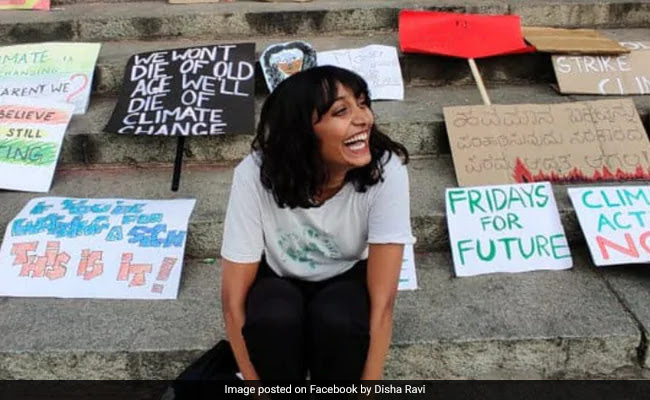
Yesterday, while granting bail to environmental activist Disha Ravi in the toolkit case related to the farmers’ movement, the court said that creating a WhatsApp group and editing a toolkit is not a crime. Delhi’s Patiala House Court said on Tuesday, “You cannot put anyone in bars only for disagreeing with the government’s policies.” Late night, Disha was released from Tihar jail.
Additional Sessions Judge Dharmendra Rana strictly said that there is no evidence against Disha that she campaigned with the intention of bringing a bad name to India. There is no evidence that she hatched any conspiracy to spread violence. Many people have been arrested in cases of violence, but not a single one has been proved to have any connection with Disha. The court also said that just to maintain the pride government no one can be charged for treason.
The court granted direction to bail on the condition of personal bond of one lakh and cooperation in investigation. They will also be prohibited from going out of the country during this period.
The judge said that the police has no evidence to prove the connection between Disha and the Khalistan supporters of the Poetic Justice Foundation.
Similarly, no such evidence has been produced to prove that Disha is a supporter of separatist ideology and there is some kind of connection between her and the banned organization Sikh for Justice.
Disha Ravi, is an Indian youth climate change activist and a founder of Fridays For Future India. Her arrest on 13 February 2021 for an alleged involvement with an online toolkit related to Greta Thunberg and the 2020–2021 Indian farmers’ protests gained international attention.

 Eduindex