

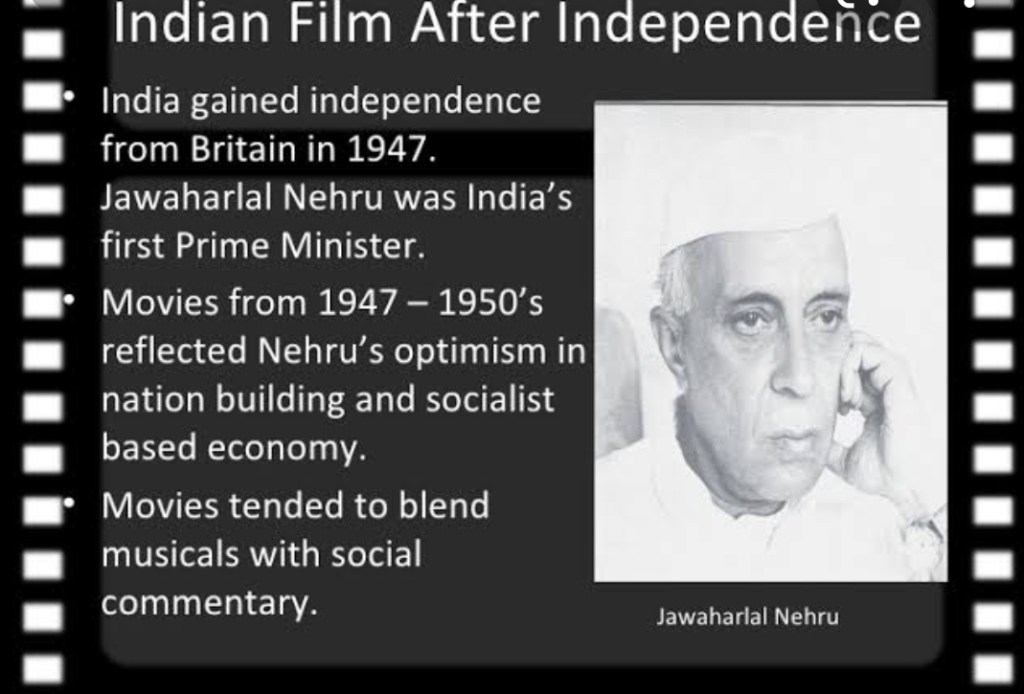
After independence, cinema became a vehicle for addressing social ills. Bollywood portrayed a society which was both desired and achievable. In the golden era of Bollywood films, from the 1950s to the late 1970s, an India which was rural but had vibrant and rich traditions was portrayed. Films show cased the relationships, customs, norms and ethics of Indian society.
“Kaagaz ke phool”, “Mother India”, “Pakeezah”, “Half Ticket” or “Padosan” are just a few titles from this golden era of Bollywood film making.”
But then came the 1980s, and the ” action era”. The Bollywood heroine lost her strength and space to her hero. Now as globalisation has taken hold, Indian cinema is becoming increasingly influenced by Western cinema.
The Indian Cinema Industry has changed significantly since 1947. Indian films are now competing on the world stage with western productions. Indian cinema portrays the essence of Indian society. The ethnic and traditional value of the Indian society, it’s cultural diversity and above all, the unty among the varied cultural and religious sects is highlighted by Indian cinema.
Some important films from the era that come to mind are “Andaz(1949)”, “Mother India(1957)”. These films are true to India’s first prime minister Pt. Jawaharlal Nehru’s ideals of modern India- developing cities, roads, dams, bridges, doctors, and engineers, being the emblem of modernity. This trend continues as Hindi cinema never failed to capture the nerve of the important historical events in post-colonial India.
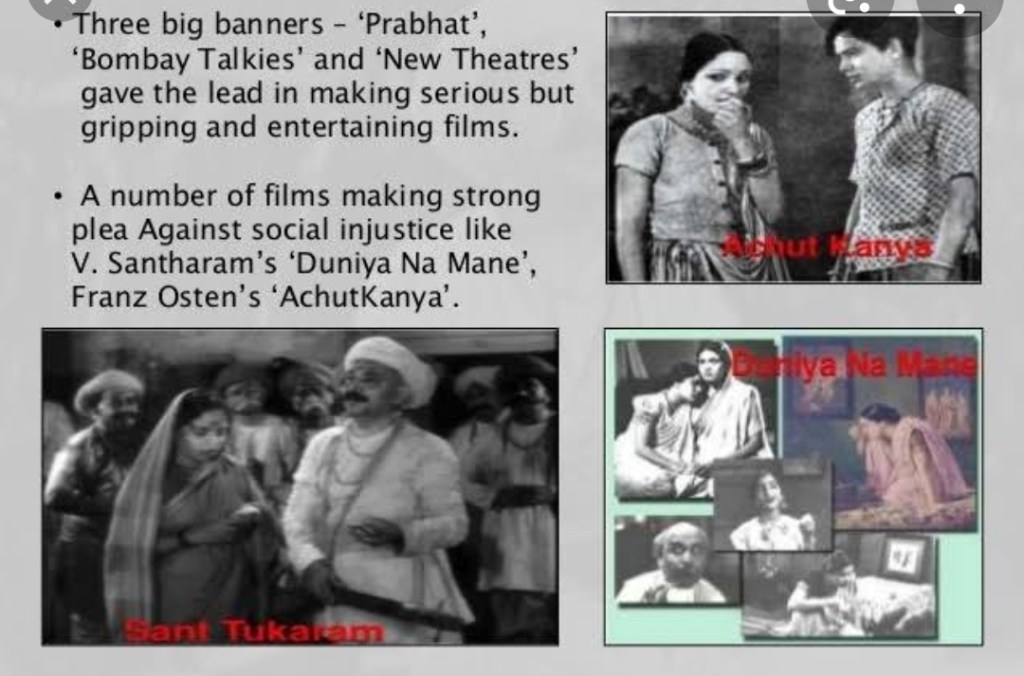
Caste and religion based connotations are plenty; and these icons are understood to be the representations of a great cultural Indian past that need to be maintained.
“That day in 1931, on seeing the word ‘Swaraj’ in the title of Shantaram’s film Svarajyache Toran (Thunder of the Hills) and the poster of the film depicting Chhatrapati Shivaji hoisting a flag, the Head of the British Indian censor flew into a rage.”
“The most significant film made around that little-known saga was – Shatranj ke Khiladi (1977) by Satyajit Ray with Tom Alter (whose Urdu was as fluent as the Queen’s English) playing General Weston and Richard Attenborough as General Outram.”
As the Indian economy gradually opened up to the world, the Hindi cinema started catering to the growing influence of the Indian diaspora. Wel one stark difference is that the majority of the nationalistic films made today tend to embrace an extreme form of patriotism that can best be described as “jingoistic” in nature.
“Poet and film maker Gulzar plays Suneel, an Indian student studying in England, and as a part of the freedom movement, he delivers speeches on the campus. The commercial blockbuster Kranti (1981) claimed to be based on a true story of a freedom struggle between 1825-1875 but did not specify which one. “
“Another ‘faction’ 1942 A Love Story (1994) was a fine balance between one of bright romance and a nationalistic plot to assassinate the tyrant General Douglas. But the tail piece of the film succumbed to the stock make-believe variety.”
https://www.dw.com/en/the-changing-face-of-indian-cinema/a-5212620

 Eduindex
You must be logged in to post a comment.