

Leaders
Leaders – we presumably see or hear about them practically every day from our parents, on television, and at school. The captain of our football team, our classroom teachers, and the individuals in charge of our country are all leaders. Leaders have only one task: to guide their followers toward a shared objective. This aim might be anything from winning a football game to passing an exam to bettering the country. The world would be a chaotic place if there were no leaders.
A Leader’s Recipe
So, what does it take to be a good leader? Many people think that some people are “born” leaders, that they are gifted with unique abilities that no one else possesses. Anyone may become a leader; acquiring the attributes of a good leader is not difficult.
Good Leader:
- Accept responsibility for their acts.
- Others should be explained, informed, taught, and guided.
- When making decisions, show courage.
- Are determined and compelled to succeed.
- Are trustworthy and eager to work.
- Encourage and encourage others to follow in their footsteps.
- They pay attention to, comprehend, and care for their followers.
Great leaders have ‘charisma.’ It attracts people to listen, to trust, and to follow them.
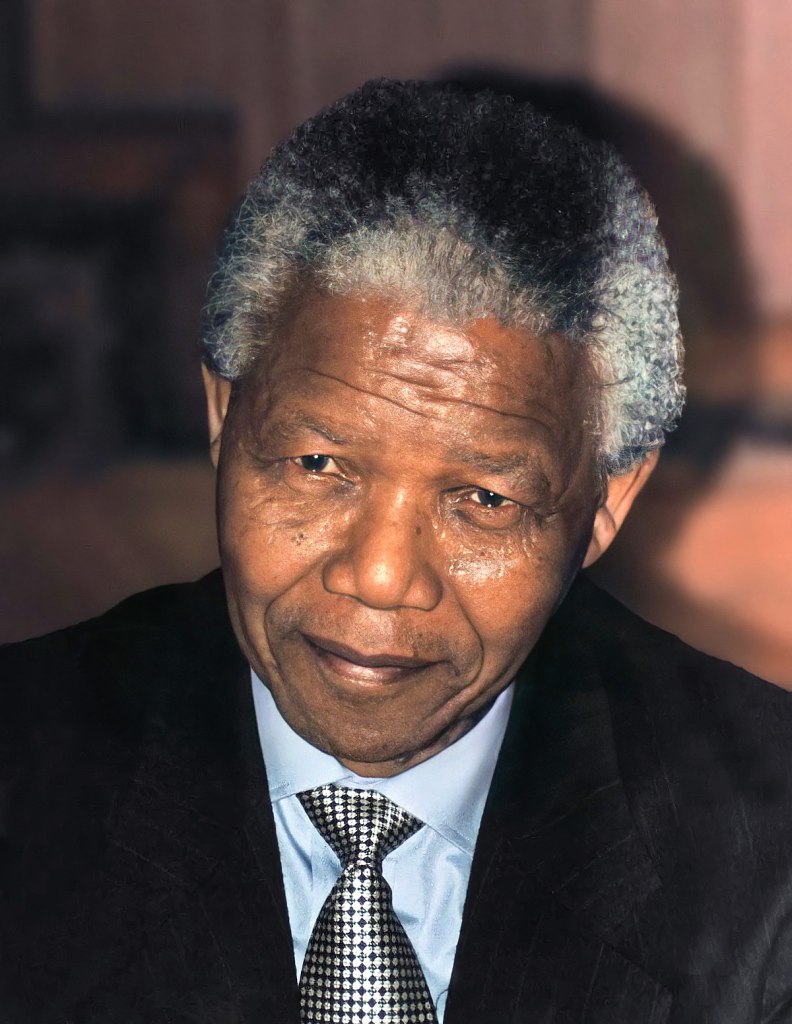
Nelson Mandela is among the greatest statesmen of the 20th century. He fought apartheid in South Africa, where people of color were treated badly by the whites.
When Nelson Mandela was a young man, apartheid in South Africa prohibited white and black people from doing activities together and forced them to live separate lifestyles.
White people, who were a small part of the population, were in charge of everything in South Africa.
Black people were not allowed to use the same items or go to the same locations as white people, and white people had superior schools and hospitals.
Basic rights, such as the ability to vote in elections, were also denied to black people. Nelson Mandela, on the other hand, felt that everyone should be treated equally.
In 1944, Mandela became a member of the African National Congress (ANC). In 1964, he was imprisoned for life, by the white minority government of South Africa, for conspiracy to overthrow the government.
Photos of Mandela were prohibited while he was in jail, and it was even prohibited to mention him in public.
People from all around the world, on the other hand, pushed for his release.
Even while in jail, Mandela remained a leading representative for the fight for equality. Following global pressure, Mandela was released from prison in 1990. Mandela had spent 27 years in jail and was greeted as a hero on his release. In 1991, the government abolished the laws, which legalized apartheid. Mandela, along with the South African President, Frederick Willem de Klerk, was awarded the Nobel Peace Prize in 1993. In 1994, Mandela was elected South Africa’s first black President, in the nation’s first multiracial election.
After being elected president, Nelson Mandela set out to bring people of all races together.
South Africa hosted its first big sporting event, the Rugby World Cup, in 1995.
Mandela gave his support to the South African rugby team, made up mostly of white men so that it would unite the country. The team, known as the Springboks, went on to lift the trophy.
Mandela became a global celebrity and one of the most popular leaders in the world, with politicians and celebrities wanting to see him.

 Eduindex
You must be logged in to post a comment.