

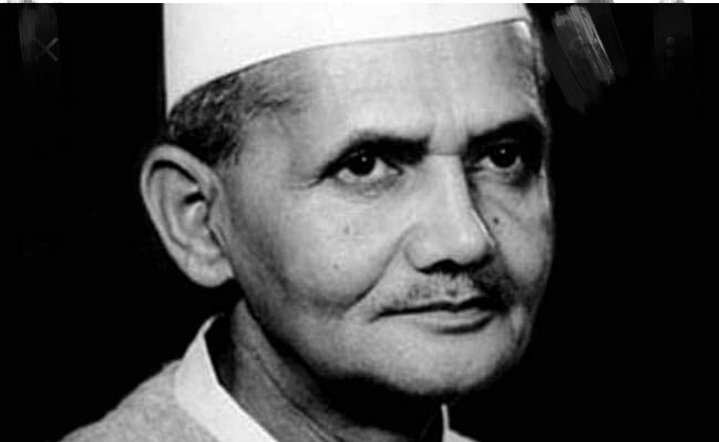
Shri Lal Bahadur Shastri was born on October 2, 1904 at Mughalsarai, a small railway town seven miles from Varanasi in Uttar Pradesh. His father was a school teacher who died when Lal Bahadur Shastri was only a year and half old. His mother, still in her twenties, took her three children to her father’s house and settled down there. Shastriji did his initial schooling from a small town. He had a happy enough childhood despite the poverty that dogged him.
He was sent to live with an uncle in Varanasi so that he could go to high school. Nanhe, as he was called at home, walked many miles to school without shoes, even when the streets burned in the summer’s heat.
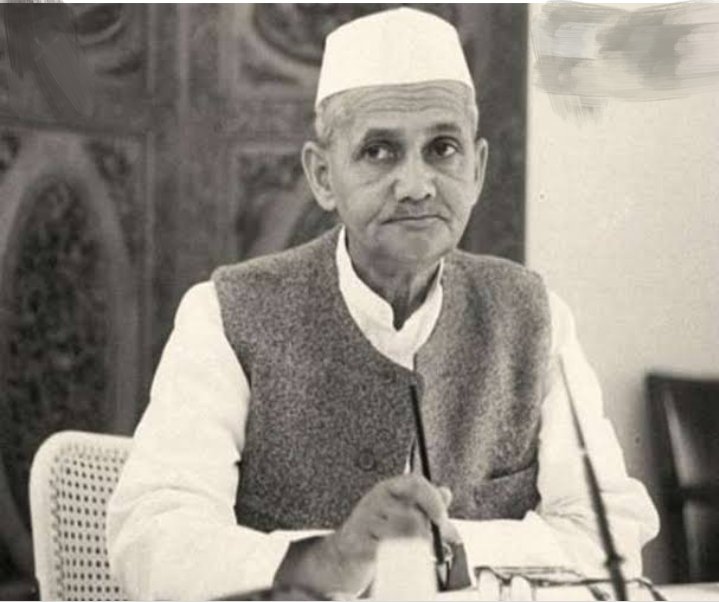
As he grew up, Lal Bahadur Shastri became more and more interested in the country’s struggle for freedom from foreign yoke. He was greatly impressed by Mahatma Gandhi’s denunciation of Indian Princes for their support of British rule in India. Lal Bahadur Sashtri was only eleven at the time, but the process that was end day to catapult him to the national stage had already begun in his mind.
Lal Bahadur Shastri was sixteen when Gandhiji called upon his countrymen to join the Non-Cooperation Movement. He decided at once to give up his studies in response to the Mahatma’s call. The decision shattered his mother’s hopes. The family could not dissuade him from what they thought was a disastrous course of action. But Lal Bahadur had made up his mind. All those who were close to him knew that he would never change his mind once it was made up, for behind his soft exterior was the firmness of a rock.
He joined the Kashi VidyaPeeth in Varanasi, one of the many national institutions set up in defiance of the British rule. ‘Shastri’ was the bachelor’s degree awarded to him by the Vidya Peeth but has stuck in the minds of the people as part of his name.
In 1927, he got married. His wife, Lalita Devi, came from Mirzapur, near his home town. The wedding was traditional in all senses but one. A spinning wheel and a few yards of handspun cloth was all the dowry. The bridegroom would accept nothing more.
He was minister in the Union Cabinet from 1951 to 1956 when he resigned taking responsibility for the railway accident and later from 1957-1964.
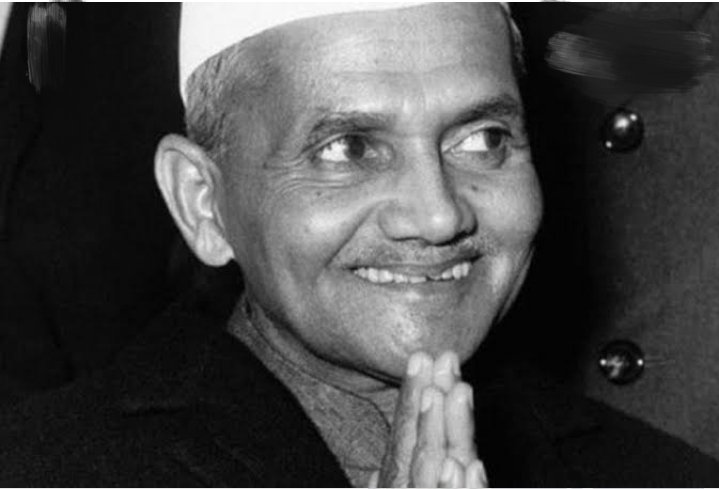
He was India’s second Prime Minister (1964-66). During Shastri’s brief Prime Ministership, the country faced two major challenges.While India was still recovering from the economic implications of the war with China (1962), failed monsoons, droughtand serious food crisis presented a grave challenge. The country also faced a war with Pakistan in 1965.
Shastri’s famous slogan ‘Jai Jawan Jai Kisan’, symbolised the country’s resolve to face both these challenges
Shastri’s Prime Ministership came to an abrupt end on 10th January 1966, when he suddenly expired in Tashkent, then in USSR and currently the capital of Uzbekistan. He was there to discuss and sign an agreement (Tashkent Agreement) with Muhammad Ayub Khan, the then President of Pakistan, to end the war.
He signed an agreement with then Ceylon (now Sri Lanka) on persons of Indian origin there, in 1964 — an endorsement of the importance of neighbourhood.
He was the first person to be posthumously awarded the Bharat Ratna (1966).

 Eduindex
You must be logged in to post a comment.