The world uses about 500 million plastic cups every year. That’s really a massive amount. Imagine these plastic cups dumped as a pile. These piles add up every year and the number tends to increase due to the increase in population. These wastes make the environmentalists who are bent over backwards in attempts of cleaning up the wastes feel exhausted. The plastic cups are not used intentionally. They are used because of the lack of an alternative. Many people have guilt about using these plastic cups. Most of us would have thought of having a reusable, variable size and handy cup. But we are provided with either or options which is just partially beneficial.
Hug – The Mug:
“Every lock has a key. Every problem has its solution”
Ruary Hewson has carefully observed the situation and has come up with an exquisite design. The features of the mug are listed as follows:
Double Walled Insulation: The Mug is double-wall insulated which makes it suitable for all environmental conditions, You can also heat it up in the microwave and have your drink piping hot.
Customizable Height: The height of the cup we use varies according to the drink and time of the day. Hug has an option for every such choice. It has 9 customizable height options to choose from.
Patent Pending Lock Mechanism: Hugcomes with a lock mechanism to lock at the height of your choice at a jiffy. The lock and unlock mechanism is built to last for 1000 cycles of its use.
Pocket-friendly and quick: Hug can easily fit into the pocket of your jeans, sweatshirts, purses and what more do we need? The speed of stretching it can be done in a blink of an eye. It can be done within 3.4 seconds.
Recycled: The cups are fully made from Recycled plastic which means it recycles the past used plastics and prevents the future use of plastics.
Spill-proof: The major hassle in using cups is spills caused by them on our precious assets. Hug is way cooler. It is completely spillproof and provides you with an unperturbed user experience.
Cool and Colourful: Hug comes with 4 vibrant colours to choose from and thus removing the restrictions of you to be cool with your cup.
Facts about Hug:
Hug is backed by 4500 backers for $ 2,04,205 which is 45 times higher than the amount targetted for.
The campaign is about to end in 4 days and rock with the delivery by next year.
India’s transport sector is large and diverse; it caters to the needs of 1.1 billion people. In 2007, the sector contributed about 5.5 percent to the nation’s GDP, with road transportation contributing the lion’s share.
Good physical connectivity in the urban and rural areas is essential for economic growth. Since the early 1990s, India’s growing economy has witnessed a rise in demand for transport infrastructure and services.
However, the sector has not been able to keep pace with rising demand and is proving to be a drag on the economy. Major improvements in the sector are therefore required to support the country’s continued economic growth and to reduce poverty.
Roads. Roads are the dominant mode of transportation in India today. They carry almost 85 percent of the country’s passenger traffic and more than 60 percent of its freight. The density of India’s highway network — at 0.66 km of roads per square kilometer of land – is similar to that of the United States (0.65) and much greater than China’s (0.16) or Brazil’s (0.20). However, most roads in India are narrow and congested with poor surface quality, and 33 percent of India’s villages do not have access to all-weather roads.
Rural Roads-A Lifeline for Villages in India: Connecting Hinterland to Social Services and markets
Railways. Indian Railways is one of the largest railways under the single management. It carried some 19.8 million passengers and 2.4 million tonnes of freight a day in year 2009 and is one of the world’s largest employer. The railways play a leading role in carrying passengers and cargo across India’s vast territory. However, most of its major corridors have capacity constraint requiring capacity enhancement plans.
Ports. India has 13 major and 199 minor and intermediate ports along its more than 7500 km long coastline. India’s seaborne foreign trade being 95% by volume and 67% by value, the ports play a very significant role in improving foreign trade in a growing economy. These ports serve the country’s growing foreign trade in petroleum products, iron ore, and coal, as well as the increasing movement of containers. Indian ports handled cargo of 850 million tonnes and about 9.0 million TEU container traffic in year 2010. Over the last decade, the average annual growth rate of port cargo volume has been about 10%.. The future potential for port sector, particularly container ports is huge considering that the container traffic is projected to grow to 40 million TEU by 2025. Inland water transportation also remains largely undeveloped despite India’s 14,000 kilometers of navigable rivers and canals.
Aviation. India has 128 airports, including 15 international airports. Indian airports handled 142 million passengers in 2010-11 and 1.6 million tonnes of cargo in year 2009-10. The CAGR for the domestic passenger and freight growth over the last decade has been 14.2% and 7.8% respectively. The dramatic increase in air traffic for both passengers and cargo in recent years has placed a heavy strain on the country’s major airports. Passenger traffic is projected to grow more than 15% annually over 2011-13 and it is estimated that the aviation industry, currently 9th largest in the World, will require 30 billion USD investment in the next 15 years to keep pace with the growing demand.
Urban Transport. India is experiencing rapid urbanization with the present urbanization levels at 30% translating to a population of roughly 340 million living in urban areas. The number of million plus cities is presently at 42 and the urban economy accountd for roughly 60% of the GDP. Motorisation rates in India are in double digits as in most developing economies. Only about 20 cities out of 87 cities with a population in excess of 500,000 and state capitals have any kind of organized transport and only 3-4 cities could lay claim to a mass rapid transit system. The share of public transport in cities with population sizes over 4 million has declined from 69% to 38% between 1994 to 2007. Accident and fatality rates are one of the highest in the world affecting primarily the poor and vulnerable without their own means of transport.
Transport infrastructure in India is better developed in the southern and southwestern parts of the country.
The major challenges facing the sector are:
• India’s roads are congested and of poor quality. Lane capacity is low – majority of national highways are two lanes or less. A quarter of all India’s highways are congested. Many roads are of poor quality and road maintenance remains under-funded. This leads to the deterioration of roads and high transport costs for users.
• Rural areas have poor access. Roads are significant for the development of the rural areas – home to almost 70 percent of India’s population. Although the rural road network is extensive, some 33 percent of India’s villages do not have access to all-weather roads and remain cut off during the monsoon season. The problem is more acute in India’s northern and northeastern states which are poorly linked to the country’s major economic centers.
• The railways are facing severe capacity constraints. All the country’s high-density rail corridors face severe capacity constraints. Also, freight transportation costs by rail are much higher than in most countries as freight tariffs in India have been kept high to subsidize passenger traffic.
• Urban centers are severely congested. In Mumbai, Delhi and other metropolitan centers, roads are often severely congested during the rush hours. The dramatic growth in vehicle ownership during the past decade – has reduced rush hour speeds especially in the central areas of major cities.
• Ports are congested and inefficient. The average annual growth of cargo volume in the ports in the last decade was close to 10%, However, capacity utilization in some of the major ports remain as low as 58-60% Both bulk and containerized traffic is expected to grow at a much faster pace in future and by some estimate the container traffic is projected to grow to about 4.5 times of the current volume by 2025. India’s ports need to significantly ramp up their capacity and efficiency to meet this surging demand.
• Airport infrastructure is strained. . Air traffic has been growing rapidly leading to severe strain on infrastructure at major airports, especially in the Delhi and Mumbai airports which account for more than 40 percent of nation’s air traffic.
The 34-year-old was eclipsed at times by a 22-year-old opponent who lit up an overcast Centre Court.
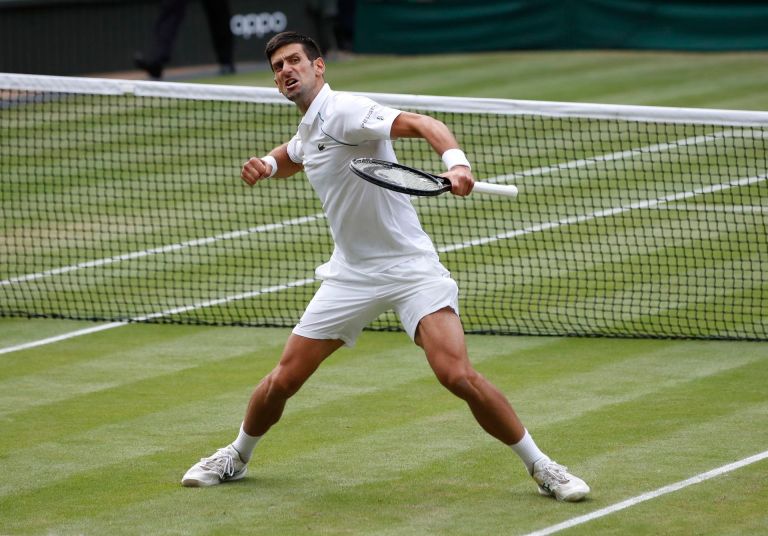
Defending champion Novak Djokovic absorbed a barrage of powerful hitting from Canadian Denis Shapovalov to reach his seventh Wimbledon final on Friday with a 7-6(3) 7-5 7-5 victory that kept the indefatigable Serb on course to write history.
The 34-year-old was eclipsed at times by a 22-year-old opponent who lit up an overcast Centre Court.
But as he almost always does, he responded to adversity with his usual mix of dogged defence and clinical precision to set up a Sunday showdown with Italian Matteo Berrettini.
Tenth seed Shapovalov was bidding to become only the second Canadian man to reach the Wimbledon final and despite producing some scintillating tennis, was left pondering what might have been after failing to crack the toughest nut in the business.
He struck 40 winners but whenever Djokovic found himself in peril, he manned the barricades, saving 10 of the 11 break points he faced and making only 15 unforced errors as he simply refused to be knocked off course in his steely pursuit of equalling Roger Federer and Rafa Nadal’s men’s record haul of 20 Grand Slam titles.
Djokovic won the opening set despite Shapovalov serving for it at 5-4, then saved several break points in the second as his opponent threw the kitchen sink at the five-time champion.
Even in the third set Shapovalov continued shooting from the hip but eventually his fire blew out as Djokovic claimed one of the toughest straight sets wins of his Wimbledon career.
Shapovalov left the court with tears in his eyes but he showed enough in a marvellous run to suggest that he is ready to challenge for the biggest prizes in tennis.
Djokovic has now won 18 successive sets since losing the opener in his first round match against British wildcard Jack Draper and extended his winning run at Wimbledon to 20, having last tasted defeat in the 2017 quarter-finals.
But he knew he had been in a real scrap.
GOLDEN SLAM
“I don’t think the scoreline says enough about the performance or the match,” Djokovic said on court.
“He was serving for the first set and was probably the better player in the second set as well, had many chances. We are going to see a lot of him in the future, he is a great player.”
Djokovic is now one win away for a third successive Wimbledon title, but there is an even bigger incentive that his fuelling the Serb’s insatiable appetite for victory.
Beat seventh seed Berrettini on Sunday and he will go to next month’s U.S. Open with a number of records looming — a 21st Grand Slam title and possibly a Golden Slam if, in the interim period, he wins the Olympic singles.
“Every time I hear there is something on the line that is historic it inspires me but at the same time I have to balance it and win only the next match,” Djokovic said.
For the vast majority the match there was little telling which player was making his first appearance in a Grand Slam semi-final and which one was contesting his 41st.
Left-hander Shapovalov had vowed to unleash his naturally attacking game on Djokovic in a bid to claim a first win against the Serb in seven meetings. He was as good as his word.
Ripping backhands and forehands on to the lines, he dominated the first set after breaking in the third game and served for the opening set at 5-4. It felt like a big moment if he was to stand a chance, but sadly the killer instinct that serial Grand Slam winners have is not quite there.
Some loose groundstrokes allowed Djokovic to level and the top seed took control of the tiebreak after a winning a ferocious baseline rally at 4-2.
Shapovalov ended the set with a double-fault.
Undaunted, Shapovalov continued to stretch Djokovic in the second set and had him in trouble on serve at 1-2 but failed to break despite leading 0-40.
Two games later Shapovalov had 15-40 on the Djokovic serve but again the Serb showed Houdini-like skills to extricate himself from yet another hole.
When Shapovalov double-faulted to drop his serve at 5-5, Djokovic duly held with relish to open a two-set lead.
Responding to a question on the daily new cases graph that has plateaued over the last two weeks, Dr V K Paul said on Friday that the slow rate of decline was an indicator that the virus could take the “upper hand” if the current situation did not change.
With daily case detections still above 40,000 and reports and pictures of blatant violations of social distancing norms coming from tourist spots, the head of India’s pandemic task force has again warned that the second wave of Covid-19 is not over yet, and that cases can explode if people continue to behave recklessly.
Responding to a question on the daily new cases graph that has plateaued over the last two weeks, Dr V K Paul said on Friday that the slow rate of decline was an indicator that the virus could take the “upper hand” if the current situation did not change.
India needed to achieve a “baseline” of 10,000 cases for at least three consecutive weeks before it could be said that the situation was under control, Paul said.
“It is right that the graph (of the decline in the number of cases) has slowed down. It was earlier declining at a faster pace. It only shows that we cannot take the situation for granted. If it is around 35,000-37,000 cases per day, this is almost one-third the number of cases we saw during the first wave peak. The war is not over; the second wave is not over. It is perhaps more visible in some districts and two particular states and the Northeast, but it is still there. As long as this is still rising there, the nation is not safe,” he said.
The Health Ministry said on Friday that 80 per cent of new cases were now coming from 90 districts in the country. Six states have 10 or more of these districts — Maharashtra (15), Kerala (14), Tamil Nadu (12), Odisha (12), Andhra Pradesh (10), and Karnataka (10).
“With a lot of effort and difficulty, we have reached a situation where cases are on the decline. The situation is bad only in a few districts. But all this can be snatched away from us because we have not contained the virus completely. If we give the virus an opportunity, and chains of transmission are launched…this is something we cannot afford,” Paul said.
He warned that localised surges were seen after the first wave too, and they could result in an explosion of the infection.
“We have seen in the past that there was predominant localisation of cases in some areas, and then the situation explodes. This is a warning to us that we should help the process of decline of this wave effectively to a much lower level to the baseline. The baseline has not yet been achieved. The baseline would be something below 10,000. This should be for three weeks at least,” he said.
The Ministry said that between June 26 and July 2, daily new cases were 46,258 on average, and that this number had fallen slightly to 42,100 between July 3 and July 9.
“This shows the second wave is not over; more than 35,000 cases per day is not a small number… It looks small in comparison to the high peak that we experienced, but the fact that the rate of decline is somewhat slow, tells us that if we don’t work hard on controlling the virus, it can take the upper hand,” Paul said.
Paul flagged the blatant violations of Covid norms in several parts of the country, especially at hill stations. Massive waves of tourists have descended on places such as Mussoorie and Manali in recent days.
“Within the country, we are seeing people being complacent. The violations being seen in both small and large cities, the markets…particularly in the tourist destinations, where people are going for relaxation…we can see a new risk emerging there. If this type of mingling continues to take place, and if social distancing norms are violated, the virus can spread…,” Paul said.
“We need to have a balanced approach. There is a need for tourism; however, if there are violations, there could be a serious situation. We can stop this at this moment… This is a cause for concern because of the visuals that are being witnessed, where crowds are mingling, social distancing is not being maintained. This has been highlighted at no lesser place than the Cabinet meeting taken by the Prime Minister yesterday (Thursday),” he said.
“It is the responsibility of the local administration of these tourist places that Covid-19-appropriate behaviour is strictly enforced. The market welfare societies are also responsible… We know that tourism and livelihood are important; however, there cannot be any negligence on Covid-19 norms. Both can mutually exist,” Paul said.
The government pointed out that countries like the United Kingdom, Russia, Bangladesh, South Korea, and Indonesia were witnessing a resurgence of cases. “In the countries where the situation was under control, the virus has freshly re-emerged. These include our neighbours and European countries. If we look at cases per million population, at this stage, it is more than the cases we saw during our (second) peak. The virus returns to infect the susceptible population. This shows that we cannot lower our guard in our country,” Paul said.
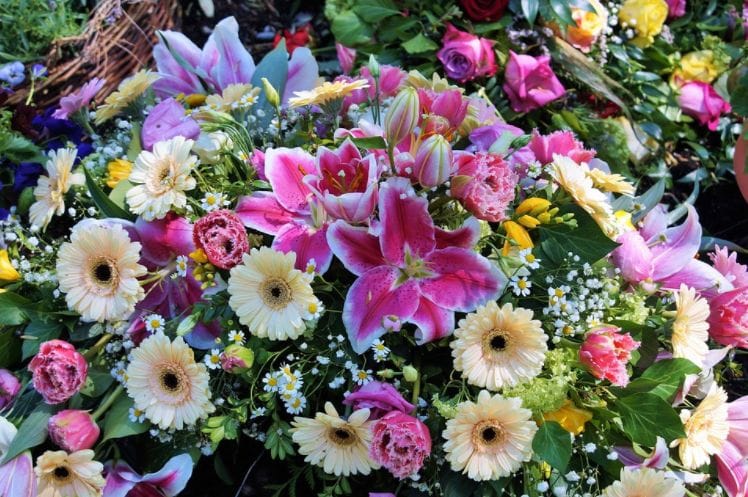
Is your favourite flower a traditional rose, a luxurious orchid or perhaps an innocent lily? When you think about it, most of us have a favourite color, song, dish and perhaps even a favourite number. All of these preferences can say a lot about your personality. For example, did you ever think about what your favourite flower is? There’s probably one type of flower you like just a little bit more than others and this is what it says about you!
A certain scent or memory can tell you exactly what your favourite flower is. Orchid These exotic flowers symbolise luxury, love, beauty and strength. They’re often associated with people who have Aquarius as their zodiac sign. The beauty that is central to this flower often comes with a price. People who prefer orchids can be pretty temperamental. If something doesn’t go the way they want it to, they can get a bit defiant. Perhaps they’re a bit too stubborn? Sunflower The sunflower stands for happiness, adoration, lust for life and admiration. The name of this beautiful flower kind of says it all already: people who love sunflowers have a warm and infectious vibe around them. You’re someone who always thinks the glass is half full and you focus on the positive side of things. Nothing can bring you down and that’s not very strange at all, because the biggest sunflower ever was 9.17 meters (30 ft) high! Different types of roses Red roses symbolise love and passion. Do you prefer yellow roses? Back in the day, these represented jealousy, which is why people rarely gave them to other people. Luckily, these days the yellow rose is associated with friendship and joy. The classic white rose remains popular for bridal bouquets and embodies purity, honesty, innocence and simplicity. Pink roses symbolise happiness and friendship, but above all gratitude. Finally, the orange rose represents passion, enthusiasm and fascination. Hydrangea These flowers are known for their extreme versatility. They lift up other flowers by their presence and offer a lot of strength and support to ‘weaker’ flowers. As a person, you’re not very different from that. You might appear strong to the outside world, but don’t be fooled: you need just as must trust and help from other people as everyone else. Tulips Red tulips symbolise the perfect love. Purple roses are associated with ‘royalty’; yellow tulips represent cheerfulness and white tulips stand for forgiveness. Do you prefer a bouquet of tulips in all kinds of different colours? That is a symbol for elegance. As a person, you’re very positive, relaxed and social. A tulip can bloom on the coldest of days, but also the sunniest. You go with the flow and you literally follow the beams of sunlight. Peony Peonies stand for nobleness, pride and extravagance. Even though you appear to be very sweet, you can be quite demanding. The peony is very loved, but only blooms a very short period of time. You have to live in the moment and appreciate life when you can, because you know those moments won’t last forever. Iris The iris represents wisdom, optimism and trust. Are irises your favourite flowers? Then you’re an art lover and a creative person. You love being someone’s muse and you secretly hope to inspire other people in their artistic endeavors. The iris has inspired many a great piece of art throughout history and is still seen as a symbol for royalty. Lily
The white lily symbolises dignity, purity of body and soul and innocence. Lilies are often featured on the family crests of royal houses. Plus, the white lily is often used as a symbol for peace. This dramatic flower has all the potential of going into full bloom, but it is often misunderstood or not valued enough. Lilies can have many different colours; some are fiery red, others are dark as the night. They’re beautiful throughout the entire year. If you love lilies the most, chances are you know how to help others and you’re always able to lift someone’s spirits.
When a family member passes away, who will inherit the deceased person’s possessions is always a mystery. Some people leave money in their will, while others bequeath their personal belongings to their next of kin. But what if it turns out that there is a hidden treasure among these things? This happened to a family in the United States when they found a dusty old Mercedes-Benz in an old shed of a deceased relative.
Unique Mercedes-Benz 300SL Roadster
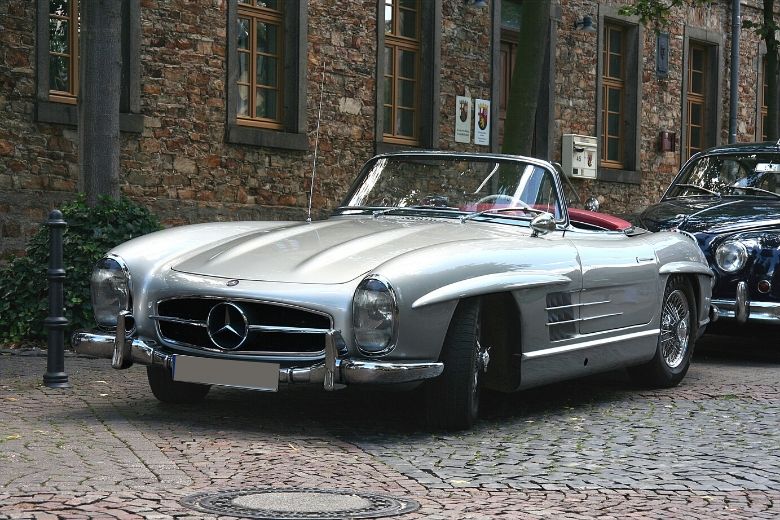
This is a special story that you don’t hear often. A unique 1960 Mercedes-Benz 300SL Roadster was stored by the former owner in a derelict shed for 40 years. When the unique sports car saw the light of day, the car turned out to be covered in dust. That did not spoil the fun, because after a good renovation it turned out to be a very unique car that had driven only 23,000 kilometers.
Bought in the 1970s
The dusty Mercedes-Benz was in the shed for no less than 40 years. The former owner, an American from the Midwestern United States, spotted the unique car in the early 1970s. It was love at first sight. The owner bought the car a few years later, in 1976. This model turned out to be very unique and had not been produced for twelve years at the time of purchase.
An old Mercedes-Benz has been in a barn for 40 years and is now worth $1 million
Bought in the 1970s
The dusty Mercedes-Benz was in the shed for no less than 40 years. The former owner, an American from the Midwestern United States, spotted the unique car in the early 1970s. It was love at first sight. The owner bought the car a few years later, in 1976. This model turned out to be very unique and had not been produced for twelve years at the time of purchase.
Neglected in the shed
Instead of driving thousands of miles in his dream car, the owner decided to do something different at the time. He parked the car in a shed in Indiana and then stopped looking at it. To this day, it is still not clear why the man did this. After the man’s death, the car was sold to Gullwing Motor Cars, a garage specializing in the sale of American and European classic cars. Fortunately, these men knew what to do with this unique car and completely refurbished it.
After restoration of the car.
Rare find
The Mercedes-Benz turned out to have a unique blue-gray color under the thick layer of dust. Unfortunately, all these years in the shed have not done the car any good and the car had discolored to a silver-colored layer of paint. However, that makes the 300SL Roadster no less special. In total only 1,458 copies of this specific model were made. Only 249 cars were made after 1960, the year of production of this Mercedes-Benz. In combination with the extremely low mileage, this Mercedes-Benz 300SL Roadster is worth a fortune. The car is currently for sale for $1,095,000 million, converted about $ 1,014,000 million.
Thomas Markle is very proud of his daughter Last week, Kensington Palace announced that Meghan Markle and Prince Harry are expecting a baby. Meghan’s father, Thomas Markle, has now given an interview to the Daily Mail in which he reacts to the news and reminisces about Meghan’s childhood.
Relationship
The whole world knows by now that Meghan Markle, the Duchess of Sussex, doesn’t have a very good relationship with her father. He wasn’t present at her wedding, though it still isn’t entirely clear whether this was due to health reasons or because Meghan, or the royal family, didn’t want him there (or a combination). Meghan and her father have become estranged due to his many comments in the media and his co-operation with the paparazzi right before the royal wedding. Their relationship hasn’t always been this bad, though. A few years ago Meghan even posted a Father’s Day post on Instagram, thanking him for all he’d done for her, ending with the words “I love you”. The post is no longer up, since Meghan’s Instagram was deleted when she became part of the royal family.
Reaction
Markle, a 74-year-old retired Hollywood lighting director, heard the news of his daughter’s pregnancy on the radio in his car. He said the news was “overwhelming and joyful” to him and that “the first thing I thought about was holding Meghan in my arms as a newborn 37 years ago.” Markle reminisces about Meghan’s birth through C-section, saying she was the most beautiful baby and that it was love at first sight. He says that the news of Meghan’s pregnancy filled him with joy and pride and that he is delighted for both her and Harry. “She will make a fantastic mother.”
Mother
Thomas Markle denies the rumours that Meghan’s mother, Doria Ragland, called him with the baby news before it was made public. Markle was markedly absent from the official announcement, which did include Ragland: “Ms Doria Ragland is very happy about the lovely news and she looks forward to welcoming her first grandchild.” While Markle has yet to meet his son-in-law Harry, Ragland has accompanied the couple on various occasions. She’s also said to be planning a move to England, so she can help take care of the royal baby.
Can you see the girl between the rocks? If you can find her you’ve got some very good eyes. We had to look about four times before we finally saw her!
Where’s Waldo The internet loves looking for things in picturesWhere’s Waldo-style. Do you remember the picture of all the snowmen and one single panda bear? That one was made by Hungarian artist Gergely Dudás and went completely viral. Today we’ve got another picture for you in which something is hidden. Take a look at the picture on the next page! Can you find the girl?
Difficult The picture was posted on Imgur, an online platform on which you can share your pictures, and it captured the attention of many of its users. We know there’s a girl, but where is she?! Because it’s so difficult to find the girl, many people thought the photographer was fooling them and there was nothing to see in the picture. But the girl is really there. We’ve got the solution for you below!
The thing you see first in this image determines your personality
If you follow our blog regularly, you’ll know we love sharing these odd images, riddles and quizzes with you to determine your personality. Did you know that some images are very telling about the way you think? The Rorschach test, the official name for ink blot tests, has been used for years. We have a new one for you: this image with a tree, a gorilla, a lion and fish. What did you see first?
Fun fact: this image is the logo of the Pittsburgh Zoo & PPG Aquarium in the United States. Find out on the next page what the different animals tell you.
Gorilla
Did you see the gorilla first? This could mean you have a lowered self-image. You are perfectionistic and quite hard on yourself. Your standard is very high, and you expect the very best of yourself. This is difficult, as no one can be perfect and live up to your high standards. You are also very curious and you like to discover new things and experience new stuff. Try to focus on what’s good for YOU, not what other people expect of you.
Lion
If you saw the lion first it means you like your freedom. You are independent and act instinctually. You don’t like to judge and hate being placed in a box. If you feel suffocated by someone, you are likely to use your ‘claws’ to defend yourself. This means you can be quite direct and harsh, even if you don’t mean to be. You love life and live it to the fullest. Your heart is in the right place, but sometimes you forget how other people may perceive your behaviour.
Fish
Even though they are not very prominent, the fish were the first to catch your attention. This means you are an introverted person who doesn’t like to be in the centre of attention. You don’t show the true you to many people. Nonetheless, people like you and you’re easy-going. You are dependable and are able to build strong bonds with others, meaning you are often called ‘best friend’. Your empathic and people like being around you.
A career in the military means being away from home from time to time. And when they are, many soldiers are separated from their families. This sometimes leads to painful, yet beautiful stories. Take, for example, the US Marine Chris Daugherty, who came home to a very special surprise after his military service…
Goodbye
When Daugherty left home in January 2017, he initially expected to be away from home for about five months. A few months later, however, it would become clear that his trip would be extended. An unexpected twist, but it was nothing compared to the shock that awaited him on his return…
Off to Korea
Daugherty, his wife Natasha and their three children were no strangers to the Marine family life. The Marine had been away from home for extended periods before, so when he left for Korea in early 2017, the family knew what to expect.
Loneliness
Still, it wasn’t long before Natasha started to feel lonely. Although she was just starting to get used to her husband’s long journeys, she felt strange this time around. She even found herself behaving differently this time. It all began with small changes, but soon these became more and more difficult to hide…
A difficult toddler
Natasha’s children also began to notice these changes. Her eldest child, a 10-year-old boy, could easily keep it a secret, but whether her younger daughter could too? That was the question.
Non-stop conversations
Although Natasha didn’t have much time for herself with all the work she had to do at home, she still kept in regular contact with her husband. They video called each other almost every day, but it wasn’t easy for Natasha. What if Chris found out that she was trying to hide something?
Almost got caught
There were times it was especially difficult for Natasha to keep her secret. She wanted to tell Chris so badly. A few weeks after he left, they had a video call during which she almost gave it away. At the last minute she decided to keep it a secret.
He wasn’t the only one she hid it from
Besides Chris, Natasha’s immediate family too couldn’t know about her secret. This proved to be more difficult by the day, because she had many clever relatives who could easily find out that the woman was keeping a secret.
Increasingly dangerous
Not only Natasha’s situation was getting more and more dangerous. Chris, who was in Korea at the time, also got into trouble. The North Korean government was experimenting with nuclear weapons, and Chris was close to the test site.
Hard times
Natasha lived in uncertainty about her husband’s fate. Still, she had to make ends meet With two jobs and three children to care for, she barely had time for herself.
Half a year later
Five months had passed, but Chris had not returned. In fact, his mission would be extended by a month. He called his wife from the army base to break the news. The mission, which became increasingly dangerous, would continue for at least another month…
Going mad with uncertainty
It was a nerve-wracking time for Natasha. Every day she doubted whether or not she should reveal the secret. What if her husband died? Could she ever forgive herself?
Coming home
Still, she held on, and her perseverance paid off. In June, six months after Chris’s departure, he set course back to his home in America.
Some love gardening and other like to stay as far away from it as possible. Whether you belong to the first or second category; it’s always nice to know a few handy garden tricks that will save you time and money. We have therefore listed 21 garden hacks for you. Here they come:
1. Use a newspaper against weeds
Even for those who like gardening, weeding can be a pain. Did you know that you can prevent weeds from growing in your garden by using a newspaper?
What to do?
Place an old newspaper over an area that you’d like to weed. Wet the newspaper and cover it completely with soil, firmly pressing the soil against the newspaper. This way the weeds (under the newspaper) do not receive sunlight or oxygen, which suffocates the weeds. The newspaper paper is organically degradable too, so you don’t have to worry about pollution.
2. Use cooking spray on your lawn mower
Do you regularly mow the grass and does the grass stick to the blades of your lawn mower? You can easily prevent this by spraying the blades of your mower with cooking spray. As a result, grass sticks to the blades a lot less easily.
3. Grow your own tomatoes
You don’t have to buy tomato seeds if you want to grow your own tomatoes. All you need is a pot, potting soil and an overripe tomato. Cut the tomato into slices and fill the pot up to about three quarters with potting soil. Place the cut tomato slices in the pot and press lightly. Cover the slices with some soil and press again. Place the pot in a sunny spot and water the soil occasionally.Once the seedlings come up, you can repot them. There is a good chance that dozens of tomato plants have emerged from the soil. If all goes well, one tomato plant can produce dozens of tomatoes. Four tomato plants are probably more than enough. Carefully repot four plants in separate pots and then allow the tomato plant to grow further.
4. Using garlic against slugs
Do snails regularly feed off your plants? There is a natural solution that you can use to chase snails out of your garden. All you need is garlic. Snails do not like the pungent smell of this herb. The moment the mollusks smell the smell of garlic, they’ll stay away from the garlic cloves or bulbs.
What to do?
Crush two whole garlic bulbs and put them in a bowl or bucket.
Boil 1 liter of water and pour it over the crushed garlic bulbs and let it sit for 20 minutes.
Carefully pour the water into a spray bottle (making sure the water has cooled enough).
Spray the plants that are being eaten by snails with the garlic water and you will notice the snails start to disappear. Nice and easy!
5. Get rid of green buildup on your fence with green soap
Green buildup on the fence is a pain in the butt for many people. Thankfully you don’t have to buy expensive cleaning supplies to get all the buildup off. What will you need? Green soap, baking soda, and warm water. This combination works perfectly against green buildup, algae, and moss on your fence.
What do you need to do?
Dissolve 50 grams of green soap and 50 grams of soda into 5 liters of water.
Rub a bit of the mixture onto your fence and let it sit.
Scrub the fence with a medium-hard brush. Watch out: don’t use a steel brush, this could damage the wood.
Covered all of your fence? Rinse it off with water and your fence is as good as new.
It’s June 1969. A team of engineers has managed to complete a near impossible task. Against all odds, they have stopped the flow of Niagara Falls, silencing one of the most famous tourist attractions on Earth. However, while the water dries up for the first time in thousands of years, a secret is revealed on the rocks below. This find is truly unbelievable.
It all started as a far cry from what Niagara Falls looks like today. Every year, millions of tourists flock to the area to admire the swirling waters. But more than five decades ago, something special happened in that very place. Back then, the famous waterfall was reduced to a trickle of water, while engineers explored what was happening at the bottom.
At that time, man surpassed nature. As the waterfall began to recede, visitors gathered to witness a spectacle they had never seen before. But what was revealed after Niagara Falls had been stopped?
The story of Niagara Falls began about 18,000 years ago with advancing ice caps. After the ice melted, it left a waterfall that flowed into the Niagara River. Over time, this inundation eroded nearby cliffs, creating the wonder of nature that we know today.
Nowadays, the nature reserve is located on the border between the United States and Canada, and it is one of the most famous tourist attractions in the world.
Although French explorer Samuel de Champlain first heard rumors of a huge waterfall in the region in the early 1600s, it wasn’t until 1678 that Niagara was first spotted by Europeans. That year, a priest named Father Louis Hennepin was witness to the astonishing spectacle on an expedition to what was then known as New France.
Five years after his discovery of the falls, priest Hennepin published A New Discovery, in which he described his incredible find. It was in this publication that the name Niagara first appeared — believed to have originated from the Iroquian word “onguiaahra,” meaning “the strait.” From the moment Westerners became aware of the falls, more and more people started travelling to the region.
In the 1800s, the number of tourists arriving at Niagara Falls by train also increased. The area had increasingly become a tourist attraction. A wide variety of amenities soon emerged to accommodate the influx of visitors—many of whom were even on honeymoon. But it was not only the local hospitality sector that saw potential in the attraction.
Toward the end of the 19th century, the industrial world too recognized the value of the falls. By harnessing the power of the water flow, they were able to power their factories and mills. In 1895, a hydroelectric power station was opened—the first major facility of its kind the world had ever seen.
But while the waterfall was innovative, it could only carry electricity for about 90 meters. Fortunately, famed inventor Nikola Tesla took things to the next level in 1896. Making use of his knowledge of alternating current, he was able to divert current more than 20 miles away to Buffalo, New York.
Tesla made history with his AC induction motor. His experiments at Niagara Falls laid the foundation for a system that still transports electricity around the world today. More than a hundred years later, hydropower is still generated by the falls. The factories located there can produce up to 2.4 million kilowatts of electric current.
Today, Niagara Falls is split between two countries, with both an American and a Canadian side. Taken together, the countries receive about 30 million tourists every year. During peak hours, visitors can see the water tumble down at a rate of six million cubic feet per minute. Wow!
An interesting detail: the amount of water that flows down the falls decreases significantly at night. A 1950 treaty allows local businesses to direct more of the power to their power plants at times when the spectacular view is impacted the least. However, it is not the only time that the volume of the waterfall changes.
Chief Minister Mamata Banerjee visited Roy’s residence in Salt Lake to express her condolences. “Mukul is my longtime colleague and I personally knew his wife.
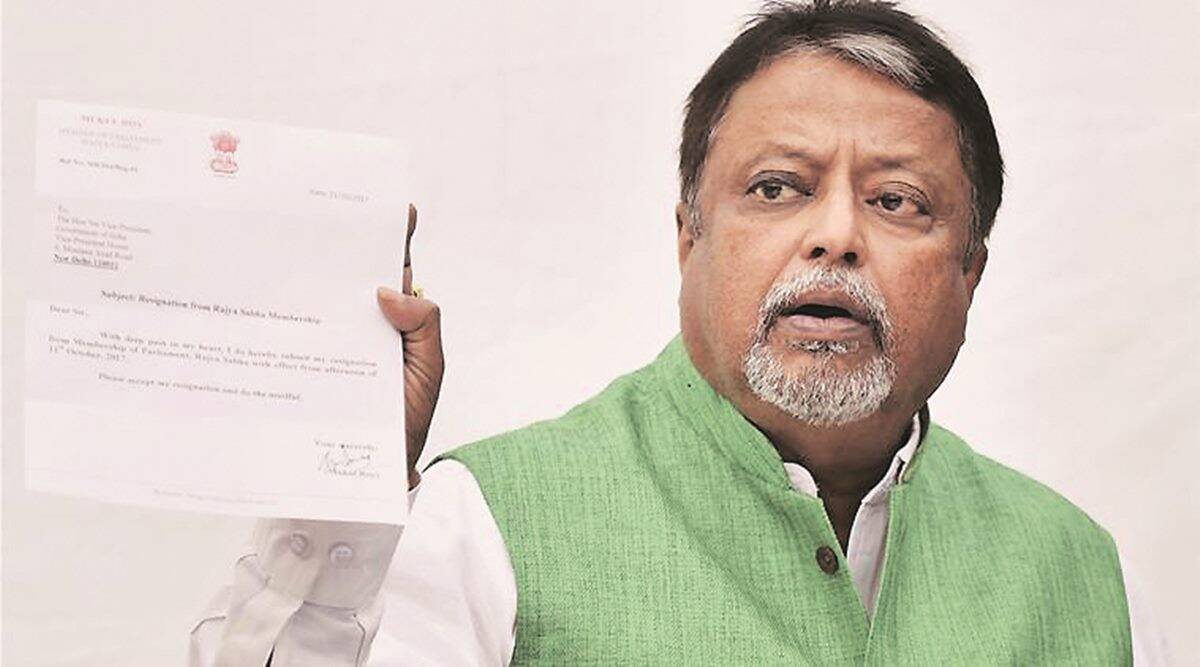
Trinamool Congress (TMC) leader Mukul Roy’s wife Krishna died in a private hospital in Chennai on Tuesday morning following a cardiac arrest. She was suffering from complications after recovering from Covid-19, and was flown to Chennai on June 17 for a lungs transplant.
Chief Minister Mamata Banerjee visited Roy’s residence in Salt Lake to express her condolences. “Mukul is my longtime colleague and I personally knew his wife. We all thought that she will recover and we made every effort to ensure she got better. But she passed away. Their son Subhrangshu is in Chennai. Tomorrow morning, the body will arrive in Kolkata. Later, the body will be taken to their house in Kanchrapara. The final rites will be held there,” Banerjee said.
TMC national general secretary and Diamond Harbour MP Abhishek Banerjee, the chief minister’s nephew, also visited Roy.
Governor Jagdeep Dhankhar too condoled Krishna Roy’s death. “Heartfelt condolences @MukulR_Official Mukul Roy, Former Union Minister and MLA, WBLA on the sad demise of his wife Mrs. Krishna Roy. Pray Almighty to bestow eternal peace on departed soul and strength to family and numerous friends to bear this huge loss and setback,” he tweeted.
Roberto Mancini’s side took the lead on the hour through a sensational curler from Federico Chiesa to complete a sweeping counter-attack which began with keeper Donnarumma catching a Spain cross and rolling the ball out.
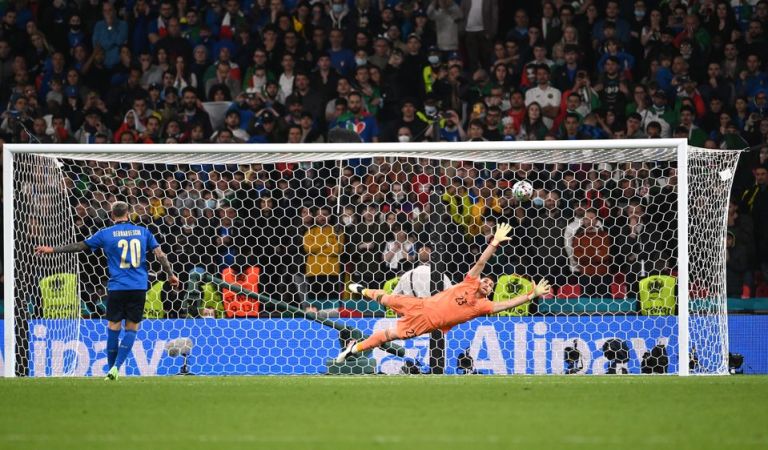
Italy reached the Euro 2020 final after edging Spain 4-2 on penalties following a compelling 1-1 draw after extra time on Tuesday, completing a remarkable revival after failing to qualify for the last World Cup.
Jorginho coolly rolled the decisive kick past Spain keeper Unai Simon in the semi-final at Wembley after Alvaro Morata had been thwarted by a fine save from Italy’s Gianluigi Donnarumma and Dani Olmo had blasted his effort over the bar.
Italy’s substitutes and coaching staff poured on to the pitch celebrate in front of their jubilant supporters behind the goal after Jorginho’s kick booked their place in Sunday’s final against either England or Denmark.
Roberto Mancini’s side took the lead on the hour through a sensational curler from Federico Chiesa to complete a sweeping counter-attack which began with keeper Donnarumma catching a Spain cross and rolling the ball out.
Morata, who had been dropped from the starting lineup after beginning all Spain’s previous games, equalised with 10 minutes left, calmly slotting into the bottom corner after bursting forward and exchanging a one-two with Olmo.
The goal was the latest twist in an eventful few weeks for Morata, who has been booed and even faced death threats from Spain supporters after a couple of poor showings, before redeeming himself with a crucial goal in the 5-3 win over Croatia.
But his tournament ended in dismay as his tame spotkick allowed Jorginho to clinch the win for Italy, continuing their sensational run, having earned a clean sweep of victories in the group stage and knocked out top-ranked Belgium in the quarter-finals.
“Spain were great, they have star players but we fought until the end and we did it,” said Italy’s Chiesa.
“When (Manuel) Locatelli missed the first penalty, everyone was calm saying we can do it and at the end our group helped us in the moment.”
Mancini’s side are looking to win the European Championship for the first time since 1968 and secure their first major trophy since winning the 2006 World Cup.
Italy avenged their shootout defeat to Spain in the Euro 2008 quarter-finals and their resounding defeat in the Euro 2012 final, and completed a second straight European Championship victory over the Spaniards after their 2-0 win in the last 16 at Euro 2016.
Spain coach Luis Enrique could take nothing away from his side.
“They only wanted to get to penalties in extra time but we could have played for half an hour more. We can be happy and proud with what we’ve seen. We kept trying to play our way,” he said.
“Everyone can feel proud of this team, we have many young players who have done things you couldn’t imagine at their age and we were a team from start to finish.”
SCORCHING ATMOSPHERE
Wembley’s capacity was expanded to 60,000 and although coronavirus restrictions prevented fans from travelling abroad, the two countries’ expatriate communities turned out to pack each end behind the goal and generate a scorching atmosphere, which heightened the sense of occasion between two titans of international football.
Italy made an intense start but Spain went on to dominate the first half, although Mancini’s side came closest to scoring when Emerson clipped the bar right before halftime.
The second half was even more intense as gaps opened up at either end and Spain captain Sergio Busquets missed a great chance when he sent a shot just over the crossbar.
Chiesa then broke the deadlock by pouncing on a loose ball after a last-ditch tackle by Aymeric Laporte and curling into the net to score his second goal in the tournament after also netting at Wembley against Austria.
Italy could have put the game to bed, but Simon saved twice from Domenico Berardi and Morata made them pay.
Spain looked more likely to find a winner in the remaining minutes and in extra time but could not manage a second shootout victory after prevailing against Switzerland in the quarter-finals.
Once again Morata was a crucial part of the story, but not in the way he would have wanted.
Almost all the perishable and packaged food items are packed in plastic or similar materials. We find the use of plastic almost everywhere, from crockery to furniture, containers, vehicles, utensils and every other area of domestic or commercial sector. Garbage bins and landfills lie flooded all over with plastic bags, items, damaged plastic waste, etc. The reason – The human race and civilization has developed drastically and with advancing technology, we seem to have incorporated plastic into almost every product today. Life seems inevitable without the indispensable use of plastic, its variants and products. But the flipside of plastic overuse has led to production of over a billion tonnes of disposable and non-biodegradable waste. As a result, we are left with an unending heap of waste with nowhere to properly get rid of, and it eventually ends up as dump waste in landfills, polluting and leaching harmful materials into the components of nature.
How is plastic formed/made?
Plastic is usually classified as synthetic and biobased plastic. While synthetic plastics are sourced from crude oil, natural gas or coal, biobased plastic is sourced from renewable products such as carbohydrates, vegetable and animal fats, etc. As compared to biobased plastic, synthetic plastic is easier and cheaper to produce. Synthetic plastic is made from natural gas, crude oil or coal. The first step in plastic manufacturing is extraction. After this, the refining and fractional distillation process takes place (for crude oil) wherein crude oil is purified and the required components for plastic making are separated out. These materials (like naphtha) are monomeric and are converted to polymer units through polymerization. Polymerization is a process in which monomers like ethylene, propylene, butylene are converted into high molecular weight hydrocarbons, or polymers. After this in compounding, various blends of materials are mixed by melting to make formulations for plastics. On the other hand, bioplastic is made from bioethanol, which is made from the fermentation of natural/biological sources.
The major problem today is handling non-biodegradable plastic waste. These plastics do not decompose to natural and environmentally safe products over time through biological processes. The extensive use of non-biodegradable plastic is due to its durability, versatility and economical cost. Due to this, a large amount of plastic waste is generated, leading to environmental pollution. Thus, plastic is discarded easily and its accumulation in the environment leads to numerous problems. Methods have been devised to dispose it off, but these methods either release toxic by-products into the environment or are costly to treat and recycle.
The probable solutions to reduce plastic pollution focus either on treatment and regeneration of old plastic waste or choosing alternatives to plastic products or finding technologies to produce decomposable and environment-friendly plastic. Some of the methods to do this is reduce plastic usage and disposal, reuse the material in a better way, recycle the existing waste and refuse or choose other materials over plastic items, rethink on ways and means to take corrective steps towards reducing plastic pollution, repair and make smart use of the existing waste, refurbish old plastic items, remanufacture instead of revamping into wholly new plastic items, repurpose or find better ways of pushing waste to sustainable usage and recover for the spoilage of nature due to the resulting pollution. Government and watch bodies all over the world are creating a lot of awareness about the wretched situation regarding handling of plastic waste and how severely it will revert back on us if we don’t act soon and take control of it, and are taking up initiatives to improve the current scenario. The use of bio-degradable plastics is in circulation nowadays. Bio-degradable plastics are degradable to water, carbon dioxide (or methane) and biomass under specified and controlled conditions. These may not be totally efficient solution systems to non-biodegradable plastics, but they are surely less polluting and more environmentally safe in comparison. A lot of research is building up on solutions to tackle plastic garbage and we surely hope that we might find co-habitable and eco-friendly methods to its use or replacement.











 Eduindex News
You must be logged in to post a comment.