

In today’s time everyone uses internet and all of us at least have one social media account. The Internet is massive. According to Broadband Search, the Internet connects 4.79 billion individuals, or over two-thirds of the world’s population. Of course, this number continues to rise and will continue to do so in the future. With so many individuals connected, we now live in an era when we have access to an infinite quantity of data.It is expanding at a breakneck speed that no one knows how many people use it.
When the internet was first developed, it was intended to be a futuristic environment where people could freely interact and learn. However, depending on which nation you are in, the internet may not be as accessible. Hence, censorship come into play. So what basically is internet censorship?
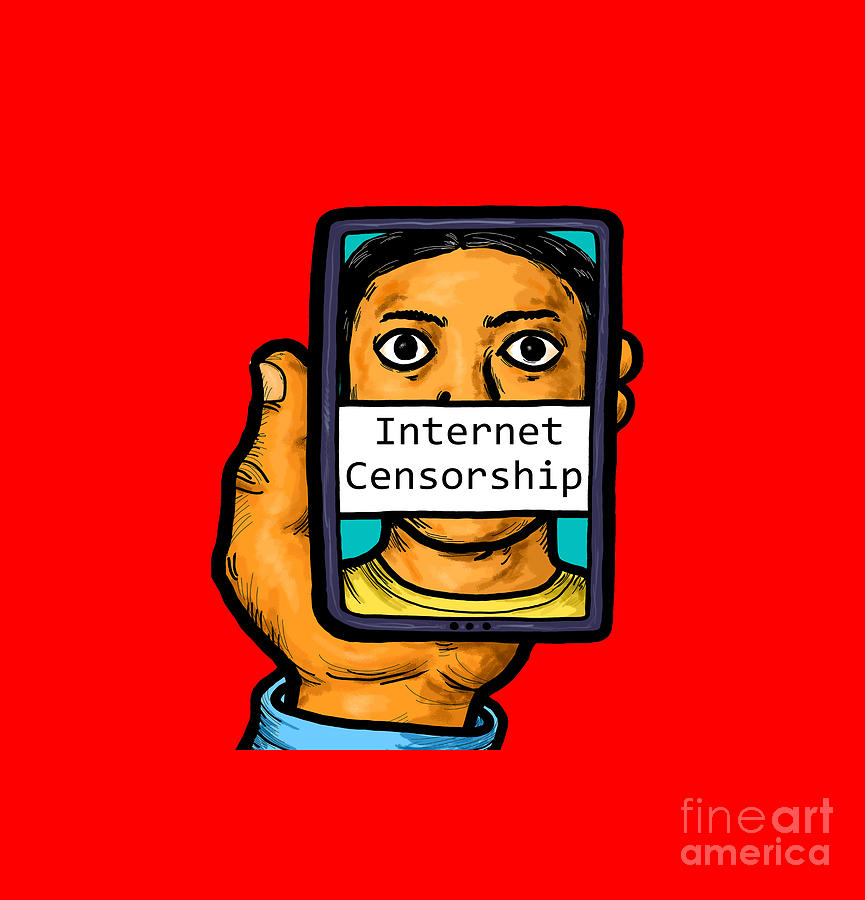
The practice of banning or censoring particular online information is known as internet censorship. Information which is often censored is porn, file shared through decentralized networks which we call peer-to-peer network, the media reports on events, websites from other countries, social media etc. Censorship can be carried out by institutions, governments, or any other entity that has power over the visibility of others on the internet. Internet censorship can be good or bad depending on the reason of why is it banned? When utilized for good, it may be used to restrict hate speech or other dangerous or sensitive content, block access to copyrighted information, and more. However, when utilized for the wrong reasons, it may be used to restrict public opinion, freedom of expression, and demonstrations.
Many nations have internet filtering laws, and they vary widely throughout the world. The majority of western continents, such as Europe and North America have no internet regulation compared to other nations where the extent of internet censorship is extensive. For instance, In the People’s Republic of China, internet censorship is among the most severe in the world. Many major websites are prohibited, including Google, Facebook, and Twitter. Unfortunately, the Chinese government utilizes its authority to suppress information about the government, oppress citizens, and prohibit any kind of media that criticizes the government.
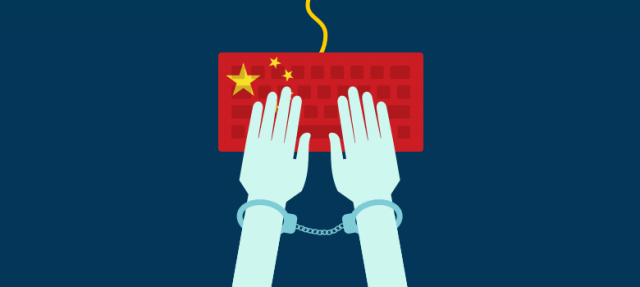
So likewise, it can be said that internet censorship has its own pros and cons. The pros and cons are highlighted in the table given below:-
| ADVANTAGES | DISADVANTAGES |
| 1. Internet censorship may be used to hunt down and shut down dangerous websites. Hence, it improves internet security. | 1.Freedom of expression is suppressed which is self-evident, and we’ve seen it in above instances that China and Myanmar are two countries that showcase how it has been abused. Simple remarks said against the government, or a favorite individual might result in imprisonment or detention. |
| 2. Internet filtering can be used to prevent users from accessing unlawful or dangerous information. Human trafficking, illicit narcotics, frightening films, and other disturbing content are examples of this. This is very useful for the younger readership. therefore, it allows us to browse safely. | 2. While limiting fake news and misleading information is a good thing, it may also be used to limit information. This is a common tactic employed by China to keep civilians from witnessing police violence and corruption. In other words, it has the ability to regulate information flow – sometimes excessively. And we all know that too much of everything is dangerous. |
| 3. We’ve all heard of false information. You can’t believe everything you read on the internet. We can fact-check sources and uncover incorrect information because of internet restrictions. | 3. it also limits economic opportunities because when a government approves legislation allowing Internet filtering, everyone must submit their material for approval before it can be published. That implies entrepreneurs would have to pitch their ideas to government officials with no assurance of being able to launch a firm which in turn leads to lower economic opportunity. |
Nowadays, Internet censorship is at the center of discussions around freedom of speech, as disinformation and foreign manipulation of social media have become key topics. The issue of internet censorship is divisive because it has two sides just like the coin has. One is for good and other one for evil. After studying how other nations manage digital censorship, I am certain that some kind of it should be implemented and placed in the hands of the appropriate authorities. After all, the Internet might be a very hazardous place if there are no rules in place but excess restriction is menacing.

 Eduindex
You must be logged in to post a comment.