

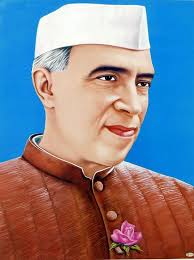
🌟Born in a wealthy, aristocratic Kashmir Brahmin family as the only son of Pandit Motilal Nehru, a flourishing law practitioner in Allahabad, Uttar Pradesh (UP), Jawaharlal received the best of education first in India and later in England where he attended at Harrow and Trinity colleges, Cambridge.Later still, he qualified as a barrister at the Inner Temple. After completing his higher studies Jawaharlal returned to India in 1912. Being a highly cultivated and sensitive individual, he was more interested in public affairs affairs rather than in practising law, specially so since his father was already deeply involved in Congress politics. In 1916,at the of 27,he was married to Kamala, daughter of Jawaharlal Kaul, another distinguished Kashmiri Brahmin descendant. After marriage,the couple went to Europe for their honeymoon. Soon a daughter was born to them, Indira Priyadharshini, who was to become India’s third prime Minister in 1967. Nehru’s family life was short-lived. As her husband plunged into politics and was hailed by the British in 1921, kamala also started participating in public life. Constant travel and rigiorous schedule made her I’ll and she had to spend several months in Switzerland for treatment. She returned to India in 1928, and again engaged herself in public life, often with her husband. When her health deteriorated,she had to go to Switzerland once again. But this time the journey was fatal. She succumbed to her illness on 28 February 1936,when Nehru was only 47 and Indira just 19. Nehru did not marry again. His life was totally dedicated to the National cause and to bring up his only daughter.
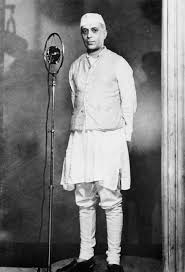
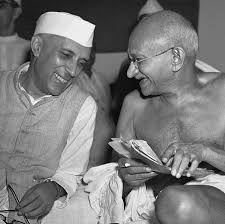
🌟Nehru’s political initiation took placeat his father’s home ‘Anandbhavan’ itself. Many Senior politicians visited Anadhabavan to hold discussions with Motilal Nehru. The young Jawaharlal got acquainted with many of them. He also came to have glimpses into the prevailing political situation. Later, he became more active in UP politics. The defining moment of Nehru’s political career came soon when he met Gandhiji in 1919. Gandhiji had already become a prominent leader of the nationalist movement. They got attracted to each other instantly. The occasion also was right. In Amristar, Punjab, the British troops had opened fire on a unarmed crowd on 13, April 1919 killing and wounding thousands of men and women. The whole nation was shocked. Innumerable protest meetings were held all over the country. Jawaharlal was among the leaders who organized protests. In the 1920 session of the Indian National Congress, Gandhiji put forward the idea of non-cooperation. Though there were differences of opinion on this novel political weapon, Nehru staunchly backed the idea. After coming into code contact with Gandhiji Tere was no respite for Nehru. In 1927, there were widespread demonstrations ad strikes against the Simon Commession sent to India by the British Government to study Constitutional reforms in the country. Jawaharlal who led the protests in Allahabad was beaten by the police. The opposition to the Simon Commession wa not only in respect of it’s terms of reference but aso to the fact that the commission had no Indian as a member. Nehru was asked to prepare an alternative ‘constitutio’ for India. This Nehru himself was elected as the President of ye Congress at the Lahore session. It as a rare honour for the young leader, for the previous session in 1928 was presided over by his father Motilal Nehru. It was also in this session that the Congress declared that complete independence was it’s avowed goal. The car the famous salt ‘satyagraha’ whereby Gandhiji exhorted people to extract salt from see water violating British ban on it. Nehru was arrested along with so many others for participating in the salt agitation. It was a series of agitations and jail terms that followed. The grand finale was the Quit India Movement when Gandhiji asked Britain and to leave India and let the Indians take over the country’s governance. Again, all the leaders including Nehru was arrested and jailed. Altogether Jawaharlal had to spend a period of more than decade and a half in British Indian jails on various occasions.
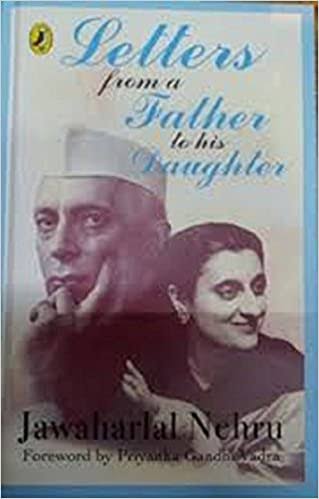
🌟But such harsh measures could not silence the man. Instead it brought to light another brilliant quality of the multifaceted personality – the writer in Nehru. He wrote some of the most historically reliable and literature- wise brilliant books during his prison days. ‘Dicovery of India’, ‘Glimpses of World History’, ‘Letters to His Daughter’, ‘An Autobiography’, Etc. are some of them. They are considered literary masterpiece in English language, and are in good demand even now.
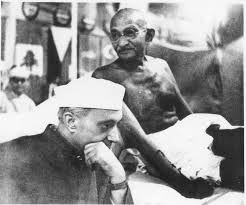
🌟By the end of the Second World war, Britain had recognized the need for settling the questions of India’s demand for Independence. The labour Government that came to power after the war sent in 1946 a Cabinet Mission under sir Stafford Crips to negotiate with Indian leaders on issues connected with the transfer of power. They spent weeks in India talking with political leaders of various shades. Nehru played a prominent role in these discussions as he had been once again elected President of the Congress Party. The talks were practically inconclusive as the two main political parties, the Indian National Congress and the Muslim League, could not agree to any formula put farward. Finally as a prelude to transfer of power Britain set up an interim Indian Government under the premiership of Jawaharlal Nehru. Though the Muslim League did not join at the beginning, they joined The Cabinet at a later stage, effectively making it a coalition ministry. The relationship of the two parties had been very complex and often antagonistic. British Government was partly responsible for their mutual hatred and suspicion. In their anxiety to prolong their rule in India, they had tacitly encouraged communal division between Hindus and Muslims, the dominant segments of the India’s population. As the political agitations for Independence intensified and on the British departure became imminent, the meeting grounds between the divided political foes became unbridgeable. British solution was division of the country into India and Pakistan a state to be newly carved out in the Indian subcontinent. Like his mentor, Mahatma Gandhi, Jawaharlal Nehru was also dead opposed to the idea of country’s partition. But the brief experience in the interim Cabinet with Muslim League during 1946 – 1947 convinced him that the partition could not be avoided. Vital portfolios were shared by rival parties and there were bickering almost daily on the decision-making process and on the allotment of funds to various administrative and development activities. The overcome this running agony and to make the administration a creative smooth affair, partition of the country was agreed upon. India became free on 15, August 1947 after Pakistan was granted freedom a day earlier. Jawaharlal Nehru was sworn in as the first prime Minister of free India when the clock struck the midnight hour that day. He was 58.
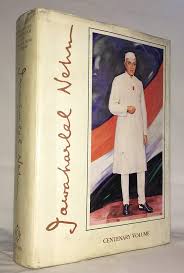
🌟As the Prime Minister of free India, Nehru’s task was stupendous. There was the immediate problem of communal mayhem and whole- scale slaughter following mass migration between the two countries. More vital was the agenda for long term development of the country. Congress Party had laid down broad outlines of National priorities. But it had to be drafted into policies and put into implementation. It was the towering personality of Jawaharlal Nehru that saved the situation. Mahatma Gandhi had already proclaimed him to be his political heir, and Nehru had a clear vision about the future of the country. He was an idealist ,but not a prisoner of ideologies. He was a top class intellectual,but he always respected the opinion of others of that decisions of national importance were made after due consultations.
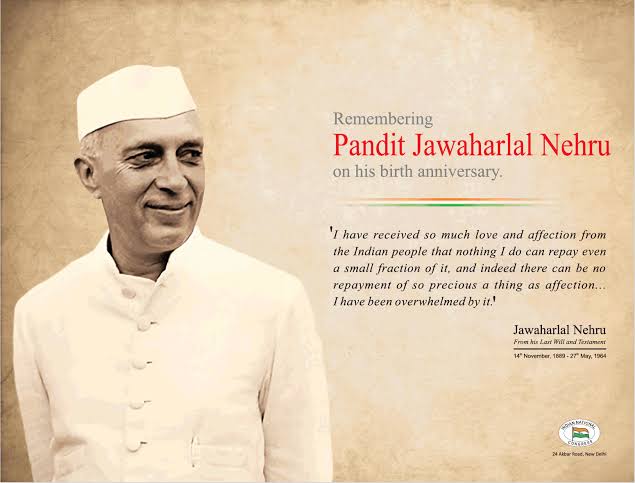
🌟Nehru envisaged a planned developed for the country. With this in view, he formed planning commission which was entrusted with the preparation of the First Five Year Plan. Though the first plan was a modest one, as the years passed the plans grew in size and ambition. One can stay with certainty that whatever growth the development India attained during the fifties and sixties had their origin in Nehru’s ideas on planned progress. Nehurvian developmental vision guided this vast country in it’s tryst with destiny.
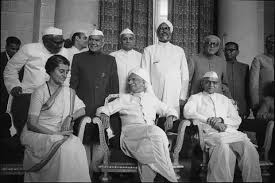
🌟Probably, Nehru’s more basic contribution was in the field of social and political developmenrs. India inherited a diversified and layered society and polity. Tendencies for internal feud and dissensions wre aplenty. Nehru’s inclusive Vision and policy of accommodation held this immense country together and helped it to evolve into a vibrant secular democracy. He remained accessible to everyone irrespective of religion, caste, region, language or other differences.
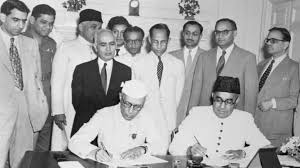
🌟Nehru’s achievement on the international arena was no less great. The post-war world was divided into a pro-socialist bloc of the contries under the USSR and a pro-capitalist bloc under the USA. In this divided world Nehru took an independent stand. Dubbed as non-alignment,the policy attracted many newly emergent, Independence countries of Asia, Africa and Latin America. A third bloc of nations soon got organized under the banner of Non-Alignment. Nehru was regarded a leader of the Non-Alignment Movement (NAM) along with President Nasser of Egypt, President Sukarno of Indonesia and President Tito of Yugoslavia. Peaceful coexistence was the pillar of his foreign policy. Non-Alignment policy helped India and other third World countries to exert an influence out of proportion to their Military or economic strength.
🌟At the domestic front, Jawaharlal showed great insight on Developmental priorities. He knew that heavy industries like steel, cement, ship building, locomotives, fertilizer, machine tools, etc. we’re the backbones for any meaningful industrialization. If heavy industries were not founded on strong basis, other industries would not follow. A similar principal was followed in the case of development of science and technology. The Council of Scientific Industrial Research (CSIR) was started as a nodal agency for promoting institutional level research efforts in various fields. As a result, some of the world class research laboratories grew up in the country. Steps were taken to establish atomic research centres and space research centres. University Grants Commission was founded for rapid expansion of higher education facilities in the country. Nehru Paid equal attention to the flowering of human talents in social sciences, arts and literature. Various national level councils such as Indian Council for Historical Research (ICHR), Indian Council for Social Science Research (ICSSR), etc. were set up to encourage pursuits of quality studies in social sciences. Various academic such as kendra Sathiya Academy, Lalith Kala Academy, National Book Trust, Children’s Books Trust, etc. also owe their existence to Nehru’s deep concern for the cultural, artistic and intellectual development of the people of this vast country.
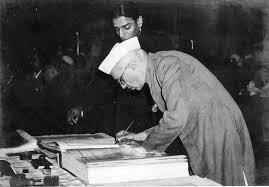
🌟Jawaharlal travelled widely both within the country and outside. In India there would be hardly a town or village where he had no visited at least once. Also, he carried India’s message across the world by visiting almost all important countries. In USA and the USSR, India’s leader was given reception that stunned even the host countries. For example,it was reported that when he visited New York in 1949, the welcome received by him was comparable only yo that received by General Mac Arthur, the 5- starred homecoming hero of the Pacific War.

🌟Nehru was a man of the masses. He was in his element when he moved with them or addressed them. He drew inspiration,even ideas from the lives of ordinary, faceless common people. For him they represented real India.

🌟A fairly long period of 16 years as head of the Government of a cast country with nearly one-sixth of world’s population should have been exhaustive and tiring for any leader. Yet, Nehru remained a relentless fighter for peace and development. However, in the summer of 1964 while he was on a hectic tour of the Himalayan districts, Jawaharlal fell ill. He was in the hospital for less than two weeks. Aged 75 ,he breathed his last peacefully on 27 May 1964 and bade good bye to his beloved people. As a token a affection to the departed leader, the ashes for his mortal body were apportioned and taken to various rivers and seacoasts across the country for immersion. Even in death, the titanic leader wanted to remain united with his country and it’s people. A simple mausoleum on the banks of the river Yamuna in Delhi was erected to preserve part of his mortal remains. It is apply named ‘Shantivan’, the adobe of peace or rather ‘peaceful woods’.

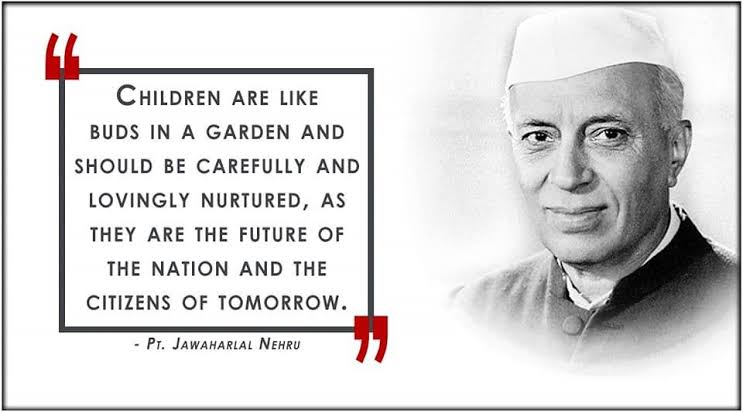
🌹Jawaharlal Nehru will be remembered by posterity as one of the greatest statemen that India has produced. His place in historyis assured as the supreme architect of modern India🌹.

 Eduindex
You must be logged in to post a comment.