

The term respiration refers to the exchange of oxygen and carbon dioxide between environment and cells of our body where organic nutrients are broken down enzymatically to release energy.
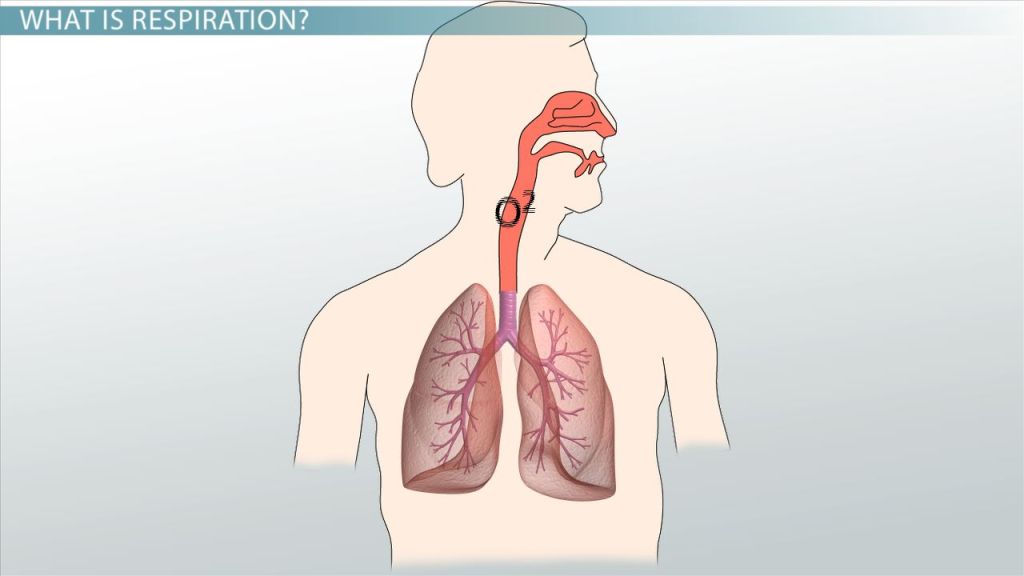
Respiratory functions
The five primary functions of the respiratory system are
✓To exchange O2 and CO2 Between the atmosphere and the blood.
✓To maintain homeostatic regulation of body pH.
✓To protect us from inhaled pathogens and pollutants.
✓To maintain the vocal cords for normal communication (vocalization).
✓To remove the heat produced during cellular respiration.
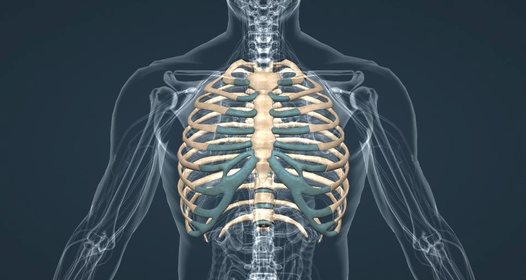
Respiratory organs in various organisms
Different animals have different organs for exchange of gases, depending upon their habitats and levels of organization. The amount of dissolved oxygen is very low in water compared to the amount of oxygen in the air. So the rate of breathing in aquatic organisms is much faster than land animals.
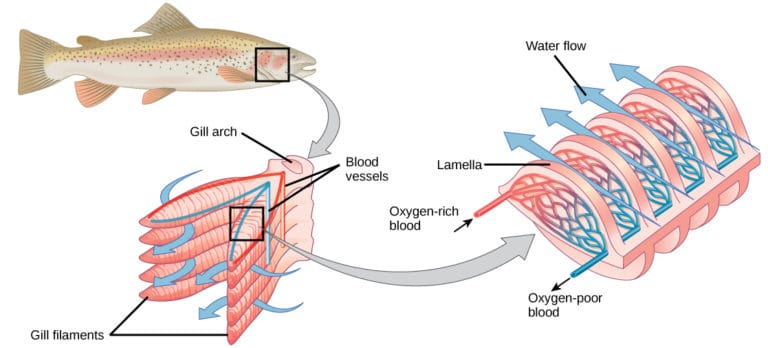
Characteristics features of respiratory surface
✓Surface area must be very large and richly supplied with blood vessels.
✓Should be extremely thin and kept moist.
✓Should be in direct contact with the environment.
✓Should be permeable to respiratory gases.
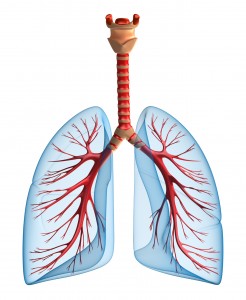
The steps involved in respiration are
✓The exchange of air between the atmosphere and the lungs.
✓The exchange of O2 and CO2 between the lungs and the blood.
✓Transport of O2 and CO2 by the blood.
✓Exchange of gases between the blood and the cells.
✓Uptake of O2 by the cells for various activities and the release of CO2.
Respiratory Volumes
Tidal Volume (TV)
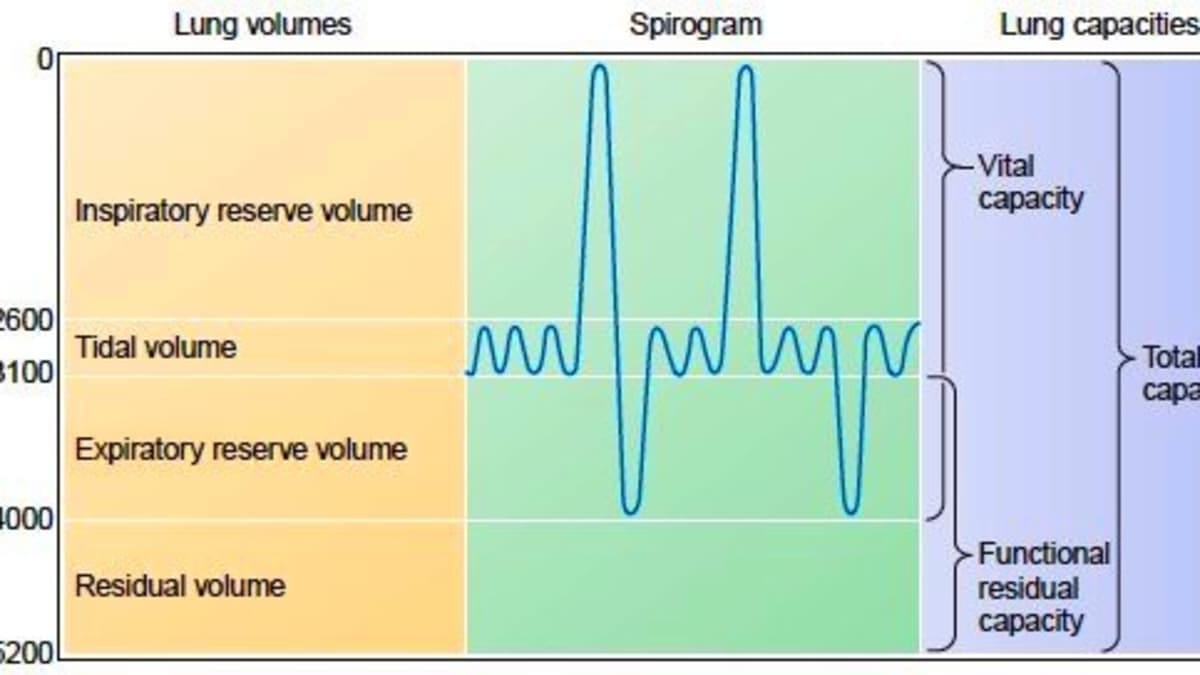
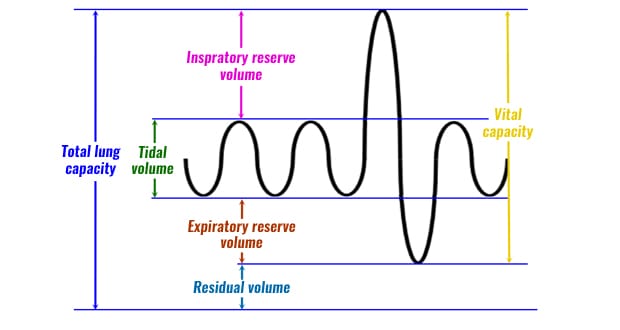
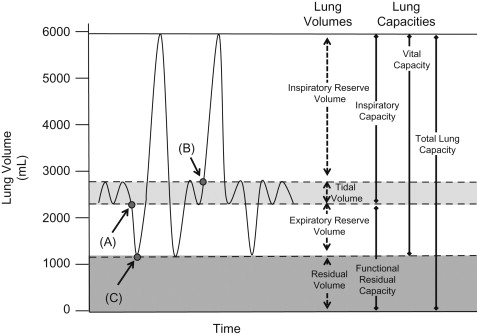
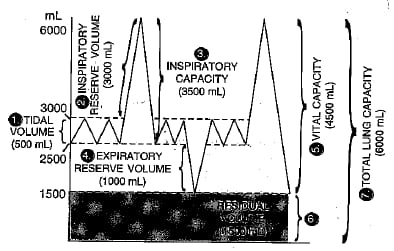
Tidal Volume is the amount of air inspired or expired with each normal breath. It is approximately 500 ml., i.e. a normal human adult can inspire or expire approximately 6000 to 8000 ml of air per minute. During vigorous exercise, the tidal volume is about 4-10 times higher.
Inspiratory Reserve Volume (IRV)
Additional volume of air a person can inspire by forceful inspiration is called Inspiration Reserve Volume. The normal value is 2500 – 3000 ml.
Expiratory Reserve Volume ( ERV)
Additional volume of air a person can forceful expiration is called Expiratory Reserve Volume. The normal value is 1000 – 1100 ml.
Residual Volume (RV)
The volume of air remaining in the lungs after a forceful expiration. It is approximately 1100 – 1200 ml.

Respiratory Capacities
Vital Capacity (VC)
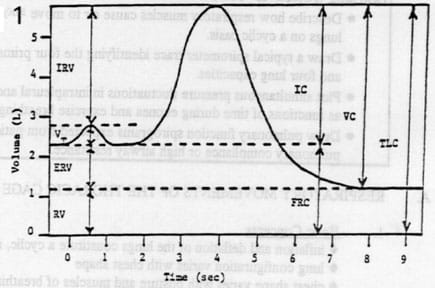
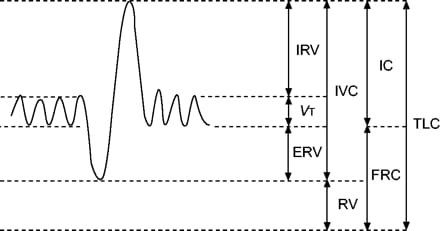
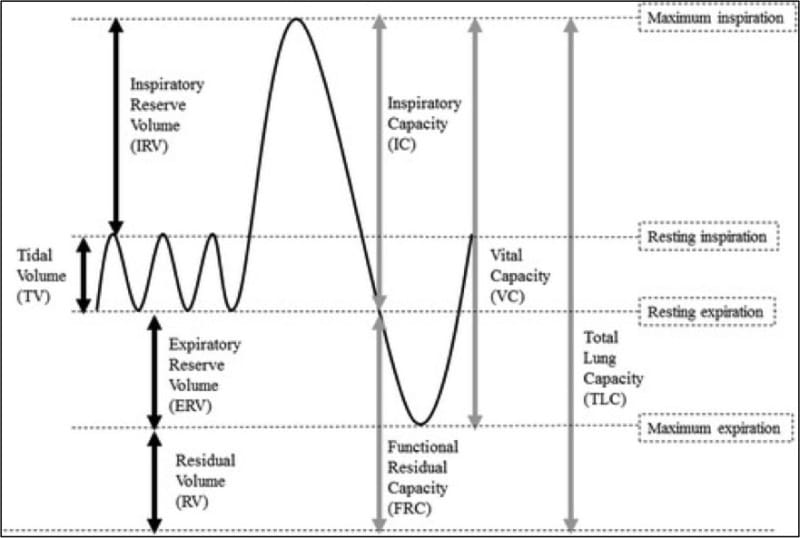
The maximum volume of air that can be moved out during a single breath following a maximal inspiration. A person first inspires maximally then expires maximally. VC = ERV + TV + IRV
Inspiratory Capacity (IC)
The total volume of air a person can inhale after normal expiration. It includes tidal volume and inspiratory reserve volume. IC = TV + IRV
Expiratory Capacity (EC)
The total volume of air a person can exhale after normal inspiration. It includes tidal volume and expiratory reserve volume. EC = TV + ERV
Total Lung Capacity (TLC)
The total volume of air which the lungs can accommodate after forced inspiration is called Total Lung Capacity. This includes the vital capacity and the residual volume. It is approximately 6000ml. TLC = VC + RV
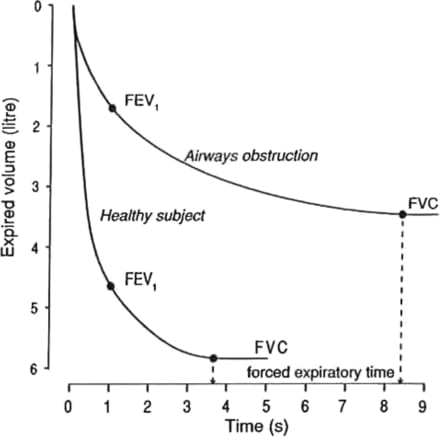
Minute Respiratory Volume
The amount of air that moves into the respiratory passage per minute is called minute respiratory volume.
Normal TV = 500ml ; Normal respiratory rate = 12 times / minute
Therefore, minute respiratory volume = 6 Litres/minute (for a normal healthy man).
Dead Space
Some of the inspired air never reaches the gas exchange areas but fills the respiratory passages where exchange of gases does not occur. This air space is called dead space.
Dead Space is not involved in gaseous exchange. It amounts to approximately 150ml.
Exercise increases the rate and depth of breathing and supplies extra oxygen to the muscles and removes more CO2 from the tissues.

 Eduindex
You must be logged in to post a comment.