LEONEL ANDRÉS MESSI also known as LEO MESSI, is an Argentine Professional footballer who plays as a forward and captain the Argentine National team. He is currently a free agent, having played all his professional career for La Liga club Barcelona, whom he captained from 2018 to 2021. Messi has won a record six European Golden Shoes, six Ballon d’Or awards. He spent his entire professional career with Barcelona FC.
Early life:
Messi was born on June 24, 1987. Messi was the youngest player ever to play for Barcelona. Messi was born in Rosario, Argentina and move to Spain at the age of 13 where he was offered the chance to train at FC Barcelona’s youth academy.
FOOTBALL LIFE:
At a young age, Messi was diagnosed with hormone deficiency which restricted his growth. Shorter than most of the kid at the age, Messi showed great talent and skills which put him in front of many organization; one of which was Barcelona. However, Messi was given a trial with Barcelona where he impressed the coach. Barcelona offered Messi a contract which included Barcelona paying for Messi’s treatment in Spain.
During the 2003-04 season, his fourth with Barcelona, Messi rapidly progressed through the club’s ranks, debuting for a record five youth teams in a single campaign. Messi was the one of several youth players called up to strengthen a depleted first team during the international break.
On 24 June 2005, his 18th birthday, Messi signed his first contract as a senior team player. It made him a Barcelona player until 2010, two years less than his previous contract, but his buyout clause increased to €150 million.
His team’s prosperity continued into the second half of 2009, as Barcelona become the first club to achieve the sextuple, winning six top-tier trophies in a single year. Barcelona won the FIFA Club World Cup against Estudiantes De La Plata on 19th December , with Messi Scoring the winning 2-1 goal with his chest. At 22 Years old, Messi won the Ballon d’Or and the FIFA World Player Of The Year.
As Messi maintained his goalscoring form into the second half of the season, the year 2012 saw him break several longstanding records. On 7 March, two weeks after scoring four goals in a league fixture against Valencia, he scored five times in a Champions League last 16-round match against Bayer Leverkusen, an unprecedented achievement in the history of the competition.
As Messi evolved into one of the best players in the world, he secured a place in Alfio Basile starting line-up, as part of a team considered favourites to win the 2007 Copa America, held in Venezuela. He set up the game-winning goal of their 4–1 victory over the United States in the opening match, before winning a penalty that led to the game-tying first strike of their 4–2 win in the next match against Colombia.
Following on from their poor qualification campaign, salvaged by Messi, expectations were not high going into the 2018 World Cup, with the team, without an injured Messi, losing 6–1 to Spain in March 2018. Prior to Argentina’s opener, there was speculation in the media over whether this would be Messi’s final World Cup. In the team’s opening group match against Iceland on 16 June, Messi missed a potential match-winning penalty in an eventual 1–1 draw. In Argentina’s second game of the 2018 World Cup on 21 June, the team lost 3–0 to Croatia. Post match the Argentina coach Jorge Sampaoli spoke of the lack of quality in the team surrounding Messi, “the reality of the Argentina squad clouds his [Messi’s] brilliance”.
###CONGRATULATION FOR YOUR FIRST INTERNATIONAL CUP#####
Artificial Intelligence means analytics, problem solving and autonomous automation based on data, knowledge and experience. AI is an intelligent entity that is created by humans. It is capable of performing tasks intelligently without being explicitly instructed to do so. The present day pervading of AI, given how little it is noticed in everyday life, suggests that in important ways this objective has been reached. We are all familiar with applications like Google Assistant, Siri, Alexa, YouTube and so on. All these applications use AI for their functioning.
The purpose of Artificial Intelligence is shared by all the different tools and techniques that we’ve invented over the past thousand years – to simplify human effort, and to help us make better decisions. Artificial Intelligence has also been touted as our Final Invention, a creation that would invent ground-breaking tools and services that would exponentially change how we lead our lives, by hopefully removing strife, inequality and human suffering. That’s all in the far future though – we’re still a long way from those kinds of outcomes. Currently, Artificial Intelligence is being used mostly by companies to improve their process efficiencies, automate resource-heavy tasks, and to make business predictions based on hard data rather than gut feelings. As all technology that has come before this, the research and development costs need to be subsidised by corporations and government agencies before it becomes accessible to everyday laymen.
There’s no doubt in the fact that technology has made our life better. From music recommendations, map directions, mobile banking to fraud prevention, AI and other technologies have taken over. Plus point of AI is that it’s of more convenience and makes life easier. There’s a fine line between advancement and destruction. There’s always two sides to a coin, and that is the case with AI as well. The advantages of Artificial Intelligence are as follows:
Reduction in human error
Available 24×7
Helps in repetitive work
Digital assistance
Faster decisions
Rational Decision Maker
Medical applications
Improves Security
Efficient Communication
Although there are several speculations on AI being dangerous, at the moment, we cannot say that AI is not at all dangerous even though it has benefited our lives in several ways. This can be a boon as well as a bane to the society. As said by Stephen Hawking “either the best or the worst thing ever to happen to humanity.” Other than the fear of evil robots taking our space, the existing AI has also been under the radar of human fear. Let us look at some of the reasons:
Complete relying on AI is not safe. Here one can personalize a device but not their data. Hence, every possibility arises of leaking information. Their information can be misused.
Wrong data input may cause misinterpretation leading to losses.
It may lead to diminution of jobs in industries. The responsibility of handling will be in single person’s hand. AI has faced the question of taking up jobs ever since it came into existence. AI has taken up a lot of tasks that were earlier carried out by people.
The dangerous use of AI can be weaponry. AI leaders said that these threaten to become the third revolution in warfare.
The fear of AI reaching in the wrong hands is also prevalent. Misusing technological advancements have been there in human history. AI cannot explain why it arrived at an answer. It cannot reason nor think rationally. Once it archives the human intelligence, humans might use them to cause a negative impact. AI’s black box has been in discussions for a long time. This caters to another fear – fear of the unknown.
Advances in Artificial Intelligence will reach the superintelligence stage in a couple of years. However, starting a new technology transition has begun, and most businesses are incorporating this unique fixture. It has not only helped with better sales and forecasts but also gives companies new growth opportunities.
AI comes with its own ethical and security issues. It causes privacy concerns to businesses, which needs to be mitigated if you want the user to stay within the company for a while. You will also need to work on job reallocation so that the people who have engaged with you for years can stay happy and engaged. The idea is to transform the future of AI without harming the goodwill of loyal people. It would help if you also introduced the overall culture and organisation-level changes to build a robust AI-induced enterprise. There is no doubt that the Artificial Intelligence future is exciting and extremely promising.
According to experts, a 90-year-old Belgian woman who died after contracting Covid-19 was infected both with the Alpha and Beta forms of the coronavirus at the same time.
After a series of falls in March, the unvaccinated lady was hospitalised to the OLV hospital in Aalst and tested positive for Covid-19 the same day.
While her oxygen levels were initially adequate, her health soon worsened and she died five days later.
She tested positive for both the Alpha strain and the Beta variant.
“Both these variants were circulating in Belgium at the time, so it is likely that the lady was co-infected with different viruses from two different people,” said molecular biologist Anne Vankeerberghen from the OLV hospital who led the research.
“Unfortunately we don’t know how she became infected.”
Vankeerberghen stated it was impossible to determine whether the co-infection contributed to the patient’s rapid decline.
The study, which has not yet been published in a medical journal, will be presented at a European symposium on microbiology and infectious illnesses.
While Vankeerberghen stated that there had been “no other reported examples” of comparable co-infections, she also stated that the “phenomenon is probably underestimated.”
This was due to a lack of testing for potentially harmful variations, she explained, urging a greater use of rapid PCR testing to detect known variants.
Scientists in Brazil claimed in January that two patients had been infected with two different strains of the coronavirus at the same time, but the work has yet to be published in a scholarly publication.
According to Lawrence Young, a virologist and professor of molecular oncology at the University of Warwick, finding single individual infected with several strains was not surprising.
“This study does emphasise the need for more research to establish whether infection with numerous variations of concern alters the clinical course of Covid-19 and whether this in any way limits immunisation efficacy,” he added.
“Extinction is the process of evolution that leads to the dissappearence of a population or species.”
When a species becomes extinct, all its genetic heritage is lost. The species evolve into new species in order to adapt to the environmental changes or changes in the genetic heritage.Over 99% of all the species that once lived on the Earth amounting to over five billion species are estimated to be extinct. As per the estimations on the number of current species, a range from 10 -14 million, of which more than 1.2 million have been studied and more than 86% have not yet been discovered.This could happen naturally due to a change in the climate or because of human activities like overhunting or due to the destruction of habitat.
Despite the uncertainties, extinction has three major elements:
For species collectively, extinction is a probability if the killing stress is so rare beyond their experience and therefore outside the reach of natural selection.
The mass extinctions would pave way for the major restructuring of the biosphere where a few successful groups are eliminated allowing minor groups to expand.
In a few cases, there is evidence that extinction is selectively argued by Darwin. It has been made impossible to predict which species are going to be the next victim of an extinction event
1.THE DODO:
The Dodo was a flightless bird native to Mauritius whose population began dwindling and eventually became extinct over the short course of a century when sailors began arriving on the East African island nation.The last of the Dodos were seen in the 1660s and because there really wasn’t an emphasis on specimen preservation, many of the remaining fossils were lost or destroyed.
Even though the Dodo went extinct more than 150 years ago, their story is important. People didn’t believe that God would take away a creature’s existence after having gone through the trouble of creating them, so no one was truly alarmed at their disappearance. This led people to believe that there were more Dodos tucked away somewhere in nature and so, specimens weren’t handled as carefully as they should have been.In fact, Dodo specimen damage and loss was common in 17th and 18th centuries.
Cause of Extinction:
popular belief has sailors hunting and eating the Dodo to the point of extinction, but it’s more likely that the rats (and other animals) the sailors brought with them caused the Dodo’s decline. The BBC reports that rats likely ate dodo eggs and other animals outcompeted the bird for food sources.
2.SCHOMBURGSK’S DEER:
Schomburgk’s deer was native to Thailand and was named after German-born explorer, Sir Robert H. Schomburgk, who was knighted in 1844.Some scientists believe that there may still be a few of these deer in the wild even though they were officially declared extinct in 2006 with the last known deer reportedly killed in captivity in 1938.
Cause of Extinction:
Besides humans, Schomburgk’s deer were hunted by native tigers and leopards. Today, we only know of one mounted deer head which resides in Paris’ Muséum National d’Histoire Natural.
SUMATRAN RHINO:
The last Sumatran rhino in Malaysia passed away in November, 2019, making the extremely rare species locally extinct. The rhino was named Iman and she died due to cancer.The death of Iman made the species critically endangered, with less than 80 Sumatran rhinos left all over the world, primarily in Indonesia. Currently, Sumatran rhinos are the smallest rhino species in the world.
Cause of Extinction:
Iman, the last Sumatran rhino left in Malaysia, died over the weekend after a long battle with uterine tumors.
The fate of this critically endangered species now lies with a tiny population of no more than 80 individuals in Indonesia, where captive breeding has yielded some success in recent years.
The critically endangered species was decimated by poaching and habitat loss in the past, but today observers say the small and fragmented nature of their populations, and a correspondingly low birthrate, is the biggest threat to their survival. Few of the remaining populations left in the wild are believed to be large enough to support natural reproduction, and isolated individuals have been found to be prone to developing reproductive pathologies like the uterine tumors suffered by Iman(rhino).
INDIAN CHEETAH :
In a report by ANI in September, 2019, it was stated that the Indian Cheetah, along with three other species is now extinct in India due to desertification. The numbers dropped down to 150 and eventually the species died out.This intense desertification was caused due to the excessive use of pesticides and heavy industrialisation in agricultural areas. The report also showed how this desertification had a negative impact on the entire food chain.
Cause of Extinction:
Trapping of large numbers of adult indian cheetah’s, who had already learned hunting skills from wild mothers, for assisting in royal hunts is said to be another major cause of the species rapid decline in india as they never bred in captivity with only one record of a litter ever.The animal is believed to have disappeared from india when Maharaja Ramanuj Pratap Singh Deo of Koriya hunted and shot the last three recorded Asiatic cheetahs in india in 1947. It was declared extinct by the government in 1952.
INDOCHINESE TIGER :
This species was mainly found in southeast Asia before it became critically endangered. Its numbers reduced to 1500 and then eventually the species became extinct.The species is completely extinct in the wild but there are a few tigers that are living in captivity. It is completely wiped out in Cambodia and the largest number of tigers are now residing in Thailand. The main reason for its extinction is hunting and poaching.
According to a lot of media and UN reports, the world is on track to lose two-thirds of its wildlife population by the end of 2020. Even common wildlife species like Koala bears are now prone to extinction because of the Australian bushfires, which happened due to climate change in the area.
Cause of Extinction:
According to the World Wildlife Fund (WWF), indochinese tiger numbers are in shocking decline across its range because of shrinking habitats, expanding human populations, poaching, and illegal wildlife trade. Vital tiger populations are also depleted by a growing commercial demand for wild meat in restaurants
Hunting for trophies, poaching by farmers, and the growing demand for tiger bones in Oriental medicine are key factors for the indochinese tiger decline. Habitat loss due to population growth is also a major concern.It’s believed there are around 350 indochinese tiger leftin the world. This low population is due to poaching and habitat loss.
CATARINA PUPFISH :
Catarina pupfish is a freshwater fish found in Mexico. The species got extinct when their natural habitat got disrupted due to groundwater extraction.The fish was living in the wild till 1994, but due to the rapid loss, the species was moved to captivity. It survived till 2012 and then got completely extinct in 2019.
Cause of Extinction:
The species got extinct when their natural habitat got disrupted due to groundwater extraction. The fish was living in the wild till 1994, but due to the rapid loss, the species was moved to captivity. It survived till 2012 and then got completely extinct in 2019.
Habitat loss caused the extinction of the Catarina pupfish, and it is threatening thousands of species. Humans have modified more than 70% of terrestrial and 60% of marine habitats. The most recent report from the UN estimates that one million animal and plant species are facing extinction in the next few decades as a result of habitat loss and degradation, overexploitation, poaching, climate change, pollution, and invasive species.
PYRENEAN IBEX :
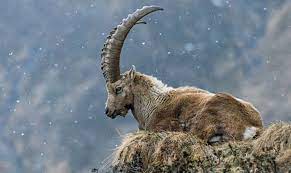
The Pyrenean ibex was a type of goat abundant across the Pyrenees mountains. It declined over two centuries from hunting, disease and inability to compete with other species. The last was a female called Celia, who died in 2000. In a first, it was declared “unextinct”in 2003 when a cloned female ibex was born alive, but died several minutes later from lung defects.The Pyrenean ibex, a subspecies of the Spanish ibex, is one more recently extinct animals.
Cause of Extinction:
The ibex, native to the Pyrenees Mountains on France and Spain’s border, was declared extinct in 2000. During medieval times, the Pyrenean ibex was abundant, but their population decreased due to hunting. 21 years ago this month, a wild goat species went extinct — and kicked off a bizarre but ultimately hopeful scientific adventure. The pyrenean ibex became extinct in January of 2000, when a falling tree landed on the last surviving member of the species.
SPLENDID POISON FROG :
In 2020, the IUCN (International Union for Conservation of Nature) declared that the splendid poison frog was extinct. Sadly, that makes the splendid poison frog one of the most recently extinct animals on the planet.The small red frog, a species of poison dart frog, lived in the neo-tropical forests of Panama in the mountain ranges adjacent to Costa Rica. Common names of the splendid poison frog in Spanish are Rana venenosa and Sapito venenoso
Cause of Extinction:
Deforestation and habitat degradation are the primary threats to the splendid poison frog. Human activities such as logging, expansion of urban and suburban areas, and the construction and use of rail lines have had a significant impact on population numbers.The splendid poison frog or splendid poison-arrow frog (Oophaga speciosa) was a species of poison dart frog endemic to the eastern end of Cordillera de Talamanca, western Panama.
SPIX’S MACAW:
The Spix’s macaw is a recently extinct animal from near the Rio São Francisco in Bahia, Brazil. In 2019, the bird known as the “Little Blue Macaw” because of its vibrant blue feathers was declared extinct in the wild. Fortunately, experts have documented about 160 Spix’s macaws in captivity. Scientists and the Brazilian government are working on a planned release of the parrots to the wild in 2021.
The species was popularized in 2011 when the animated movie “Rio” depicted a cartoon characterization of the breed. Early scientists named the species for the German naturalist who documented them in 1819.
Cause of Extinction:
Though it perished in 2000, some 60-80 are still being bred in captivity. 5. While they were driven to extinction by human factors like the building of dams and trapping for trade, there is still hope to clone and revive these birds in wild populations.Since the year 2000, the species has been considered extinct in the wild. In addition to illegal trafficking, the destruction of habitat due to human influences was the main reason for the extinction of the species.
Habitat destruction and illegal trapping and trade are what caused the wild Spix’s macaw’s demise.A female spix’s macaw released from captivity at the site in 1995 was killed by collision with a power line after seven weeks. The last wild male disappeared from the site in October 2000; his disappearance was thought to have marked the extinction of this species in the wild.
PASSENGER PIGEON :
Although the passenger pigeon went extinct over 100 years ago, you could say that it is one of the recently extinct animals in relation to the earth’s age. The passenger pigeon’s abundant numbers made the species seem ineradicable, but it became the poster child of animal conservationist groups after its demise. Most ecologists estimate that passenger pigeons numbered in the millions when Europeans began settling North America. Eyewitnesses reported that skies would darken when flocks flew overhead on sunny days.
Cause of Extinction:
Passenger pigeons vanished after farmers cleared their habitat and hunters netted, shot and poisoned them to the point of extinction. The extermination of the passenger pigeon was part of the motivation for the birth of 20th century conservation. The last known bird died in the Cincinnati Zoo in 1914.People ate passenger pigeon in huge amounts, but they were also killed because they were perceived as a threat to agriculture. As Europeans migrated across North America, they thinned out and eliminated the large forests that the pigeons depended on.The last passenger pigeon died in the Cincinnati Zoo in 1914
THE QUAGGA :
Another of the relatively recently extinct animals is the Quagga. The odd-looking animal resembled a cross between a stout pony and a zebra. With the zebra’s dazzling stripes across its head, mane, and neck, and the chestnut colouring of a pony or horse throughout the rest of its body, the quagga was hunted to extinction in the late 1800s by European settlers.
The somewhat recently extinct animal was native to South Africa and was a subspecies of the plains Zebra. Named by the African tribe of Hottentots for its distinctive ‘kwa-ha-ha’ call, quagga is an onomatopoeia. The last animal died in the Amsterdam Zoo in 1883.Interestingly, scientists of the Quagga project are using selective breeding of zebras in an attempt to revive the extinct quagga.
Cause of Extinction:
The Quagga’s extinction is generally attributed to the “ruthless hunting”, and even “planned extermination” by colonists. Wild grass eating animals such as the Quagga were perceived by the settlers as competitors for their sheep, goats and other livestock.Quagg’s extinction a Nasty Surprise. 1883: The quagga goes extinct when the last of these South African zebras dies at the Amsterdam Zoo.
MAMMOTH:
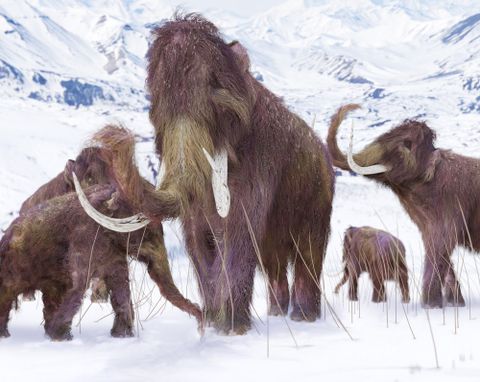
Woolly mammoths lived during the last ice age, and they may have died off when the weather became warmer and their food supply changed. Humans may also be partly responsible for their disappearance due to hunting. Although the word “mammoth” has come to mean “huge,” woolly mammoths were probably about the size of africian elephants. Their ears were smaller than those of today’s elephants. This was probably an adaptation to the cold climate that kept their ears closer to their heads and kept them warmer. Their tusks were very long, about 15 feet (5 meters) and were used for fighting and digging in the deep snow. Mammoths were herbivores and ate mostly grass, but also ate other types of plants and flowers.
Cause of Extinction:
Most woolly mammoths went extinct roughly 10,000 years ago amid a warming climate and widespread human hunting.They pinpointed a collection of genetic mutations in the Wrangel Island mammoth and synthesized these genes in the laboratory to test their functionality.While woolly mammoths were once plentiful across the northern hemisphere, they actually went extinct in two separate events. The first wave of mammoth extinction occurred on the heels of the last ice age and global warming led to the loss of their habitat, around 10,500 years ago.
REASONS FOR EXTINCTION OF SPECIES:
The important causes of extinction include:
Asteroid Strikes:
A meteor strike on the Yucatan peninsula in Mexico led to the disappearance of dinosaurs millions of years ago. Most of the mass extinctions, such as KT-extinction or Permian-Triassic extinction were caused due to such events. The astronomers constantly keep an eye on comets or meteors that could lead to the end of human civilization.
Climate Change:
Climate change is yet another factor that could destroy terrestrial organisms. During the end of the last ice-age, most of the megafauna were unable to adapt to the changing warm temperatures. They died due to lack of food and hunting by early humans. Even modern civilization is stepping towards the threat of extinction due to global warming.
Disease:
Various epidemics had been the cause of extinction of a large population of humans and animals on earth. The Black Death wiped out one-third of the European population in the Middle Ages.
Loss of habitat:
Every animal has its own comfort zone where it can breed and raise its young ones. For eg., a bird is comfortable only on the branch of a tree. Due to the expansion of human civilization and industrialization, the forests have been destroyed which are an abode to most of the animals. Due to lack of space and eventually food, the populations of many organisms have been minimised.
Better Adapted Competition:
The better-adapted populations win over the ones that lag behind. For eg., the pre-historic mammals were better adapted than the dinosaurs. The ones which are well-adapted survive, while the others become extinct.
Pollution:
The pollution from the industries and vehicles have led to a drastic change in the oxygen levels in the atmosphere as well as water. This has led to the extinction of most of the aquatic as well as terrestrial species.
Forster began writing A Passage to India in 1913, just after his first visit in India. The novel was not revised and completed, however, until well after his second stay in India in 1921, when he served as a secretary to the Maharajah of Dewas State Senior. Published in 1924, A Passage to India examines the racial misunderstandings and cultural hypocrisies that characterized the complex interactions between Indians and the English toward the end of the British occupation of India.
When Dr Aziz is introduced to us, we don’t see him. We see the bicycle before it hits the balcony. We know that he is “all animation” without being told exactly how he is being “animated” And we hear him calling out his friend’s name before we find out his name, before we see his face, or get to know a single detail about his appearance or background.
The opening scene is just a wind-up for the rest of the novel, as it turns out. Impulsive, talkative, gregarious, spontaneously affectionate, Aziz is the Energizer Bunny of the story, rushing into conversations and situations without really thinking too hard about what he’s saying or doing. And given the fact that he’s so extroverted, it would probably be easy to assemble his profile on a dating site: widowed doctor, father of three, seeking casual relationship or companionship with attractive female. Hobbies include riding horses, waxing nostalgic about the Mughal Empire, and reading and writing Urdu poetry. Peeves include trekking to dark and mysterious caves.
But despite the fact that Aziz talks so much, or perhaps because of the fact Aziz talks so much one might find it hard to get a handle on who he really is. His behaviour can seem so contradictory. Aziz can be incredibly friendly and out going in one moment, and suddenly turn suspicious and rather nasty the next. For example, Aziz seems to like Fielding. Yet he is so ready to believe the rumor that Fielding had an affair with Adela and that Fielding actually plotted to keep Aziz from suing Adela so that Fielding and Adela could enjoy her money together. It’s also hard to reconcile the high, romantic idealism that can be hard to stomach, as when he makes plans to see prostitutes.
Our difficulties with Aziz may have something to do with the fact that we learn everything about Aziz through the filter of a narrative that is dotted with the racial stereotype of the “Oriental” Of course, the narrative of A Passage to India isn’t as racist as the Turtons or McBryde; it’s enlightened enough to satirize these characters. But even when it’s championing the Oriental/Indian, it still can sound offensive. This is usually signaled when the narrator suddenly stops talking about Aziz the individual, and leaps to all “Orientals.” Thus, we learn, for example that “suspicion in the oriental is a sort malignant just or, a mental malady, that makes him self-conscious and unfriendly suddenly.” Instead of Aziz just being a suspicious guy, the novel wants us to think that Aziz is naturally suspicious because he’s Indian.
Be that as it may, the novel represents a sincere attempt to inhabit Aziz’s mind, to show the effects of living as an Indian under British rule, and to show how the racism of a Turton or Callendar prevent them from recognizing not only Aziz’s innocence, but also the validity of Indians’ appeal for an independent nation. Perhaps at the end the novel gives us the tools to critically examine itself so that we might finally read Aziz’s last gesture to Adela not as the illogical, inconsistent Oriental, but as the expression of a generous spirit.
While displaying zero tolerance for those involved in black marketing of remedesivir, the Madhya Pradesh High Court has in a brief, brilliant, bold and balanced judgment titled Sonu Bairwa Vs State of MP & Ors in WP No. 9878/2021 delivered on July 7, 2021 has upheld the detention of a man accused of black marketing of Remedesivir injections amid Covid-19 pandemic under the National Security Act, 1980. A Division Bench of Justice Sujoy Paul and Justice Anil Verma of Indore Bench of Madhya Pradesh High Court held that black marketing of remdesivir injection has direct impact on “public order”, and the petitioner-accused if released, could indulge into same activity because the scarcity of remdesivir is still there. Without mincing any words, the Division Bench held that, “Blackmarketing of a drug like remedesivir in days of extreme crisis is certainly such an ugly act and fact which can very well be a reason for invoking Section 3 of NSA Act against the petitioner by District Magistrate.”
To start with, Justice Sujoy Paul who has authored this cogent, commendable, courageous, calibrated and convincing judgment for a Division Bench of Indore Bench of Madhya Pradesh High Court comprising of himself and Justice Anil Verma that was delivered on July 7, 2021 first and foremost puts forth in para 1 that, “The petitioner has invoked the jurisdiction of this Court under Article 226 of the Constitution to assail the order dated 17/5/2021 whereby the District Magistrate in exercise of power u/S.3(2) read with (3) of National Security Act, 1980 (for short “NSA Act”) detained the petitioner.”
To put things in perspective, the Division Bench then discloses in para 2 that, “The petitioner was detained by District Magistrate by stating that the petitioner indulged in black marketing of Remedesivir injections. Two such injections were recovered from him. In a situation when highest numbers of Covid patients were there at Indore, the act of petitioner has caused serious threat to the ‘public order’. In view of aforesaid conduct, the detention order was passed and the grounds therefore were supplied to him.”
While citing the relevant case law, the Bench opines in para 13 that, “The interesting conundrum relating to liberty and regarding extent of liberty and aspect of curtailment thereof is wonderfully explained by K.K. Mathew, J. in Smt. Indira Nehru Gandhi vs. Raj Narain (1975 (Supp.) SCC 1):-
“the major problem of human society is to combine that degree of liberty without which law is tyranny with that degree of law without which liberty becomes licence; and the difficulty has been to discover the practical means of achieving this grand objective and to find the opportunity for applying these means in the ever shifting tangle of human affairs.””
Simply put, the Division Bench then brings out in para 14 that, “The first grievance put forth by petitioner is that in the instant case, the District Magistrate and other authorities passed the orders mechanically. This runs contrary to law laid down by Supreme Court in Khudiram Das (supra) and judgment of Allahabad High Court in Dr. Kafeel Khan (supra). This Court in its recent order passed in Yatindra Verma (supra) opined that when a detenu was not absconding and yet the authorities mentioned in their orders that he was absconding, it shows non-application of mind or acting in a mechanical manner. Thus, there is no hesitation in holding that the orders to the extent petitioner was shown to be absconding are passed without proper application of mind. However, it is noteworthy that the order of detention in case of Yatindra Verma was not set aside for incorrectly mentioning the word “absconding”. On the contrary the operative reason for setting aside the detention order in the said case was that detenu’s valuable right to make a representation against the detention order to the same authority who passed the detention order was infringed and such denial has vitiated the detention order.”
While cutting across the arguments of the petitioner’s counsel, the Division Bench then points out in para 15 that, “The learned counsel for the petitioner has taken pains to contend that present petitioner is similarly situated qua Yatindra Verma (supra). The language employed in their detention orders are identical, hence petitioner is entitled to get similar treatment. The argument on the first blush appears to be attractive, but lost much of its shine on closure scrutiny. In Yatindra Verma (supra), the petitioner therein was carrying an oxyflow meter and allegation was that he was trying to blackmarket it, whereas in the instant case, the petitioner was allegedly carrying remedesivir injections, a life saving /essential drug to fight corona virus. The SP’s report in the instant case shows that the petitioner was carrying those injections. The city of Indore was struggling to cope up the acute shortage of drugs, oxygen, beds etc. because of corona pandemic. Blackmarketing of remedesivir injection has direct impact on “public order”. The petitioner, who was already detained, if released could indulge into same activity because the scarcity of remedesivir is still there was the report of SP which was relied upon by District Magistrate.”
While justifying the detention of the petitioner under the NSA and citing the relevant case laws, the Division Bench then envisages in para 16 that, “In the factual backdrop of this case, the necessary parameters on which a person already under arrest can be detained under the NSA Act are satisfied. The judgment of Yatindra Verma (supra) cannot be mechanically pressed into service in this case. This is trite that a judgment of a Court cannot be read as Euclid’s theorem [See Bharat Petroleum Corporation Ltd. Vs. N.R. Vairmani (2004) 8 SCC 579, C.Ronald Vs. UT Andaman & Nicobar Islands (2011) 12 SCC 428, Deepak Bajaj Vs. State of Maharashtra (2008) 16 SCC 14]. This is equally settled that little difference in facts or an additional fact may make a lot of difference in the precedential value of a decision (See Bhavnagar University Vs. Palitana Sugar Mill (P) Ltd & Ors.(2003) 2 SCC 111).”
Adding more to it, the Division Bench then makes it clear in para 17 that, “A person, who is already in custody can still be detained under NSA Act if i) detaining authority had knowledge about detenu’s custody, ii) there exists real possibility of detenu’s release on bail and, iii) necessity of preventing him from indulging in activities prejudicial to the security of State or maintenance of public order upon his release on bail. In the instant case, all the aforesaid ingredients were satisfied. (See: Kamini Yadav vs. State of MP & Ors. – WP No.25986/2018) and judgment of Supreme Court reported in (2012) 7 SCC 181 (Konungjao Singh vs. State of Manipur & Ors.).”
Furthermore, while citing yet another relevant case law, the Division Bench then mentions in para 18 that, “The Apex Court in (1986) 4 SCC 407 (Rajkumar Singh vs. State of Bihar) opined as under:-
“Preventive detention as reiterated as hard law and must be applied with circumspection rationally, reasonably and on relevant materials. Hard and ugly facts make application of harsh laws imperative.” (Emphasis supplied).””
Briefly stated, the Division Bench then underscores in para 19 that, “Blackmarketing of a drug like remedesivir in days of extreme crisis is certainly such an ugly act and fact which can very well be a reason for invoking Section 3 of NSA Act against the petitioner by District Magistrate.”
Be it noted, the Division Bench then lays bare in para 20 that, “Section 3(2) of NSA Act and explanation reads as under:-
“The Central Government or the State Government may, if satisfied with respect to any person that with a view to preventing him from acting in any manner prejudicial to the security of the State or from acting in any manner prejudicial to the maintenance of public order or from acting in any manner prejudicial to the maintenance of supplies and services essential to the community it is necessary so to do, make an order directing that such person be detained.
Explanation.—For the purposes of this sub-section, “acting in any manner prejudicial to the maintenance of supplies and services essential to the community” does not include “acting in any manner prejudicial to the maintenance of supplies of commodities essential to the community” as defined in the Explanation to sub-section (1) of section 3 of the Prevention of Blackmarketing and Maintenance of Supplies of Essential Commodities Act 1980 (7 of 1980), and accordingly, no order of detention shall be made under this Act on any ground on which an order of detention may be made under that Act.” (Emphasis supplied).””
It would be instructive to note that the Division Bench then observes in para 21 that, “The use of “explanation” in a statute is an internal aid to construction. Fazal Ali J in (1985)1 SCC 591 (S. Sundaram Pillai & Ors. vs. V.R. Pattabiraman & Ors.) culled out from various judgments of Supreme Court the following as objects of an explanation to a statutory provision:-
(a) to explain the meaning and intendment of the Act itself;
(b) where there is any obscurity or vagueness in the main enactment, to clarify the same so as to make it consistent with the dominant object which it seems to subserve,
(c) to provide an additional support to the dominant object of the Act in order to make it meaningful and purposeful;
(d) an Explanation cannot in any way interfere with or change the enactment or any part thereof but where gap is left which is relevant for the purpose of the Explanation, in order to suppress the mischief and advance the object of the Act it can help or assist the court in interpreting the true purport and intendment of the enactment; and
(e) it cannot, however, take away a statutory right with which any person, under a statute has been clothed or set at naught the working of an Act by becoming an hindrance in the interpretation of the same.
This principle is consistently followed by Supreme Court in (2004) 2 SCC 249 (M.P. Cement Manufacturers Association vs. State of MP & Ors.) and (2004) 11 SCC 64 (Swedish Match AB vs. Securities & Exchange Board of India).”
For the sake of clarity, the Bench then clarifies in para 22 stating that, “These examples are illustrative in nature and not exhaustive. An “explanation” may be added to include something within or to exclude something from the ambit of the main enactment or the connotation of some word occurring in it (See: Controller of Estate Duty, Gujarat Vs. Shri Kantilal Trikamlal AIR 1976 SC 1935). Similarly a negative explanation which excludes certain types of category from the ambit of enactment may have the effect of showing that the category leaving aside the excepted types is included within it (See First Income Tax Officer, Salem Vs. Short Brothers (P) Ltd. AIR 1967 SC 81). Thus, the explanation in the instant case, has a limited impact on main provision i.e. sub-section (2) of Section 3 of NSA Act. It does not dilute or take away the right of detaining authority under the NSA Act regarding eventualities relating to maintenance of ‘public order’ or security of the State.”
It is worth noting that the Division Bench then puts across in simple, straight and suave language in para 23 that, “A microscopic reading of Section 3(2) with ‘Explanation’ leaves no room for any doubt that Sub-Section (2) is wide enough and deals with three contingencies when a citizen can be detained:
i) for preventing him from acting in any manner prejudicial to the security of State.
ii) for preventing him from acting in any manner prejudicial to the maintenance of public order.
iii) for preventing him from acting in any manner prejudicial to the maintenance of supplies and services essential to the community.”
While elaborating further, the Division Bench then puts forth in para 24 that, “The ‘explanation’ is limited to the contingency (iii) aforesaid only. The argument of Shri Maheshwari that since remedesivir is an essential drug/commodity, therefore, obstruction to its supply or blackmarketing can be a reason to invoke the blackmarketing act, but NSA Act cannot be invoked, is liable to be discarded for the simple reason that Sub-Section (2) of Section 3 is wide enough which contains and deals with three contingencies, whereas ‘explanation’ takes only one beyond the purview of the NSA Act if it is covered by Blackmarketing Act.”
Needless to say, the Division Bench then says categorically in para 25 that, “We find force in the argument of learned Additional Advocate General that blackmarketing of remedesivir creates a threat to “public order”. We have taken this view recently in the case of Yatindra Verma (supra) also. If ‘public order’ is breached or threatened, in order to maintain ‘public order’, NSA Act can very well be invoked. Thus, “explanation” appended to Sub-Section 2 of Section 3 of NSA Act will not exclude the operation of NSA Act in a case of this nature where ‘public order’ is breached, threatened and put to jeopardy.”
Frankly speaking, the Division Bench then makes it clear in para 26 that, “Interpretation of a statute must depend on the text and the context. Neither can be ignored. Both are important. That interpretation is best which makes the textual interpretation match the contextual. A statute is best interpreted when we know why it was enacted. (See: 1987 (1) SCC 424- RBI vs. Peerless General Finance and Investment Co. Ltd.).”
While citing yet another relevant case law, the Division Bench then puts it succinctly in para 27 that, “The Apex Court in (2013) 3 SCC 489 (Ajay Maken vs. Adesh Kumar Gupta & Anr.) held as under:-
“Adopting the principle of literal construction of the statute alone, in all circumstances without examining the context and scheme of the statute, may not subserve the purpose of the statute. In the words of V.R. Krishna Iyer, J., such an approach would be “to see the skin and miss the soul”. Whereas, “The judicial key to construction is the composite perception of the deha and the dehi of the provision.” (Board of Mining Examination v. Ramjee (1977) 2 SCC 256, Para-9)”.”
While endorsing the detention of the petitioner, the Division Bench then puts it plainly in para 28 that, “Sub-Section 2 of Section 3 is very wide and as noticed above, deals with three eventualities (See: Para-23). “Explanation” to SubSection 2 deals with a small part of it. The intention of law makers in inserting the ‘explanation’ is to take out cases of blackmarketing from NSA Act to some extent, to the extent it is covered by the Black Marketing Act. ‘Explanation’, by no stretch of imagination can eclipse the entire main provision namely, Sub-Section 2 of Section 3. The plain and unambiguous language of Sub-Section 2 of Section 3 makes it clear that the Competent Authority/Govt. can pass order of detention if one of the eventuality out of said three is satisfied. In the instant case, the District Magistrate has taken a plausible view that ‘public order’ is being threatened by petitioner. Thus, we are unable to hold that order of detention is beyond the purview of Sub-Section 2 of Section 3 of NSA Act.”
Quite remarkably, the Division Bench then hastens to add in para 29 that, “We will be failing in our duty if argument of Shri Maheshwari relating to “acting under dictate” is not taken into account. On the basis of certain social media posts of the Chief Minister of the State wherein he expressed his view that persons involved in black marketing of Remdesivir/drugs should be detained under NSA Act, it was argued that the detention order passed by the District Magistrate is in furtherance of said posts and amount to acting under dictate. We do not see any merit in this contention. The social media posts cannot be equated with an administrative order/instruction. It is not necessary that every social media post of a government functionary is seen/read out and followed in the administrative hierarchy. Had it been an executive instruction/order issued by higher functionary to act in a particular manner and in obedience thereof District Magistrate would have passed a detention order, perhaps the matter would have been different. Unless a clear nexus is established between the social media posts and the detention order, it cannot be said that District Magistrate has acted under dictate. Apart from this, the impugned order of District Magistrate has been examined by us on the necessary parameters and it was found that he has used his discretion in accordance with law and thus this argument of petitioner must fail.”
What’s more, the Bench then also makes it clear in para 30 that, “So far question of communication of detention order to the uncle of petitioner is concerned, suffice it to say that no prejudice was caused to the petitioner because of such communication. Indeed petitioner filed this petition and had taken legal recourse with quite promptitude. In absence of showing any prejudice, no interference on this count is warranted and judgments of A.K. Roy (supra) and Dr. Kafeel (supra) are of no help to the petitioner.”
While taking potshots at the petitioner’s tall claims of innocence, the Division Bench then minces no words to put forth in para 31 that, “The petitioner is unable to show any flaw in the decision making process adopted by District Magistrate. In absence of establishing any such illegality, no interference is warranted.”
Finally, the Division Bench then holds in para 32 that, “Petition sans substance and is hereby dismissed.”
On the whole, this noteworthy judgment by a Division Bench of the Indore Bench of Madhya Pradesh High Court comprising of Justice Sujoy Paul and Justice Anil Verma have taken the blackmarketing of remedesivir drug most seriously and has demonstrated zero tolerance towards those who indulge in it as it directly impacts public order and those in need of it are compelled to buy the drug at exorbitant rates which is most inhumanly and cannot be condoned under any circumstances! We all know how Indore was among the worst affected city in India due to Covid-19 and so under such trying circumstances if there are such type of people who still tend to think only of themselves and their vested interests and hold others to ransom then they have to pay through their nose and suffer the consequences emanating from their condemnable acts! This notable judgment has done precisely that only!
When scientists talk about the expanding universe, they mean that it has been growing ever since its beginning with the Big Bang.
The galaxies outside of our own are moving away from us, and the ones that are farthest away are moving the fastest. This means that no matter what galaxy you happen to be in, all the other galaxies are moving away from you.
However, the galaxies are not moving through space, they are moving in space, because space is also moving. In other words, the universe has no center; everything is moving away from everything else. If you imagine a grid of space with a galaxy every million light years or so, after enough time passes this grid will stretch out so that the galaxies are spread to every two million light years, and so on, possibly into infinity.
The universe encompasses everything in existence, from the smallest atom to the largest galaxy; since forming some 13.7 billion years ago in the Big Bang, it has been expanding and may be infinite in its scope. The part of the universe of which we have knowledge is called the observable universe, the region around Earth from which light has had time to reach us.
One famous analogy to explain the expanding universe is imagining the universe like a loaf of raisin bread dough. As the bread rises and expands, the raisins move farther away from each other, but they are still stuck in the dough. In the case of the universe, there may be raisins out there that we can’t see any more because they have moved away so fast that their light has never reached Earth. Fortunately, gravity is in control of things at the local level and keeps our raisins together.
Who Figured This Out?
The American astronomer Edwin Hubble made the observations in 1925, proving that there is a direct relationship between the speeds of distant galaxies and their distances from Earth. The observation that galaxies are moving away from the Earth at speeds proportional to their distance has traditionally been known as Hubble’s Law, although it should be noted that, in 2018, the International Astronomical Union (IAU) voted to recommend amending the name to the Hubble–Lemaître law, in recognition of the contributions of both Hubble and the Belgian astronomer Georges Lemaître to the development of modern cosmology.
The Hubble Space Telescope was named after Edwin Hubble, and the single number that describes the rate of the cosmic expansion, relating the apparent recession velocities of external galaxies to their distance, is called the Hubble Constant.
Is the Universe Infinite?
It might be easier to explain about the beginning of the universe and the Big Bang Theory, than to talk about how it will end. It is possible that the universe will last forever, or it may be crushed out of existence in a reverse of the Big Bang scenario, but that would be so far in the future that it might as well be infinite. Until recently, cosmologists (the scientists who study the universe) assumed that the rate of the universe’s expansion was slowing because of the effects of gravity. However, current research indicates that the universe may expand to eternity. But research continues and new studies of supernovae in remote galaxies and a force called dark energy may modify the possible fates of the universe.
John Keats was an exemplary second-generation romantic poet who lived in the early 19th century. The romantic period refers to several literary movements that were characterised by their highly subjective form of writing, which was essentially a breakaway from the traditions of more rigid writing followed by the Neoclassical poets. Keats belonged to a group of poets who were later dubbed as the ‘second-generation romantics’ and it included other poets like Shelly, Wordsworth and Byron. The romantic age in England is generally marked by the publishing of ‘Lyrical Ballads’ by Coleridge and Wordsworth in 1789.
Thou still unravish'd bride of quietness,
       Thou foster-child of silence and slow time...
One of the main characteristics that set the romantics apart from the others is their intensely personal subject matter. It ranged from their own internal conflicts, to their philosophical thoughts, to praising the glory of nature and its effects on humans. Their poetic style was free and untamed (not that it did not have any metrical compositions, they were comparatively flexible in relation to the neoclassic poets.) like the vast untamedness of nature. They found their sources of poetry from particularly unique and seemingly unlikely experiences. For them, poetry conveyed its own truth and the sincerity was the true criterion for judging a poetry.
Heard melodies are sweet, but those unheard
       Are sweeter; therefore, ye soft pipes, play on;
Not to the sensual ear, but, more endear'd,
       Pipe to the spirit ditties of no tone:...
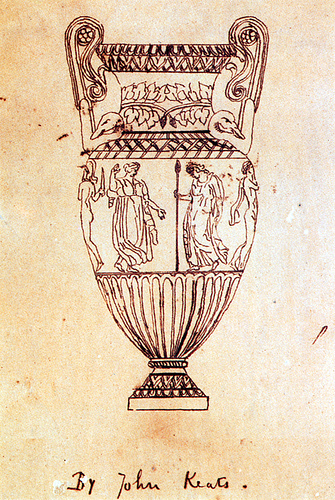
Several of Keats’ poetry questions the mortality and impermanence of human life with relations to art and its everlasting life on earth. In ‘Ode on a Grecian Urn’, the speaker comes across an old Grecian artefact and admires all the paintings on it. The urn contains several pictures of characters including a fair youth who sings beneath an evergreen tree, two lovers who are almost kissing, a melodist playing a pipe, a town of people on a procession with a sacrificial cow and so on. He takes a moment to think about each of their stories and wonders how it is to remain immortal.
For ever panting, and for ever young;
All breathing human passion far above,
         That leaves a heart high-sorrowful and cloy'd,
                A burning forehead, and a parching tongue...
He starts off the poem by describing the beautiful shape of the urn. He addresses it by several names and revels in the beauty and satisfaction that it gives him. He then addresses the sweetness of the music that might be coming out of the painted instruments. He assures himself by saying that the unheard melodies are sweeter because it speaks directly to our inner soul. He then moves onto the loves and assures them that though they may never kiss, they will forever remain young and fair. He complements the beautiful boughs of the trees and tells them that they will never wilt and will forever remain beautiful. In the later stanza, the poem takes a little turn as the speaker as he examines how they will live forever while humans living in the real world are all eventually bound to die one day. He then examines a procession of people who are carrying a sacrificial heifer and wonder which town or village is empty of this folk.
  "Beauty is truth, truth beauty,—that is all
                Ye know on earth, and all ye need to know."
In the final stanza of the poem, the speaker once again admires the beauty of the urn and decides that even after his lifetime, the urn will forever remain and tell its story for generations to come. The speaker finally neds the poem with one of the most beautiful verses in the poem going “Beauty is truth, truth beauty” which he confirms is the only eternal truth that one needs to know on earth.
Chhatrapati Shivaji was a great king and brave warrior. He was born on 19th february 1630 at Shivneri Fort in Pune, Maharashtra.His father Shahaji Bhonsle and mother Jijabai. He got best qualities of his character from his mother and Guru Ramdas. Dadaji kond deva was the teacher of Shivaji. Shivaji was the founder of the Marathi Empire in western India.
chhatrapati shivaji
Shivaji always believed in equality and justice.He had also strictly warned his solders not to harm or disrespect to women.The battle technique of shivaji was called Guerrilla Warfare. The technique are still used in modren days.He introduced the concept of Ashtha Pradhan Mandal where each minister has particular responsibilities. He was the biggest enemy of Mugal Emperor Aurangzeb. At the age of 15, he gathered trusted soldiers which were called “Mavlas” and pledged to establish the swarajya,self governance.They were highly inspired to shivaji and ready to sacrifice their lives for the swarajya and shivaji.
After the death of Shahaji,Shivaji Maharaj started his conquest again. Adil shah(ruled the Sultanate of Bijapur) ordered his commander Afzal Khan to plan a murder and eradicate shivaji. Afzal acted as a friend to gain his confidence and kill him. Shivaji was one step ahead,he killed Afzal Khan.This battle technique was the major weapon of Shivaji Maharaj and it was called “Guerrilla warfare”.Later real battle started with the Mughal Emperor.There are so many acts of bravery of Shivaji Maharaj such as his clever escape from the Aurangzeb arrest in Agra and so many other.
Shivaji Maharaj was crowned as the king of Marathas on June 6,1674.He introduced the collection pf two taxes called the Chauth and Sardeshmukhi. He encourged women’s liberty and respected them atmost. He had also strictly warned his soldiers not to cause harm or disrespect to women. In late March, Shivaji fell ill with fever and dysentery.He died on 3rd April,1680 in Raigad.
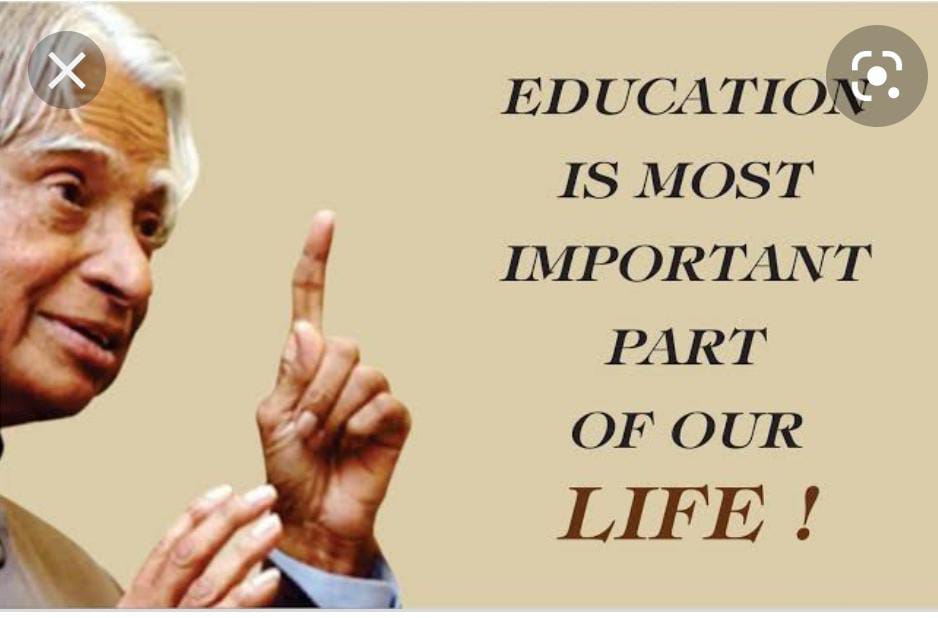
Education is very important for every individual human being and for every country. It is the “ray of light in the darkness”.Education teaches the ability to read and write.Reading and Writing is the foremost step in education. Education helps to improve knowledge, skills and develops the personality.Education is important to both men and women to understand every aspect of life.Educated people know when to speak and when to remain silent.
“Purpose of education is to turn mirrors into windows”
Educate yourself and get as many qualifications and experience as possible.one of the benefits of educational system teaches us how to obtain and develop critical and logical thinking and make independent decisions. Educated people are treated as equal on the basis of their knowledge and competence.Thus we are able to shape a better society, education plays a very important role in all aspects of every humans.
Legendary manga creator Kentaro Miura of the critically acclaimed Berserk series has passed away at the age of 54. He died on May 6 due to acute aortic dissection. Miura is best known for both his stunning artistic prowess and compelling storytelling abilities that he employed in his seminal series Berserk. Since it began in 1989, his masterpiece has spawned a 1997 anime adaption of the manga’s earlier chapters, three movies covering the same events as the original adaptation in 2012-13, and a 2016 series that delved into the manga’s later arcs for two seasons. Miura’s work, which also influenced a proliferation of gaming adaptations, was still ongoing with 40 volumes of 364 chapters and more than 35 million copies sold worldwide.
Berserk told the story of Guts, a former mercenary who later embraced the ominous identity of the Black Swordsman. For the majority of the series, Guts seeks revenge against his former friend Griffith who sacrificed his companions so he could achieve his dream of building his own kingdom. On his bloody conquest, Guts is plagued by demons, as the world falls into an existential state of chaos as a direct result of Griffith’s selfish actions.
Although a manga artist, Miura pioneered a new artistic style that was unheard of at the time and that, even now, few have attempted or even considered to replicate. This bold step in breaking away from the norm of how characters and settings are drawn in this particular medium allowed Miura to venture into an incredibly dark and intricate world that set it apart from other manga. Regardless of this stark departure, Berserk always felt like a manga, allowing Miura to grasp and fully benefit from all of the best characteristics and qualities that the medium has to offer, without sullying his own artistic genius and direction.
When he began Berserk, Miura embraced an extreme form of violence that transcended what existed in manga at the time. It may have been a risky move, but it was a tactic that ended up strengthening his story and deepening his characters in a way that any normal depiction of violence could never achieve. It was clear that Miura understood how much of an impact such unsettling depictions could have on readers.
Yet, despite the existential despair that Kentaro Miura created, humanity still shone through inBerserk, as Guts strove to protect his friends and Casca, the woman he loved, from the interminable wave of nihilistic violence that surrounded them. In fact, near the end of his manga series, Miura began hinting at the seemingly impossible, undermining what drove so many to embrace his work in the first place. Guts, despite being propelled by hate and anger for so long, appeared to have been letting go of his hatred of Griffith. Even in the violent world that he himself created, Miura was willing to break his own rules, all for the sake of love and hope. Kentaro Miura was a visionary. He was a legend. He will be missed. RIP.
According to their height, clouds are classified into the following types ☆ High clouds (6-20km Height) ☆ Middle clouds (2.5km-6km Height) ☆ Low clouds (ground surface to 25km height)
These major types of clouds are further divided into different types on the basis of shape and structure.
High clouds
Cirrus
Detached clouds in the forms of white delicate fibrous silky filaments formed at the high sky (8000 meters to 12000 meters) are called Cirrus clouds. These clouds have Ice crystals and are dry and do not give rainfall.
Cirro-cumulus
Whitepatched, sheet or layer like clouds composed of ice crystals.
Cirro-stratus
Smooth milky transparent whitish clouds composed of tiny ice crystals.
Middle clouds
Alto-stratus
Thin sheets of grey or blue coloured clouds in uniform appearance. Consisting of frozen water droplets.
Alto-cumulus
Clouds fitted closely together in parallel bands, called as ‘Sheep clouds’ or wool pack clouds.
Nimbo stratus
These are clouds of dark colour very close to the ground surface associated with rain, snow or sleet.
Low clouds
Strato-cumulus
Grey or whitish layer of non-fibrous low clouds found in rounded patches at an height of 2500 to 3000 meters, associated with fair or clear weather.
Stratus
Dence, low lying fog-like clouds associated with rain or snow.
Cumulus
Dome-shaped with a flat base often resembling a cauliflower, associated with fair weather.
Cumulo-nimbus
Fluffy thick towering thunderstorm cloud capable of producing heavy rain, snow, hailstorm or tornadoes.
Precipitation
Falling down of condensed water vapour in different forms is called Precipitation. When the dew point is reached in the cloud water droplets become saturated and start to fall. Hence, they fall on the earth as Precipitation.
The climatic conditions/factors influencing the forms of precipitation mainly are : ☆ Temperature ☆ Altitude ☆ Cloud type ☆ Atmospheric conditions ☆ Precipitation process The main forms of precipitation include drizzle, rain, sleet, snow, hail etc.
Drizzle
Falling of numerous uniform minute droplets of water with diameter of less than 0.5 mm is called drizzle from low clouds. Sometimes drizzles are combined with fog and hence reduce visibility.
Rain
Rain is the most widespread and important form of precipitation in places having temperature above the freezing point. It occurs only when there is abundant moisture in the air. The diameter of a rain drop is more than 5mm.
Sleet
Sleet refers to a precipitation, in the form of pellets made up of transparent and translucent ice. This precipitation is a mixture of snow and rain.
Snow
Snow is formed when condensation occurs below freezing point. It is the precipitation of opaque and semi opaque ice crystals. When these ice crystals collide and stick together, it becomes snowflakes.
Hails
Hails are chunks of ice (greater than 2cm in diameter) falling from the sky, during a rainstorm or thunderstorm. Hailstones are a form of solid precipitation where small pieces of ice fall downwards. These are destructive and dreaded forms of solid precipitation because they destroy agricultural crops and human lives.
The foreign policy of India regulates India’s relations with other states of the world in promoting its national interests.
Principles of foreign policy:
Promotion of world peace- India’s foreign policy aims at the promotion of international peace and security. Article 51 of the constitution directs the Indian state to promote international peace and security, maintain just and honourable relations between nations, foster respect for international law and treaty obligations and encourage settlement of international disputes by arbitration.
Anti colonialism- The foreign policy of India opposes colonialism and imperialism. India views that colonialism and imperialism leads to exploitation of the weaker sections by the Imperialist powers and affect the promotion of international peace. India advocated the liquidation of colonialism in all forms and supported the Liberation Movement in Afro Asian countries like Indonesia Malaya Tunisia and so on.
Anti racialism- Opposition to racialism in all its forms is an important aspect of Indian foreign policy. India strongly criticized the policy of racial discrimination being followed by the white minority racist regime of South Africa.
Non alignment- This policy was initiated in the the cold war era when India refused to join any of the two blocks that is USA and USSR and chose to adopt a policy of non alignment. Under this India has no military alliances with countries of either blocs or indeed with any nation. India has an independent approach to foreign policy and she attempts to maintain friendly relations with all countries.
Panchsheel- This policy implies the five principles of conduct in international relations, it was embodied in the Preamble of The Indo China Treaty on Tibet signed in 1954 by Jawaharlal Nehru and Chou En-Lai the Chinese premier. The principles are mutual respect for each other’s territorial integrity and sovereignty, non aggression, equality and mutual benefit, peaceful coexistence and non interference in each others internal affairs.
Support to the UN- India became a member of the UN in 1945 itself since then it has been supporting the activities and programs of the UN. It has expressed full faith in the objectives and principles of the UN. India has actively participated in UN peacekeeping missions in Korea, Congo, Cambodia, Angola and so on.
Disarmament- The foreign policy of India is opposed to arms race and advocates this armament both conventional and nuclear. This is aimed at promoting world peace and security by reducing or ending tensions between power blocs and to accelerate economic development of the country by preventing the unproductive expenditure on the manufacture of arms.
I can never agree with people who say watching a movie or series is better than reading a book. While watching a movie, we are just looking at a projection of the film. We are not using our imagination.
I have read the divergent series by Veronica Roth. It also has a movie trilogy. Well, the movie is a disappointment to what the book portrays. The book has so much more details which the movie fails to show.
Books allow us to create our own imagination. They talk about the prominent features of their characters like the almond-shaped caramel eyes and the brown hair with a tint of waves and a well-defined jaw of the person. They leave it on us to decide how the person looks. They describe the cottage with a warm and cozy fireplace but do not provide us with how the cottage looks.
Books allow us to create a world of our choice. Every person reading the book would imagine their world differently. I started reading books as an escape from reality. When I was going through a hard time in my life, books became my best friends. No matter how bad my day was, I was always looking forward to start reading. It made me forget about my life because books allow us to live the life of the characters of fiction. Their life would become mine till I completed the book. At the end of every book, I would feel happy and sad at the same time. I felt sad because I never wanted the book to end. Happy because I get to live the life of another character when I start my next book.
Now you see books are an escape from reality, but they are a good escape. Reading books comes with a lot of benefits:
Improving vocabulary: when I started reading, I would make sure to find the meaning of every word that I was unaware of. For me, reading is incomplete without knowing what every word means.
Improves creativity: A person reading a book isn’t just reading literature words. An entire world of imagination is going on in their minds.
The best form of entertainment: it is better than looking at your screens for hours.
Creates a sense of understanding: when we read a book where the character has anxiety. It will make us understand how people around us with anxiety would feel like.
Inspires us: I have read books where the main characters do not give up, no matter how many problems come their way. This has honestly inspired me a lot in my life.
Makes us a better writer: reading makes our brain absorb the vocabulary and grammar required for better writing skills.
You must have also noticed that talking to people who read has always been interesting. People who read have a lot to share with the world. I remember talking to a few people who read a lot and our conversation never dies down. Reading also reduces stress and boosts our mood instantly. I want to end with my favorite quote by Mason Cooley
“Reading gives us someplace to go when we have to stay where we are”
The Renaissance began in Italy hand spreading the rest of Europe by the 16th century which influence was fit in art architecture philosophy literature music science technology politics religion and other aspects of the intellectual inquiry. The Renaissance scholars employed the humanist method of study and searched for realism and human emotion in art well after the first artist return to class system has been exchanged filed in the scripture of Nicole Pisano Florentine painter by Masacloio strove to portray the human form realistically developing techniques to render prospective and light more naturally. Some scholars such as Rodney stark play down The Renaissance in favour of the earlier innovations of the Italian City States in the middle ages.Lorenzo de Medici bajda catalyst for any enormous amount of arts patronage the leading artist of Florence including Leonardo da Vinci,Sandro Botticelli and Michelangelo Buonarrati.
Looking on the famous renaissance artist Leonard da Vinci is probably the best known Renaissance artists famous for his mass works is innovative techniques including laying of paints precise attention to light shadow and human form and the and a detailed eye for expression and gesture the classic Renaissance man was not only an artist but also and innovator scientist architect engineer and more. Why is fame initially e registered on his achievements as a painter also became known for his notebooks on a variety of subjects including anatomy astronomy botany cartography painting and paleontology. He was known for painting drawing much more and of credited as the founder of high Renaissance. Is Magnum Opur the Mona Lisa is is best known work and often regarded as the world’s famous painting Salva. Image substantial discoveries in anatomy civil engineering hydrodynamics geology optics and tribology and the famous artwork of Da Vinci was Monalisa Last supper self-portrait head of women lady with ermine vitruvian man the virgin Salvator mundi Ginevra de benci the virgin and child with saint Anne.
Michelangelo was an accomplished artist poet architect and engineer is artist versatility watch as such as I order is output in this field there prodigious. Despite holding a low opinion of painting a also created two of the most influential frescoes in the history of the Western art as a young boys Michelangelo what sent for Florence to study grammar however issue no interest but referring to copy paintings from churches and later became artist most of Michelangelo works were Pieta,David Doni tonado (holy family) the large bathers. Raphael is known as third of the great master artist of Renaissance Italy is works trailer extremely influential even during his lifetimes. Raphael express the humanistic philosophy that we had learnt in the Urbino court as a boy. The Raphael artworks where resurrection of Christ the holy trinity the creation of Eve from Adam madana with lamp angel angel holding a scroll God the father and the virgin Mary Madonna Solly portrait of a man.
And finally Donatello who nailed from the period known as the early Renaissance . He mainly as a sculptor and the realism. Us able to create mark stark break common in middle age. Donatello was gaining reputation using innovative technique and extraordinary skills is workwear David Saint George the feast of Herod Magdalena penitent Judith and holeferner.








































 Eduindex
You must be logged in to post a comment.