

Educational technology is a field of study that investigates the process of analyzing, designing, developing, implementing, and evaluating the instructional environment and learning materials in order to improve teaching and learning. it is important to keep in mind that the purpose of educational technology is to improve education. we must define the goals and needs of education first and then we use all our knowledge, including technology, to design the most effective learning environment for students. instructional technology can also be seen as a process of solving educational problems and concerns, which might include motivation, discipline, drop-out-rate, school violence basic skills, critical thinking, and the whole list of educational concerns. first the problem is identified an analysis of the factors of the problem is made, and possible solutions to the problem are presented. then, the student population and the curriculum are analyzed. the next step is to select the most appropriate instructional strategies for the particular situation. next instructional materials and resources are selected that are suitable for the curriculum and the mode of instruction chosen. finally the program is implemented, evaluated, and revised as needed in order to meet the stated goals for school improvement.
The learning materials today have greatly expanded because of the various technological advances. Instructional materials include more conventional materials, such as the black board, overhead projectors, televisions, VCRs, overhead projectors, slide projectors, and opaque projectors, as well as newer materials, such as the computer, various software applications, LCD projectors, camcorders, digital cameras, scanners, the internet, the satellite, interactive T.V, audio and video conferencing, artificial intelligence, and so on. The issue of what this materials are and how to use them is a first step. But we must quickly begin to discuss how these materials should be used and how they affect the curriculum and instruction in our schools. Technology can be used to perpetuate teacher-led, knowledge-based learning approach or it can be used to help us implement a student-centered, constructivist, and progressive approach. We need to help teachers to understand the bigger picture of technology can revolutionize education. Remember in all of these areas of educational technology that the goal of improving a specific aspect of teaching and learning comes first. Technology is selected to help us meet these goals.
SOFTWARE TYPES: Drill and practice, tutorials of computer based instruction, and simulations. Teachers need to know what these are as well as why, when, and how to incorporate them into their teaching
EQUIPMENT USE: Digital camera, scanner, camcorder, CD writer, computer, modern, printer, VCR, LCD projector, laser-disk player. Teachers need to know how to use them and how they can be used in a classroom.
AUDIO AND VIDEO CONFERENCING: Understand what these are and how to incorporate them into educational process. Understand various teaching materials that best utilize these tools. Understand how these can affect how we learn.
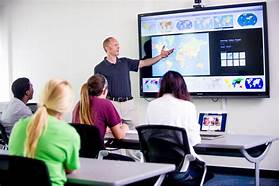
CLASSROOM CONFIGURATIONS: How to best equip and utilize technology in the classroom. How to use the technology in the classroom. Classrooms need multimedia technology in each classroom. Teachers need to be able to quickly use this equipment and access software when needed.
WEB PAGES: How to create web pages, how to use them in their teaching, and why they should use them. Web pages can have many functions for displaying information and creating student interaction. Web pages can also be used for helping students be more independent learners.
SOFTWARE REVIEW AND EVALUATION: How to select appropriate software for specific grade levels and content areas, how to evaluate effectiveness of this software, and what types of software’s are available. Teachers need to be thoroughly familiar with many of the software options available and understand when and how to use them in the classroom.
NEW SOFTWARE AND HARDWARE: Teachers need to keep up with what types of instructional materials and tools that are being developed and how these new materials might be useful to them as teachers. They need to learn how to use these new materials and how to incorporate them into their teaching.

 Eduindex
You must be logged in to post a comment.