Leisure is an important part of life. Leisure is not idleness nor non activity but it implies an activity which is meaningful, fruitful and enjoyable. Leisure time is a time of personal fulfilment and pleasure. It is freedom from monotony, boredom and drudgery of life. It is a time when one pursues what one likes most. It is as important as the work itself which forms our means of livelihood.
The modern age of automation, better standard of living and longevity has further broadened and liberalized the concept of leisure. The wonderful scientific and technological inventions, discoveries and developments have reduced the hours of working and consequently man has now more time to enjoy leisure and hobbies. But to make a meaningful use of leisure time is nothing short of an art. Very few people know how to make best use of the leisure time. One needs to develop a proper perspective to make most meaningful and satisfying use of the spare moments.
Different people spend their leisure in different ways. Some people have no definite idea or plan in this respect. Some others may treat this period as a time of rest and sleep. To many others it is a time of some creative and aesthetic pursuit and inner fulfilment and growth. They play music, grow plants, write poems, practice meditation or render social service. To many it is time for simple entertainment and they go to theatres, see movies or exchange visits with friends and relatives.
But in this age of electronics most of the people spend their leisure before their television sets. The craze and popularity of television is rapidly increasing further and further. A great part of their free time is being spent in viewing programmes on the idiot box. There are interesting serials, spicy films, dances, chat shows, interviews, various types of information, latest news, weather forecasts, analysis of events and happenings and many more things all the 24 hours of the day. There are scores of channels to choose from. One has to do nothing. There is neither mental exercise nor physical activity. You have to just sit and watch things happen on the small screen. Even children are great TV enthusiasts. They have cartoon films and other programmes to keep them glued to their TV sets.
Such a craze and popularity of TV has created many social, psychological, physical, family and mental problems. It has marginalised reading, social activities and outdoor hobbies to a great extent. It is particularly harmful for children. They spend 3-4 hours or more daily in viewing television programmes. Consequently, they grow mature before their age, acquire lots of knowledge but never grow wisdom and lose much of their valuable fun, pleasure and enjoyment peculiar to childhood.
These days leisure has grown into a big business and industry. People have invested huge sums of money in developing luxury hotels, motels, holiday homes, video games resorts, golf courses, places of water sports, fun and health clubs. There are package tours, chartered flights and other attractions to make your spare time really interesting, enjoyable, exciting and memorable.
Our life is now far more free and leisurely than it was for our forefathers. But this abundance of leisure and spare time may turn into a curse if not used properly and wisely in some pleasant, enjoyable and healthy hobby. It is after day’s hard work that one enjoys one’s leisure the most. Rest is sweetest only after exhaustion. Leisure provides us with a rare opportunity to satisfy our inner spiritual and aesthetic demands. But problem is how many of us are really well equipped to meet these demands?
Biologist tell us that the first living organisms originated in the plant’s oceans.The ancient babylonians that before heaven and earth existed,the universe made of two oceans:
one sweet &
one salt
whose waters mingled together. Jews, Christian and Muslims believe that before light was created, The “𝗦𝗣𝗜𝗥𝗜𝗧 𝗢𝗙 𝗚𝗢𝗗 𝗠𝗢𝗩𝗘𝗗 𝗢𝗩𝗘𝗥 𝗧𝗛𝗘 𝗙𝗔𝗖𝗘𝗦 𝗢𝗙 𝗪𝗔𝗧𝗘𝗥𝗦”.
what all theses story tell us is that 🅛︎🅘︎🅕︎🅔︎ 🅐︎🅡︎🅞︎🅢︎🅔︎ 🅕︎🅡︎🅞︎🅜︎ 🅦︎🅐︎🅣︎🅔︎🅡︎.we spend the 𝗙𝗶𝗿𝘀𝘁 𝗻𝗶𝗻𝗲 𝗺𝗼𝗻𝘁𝗵𝘀 𝗼𝗳 𝗼𝘂𝗿 𝗱𝗲𝘃𝗲𝗹𝗼𝗽𝗺𝗲𝗻𝘁 𝗲𝗻𝘃𝗲𝗹𝗼𝗽𝗲𝗱 𝗶𝗻 🅦︎🅐︎🅣︎🅔︎🅡︎, and when a baby is born,is 𝗯𝗼𝗱𝘆 is 78% 𝘄𝗮𝘁𝗲𝗿.Even as adult,our bodies are 𝗺𝗮𝗱𝗲 𝘂𝗽 𝗺𝗼𝗿𝗲 𝗼𝗳 𝘄𝗮𝘁𝗲𝗿 𝘁𝗵𝗲𝗻 𝗮𝗻𝘆𝘁𝗵𝗶𝗻𝗴 𝗲𝗹𝘀𝗲.
𝗪𝗔𝗧𝗘𝗥,obviously is crucial to our survival. While human beings can live more than a month without food, three days to a week is the longest we can survive 𝘄𝗶𝘁𝗵𝗼𝘂𝘁 water. The important of water to our survival and well being,it would seem that access of water would be universally accepted as a 𝗯𝗮𝘀𝗶𝗰 𝗼𝗳 𝗵𝘂𝗺𝗮𝗻 𝗿𝗶𝗴𝗵𝘁.
This 𝗪𝗔𝗧𝗘𝗥 collection will inspire you to keep loving towards your goals and dreams no matter what obstacles stand in your path. Water is VITAL for all forms of life. Although it provides no calories or organic nutrients, WATER PLAYS AN IMPORTANT ROLE IN EARTH. It is the centre piece of all life…We can learn more inspiration thing from 𝗪𝗔𝗧𝗘𝗥.
Biologist tell us that the first living organisms originated in the plant’s oceans.The ancient babylonians that before heaven and earth existed,the universe made of two oceans:
one sweet &
one salt
whose waters mingled together. Jews, Christian and Muslims believe that before light was created, The “𝗦𝗣𝗜𝗥𝗜𝗧 𝗢𝗙 𝗚𝗢𝗗 𝗠𝗢𝗩𝗘𝗗 𝗢𝗩𝗘𝗥 𝗧𝗛𝗘 𝗙𝗔𝗖𝗘𝗦 𝗢𝗙 𝗪𝗔𝗧𝗘𝗥𝗦”.
what all theses story tell us is that 🅛︎🅘︎🅕︎🅔︎ 🅐︎🅡︎🅞︎🅢︎🅔︎ 🅕︎🅡︎🅞︎🅜︎ 🅦︎🅐︎🅣︎🅔︎🅡︎.we spend the 𝗙𝗶𝗿𝘀𝘁 𝗻𝗶𝗻𝗲 𝗺𝗼𝗻𝘁𝗵𝘀 𝗼𝗳 𝗼𝘂𝗿 𝗱𝗲𝘃𝗲𝗹𝗼𝗽𝗺𝗲𝗻𝘁 𝗲𝗻𝘃𝗲𝗹𝗼𝗽𝗲𝗱 𝗶𝗻 🅦︎🅐︎🅣︎🅔︎🅡︎, and when a baby is born,is 𝗯𝗼𝗱𝘆 is 78% 𝘄𝗮𝘁𝗲𝗿.Even as adult,our bodies are 𝗺𝗮𝗱𝗲 𝘂𝗽 𝗺𝗼𝗿𝗲 𝗼𝗳 𝘄𝗮𝘁𝗲𝗿 𝘁𝗵𝗲𝗻 𝗮𝗻𝘆𝘁𝗵𝗶𝗻𝗴 𝗲𝗹𝘀𝗲.
𝗪𝗔𝗧𝗘𝗥,obviously is crucial to our survival. While human beings can live more than a month without food, three days to a week is the longest we can survive 𝘄𝗶𝘁𝗵𝗼𝘂𝘁 water. The important of water to our survival and well being,it would seem that access of water would be universally accepted as a 𝗯𝗮𝘀𝗶𝗰 𝗼𝗳 𝗵𝘂𝗺𝗮𝗻 𝗿𝗶𝗴𝗵𝘁.
This 𝗪𝗔𝗧𝗘𝗥 collection will inspire you to keep loving towards your goals and dreams no matter what obstacles stand in your path. Water is VITAL for all forms of life. Although it provides no calories or organic nutrients, WATER PLAYS AN IMPORTANT ROLE IN EARTH. It is the centre piece of all life…We can learn more inspiration thing from 𝗪𝗔𝗧𝗘𝗥.
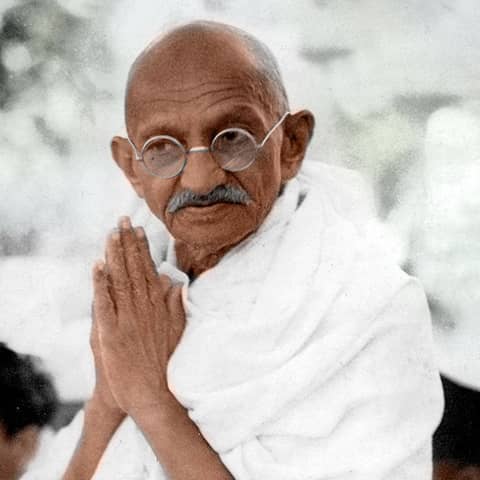
Gandhi was the youngest child of his father’s fourth wife. His father—Karamchand Gandhi, who was the dewan (chief minister) of porbandar, the capital of a small principality in western India (in what is now gujrat state) under British suzerainty—did not have much in the way of a formal education. He was, however, an able administrator who knew how to steer his way between the capricious princes, their long-suffering subjects, and the headstrong British political officers in power.
Early Life
Mohandas Karamchand Gandhi was born on October 2, 1869, at Porbandar, in the present-day Indian state of Gujarat. His father was the dewan (chief minister) of Porbandar; his deeply religious mother was a devoted practitioner of Vaishnavism (worship of the Hindu god Vishnu), influenced by Jainism, an ascetic religion governed by tenets of self-discipline and nonviolence. At the age of 19, Mohandas left home to study law in London at the Inner Temple, one of the city’s four law colleges. Upon returning to India in mid-1891, he set up a law practice in Bombay, but met with little success. He soon accepted a position with an Indian firm that sent him to its office in South Africa. Along with his wife, Kasturbai, and their children, Gandhi remained in South Africa for nearly 20 years.
The Birth of Passive Resistance
In 1906, after the Transvaal government passed an ordinance regarding the registration of its Indian population, Gandhi led a campaign of civil disobedience that would last for the next eight years. During its final phase in 1913, hundreds of Indians living in South Africa, including women, went to jail, and thousands of striking Indian miners were imprisoned, flogged and even shot. Finally, under pressure from the British and Indian governments, the government of South Africa accepted a compromise negotiated by Gandhi and General Jan Christian Smuts, which included important concessions such as the recognition of Indian marriages and the abolition of the existing poll tax for Indians.
Leader of a Movement
As part of his nonviolent non-cooperation campaign for home rule, Gandhi stressed the importance of economic independence for India. He particularly advocated the manufacture of khaddar, or homespun cloth, in order to replace imported textiles from Britain. Gandhi’s eloquence and embrace of an ascetic lifestyle based on prayer, fasting and meditation earned him the reverence of his followers, who called him Mahatma (Sanskrit for “the great-souled one”). Invested with all the authority of the Indian National Congress (INC or Congress Party), Gandhi turned the independence movement into a massive organization, leading boycotts of British manufacturers and institutions representing British influence in India, including legislatures and schools.
2020 January – the whole world was scared by the idea of a new virus overtaking all of humanity. There were lockdowns followed by a host of other measures – some very severe, some probably less by governments all over the world. The idea that most doctors and scientists presented was isolation, quarantine and social distancing.
A survey conducted by researchers in England and published by Springer suggests that about 93% participants did not adhere to the covid protocols strictly and 47% of them did so intentionally. The research also statistically established a strong correlation between non-adherence to the COVID guidelines and vulnerability to COVID-19 itself.
Now, COVID is a disease that has no known cure except for a host of vaccines that were prepared in a great show of human endeavour. However, the vaccines were created keeping in mind the initial variants of COVID-19. The world and the governments all over were scared of the simple numbers of May 2020, which are simple given the numbers the world is facing today. The increase in numbers is however not in the same geographic location as the previous spikes, but the unfortunate thing is that it took place in larger population groups, in groups where social and economic security is not guaranteed effectively or at all by the government to all people and in groups where non-adherence to even simpler rules is more common than the previously infected groups. India, Brazil and the US – all three fall under this category. While some may argue various reasons for breaching the covid norms in their respective country or might even blame the governments for the failure, which it must be, but the fact remains that the consequences include a higher infectivity and hence increased death rates. But is that all? Well, no.
Scientist claim that an infectious virus is suppressed when the herd immunity thresh-hold is reached. The best number to reach is 80% of the population. However, in cases of Israel, the government reopened the country after 58% population was inoculated. If the herd immunity is not achieved, the virus gets enough time to mutate and as covid has quite effectively proven, these mutations are not always good. This means that the slow pace of vaccination in countries like India (I say slow given the huge population the country has), Brazil and even slower and probably negligible rates in the poorest nations gives the virus a strong and assured method to mutate and evolve. Most pharma giants and as many countries like Germany too have shown a greater interest in trading the vaccines commercially rather than quickly addressing the possibility of a stronger covid wave every time the poorest nations are denied vaccines. The richer countries indeed need to save their revenue. But a middle ground must be found otherwise the savings of revenue and the vision of a strong pharma market might lead to a civil breakdown like the one towards which protests in Brazil had pointed towards.
More variants are appearing, more people are being infected every day. The vaccinated nations of Israel, US and the UK are back to masks and social distancing. Is the COVID wave going anywhere? Well, probably no. And let us wait for the xhi or phi variant. And then maybe a greek god appears to take the virus away.
2020 January – the whole world was scared by the idea of a new virus overtaking all of humanity. There were lockdowns followed by a host of other measures – some very severe, some probably less by governments all over the world. The idea that most doctors and scientists presented was isolation, quarantine and social distancing.
A survey conducted by researchers in England and published by Springer suggests that about 93% participants did not adhere to the covid protocols strictly and 47% of them did so intentionally. The research also statistically established a strong correlation between non-adherence to the COVID guidelines and vulnerability to COVID-19 itself.
Now, COVID is a disease that has no known cure except for a host of vaccines that were prepared in a great show of human endeavour. However, the vaccines were created keeping in mind the initial variants of COVID-19. The world and the governments all over were scared of the simple numbers of May 2020, which are simple given the numbers the world is facing today. The increase in numbers is however not in the same geographic location as the previous spikes, but the unfortunate thing is that it took place in larger population groups, in groups where social and economic security is not guaranteed effectively or at all by the government to all people and in groups where non-adherence to even simpler rules is more common than the previously infected groups. India, Brazil and the US – all three fall under this category. While some may argue various reasons for breaching the covid norms in their respective country or might even blame the governments for the failure, which it must be, but the fact remains that the consequences include a higher infectivity and hence increased death rates. But is that all? Well, no.
Scientist claim that an infectious virus is suppressed when the herd immunity thresh-hold is reached. The best number to reach is 80% of the population. However, in cases of Israel, the government reopened the country after 58% population was inoculated. If the herd immunity is not achieved, the virus gets enough time to mutate and as covid has quite effectively proven, these mutations are not always good. This means that the slow pace of vaccination in countries like India (I say slow given the huge population the country has), Brazil and even slower and probably negligible rates in the poorest nations gives the virus a strong and assured method to mutate and evolve. Most pharma giants and as many countries like Germany too have shown a greater interest in trading the vaccines commercially rather than quickly addressing the possibility of a stronger covid wave every time the poorest nations are denied vaccines. The richer countries indeed need to save their revenue. But a middle ground must be found otherwise the savings of revenue and the vision of a strong pharma market might lead to a civil breakdown like the one towards which protests in Brazil had pointed towards.
More variants are appearing, more people are being infected every day. The vaccinated nations of Israel, US and the UK are back to masks and social distancing. Is the COVID wave going anywhere? Well, probably no. And let us wait for the xhi or phi variant. And then maybe a greek god appears to take the virus away.
Oxygen debt means when the demand for oxygen is greater than the supply. It means that when your body works hard you breathe a lot of oxygen but you can not absorb enough oxygen to cope with the level of activity. It is the stage of oxygen debt. As a matter of fact, ATP (or adinosine triphosphate) is the source of energy for muscular contraction . There are three main sources , which provide a continual supply of ATP.
Creatine phosphate.
Glycolysis
Oxidative phosphorylation ( critic acid )
When our muscles remain in resting position, these contain large amount of ATP and creatine phosphate . But, when we start exercise during the first few seconds of muscular contraction, the reserved ATP is used up immediately. During this period , ADP ( or adinosine diphosphate ) levels increase. Creatine phosphate rapidly supplies ATP for the contraction of muscles. The molecule of creatine phosphate contains both energy and phosphate , which are transferred to a molecule of ADP to form ATP and creatine. If the contraction is short , the muscle can drive all its ATP from creatine phosphate. If light exercise is to be done for longer period, other sources of ATP must be available . Glycolysis is the process by which glycogen ( stored from of glucose in muscles ) or glucose from the blood is broken down to CO2 and H2O by oxidative phosphorylation in the citric acid cycle to produce more ATP . The breakdown of ATP , the combination of creatine phosphate with ADP , and glycolysis can occur both aerobically (in the presence of oxygen ) and anaerobically ( in the absence of oxygen ) . Oxidative phosphorylation is an aerobic process . It means it requires the presence of oxygen . If oxygen supplied to muscles gets exhausted ( during heavy muscular activity ) , the pyruvic acid formed in glycolysis is converted to lactic acid . The accumulation of lactic acid in the muscle causes fatigue. At this stage ,m muscle is in oxygen debt . If exercise is continued , then there will be more debt of oxygen . In oxygen debt , lactic acid diffuses out into the blood and is carried to the liver, where it is reoxidised to pyruvic acid. In the liver , pyruvic acid can enter the citric acid cycle and can be broken down to CO2 and H2O . It can be said that it is reconverted to glycogen . It has been observed that up to the deficit of 2.3 litres oxygen , the lactic acid is not produced in muscles but , after that , if the amount of lactic acid goes on increasing , the deficit of O2 will be increased at the same rate .A complete rest helps in removing oxygen debt . During the rest , ATP is again stored in the muscles for activities . Generally , lactic acid is removed approximately in one hour if cooling down is performed properly . It may also take 2 hours or more if cooling down is not done with gentle exercise .
Oxygen debt means when the demand for oxygen is greater than the supply. It means that when your body works hard you breathe a lot of oxygen but you can not absorb enough oxygen to cope with the level of activity. It is the stage of oxygen debt. As a matter of fact, ATP (or adinosine triphosphate) is the source of energy for muscular contraction . There are three main sources , which provide a continual supply of ATP.
Creatine phosphate.
Glycolysis
Oxidative phosphorylation ( critic acid )
When our muscles remain in resting position, these contain large amount of ATP and creatine phosphate . But, when we start exercise during the first few seconds of muscular contraction, the reserved ATP is used up immediately. During this period , ADP ( or adinosine diphosphate ) levels increase. Creatine phosphate rapidly supplies ATP for the contraction of muscles. The molecule of creatine phosphate contains both energy and phosphate , which are transferred to a molecule of ADP to form ATP and creatine. If the contraction is short , the muscle can drive all its ATP from creatine phosphate. If light exercise is to be done for longer period, other sources of ATP must be available . Glycolysis is the process by which glycogen ( stored from of glucose in muscles ) or glucose from the blood is broken down to CO2 and H2O by oxidative phosphorylation in the citric acid cycle to produce more ATP . The breakdown of ATP , the combination of creatine phosphate with ADP , and glycolysis can occur both aerobically (in the presence of oxygen ) and anaerobically ( in the absence of oxygen ) . Oxidative phosphorylation is an aerobic process . It means it requires the presence of oxygen . If oxygen supplied to muscles gets exhausted ( during heavy muscular activity ) , the pyruvic acid formed in glycolysis is converted to lactic acid . The accumulation of lactic acid in the muscle causes fatigue. At this stage ,m muscle is in oxygen debt . If exercise is continued , then there will be more debt of oxygen . In oxygen debt , lactic acid diffuses out into the blood and is carried to the liver, where it is reoxidised to pyruvic acid. In the liver , pyruvic acid can enter the citric acid cycle and can be broken down to CO2 and H2O . It can be said that it is reconverted to glycogen . It has been observed that up to the deficit of 2.3 litres oxygen , the lactic acid is not produced in muscles but , after that , if the amount of lactic acid goes on increasing , the deficit of O2 will be increased at the same rate .A complete rest helps in removing oxygen debt . During the rest , ATP is again stored in the muscles for activities . Generally , lactic acid is removed approximately in one hour if cooling down is performed properly . It may also take 2 hours or more if cooling down is not done with gentle exercise .
Want to dive deep into web development or are you looking to kickstart your development journey. Here are 8 YouTube channels that can help you to get started.
It is an online learning platform that aims to make learning web development easy and accessible to anyone within the comfort of their home. They publish courses all the time. From Python and Data Science to Game Development and JavaScript.
Clever Programmer is a startup that aims to make anyone a full-stack developer starting from scratch.
Rafeh Qazi is the founder of Clever Programmer. He is a Python Fullstack Developer and was initially a freelancer and then shifted to teaching programming.
The Net Ninja offers over 1000 free programming tutorials about web development namely Modern JavaScript, Node.js, Firebase, and others. You can Black-belt your web development skills. The way material is broken down into smaller chunks is exceptional. There’s plenty of content for anyone to learn anything related to programming.
Faraday Academy is an education platform mainly for software developers.
The academy is run by Gwendolyn and she’s super fun with a ton of helpful content! She is a software engineer, author, speaker, and passionate content creator.
Academind offers hundreds of coding tutorials and other programming video courses. With the tagline, There’s always something to learn!
It is run by Max & Manuel. They create courses and tutorials that teach you everything related to web development. Be it programming languages like JavaScript, runtimes like NodeJS or popular frameworks like ReactJS, Angular, or VueJS or any other. They’ve got you covered.
The channel is run by Angela Yu and her team. There’s content for absolute beginners.
They cover Web Development, how to make iOS, Flutter and Android apps, as well as Data Science. They make learning to program fun and accessible. They design programming courses that teach programming through doing.
The about section of the channel reads – Learn web development, web design, 3d modeling, tools like Figma, and more without getting bored!
Ed, who is famously known online as Dev Ed, is a Romanian-German YouTuber who makes programming and design videos. He is particularly famous for his web development tutorials, as that is his main type of video.
List Source – Edan Ben Atar
Looking to learn Web Development for FREE? 🤑
Here are 20 YouTube channels that can help you do that! 🧵👇
Want to dive deep into web development or are you looking to kickstart your development journey. Here are 8 YouTube channels that can help you to get started.
It is an online learning platform that aims to make learning web development easy and accessible to anyone within the comfort of their home. They publish courses all the time. From Python and Data Science to Game Development and JavaScript.
Clever Programmer is a startup that aims to make anyone a full-stack developer starting from scratch.
Rafeh Qazi is the founder of Clever Programmer. He is a Python Fullstack Developer and was initially a freelancer and then shifted to teaching programming.
The Net Ninja offers over 1000 free programming tutorials about web development namely Modern JavaScript, Node.js, Firebase, and others. You can Black-belt your web development skills. The way material is broken down into smaller chunks is exceptional. There’s plenty of content for anyone to learn anything related to programming.
Faraday Academy is an education platform mainly for software developers.
The academy is run by Gwendolyn and she’s super fun with a ton of helpful content! She is a software engineer, author, speaker, and passionate content creator.
Academind offers hundreds of coding tutorials and other programming video courses. With the tagline, There’s always something to learn!
It is run by Max & Manuel. They create courses and tutorials that teach you everything related to web development. Be it programming languages like JavaScript, runtimes like NodeJS or popular frameworks like ReactJS, Angular, or VueJS or any other. They’ve got you covered.
The channel is run by Angela Yu and her team. There’s content for absolute beginners.
They cover Web Development, how to make iOS, Flutter and Android apps, as well as Data Science. They make learning to program fun and accessible. They design programming courses that teach programming through doing.
The about section of the channel reads – Learn web development, web design, 3d modeling, tools like Figma, and more without getting bored!
Ed, who is famously known online as Dev Ed, is a Romanian-German YouTuber who makes programming and design videos. He is particularly famous for his web development tutorials, as that is his main type of video.
List Source – Edan Ben Atar
Looking to learn Web Development for FREE? 🤑
Here are 20 YouTube channels that can help you do that! 🧵👇
Best things happens in life unexpectedly, it often catches you off guard and takes you by suprise, and sometimes you are not ready for that, sometimes you are not assure or you can’t trust anyone, as you have bad past, so it takes time to believe. And then, when you feel the right person came, you get stuck and starts feeling bad for being low and not believing in them. But it’s absolutely fine, it’s okay to be like that, time will heal everything. It’s then if your partner stand by you through the process, it’s lets you see how much he/she love and honor you.
It’s true “waiting is hard, for the right person,the outcome can be worth it.”
Best things happens in life unexpectedly, it often catches you off guard and takes you by suprise, and sometimes you are not ready for that, sometimes you are not assure or you can’t trust anyone, as you have bad past, so it takes time to believe. And then, when you feel the right person came, you get stuck and starts feeling bad for being low and not believing in them. But it’s absolutely fine, it’s okay to be like that, time will heal everything. It’s then if your partner stand by you through the process, it’s lets you see how much he/she love and honor you.
It’s true “waiting is hard, for the right person,the outcome can be worth it.”
Time management is critical for personal and professional success. Time management refers to the ability to make the best use of one’s time. It is stated that if you master this approach, you can do everything in life, despite the fact that effective time management appears to be as simple as it is difficult. Effective time management necessitates far too much work. Self-discipline is essential for effective time management. When we think of time management, we usually think of personal time management, which is loosely described as managing our time so that we may spend less time doing the things we need to do and more time doing the things we want to do. As a result, time management is frequently thought of or presented as a set of time management skills; the premise is that if we acquire these abilities, we will be more organized, efficient, and happy.
Importance of time management:
Good productivity: Once you’ve devised a strategy, all you have to do now is put it into action. There’s no need to waste time on things you don’t have to do at work; instead, focus on what you need to do next to boost productivity. However, keep in mind that this will only work if you complete your task on time; delaying will have a negative impact on your productivity.
Less Stress: You may become stressed if you do not complete your studies, assignments, or projects. Taking care of one’s mental health is critical for everyone, and students’ poor performance is typically a result of increased stress and anxiety caused by the pressures of academics. Effective time management can help you relieve mental stress while also increasing your confidence and vitality. Time management assists you in completing activities in less time and with less resources. It’s also a terrific approach to relieve stress in this way.
Health Advantages: Your attempts to manage your time have an impact on your health as well. You won’t have to stay up late to complete your responsibilities if you manage your time efficiently. Sleep deprivation causes fatigue, which might disrupt your day’s plans. A good night’s sleep is necessary for your brain and body to replenish, which benefits your health and energy levels.
Syllabus Cramming: Not finishing their course on time is a common issue among students. As a result, they cram all of the chapters right before the tests, resulting in poorer than expected results. Students who use effective time management skills can not only finish their coursework on time, but also have time left over for revisions. Extracurricular Activities Have More Time: When you have a set timetable for all of your duties for the day, you can estimate how much time you’ll have left once you’ve completed them all. You can organize your tasks so that you have more time to do what you enjoy. This can include activities such as drawing, painting, singing, dancing, photography, and so on, or you can go cycling or jogging to get some fresh air.
Conclusion: Time management is important for everyone, whether you are a student, a housewife, a businessperson, or a working professional. If you are unable to effectively manage your time, you will fall behind on your goals.
Time management is critical for personal and professional success. Time management refers to the ability to make the best use of one’s time. It is stated that if you master this approach, you can do everything in life, despite the fact that effective time management appears to be as simple as it is difficult. Effective time management necessitates far too much work. Self-discipline is essential for effective time management. When we think of time management, we usually think of personal time management, which is loosely described as managing our time so that we may spend less time doing the things we need to do and more time doing the things we want to do. As a result, time management is frequently thought of or presented as a set of time management skills; the premise is that if we acquire these abilities, we will be more organized, efficient, and happy.
Importance of time management:
Good productivity: Once you’ve devised a strategy, all you have to do now is put it into action. There’s no need to waste time on things you don’t have to do at work; instead, focus on what you need to do next to boost productivity. However, keep in mind that this will only work if you complete your task on time; delaying will have a negative impact on your productivity.
Less Stress: You may become stressed if you do not complete your studies, assignments, or projects. Taking care of one’s mental health is critical for everyone, and students’ poor performance is typically a result of increased stress and anxiety caused by the pressures of academics. Effective time management can help you relieve mental stress while also increasing your confidence and vitality. Time management assists you in completing activities in less time and with less resources. It’s also a terrific approach to relieve stress in this way.
Health Advantages: Your attempts to manage your time have an impact on your health as well. You won’t have to stay up late to complete your responsibilities if you manage your time efficiently. Sleep deprivation causes fatigue, which might disrupt your day’s plans. A good night’s sleep is necessary for your brain and body to replenish, which benefits your health and energy levels.
Syllabus Cramming: Not finishing their course on time is a common issue among students. As a result, they cram all of the chapters right before the tests, resulting in poorer than expected results. Students who use effective time management skills can not only finish their coursework on time, but also have time left over for revisions. Extracurricular Activities Have More Time: When you have a set timetable for all of your duties for the day, you can estimate how much time you’ll have left once you’ve completed them all. You can organize your tasks so that you have more time to do what you enjoy. This can include activities such as drawing, painting, singing, dancing, photography, and so on, or you can go cycling or jogging to get some fresh air.
Conclusion: Time management is important for everyone, whether you are a student, a housewife, a businessperson, or a working professional. If you are unable to effectively manage your time, you will fall behind on your goals.
Few have ever worked in professional wrestling that has embodied their character quite like The Undertaker.
The Phenom was every bit of that moniker. In the early days of his tenure in WWE(F), he was a mysterious and daunting presence that both captivated and terrified audiences.
The Undertaker was more than a wrestler or a character; he was an entire persona that—for many years—no one could quite figure out. He was the living dead man, the one who took opponents to the grave.
When one thinks of wrestling entrances, the time that most use to showboat, sway the crowd, or emphasize their personality, The Undertaker’s is the inevitable talking point. A slow, methodical walk to the ring surrounded by smoke and fog in a darkened arena, while bells toll and ominous music chills the air. It was a sight to see, and every crowd that sat through it did so in amazement.
The Undertaker was the wrestler that no one could escape. Anyone that had a feud with ‘Taker was never quite the same again. His long-standing WrestleMania streak is one of the most impressive feats in wrestling history—winning 21 consecutive matches at the premier WWE event. WrestleMania happens once a year, so yes, that means that The Undertaker was undefeated on the Grandest Stage of Them All for 21 years.
Early Life
Mark Calaway was born on March 24, 1965, in Houston, Texas. The youngest of five brothers, Mark grew up in a large family. In high school, Calaway played basketball and football. He went to college on a basketball scholarship. He attended Angelina College in 1983, but two years later, in 1985, he enrolled at Texas Wesleyan University. He played center for the Wesleyan basketball team and majored in sports management.
Calaway dropped out of college to focus on a professional sports career and contemplated trying his hand at going pro in basketball in Europe. Ultimately, Calaway decided to pursue his passion for wrestling and began training in 1986.
How the Undertaker started wrestling
Start in Wrestling
Mark Calaway’s start in professional wrestling wasn’t a smooth one. He trained under Buzz Sawyer in 1986, but Calaway states that Sawyer lacked commitment and relayed limited knowledge of wrestling. So after departing from Sawyer, Calaway took a “learn as you go” approach and venture out into the wrestling world.
On June 26, 1987, Calaway had his debut match with World Class Championship Wrestling (WCCW) against Bruiser Brody. In a stroke of fate, Percival “Percy” Pringle III accompanied Calaway to the ring—the man who would later become Paul Bearer and manage The Undertaker for much of his WWE career.
In 1989, Calaway was reintroduced as The Master of Pain in Continental Wrestling Association (CWA) and managed by Dutch Mantel. Calaway wrestled then Heavyweight Champion Jerry Lawler in an impromptu match. Though The Master of Pain dominated the match, Dutch Mantel called the monster off. Lawler agreed to an official title match. The Master of Pain dominated again and won his first professional wrestling championship. Three weeks later, Lawler won the title back by becoming the first person to pin The Master of Pain.
World Championship Wrestling
Calaway joined WCW in 1989 under the new gimmick of “Mean” Mark Callous—a name that Terry Funk created. Callous was presented as a dark and nasty character. He mostly wore black, claiming that he had an affinity for snakes and Ozzy Osbourne music. Callous partnered with Dan Spivey to replace the injured Sid Vicious in the tag-team The Skyscrapers. The duo attacked the mega-popular The Road Warriors and obtained a match. However, days before the event, Dan Spivey left WCW. Callous and a masked partner lost to The Road Warriors.
Callous struck out on his own in singles competition after and joined Paul E. Dangerously. Callous defeated Ace Steel and Brian Pillman while Paul E. managed him.
Reportedly, Ole Anderson told Calaway that he was doomed in the professional wrestling world, and he believed that fans would never pay money to see Calaway as the main draw. Nevertheless, with a legitimate hip injury, Calaway pressed on and wrestled Lex Luger at The Great American Bash. He lost the match, but his primary objective was to perform regardless of injury because he knew that Vince McMahon was watching.
At the insistence of Bruce Prichard, McMahon met with Calaway to discuss a possible future in the, then, WWF. The meeting turned positive results, and Calaway gave his notice to WCW. He defeated Dave Johnson in his final WCW match on September 7.
Undertaker in WWE as “Mean” Mark Callous
World Wrestling Entertainment
Calaway signed with the WWF in 1990 and made his debut that year at a taping of Superstars. His official on-camera debut as The Undertaker came at Survivor Series as the mystery member of Ted DiBiase’s Million Dollar Team. One minute into the match, The Undertaker eliminated Koko B. Ware. He later eliminated Dusty Rhodes. He was eventually eliminated via count-out, but DiBiase went on to win the match for the team.
Throughout 1990 and part of 1991, The Undertaker squashed every opponent put in front of him—most of them being jobbers with the sole purpose of making ‘Taker look menacing. He switched managers from Brother Love to Paul Bearer in 1991. Bearer would carry an urn with them and claim the object could restore The Undertaker’s power if he were bested.
The Undertaker’s first real feud in the WWF came against “Superfly” Jimmy Snuka. The two squared off at WrestleMania VII in a match that saw The Undertaker quickly defeat Snuka. Shortly after disposing of Snuka, Undertaker began a feud with The Ultimate Warrior. The feud with Warrior culminated in the first-ever Body Bag Match, which Warrior won.
At Survivor Series 1991, The Undertaker defeated Hulk Hogan to become the World Heavyweight Champion. The victory saw Calaway become the youngest—at the time—Heavyweight Champion in WWF’s history. However, the record would only last until 1993, when Yokozuna took that honour.
Six days after becoming WWF Champion, The Undertaker and Hogan had a rematch that saw ‘Taker lose the belt. Despite two matches, and two outcomes, both were deemed controversial, and WWF President Jack Tunney vacated the World Title. Ric Flair later won the title when he became the winner of the 1992 Royal Rumble—the only time the Rumble has decided the holder of a vacant Heavyweight Championship.
To allow time off to nurse a back injury, The Undertaker was shoved into a casket by Yokozuna and a host of others at the 1994 Royal Rumble in a Heavyweight Title match. A video feed inside the casket was shown to signify Undertaker’s spirit and eventual return. The Undertaker was out of action for seven months.
Ted DiBiase reintroduced The Undertaker after WrestleMania X, but with one problem—it wasn’t The Undertaker. Instead, the real Undertaker would return and feud with the imposter, dubbed The Underfaker by fans. Taker would assume the Deadman persona and change his colours from black and grey to black and purple. He defeated The Underfaker in a casket match at SummerSlam.
The Undertaker held several character variations throughout his WWF/E run, such as the Deadman, the Lord of Darkness, the American Bad Ass, the leader of the sinister group the Ministry of Darkness, Big Evil, and eventually returned to the Deadman to finish his active wrestling career.
Famous Matches
In Your House 18: Bad Blood – The Undertaker vs. Shawn Michaels
The first-ever Hell in a Cell match took place between The Undertaker and Shawn Michaels at Bad Blood in 1997 for the Heavyweight Championship.
A long and gruelling match between two top performers in the company, ‘Taker and Michaels, tore the house down and left a lasting image. Michaels famously fell from the cell but still emerged victorious to retain his Championship when the debuting Kane—Undertaker’s long-lost brother—interfered and attacked Undertaker.
King of the Ring 1998 – The Undertaker vs. Mankind
While not the first Hell in a Cell ever, this one was certainly the most memorable.
The Undertaker and Mankind had a hellacious rivalry that featured many barbaric matches. But, perhaps, none more extreme than this bought. The Undertaker demolished Mankind. He threw Mankind off the top of the cell through the announce tables, then later sent Mankind through the cell’s roof to the mat with a Choke Slam. Undertaker won the match, and the two gave the wrestling world one of the most brutal and classic contests of all time.
WrestleMania XXV – The Undertaker vs. Shawn Michaels
‘Taker had many great feuds and opponents throughout his career, but none pushed his abilities as an athlete quite like Shawn Michaels.
If I were to make a Top 10 Undertaker matches list, matches against Shawn Michaels would occupy at least three spots—the two were just that good together. WrestleMania 25 is seen as the top candidate by many to the claim of Undertaker’s best match. The two went back and forth in a stellar, knockdown, drag-out brawl filled with high spots, intensity, drama, and nerve-wracking moments. The Undertaker won the match, but none one won more than the fans.
The Undertaker’s Wrestling Style
The Undertaker was a behemoth of a man and wrestled a style that mixed the big man technique with a dash of high-flying and technical ring work.
While The Undertaker is mostly known for his physicality and brutal methods, the Deadman could lock up with the best technical wrestlers in the world.
The Phenom wasn’t averse to climbing the top rope, or even literally walking the ropes, either—and he was seen many times vaulting himself over the top rope from inside the ring to crash onto his opponents. The Undertaker’s style was varied and clinical—the mark of a true talent.
Not many in wrestling can lay claim to accomplishments like ‘Taker can. An overall 7 time World Champion in WWE and holder of multiple other titles, The Undertaker saw success throughout his entire tenure with the company and cemented himself as one of the most memorable and enjoyable wrestlers of all time.







 Eduindex
You must be logged in to post a comment.