Software Engineering – A Layered Approach

What is layered approach of Software Engineering ?

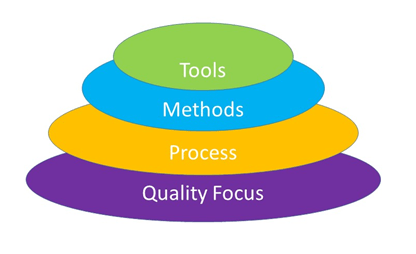
Software engineering deals with process, methods, and their implementation tools and finally the quality of the product.This is known as the layered approach of software engineering
  1. Quality Focus

 Software engineering is a layered technology. Referring to Figure 1.1, any engineering approach must
rest on an organizational commitment to quality.
 Total quality management, Six Sigma and similar principles help a continuous software process
improvement, and this ultimately leads to the development of increasingly more mature approaches to
software engineering.
 The bedrock that supports software engineering is a quality focus.

2. Process Layer

 The foundation for software engineering is the process layer.
 Software engineering process is the glue that holds the technology layers together and enables balanced
and timely development of computer software.
 Process defines a framework for a set of key process areas that must be established for effective
delivery of software engineering technology.
 Process defines the context in which technical methods can be applied, work products are produced,
milestones are established, quality is ensured etc.

3. Method Layer

 Software engineering methods provide the technical how-to’s for building software.
 Methods encompass a broad array of tasks that include communication, requirements analysis, design,program construction, testing, and support.

4. Tools Layer

 Software engineering tools provide automated or semi-automated support for the process and the
methods.
 Tools are combines so that information created by one tool can be used by another, a system that is
developed for the support of software development, is called as computer-aided software engineering(CASE). CASE combines software, hardware, and a software engineering database.

Impulsive Buying

Every person has to shop things from time to time. Shopping is a part of our day to day life because it is requisite to supply our families with the basic necessities. Some do shopping to escape the stress built within them and they enjoy by doing so. They find it as a way of relaxing from the monotonous life. While some consumers plan the things that they need to buy before hand by preparing the list of items for every week/month, they surf through the price tags to afford the good quality products at the lowest price, there are others who indulge in impulsive buying. It is the tendency of a customer to buy goods and services without planning anything in advance. When a customer makes impetuous decisions to buy products off the cuff, it is usually provoked by emotions and feelings. Impulsive buying is not just restricted to few products it can be observed on a wide range of goods like clothing, electronic devices, jewellery, sports pieces, pastries and so on, by the consumers when they get fascinated with a sudden impulse.

TYPES OF IMPULSE PURCHASES:

  • PURE IMPULSE BUYING – The consumers crack their normal pattern of consumption
  • REMINDER IMPULSE BUYING – When the consumers sees items in the shop that they forgot to add to the shopping list before, they purchase them when he/she is reminded by seeing those things displayed in the stores.
  • SUGGESTION IMPULSE BUYING – When the customers notice things that they never used or seen before they plan to buy them at the moment by a conviction that it would be very obliging.

Dealers try to exploit this behavior of the customers to promote their sales/services. The hyper markets tries to captivate people from the entrance of their space. They provide a great window display which increases the curiosity of potential customers, introduce combo packs using the demand of the primary products for the sale of secondary products, work with brands, offer suggestions with new products and influence the mind of customers and such plentiful tricks. Marketing companies are more likely to get benefitted because of this trait because customers end up purchasing products even without any actual intent of doing so.

Some of the customers even realize this when half of the wallet is swiped off as they return back to home ending up with random products which may not be of a great use to them. A study published in the June 2008 issue of the Journal Of Consumer Research suggests that consumers are more susceptible to impulsive buying from one brand over another when distracted while shopping. Consumers are also likely to make an impulse purchase, when a consumer perceives that the environment is over stimulating. Emotional appeal contributes largely to impulsive buying. Scientists state that this happens because some items help us feel better and temporarily dampen our unhappiness. Some customers want to stock up things even when there is not an immediate need for them. Many get attracted on the spotting of discounts on products and at times our brain get fooled by the idea that we are getting a good deal and get defeated.

How to get rid of impulsive buying ?

  • Design a budget and cling to it. A budget doesn’t all of a sudden save all your money we should sincerely stick to them. If not planned for a budget don’t go in for spending money.
  • Try not to shop when you are emotional. It takes an major part in triggering a person to go for an impulsive buying. We just buy things in the thrill of the moment and later realize the unnecessary investments made. Retail therapy just makes you feel goo at the spur of the moment.
  • Have a clear monitor on the budget and savings and review it every month. By this we can avoid the dispensable products.
  • When shopping on a larger basis find support and accountability which can go a long way in refraining us from impulsive buying.
  • When tempted to buy a new product go through its reviews and we can realize the worth of buying such products.

Impulsive Buying

Every person has to shop things from time to time. Shopping is a part of our day to day life because it is requisite to supply our families with the basic necessities. Some do shopping to escape the stress built within them and they enjoy by doing so. They find it as a way of relaxing from the monotonous life. While some consumers plan the things that they need to buy before hand by preparing the list of items for every week/month, they surf through the price tags to afford the good quality products at the lowest price, there are others who indulge in impulsive buying. It is the tendency of a customer to buy goods and services without planning anything in advance. When a customer makes impetuous decisions to buy products off the cuff, it is usually provoked by emotions and feelings. Impulsive buying is not just restricted to few products it can be observed on a wide range of goods like clothing, electronic devices, jewellery, sports pieces, pastries and so on, by the consumers when they get fascinated with a sudden impulse.

TYPES OF IMPULSE PURCHASES:

  • PURE IMPULSE BUYING – The consumers crack their normal pattern of consumption
  • REMINDER IMPULSE BUYING – When the consumers sees items in the shop that they forgot to add to the shopping list before, they purchase them when he/she is reminded by seeing those things displayed in the stores.
  • SUGGESTION IMPULSE BUYING – When the customers notice things that they never used or seen before they plan to buy them at the moment by a conviction that it would be very obliging.

Dealers try to exploit this behavior of the customers to promote their sales/services. The hyper markets tries to captivate people from the entrance of their space. They provide a great window display which increases the curiosity of potential customers, introduce combo packs using the demand of the primary products for the sale of secondary products, work with brands, offer suggestions with new products and influence the mind of customers and such plentiful tricks. Marketing companies are more likely to get benefitted because of this trait because customers end up purchasing products even without any actual intent of doing so.

Some of the customers even realize this when half of the wallet is swiped off as they return back to home ending up with random products which may not be of a great use to them. A study published in the June 2008 issue of the Journal Of Consumer Research suggests that consumers are more susceptible to impulsive buying from one brand over another when distracted while shopping. Consumers are also likely to make an impulse purchase, when a consumer perceives that the environment is over stimulating. Emotional appeal contributes largely to impulsive buying. Scientists state that this happens because some items help us feel better and temporarily dampen our unhappiness. Some customers want to stock up things even when there is not an immediate need for them. Many get attracted on the spotting of discounts on products and at times our brain get fooled by the idea that we are getting a good deal and get defeated.

How to get rid of impulsive buying ?

  • Design a budget and cling to it. A budget doesn’t all of a sudden save all your money we should sincerely stick to them. If not planned for a budget don’t go in for spending money.
  • Try not to shop when you are emotional. It takes an major part in triggering a person to go for an impulsive buying. We just buy things in the thrill of the moment and later realize the unnecessary investments made. Retail therapy just makes you feel goo at the spur of the moment.
  • Have a clear monitor on the budget and savings and review it every month. By this we can avoid the dispensable products.
  • When shopping on a larger basis find support and accountability which can go a long way in refraining us from impulsive buying.
  • When tempted to buy a new product go through its reviews and we can realize the worth of buying such products.

Everything about Zomato IPO

History

Zomato was established in 2010 as just a restaurant finding platform. Over the years, the young online startup expanded its services and is today one of the largest online food delivery platforms in India. It has currently expanded its territory to 24 countries including India. Its active restaurant partners have grown to over 1.5 lakhs in the fiscal year 2021 as compared to 94,286 in the fiscal year 2019. The average order value on this platform has risen from Rs 264 in 2020 to Rs 395 in 2021.

Zomato also boasts of having the largest local delivery networks in India with almost 1.7 lakh delivery partners. It’s units are making Rs 20.5 per order from the previous fiscal year. But it also suffered a loss of Rs 30.5 per order in the fiscal year 2020. However, the company has been suffering losses over the last three years.

About the IPO

The IPO issue size is Rs 9375 crores. Of this, Rs 9000 crores is a fresh issue which will be used for the company’s organic and inorganic growth. The remaining Rs 375 crores is an offer for sales. The IPO will be allocated to Qualified Institutional Buyers(QIB), Non-Institutional Buyers(NIB) and Retailers. Qualified Institutional Buyers are allotted a quota of 75%, Non-Institutional Buyers are allotted a quota of 15% and the Retailers are allotted a quota of 10%.

Price range per share is Rs 72-76. There will be 195 shares per lot and retailers can bid for a maximum of 13 lots for the maximum price. The issuing of IPO’s has already begun on 14 July 2021. As of now the IPO has been oversubscribed by more than 4 times in the retail investors quota. The QIB quota has been oversubscribed by 7 times and the NIB quota has seen an oversubscription of 0.45 times. Overall, the IPO has been oversubscribed by 4.79 times.

It is believed that the company will be a loss making company for the next 2-3 years. Experts say that this IPO is not suitable for retail investors. Only people with high risk appetite and those who are willing for long term holdings are advised to go for this IPO. Going ahead, the subscription for this IPO will be available for one more day from 10 am till 5 pm on Friday, July 16, 2021.

The allotment of this IPO will begin on Thursday, 22 July 2021. To the investors who didn’t get allotted, the refund will be initiated on Friday, July 23, 2021. Investors who have been allotted will get their shares on their respective demat accounts on Monday, July 26, 2021. The shares will be listed publicly for exchange from Tuesday, July 27, 2021.

Allotment of IPO’s is random and not based on first come first serve. But being too late is also not good for the allotment. To get higher chances of allotment, make sure that you apply early and apply from different demat accounts. If a person has applied for more than one time with the same PAN card, then all of his applications will be rejected. Buy the shares of it’s parent company to ensure more chances of subscription.

Everything about Zomato IPO

History

Zomato was established in 2010 as just a restaurant finding platform. Over the years, the young online startup expanded its services and is today one of the largest online food delivery platforms in India. It has currently expanded its territory to 24 countries including India. Its active restaurant partners have grown to over 1.5 lakhs in the fiscal year 2021 as compared to 94,286 in the fiscal year 2019. The average order value on this platform has risen from Rs 264 in 2020 to Rs 395 in 2021.

Zomato also boasts of having the largest local delivery networks in India with almost 1.7 lakh delivery partners. It’s units are making Rs 20.5 per order from the previous fiscal year. But it also suffered a loss of Rs 30.5 per order in the fiscal year 2020. However, the company has been suffering losses over the last three years.

About the IPO

The IPO issue size is Rs 9375 crores. Of this, Rs 9000 crores is a fresh issue which will be used for the company’s organic and inorganic growth. The remaining Rs 375 crores is an offer for sales. The IPO will be allocated to Qualified Institutional Buyers(QIB), Non-Institutional Buyers(NIB) and Retailers. Qualified Institutional Buyers are allotted a quota of 75%, Non-Institutional Buyers are allotted a quota of 15% and the Retailers are allotted a quota of 10%.

Price range per share is Rs 72-76. There will be 195 shares per lot and retailers can bid for a maximum of 13 lots for the maximum price. The issuing of IPO’s has already begun on 14 July 2021. As of now the IPO has been oversubscribed by more than 4 times in the retail investors quota. The QIB quota has been oversubscribed by 7 times and the NIB quota has seen an oversubscription of 0.45 times. Overall, the IPO has been oversubscribed by 4.79 times.

It is believed that the company will be a loss making company for the next 2-3 years. Experts say that this IPO is not suitable for retail investors. Only people with high risk appetite and those who are willing for long term holdings are advised to go for this IPO. Going ahead, the subscription for this IPO will be available for one more day from 10 am till 5 pm on Friday, July 16, 2021.

The allotment of this IPO will begin on Thursday, 22 July 2021. To the investors who didn’t get allotted, the refund will be initiated on Friday, July 23, 2021. Investors who have been allotted will get their shares on their respective demat accounts on Monday, July 26, 2021. The shares will be listed publicly for exchange from Tuesday, July 27, 2021.

Allotment of IPO’s is random and not based on first come first serve. But being too late is also not good for the allotment. To get higher chances of allotment, make sure that you apply early and apply from different demat accounts. If a person has applied for more than one time with the same PAN card, then all of his applications will be rejected. Buy the shares of it’s parent company to ensure more chances of subscription.

Characteristics of a Good Software

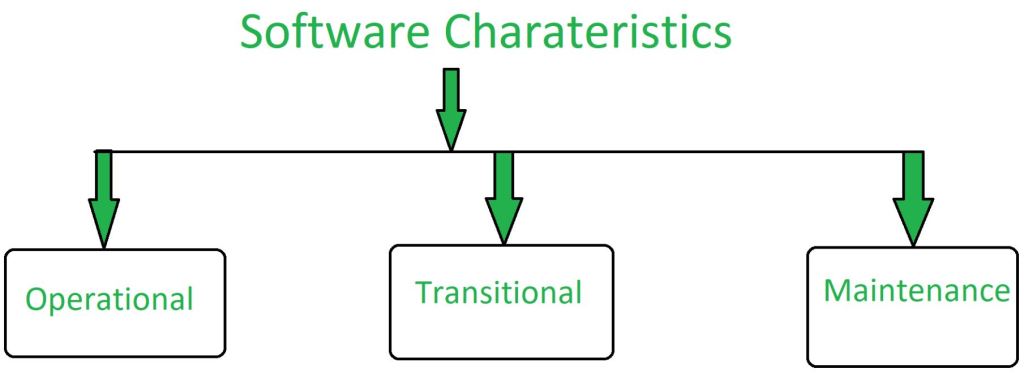
A software product can be judged by what it offers and how well it can be used. This software must satisfy on the following grounds: Operational, Transitional, Maintenance Well-engineered and crafted software is expected to have the following characteristics:

  1. Operational:

This tells us how well software works in operations. It can be measured on:

  • Budget
  • Usability
  • Efficiency
  • Correctness
  • Functionality
  • Dependability
  • Security
  • Safety

2. Transitional:

This aspect is important when the software is moved from one platform to another:

  • Portability
  • Interoperability
  • Reusability
  • Adaptability

3. Maintenance:

This aspect briefs about how well software has the capabilities to maintain itself in the ever-
changing environment:

  • Modularity
  • Maintainability
  • Flexibility
  • Scalability

Characteristics of a Good Software

A software product can be judged by what it offers and how well it can be used. This software must satisfy on the following grounds: Operational, Transitional, Maintenance Well-engineered and crafted software is expected to have the following characteristics:

  1. Operational:

This tells us how well software works in operations. It can be measured on:

  • Budget
  • Usability
  • Efficiency
  • Correctness
  • Functionality
  • Dependability
  • Security
  • Safety

2. Transitional:

This aspect is important when the software is moved from one platform to another:

  • Portability
  • Interoperability
  • Reusability
  • Adaptability

3. Maintenance:

This aspect briefs about how well software has the capabilities to maintain itself in the ever-
changing environment:

  • Modularity
  • Maintainability
  • Flexibility
  • Scalability

10 Best Places to visit in Kashmir

Kashmir is the Indian subcontinent’s northernmost geographical area.

Srinagar

Srinagar is one of Kashmir’s and India’s most attractive and well-known tourist destinations. Srinagar offers it everything, from boating to trekking, bird viewing to water skiing. This location is regarded as the “mirror to the mountains” by the locals. This location provides an up-close glimpse into Kashmiri cuisine and culture.

Dal Lake

Dal Lake, often known as the “Jewel in the Crown of Kashmir,” is one of Kashmir’s most exquisite pieces of heaven. For decades, the lake has been the region’s favorite summer getaway, surrounded by magnificent Mughal gardens and dotted with British-built houseboats.

Indira Gandhi Memorial Tulip garden

You enter the garden with your eyes closed, then open them to find yourself immersed in a lake of flowers. Tulips of different colors may be found in this garden, which was planted using seeds brought in from Spain. They’re at their finest in the springtime, and the neighboring Dal Lake provides the perfect backdrop for photography.

Gulmarg

Gulmarg, also known as the ‘Meadow of Flowers,’ is a big attraction with its stretch of colorful flowers set against the backdrop of snow-capped mountains. For all the right reasons, Gulmarg is regarded as one of the greatest locations to visit in Kashmir. Because of the numerous opportunities for skiing in the snow while taking in the scenery, this region of Kashmir is also regarded as an adventurer’s paradise.

Sonmarg

Sonamarg is known as the ‘Golden Meadow,’ as its name indicates. Its attractions include an unending stream of beautiful flowers and undulating hiking trails.

Pahalgam

Pahalgam, at a height of 2740 meters, is considered a representation of paradise on earth. It is 95 kilometers from Srinagar and is surrounded by thick woods, lovely lakes, and flower-filled meadows. This small town is famous for pulling all of a visitor’s tension away, making it one of the greatest locations to visit in Kashmir.

Betaab Valley

Many trekkers begin their journey in this valley, which is surrounded by beautiful green meadows and snow-capped mountains. The thick greenery of conifers and lush green bushes encapsulate Kashmir’s genuine nature. This valley, which is dotted with colorful cottages, shelters, and a variety of bird species, is unique in its own right. You may go horseback riding or enjoy a picnic on the banks of the snow-fed Jade River in the Betab Valley, which flows south from the snowy peaks. The water in Jade is so clean that it is used for drinking by the locals!

Nishat Garden

On the shores of Dal Lake, this one is regarded as one of the biggest Mughal Gardens. Nishat Garden is also known as the Garden of Bliss, which is fitting given the stunning Zabarwan Mountains in the background. This garden is historically significant, and it was created by Asaf Khan, Nur Jahan’s brother.

Shalimar Garden

The well-known Emperor Jehangir built this garden specifically for his wife, Nur Jahan, in the year 1616. Another garden, Faiz Baksh, was added to this one after a while. Inside the garden, there is a canal with polished stones around the edges.

Sinthan Top

Sinthan Top, at 3,658 meters above sea level, provides stunning panoramic views of the area’s snow-capped mountains and low-lying areas. The location is easily accessible from a highway, but you must navigate yourself and overcome a few challenges before reaching the summit. You may even continue walking and land on the snow while enjoying a beautiful and magnificent 360-degree panorama of the entire area.

10 Best Places to visit in Kashmir

Kashmir is the Indian subcontinent’s northernmost geographical area.

Srinagar

Srinagar is one of Kashmir’s and India’s most attractive and well-known tourist destinations. Srinagar offers it everything, from boating to trekking, bird viewing to water skiing. This location is regarded as the “mirror to the mountains” by the locals. This location provides an up-close glimpse into Kashmiri cuisine and culture.

Dal Lake

Dal Lake, often known as the “Jewel in the Crown of Kashmir,” is one of Kashmir’s most exquisite pieces of heaven. For decades, the lake has been the region’s favorite summer getaway, surrounded by magnificent Mughal gardens and dotted with British-built houseboats.

Indira Gandhi Memorial Tulip garden

You enter the garden with your eyes closed, then open them to find yourself immersed in a lake of flowers. Tulips of different colors may be found in this garden, which was planted using seeds brought in from Spain. They’re at their finest in the springtime, and the neighboring Dal Lake provides the perfect backdrop for photography.

Gulmarg

Gulmarg, also known as the ‘Meadow of Flowers,’ is a big attraction with its stretch of colorful flowers set against the backdrop of snow-capped mountains. For all the right reasons, Gulmarg is regarded as one of the greatest locations to visit in Kashmir. Because of the numerous opportunities for skiing in the snow while taking in the scenery, this region of Kashmir is also regarded as an adventurer’s paradise.

Sonmarg

Sonamarg is known as the ‘Golden Meadow,’ as its name indicates. Its attractions include an unending stream of beautiful flowers and undulating hiking trails.

Pahalgam

Pahalgam, at a height of 2740 meters, is considered a representation of paradise on earth. It is 95 kilometers from Srinagar and is surrounded by thick woods, lovely lakes, and flower-filled meadows. This small town is famous for pulling all of a visitor’s tension away, making it one of the greatest locations to visit in Kashmir.

Betaab Valley

Many trekkers begin their journey in this valley, which is surrounded by beautiful green meadows and snow-capped mountains. The thick greenery of conifers and lush green bushes encapsulate Kashmir’s genuine nature. This valley, which is dotted with colorful cottages, shelters, and a variety of bird species, is unique in its own right. You may go horseback riding or enjoy a picnic on the banks of the snow-fed Jade River in the Betab Valley, which flows south from the snowy peaks. The water in Jade is so clean that it is used for drinking by the locals!

Nishat Garden

On the shores of Dal Lake, this one is regarded as one of the biggest Mughal Gardens. Nishat Garden is also known as the Garden of Bliss, which is fitting given the stunning Zabarwan Mountains in the background. This garden is historically significant, and it was created by Asaf Khan, Nur Jahan’s brother.

Shalimar Garden

The well-known Emperor Jehangir built this garden specifically for his wife, Nur Jahan, in the year 1616. Another garden, Faiz Baksh, was added to this one after a while. Inside the garden, there is a canal with polished stones around the edges.

Sinthan Top

Sinthan Top, at 3,658 meters above sea level, provides stunning panoramic views of the area’s snow-capped mountains and low-lying areas. The location is easily accessible from a highway, but you must navigate yourself and overcome a few challenges before reaching the summit. You may even continue walking and land on the snow while enjoying a beautiful and magnificent 360-degree panorama of the entire area.

What’s happening in Afghanistan

On February 29,2020 , the U.S. government and the Taliban signed  a peace agreement after more then years of negotiation.

The war that has been going on for almost 20 years comes to an end.

HISTORY

It started with the attack of 9/11. After September 2001 , U.S. invaded Afghanistan to capture the master mind of the attack . Osama bin Laden , the leader of al-Qaeda’s was killed in that invasion.  The Taliban leaders relocated to southern Afghanistan and the border to Pakistan. From there , Afghanistan has been in control of UNITED STATE . U.S. Military and troops has been sent there to capture the area of Taliban.

 WHY IN THE NEWS

 According to U.S. and Taliban agreement  ,  The withdrawal  of troop to be done by September 11.

U.S. force to withdraw approx. 8,500 troops within 135 days and complete a full withdrawal within fourteen months.

In agreement , The Taliban  promise to prevent territory from terrorist groups and they also promise to negotiate with Afghanistan government  in March 2020.

Result of negotiation between Taliban and Afghanistan government . The reason for disagreement between them due to timing of the release of Five thousand  Taliban prisoners.

Taliban wanted a release of prisoners before the agreement and The Afghan  government wanted it after the negotiation.

Afghan government itself was divided in two groups and lastly in February 2020, Ashraf Ghani declared president of election commission. His main rival chief Executive Officer Abdullah Abdullah declared himself as winner and held a parallel inauguration ceremony in March 2020.

 At currently Taliban has captured 90%  of the areas including Kabul.

 In conclusion ,the effect and consequences of this war will be suffered of the common man mostly women and children.   The nightmare will be haunting these people for long.

What’s happening in Afghanistan

On February 29,2020 , the U.S. government and the Taliban signed  a peace agreement after more then years of negotiation.

The war that has been going on for almost 20 years comes to an end.

HISTORY

It started with the attack of 9/11. After September 2001 , U.S. invaded Afghanistan to capture the master mind of the attack . Osama bin Laden , the leader of al-Qaeda’s was killed in that invasion.  The Taliban leaders relocated to southern Afghanistan and the border to Pakistan. From there , Afghanistan has been in control of UNITED STATE . U.S. Military and troops has been sent there to capture the area of Taliban.

 WHY IN THE NEWS

 According to U.S. and Taliban agreement  ,  The withdrawal  of troop to be done by September 11.

U.S. force to withdraw approx. 8,500 troops within 135 days and complete a full withdrawal within fourteen months.

In agreement , The Taliban  promise to prevent territory from terrorist groups and they also promise to negotiate with Afghanistan government  in March 2020.

Result of negotiation between Taliban and Afghanistan government . The reason for disagreement between them due to timing of the release of Five thousand  Taliban prisoners.

Taliban wanted a release of prisoners before the agreement and The Afghan  government wanted it after the negotiation.

Afghan government itself was divided in two groups and lastly in February 2020, Ashraf Ghani declared president of election commission. His main rival chief Executive Officer Abdullah Abdullah declared himself as winner and held a parallel inauguration ceremony in March 2020.

 At currently Taliban has captured 90%  of the areas including Kabul.

 In conclusion ,the effect and consequences of this war will be suffered of the common man mostly women and children.   The nightmare will be haunting these people for long.

EDUCATION DEVELOPMENT DAY IN TAMILNADU!!!

Though many National leaders rendered their selfless service to our country, one among them to be noted was the Kingmaker Kamaraj. K. Kamaraj, familiarly known as Kamarajar was an independent activist and the former Chief Minister of Tamil Nadu. He was popularly known as the Kingmaker of India during the 1960s. He supported Lal Bahadur Shastri, to be the President of India after the death of Nehru. After the sudden dismissal of Lal Bahadur Shastri, he supported Indira Gandhi to be the President of India. He was a man of simplicity and known for his best leadership in the development of Tamil Nadu. The Midday Meals Scheme introduced by him was very popular in India. He was popularly known as Karmaveerar, KalviKan Thirantha Mudhalvar, etc.

K KAMARAJ – Former Chief Minister Of TamilNadu

Kamaraj was born on 15th July 1903 at Virudhunagar in TamilNadu to Kumarasamy and Sivagami Ammal. His birth name was Kamatchi and later changed to Kamarajar. He studied primary education in a traditional school and he was to drop out because of his father’s death to support his family. He had a younger sister named Nagammal. He worked in his uncle’s shop and begun to attend political meetings and common meetings related to Home Rule Movement. He developed his interest in politics by reading daily newspapers. In 1920, at the age of 18, he became a very enthusiastic person and joined Indian National Congress. He organized public meetings for leaders in Virudhnagar and was very eager to meet Mahatma Gandhi. As he wished, he met Gandhiji for the first time in the meeting. Kamaraj went to jail for two years for taking part in ‘Salt Sathyagraha’ led by C. Rajagopalachari at Vedaranyam.

At the age of 34, he contested in the Legislative election for the first time and marked his first victory at Sattur in 1937. He stuck by the principle ‘ One should not accept any post/leadership to which one could not do full justice ‘. In 1954, Kamaraj became the Chief Minister of Tamil Nadu. Various schemes and deeds introduced by him as a Chief Minister are as follows:

  • He removed Hereditary Education Policy introduced by Rajaji.
  • He reopened more than 12,000 schools during his leadership as a Chief Minister.
  • Education and trade hiked during his period.
  • Kamarajar aimed to eradicate illiteracy and introduced compulsory education. The literacy rate was 7% during the British period but during his period, the literacy rate increased to 37%.
  • He also introduced the Midday Meals Scheme to provide atleast one healthy meal per day to the poor and needy children. He introduced the uniform scheme to the school children to eradicate the germination of caste-based flaws in young minds.
  • He built several irrigation canals during his period. He built nine dams which are appreciated till now and they are as strong as him.
  • Huge investment industries such as Neyveli Lignite Corporation, BHEL, etc. were started during his period.

He has been the Chief Minister of Tamil Nadu for three consecutive terms, by the victory in 1957 and 1962. His ruling period was known as the Golden Age of Tamil Nadu. Kamaraj was a great follower of Mahatma Gandhi, yet to this fact, he died on 2nd October 1975 during his sleep in his native Virudhunagar. He was awarded ‘Bharat Ratna’ posthumously in 1976. The Chennai Airport is named after him as Kamaraj Terminal.

His birthday is celebrated as ‘ Education Development Day ‘ in Tamil Nadu every year. Though he died, his good deeds remain in the hearts of the people.

Intelligence plus character – that is the goal of Education.

– K Kamaraj.

EDUCATION DEVELOPMENT DAY IN TAMILNADU!!!

Though many National leaders rendered their selfless service to our country, one among them to be noted was the Kingmaker Kamaraj. K. Kamaraj, familiarly known as Kamarajar was an independent activist and the former Chief Minister of Tamil Nadu. He was popularly known as the Kingmaker of India during the 1960s. He supported Lal Bahadur Shastri, to be the President of India after the death of Nehru. After the sudden dismissal of Lal Bahadur Shastri, he supported Indira Gandhi to be the President of India. He was a man of simplicity and known for his best leadership in the development of Tamil Nadu. The Midday Meals Scheme introduced by him was very popular in India. He was popularly known as Karmaveerar, KalviKan Thirantha Mudhalvar, etc.

K KAMARAJ – Former Chief Minister Of TamilNadu

Kamaraj was born on 15th July 1903 at Virudhunagar in TamilNadu to Kumarasamy and Sivagami Ammal. His birth name was Kamatchi and later changed to Kamarajar. He studied primary education in a traditional school and he was to drop out because of his father’s death to support his family. He had a younger sister named Nagammal. He worked in his uncle’s shop and begun to attend political meetings and common meetings related to Home Rule Movement. He developed his interest in politics by reading daily newspapers. In 1920, at the age of 18, he became a very enthusiastic person and joined Indian National Congress. He organized public meetings for leaders in Virudhnagar and was very eager to meet Mahatma Gandhi. As he wished, he met Gandhiji for the first time in the meeting. Kamaraj went to jail for two years for taking part in ‘Salt Sathyagraha’ led by C. Rajagopalachari at Vedaranyam.

At the age of 34, he contested in the Legislative election for the first time and marked his first victory at Sattur in 1937. He stuck by the principle ‘ One should not accept any post/leadership to which one could not do full justice ‘. In 1954, Kamaraj became the Chief Minister of Tamil Nadu. Various schemes and deeds introduced by him as a Chief Minister are as follows:

  • He removed Hereditary Education Policy introduced by Rajaji.
  • He reopened more than 12,000 schools during his leadership as a Chief Minister.
  • Education and trade hiked during his period.
  • Kamarajar aimed to eradicate illiteracy and introduced compulsory education. The literacy rate was 7% during the British period but during his period, the literacy rate increased to 37%.
  • He also introduced the Midday Meals Scheme to provide atleast one healthy meal per day to the poor and needy children. He introduced the uniform scheme to the school children to eradicate the germination of caste-based flaws in young minds.
  • He built several irrigation canals during his period. He built nine dams which are appreciated till now and they are as strong as him.
  • Huge investment industries such as Neyveli Lignite Corporation, BHEL, etc. were started during his period.

He has been the Chief Minister of Tamil Nadu for three consecutive terms, by the victory in 1957 and 1962. His ruling period was known as the Golden Age of Tamil Nadu. Kamaraj was a great follower of Mahatma Gandhi, yet to this fact, he died on 2nd October 1975 during his sleep in his native Virudhunagar. He was awarded ‘Bharat Ratna’ posthumously in 1976. The Chennai Airport is named after him as Kamaraj Terminal.

His birthday is celebrated as ‘ Education Development Day ‘ in Tamil Nadu every year. Though he died, his good deeds remain in the hearts of the people.

Intelligence plus character – that is the goal of Education.

– K Kamaraj.

Basics of Software Engineering

What is a Software ?

  • It is a set of instructions (computer programs) that when executed provide desired function and performance.
  • It is a Data structures that enable the programs to adequately manipulate information.
  • It is a Documents that describe the operation and use of the programs.

What is Embedded Software ?

 Intelligent products have become commonplace in nearly every consumer and industrial market.
 Embedded software resides in read-only memory and is used to control products and systems for the
consumer and industrial markets.
 Embedded software can perform very limited and esoteric functions (e.g., keypad control for a
microwave oven) or provide significant function and control capability (e.g., digital functions in an
automobile such as fuel control, dashboard displays, and braking systems).
 A function point extension called feature points.
 It is a superset of the function point measure that can be applied to systems and engineering software applications.

 The feature point measure accommodates applications in which algorithmic complexity is high. Real-
time, process control and embedded software applications tend to have high algorithmic complexity and are therefore amenable to the feature point.

Changing Nature of Software

 Whenever one starts with the software implementation changes can occur any time.
 The software can be change due to any reason.
 But while implementing software one should be ready for such changes as if changes occur there shall not be drastic change in the system.
 The development team should manage to implement/mould the implemented system so that the
changes can be reflected and the user requirements meet.
 When change occur the team look for the current status of the system and from there onwards they starts implementing a system with new requirements of a user or changes which is to be implemented in a system.

Basics of Software Engineering

What is a Software ?

  • It is a set of instructions (computer programs) that when executed provide desired function and performance.
  • It is a Data structures that enable the programs to adequately manipulate information.
  • It is a Documents that describe the operation and use of the programs.

What is Embedded Software ?

 Intelligent products have become commonplace in nearly every consumer and industrial market.
 Embedded software resides in read-only memory and is used to control products and systems for the
consumer and industrial markets.
 Embedded software can perform very limited and esoteric functions (e.g., keypad control for a
microwave oven) or provide significant function and control capability (e.g., digital functions in an
automobile such as fuel control, dashboard displays, and braking systems).
 A function point extension called feature points.
 It is a superset of the function point measure that can be applied to systems and engineering software applications.

 The feature point measure accommodates applications in which algorithmic complexity is high. Real-
time, process control and embedded software applications tend to have high algorithmic complexity and are therefore amenable to the feature point.

Changing Nature of Software

 Whenever one starts with the software implementation changes can occur any time.
 The software can be change due to any reason.
 But while implementing software one should be ready for such changes as if changes occur there shall not be drastic change in the system.
 The development team should manage to implement/mould the implemented system so that the
changes can be reflected and the user requirements meet.
 When change occur the team look for the current status of the system and from there onwards they starts implementing a system with new requirements of a user or changes which is to be implemented in a system.