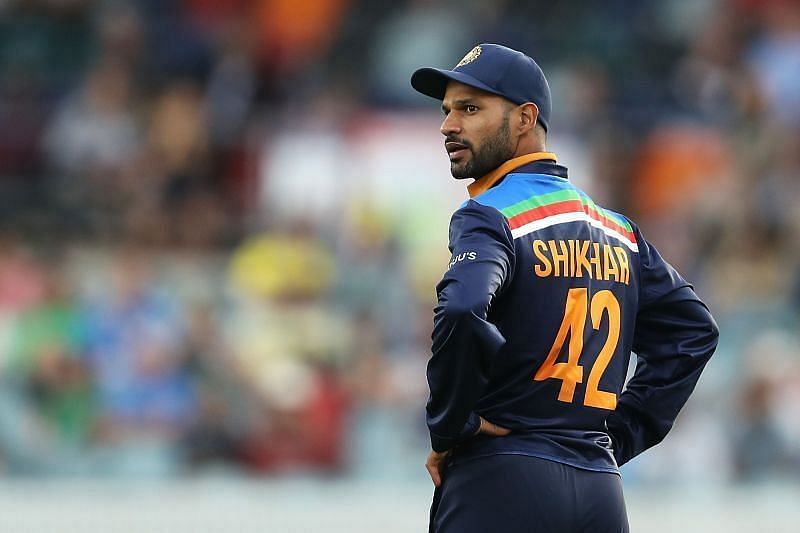
For the first time in history, Indian cricket fans will witness two different Indian cricket teams simultaneously. While the Test side, under Virat Kohli, is in England for a five-match series, a team of white-ball players, under Shikhar Dhawan, is in Sri Lanka for three ODIs and as many T20Is, starting from July 18. Nevertheless, the squad for the Sri Lanka series is missing many prominent names, and it would be interesting to see how the Men in Blue perform.
Speaking of Sri Lanka, they are fresh from a clean sweep in England in both the ODI and T20I series. However, they should leave no stone unturned to defeat this second string Indian team which is missing most of it’s big players. Sri Lanka hasn’t had any great success in the past few years and a victory against the Indian side will boost their confidence ahead of the T20I World Cup held later this year.
Veteran opener Shikhar Dhawan is leading this team and pacer Bhuvneshwar Kumar has been named his deputy. Prithvi Shaw, Navdeep Saini and Sanju Samson are back in Indian colors. Youngsters Devdutt Padikkal, Chetan Sakariya and Ruturaj Gaikwad received their maiden call up due to their impactful performance in the domestic season and in the Indian Premier League. The experienced players include Yuzvendra Chahal, Kuldeep Yadav, Manish Pandey and Hardik Pandya. Even this second string side looks strong, balanced and India start the series as favourites.
As for Sri Lanka, they need to put their best foot forward in order to challenge this new Indian team. Wicketkeeper-batsman Kusal Perera was the captain of this team, but is ruled out from the series as he sprained his shoulder while training. A replacement hasn’t been announced yet and this injury will be a major set back for the Sri Lankan team as it is missing several of it’s veterans like Angelo Mathews, Dinesh Chandimal haven’t played white ball cricket for their national team for a while.
Sri Lanka will be looking to its young players like Dhananjaya de Silva, Wanindu Hasaranga and Avishka Fernando as they have been impressive for their side lately. Despite all this, Sri Lanka will be starting the tour as underdogs and will be aiming to defeat this young Indian side in both ODIs and T20Is. The first ODI will be start on Sunday, July 18 2021,3:00 PM IST and the remaining ODIs will take place on 20, 23 July respectively.
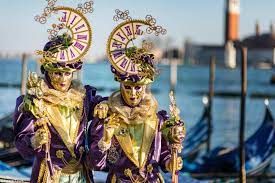
This Carnival of Venice is described as one of the best carnivals in the world. It is centered around the Piazza San Marco. The events are held in every towns and cities of Venice. This event also contains boat parades along with the Grand Canal. Its main specialty is about their elaborate masks and a mask parade is done in the Piazza San Marco. It comprises of a special Carnival for Children in the Cannaregio district of Venice. It is kind of annual festival held every year in the city of Venice.
It is held for a period of two weeks . It ends just the day before the Ash Wednesday which is very commonly said as the shrove Thursday. During this carnival a number of freebies are available for the tourists. Like the free show , special video projections and free guided museum tours , there’s a lot of free things that happens during the Carnival which makes us to add this carnival as a must attending one on our bucket list. The tradition of the mask started long back to the 13th century .
According to the pages of history, The Carnival of Venice started when the venetians military, of the Venetian Republic won against the Patriarch of Aquileia in the year of 1162. On that time people started celebrating the the victory by dancing . This festival be became an official on during the period of Renaissance. During the 17th century it became the prestigious way to save the image of the Venice in the world. This carnival reached its peak fame during the 18th century.
This Carnival of Venice is described as one of the best carnivals in the world. It is centered around the Piazza San Marco. The events are held in every towns and cities of Venice. This event also contains boat parades along with the Grand Canal. Its main specialty is about their elaborate masks and a mask parade is done in the Piazza San Marco. It comprises of a special Carnival for Children in the Cannaregio district of Venice. It is kind of annual festival held every year in the city of Venice.
It is held for a period of two weeks . It ends just the day before the Ash Wednesday which is very commonly said as the shrove Thursday. During this carnival a number of freebies are available for the tourists. Like the free show , special video projections and free guided museum tours , there’s a lot of free things that happens during the Carnival which makes us to add this carnival as a must attending one on our bucket list. The tradition of the mask started long back to the 13th century .
According to the pages of history, The Carnival of Venice started when the venetians military, of the Venetian Republic won against the Patriarch of Aquileia in the year of 1162. On that time people started celebrating the the victory by dancing . This festival be became an official on during the period of Renaissance. During the 17th century it became the prestigious way to save the image of the Venice in the world. This carnival reached its peak fame during the 18th century.
Running has truly changed my life. I never thought that because I never understood running as a form of exercise.
When physical harm is looming, our natural response is to run. It’s human nature — we either fight or flee. Most of us choose to flee— I would surely run if a wild animal would charge at me. But I also found that our fear mechanism kicks in when we face emotional challenges.
During the first two weeks this year, my grandmother passed away, I broke up with my girlfriend, and I started to dislike my job in London because of office politics. Everything seemed to work against me.
My life felt stuck. So I decided to run. It was my natural response. I just wanted to getaway. I laced my shoes and started running — by the time I came back, I felt tired and energized at the same time. I knew I was on to something.
I’ve always exercised since I was little. I played basketball through high school. In my adult years, I’ve practiced different sports — I tried kickboxing, tennis, squash. But I never got excited about those things.
So I did what most people do when they don’t want to get fat — go to the gym. In a way, going to the gym is lazy. You hop in your car, do some light to moderate exercise while you have a chat with a friend or someone you know from the gym. I’ve been doing that for the past ten years for 2 or 3 times a week.
Once in a while, I would get hyped about running. However, I always picked up running for the wrong reasons. I used running as a reason to buy new Nike’s and compression clothes. Or I decided to run to lose weight or become more healthy.
Other times, I went for a run on Sunday morning to get rid of the alcohol from the previous night out. My running stints never lasted longer than 2–3 weeks. I would lose interest in running. I just didn’t understand it. Why would anyone go through the pain of running? Especially when the weather is bad. Who does that? I’d rather go to the gym with my friends, talk, and pick up some weights.
But I found that pain is precisely the reason I started to run again. When my life was not what I wanted it to be, I was upset. I felt like punching a stranger on the subway. But instead of getting busted by a British police officer, I decided to run when I arrived home one day after work. It was a cold January day, and I only ran for 3 miles in a time that I am too ashamed to mention. But my time is not what’s important — during that run I finally got it.
My stamina was synonymous with my life at the time — it was bad, but I knew it would be better if I kept running. If I would fight against the wind, rain, cold, and my thoughts of giving up, I would eventually improve my stamina and be a better runner.
My life has improved at the same rate that my running pace and stamina has improved. But running has the most impact on my productivity, mood, creativity, and overall livelihood. Scientific research backs all of this.
Dr. John Ratey wrote a book about the effect of exercise on our brain, called Spark. He says:
“Cognitive flexibility is an important executive function that reflects our ability to shift thinking and to produce a steady flow of creative thoughts and answers as opposed to a regurgitation of the usual responses. The trait correlates with high-performance levels in intellectually demanding jobs. So if you have an important afternoon brainstorming session scheduled, going for a short, intense run during lunchtime is a smart idea.”
Every time life became difficult I would give up. When I wanted to travel the world after college, I decided that I did not have money — so I told myself I should save money. Years passed, and that round-the-world trip never happened — I was scared to be away from home for a long time.
Now, when life is difficult, my response is different — I love the pain and struggle instead of shy away from it. I owe this to running. And the best thing about running is that is easy to start. You just go. You decide when, where, and how fast.
To me, running is exactly like life. It’s hard, you do not always want to do it, summers are better than winters, and you feel better when you have new shoes. But it’s worth it. After the pain comes happiness, both in life and in running. That’s why my life is moving forward again — I’ve never stopped running for a day. You should try it too.
Is college worth the investment of your time and money? And what do you even learn in college?
When it comes to learning—I like to learn by doing. So from that point of view, going to college wouldn’t be necessary for me. But I did go. For six years.
Most of my friends and peers who are like me never went to college. They just did things. But weirdly enough, I did not only go to college, but I also loved it.
I spent four years getting a bachelor’s degree in business, and another two years to get a Master’s degree in marketing from another university.
People often ask me:
“Should I go to college?”
“Should I drop out?”
“Should my kid go to college?”
“Do you need a degree to get a job?”
I don’t think I’m in a position to answer any of those questions. It all depends on what you want to do in life.
The only thing I can do is share with you what I’ve learned from those six years in college. Because there are some valuable things I’ve learned that I probably wouldn’t know if I didn’t go to college.
So here are the 6 biggest lessons I’ve learned in college.
1. Learning Should Be Fun
Most of my professors were quite boring. And that often made learning a boring affair.
But fortunately, I also had many enthusiastic professors. That made me learn an important lesson: Learning is not boring. People are.
The school doesn’t have to be boring as long as the teachers are passionate about what they teach.
Why not make it more fun for students? I never get it when teachers think they are police offers. Teachers should teach, not the police.
2. The More You Learn, The Less You Know
During my time in college, I learned mostly from professors, books, and my fellow students. As a business student, you often work together on assignments. And that’s how I learned the most useful things I know.
But the funny thing was that every year I felt like I had fewer answers to everything.
“Judge a man by his questions rather than by his answers.” ― Voltaire
That’s the beauty of education. Idiots think they know everything. But the more you learn, the less certain you are of things.
Some people go to college and they become even bigger idiots because they think they have a degree.
But going to college has NOTHING to do with being smart. We’re all in the same boat: We know nothing.
3. “Thinking” Is A Skill
I would say that I’ve forgotten about 95% of the stuff I learned. But I don’t care.
I don’t get why people HAVE to study something they enjoy. If you think that you should only study subjects that you love, you’re completely missing the point of college.
The most valuable thing you learn in college is the ability to think.
As long as you study SOMETHING, you train your brain to think. And that’s priceless. Thomas Edison put it best:
“Five percent of the people think; ten percent of the people think they think; and the other eighty-five percent would rather die than think.”
We live in a world where resourceful people thrive. How do you become resourceful? Exercise that brain of yours. Learn how to think.
4. Finishing Something Is HARD
College was hard. People who say they went through college with ease are full of shit.
It’s not easy to learn full time for at least 4 years. And teachers often try to make it hard on you as well. And they should.
In college, you learn that finishing something is hard—it takes real blood, sweat, and tears.
But you know what? Once you finish something that you started, you’ll be proud of yourself.
5. Experience Is Never A Waste Of Time Or Money
People often regret that they chose a wrong degree. Or sometimes you feel like you wasted your time and money on education that you didn’t pursue further with a career in that direction.
But how else do you expect to know yourself? Everything you do in life is an experiment.
If something doesn’t work out, just try something else. Maybe you switched majors, classes, or even degrees. So what? As long as you don’t give up it’s all good.
“All life is an experiment. The more experiments you make the better.” — Ralph Waldo Emerson
6. There Are People Who Are Drastically Different From You
When you grow up in one area, you think that’s life. You are exposed to the same people, same opinions, thoughts, culture, etc.
That’s a very limited life.
But once you go to college, you often meet people from different countries, with different ideas and cultures.
That’s a great way to learn about people and the world. In a way, it’s like traveling the world. But when you go to college, the world comes to you.
During my time in college, I worked with people from South-Africa, China, South-Korea, Romania, Germany, America, Canada, Brazil, India. That’s what I can recall. I was probably exposed to even more people from different countries.
It gives you a better perspective of the world and the people who live in it. One thing you’ll learn is that, in a way, we’re all the same — and yet, we’re so different.
That’s not only the beauty of college but also of life.
So, if you have the chance; go to college. If not; try to learn in a different way.
As I said, I don’t know much, but there’s one thing I’m confident about: Education never ends. So whether you’re in college or not, just keep on keep on learning.
“I quit.” That’s what I think three or four times a month.
To be honest, the thought of quitting whatever I’m doing in my life has been on my mind as long as I remember. When I was in high school, I wanted to quit and just find a job. When I played basketball, I wanted to quit.
When I started a business, I wanted to quit and get a job. When I got a job, I wanted to quit and get back to my business.
I can go on and on until I reach the present. I know, it sounds like an existential crisis that people in the first world only have. But that’s not what’s going on.
You’ll never find me crying about stuff like missing out on parties, not being able to get my hands on a ‘one-of-a-kind’ t-shirt (you hype beasts out there), or a dead battery.
But no matter how much I love what I do, the thoughts of quitting and just walking away show up in my mind every time things get hard. And in the past, those thoughts cost me many nights of sleep.
But more often, it’s just fear. And I refuse to surrender to it. And so should you.
Don’t Quit When It Gets Hard
I’m all about quitting things that are not worth it. Sometimes, you’re doing things that don’t contribute anything to your life. For example, I’ve left jobs, clients, and even friends in the past.
However, I’m firmly against quitting when things get hard. And unfortunately, that’s exactly the reason most of us quit.
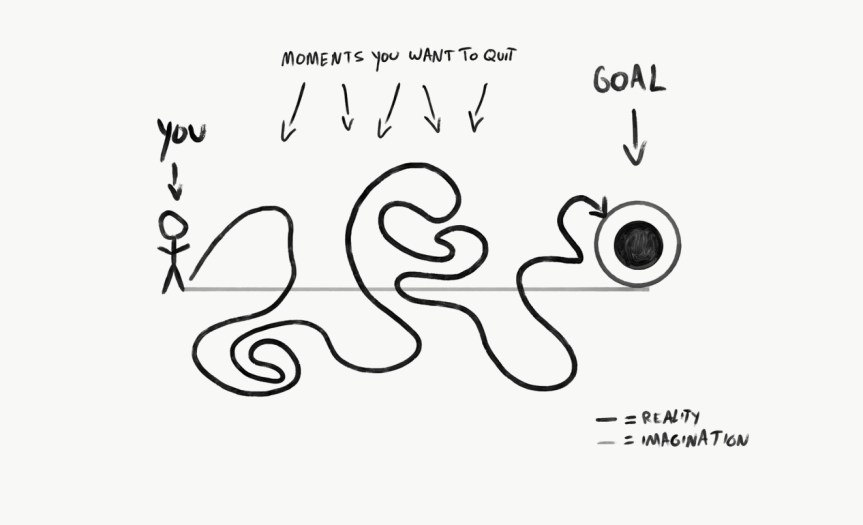
Look, achieving goals never happens in a linear way.
We believe there’s a straight line from where you are to where you want to be. Let’s say your goal is to start a business so you can have more freedom in your life. That was my goal since I was 17.
I still remember how I came up with that goal. I started working several jobs since I was 15. I worked in kitchens, stores, and call centers. And I quickly realized, there’s only one person who benefits from all this: The one at the top.
So from an early age, I set my mind to working for myself. I thought I could just start working for myself from the beginning.
But that’s not how it worked out for me. I had to take a lot of detours. I worked for many other people in between. I also started businesses that failed. And I’m still no way near where I want to be.
But understanding that life is not linear helps us to change the way we think.
It took me years to figure out how you can work for yourself successfully. Along the way, I’ve thought about quitting many times.
Now, I realize that’s a good thing. If you never feel like quitting, that means life is too easy, and you need to take action in your life.
Everybody plays tough and pretends they can easily handle life. I don’t believe that. No one knows what they’re doing. Some people are just better at dealing with their fear than others.
Because when you get over your fear, good things happen. Unfortunately, there’s nothing I can say to make things easier for you. Life is not easy. No matter what you do, it’s time to stop watching Netflix every night and browsing webshops for the newest clothes.
Don’t put your life off. It takes a while to figure things out. But that doesn’t mean you should quit. I’ve learned that if you haven’t reached your goals yet, or haven’t found a way to be successful, it doesn’t mean you’re a loser.
It means you haven’t found out how to win yet. If you keep going, you will find out.
Running has truly changed my life. I never thought that because I never understood running as a form of exercise.
When physical harm is looming, our natural response is to run. It’s human nature — we either fight or flee. Most of us choose to flee— I would surely run if a wild animal would charge at me. But I also found that our fear mechanism kicks in when we face emotional challenges.
During the first two weeks this year, my grandmother passed away, I broke up with my girlfriend, and I started to dislike my job in London because of office politics. Everything seemed to work against me.
My life felt stuck. So I decided to run. It was my natural response. I just wanted to getaway. I laced my shoes and started running — by the time I came back, I felt tired and energized at the same time. I knew I was on to something.
I’ve always exercised since I was little. I played basketball through high school. In my adult years, I’ve practiced different sports — I tried kickboxing, tennis, squash. But I never got excited about those things.
So I did what most people do when they don’t want to get fat — go to the gym. In a way, going to the gym is lazy. You hop in your car, do some light to moderate exercise while you have a chat with a friend or someone you know from the gym. I’ve been doing that for the past ten years for 2 or 3 times a week.
Once in a while, I would get hyped about running. However, I always picked up running for the wrong reasons. I used running as a reason to buy new Nike’s and compression clothes. Or I decided to run to lose weight or become more healthy.
Other times, I went for a run on Sunday morning to get rid of the alcohol from the previous night out. My running stints never lasted longer than 2–3 weeks. I would lose interest in running. I just didn’t understand it. Why would anyone go through the pain of running? Especially when the weather is bad. Who does that? I’d rather go to the gym with my friends, talk, and pick up some weights.
But I found that pain is precisely the reason I started to run again. When my life was not what I wanted it to be, I was upset. I felt like punching a stranger on the subway. But instead of getting busted by a British police officer, I decided to run when I arrived home one day after work. It was a cold January day, and I only ran for 3 miles in a time that I am too ashamed to mention. But my time is not what’s important — during that run I finally got it.
My stamina was synonymous with my life at the time — it was bad, but I knew it would be better if I kept running. If I would fight against the wind, rain, cold, and my thoughts of giving up, I would eventually improve my stamina and be a better runner.
My life has improved at the same rate that my running pace and stamina has improved. But running has the most impact on my productivity, mood, creativity, and overall livelihood. Scientific research backs all of this.
Dr. John Ratey wrote a book about the effect of exercise on our brain, called Spark. He says:
“Cognitive flexibility is an important executive function that reflects our ability to shift thinking and to produce a steady flow of creative thoughts and answers as opposed to a regurgitation of the usual responses. The trait correlates with high-performance levels in intellectually demanding jobs. So if you have an important afternoon brainstorming session scheduled, going for a short, intense run during lunchtime is a smart idea.”
Every time life became difficult I would give up. When I wanted to travel the world after college, I decided that I did not have money — so I told myself I should save money. Years passed, and that round-the-world trip never happened — I was scared to be away from home for a long time.
Now, when life is difficult, my response is different — I love the pain and struggle instead of shy away from it. I owe this to running. And the best thing about running is that is easy to start. You just go. You decide when, where, and how fast.
To me, running is exactly like life. It’s hard, you do not always want to do it, summers are better than winters, and you feel better when you have new shoes. But it’s worth it. After the pain comes happiness, both in life and in running. That’s why my life is moving forward again — I’ve never stopped running for a day. You should try it too.
Is college worth the investment of your time and money? And what do you even learn in college?
When it comes to learning—I like to learn by doing. So from that point of view, going to college wouldn’t be necessary for me. But I did go. For six years.
Most of my friends and peers who are like me never went to college. They just did things. But weirdly enough, I did not only go to college, but I also loved it.
I spent four years getting a bachelor’s degree in business, and another two years to get a Master’s degree in marketing from another university.
People often ask me:
“Should I go to college?”
“Should I drop out?”
“Should my kid go to college?”
“Do you need a degree to get a job?”
I don’t think I’m in a position to answer any of those questions. It all depends on what you want to do in life.
The only thing I can do is share with you what I’ve learned from those six years in college. Because there are some valuable things I’ve learned that I probably wouldn’t know if I didn’t go to college.
So here are the 6 biggest lessons I’ve learned in college.
1. Learning Should Be Fun
Most of my professors were quite boring. And that often made learning a boring affair.
But fortunately, I also had many enthusiastic professors. That made me learn an important lesson: Learning is not boring. People are.
The school doesn’t have to be boring as long as the teachers are passionate about what they teach.
Why not make it more fun for students? I never get it when teachers think they are police offers. Teachers should teach, not the police.
2. The More You Learn, The Less You Know
During my time in college, I learned mostly from professors, books, and my fellow students. As a business student, you often work together on assignments. And that’s how I learned the most useful things I know.
But the funny thing was that every year I felt like I had fewer answers to everything.
“Judge a man by his questions rather than by his answers.” ― Voltaire
That’s the beauty of education. Idiots think they know everything. But the more you learn, the less certain you are of things.
Some people go to college and they become even bigger idiots because they think they have a degree.
But going to college has NOTHING to do with being smart. We’re all in the same boat: We know nothing.
3. “Thinking” Is A Skill
I would say that I’ve forgotten about 95% of the stuff I learned. But I don’t care.
I don’t get why people HAVE to study something they enjoy. If you think that you should only study subjects that you love, you’re completely missing the point of college.
The most valuable thing you learn in college is the ability to think.
As long as you study SOMETHING, you train your brain to think. And that’s priceless. Thomas Edison put it best:
“Five percent of the people think; ten percent of the people think they think; and the other eighty-five percent would rather die than think.”
We live in a world where resourceful people thrive. How do you become resourceful? Exercise that brain of yours. Learn how to think.
4. Finishing Something Is HARD
College was hard. People who say they went through college with ease are full of shit.
It’s not easy to learn full time for at least 4 years. And teachers often try to make it hard on you as well. And they should.
In college, you learn that finishing something is hard—it takes real blood, sweat, and tears.
But you know what? Once you finish something that you started, you’ll be proud of yourself.
5. Experience Is Never A Waste Of Time Or Money
People often regret that they chose a wrong degree. Or sometimes you feel like you wasted your time and money on education that you didn’t pursue further with a career in that direction.
But how else do you expect to know yourself? Everything you do in life is an experiment.
If something doesn’t work out, just try something else. Maybe you switched majors, classes, or even degrees. So what? As long as you don’t give up it’s all good.
“All life is an experiment. The more experiments you make the better.” — Ralph Waldo Emerson
6. There Are People Who Are Drastically Different From You
When you grow up in one area, you think that’s life. You are exposed to the same people, same opinions, thoughts, culture, etc.
That’s a very limited life.
But once you go to college, you often meet people from different countries, with different ideas and cultures.
That’s a great way to learn about people and the world. In a way, it’s like traveling the world. But when you go to college, the world comes to you.
During my time in college, I worked with people from South-Africa, China, South-Korea, Romania, Germany, America, Canada, Brazil, India. That’s what I can recall. I was probably exposed to even more people from different countries.
It gives you a better perspective of the world and the people who live in it. One thing you’ll learn is that, in a way, we’re all the same — and yet, we’re so different.
That’s not only the beauty of college but also of life.
So, if you have the chance; go to college. If not; try to learn in a different way.
As I said, I don’t know much, but there’s one thing I’m confident about: Education never ends. So whether you’re in college or not, just keep on keep on learning.
“I quit.” That’s what I think three or four times a month.
To be honest, the thought of quitting whatever I’m doing in my life has been on my mind as long as I remember. When I was in high school, I wanted to quit and just find a job. When I played basketball, I wanted to quit.
When I started a business, I wanted to quit and get a job. When I got a job, I wanted to quit and get back to my business.
I can go on and on until I reach the present. I know, it sounds like an existential crisis that people in the first world only have. But that’s not what’s going on.
You’ll never find me crying about stuff like missing out on parties, not being able to get my hands on a ‘one-of-a-kind’ t-shirt (you hype beasts out there), or a dead battery.
But no matter how much I love what I do, the thoughts of quitting and just walking away show up in my mind every time things get hard. And in the past, those thoughts cost me many nights of sleep.
But more often, it’s just fear. And I refuse to surrender to it. And so should you.
Don’t Quit When It Gets Hard
I’m all about quitting things that are not worth it. Sometimes, you’re doing things that don’t contribute anything to your life. For example, I’ve left jobs, clients, and even friends in the past.
However, I’m firmly against quitting when things get hard. And unfortunately, that’s exactly the reason most of us quit.
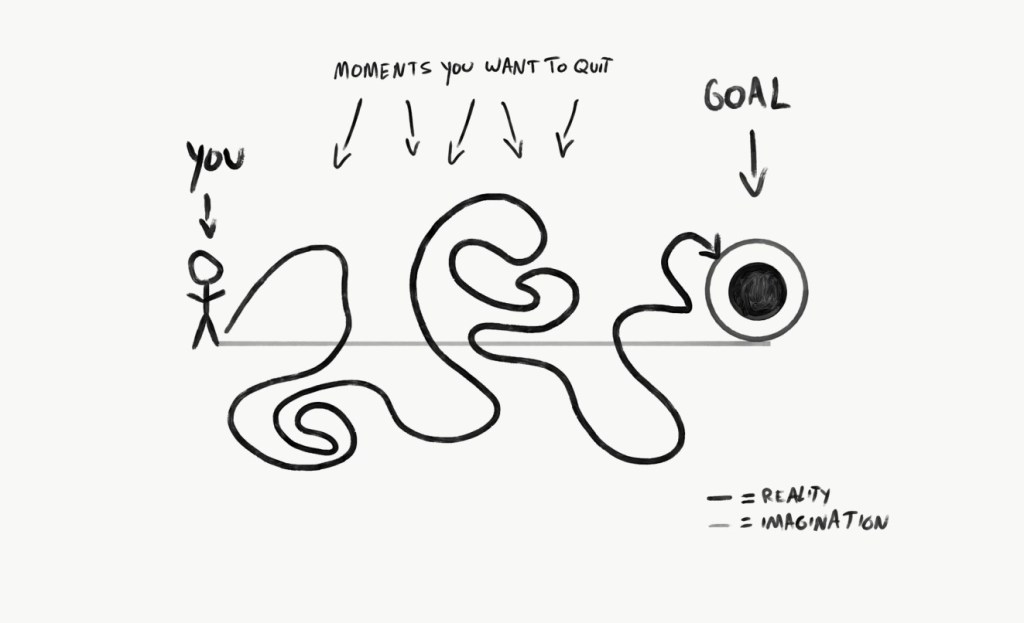
Look, achieving goals never happens in a linear way.
We believe there’s a straight line from where you are to where you want to be. Let’s say your goal is to start a business so you can have more freedom in your life. That was my goal since I was 17.
I still remember how I came up with that goal. I started working several jobs since I was 15. I worked in kitchens, stores, and call centers. And I quickly realized, there’s only one person who benefits from all this: The one at the top.
So from an early age, I set my mind to working for myself. I thought I could just start working for myself from the beginning.
But that’s not how it worked out for me. I had to take a lot of detours. I worked for many other people in between. I also started businesses that failed. And I’m still no way near where I want to be.
But understanding that life is not linear helps us to change the way we think.
It took me years to figure out how you can work for yourself successfully. Along the way, I’ve thought about quitting many times.
Now, I realize that’s a good thing. If you never feel like quitting, that means life is too easy, and you need to take action in your life.
Everybody plays tough and pretends they can easily handle life. I don’t believe that. No one knows what they’re doing. Some people are just better at dealing with their fear than others.
Because when you get over your fear, good things happen. Unfortunately, there’s nothing I can say to make things easier for you. Life is not easy. No matter what you do, it’s time to stop watching Netflix every night and browsing webshops for the newest clothes.
Don’t put your life off. It takes a while to figure things out. But that doesn’t mean you should quit. I’ve learned that if you haven’t reached your goals yet, or haven’t found a way to be successful, it doesn’t mean you’re a loser.
It means you haven’t found out how to win yet. If you keep going, you will find out.
The word Badminton will instantly bring P.V.Sindhu in everyone’s mind.Pusarla Venkata Sindhu is one of the two Indian badminton players to ever win a silver medal in 2016 Olympics- the other being Saina Nehwal who has won a bronze medal in 2012 Olympics. Sindhu came to international attention when she broke into the top 20 of the BWF(Badminton World Federation) in September 2012 at the age of 17. She is one of the top five shuttlers in the women’s singles category. She started playing badminton at the age of eight. Though her parents were professional volleyball players, Sindhu chose badminton over volleyball because she drew inspiration from the success of Pullela Gopichand, the 2001 All England Open Badminton Champion. Sindhu first learned the basics of the sport with the guidance of Mehboob Ali. She then joined Pullela Gopichand’s ‘Gopichand Badminton Academy’. While profiling Sindhu’s career, a correspondent with THE HINDU wrote: “The fact that she reports on time at the coaching camps daily, travelling a distance of 56 km from her residence, is perhaps a reflection of her willingness to fulfil her desire to be a good badminton player with the required hard work and commitment”. Gopichand seconded this opinion, “The most striking feature in Sindhu’s game is her attitude and the never-say-die spirit”. Despite P.V Sindhu being busy with her training schedules and International tournaments, she managed to attend regular school until class 9, after which all her classes were through correspondence. She did balance both her passion as well as her academics and she holds a Bachelor’s degree in Commerce (B.Com). After joining Gopichand’s badminton academy, Sindhu won several titles. She has won many awards as well as cash grants for her contribution and among them, these three awards were conferred on her by the Indian government: 1) Rajiv Gandhi Khel Ratna award, the highest sporting honour of India (2016). 2) Padma Shri, the fourth highest civilian award of India (2015) . 3) Arjuna Award (2013).
Health is a state of complete well being both physically and mentally. A healthy person is one whose mind and body are completely fit. Hygiene refers to habits or practices that ensure good health and a clean environment. We consume a variety of foods everyday.
Health refers to a healthy state of mind and a body physically fit to have no disorder, illness or disease. … Hygiene refers to good practices that prevent disease and lead to good health, especially cleanliness, proper disposal of wastewater and drinking water supply.
Good personal hygiene is one of the best ways to protect yourself from getting illnesses such as gastroenteritis and the common cold. Washing your hands with soap removes germs that can make you ill. Maintaining good personal hygiene will also help prevent you from spreading diseases to other people.
Healthy Habits for a Healthy Life
• Regular exercise
• Always eat breakfast.
• Practice healthy eating throughout the day.
• Stay hydrated.
• Don’t neglect dental hygiene.
• Get your sleep.
Personal hygiene is how you take care of your body. Maintaining hygiene practices reduces the spread of illness and risk of medical conditions caused by not taking care of yourself. It also increases self-confidence and positively impacts personal relationships.
How important is it to have a voice ? And how important is it for that voice to be heard ?
A few months back ,Loujain al-Hathloul, one of the most prominent women’s rights activists from Saudi Arabia was released after spending more than 1000 days in prison. Her release came about a week after the US called on Saudi Arabia to improve its human rights record, including releasing all political prisoners and women’s rights activists.In December 2020, she was sentenced to five years and eight months in prison by a Saudi Specialised Criminal Court. The Saudi Arabian authorities charged her under the state’s broad counter-terrorism laws for undermining national security and trying to change the political system of the country.
Being branded as a terrorist, she must have done something which could have endangered her country and the people. So what exactly did she do?
She had played a fundamental role in the movement to lift the driving ban on women and the “Wilayah” male guardianship system. It was only last year in August that Saudi Arabian women were allowed to travel abroad without obtaining permission from a male guardian, apply for passports and register their marriages and divorces. So trying to abolish ages old patriarchal dictum which had chained women for years, yes you can say that’s somewhat fulfills the definition of terrorism.
In 2014, al-Hathloul, who had a driving license issued in the UAE, was detained for 73 days for attempting to drive into Saudi Arabia from the UAE. Following this, weeks before the Saudi Arabian authorities lifted the ban on women drivers in 2018 (the last such ban in the world) she was arrested along with several other women’s rights activists. Before the ban was lifted, any women caught driving, could be sentenced to flogging (a beating administered with a whip or rod)
In 2015, she made an unprecedented move ,when she stood for elections , which was also the first time women were allowed to vote and stand for elections. But according to Amnesty International , her name was not even added to the ballots.
She was detained in 2018 on grounds of national security.For over 10 months after she was detained, she was not charged and there was no trial. According to Amnesty International, she was waterboarded, given electric shocks, was sexually harassed and was threatened with rape and murder during this time. Finally she was able to see the light of the day , after spending days locked up, for having a voice.
Princess Latifa is the daughter of Dubai’s billionaire ruler Sheikh Mohammed bin Rashid al-Maktoum and his second ” official” wife Her Royal Highness Princess Haya bint Al Hussein. A video of her had surfaced a couple of months back in which she claimed she was being kept hostage by her father in a villa converted into a jail in Dubai. Talk about actually being caged, that to in your own house, that to for years, by your own father.
As per the ‘Free Latifa’ campaign, the princess tried to escape from the family residence in Dubai in 2002. She was 16 at the time. She was, however, easily tracked and brought back to the palace where she was allegedly detained by her father for over three years, the campaign says.
Latifa made a second attempt to escape in February 2018, when she met up with her friend at a coffee shop in Dubai. After which they drove out of town and managed to cross the border into Oman. From there, she got on a boat and sailed into international waters. However, she was held just off the coast of Goa in India by a “significant Indian and UAE military force”, and taken back to Dubai again.
Since they were published, the videos have led to a call for an investigation into the matter by the United Nations (UN), which has responded to these demands affirmatively saying it will raise the matter with the UAE.
As per recent pictures uploaded on social media, she was seen at various places with her friends . And the update regarding her actual whereabouts is under process.
Let’s get back to the where we began, How important is it to have a voice ? and how important is to be heard ?
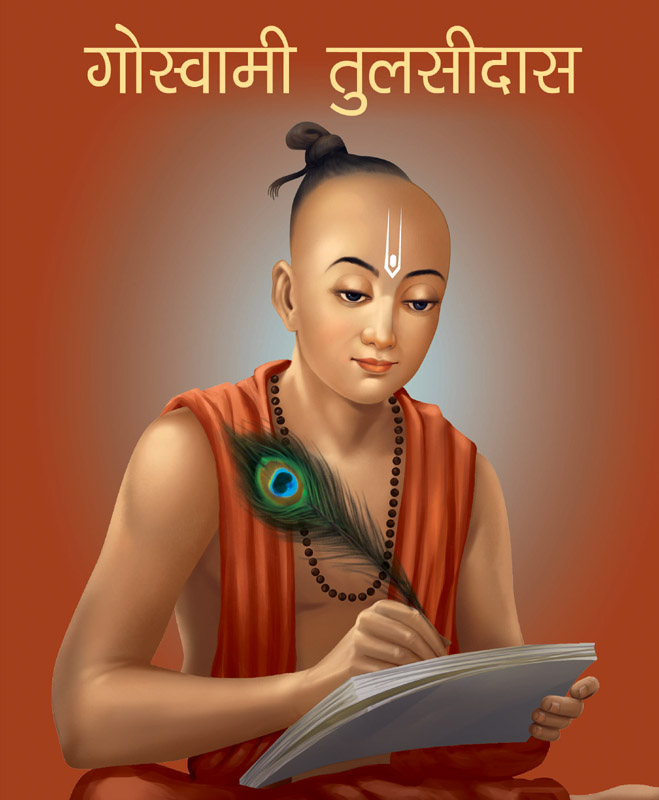
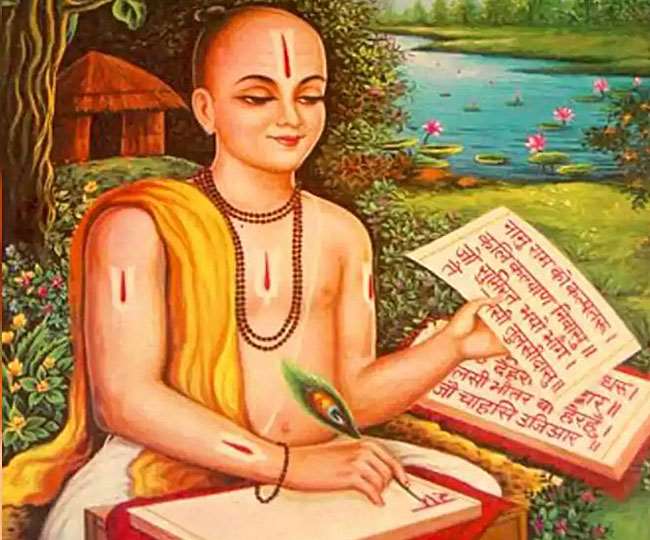
Tulsidas or Goswami Tulsidas was a 16th century great Hindu poet and saint, acclaimed as one of the Greatest Poet in Hindi, Indian and World literature. He is renowned for his dedication and devotion to the Lord Ram. He wrote several popular works in Sanskrit and Awadhi but is best known as the author of the epic Ramcharitmanas, a retelling of the Sanskrit Ramayana based on Rama’s life in the vernacular Awadhi. The word Ramcharitmanas literally means “lake of the deeds of Ram”. He is also considered to be the composer of Hanuman Chalisa, a popular devotional Hymn, dedicated to Hanuman- the divine devotee of lord Ram.
According to the sources, Tulsidas was born in the year 1497 at the banks of the river Ganga in Varanasi, Uttar Pradesh. After he was born, instead of crying he spoke the word “Ram” because of which he was named as “Rambola” meaning “one who utters Ram”. Tulsidas’s parents abandoned him after his birth because according to the Hindu Astrology he was born under the Abhuktamula constellation which was believed to cause immediate danger to the life of his father. He was sent away with Chuniya, a female servant who used to work at Tulsidas’s home. She took him to her village of Haripur and looked after him for five and a half years after which she died. Tulsidas was left to fend himself as an impoverished orphan and wandered from door to door begging for alms. It is believed that the goddess Parvati assumed the form of a Brahmin woman and fed Tulsidas every day.
At the age of five years, Tulsidas was adopted by Narharidas, a Vaishnava ascetic(worshiping the god Vishnu), of Ramananda’s monastic order who was believed to be the fourth disciple of Ramananda or alternately the disciple of Anantarcharya. Tulsidas was given the “Diksha” that is “initiation” and here he was given the name “Tulsidas”. His Guru repeatedly narrated the Ramayan to him which led him to understand it. Tulsidas later came to the sacred city of Varanasi and studied Sanskrit Grammar, scriptural reading of four Vedas, six Vedangas, Jyotisha and the six schools of Hindu Philosophy over a period of 15-16 years from Guru Shesha Santana who was based at a Ghat in Varanasi. After studying, by the permission of his Guru he started to live with his family and narrated the story of “Ramayan”.
Tulsidas got married to Ratnavali and they had a son named Tarak who died as a toddler. Once when Tulsidas had gone to a Hanuman Temple, Ratnavali went to her father’s home with her brother. When Tulsidas came to know about this, he Swam across the Yamuna river in the night to meet her. Ratnavali chided Tulsidas for this, and remarked that if Tulsidas was even half as devoted to God as he was to her body of flesh and blood, he would have been redeemed. Tulsidas left her instantly and left for the holy city of Prayag. Here, he renounced the Grihastha stage(householder’s life) and became a Sadhu(Hindu ascetic).
Tulsidas started composing poetry in Sanskrit in Varanasi on the Prahlada Ghat. Tradition holds that all the verses that he composed during the day, would get lost in the night. Tulsidas dreamt of composing a poetry in the vernacular instead of Sanskrit. Tulsidas woke up and saw both Shiva and Parvati who blessed him. He is also credited with having composed a number of wise saying and ‘Dohas’ on lessons for life.
Artificial Intelligence, or simply AI, is the ability of a computer system or machine to operate and interpret information in the same way that a human does. It is capable of learning, analyzing, copying, and adapting to new knowledge without the need for external optimization. Experts believe that AI will be able to make human existence more easier in the future by providing solutions to nearly all problems. Artificial Intelligence will also make humans aware of potential hazards ahead of time. Artificial intelligence (AI) is one of the most rapidly evolving disciplines of science and creation. Artificial intelligence (AI), also known as “man-made reasoning,” is a branch of software engineering that aims to create machines that can think and function like humans.
Artificial Intelligence (AI): A Brief History
Artificial insight research was also started in 1950. The development of electronic computers and stored programs computers sparked AI research. A connection could not interface a PC to reason or act like a human psyche for a long time after that. Following that, Norbert Wiener made a revelation that accelerated AI’s early development tremendously. He demonstrated that the reaction component is responsible for all creative behavior in individuals. Logic Theorist was another step toward modern AI. It is considered the most important AI programs, having been created by Newell and Simon in 1955.
Who is the Father of Artificial Intelligence?
Mr. John McCarthy (1927-2011) is known as the “Father of AI.” He was born in Boston, Massachusetts, to a poor European immigrant family. McCarthy had already excelled in Mathematics as a teenager. He used to work as a carpenter and a fisherman to help support his family before becoming an official at the California Institute of Technology, Caltech. John McCarthy received his bachelor’s degree in mathematics from Caltech in 1948 and his doctorate in 1951.
Who was John McCarthy?
John McCarthy, also regarded as the “Father of AI,” was a brilliant computer scientist and cognitive scientist. He has been fascinated by artificial intelligence since 1948, and in 1955, he created the term. The formalization of common sense information has been his principal artificial intelligence research topic. In 1958, he created the LISP programming language, and in the late 1950s and early 1960s, he pioneered the concept of time-sharing. Since the early 1960s, he has worked on proving that computer programs fit their specifications. In 1978, he developed the circumscription approach of non-monotonic reasoning.
Applications of Artificial Intelligence:
Marketing: Marketing, which has been a significant area for improvement and the current AI trends, is one of the most notable artificial intelligence examples applications. In terms of AI’s application in the marketing arena online, the early 2000s were not very promising. Yes, there was e-commerce, but the search was not very good. When you didn’t know the specific name of anything, finding it in a store was difficult. Smart suggestions are now far more effective thanks to advancements in AI. Consumers on the web may soon be able to buy things by snapping a photo of them, thanks to advances in AI. This concept is already being tested by companies like Cam Find and their competitors. AI Platforms like IFlyTek also has many AI softwares that leverages on machine and AI intelligence such as text-to-speech and document translation tools to improve everyday life.
Gaming: Artificial Intelligence (AI) has been an important aspect of the game business in recent years. In fact, one of AI’s greatest achievements is in the gaming business. One of the most notable achievements in the field of AI is DeepMind’s AI-based AlphaGo software, which is famous for defeating Lee Sedol, the world champion in the game of GO. The gaming world is the best illustration of clever artificial intelligence applications because it is on this platform that there are many changes in the purpose. AI is employed to create the game, develop the characters, and, to some extent, frame the tale.
Healthcare: The healthcare industry has been one of the most enthusiastic adopters of AI technology. It all comes down to AI’s ability to crunch numbers quickly and learn from previous data, which is important in the healthcare industry. AI has also made a significant contribution to assisting people in the care of patients. The automated bots and healthcare software ensure that patients are properly medicated and treated in the facilities. In some circumstances, AI programs have been reported to assist surgeons during operations.
Chat Bots: Virtual assistants have become increasingly popular in recent years. Almost every home has a virtual assistant that manages the household equipment. Siri and Cortana, for example, are gaining popularity as a result of the user experience they deliver. Amazon’s Echo is an example of how AI can be used to interpret human words into desired actions. This device employs speech recognition and natural language processing to carry out a variety of operations at your direction. It’s capable of much more than just playing your favorite music. It may be used to control your home’s electronics, book cabs, make phone calls, order your favorite meals, and check the weather, among other things.
ALL OF US HAVE STUDIED ABOUT LOUIS XVI FAMOUS STORY. AND THE SAGA OF NAPOLEAN BONAPARTE.LETS HAVE A FLASHBACK TO THE HISTORY
French Revolution
Paragraph 1
Women’s participation in the revolutionary events in France between 1789 and 1795 has only recently been given nuanced treatment. Early twentieth- century historians of the French Revolution are typified by Jaures, who, though sympathetic to the women’s movement of his own time, never even mentions its antecedents in revolutionary France. Even today most general histories treat only cursorily a few individual women, like Marie Antoinette. The recent studies by Landes, Badinter, Godineau, and Roudinesco, however, should signal a much-needed reassessment of women’s participation.
Paragraph 2
Godineau and Roudinesco point to three significant phases in that participation. The first, up to mid-1792, involved those women who wrote political tracts. Typical of their orientation to theoretical issues—in Godineau’s view, without practical effect—is Marie Gouze’s Declaration of the Rights of Women. The emergence of vocal middle- class women’s political clubs marks the second phase. Formed in 1791 as adjuncts of middle-class male political clubs, and originally philanthropic in function, by late 1792 independent clubs of women began to advocate military participation for women. In the final phase, the famine of 1795 occasioned a mass women’s movement: women seized food supplies, held officials hostage, and argued for the implementation of democratic politics. This phase ended in May of 1795 with the military suppression of this multiclass movement. In all three phases women’s participation in politics contrasted markedly with their participation before 1789. Before that date some noblewomen participated indirectly in elections, but such participation by more than a narrow range of the population—women or men—came only with the Revolution.
Paragraph 3
What makes the recent studies particularly compelling, however, is not so much their organization of chronology as their unflinching willingness to confront the reasons for the collapse of the women’s movement. For Landes and Badinter, the necessity of women’s having to speak in the established vocabularies of certain intellectual and political traditions diminished the ability of the women’s movement to resist suppression. Many women, and many men, they argue, located their vision within the confining tradition of Jean-Jacques Rousseau, who linked male and female roles with public and private spheres respectively. But, when women went on to make political alliances with radical Jacobin men, Badinter asserts, they adopted a vocabulary and a violently extremist viewpoint that unfortunately was even more damaging to their political interests.
Paragraph 4
Each of these scholars has a different political agenda and takes a different approach—Godineau, for example, works with police archives while Roudinesco uses explanatory schema from modern psychology. Yet, admirably, each gives center stage to a group that previously has been marginalized, or at best undifferentiated, by historians. And in the case of Landes and Badinter, the reader is left with a sobering awareness of the cost to the women of the Revolution of speaking in borrowed voices.














 Eduindex
You must be logged in to post a comment.