


‘Macro’ signifies enormous or large, as their name proposes these are nutrients which individuals need to eat routinely and in a genuinely huge sum. They incorporate starches, fats, proteins, fiber and water. These substances are required for the flexibly of energy and development, for digestion and other body functions. Metabolism implies the cycle associated with the age of energy and all the ‘building squares’ needed to keep up the body and its capacities. Macronutrients give a great deal of calories however the measure of calories gave fluctuates, contingent upon the food source.
Every gram of starch or protein gives four calories, while fat gives nine calories to every gram.
Carbohydrates
Carbohydrates might be delegated monosaccharides, disaccharides or polysaccharides relying upon the quantity of monomer (sugar) units they contain. They are an assorted gathering of substances, with a scope of synthetic, physical and physiological properties. They make up a huge piece of nourishments, for example, rice, noodles, bread, and other grain-based items, yet they are not a basic nutrient, which means a human doesn’t have to eat sugars. The brain is the biggest shopper of sugars in the human body, and uses especially a lot of glucose, representing 20% of all out body glucose utilization. The brain utilises generally glucose for energy; if glucose is inadequate not withstanding, it changes to utilising fats. Monosaccharides contain one sugar unit, disaccharides two, and polysaccharides at least three. Monosaccharides incorporate glucose, fructose and galactose. Disaccharides incorporate sucrose, lactose, and maltose; cleaned sucrose, for example, is utilised as table sugar. Polysaccharides, which incorporate starch and glycogen, are regularly alluded to as ‘intricate’ starches since they are ordinarily long different stretched chains of sugar units.

Proteins
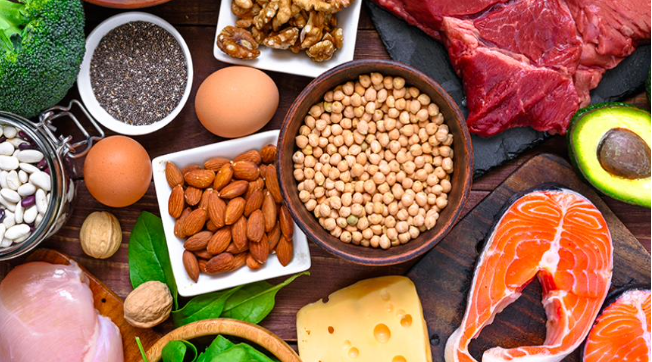
Proteins are the basis of numerous creature body structures (for example muscles, skin, and hair) and structure the compounds that control synthetic responses all through the body. Every protein particle is made out of amino acids which contain nitrogen and once in a while sulfur (these segments are answerable for the particular smell of consuming protein, for example, the keratin in hair). The body requires amino acids to deliver new proteins (protein maintenance) and to supplant harmed proteins. Amino acids are dissolvable in the stomach related juices inside the small digestive tract, where they are consumed into the blood. When ingested, they can’t be put away in the body, so they are either utilized as required or discharged in the urine. Proteins comprise of amino acids in various extents. The main angle and characterising normal for protein from a healthful viewpoint is its amino acid synthesis. For all animals, some amino acids are basic (can’t deliver them inside so they should be eaten) and some are trivial (can create them from other nitrogen-containing mixes). Around twenty amino acids are found in the human body, and around ten of these are fundamental. The combination of some amino acids can be restricted under uncommon pathophysiological conditions, for example, rashness in the newborn child or people in serious catabolic pain, and those are called restrictively fundamental. An eating routine that contains satisfactory measures of amino acids (particularly those that are basic) is especially significant in certain circumstances: during early turn of events and development, pregnancy, lactation, or injury (a consume, for example). A total protein source contains all the basic amino acids; a fragmented protein source needs at least one of the fundamental amino acids. It is conceivable with protein mixes of two inadequate protein sources (e.g., rice and beans) to make a total protein source, and trademark blends are the premise of unmistakable social cooking conventions. In any case, integral wellsprings of protein don’t should be eaten at a similar supper to be utilized together by the body. Abundance amino acids from protein can be changed over into glucose and utilised for fuel through a cycle called gluconeogenesis.
Fats and Oils
A particle of dietary fat ordinarily comprises of a few unsaturated fats (containing long chains of carbon and hydrogen atoms), clung to a glycerol. They are commonly found as fatty oils (three unsaturated fats appended to one glycerol spine). Fats might be delegated immersed or unsaturated relying upon the substance structure of the unsaturated fats included. Immersed fats have the entirety of the carbon atoms in their unsaturated fat chains attached to hydrogen particles, though unsaturated fats have a portion of these carbon molecules twofold reinforced, so their atoms have moderately less hydrogen molecules than a soaked unsaturated fat of a similar length. Unsaturated fats might be additionally delegated monounsaturated (one twofold security) or polyunsaturated (some twofold securities). Besides, contingent upon the area of the twofold security in the unsaturated fat chain, unsaturated fats are named omega-3 or omega-6 unsaturated fats. Trans fats are a sort of unsaturated fat with trans-isomer securities; these are uncommon in nature and in nourishments from normal sources; they are regularly made in a modern cycle called (halfway) hydrogenation. There are nine kilocalories in every gram of fat. Unsaturated fats, for example, formed linoleic corrosive, catalpic corrosive, eleostearic corrosive and punicic corrosive, notwithstanding giving energy, speak to strong insusceptible modulatory particles. Immersed fats (ordinarily from creature sources) have been a staple in numerous world societies for centuries. Unsaturated fats (e. g., vegetable oil) are viewed as more advantageous, while trans fats are to be kept away from. Immersed and some trans fats are regularly strong at room temperature, (for example, spread or fat), while unsaturated fats are normally fluids, (for example, olive oil or flaxseed oil). Trans fats are extremely uncommon in nature, and have been demonstrated to be exceptionally unfavorable to human wellbeing, yet have properties helpful in the food handling industry, for example, rancidity opposition.

Water
Water is the significant constituent of the human body. The body can’t deliver enough water by digestion or acquire enough water by food ingestion to satisfy its requirements. As an outcome, we need to focus on what we drink for the duration of the day to guarantee that we are meeting our day by day water needs, as not doing so may have negative wellbeing impacts. Water is discharged from the body in numerous structures; including pee and defecation, perspiring, and by water fume in the breathed-out breath. In this manner, it is important to satisfactorily rehydrate to supplant lost liquids.
Early proposals for the amount of water needed for upkeep of good wellbeing recommended that 6–8 glasses of water day by day is the base to keep up legitimate hydration. The idea that an individual ought to burn-through eight glasses of water for each day can’t be followed to a trustworthy logical source. Water is the primary constituent of cells, tissues and organs and is essential forever. Regardless of its entrenched significance, water is frequently failed to remember in dietary suggestions, and the significance of sufficient hydration isn’t referenced. As a result, wellbeing experts and nutritionists are here and there confounded and question the need of drinking water consistently, what amount should we drink, and how to know if patients are very much hydrated.
FibRE
Dietary fiber is a carbohydrate, explicitly a polysaccharide, which is not completely assimilated in people and in certain animals. Like all sugars, when it is processed, it can create four Calories (kilocalories) of energy per
gram, however much of the time, it represents not as much as that on account of its restricted retention and absorbability. Entire grains, beans, and different vegetables, organic products (particularly plums, prunes, and figs), and vegetables are acceptable wellsprings of dietary fiber. Fibre is imperative to stomach related wellbeing and is thought to diminish the danger of colon malignant growth. Fiber can help in mitigating both blockage and loose bowels by expanding the weight and size of stool and mellowing it. Fiber gives mass to the intestinal substance, and insoluble fiber particularly invigorates peristalsis – the cadenced strong constrictions of the digestive organs which move digesta along the stomach related lot. Some dissolvable strands produce an answer of high thickness; this is basically a gel, which eases back the development of food through the digestive organs. By easing back the retention of sugar, fiber may assist lower with blooding glucose levels, diminishing insulin spikes and lessening the danger of type 2 diabetes.


 Eduindex
You must be logged in to post a comment.