


When we talk about contracts, we come across many different sorts of types of contracts, such as quasi-contracts, implied contracts, expressed contracts, and many more. Wagering Contracts are one form of contract. A wagering contract is one in which two essential parties enter into a contract and in which the first party promises to pay a certain quantity of money to the second party if a certain event occurs in the future and the second party agrees to compensate the first party if that event does not occur. The presence of two parties who are of sound mind to benefit or lose is the essential foundation of a wagering arrangement. In layman’s terms, a Wager is a bet or a gamble. The phrase wager refers to betting in its most fundamental sense. Section 30 of the Indian Contract Act expressly states that wagering agreements are invalid. The section was structured as follows:
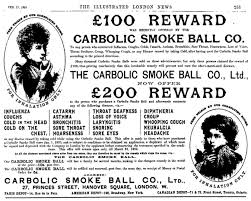
Carlill vs. Carbolic Smoke Ball Co. (1993): This is the first case law that has described a wagering contract in the most explicit and comprehensive manner. It is written as follows:
“One by which two persons professing to hold opposing views on the issue of a future uncertain event mutually agree that, depending on the determination of that event, one shall win from the other, and that other shall pay or hand over to him, a sum of money or other stake; neither of the parties having any other interest in that contract than the sum or stake he will win or lose.” It is not a wagering contract if any party can win but cannot lose or can lose but cannot win.”
As a result, all wagering agreements are contingent agreements, but not all contingent agreements are wagering agreements. Thus, in layman’s terms, a wagering contract is a futures contract that is dependent on the occurrence of a certain event in the future. Depending on the conditions in the future, a wagering contract may or may not be implemented.
HISTORY OF LAW RELATED TO THE CONCEPT OF WAGER:
Since the beginning of time, when there were instances in British India, the law governing wagers was common law in England, but in 1848, the Wagers Avoiding Act came into effect. Previously, it was thought that any wagering activity may be upheld if it did not violate the emotional emotions of a third party and was not contrary to public policy. When we consider the notion of gambling and betting, we know that this type of activity existed in our nation from ancient times, but it was not accepted in England and was shunned. These sorts of acts are prohibited and are not protected by the purview of our Indian constitution under Article 19 or Article 301 since they are not expressly listed in the Indian Contract Act or Hindu law in general.
TYPES OF WAGER:
- Moneyline Betting:
This is one of the most straightforward kinds of betting. Money line betting is relatively easy because it is only done on sports contests and games and is only centred on the outcome/result of the match. This form of betting is illegal, and it is most prevalent in cricket, particularly in the Indian Premier League.
2. Spread Betting:
This sort of wager/betting occurs when the person making the bet on the most favoured team competing in the match to win by a specific margin or on the team considered as the underdog to win or even if it loses by a very tight margin.
3. Over Betting:
This form of betting is done in a game where the better places his wager on the total number of points earned or total number of goals scored by both sides through a combination of a specific number and which is completely a speculative event over which no one has control.
4. Under Betting:
This type of betting takes place when the better places his bet on the condition that the combination of the total number of goals and pints that are scored by both the teams will be less or under a certain limit. This type of wager is also related to the final outcome of the game.
5. Prop Betting:
This type of betting is very unique and creative in nature because it is unrelated to the game’s final outcome. In this case, the better bets on something like the first half of the game or whether there will be a super over in a cricket match, for example. As a result, this is also known as prop betting.
ESSENTIALS OF A WAGERING CONTRACT:
- Equal opportunity:
One of the most important aspects of a wagering contract is that both parties have an equal probability of winning or losing based on the result of the future event.
2. Uncontrollable:
These are hypothetical occurrences that may or may not occur, and they should be beyond the power of either side, since if any party has influence over it, it is not a wager.
3. No Outside Interest:
Both parties should have a single interest in the event’s profit or loss, and there should be no outside or personal interest associated with the uncertain occurrence, since this will also not amount to wager.
4. Dependency:
The wager agreement is entirely reliant on the outcome of the projected event, whether it be compared to the past, present, or future.
5. Promise:
The wager contract should include an important provision stating that the parties commit to pay the money or money’s value to the other party if the event occurs, and this should be agreed upon by both parties.

 Eduindex News
You must be logged in to post a comment.