

A novel coronavirus (CoV) named ‘2019 novel coronavirus ’by the World Health Organization (WHO) is responsible of this outbreak of pneumonia that began at the mid of November 2019 near in Wuhan City, Hubei Province, China. The SARS-CoV-2 is a pathogenic virus. Coronaviruses are enveloped viruses with a large, single-stranded, positive-sense RNA genome, which are about 120 nanometers in diameter. They are vulnerable to mutation and recombination and are therefore highly diverse. There are about 40 different varieties which they mainly infect human and non-human mammals and birds. They reside in bats and wild birds, and will spread to other animals and hence to humans. The virus that causes COVID-19 is assumed to possess originated in bats then spread to snakes and pangolins and hence to humans, perhaps by contamination of meat from wild animals, as sold in China’s meat markets.
The corona-like appearance of coronaviruses is due to the presence of spike glycoproteins, or peplomers, which are necessary for the viruses to enter host cells. The spike has two subunits, one subunit is S1 which binds to a receptor on the surface of the host cell and the opposite subunit which is S2 fuses with the cell wall. The cell wall receptor for both SARS-CoV-1 and SARS-CoV-2 could even be a sort of angiotensin converting enzyme, ACE-2, different from the enzyme that’s inhibited by conventional ACE-1 inhibitors, like enalapril and ramipril.
Viral RNA can be detected by polymerase chain reaction which is sometimes referred to as RT-PCR or real time PCR. In this test, the virus’s single-stranded RNA is converted to its complementary DNA by reverse transcriptase; specific regions of the DNA are marked by primers, are then amplified. This is done by synthesizing new DNA strands from deoxy-nucleoside triphosphates using DNA polymerase.

COVID-19 DRUG DEVELOPMENT
COVID19 drug development is basically a research process to develop preventative therapeutic prescription drugs which may lower the severity of coronavirus disease 2019 (COVID19). Internationally, by November 2020, several hundred drug companies, biotechnology firms, university research groups, and health organizations are trying to develop over 500 potential therapies for COVID19 disease in various stages of preclinical or clinical research.
The World Health Organization (WHO), European Medicines Agency (EMA), US Food and Drug Administration (FDA), and therefore, the Chinese government and drug manufacturers were coordinating with academic and industry researchers to hurry development of vaccines, antiviral drugs, and post-infection therapies.
Drug development may be a multistep process, typically requiring five years to assure safety and assurance of the new compound. Several national regulatory agencies, like the EMA and the FDA, have approved procedures to expedite clinical testing. Chloroquine is an anti-malarial medication that is also used against some auto-immune diseases. Hydroxy-chloroquine is more commonly available than chloroquine in the United States. Although several countries initially used chloroquine or hydroxy-chloroquine for treatment of people hospitalised with COVID19, the drug has not been formally approved through clinical trials.
VACCINE DEVELOPMENT
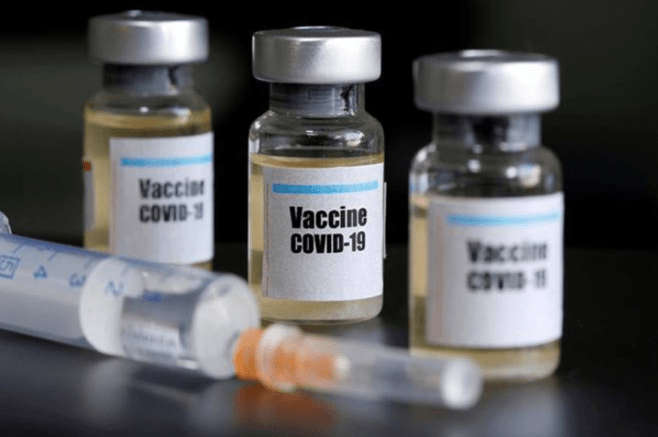
A vaccine for a communicable and pathogenous disease which has never before been produced in several years, and also no vaccine exists for preventing a coronavirus infection in humans. After the coronavirus was detected, the genetic sequence of COVID‐19 was published on 11 January 2020, triggering an urgent international response towards organize for an epidemic and hasten development of a preventive vaccine.
In February 2020, the World Health Organization (WHO) said it didn’t expect a vaccine against severe acute respiratory syndrome coronavirus or the SARS-CoV-2 which is the causative virus, to become available in 18 months.
Their development had previously been considered as low priority because the coronaviruses that were circulating in humans caused relatively mild disease. Most coronaviruses encode only one large surface protein, the spike protein, which is responsible for receptor binding and membrane fusion. In the case of SARS-CoV-2 (and SARS-CoV), the spike protein binds to angiotensin- converting enzyme 2 (ACE2) on host cells and is then endocytosed. This step is followed by fusion of viral and endosomal membranes and release of the viral genome into the cytoplasm. Antibodies that bind to the spike protein, especially to its receptor-binding domain (RBD), prevent its attachment to the host cell and neutralize the virus. On the basis of this knowledge, and information gained from preclinical studies with SARS-CoV and MERS-CoV, the spike protein was identified as an antigenic target for the development of a vaccine against SARS-CoV-2 at a very early stage. It has been demonstrated that the spike protein is a strong target of CD4+ T cells, whereas fewer CD8+ T cells are induced by natural infection with SARS-CoV-2 in general. It is important to note that natural infection induces both mucosal intramuscularly or intradermally induce mainly IgG, and no secretory IgA. It is therefore possible that most vaccines currently in development induce disease-preventing or disease-attenuating immunity, but not necessarily sterilizing immunity.
This pandemic which is due the coronavirus requires a rapid and fast action in the field of vaccines and biology and in a short amount of time as the original vaccine making process for any disease requires at least 15 years for the whole procedure and testing trials antibody responses (secretory immunoglobulin A (IgA)) and systemic antibody responses (IgG). The upper respiratory tract is thought to be mainly protected by secretory IgA, whereas the lower respiratory tract is thought to be mainly protected by IgG. Vaccines that are administered and therefore, is a very tedious and lengthy process and work. As this disease requires a very fast process so the first clinical trial of a vaccine candidate for SARS-CoV-2 began in March 2020. Trials were designed in such a manner that clinical phases are overlapping and trial starts are staggered, with initial phase I/II trials followed by rapid progression to phase III trials after interim analysis of the phase I/II data. Currently, several manufacturers have already started the commercial production of vaccines at risk without any results from phase III trials. Although the licensure pathways are not yet completely clear, it is possible that reviews could be expedited and that vaccines could even be approved through an emergency use authorization. The FDA has released a guidance document for the development and licensure of SARS-CoV-2 vaccines, which as well as providing additional details states that an efficacy of at least 50% will be required. It is very important to point out that moving forward at financial risk is the main factor that has enabled the accelerated development of SARS-CoV-2 vaccine candidates, and no corners have been or should be cut in terms of safety evaluation.

 Eduindex
You must be logged in to post a comment.