Movie recommendation: Outsourced

Outsourced is one of the few movies that have always remained my favourite.  Being an Indian English literature enthusiast, seeing a decent representation of India in the silver screen has always been a matter of interest. Outsourced is one such film without any exaggeration whatsoever about the Indian culture. It is a modern-day comedy of cross-culture conflicts and romance.

 The movie revolves around Todd Anderson who is outsourced to India to work at a call centre who was sent with a mission of reducing the call time there. He finds the Indian work culture quite unprofessional. He believes that the calls are not duly answered or customers are often ‘hit-on’ by the agents. He goes on demanding more from his workers without actually knowing them. He starts teaching them American English, as the customers would prefer talking to a native English speaker. Here we see how the westerners keep their culture and language as the primary point of judging other cultures, just like Americans inherited the language from the brits, Indians too have acquired the language. But the accented pronunciation is somehow off-putting for them. One of his coworkers, Asha, points out this fact and even goes on to say unlike American English speakers who makes unnecessary reductions, Indians have a better pronunciation of the language. Todd goes on to reduce the call time to the required limit with the help of Asha and flies back to the USA, leaving behind a strong connection.

The most commendable part of the movie is the raw representation of India, Holi not being about filmy songs, not all Indians have an accented pronunciation, and everyone you see is not thieves, being some of them. It shows how acclimated Indians are to the western culture while still retaining their innate culture.
Movie recommendation: Outsourced

Outsourced is one of the few movies that have always remained my favourite.  Being an Indian English literature enthusiast, seeing a decent representation of India in the silver screen has always been a matter of interest. Outsourced is one such film without any exaggeration whatsoever about the Indian culture. It is a modern-day comedy of cross-culture conflicts and romance.

 The movie revolves around Todd Anderson who is outsourced to India to work at a call centre who was sent with a mission of reducing the call time there. He finds the Indian work culture quite unprofessional. He believes that the calls are not duly answered or customers are often ‘hit-on’ by the agents. He goes on demanding more from his workers without actually knowing them. He starts teaching them American English, as the customers would prefer talking to a native English speaker. Here we see how the westerners keep their culture and language as the primary point of judging other cultures, just like Americans inherited the language from the brits, Indians too have acquired the language. But the accented pronunciation is somehow off-putting for them. One of his coworkers, Asha, points out this fact and even goes on to say unlike American English speakers who makes unnecessary reductions, Indians have a better pronunciation of the language. Todd goes on to reduce the call time to the required limit with the help of Asha and flies back to the USA, leaving behind a strong connection.

The most commendable part of the movie is the raw representation of India, Holi not being about filmy songs, not all Indians have an accented pronunciation, and everyone you see is not thieves, being some of them. It shows how acclimated Indians are to the western culture while still retaining their innate culture.

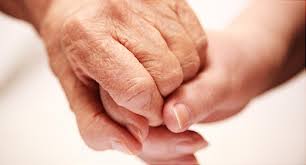
Palliative care is need of Lifeline

End of life care includes Palliative care . If you have an illness that cannot be cured, Palliative care makes you as comfortable as possible , By managing your pain and other distressing symptoms . It also involves psychological , social and spiritual support for you and your family or careers . End of life care provides proactive palliative care services at home , symptom management to individuals in advanced stages of illness. End-of-life care addresses the medical, physical, social, emotional and spiritual needs of the patient . It helps patients enjoy the comforts of home and family, draw on social and emotional support, and manage symptoms such as pain, shortness of breath, nausea, extreme fatigue, loss of appetite and inability to sleep. Many patients and their families find that the emotional support and management of physical symptoms provided by end-of-life care, can make a huge difference in the equality of life of a patient in his last days of life. End-of-life care is available for patients with advanced life -limiting conditions of any type, including end-stage demetia , AIDS, heart disease or emphysema- as well as cancer. Our Ends-of-life care teams work together with the patient, family and the patients physician to: improve quality of life; relieve physical, emotional and spiritual distress; provide an individual plan of care ; and give support to family members. It includes full-time physicians who has experience in palliative care. Nurses with special training in palliative care. Social workers with understanding of understanding of special conditions of palliative care. Dietitians, home health aides and therapists who specialize in complementary medicine. Spiritual care counselors.

Palliative care is need of Lifeline

End of life care includes Palliative care . If you have an illness that cannot be cured, Palliative care makes you as comfortable as possible , By managing your pain and other distressing symptoms . It also involves psychological , social and spiritual support for you and your family or careers . End of life care provides proactive palliative care services at home , symptom management to individuals in advanced stages of illness. End-of-life care addresses the medical, physical, social, emotional and spiritual needs of the patient . It helps patients enjoy the comforts of home and family, draw on social and emotional support, and manage symptoms such as pain, shortness of breath, nausea, extreme fatigue, loss of appetite and inability to sleep. Many patients and their families find that the emotional support and management of physical symptoms provided by end-of-life care, can make a huge difference in the equality of life of a patient in his last days of life. End-of-life care is available for patients with advanced life -limiting conditions of any type, including end-stage demetia , AIDS, heart disease or emphysema- as well as cancer. Our Ends-of-life care teams work together with the patient, family and the patients physician to: improve quality of life; relieve physical, emotional and spiritual distress; provide an individual plan of care ; and give support to family members. It includes full-time physicians who has experience in palliative care. Nurses with special training in palliative care. Social workers with understanding of understanding of special conditions of palliative care. Dietitians, home health aides and therapists who specialize in complementary medicine. Spiritual care counselors.

Social Media and Reality

 Uh oh, check this out before that new notification distracts you and makes you waste another 2 hours stalking someone you think is superior to you and make yourself sulk for nothing.

Social Media VS Reality

If we start comparing the pre-social media phase and post-social media phase, many of us will have different views on the same. Let’s say that it was so much better when we didn’t have to spend hours before the screen and actually had some goals specifically for the day.

The physical meet-up with friends and families had its own advantages and better exposure for anyone who liked interacting with people. The white light of phone screens has literally snatched it away from all of us.

We all will accept the fact that technology has brought so many facets that are helpful for us all and provides us a such a level of education and productivity that we wouldn’t have been able to realize without it. If we talk about social media it has allowed for larger and quicker access to information. The information coming to us may be about some celebrity activity, fashion, or recent natural disaster but we cannot claim that we are not informed. 


Like every other thing, social media has its own downsides. There are a lot of questions that arise that if the information we receive is correct? Do we trust the sources giving us the information? Would the addiction of it affect our normal life? Does social media alter one’s understanding of reality? 

The chaos of looking better than the rest in your Instagram posts, sharing your travel location on Facebook, and tweeting on Twitter over the topics that you aren’t even aware of, is just another reason to feel accomplished at that time and then feel anxious upon it. 

THE FAKE BUBBLE OF SOCIAL MEDIA

Don’t get me wrong- social media is amazing. From information, comedies to one’s personal stories, ideas to marketing and targeting people for little to no cost. But as great as all of it is, social media is the most damaging aspect of our generation.

From the new teens to the ones in their 40s, almost everyone participates in the marathon of looking presentable over social media, the cold war between Instagram influencers and digital creators within this marathon is something that can’t be ignored or go unnoticed. It is very common these days where one might create all the scenarios over their online love interest and later realize that it was nothing but treachery with a whole fake identity and several trap accounts, playing with people’s emotions and this act that may sound fun to one, might lead someone with serious trust issues and on the edge of loneliness.

It is high time for every one of us to understand that being on social media platforms can be great and help us deal with almost any kind of boredom, be it by being a part of random group chat, recreating pictures like some “victoria secret” model, and being the queen bee amongst your friend circle, but as far as it looks so fascinating and attractive, one must know that it is nothing but a well-composed online game which was visually created with the actually existing people and none that happens on it, is real and holds any existence. 

ACID RAIN- THE STEADY DESTROYER

In 1963, Scientists studying Hubbard Brook Experimental Forest in New Hampshire made a shocking discovery. Their most recent rainfall samples were nearly 100 times more acidic than the usual rainfall samples. At these levels, additional downpours of acid rain would destroy the region’s marine and arboreal ecosystems in a matter of decades. Urgently haring their findings with the fellow researchers, they were determined to answer two questions: What was causing this deadly rainfall? and what could be done to stop it?

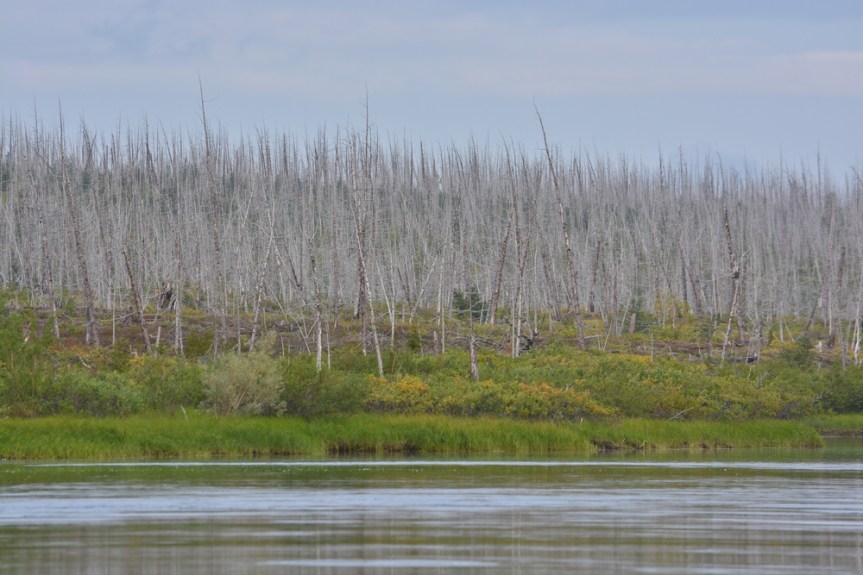
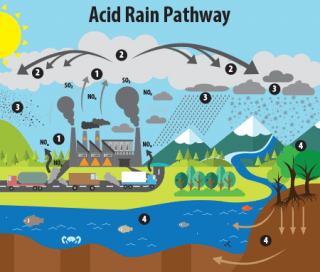
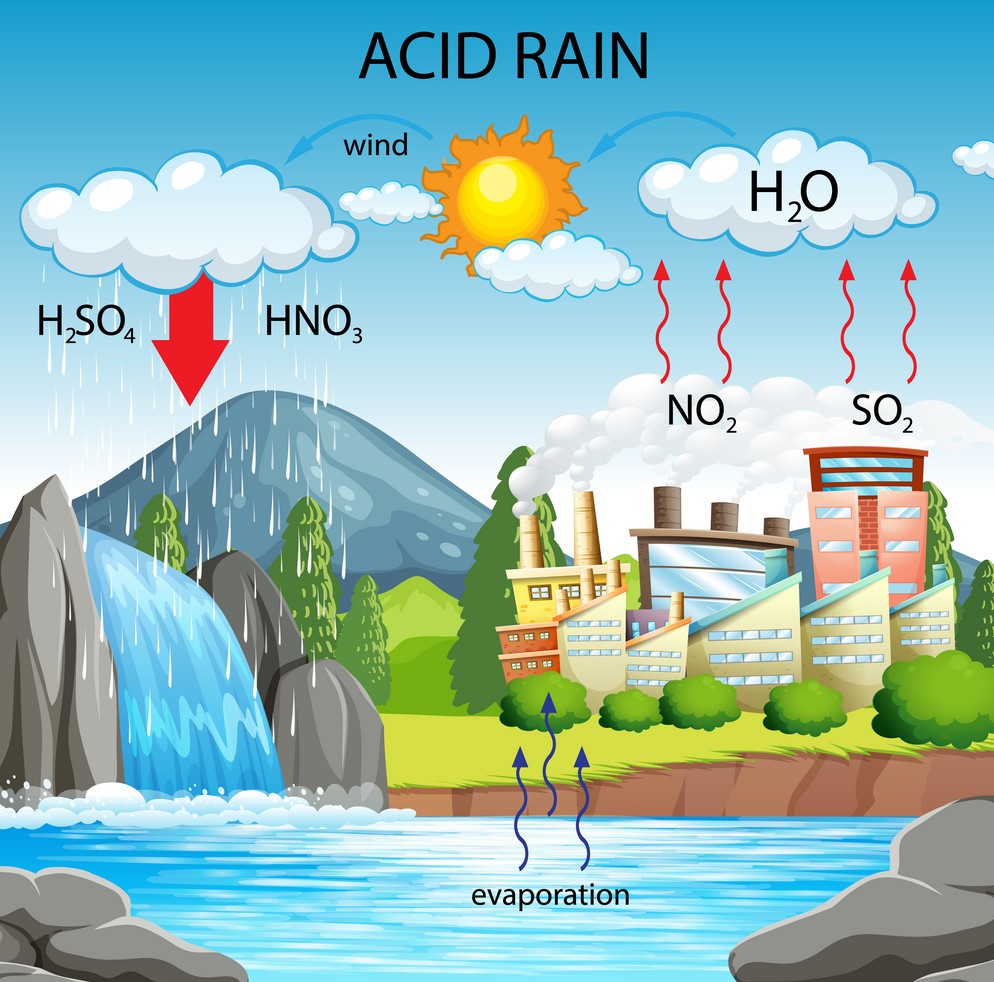
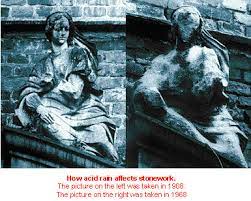
Rain is never just composed of water. Chemicals and particulates in the atmosphere can be found in every drop, and some compounds like carbon dioxide make even regular rainfall slightly acidic. But this pales in comparison to the powerful acids produced when water interacts with oxides of nitrogen or sulfur dioxide. On the pH scale which measures acidity, each whole number is ten times more acidic than the one above it. And where normal rain has a pH of roughly 5.4, rain that’s interacted with these gases(carbon dioxide, sulfur dioxide or oxides of nitrogen) can rank as low as 3.7. Oxides of nitrogen and sulfur dioxide can appear naturally as a short-lived byproduct of volcanic eruptions or lightening strikes. But power plants, refineries and vehicles that use fossil fuels consistently pump large quantities of these harmful gases into the air. These dangerous gases travel with the wind spreading hundreds of kilometers from the pollution’s source. Acting like roaming clouds of destruction, their presence dramatically increases the acidity of local precipitation, creating acid rain, acid snow and acid fog. These all acidify lakes and streams, kill crops and forests, and damage soil to inhibit future growth on it. Overtime, acid rain can even corrode human structures made up of stone or metal.

By the 1970s, Scientists in North America and Europe classified acid rain as a major environmental threat. But despite clear evidence tying the problem to air pollution, companies denied responsibility and cast doubt on the research. In the United States, corporations lobbied against regulating pollution, and convinced politicians that such policies would raise energy costs and threaten jobs. These obstacles led the government to delay changes, and mandate further research into the issue. But after a decade of mounting concern, Congress finally took action. Since the bulk of sulfur dioxide emissions came from power plants, the government set a limit on the total amount of it the electric power sector could emit each year. Then, they divided the permitted emissions into a fixed number of “allowances” distributed to each power plant. A plant could then choose to emit as much sulfur dioxide as they were allowed, or reduce their emissions and sell their unused allowances to the other power plants. This system is known as “Cap and Trade”, offered power plants the economic flexibility to keep costs low while strictly limiting pollution.

Many critics called these allowances licenses to pollute or said the government was selling clean air. But since the Cap was set to lower five years into the program, it forced every utility company to reduce emissions in the long term. Some plants added desulfurizing scrubbers to their smokestacks, or switched to low-sulfur coal and natural gas. Oxides of nitrogen emissions were also reduced with relatively low-cost technologies. These advances allowed the power sector to grow while the cap kept pollution under control.

ACID RAIN- THE STEADY DESTROYER

In 1963, Scientists studying Hubbard Brook Experimental Forest in New Hampshire made a shocking discovery. Their most recent rainfall samples were nearly 100 times more acidic than the usual rainfall samples. At these levels, additional downpours of acid rain would destroy the region’s marine and arboreal ecosystems in a matter of decades. Urgently haring their findings with the fellow researchers, they were determined to answer two questions: What was causing this deadly rainfall? and what could be done to stop it?

Rain is never just composed of water. Chemicals and particulates in the atmosphere can be found in every drop, and some compounds like carbon dioxide make even regular rainfall slightly acidic. But this pales in comparison to the powerful acids produced when water interacts with oxides of nitrogen or sulfur dioxide. On the pH scale which measures acidity, each whole number is ten times more acidic than the one above it. And where normal rain has a pH of roughly 5.4, rain that’s interacted with these gases(carbon dioxide, sulfur dioxide or oxides of nitrogen) can rank as low as 3.7. Oxides of nitrogen and sulfur dioxide can appear naturally as a short-lived byproduct of volcanic eruptions or lightening strikes. But power plants, refineries and vehicles that use fossil fuels consistently pump large quantities of these harmful gases into the air. These dangerous gases travel with the wind spreading hundreds of kilometers from the pollution’s source. Acting like roaming clouds of destruction, their presence dramatically increases the acidity of local precipitation, creating acid rain, acid snow and acid fog. These all acidify lakes and streams, kill crops and forests, and damage soil to inhibit future growth on it. Overtime, acid rain can even corrode human structures made up of stone or metal.

By the 1970s, Scientists in North America and Europe classified acid rain as a major environmental threat. But despite clear evidence tying the problem to air pollution, companies denied responsibility and cast doubt on the research. In the United States, corporations lobbied against regulating pollution, and convinced politicians that such policies would raise energy costs and threaten jobs. These obstacles led the government to delay changes, and mandate further research into the issue. But after a decade of mounting concern, Congress finally took action. Since the bulk of sulfur dioxide emissions came from power plants, the government set a limit on the total amount of it the electric power sector could emit each year. Then, they divided the permitted emissions into a fixed number of “allowances” distributed to each power plant. A plant could then choose to emit as much sulfur dioxide as they were allowed, or reduce their emissions and sell their unused allowances to the other power plants. This system is known as “Cap and Trade”, offered power plants the economic flexibility to keep costs low while strictly limiting pollution.

Many critics called these allowances licenses to pollute or said the government was selling clean air. But since the Cap was set to lower five years into the program, it forced every utility company to reduce emissions in the long term. Some plants added desulfurizing scrubbers to their smokestacks, or switched to low-sulfur coal and natural gas. Oxides of nitrogen emissions were also reduced with relatively low-cost technologies. These advances allowed the power sector to grow while the cap kept pollution under control.

Transmission Mode :

When two computers are in communication,data transmission may occur in one of the three modes

🔸️one way only
a) Simplex mode

🔸️Both ways but one way at a time
b) Half- duplex mode

🔸️Both ways simultaneously
c) Full-duplex mode

🌟Simplex mode🌟:

In Simplex mode,data can be transmitted in one direction as shown in below.
The device using the Simplex mode of transmission can either send or receive data, but it cannot do both. An example is the traditional television broadcast, in which the signal sent from the transmitter to the TV. There is no return signal. In order words a TV cannot send a signal to the transmitter.

🌟Half duplex mode🌟:

In Hslf duplex mode data csn be transmitted back and forth between two stations. But at any point of the time data can go in any one direction only. This arrangement resembles traffic on a one-lane bridge. When traffic moves in one direction, traffic on the opposite direction is to wait and take their turn. The common example is walky-talky, wherein one waits for his turn while the other talks.

🌟Full duplex mode🌟:

In full duplex mode a device can simultaneously send or received data. This arrangement resembles traffic on a two-way bridge, traffic moving on both directions simultaneously. An example is two people on the telephone talking and listening simultaneously. Communication in full duplex mode is faster. Full duplex transmission is used in large computer systems. Products like “MicrosoftNet Meeting” supports such two way interaction.

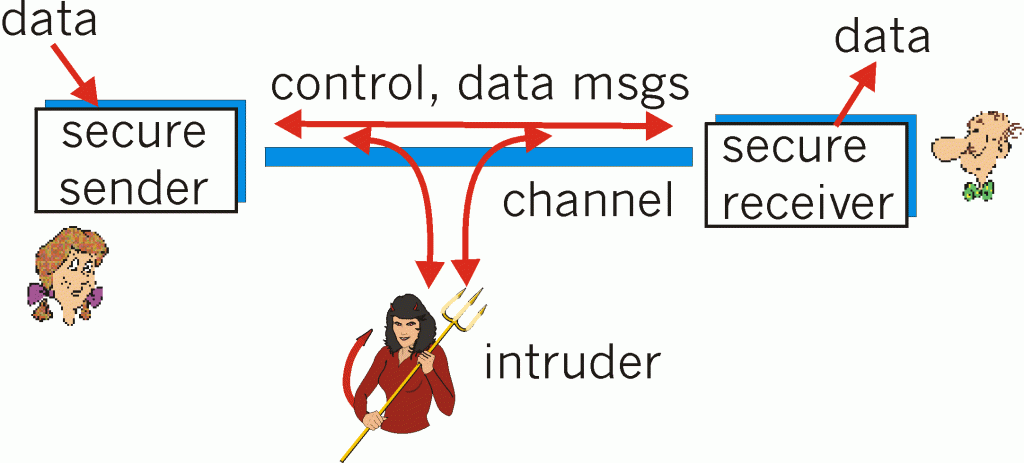
What is Intruders ?

One of the two most publicized threats to security is the intruder (the other is viruses), often referred to as a hacker or cracker. Significant issue for networked systems is unwanted access either via network or local.

Classification of Intruders

  1. Masquerader : An individual who is not authorized to use the computer and who penetrates a system’s access controls to exploit a legitimate user’s account. The masquerader is likely to be an outsider.
  2. Misfeasor : A legitimate user who accesses data, programs, or resources for which such access is not authorized, or who is authorized for such access but misuses his or her privileges :the misfeasor generally is an insider.
  3. Clandestine user : An individual who seizes supervisory control of the system and uses this control to evade auditing and access controls or to suppress audit collection. User can be either an outsider or an insider.

Intruders : Intrusion Techniques

The objective of the intruder is to gain access to a system or to increase the range of privileges accessible on a system. Most initial attacks use system or software vulnerabilities that allow a user to execute code that opens a back door into the system. Typically, a system must maintain a file that associates a password with each authorized user. If such a file is stored with no protection, then it is an easy matter to gain access to it and learn passwords. The password file can be protected in one of two ways:

  1. One-way function : The system stores only the value of a function based on the user’s password. When the user presents a password, the system transforms that password and compares it with the stored value.
  2. Access control : Access to the password file is limited to one or a very few accounts.

On the basis of a survey of the literature and interviews with a number of password crackers, [ALVA90] reports the following techniques for learning passwords:

  1. Try default passwords used with standard accounts that are shipped with the system. Many administrators do not bother to change these defaults.
  2. Exhaustively try all short passwords (those of one to three characters).
  3. Try words in the system’s online dictionary or a list of likely passwords. Examples of the latter are readily available on hacker bulletin boards.
  4. Collect information about users, such as their full names, the names of their spouse and children, pictures in their office, and books in their office that are related to hobbies.
  5. Try users’ phone numbers, Social Security numbers, and room numbers.
  6. Try all legitimate license plate numbers for this state.
  7. Use a Trojan horse to bypass restrictions on access.

Intrusion Detection

Inevitably will have security failures, So need also to detect intrusions so can
 Block if detected quickly
 Act as deterrent
 Collect info to improve security
Assume intruder will behave differently to a legitimate user, But will have imperfect distinction between.

Transmission Mode :

When two computers are in communication,data transmission may occur in one of the three modes

🔸️one way only
a) Simplex mode

🔸️Both ways but one way at a time
b) Half- duplex mode

🔸️Both ways simultaneously
c) Full-duplex mode

🌟Simplex mode🌟:

In Simplex mode,data can be transmitted in one direction as shown in below.
The device using the Simplex mode of transmission can either send or receive data, but it cannot do both. An example is the traditional television broadcast, in which the signal sent from the transmitter to the TV. There is no return signal. In order words a TV cannot send a signal to the transmitter.

🌟Half duplex mode🌟:

In Hslf duplex mode data csn be transmitted back and forth between two stations. But at any point of the time data can go in any one direction only. This arrangement resembles traffic on a one-lane bridge. When traffic moves in one direction, traffic on the opposite direction is to wait and take their turn. The common example is walky-talky, wherein one waits for his turn while the other talks.

🌟Full duplex mode🌟:

In full duplex mode a device can simultaneously send or received data. This arrangement resembles traffic on a two-way bridge, traffic moving on both directions simultaneously. An example is two people on the telephone talking and listening simultaneously. Communication in full duplex mode is faster. Full duplex transmission is used in large computer systems. Products like “MicrosoftNet Meeting” supports such two way interaction.

What is Intruders ?

One of the two most publicized threats to security is the intruder (the other is viruses), often referred to as a hacker or cracker. Significant issue for networked systems is unwanted access either via network or local.

Classification of Intruders

  1. Masquerader : An individual who is not authorized to use the computer and who penetrates a system’s access controls to exploit a legitimate user’s account. The masquerader is likely to be an outsider.
  2. Misfeasor : A legitimate user who accesses data, programs, or resources for which such access is not authorized, or who is authorized for such access but misuses his or her privileges :the misfeasor generally is an insider.
  3. Clandestine user : An individual who seizes supervisory control of the system and uses this control to evade auditing and access controls or to suppress audit collection. User can be either an outsider or an insider.

Intruders : Intrusion Techniques

The objective of the intruder is to gain access to a system or to increase the range of privileges accessible on a system. Most initial attacks use system or software vulnerabilities that allow a user to execute code that opens a back door into the system. Typically, a system must maintain a file that associates a password with each authorized user. If such a file is stored with no protection, then it is an easy matter to gain access to it and learn passwords. The password file can be protected in one of two ways:

  1. One-way function : The system stores only the value of a function based on the user’s password. When the user presents a password, the system transforms that password and compares it with the stored value.
  2. Access control : Access to the password file is limited to one or a very few accounts.

On the basis of a survey of the literature and interviews with a number of password crackers, [ALVA90] reports the following techniques for learning passwords:

  1. Try default passwords used with standard accounts that are shipped with the system. Many administrators do not bother to change these defaults.
  2. Exhaustively try all short passwords (those of one to three characters).
  3. Try words in the system’s online dictionary or a list of likely passwords. Examples of the latter are readily available on hacker bulletin boards.
  4. Collect information about users, such as their full names, the names of their spouse and children, pictures in their office, and books in their office that are related to hobbies.
  5. Try users’ phone numbers, Social Security numbers, and room numbers.
  6. Try all legitimate license plate numbers for this state.
  7. Use a Trojan horse to bypass restrictions on access.

Intrusion Detection

Inevitably will have security failures, So need also to detect intrusions so can
 Block if detected quickly
 Act as deterrent
 Collect info to improve security
Assume intruder will behave differently to a legitimate user, But will have imperfect distinction between.

INTERNATIONAL SPACE STATION

ISS is a large spacecraft which can house astronauts. It goes around in low Earth orbit at approximately 400 km distance. It is also a science laboratory. Its very first part was placed in orbit in 1998 and its core construction was completed by 2011. It is the largest man-made object in space which can also be seen from the Earth through the naked eye. The first human crew went to the ISS in 2000. Ever since that, it has never been unoccupied by humans. At any given instant, at least six humans will be present in the ISS. According to the current plan, ISS will be operated until 2024, with a possible extension until 2028. After that, it could be deorbited, or recycled for future space stations.

Benefits of ISS

According to NASA, the following are some of the ways in which the ISS is already benefitting us or will benefit us in the future.

Supporting water-purification efforts

Using the technology developed for the ISS, areas having water scarcity can gain access to advanced water filtration and purification systems. The water recovery system (WRS) and the oxygen generation system (OGS) developed for the ISS have already saved a village in Iraq fry being deserted due to lack of clean water.

Eye tracking technology

The Eye Tracking Device, built for a microgravity experiment, has proved ideal to be used in many laser surgeries. Also, eye tracking technology is helping disabled people with limited movement and speech. For example, a kid who has severe disability in body movements can use his eye-movements alone and do routine tasks and lead an independent life.

Robotic arms and surgeries

Robotic arms developed for research in the ISS are providing significant help to the surgeons in removing inoperable tumours (e.g. brain tumours) and taking biopsies with great accuracies. Its inventors say that the robot could take biopsies with remarkable precision and consistency.

Apart from the above-mentioned applications, there are many other ways in which the researches that take place in the ISS are helpful. They are: development of improved vaccines, breast cancer detection and treatment, ultrasound machines for remote regions etc,.

ISS and International Cooperation

As great as the ISS’ scientific achievements are, no less in accomplishment is the international co-operation which resulted in the construction of the ISS. An international collaboration of five different space agencies of 16 countries provides, maintains and operates the ISS. They are: NASA (USA), Roskosmos (Russia), ESA (Europe), JAXA (Japan) and CSA (Canada). Belgium, Brazil, Denmark, France, Germany, Italy, Holland, Norway, Spain, Sweden, Switzerland and the UK are also part of the consortium.

INTERNATIONAL SPACE STATION

ISS is a large spacecraft which can house astronauts. It goes around in low Earth orbit at approximately 400 km distance. It is also a science laboratory. Its very first part was placed in orbit in 1998 and its core construction was completed by 2011. It is the largest man-made object in space which can also be seen from the Earth through the naked eye. The first human crew went to the ISS in 2000. Ever since that, it has never been unoccupied by humans. At any given instant, at least six humans will be present in the ISS. According to the current plan, ISS will be operated until 2024, with a possible extension until 2028. After that, it could be deorbited, or recycled for future space stations.

Benefits of ISS

According to NASA, the following are some of the ways in which the ISS is already benefitting us or will benefit us in the future.

Supporting water-purification efforts

Using the technology developed for the ISS, areas having water scarcity can gain access to advanced water filtration and purification systems. The water recovery system (WRS) and the oxygen generation system (OGS) developed for the ISS have already saved a village in Iraq fry being deserted due to lack of clean water.

Eye tracking technology

The Eye Tracking Device, built for a microgravity experiment, has proved ideal to be used in many laser surgeries. Also, eye tracking technology is helping disabled people with limited movement and speech. For example, a kid who has severe disability in body movements can use his eye-movements alone and do routine tasks and lead an independent life.

Robotic arms and surgeries

Robotic arms developed for research in the ISS are providing significant help to the surgeons in removing inoperable tumours (e.g. brain tumours) and taking biopsies with great accuracies. Its inventors say that the robot could take biopsies with remarkable precision and consistency.

Apart from the above-mentioned applications, there are many other ways in which the researches that take place in the ISS are helpful. They are: development of improved vaccines, breast cancer detection and treatment, ultrasound machines for remote regions etc,.

ISS and International Cooperation

As great as the ISS’ scientific achievements are, no less in accomplishment is the international co-operation which resulted in the construction of the ISS. An international collaboration of five different space agencies of 16 countries provides, maintains and operates the ISS. They are: NASA (USA), Roskosmos (Russia), ESA (Europe), JAXA (Japan) and CSA (Canada). Belgium, Brazil, Denmark, France, Germany, Italy, Holland, Norway, Spain, Sweden, Switzerland and the UK are also part of the consortium.

Hard Working

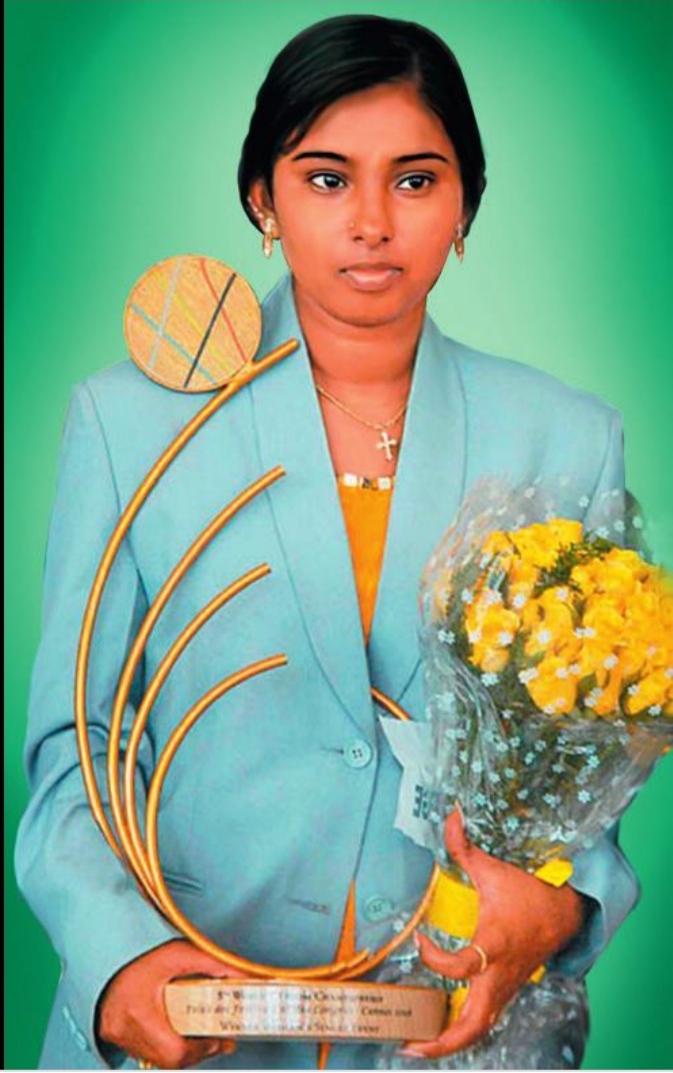
The hard working and the passionate people, always chase their dream and live it. Ilavazhagi is one among the many to achieve her dreams amidst all odds. Mr. A. Irudayaraj, her father, was a district level champion in carrom. His dream shattered, since his family did not encourage and support him. He was determined to achieve his dream through his daughter. He used to put his daughter on the carrom board, while she listened to the sounds of striker and coins. When she was two years old, he would carry her with him to the tournaments ; he played with his friends at local clubs. Her father began coaching her when she was around five. One day her father called her for a match, and she won that match, which gave her confidence. The confidence led her to win. Her victories included the Asia Cup and ( South Asian Association for Regional Cooperation) cup and the world championship.

Irudayaraj, a fish- cart driver who transports materials like pipes to make a living for his family – a wife and three daughters. They lived in a small one – room apartment in Vyasarpadi, Chennai, is not enough to accommodate the family. The trophies, she has won over the years are too many, and her home is just not big enough to keep them. The trophies left over after filling the space under the bed, were given to the neighbours and relatives. Financing the trips has always been a big trouble, though she has been playing for the state for almost 14 years. Still she says “Victories follow me”. Ilavazhagi is a member of the Thiruvallur District Carrom Association and also represented India at the Carrom World Championship, Asian Championships.

Hard Working

The hard working and the passionate people, always chase their dream and live it. Ilavazhagi is one among the many to achieve her dreams amidst all odds. Mr. A. Irudayaraj, her father, was a district level champion in carrom. His dream shattered, since his family did not encourage and support him. He was determined to achieve his dream through his daughter. He used to put his daughter on the carrom board, while she listened to the sounds of striker and coins. When she was two years old, he would carry her with him to the tournaments ; he played with his friends at local clubs. Her father began coaching her when she was around five. One day her father called her for a match, and she won that match, which gave her confidence. The confidence led her to win. Her victories included the Asia Cup and ( South Asian Association for Regional Cooperation) cup and the world championship.

Irudayaraj, a fish- cart driver who transports materials like pipes to make a living for his family – a wife and three daughters. They lived in a small one – room apartment in Vyasarpadi, Chennai, is not enough to accommodate the family. The trophies, she has won over the years are too many, and her home is just not big enough to keep them. The trophies left over after filling the space under the bed, were given to the neighbours and relatives. Financing the trips has always been a big trouble, though she has been playing for the state for almost 14 years. Still she says “Victories follow me”. Ilavazhagi is a member of the Thiruvallur District Carrom Association and also represented India at the Carrom World Championship, Asian Championships.