Economic Benefits of Biodiversity

All of us live in a world where we depend on each other for our needs. Almost all of our needs are met through biodiversity, directly or indirectly. Biodiversity refers to the variability among living organisms from all sources including terrestrial, marine and other aquatic ecosystems and the ecological complexes of which they are part, this includes diversity within species, between species and of ecosystems. Biodiversity in short is our whole environment including flora, fauna, microbes, gases and everything that constitutes our planet earth. It is the foundation of life.

Biodiversity is of great importance when it comes to its economic benefits. Here are some of the economic benefits of biodiversity.

(1) Biodiversity provides us with potential raw materials – Biodiversity provides a great diversity of materials for the construction and fuel including wood, biofuels and plant oils that are directly derived from wild and cultivated plant species.

(2) Food and fresh water – The most important services for the survival of human beings like food and water are provided by the biodiversity. Biodiversity regulates the flow and purification of water.
(3) Organic waste disposal – Biodiversity acts as an organic disposal ground for waste materials, as many things are naturally decomposed in the environment with the help of microbes present in the soil.

(4) Climate and air quality control – Trees provide shade while forests influence rainfall and water availability both locally and regionally. They also play an important role in regulating air quality by removing pollutants from the atmosphere.

(5) Nitrogen fixation – Nitrogen fixation is essential for plant growth and an insufficient quantity of it frequently limits biomass production in both natural and agricultural ecosystems. To increase production of crops, a process called biological nitrogen fixation is implemented through chemical uses, however natural biological nitrogen fixation proves to be healthier and more yielding than the commercial one.

(6) Moderates natural disasters – Extreme weather events or natural hazards include floods, storms, tsunamis, avalanches and landslides. Ecosystems and living organisms create buffer against natural disasters, thereby preventing possible damage. E.g. wetlands can soak up floodwater while trees can stabilize slopes.

(7) Species Habitat – Habitats provide everything that an individual plant or animal needs to survive. Each ecosystem provides different habitats that can be essential for species’ lifecycle.

(8) Medicinal Resources – Ecosystems and their biodiversity provide many medicinal plants used in traditional medicine and as well as provide raw materials for the pharmaceutical industry.

(9) Pollination – Insects and wind pollinate plants and trees, which is essential for propagation and development of fruits, vegetables and seeds.

(10) Biotechnology- Biodiversity has led to an important field of study in science known as biotechnology. Biotechnology refers to the technologies produced from animals, plants and microbes. Biotechnology is of utmost importance because it provides us with various beneficial products and inventions that lead to an advance in our economy and in human life.

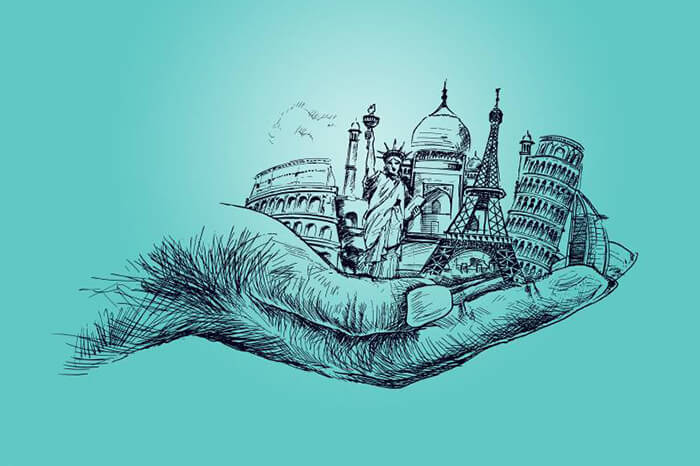
(11) Tourism – Ecosystems and biodiversity play an important role for many kinds of tourism, which in turn provides considerable economic benefits and is a vital source of income for many countries.

These are only a few important economic benefits of biodiversity. Biodiversity as a whole has a lot more benefits and is our main sustainer of life. Therefore, we must strive to conserve our biodiversity.

NEPOTISM

BY: VAIBHAVI MENON

Nepotism is a form of favoritism which is granted to relatives and friends in various fields, including business, politics, entertainment, sports, religion and other activities. The term originated with the assignment of nephews to important positions by Catholic popes and bishops. Nepotism has been criticized since the ancient times by several philosophers, including Aristotle, Valluvar, and Confucius, condemning it as both evil and unwise. Nepotism in India is common in politics, judiciary, business, the film industry, religious circles, arts, industry, and other types of organizations. Many judges and advocates of the high courts and the Supreme Court of India are alleged to be appointed by exercising casteism, nepotism, and favoritism, primarily due to the Supreme Court and the high court appointment process called Collegium which recommends to the President, in a legally binding manner, the names of judges to be appointed or promoted to the higher judiciary. The various judicial services exams are also infamous for these practices. Rahul Gandhi, Former President of the Indian National Congress party, is a descendant of Jawaharlal Nehru and Indira Gandhi, Rajiv Gandhi, Sonia Gandhi.

The Kapoor family, one of the most prolific generational families involved in Indian cinema, have been known for bringing their children into the industry with their endorsements and influence. In June 2020 a fresh debate on nepotism followed soon after the suicide of actor Sushant Singh Rajput, which fans believe was in reaction to efforts by Bollywood insiders to boycott him. Filmmaker Karan Johar, who Rajput had worked with in the Netflix film Drive, was quickly accused of nepotism by actress Kangana Ranaut, with Rajput’s fans calling for a boycott of Johar and his studio, Dharma Productions, as well as of actor Salman Khan and his brothers, who were accused of bullying outsiders in the past. Actors and actresses Alia Bhatt, Varun Dhawan, Janhvi Kapoor, Ishaan Khatter, Ananya Pandey, Athiya Shetty, Tiger Shroff, Arjun Kapoor and Sara Ali Khan, all of whom hail from film families, were also widely criticized. The term comes from Italian word nepotismo, which is based on Latin root nepos meaning nephew. Since the Middle Ages and until the late 17th century, some Catholic popes and bishops – who had taken vows of chastity and, therefore, usually had no legitimate offspring of their own – gave their nephews such positions of preference as were often accorded by fathers to sons.

Several popes elevated nephews and other relatives to the cardinalate. Often, such appointments were a means of continuing a papal “dynasty”. For instance, Pope Callixtus III, head of the Borgia family, made two of his nephews cardinals; one of them, Rodrigo, later used his position as a cardinal as a stepping stone to the papacy, becoming Pope Alexander VI. Alexander then elevated Alessandro Farnese, his mistress’s brother, to cardinal; Farnese would later go on to become Pope Paul III. Paul III also engaged in nepotism, appointing, for instance, two nephews, aged 14 and 16, as cardinals. The practice was finally limited when Pope Innocent XII issued the bull Romanum decet Pontificem, in 1692.The papal bull prohibited popes in all times from bestowing estates, offices, or revenues on any relative, with the exception that one qualified relative (at most) could be made a cardinal.

BLACK HOLE

BY: VAIBHAVI MENON

A black hole is a region of spacetime where gravity is so strong that nothing—no particles or even electromagnetic radiation such as light—can escape from it. The theory of general relativity predicts that a sufficiently compact mass can deform spacetime to form a black hole. The boundary of no escape is called the event horizon. Although it has an enormous effect on the fate and circumstances of an object crossing it, according to general relativity it has no locally detectable features. In many ways, a black hole acts like an ideal black body, as it reflects no light. Moreover, quantum field theory in curved spacetime predicts that event horizons emit Hawking radiation, with the same spectrum as a black body of a temperature inversely proportional to its mass. This temperature is on the order of billionths of a kelvin for black holes of stellar mass, making it essentially impossible to observe directly.

Objects whose gravitational fields are too strong for light to escape were first considered in the 18th century by John Michell and Pierre-Simon Laplace. The first modern solution of general relativity that would characterize a black hole was found by Karl Schwarzschild in 1916, and its interpretation as a region of space from which nothing can escape was first published by David Finkelstein in 1958. Black holes were long considered a mathematical curiosity; it was not until the 1960s that theoretical work showed they were a generic prediction of general relativity. The discovery of neutron stars by Jocelyn Bell Burnell in 1967 sparked interest in gravitationally collapsed compact objects as a possible astrophysical reality. The first black hole known as such was Cygnus X-1, identified by several researchers independently in 1971. Black holes of stellar mass form when very massive stars collapse at the end of their life cycle. After a black hole has formed, it can continue to grow by absorbing mass from its surroundings. By absorbing other stars and merging with other black holes, supermassive black holes of millions of solar masses may form. There is consensus that supermassive black holes exist in the centers of most galaxies.

The presence of a black hole can be inferred through its interaction with other matter and with electromagnetic radiation such as visible light. Matter that falls onto a black hole can form an external accretion disk heated by friction, forming quasars, some of the brightest objects in the universe. Stars passing too close to a supermassive black hole can be shred into streamers that shine very brightly before being “swallowed.” If there are other stars orbiting a black hole, their orbits can be used to determine the black hole’s mass and location. Such observations can be used to exclude possible alternatives such as neutron stars. In this way, astronomers have identified numerous stellar black hole candidates in binary systems, and established that the radio source known as Sagittarius A*, at the core of the Milky Way galaxy, contains a supermassive black hole of about 4.3 million solar masses.

WHAT DOES AN ENGINEER ACTUALLY DO?

BY:VAIBHAVI MENON

Engineers, as practitioners of engineering, are professionals who invent, design, analyze, build and test machines, complex systems, structures, gadgets and materials to fulfill functional objectives and requirements while considering the limitations imposed by practicality, regulation, safety and cost. The word engineer (Latin ingeniator) is derived from the Latin words ingeniare (“to create, generate, contrive, devise”) and ingenium (“cleverness”). The foundational qualifications of an engineer typically include a four-year bachelor’s degree in an engineering discipline, or in some jurisdictions, a master’s degree in an engineering discipline plus four to six years of peer-reviewed professional practice (culminating in a project report or thesis) and passage of engineering board examinations.

The work of engineers forms the link between scientific discoveries and their subsequent applications to human and business needs and quality of life. A professional engineer is competent by virtue of his/her fundamental education and training to apply the scientific method and outlook to the analysis and solution of engineering problems. He/she is able to assume personal responsibility for the development and application of engineering science and knowledge, notably in research, design, construction, manufacturing, superintending, managing and in the education of the engineer. His/her work is predominantly intellectual and varied and not of a routine mental or physical character. It requires the exercise of original thought and judgement and the ability to supervise the technical and administrative work of others. His/her education will have been such as to make him/her capable of closely and continuously following progress in his/her branch of engineering science by consulting newly published works on a worldwide basis, assimilating such information and applying it independently. He/she is thus placed in a position to make contributions to the development of engineering science or its applications. His/her education and training will have been such that he/she will have acquired a broad and general appreciation of the engineering sciences as well as thorough insight into the special features of his/her own branch. In due time he/she will be able to give authoritative technical advice and to assume responsibility for the direction of important tasks in his/her branch. Engineers develop new technological solutions. During the engineering design process, the responsibilities of the engineer may include defining problems, conducting and narrowing research, analyzing criteria, finding and analyzing solutions, and making decisions. Much of an engineer’s time is spent on researching, locating, applying, and transferring information. Indeed, research suggests engineers spend 56% of their time engaged in various information behaviors, including 14% actively searching for information. Engineers must weigh different design choices on their merits and choose the solution that best matches the requirements and needs. Their crucial and unique task is to identify, understand, and interpret the constraints on a design in order to produce a successful result.

Engineers apply techniques of engineering analysis in testing, production, or maintenance. Analytical engineers may supervise production in factories and elsewhere, determine the causes of a process failure, and test output to maintain quality. They also estimate the time and cost required to complete projects. Supervisory engineers are responsible for major components or entire projects. Engineering analysis involves the application of scientific analytic principles and processes to reveal the properties and state of the system, device or mechanism under study. Engineering analysis proceeds by separating the engineering design into the mechanisms of operation or failure, analyzing or estimating each component of the operation or failure mechanism in isolation, and recombining the components. They may analyze risk.

HOW TO CONTROL YOUR EMOTION ?

Benefits of Meditation 101: How To Meditate In Less Time

There is no doubt that emotions play a very important role in the field of games and sports but it is also essential for a sportsperson to have enough control over emotions . If a sportsperson is unable to control his emotion during the competition , it can damage or ruin his sports career . If there is appropriate control over emotions, the emotional energy may be utilised into proper and constructive channels. A number of research studies have shown that we can control our emotions well before the provoking situation occurs. We can prepare ourselves ahead of time. We can take some physical actions , can learn new ways of thinking and understanding how emotions work . Emotions can be controlled up to a desired level by the following methods.

  • Control your breathing : For appropriate control over your emotions you should try to control your breathing whenever you note certain physiological changes such as dry mouth and elevated heart rate . Find a comfortable place. Take a normal breathe first , then start inhalation. Allow your chest to expand as you fill air into your lungs. Take six to ten deep breaths per minute . In this way, you can control your breathing which will ultimately control your emotions .
  • Meditation : Meditation can be used for controlling your emotions. It can be ideal for staying calm in between the rounds of competition . First of all, sit in a comfortable position . After that pick or select a short focus word that has significant meaning for you and that you associate with relaxation . The word may be relax , smooth , calm or easy, etc . Then close your eyes slowly. After that breathe slowly repeating the focus word. Be passive and avoid other thoughts which come into your mind . Continue this process for 10 to 15 times.
  • Repression: Repression means to avoid the undesirable emotions when these arise in an individual . However , there may be some problems in using this method because sometimes the undesirable emotions may enter into unconscious mind and later on these burst spontaneously with greater force.
  • Introspection: It may be applicable for educated individuals . They can introspect themselves in the stages of different emotions. As soon as they start introspection into themselves, emotions are usually vented out .
  • Redirection: Redirection means the change of direction in the display of emotions.

World Heritage

World heritages consist of all the heritage sites that were discovered around the world and the process of exploring and discovering never stops. Heritage is not only about discovering the monuments, civilizations etc but, it holds a special place from three perspective that is past, present, and future. Build in the past, heritage sites are of high value to study the history how people used to live, speciality of a civilization, discovery of unknown facts and so much more. At present research is done, the technology that we have today is advance that the scientist can easily study and preserve the rich heritage for many more years. In future, all the research and evidences the historic sites will turn ten times more valuable.


World heritage day

which is observed every year on 18th April , also known as world monuments and sites day, the purpose is to celebrate the rich heritage from around the world and create awareness about the same. As it is observed that many monuments and sites are need to be preserved from deterioration, we should not loose the heritage in the ongoing development process. Every year a theme is decided for World heritage day this year it was “Complex pasts: Diverse Future” .


ICOMOS
International Council on Monuments and sites is the main body who is also behind all the work that takes place. Pierro Gazallo is the founder of ICOMOS, he is known for working to restore and preserve heritage sites and monuments it was established in the year 1979. ICOMOS gave the suggestion to UNESCO (United National Education, Scientific and Cultural Organisation) which was approved in the 22nd general conference in 1983.
India
Some of the world heritage sites are Ajanta and Elora caves, western Ghats, Sundarbans national park, Nanda Devi, and valley of flowers, Chola temples etc.
World
Komodo national park (Indonesia), Lut desert (Iran), Meteora (Greece), town of Bamberg (Germany), Levuka Port town (Fiji), Angkor (Cambodia), Brasilia (Brazil), Rainforest of Atsinanana (Madagascar), Chitwan National Park (Nepal) etc.


Recently in news Liverpool lost its status of world heritage site, the reason was the massive construction that occurred around the place despite several warnings issued by UNESCO, the construction includes building complex, Moore Dock Stadium, and offices. The act of removal of a world heritage site is very rare and disgraceful for the country as they failed to protect a heritage site.
The heritage sites and monuments are chosen after the recommendation of ICOMOS and IUCN (International Union of Conservation of Nature) for natural sites.
However, UNESCO has laid down some criteria to declare a monument or site heritage which includes:
• a place represents genius human creativity
• A place that shows human interaction with nature and showcase culture.
• A place that illustrates significant stages of human history.
• A place that showcases earth’s history in any geographical form.
• A place with an exceptional cultural feature or tradition.
• A place that displays biological diversity and is valuable for conservation of nature or any species.
• A place of human settlement that shows use of natural resources to study the life of people.

HOW TO CONTROL YOUR EMOTION ?

Benefits of Meditation 101: How To Meditate In Less Time

There is no doubt that emotions play a very important role in the field of games and sports but it is also essential for a sportsperson to have enough control over emotions . If a sportsperson is unable to control his emotion during the competition , it can damage or ruin his sports career . If there is appropriate control over emotions, the emotional energy may be utilised into proper and constructive channels. A number of research studies have shown that we can control our emotions well before the provoking situation occurs. We can prepare ourselves ahead of time. We can take some physical actions , can learn new ways of thinking and understanding how emotions work . Emotions can be controlled up to a desired level by the following methods.

  • Control your breathing : For appropriate control over your emotions you should try to control your breathing whenever you note certain physiological changes such as dry mouth and elevated heart rate . Find a comfortable place. Take a normal breathe first , then start inhalation. Allow your chest to expand as you fill air into your lungs. Take six to ten deep breaths per minute . In this way, you can control your breathing which will ultimately control your emotions .
  • Meditation : Meditation can be used for controlling your emotions. It can be ideal for staying calm in between the rounds of competition . First of all, sit in a comfortable position . After that pick or select a short focus word that has significant meaning for you and that you associate with relaxation . The word may be relax , smooth , calm or easy, etc . Then close your eyes slowly. After that breathe slowly repeating the focus word. Be passive and avoid other thoughts which come into your mind . Continue this process for 10 to 15 times.
  • Repression: Repression means to avoid the undesirable emotions when these arise in an individual . However , there may be some problems in using this method because sometimes the undesirable emotions may enter into unconscious mind and later on these burst spontaneously with greater force.
  • Introspection: It may be applicable for educated individuals . They can introspect themselves in the stages of different emotions. As soon as they start introspection into themselves, emotions are usually vented out .
  • Redirection: Redirection means the change of direction in the display of emotions.

World Heritage

World heritages consist of all the heritage sites that were discovered around the world and the process of exploring and discovering never stops. Heritage is not only about discovering the monuments, civilizations etc but, it holds a special place from three perspective that is past, present, and future. Build in the past, heritage sites are of high value to study the history how people used to live, speciality of a civilization, discovery of unknown facts and so much more. At present research is done, the technology that we have today is advance that the scientist can easily study and preserve the rich heritage for many more years. In future, all the research and evidences the historic sites will turn ten times more valuable.

World heritage day

which is observed every year on 18th April , also known as world monuments and sites day, the purpose is to celebrate the rich heritage from around the world and create awareness about the same. As it is observed that many monuments and sites are need to be preserved from deterioration, we should not loose the heritage in the ongoing development process. Every year a theme is decided for World heritage day this year it was “Complex pasts: Diverse Future” .

ICOMOS
International Council on Monuments and sites is the main body who is also behind all the work that takes place. Pierro Gazallo is the founder of ICOMOS, he is known for working to restore and preserve heritage sites and monuments it was established in the year 1979. ICOMOS gave the suggestion to UNESCO (United National Education, Scientific and Cultural Organisation) which was approved in the 22nd general conference in 1983.
India
Some of the world heritage sites are Ajanta and Elora caves, western Ghats, Sundarbans national park, Nanda Devi, and valley of flowers, Chola temples etc.
World
Komodo national park (Indonesia), Lut desert (Iran), Meteora (Greece), town of Bamberg (Germany), Levuka Port town (Fiji), Angkor (Cambodia), Brasilia (Brazil), Rainforest of Atsinanana (Madagascar), Chitwan National Park (Nepal) etc.

Recently in news Liverpool lost its status of world heritage site, the reason was the massive construction that occurred around the place despite several warnings issued by UNESCO, the construction includes building complex, Moore Dock Stadium, and offices. The act of removal of a world heritage site is very rare and disgraceful for the country as they failed to protect a heritage site.
The heritage sites and monuments are chosen after the recommendation of ICOMOS and IUCN (International Union of Conservation of Nature) for natural sites.
However, UNESCO has laid down some criteria to declare a monument or site heritage which includes:
• a place represents genius human creativity
• A place that shows human interaction with nature and showcase culture.
• A place that illustrates significant stages of human history.
• A place that showcases earth’s history in any geographical form.
• A place with an exceptional cultural feature or tradition.
• A place that displays biological diversity and is valuable for conservation of nature or any species.
• A place of human settlement that shows use of natural resources to study the life of people.

BIG BANG THEORY

BY: VAIBHAVI MENON

The Big Bang theory is the prevailing cosmological model explaining the existence of the observable universe from the earliest known periods through its subsequent large-scale evolution. The model describes how the universe expanded from an initial state of high density and temperature, and offers a comprehensive explanation for a broad range of observed phenomena, including the abundance of light elements, the cosmic microwave background (CMB) radiation, and large-scale structure. Crucially, the theory is compatible with Hubble–Lemaître law—the observation that the farther away a galaxy is, the faster it is moving away from Earth. Extrapolating this cosmic expansion backwards in time using the known laws of physics, the theory describes an increasingly concentrated cosmos preceded by a singularity in which space and time lose meaning (typically named “the Big Bang singularity”). Detailed measurements of the expansion rate of the universe place the Big Bang singularity at around 13.8 billion years ago, which is thus considered the age of the universe.

After its initial expansion, an event that is by itself often called “the Big Bang”, the universe cooled sufficiently to allow the formation of subatomic particles, and later atoms. Giant clouds of these primordial elements—mostly hydrogen, with some helium and lithium—later coalesced through gravity, forming early stars and galaxies, the descendants of which are visible today. Besides these primordial building materials, astronomers observe the gravitational effects of an unknown dark matter surrounding galaxies. Most of the gravitational potential in the universe seems to be in this form, and the Big Bang theory and various observations indicate that this excess gravitational potential is not created by baryonic matter, such as normal atoms. Measurements of the redshifts of supernovae indicate that the expansion of the universe is accelerating, an observation attributed to dark energy’s existence. Georges Lemaître first noted in 1927 that an expanding universe could be traced back in time to an originating single point, which he called the “primeval atom”. Edwin Hubble confirmed through analysis of galactic redshifts in 1929 that galaxies are indeed drifting apart; this is important observational evidence for an expanding universe. For several decades, the scientific community was divided between supporters of the Big Bang and the rival steady-state model which both offered explanations for the observed expansion, but the steady-state model stipulated an eternal universe in contrast to the Big Bang’s finite age. In 1964, the CMB was discovered, which convinced many cosmologists that the steady-state theory was falsified, since, unlike the steady-state theory, the hot Big Bang predicted a uniform background radiation throughout the universe caused by the high temperatures and densities in the distant past. A wide range of empirical evidence strongly favors the Big Bang, which is now essentially universally accepted.

According to the Big Bang theory, the universe at the beginning was very hot and very compact, and since then it has been expanding and cooling down. As the universe cooled, the rest energy density of matter came to gravitationally dominate that of the photon radiation. After about 379,000 years, the electrons and nuclei combined into atoms (mostly hydrogen), which were able to emit radiation. This relic radiation, which continued through space largely unimpeded, is known as the cosmic microwave background.

Books- Our best companion

INTRODUCTION

Our best companies are books because they provide us with knowledge and comfort of mind.

Despite the fact that we have family and friends with whom we may discuss our opinions, we believe that books are the finest way to live a life full of wisdom and without explanation.

A book may be the one thing that one may read all day and leave all of their difficulties behind.

Photo by Mau00ebl BALLAND on Pexels.com

Although a book might provide us with knowledge, we should never expect us to remain obedient to the information provided. Books can also teach you about other facets of life.

Books are regarded for providing unbiased and reliable information. Books provide us with reliable research and information on a subject.

Like a wonderful buddy, good books approach our minds with knowledge and nice thoughts.

It is true that books are our best friends. Books will not abandon us in the face of adversity. They will be a terrific company for us at all times.

There are a lot of fantastic books out there that can help us modify our minds. To be motivated and inspired in our daily lives, we need a lot of good thoughts.

Learning new abilities by reading a book is a great approach to do so.

We can gain a comprehensive understanding of a subject. When we are feeling lonely, we can curl up with a nice book. I can assure you that you will begin to feel better. We must constantly avoid reading terrible novels.

A poor book can destroy your head and cause you to think negatively. That is why, before selecting a book, we should seek recommendations from friends or the internet.

Books can be expensive to purchase at times, but investing in a good book is well worth it. Money cannot be used to measure knowledge. That is why you should never stop purchasing books.

The public library has a lot of free books. If you like to read, you can also borrow books from your friends and elders. When you’re having a bad day and are feeling down, books can assist. Books can help you get out of a bind.

Photo by Leah Kelley on Pexels.com

We can learn many good things while reading a good book.

Books written by famous and experienced people helps us to become a better human being and also teach us how to serve the society in the best possible way.

When we are alone, we can always pick up a book and start reading to feel relax.

FAMOUS QUOTES

Good friends, good books, and a sleepy conscience: this is the ideal life.- Mark Twain

A great book should leave you with many experiences, and slightly exhausted at the end. You live several lives while reading.- William Styron

QUALITIES WE CAN LEARN FROM GOOD BOOKS

Being smart entails having a strong learning ability.


Brave: Willing to tackle challenges head on.


Nothing is impossible if you keep trying.

Demonstrate compassion by expressing positive thoughts toward people.

Don’t Insult Anyone: Be humble.

Always be grateful for what others have done for you.

Help others: Be a source of assistance to everyone.

Be Positive: Enjoy yourself in whatever you do.

Respect for people and their property is one of the most important moral values.

REFERENCES

http://www.vowelor.com

http://www.paragraphbuzz.com

Books- Our best companion

INTRODUCTION

Our best companies are books because they provide us with knowledge and comfort of mind.

Despite the fact that we have family and friends with whom we may discuss our opinions, we believe that books are the finest way to live a life full of wisdom and without explanation.

A book may be the one thing that one may read all day and leave all of their difficulties behind.

Photo by Mau00ebl BALLAND on Pexels.com

Although a book might provide us with knowledge, we should never expect us to remain obedient to the information provided. Books can also teach you about other facets of life.

Books are regarded for providing unbiased and reliable information. Books provide us with reliable research and information on a subject.

Like a wonderful buddy, good books approach our minds with knowledge and nice thoughts.

It is true that books are our best friends. Books will not abandon us in the face of adversity. They will be a terrific company for us at all times.

There are a lot of fantastic books out there that can help us modify our minds. To be motivated and inspired in our daily lives, we need a lot of good thoughts.

Learning new abilities by reading a book is a great approach to do so.

We can gain a comprehensive understanding of a subject. When we are feeling lonely, we can curl up with a nice book. I can assure you that you will begin to feel better. We must constantly avoid reading terrible novels.

A poor book can destroy your head and cause you to think negatively. That is why, before selecting a book, we should seek recommendations from friends or the internet.

Books can be expensive to purchase at times, but investing in a good book is well worth it. Money cannot be used to measure knowledge. That is why you should never stop purchasing books.

The public library has a lot of free books. If you like to read, you can also borrow books from your friends and elders. When you’re having a bad day and are feeling down, books can assist. Books can help you get out of a bind.

Photo by Leah Kelley on Pexels.com

We can learn many good things while reading a good book.

Books written by famous and experienced people helps us to become a better human being and also teach us how to serve the society in the best possible way.

When we are alone, we can always pick up a book and start reading to feel relax.

FAMOUS QUOTES

Good friends, good books, and a sleepy conscience: this is the ideal life.- Mark Twain

A great book should leave you with many experiences, and slightly exhausted at the end. You live several lives while reading.- William Styron

QUALITIES WE CAN LEARN FROM GOOD BOOKS

Being smart entails having a strong learning ability.

Brave: Willing to tackle challenges head on.

Nothing is impossible if you keep trying.

Demonstrate compassion by expressing positive thoughts toward people.

Don’t Insult Anyone: Be humble.

Always be grateful for what others have done for you.

Help others: Be a source of assistance to everyone.

Be Positive: Enjoy yourself in whatever you do.

Respect for people and their property is one of the most important moral values.

REFERENCES

http://www.vowelor.com

http://www.paragraphbuzz.com

CONDITION OF WOMEN IN MODERN WORLD

A woman is the fuel of this world. This world would have stopped if female gender didn't exist. She is an important factor in the cycle of birth and rebirth. It's an unknown secret how the first man and woman came into this world.
From suffering a menstrual cycle for more than half of her life, to being a mother and feeding a child, her role is difficult. It's not difficult because she is a woman. It's difficult because society gave her the status that she is a woman and she is beneath man. She never gave herself that or any other identity.
From sati to the present situation, it's easy to say that the condition of women has improved in society. We can say that it has improved in the field of education and few more. Not in every field. Very few.
The only improvement is that earlier people harassed women openly. They considered them as inferior. There were no laws for upliftment of women. Now there are laws, but not implemented. Neither at that time women revolted, raised voice against violence and harassment of their rights, nor do they revolt today.
I think somewhere women themselves may be responsible for their own poor condition. When you see the same behavior being repeated again and again, you start believing that to be the truth. The same is true with women. Specifically in India. It doesn't matter how much you have developed, your society has developed, standards of living have improved, women are always told that they are inferior and always behind men. This is called the domination of the system. A woman at some point considers herself that she is only meant to give birth to a child, feed the child and her family, even if she is highly educated. She has to cook food along with her job. There is nothing bad in doing so but society doesn't appreciate it. For them it's her responsibility and the woman has to manage both.
The development of the standards of women is a long term war. It's an irony that on one hand the status of women is improving, they are coming forward in every field, they are exploring themselves, they are becoming equal to men, but all this is limited to only a very few women. Total female population according to the 2020 census is 620 million. Barely 10% of women would be having full freedom and liberty to live, love and express it.
Even if the government, law and NGOs are trying to improve the status of women, society does not want to cooperate. Somewhere women too don't want to change the status quo. They would continue feeding family, children and parents. She considers it her responsibility because of love and affection. I am also caught in this dilemma, despite knowing my own rights. How can love and affection be a trap of deteriorating yourself? The best example is women.
India is a country where 70% of the population lives in remote areas or in villages. Most of the people here are either poor or middle class. If the condition of women has improved, it is only for the women of higher class or of middle class that too not completely as equal to man.
Even in higher, middle and lower classes the condition of a large number of women is so harsh that it's hard to express. The ground reality is that women still have no value in society. Men easily dominate them.
I have seen that the girls, when they attain the age of 12-14 get either engaged or married to someone whom they have not even met, nor seen. In this 21st century, after the engagement, these young kiddo girls aren't allowed to come out of the home. They are forced to go hungry and fast for their husbands to be. They live almost a married woman's life at such an early age.
Domestic violence is very much prevalent in India. Women are still beaten by their husbands. Not only the women living in rural areas and uneducated, domestic violence is tolerated by the working women, those who are educated and are married in rich families.
Love marriage, inter-caste marriage is still a sin, which society declared. Girls cannot take decisions on their own. They cannot have a voice of their own. How can one control someone's life so badly?
It's easy to say one must raise a voice for the rights. It is very hard for women in India to convince herself to do so. She could be educated, she could be employed, but what about her freedom? She is controlled financially and emotionally.
Love and affection are the worst trap in which women throw themselves so badly. In the name of respect she gives rights to her husband, her father, her mother, her elders, her in-laws etc. She might feel that they are older and she must obey them. There is a difference between obeying and controlling. People in India take respect and loyalty for granted. They think that they can control a person. If she doesn't get controlled, she doesn't become a puppet, she is not an ideal woman, daughter, sister, wife, daughter in law and all other relationships.
She is important because she is going to give birth to another generation. She doesn't deserve love, respect and freedom simultaneously. If one in many does something against the rules of society she gets tortured even by her family members and beloved. Here's where she feels that all care about the society and status is fake. It's the system which dominates.
It will take centuries for women’s conditions to get better.. Sometimes what you see is not the truth, and what's true cannot be seen. You can just feel how hard it is, especially in Indian society, to play the role of a woman. Despite being a form of goddess to whom every single person praises daily, people abuse each other in her name only by taking the name of a woman i.e mother and sister. Hypocrisy is so strong in people of India.

CONDITION OF WOMEN IN MODERN WORLD

A woman is the fuel of this world. This world would have stopped if female gender didn't exist. She is an important factor in the cycle of birth and rebirth. It's an unknown secret how the first man and woman came into this world.
From suffering a menstrual cycle for more than half of her life, to being a mother and feeding a child, her role is difficult. It's not difficult because she is a woman. It's difficult because society gave her the status that she is a woman and she is beneath man. She never gave herself that or any other identity.
From sati to the present situation, it's easy to say that the condition of women has improved in society. We can say that it has improved in the field of education and few more. Not in every field. Very few.
The only improvement is that earlier people harassed women openly. They considered them as inferior. There were no laws for upliftment of women. Now there are laws, but not implemented. Neither at that time women revolted, raised voice against violence and harassment of their rights, nor do they revolt today.
I think somewhere women themselves may be responsible for their own poor condition. When you see the same behavior being repeated again and again, you start believing that to be the truth. The same is true with women. Specifically in India. It doesn't matter how much you have developed, your society has developed, standards of living have improved, women are always told that they are inferior and always behind men. This is called the domination of the system. A woman at some point considers herself that she is only meant to give birth to a child, feed the child and her family, even if she is highly educated. She has to cook food along with her job. There is nothing bad in doing so but society doesn't appreciate it. For them it's her responsibility and the woman has to manage both.
The development of the standards of women is a long term war. It's an irony that on one hand the status of women is improving, they are coming forward in every field, they are exploring themselves, they are becoming equal to men, but all this is limited to only a very few women. Total female population according to the 2020 census is 620 million. Barely 10% of women would be having full freedom and liberty to live, love and express it.
Even if the government, law and NGOs are trying to improve the status of women, society does not want to cooperate. Somewhere women too don't want to change the status quo. They would continue feeding family, children and parents. She considers it her responsibility because of love and affection. I am also caught in this dilemma, despite knowing my own rights. How can love and affection be a trap of deteriorating yourself? The best example is women.
India is a country where 70% of the population lives in remote areas or in villages. Most of the people here are either poor or middle class. If the condition of women has improved, it is only for the women of higher class or of middle class that too not completely as equal to man.
Even in higher, middle and lower classes the condition of a large number of women is so harsh that it's hard to express. The ground reality is that women still have no value in society. Men easily dominate them.
I have seen that the girls, when they attain the age of 12-14 get either engaged or married to someone whom they have not even met, nor seen. In this 21st century, after the engagement, these young kiddo girls aren't allowed to come out of the home. They are forced to go hungry and fast for their husbands to be. They live almost a married woman's life at such an early age.
Domestic violence is very much prevalent in India. Women are still beaten by their husbands. Not only the women living in rural areas and uneducated, domestic violence is tolerated by the working women, those who are educated and are married in rich families.
Love marriage, inter-caste marriage is still a sin, which society declared. Girls cannot take decisions on their own. They cannot have a voice of their own. How can one control someone's life so badly?
It's easy to say one must raise a voice for the rights. It is very hard for women in India to convince herself to do so. She could be educated, she could be employed, but what about her freedom? She is controlled financially and emotionally.
Love and affection are the worst trap in which women throw themselves so badly. In the name of respect she gives rights to her husband, her father, her mother, her elders, her in-laws etc. She might feel that they are older and she must obey them. There is a difference between obeying and controlling. People in India take respect and loyalty for granted. They think that they can control a person. If she doesn't get controlled, she doesn't become a puppet, she is not an ideal woman, daughter, sister, wife, daughter in law and all other relationships.
She is important because she is going to give birth to another generation. She doesn't deserve love, respect and freedom simultaneously. If one in many does something against the rules of society she gets tortured even by her family members and beloved. Here's where she feels that all care about the society and status is fake. It's the system which dominates.
It will take centuries for women’s conditions to get better.. Sometimes what you see is not the truth, and what's true cannot be seen. You can just feel how hard it is, especially in Indian society, to play the role of a woman. Despite being a form of goddess to whom every single person praises daily, people abuse each other in her name only by taking the name of a woman i.e mother and sister. Hypocrisy is so strong in people of India.

Studies and Exams during Pandemic

Being a student is never easy. Living up to the parents expectations, constantly being compared to others with better grades and competing with fellow students and friends may sound easy but is really very difficult. Competition has been increasing day by day along with our population. Fees of schools and colleges have been increasing, seats for prestigious universities are decreasing and the number of people fighting for those seats are growing drastically.

Adding to that, this pandemic situation has taken a toll on students and teachers equally. But students being on the receiving end from each and every side. Teachers and parents used to scold children for spending time in front of TV’s, computers and mobile phones. They used to tell us that it is not good for our eyes and we may get headache, weak eyesight, etc. But now, the very same teachers and parents are asking us to spend hours in front of those small screens daily.

Photo by Ksenia Chernaya on Pexels.com

An average student has to spend a minimum of 6 hours a day in front of his mobile or computer screens to attend his online lectures. He then has to finish boatload of assignments and homework which have to be submitted the following day. Keeping all those aside, he even has to attend to exams physically, all the way to his examination hall. Now, a student has to risk his life to write an exam.

Being prepared mentally and physically for all those exams is not a cake walk for any student. He has to bear his headaches caused due to online classes, manage his workload of assignments and studies simultaneously. Preparing the notes on his own or studying again from his mobile will one day weaken his eyes and damage his nerves. Leading such a stressful lives and yet being scolded for bad results can only be possible by a student.

Take regular breaks from classes and try to lighten your workload. Ask anyone for help if you are feeling stressed or depressed. It is okay to take a temporary break from your life and enjoy everything. Update everything about yourself to any close friend to make him know if you are facing any difficulties. This is your life and no one will scold you for being you.

Studies and Exams during Pandemic

Being a student is never easy. Living up to the parents expectations, constantly being compared to others with better grades and competing with fellow students and friends may sound easy but is really very difficult. Competition has been increasing day by day along with our population. Fees of schools and colleges have been increasing, seats for prestigious universities are decreasing and the number of people fighting for those seats are growing drastically.

Adding to that, this pandemic situation has taken a toll on students and teachers equally. But students being on the receiving end from each and every side. Teachers and parents used to scold children for spending time in front of TV’s, computers and mobile phones. They used to tell us that it is not good for our eyes and we may get headache, weak eyesight, etc. But now, the very same teachers and parents are asking us to spend hours in front of those small screens daily.

Photo by Ksenia Chernaya on Pexels.com

An average student has to spend a minimum of 6 hours a day in front of his mobile or computer screens to attend his online lectures. He then has to finish boatload of assignments and homework which have to be submitted the following day. Keeping all those aside, he even has to attend to exams physically, all the way to his examination hall. Now, a student has to risk his life to write an exam.

Being prepared mentally and physically for all those exams is not a cake walk for any student. He has to bear his headaches caused due to online classes, manage his workload of assignments and studies simultaneously. Preparing the notes on his own or studying again from his mobile will one day weaken his eyes and damage his nerves. Leading such a stressful lives and yet being scolded for bad results can only be possible by a student.

Take regular breaks from classes and try to lighten your workload. Ask anyone for help if you are feeling stressed or depressed. It is okay to take a temporary break from your life and enjoy everything. Update everything about yourself to any close friend to make him know if you are facing any difficulties. This is your life and no one will scold you for being you.