Sixth Schedule of the Indian Constitution: Articles 244(2)

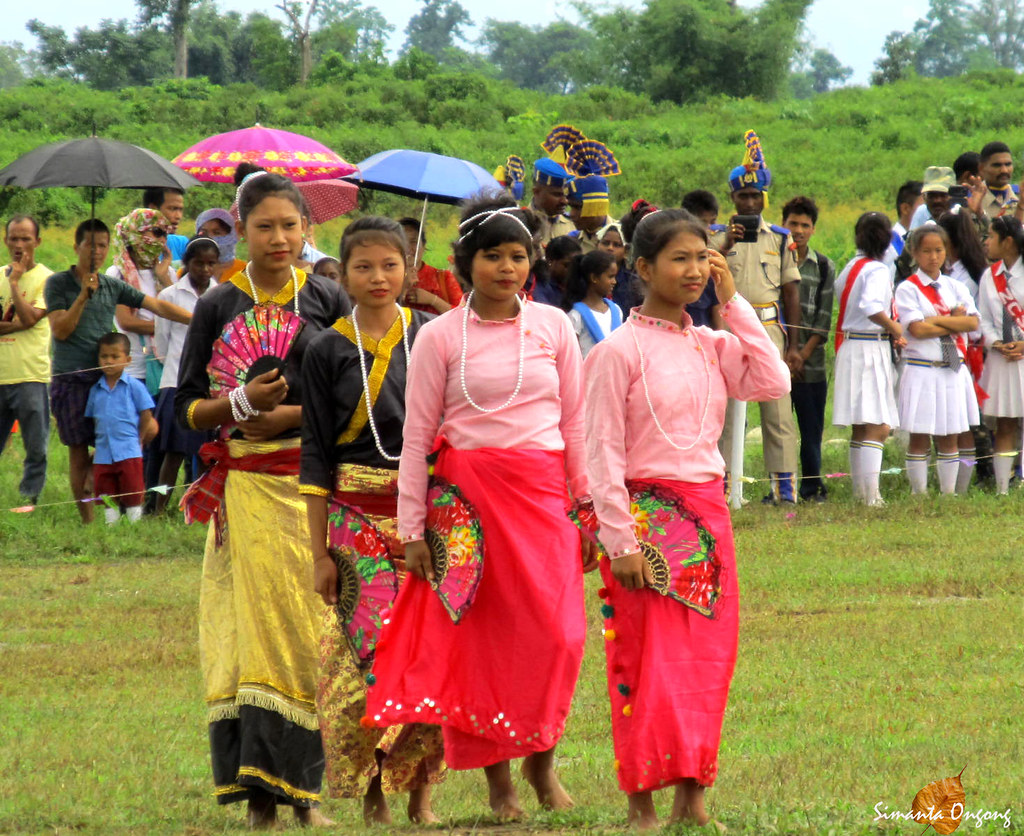
• Tribal Areas:- The tribal Areas in the States of Assam, Meghalaya, Tripura, Manipur are separately dealt with in Article 244(2), and provisions for their administration are to be found in the Sixth Schedule of the Indian Constitution.

• Sixth Schedule:- The 6th Schedule is related to the administration of the Tribal Areas in Assam, Meghalaya, Tripura, Manipur are specified in the table appended to the 6th Schedule( paragraph 20) of the Constitution, which has undergone several amendments originally. It consisted of two parts A and B. But since the creation of the State Nagaland, the table (as amended in 1972, 1984, 1988, 2003) includes 10 areas in four parts. These special provisions are provided under Article 244(2) and Article 275(1) of the Constitution.

Part I – (1) The North Cachar Hills District. (2) Karbi Anglong District. (3) Bodoland Territory Areas District.

Part II (I) – (1) Khasi Hills District. (2) Jaintia Hills District. (3) Garo Hills Districts (in Meghalaya)

Part II (A)- Tripura Tribal Areas District.

Part III – (1) The Chakma District. (2) The Mara District. (3) The Lai District

• Administration under Sixth Schedule:-

(1) Executive and Legislative powers- Under the provisions of the 6th Schedule of the Constitution of India, Autonomous District Councils can make laws, rules, and regulations in the areas like land management, water resources, forest management, agricultural, cultivation, formation of village councils, public health, sanitation, village, and town level planning, the appointment of traditional chiefs and headman, inheritance of property, marriage, and divorce, social customs, money-lending, mining and minerals.

• Judicial powers:- Autonomous District Councils have the powers to form courts to hear cases where both the parties are members of Scheduled Tribes and the maximum sentence, is less than 5years in prison. It has the power to settle certain types of civil and criminal cases also. Thus the councils under the 6th Schedule have been given more power than the local government under the 73rd and 74th Amendments of the Constitution 1992.

• Role of the Governor:- The Governor is empowered to determine areas under the administration of the councils. He has the authority to form a new Autonomous District. He can also increase or decrease the areas of any autonomous district, or district council. The act of Parliament or the State Legislature so not apply to Autonomous Districts and Autonomous Regions or apply by specified modifications and exceptions. He is also empowered to unite two or more districts or its part to carve out one autonomous district from it. The Governor can also define the boundaries or alter the name of any autonomous district.

• District Councils and Regional Councils:- Each District Council and Regional Council consists of not more than 30 members of which 4 are nominated by the Governor and the rest via elections. All of them remain in the power for a term of 5years. District Council and Regional Council under the 6th Schedule have the real power for making laws on various legislative subjects.

• Taxation Revenue:-

(1) The Regional Council and Autonomous District Councils have the powers to assess and collect revenue concerning such lands by the principles for the time being followed by the government of the State.

(2) They also have the power to levy/collect all taxes on lands, buildings, and tolls on a person resident within the area.

(3) It also has the power to levy/ collect all or any of the following taxes:

(i) Profession, trades, callings, employments.

(ii) Animals, vehicles, boats

(iii) Entry of goods into a market, and tolls on passengers, goods carried in ferries.

(iv) Maintenance of schools, dispensaries, or roads.

Comparing Writing forms of two Indian Writers- Twinkle Khanna and Dr. Shashi Tharoor

Twinkle Khanna has disarmed the audience with her thought- provoking writing and her charming wit. She is a popular newspaper columnist, Indian author, interior designer, film producer and a former Bollywood actress. She writes columns in The Times of India and Daily News Analysis (DNA), her discernible writing skills and her liberal opinions have captured the attention of her readers. Her craft of penning down funny fables and satirical writing has set her apart. She firmly believes that in life nothing is more sacred than laughter.

  • She writes anecdotes about everyday situations that a woman has to go through. The situations are mundane yet significant incidents in life. Her columns are random, though interesting, slice of life entries, adds life to her words through her self-deprecatory humour and unmatched wit with bits and pieces of life- learnings.
  • Her Popular works include – Mrs.Funnybones, Pyjamas are forgiving, The Legend of Laxmi Prasad
  • Her style of writing can be described as discernible, easy to read and has a smooth way of expressing herself through her writings. If a person is not an adamant reader, they will still be able to understand the picture that she is framing through her writings. Her flow of words is effortless.

 She deals with a wide range of topics from focusing on women empowerment, mental health and normalizing finding love at the age of sixty to WhatsApp forwards and her staff members being a menace to her. She masterfully manages to never belittle a problem or the issue and never diminishes their relevance in any way. Through her columns she can give words to your thoughts. Her columns are an amalgamation of intelligence, sarcasm, practicality and adulation.

  • Her choice of words is interesting, mostly uses expressive adjectives which intensifies her anecdotes. Includes – details that are distinctive, uses similes in her work which adds humor in situations and uses satire and irony which conveys absurdity and silliness of people, situations and things.
  • Her tone is joyful, sarcastic and cheerful.
  • Mood – she is comical, humorous and maddening.
Twinkle Khanna is ready with her third book and it is all about 'pyjama  girls' | Lifestyle News,The Indian Express

Dr. Shashi Tharoor is a best-selling author, columnist and a politician. He is currently member of parliament of Thiruvananthapuram. He has also served as a peacemaker and an administrator in the United Nations for over three decades. He certainly did not let his political career stop his pen. He is known to be the man of having many skills. Over the years he has made a reputation of an impactful orator and a prolific writer.

  • His popular work includes- The paradoxical prime minister, An era of darkness: The British Empire in India, Why I am a Hindu
  • He writes about politics and topical issues of caste system, society, democracy, foreign policy, patriotism, citizenship, nationalism and modern India. He chooses an immersive narrative for all his books and columns. His way of writing exhibits the qualities of good research and personal knowledge which gives a different and a new perspective to readers.

Readers who are looking for a refined viewpoint on the current events that unfold in our country’s political system must read his work. His ability to include the application of critical analysis creates better understanding of important matters that the country is facing or has faced.

  • He is known for having an inimitable style of writing. He has an extensive vocabulary and many people cannot perceive his work easily and often call it obscure in a way. His books are not an easy read and takes a time and efforts to understand vast concepts, debates, history and terminologies that he includes in his columns.
  • His choice of words is complex and informative. His work is recognized for brilliancy in the usage of satire to deliver serious messages. In his columns he has shown that a strong and thoughtful argument can be presented in a humorous way to prevent monotonousness, yet he manages to deliver the required message. By inculcating satire in his work, he candidly expresses himself.
  • His tone is firm, serious and formal.
  • Mood – critical and humorous  

The similarities in their work are that both have chosen topics that are relevant in our country. They both have strong stands and a sense of individuality which sets them apart in their felid of work. They are not hesitant to candidly express themselves and explain their point of views to the readers. Both have an interesting way to put across their messages. There writings include a few scathing statements but are thought-provoking and will entice the readers.

Sixth Schedule of the Indian Constitution: Articles 244(2)

• Tribal Areas:- The tribal Areas in the States of Assam, Meghalaya, Tripura, Manipur are separately dealt with in Article 244(2), and provisions for their administration are to be found in the Sixth Schedule of the Indian Constitution.

• Sixth Schedule:- The 6th Schedule is related to the administration of the Tribal Areas in Assam, Meghalaya, Tripura, Manipur are specified in the table appended to the 6th Schedule( paragraph 20) of the Constitution, which has undergone several amendments originally. It consisted of two parts A and B. But since the creation of the State Nagaland, the table (as amended in 1972, 1984, 1988, 2003) includes 10 areas in four parts. These special provisions are provided under Article 244(2) and Article 275(1) of the Constitution.

Part I – (1) The North Cachar Hills District. (2) Karbi Anglong District. (3) Bodoland Territory Areas District.

Part II (I) – (1) Khasi Hills District. (2) Jaintia Hills District. (3) Garo Hills Districts (in Meghalaya)

Part II (A)- Tripura Tribal Areas District.

Part III – (1) The Chakma District. (2) The Mara District. (3) The Lai District

• Administration under Sixth Schedule:-

(1) Executive and Legislative powers- Under the provisions of the 6th Schedule of the Constitution of India, Autonomous District Councils can make laws, rules, and regulations in the areas like land management, water resources, forest management, agricultural, cultivation, formation of village councils, public health, sanitation, village, and town level planning, the appointment of traditional chiefs and headman, inheritance of property, marriage, and divorce, social customs, money-lending, mining and minerals.

• Judicial powers:- Autonomous District Councils have the powers to form courts to hear cases where both the parties are members of Scheduled Tribes and the maximum sentence, is less than 5years in prison. It has the power to settle certain types of civil and criminal cases also. Thus the councils under the 6th Schedule have been given more power than the local government under the 73rd and 74th Amendments of the Constitution 1992.

• Role of the Governor:- The Governor is empowered to determine areas under the administration of the councils. He has the authority to form a new Autonomous District. He can also increase or decrease the areas of any autonomous district, or district council. The act of Parliament or the State Legislature so not apply to Autonomous Districts and Autonomous Regions or apply by specified modifications and exceptions. He is also empowered to unite two or more districts or its part to carve out one autonomous district from it. The Governor can also define the boundaries or alter the name of any autonomous district.

• District Councils and Regional Councils:- Each District Council and Regional Council consists of not more than 30 members of which 4 are nominated by the Governor and the rest via elections. All of them remain in the power for a term of 5years. District Council and Regional Council under the 6th Schedule have the real power for making laws on various legislative subjects.

• Taxation Revenue:-

(1) The Regional Council and Autonomous District Councils have the powers to assess and collect revenue concerning such lands by the principles for the time being followed by the government of the State.

(2) They also have the power to levy/collect all taxes on lands, buildings, and tolls on a person resident within the area.

(3) It also has the power to levy/ collect all or any of the following taxes:

(i) Profession, trades, callings, employments.

(ii) Animals, vehicles, boats

(iii) Entry of goods into a market, and tolls on passengers, goods carried in ferries.

(iv) Maintenance of schools, dispensaries, or roads.

India's long road: Rural development


“The village is the cell of the national body and the cell-life must be healthy and developed for the national body to be healthy and developed.” – well alluded by SRI AUROBINDO.

India as it is said is the “land of villages.” The heart of our nation resides in the rural areas. As quoted by the father of our nation, Mahatma Gandhi, “India lives in her seven hundred thousand villages.” Although the term “Rural development” has been widely used, what constitutes it seems to have changed significantly. So, the question is what exactly is rural development. Rural development means improving the living conditions of the people living in rural areas. There are many definitions to it. The fact is that today more than half of the Indian population lives in rural areas and most of them depends upon agriculture as their primary source of income. Agriculture is an integral part of many world economies, especially the developing ones, and hence plays a significant role in the rural development. The strength and prosperity of our nation depends upon the strength and prosperity of rural areas. Therefore, it is important to free the rural India from poverty.

Our government is trying its best to bring rapid growth and development in the villages. We derive major contributions to GDP from rural workers. Upwelling schemes for rural electrification, open defecation free villages, skill development, Prime Minister rural housing mission, Prime Minister Gram Sadak Yojana, Deen Dayal Upadhyaya Grameen Kaushalya Yojana, National Rural Livelihood Mission, National Rural Employment Guarantee Act, Sampoorna Grameen Rozgar Yojana, Sarv Siksha Abhiyan, Sansad Adarsh Gram Yojana, National Social Assistance Programme etc., has modified the doddering face of Indian villages.

Empowering rural economy through digitalization schemes, regeneration of traditional industries schemes, entrepreneurship schemes, water conservation schemes, MGNREGS, has further added to the rural development and has brought direct benefit transfer. Achieving hygiene and sanitation through government initiatives like SWACHH BHARAT MISSION has further added to the list.

According to the World Bank, “Rural development as a strategy designed to improve the economic and social life of a specific group of people – The rural (people) poor. It involves extending the benefits of development to the poorer among those who seek a livelihood in rural areas. The group includes small-scale farmers, tenants and the landless.” Rural development is a strategy that encompasses all the aspects and factors to achieve an overall spectrum of development and growth. This development is needed to benefit the poor and weaker sections of the society. Rural development seeks to transform all the sectors of rural economy – the primary sector, the secondary sector and the tertiary sector. It is concerned with the improvement of the standard of living of the rural people through the provision of health and medical facilities, employment opportunities including vocational training, educational facilities, etc. It brings about significant improvement in the socio-economic conditions of the scheduled castes, scheduled tribes, the landless agricultural labourers and the marginal and small farmers.

The village land of India is adorned with lush green land, protected livestock and unexplored pool of species which needs special attention of the government. The recent extent of India from the Regional Comprehensive Economic Partnership (RCEP) did mark the promise of self-sustained indigenous production of India. The decision was to safeguard the interests of industries like agriculture and dairy.

Rural development should include social, economic and overall development of a rural area. It should be an all- round project. Employment creation is the main component of rural development. Therefore, to generate employment opportunities in villages, there is a need to strengthen agriculture sector and also set up other industries. A digital platform should be built for active labourers to check the process of employment generation. Integrated and organic farming methods should be promoted. Economic models like Gig’s – economy must be brought in action to counter seasonal as well as disguised unemployment from rural economy. Better planning must be done by the government, to boost up local economy of a village. Better roads connectivity should be put in the major plan of action. Basic amenities should be made available.

“Education is the most powerful weapon which you can use to change the world”, well said by Nelson Mandela. Six Indian states account for about 70per cent of all illiterates in India. India currently has the largest population of illiterate adults in the world with 287 million people, with major proportion in the rural India. While India’s literacy rate rose from 48 per cent in 1991 to 63 per cent in 2006, “population growth cancelled the gains so there was no change in the number of illiterate adults”, says the UNESCO report.

Thus, education is the most important tool which can pave the way for the development of every other factors. The government has been trying to come up with schemes to strengthen education and integrated skill development of youth of rural India. Primary education has been made free and compulsory for the rural people so that the maximum number of the villages may be literate. Schemes like Beti Bachao Beti Padhao, has been proved effective. Women in rural India are still devoid of their ‘fare-share’ in the field of agriculture and labour. Strengthening of service sector has emerged as a boon for women. The problem of the ownership of the land should be resolved. The cottage industries should be established to further accelerate the growth. The villages should be in sync with the urban areas.

Another matter of concern is the crime rate which has increased in rural areas and specially against the marginalized sections of society. The death rates in rural areas due to domestic violence has also not seen any change. Banning of liquor consumption in states like Bihar has provided to be an effective step. People should be made aware and educated about the rights and wrongs. Proper healthcare facilities should also be provided with adequate number of doctors and nurses. Other robust steps should be adopted towards rural development.

It is often felt that the migration of people from rural to urban, in search of employment or better lifestyle, is putting severe pressure on urban amenities. The low wage migrants are thus left with no other option than to live in unhygienic condition. There is a need to make rural economy stronger and create employment opportunities in rural India. This will help in reducing the disparity in per capita income of rural and urban which has always remained high.  A significant growth is required in rural area. Non farming activities should also be encouraged.

The development of rural India is of utmost importance for the development of the country. If India needs to become the next superpower in the world, it needs to tap into the potential of rural India. Given its size and population, no business house can afford to neglect the consumer spending power of rural India. India has many heroes that rural population should look up, like M.S. Swaminathan, the father of the green revolution in India, Varghese Kurien, the father of the white revolution in India. The progress of a nation depends upon the progress of its villages. We can say that the rural areas are the backbone of a nation.

Our rural areas have undergone major changes since independence. We should try to keep in mind the Sustainable Development Goals (SDGs) while trying to achieve the rural development goal. We need to join our hands with the government in embellishing its goal of the development of rural India.




Kargil Vijay Diwas

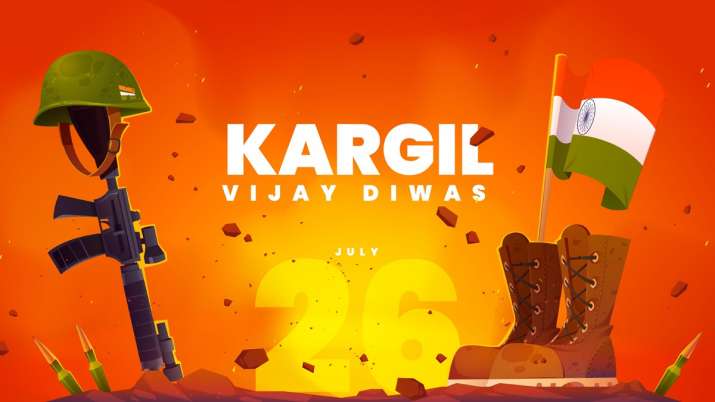
Today marks the 22nd anniversary of Kargil Vijay Diwas, which is being observed across the country. On Kargil Vijay Diwas, the nation remembers its war heroes and pays respect to Martyrs.

The day commemorates the success of Indian military forces in Operation Vijay in 1999, when they drove infiltrators supported by the Pakistani army out of high positions in the Kargil area.

President Ram Nath Kovind will visit the Kargil War Memorial in Drass, Ladakh, today to pay tribute to the Indian Armed Forces’ unwavering heroism and sacrifice during the Kargil Conflict in 1999.

The Prime Minister also shared a clip from All India Radio’s Mann Ki Baat show from last year. He stated that India will never forget the circumstances surrounding the Kargil conflict.

On the occasion of Kargil Vijay Diwas, Defence Minister Rajnath Singh today paid tribute to the Indian Army’s unwavering courage and sacrifice. Prime Minister Narendra Modi paid tribute to all those who died while defending our country. President of India Ram Nath Kovind will attend the 22nd anniversary of the Kargil War.

He will be the first President to visit the Kargil War Memorial in Drass and take part in the festivities. Air Force Chief Air Chief Marshal R K S Bhadauria and Navy Vice Chief Vice Admiral G Ashok Kumar also expressed their condolences.

“Operation Vijay was a perfect combination of strong and resolute political, military, and diplomatic efforts that helped us to turn an unfavourable situation into a military and diplomatic victory,” wrote General VP Malik, the Indian Army Chief during the Kargil War, in a 2002 essay.

The Kargil War in 1999 was the world’s first and only conflict between two nuclear-armed states. Every year on Kargil Vijay Diwas, India commemorates the heroism of its defence troops, headed by the Indian Army, which pulled off numerous notable successes in the line of fire.

Despite strategic disadvantages and hostile weather, India successfully pushed back the enemy after a nearly three-month operation that included intense warfare, synchronised political and militaristic pressure, and, most importantly, the sacrifices of many lionhearted patriots who will be remembered for the rest of their lives.

Kargil Vijay Diwas

Today marks the 22nd anniversary of Kargil Vijay Diwas, which is being observed across the country. On Kargil Vijay Diwas, the nation remembers its war heroes and pays respect to Martyrs.

The day commemorates the success of Indian military forces in Operation Vijay in 1999, when they drove infiltrators supported by the Pakistani army out of high positions in the Kargil area.

President Ram Nath Kovind will visit the Kargil War Memorial in Drass, Ladakh, today to pay tribute to the Indian Armed Forces’ unwavering heroism and sacrifice during the Kargil Conflict in 1999.

The Prime Minister also shared a clip from All India Radio’s Mann Ki Baat show from last year. He stated that India will never forget the circumstances surrounding the Kargil conflict.

On the occasion of Kargil Vijay Diwas, Defence Minister Rajnath Singh today paid tribute to the Indian Army’s unwavering courage and sacrifice. Prime Minister Narendra Modi paid tribute to all those who died while defending our country. President of India Ram Nath Kovind will attend the 22nd anniversary of the Kargil War.

He will be the first President to visit the Kargil War Memorial in Drass and take part in the festivities. Air Force Chief Air Chief Marshal R K S Bhadauria and Navy Vice Chief Vice Admiral G Ashok Kumar also expressed their condolences.

“Operation Vijay was a perfect combination of strong and resolute political, military, and diplomatic efforts that helped us to turn an unfavourable situation into a military and diplomatic victory,” wrote General VP Malik, the Indian Army Chief during the Kargil War, in a 2002 essay.

The Kargil War in 1999 was the world’s first and only conflict between two nuclear-armed states. Every year on Kargil Vijay Diwas, India commemorates the heroism of its defence troops, headed by the Indian Army, which pulled off numerous notable successes in the line of fire.

Despite strategic disadvantages and hostile weather, India successfully pushed back the enemy after a nearly three-month operation that included intense warfare, synchronised political and militaristic pressure, and, most importantly, the sacrifices of many lionhearted patriots who will be remembered for the rest of their lives.

Fifth Schedule of the Indian Constitution: Scheduled Areas Articles-244(1)

Scheduled Areas:- The Fifth Schedule Article-244(1), being a very important provision of the Constitution deals with the control and administration of the Scheduled Areas. The Constitution makes special provisions for the administration of certain areas called Scheduled Areas in the states other than Assam, Meghalaya, Tripura, Manipur despite such areas are situated within a State or Union Territory A- 244(1), probably because of the backwardness of the people of these areas.

Criterion:-

The criteria for declaring any areas as Scheduled Areas under the Fifth Schedule are as follows :

(1) Preponderance of Tribal population in such area.

(2) Compactness and reasonable size of the area.

(3) Viable administration entity such as a district, block, or Taluk, etc.

(4) Economic backwardness of the area as compared to the neighboring areas.

Features of the 5th Schedule-

(1) Declaration of Scheduled Areas- The Constitution empowers the President to declare any areas as Scheduled Areas. He can increase or decrease or even alter the boundaries of a Scheduled Area. He can also cancel such designation after consultation with the Governor of the concerned State or can make fresh orders to redefine any Scheduled Area.

(2) Executive powers of State and Union- Subject to the provisions of this schedule the executive powers of State extend to the Scheduled Areas therein. The executive powers of the Union are limited to giving directions to the State for the administration of such areas.

(3) Tribal Advisory Council- Any state having a Scheduled Area needs to establish a Tribal Advisory Council consisting of not more than 20 members of whom about 3/4 members should be the representative of the Scheduled Tribes in the Legislative Assembly of the State.

(4) Law Applicable to Scheduled Areas– The Governor is empowered to direct that any particular Act of Parliament or the Legislature of the State, does not apply directly to a Scheduled Area and is subject to such exceptions and modifications as he may specify in the notification:

(a) Prohibit the transfer of land by or among members of the Scheduled Tribe in such areas;

(b) Regulate the allotments of land to the members of the Scheduled Tribes in such areas;

(c) Regulate the carrying out of businesses as money lenders by persons who lend money to members of the Scheduled Tribes in such areas.

• States Under Fifth Schedule:-

The Fifth Schedule designates Tribal majority areas in the ten Tribal minority States within peninsular India including:

(1) Andhra Pradesh

(2) Himachal Pradesh

(3) Madhya Pradesh

(4) Odisha

(5) Rajasthan

(6) Jharkhand

(7) Gujarat

(8) Chhattisgarh

(9) Telangana

(10) Maharashtra

Some Important points:-

(1) Tribal Advisory Council(TAC) in Scheduled Areas do not perform administrative actions directly and do not have much autonomy.

(2) Panchayat Extension to Scheduled Areas is applicable here.

(3) PRIs in non-6th Scheduled Areas are liberally funded so direct funding of the Council is done under Article 280 of the Constitution.

(4) The Council in the 5th Schedule is the creation of the State Legislature.

(5) 5th Schedule Areas have an implementation of various schemes like MGNAREGA ( Mahatma Gandhi National Rural Employment Guarantee Act) 2005.

Fifth Schedule of the Indian Constitution: Scheduled Areas Articles-244(1)

Scheduled Areas:- The Fifth Schedule Article-244(1), being a very important provision of the Constitution deals with the control and administration of the Scheduled Areas. The Constitution makes special provisions for the administration of certain areas called Scheduled Areas in the states other than Assam, Meghalaya, Tripura, Manipur despite such areas are situated within a State or Union Territory A- 244(1), probably because of the backwardness of the people of these areas.

Criterion:-

The criteria for declaring any areas as Scheduled Areas under the Fifth Schedule are as follows :

(1) Preponderance of Tribal population in such area.

(2) Compactness and reasonable size of the area.

(3) Viable administration entity such as a district, block, or Taluk, etc.

(4) Economic backwardness of the area as compared to the neighboring areas.

Features of the 5th Schedule-

(1) Declaration of Scheduled Areas- The Constitution empowers the President to declare any areas as Scheduled Areas. He can increase or decrease or even alter the boundaries of a Scheduled Area. He can also cancel such designation after consultation with the Governor of the concerned State or can make fresh orders to redefine any Scheduled Area.

(2) Executive powers of State and Union- Subject to the provisions of this schedule the executive powers of State extend to the Scheduled Areas therein. The executive powers of the Union are limited to giving directions to the State for the administration of such areas.

(3) Tribal Advisory Council- Any state having a Scheduled Area needs to establish a Tribal Advisory Council consisting of not more than 20 members of whom about 3/4 members should be the representative of the Scheduled Tribes in the Legislative Assembly of the State.

(4) Law Applicable to Scheduled Areas– The Governor is empowered to direct that any particular Act of Parliament or the Legislature of the State, does not apply directly to a Scheduled Area and is subject to such exceptions and modifications as he may specify in the notification:

(a) Prohibit the transfer of land by or among members of the Scheduled Tribe in such areas;

(b) Regulate the allotments of land to the members of the Scheduled Tribes in such areas;

(c) Regulate the carrying out of businesses as money lenders by persons who lend money to members of the Scheduled Tribes in such areas.

• States Under Fifth Schedule:-

The Fifth Schedule designates Tribal majority areas in the ten Tribal minority States within peninsular India including:

(1) Andhra Pradesh

(2) Himachal Pradesh

(3) Madhya Pradesh

(4) Odisha

(5) Rajasthan

(6) Jharkhand

(7) Gujarat

(8) Chhattisgarh

(9) Telangana

(10) Maharashtra

Some Important points:-

(1) Tribal Advisory Council(TAC) in Scheduled Areas do not perform administrative actions directly and do not have much autonomy.

(2) Panchayat Extension to Scheduled Areas is applicable here.

(3) PRIs in non-6th Scheduled Areas are liberally funded so direct funding of the Council is done under Article 280 of the Constitution.

(4) The Council in the 5th Schedule is the creation of the State Legislature.

(5) 5th Schedule Areas have an implementation of various schemes like MGNAREGA ( Mahatma Gandhi National Rural Employment Guarantee Act) 2005.

The Curious Case of Benjamin Button

What is growing old? Is it accumulating experiences and memories or making memories? Scientifically growing old means your body accumulates damages and is no longer able to function normally. What if someone could grow younger instead of older? The movie plays with a similar idea, it focuses on a man that grows younger instead of older.

The movie starts with an elderly Daisy Fuller on her deathbed in august 2005, she tells her daughter about a clock that ran backwards. The clock was installed on a station in 1918 by a clock worker that wanted it to be an memorial to everyone who lost their lives in the second world war. On the evening of November 11 19118 a boy is born with the appearance of an old man, he is abandoned as an infant on the steps of a nursing home run by Queenie and Mr Weathers. They decide to raise the boy as their own in the nursing home.

Benjamin has to use a wheelchair till 1925 as he cant walk, he however learns to walk and is given crutches. Benjamin although physically old is mentally only about 7. He meets seven year old daisy and becomes good friends with her. Wishing to see more of the world he accepts work on a tugboat captained by Mike Clark, they form a close friendship while working together. Benjamin is contacted by Thomas Button a rich older man who seems to like his company, Thomas hides the fact that he his Benjamin’s father. Benjamin leaves with Mike on along-term work engagement.

In 1941 Benjamin meets Elizabeth Abbot in Murmansk and begins courting her, in December Japan attacks Pearl harbour bringing the War to United States. Captain Mike volunteers the boat for the U.S.Navy, the boat is assigned to salvage duties. After nearly dying in a fight against a German gunboat Benjamin and some surviving crewmen are rescued by a Navy ship, Benjamin returns to New Orleans in 1945 and reunites with Queenie. Benjamin learns that Mr Weathers passed away a while back. Benjamin meets Daisy and has dinner with her before she departs for New York. Benjamin is contacted by Thomas who reveals his relation and leaves his estate to Benjamin.

In 1947 Benjamin visits Daisy in New York but leaves once he realises that she has fallen in love with someone. He meets Daisy again in 1954 after her accident in Paris, a frustrated Daisy asks Benjamin to leave her life. In 1962 their paths cross again in New Orleans, they decide to give their relationship a shot as they are of similar physical age. The two move in together in 1967, Daisy give birth to their daughter Caroline. In 1968 believing that he cant be a proper father, Benjamin liquidates his assets and leaves their lives. Benjamin travels the world alone in the 1970s.

In 1980 Benjamin meets a married Daisy who introduces him as a family friend, they part once more after a short reunion. In 1990 a widowed Daisy is contacted by social workers who find a pre-teen Benjamin living in an abandoned building. Daisy moves into the nursing home and cares for Benjamin the rest of her life. Benjamin finally dies in 2002 as an infant but chronologically 84 years old. Daisy dies having revealed the truth about Benjamin to their daughter Caroline.

This is an amazing movie with a really unique concept which explore the possibility of ageing backwards. A must watch for fans of science fiction, the plot is amazing and makes you think. The cast is amazing as well Brad Pitt plays Benjamin Button and Cate Blachet plays Daisy.

The Curious Case of Benjamin Button

What is growing old? Is it accumulating experiences and memories or making memories? Scientifically growing old means your body accumulates damages and is no longer able to function normally. What if someone could grow younger instead of older? The movie plays with a similar idea, it focuses on a man that grows younger instead of older.

The movie starts with an elderly Daisy Fuller on her deathbed in august 2005, she tells her daughter about a clock that ran backwards. The clock was installed on a station in 1918 by a clock worker that wanted it to be an memorial to everyone who lost their lives in the second world war. On the evening of November 11 19118 a boy is born with the appearance of an old man, he is abandoned as an infant on the steps of a nursing home run by Queenie and Mr Weathers. They decide to raise the boy as their own in the nursing home.

Benjamin has to use a wheelchair till 1925 as he cant walk, he however learns to walk and is given crutches. Benjamin although physically old is mentally only about 7. He meets seven year old daisy and becomes good friends with her. Wishing to see more of the world he accepts work on a tugboat captained by Mike Clark, they form a close friendship while working together. Benjamin is contacted by Thomas Button a rich older man who seems to like his company, Thomas hides the fact that he his Benjamin’s father. Benjamin leaves with Mike on along-term work engagement.

In 1941 Benjamin meets Elizabeth Abbot in Murmansk and begins courting her, in December Japan attacks Pearl harbour bringing the War to United States. Captain Mike volunteers the boat for the U.S.Navy, the boat is assigned to salvage duties. After nearly dying in a fight against a German gunboat Benjamin and some surviving crewmen are rescued by a Navy ship, Benjamin returns to New Orleans in 1945 and reunites with Queenie. Benjamin learns that Mr Weathers passed away a while back. Benjamin meets Daisy and has dinner with her before she departs for New York. Benjamin is contacted by Thomas who reveals his relation and leaves his estate to Benjamin.

In 1947 Benjamin visits Daisy in New York but leaves once he realises that she has fallen in love with someone. He meets Daisy again in 1954 after her accident in Paris, a frustrated Daisy asks Benjamin to leave her life. In 1962 their paths cross again in New Orleans, they decide to give their relationship a shot as they are of similar physical age. The two move in together in 1967, Daisy give birth to their daughter Caroline. In 1968 believing that he cant be a proper father, Benjamin liquidates his assets and leaves their lives. Benjamin travels the world alone in the 1970s.

In 1980 Benjamin meets a married Daisy who introduces him as a family friend, they part once more after a short reunion. In 1990 a widowed Daisy is contacted by social workers who find a pre-teen Benjamin living in an abandoned building. Daisy moves into the nursing home and cares for Benjamin the rest of her life. Benjamin finally dies in 2002 as an infant but chronologically 84 years old. Daisy dies having revealed the truth about Benjamin to their daughter Caroline.

This is an amazing movie with a really unique concept which explore the possibility of ageing backwards. A must watch for fans of science fiction, the plot is amazing and makes you think. The cast is amazing as well Brad Pitt plays Benjamin Button and Cate Blachet plays Daisy.

#Thepurestbond : “A father-daughter bond”

Everyone has different relationship with their parents , but the most purest bond that one will find is of a father- daughter . Each one of have witnessed it , dads taking care of their little girls , making their hairs , paint their nails , trying new makeup hacks on their daddy , doing their dad’s makeup , etc. Their is something so sweet & beautiful to watch both of them interact . A father protects her daughter from every things which is bad for her , he tends to make her girl the prettiest & the most perfectionist in the world . It is important for girls to have good relationship with their father , as it impacts their personality , their success , their behavior.

FATHER DAUGHTER BOND IS THE PURREST !

Women who have a good relationship with their fathers are lucky enough to look back at their fond memories when they grow up. Having a good relationship with her father not only shapes a girl’s childhood experience but also influences her behavior towards other men later in life. If a girl’s father is erratic or completely absent by nature, then it creates a feeling of low self-esteem in her, and she might have trouble trusting men in general.

A girl’s father act as a hero for her , this is because he is the first man she is introduced to , he is the first man who holds her , her perception about a man is developed the way her father treats her . This perception is important for a girls’ growth . A girl calls her dad her hero because , he gives a sense of security , he tends to protect her from every thing , dads tends as he would take here girl’s each & every problem .

The father’s connection and communication will help the daughter make the right decisions. A father should provide stability and moral guidance to his daughter because that is the time( teenage ) when she is surrounded and tempted by bad influences. Daughters learn more about relationships by observing their father’s actions and behavior. They judge men based on the standard their father sets. Happy marriages are connected to a warm parent-child relationship. If the parents have marital problems, the girl tends to be insecure, anxious, and aggressive.

Father’s presence not only directs girls in the early stage of life but also assure her that what ever the problem is her father is standing as an iceberg in front of her & will protect her from every problem .

#Thepurestbond : "A father-daughter bond"

Everyone has different relationship with their parents , but the most purest bond that one will find is of a father- daughter . Each one of have witnessed it , dads taking care of their little girls , making their hairs , paint their nails , trying new makeup hacks on their daddy , doing their dad’s makeup , etc. Their is something so sweet & beautiful to watch both of them interact . A father protects her daughter from every things which is bad for her , he tends to make her girl the prettiest & the most perfectionist in the world . It is important for girls to have good relationship with their father , as it impacts their personality , their success , their behavior.

FATHER DAUGHTER BOND IS THE PURREST !

Women who have a good relationship with their fathers are lucky enough to look back at their fond memories when they grow up. Having a good relationship with her father not only shapes a girl’s childhood experience but also influences her behavior towards other men later in life. If a girl’s father is erratic or completely absent by nature, then it creates a feeling of low self-esteem in her, and she might have trouble trusting men in general.

A girl’s father act as a hero for her , this is because he is the first man she is introduced to , he is the first man who holds her , her perception about a man is developed the way her father treats her . This perception is important for a girls’ growth . A girl calls her dad her hero because , he gives a sense of security , he tends to protect her from every thing , dads tends as he would take here girl’s each & every problem .

The father’s connection and communication will help the daughter make the right decisions. A father should provide stability and moral guidance to his daughter because that is the time( teenage ) when she is surrounded and tempted by bad influences. Daughters learn more about relationships by observing their father’s actions and behavior. They judge men based on the standard their father sets. Happy marriages are connected to a warm parent-child relationship. If the parents have marital problems, the girl tends to be insecure, anxious, and aggressive.

Father’s presence not only directs girls in the early stage of life but also assure her that what ever the problem is her father is standing as an iceberg in front of her & will protect her from every problem .

Consumer Rights and Responsibilities

Consumer Rights:

  1. Right to safety:- Means the right to be protected from the marketing of goods and services that endanger life and property. The items and services acquired should not only suit their current requirements, but also their long-term interests. Consumers should insist on the quality of the items as well as the guarantee of the products and services before making a purchase. They should rather choose quality-marked items such as ISI, AGMARK, and so on.
  2. Right to choose:- Means the right to be guaranteed, whenever feasible, of access to a diverse range of products and services at a reasonable price. In the case of monopolies, it entails the right to expect good quality and service at a reasonable price. It also covers the right to fundamental goods and services. This is because the minority’s unfettered ability to choose might imply a rejection of the majority’s fair share. This right is better exercised in a competitive market when a wide range of items are accessible at reasonable costs.
  3. Right to be informed:- Means the customer has the right to be informed about the quality, amount, potency, purity, standard, and price of goods in order to defend themselves from unfair commercial practises. Before making a choice or decision, consumers should insist on receiving all available information about the product or service. This will allow him to behave intelligently and responsibly, as well as avoid falling victim to high-pressure marketing methods.
  4. Right to consumer education:- The right to gain the information and skills necessary to be an educated consumer throughout one’s life. Consumer ignorance, particularly among rural customers, is largely to blame for their exploitation. They should be aware of their rights and should exercise them. Only then can successful consumer protection be achieved.
  5. Right to be heard:- This means that the interests of consumers will be taken into account in relevant forums. It also involves the right to be represented in different forums established to examine the welfare of consumers. Consumers should create non-political and non-commercial consumer groups that may be represented in various consumer committees formed by the government and other entities.
  6. Right to Seek redressal:- Means the right to seek remedy for unjust trade practises or unethical consumer exploitation. It also includes the consumer’s right to a fair resolution of legitimate issues. Consumers must file a complaint if they have legitimate issues. Many times, their complaint may be of minor importance, but its influence on society as a whole may be significant. They can also seek resolution of their concerns via consumer organisations.
  7. Consumer Protection Act:- An Act to provide for the protection of consumers’ interests and, for that purpose, to create agencies for the prompt and effective administration and resolution of consumer disputes, as well as for matters associated therewith.” (From the Consumer Protection Act of 2019.) “An Act to provide for greater consumer protection and to make provision for the formation of consumer councils and other agencies for the resolution of consumer disputes and for issues connected therewith.”(From the Consumer Protection Act of 1986.) The Consumer Protection Act of 1986 aims to promote and defend customers’ interests against inadequacies and faults in goods or services. It also aims to protect consumers’ rights against unfair or restrictive trade practises. This act was passed in the Lok Sabha on December 9, 1986, and the Rajya Sabha on December 10, 1986, and it was signed by the President of India on December 24, 1986, and it was published in the Gazette of India on December 26, 1986.

Consumer Responsibilities:

  1. Ask Yourself!:-
  • Have you had any issues as a consumer?
  • Have you ever complained about an issue like this?
  • Do you aware that you may seek the help of a consumer organization to safeguard your interests?

2. Be Critically Aware:- The responsibility to be more alert and to question more – about prices, about quantity and quality of goods bought and services used.

3. Be Involved:- The obligation to be forceful – to guarantee that you, as a customer, get a fair bargain. Remember that if you remain passive, you will most likely be exploited.

4. Be Organized:- The duty to join hands and raise one’s voice as a customer; to fight as a group and to build the power and influence necessary to promote and safeguard consumer interests.

5. Practice Sustainable Consumption:- The responsibility to be aware of the impact of your consumption on other citizens, especially the disadvantaged or powerless groups; and to consume based on needs – not wants.

6. Be Responsible to the Environment:- The obligation to be aware of and comprehend the environmental repercussions of our consumption. We must acknowledge our personal and social duty to conserve natural resources and maintain the environment for future generations.

Children & Trauma


Trauma in Children with Special Needs - My Mental Health

Most of the people have a thought that children don’t experience traumas but that’s
not the case in reality. Children that experience negative environmental conditions
during their early stages, continue to carry on that feeling till much later in life.
Infants, pre-schoolers, teenagers have totally different environmental conditions
around them in which they live and respond to hence the trauma can be felt and dealt
with differently. Attachments and having good relationships as a young individual is
very important to make a safe environment to be in when they deal with some fear.
Specially in an average Indian household where children’s mental health is not given
that much importance, it is very important to make parents aware about having a safe
and secure environment for their children in order to have a healthy future for them.
I personally know many people who have experienced childhood traumas and till
date it just takes a small thing to trigger that memory and make them go back to
where it was all started as if it was a fresh wound.
A small trauma can lead to serious issues and hence it should be prevented at all cost
specially in the childhood stage when the child is not capable of handling the
situation.
I want to give an example of my uncle here, he was 12 years old when this incident
happened. A very famous Durga temple conducts a function where lakhs of people
come to see, he was one of them and suddenly a fight broke out which turned furious
very fast that police had to intrude, he accidentally got stuck in the fight and got an
injury in his feet, he hid there in that temple for about 2 whole nights alone all scared.
luckily nothing serious happened to him and he safely reached home the 3rd day.
She got paranoid so bad that he is now 45 and still gets scared a Little when he goes
near that temple as he was scared for life being in that incident. That physical scar in
his feet still is very much visible and reminds him of what had happened. A 12 year
old kid accidentally carried away in a lathi charge and is left alone hiding from the
world for 48 hours is indeed traumatic.
Many scientific researches and surveys have been done in the same field and things
like mental health problems and PTSDs have been taken into key concentration
during the researches. Children exposed to such negative incidences are found to be
less efficient in school and lacks the skill of effective communication and is a vicious
cycle for a child’s development.
Another important discussion I would like to bring upon is that of an experience
called past life. Some people believe in it and some don’t but the ‘ past life regression
therapy’ is believed to be successful on clients even if the psychotherapist doesn’t
believe in it.
It is said that sometimes children would have developed a sense of fear, for example a
2 year old kid might have a fear of heights even though he would be experiencing a
sense of being on a high platform for the first time and such a fear can be a
consequence of something that happened in his/her past life.
This discussion is very much open to the floor and no one really have said to come to
a conclusion and I would like to research further on this issue

Consumer Rights and Responsibilities

Consumer Rights:

  1. Right to safety:- Means the right to be protected from the marketing of goods and services that endanger life and property. The items and services acquired should not only suit their current requirements, but also their long-term interests. Consumers should insist on the quality of the items as well as the guarantee of the products and services before making a purchase. They should rather choose quality-marked items such as ISI, AGMARK, and so on.
  2. Right to choose:- Means the right to be guaranteed, whenever feasible, of access to a diverse range of products and services at a reasonable price. In the case of monopolies, it entails the right to expect good quality and service at a reasonable price. It also covers the right to fundamental goods and services. This is because the minority’s unfettered ability to choose might imply a rejection of the majority’s fair share. This right is better exercised in a competitive market when a wide range of items are accessible at reasonable costs.
  3. Right to be informed:- Means the customer has the right to be informed about the quality, amount, potency, purity, standard, and price of goods in order to defend themselves from unfair commercial practises. Before making a choice or decision, consumers should insist on receiving all available information about the product or service. This will allow him to behave intelligently and responsibly, as well as avoid falling victim to high-pressure marketing methods.
  4. Right to consumer education:- The right to gain the information and skills necessary to be an educated consumer throughout one’s life. Consumer ignorance, particularly among rural customers, is largely to blame for their exploitation. They should be aware of their rights and should exercise them. Only then can successful consumer protection be achieved.
  5. Right to be heard:- This means that the interests of consumers will be taken into account in relevant forums. It also involves the right to be represented in different forums established to examine the welfare of consumers. Consumers should create non-political and non-commercial consumer groups that may be represented in various consumer committees formed by the government and other entities.
  6. Right to Seek redressal:- Means the right to seek remedy for unjust trade practises or unethical consumer exploitation. It also includes the consumer’s right to a fair resolution of legitimate issues. Consumers must file a complaint if they have legitimate issues. Many times, their complaint may be of minor importance, but its influence on society as a whole may be significant. They can also seek resolution of their concerns via consumer organisations.
  7. Consumer Protection Act:- An Act to provide for the protection of consumers’ interests and, for that purpose, to create agencies for the prompt and effective administration and resolution of consumer disputes, as well as for matters associated therewith.” (From the Consumer Protection Act of 2019.) “An Act to provide for greater consumer protection and to make provision for the formation of consumer councils and other agencies for the resolution of consumer disputes and for issues connected therewith.”(From the Consumer Protection Act of 1986.) The Consumer Protection Act of 1986 aims to promote and defend customers’ interests against inadequacies and faults in goods or services. It also aims to protect consumers’ rights against unfair or restrictive trade practises. This act was passed in the Lok Sabha on December 9, 1986, and the Rajya Sabha on December 10, 1986, and it was signed by the President of India on December 24, 1986, and it was published in the Gazette of India on December 26, 1986.

Consumer Responsibilities:

  1. Ask Yourself!:-
  • Have you had any issues as a consumer?
  • Have you ever complained about an issue like this?
  • Do you aware that you may seek the help of a consumer organization to safeguard your interests?

2. Be Critically Aware:- The responsibility to be more alert and to question more – about prices, about quantity and quality of goods bought and services used.

3. Be Involved:- The obligation to be forceful – to guarantee that you, as a customer, get a fair bargain. Remember that if you remain passive, you will most likely be exploited.

4. Be Organized:- The duty to join hands and raise one’s voice as a customer; to fight as a group and to build the power and influence necessary to promote and safeguard consumer interests.

5. Practice Sustainable Consumption:- The responsibility to be aware of the impact of your consumption on other citizens, especially the disadvantaged or powerless groups; and to consume based on needs – not wants.

6. Be Responsible to the Environment:- The obligation to be aware of and comprehend the environmental repercussions of our consumption. We must acknowledge our personal and social duty to conserve natural resources and maintain the environment for future generations.