Memory

Memory refers to the processes that are used to acquire, store, retain, and later retrieve information. There are three major processes involved in memory: encoding, storage, and retrieval. Human memory involves the ability to both preserve and recover information we have learned or experienced.

The term memory denotes a specific brain function of storing and retrieving of informations related to experiences.Tge duration of memory varies from few seconds or hours,to several years.

Types of memory

⭐Sensory memory:It means the ability to retain sensory signals in the sensory areas of the brain for a short interval of time following the actual sensory experience.This is the initial stage of memory process.

⭐ Primary memory:It is the memory of facts,words, numbers,letters,or other information.The information in this memory is instantaneously made available so that a person need not search through his or her mind for it.

⭐ Secondary memory:It is the storage in the brain of information that can be recalled at some later time(hours,days,months or years later).This is also called long term memory,fixed memory or permanent memory.

Physiology of memory: Certain anatomical, physical or chemical changes occur in the pre synaptic terminals or perhaps in whole neurons that permanently facilitated the transmission of impulses at the synapses.

All the synapses are thus facilitated in a thought circuit.This circuit can be re excited by any one of many diverse signals at later dates thereby causing memory.The overall facilitated circuit is called a memory engram or a memory trace.

Amnesia: Amnesia means memory loss.It is the inability to recall memories from the past.

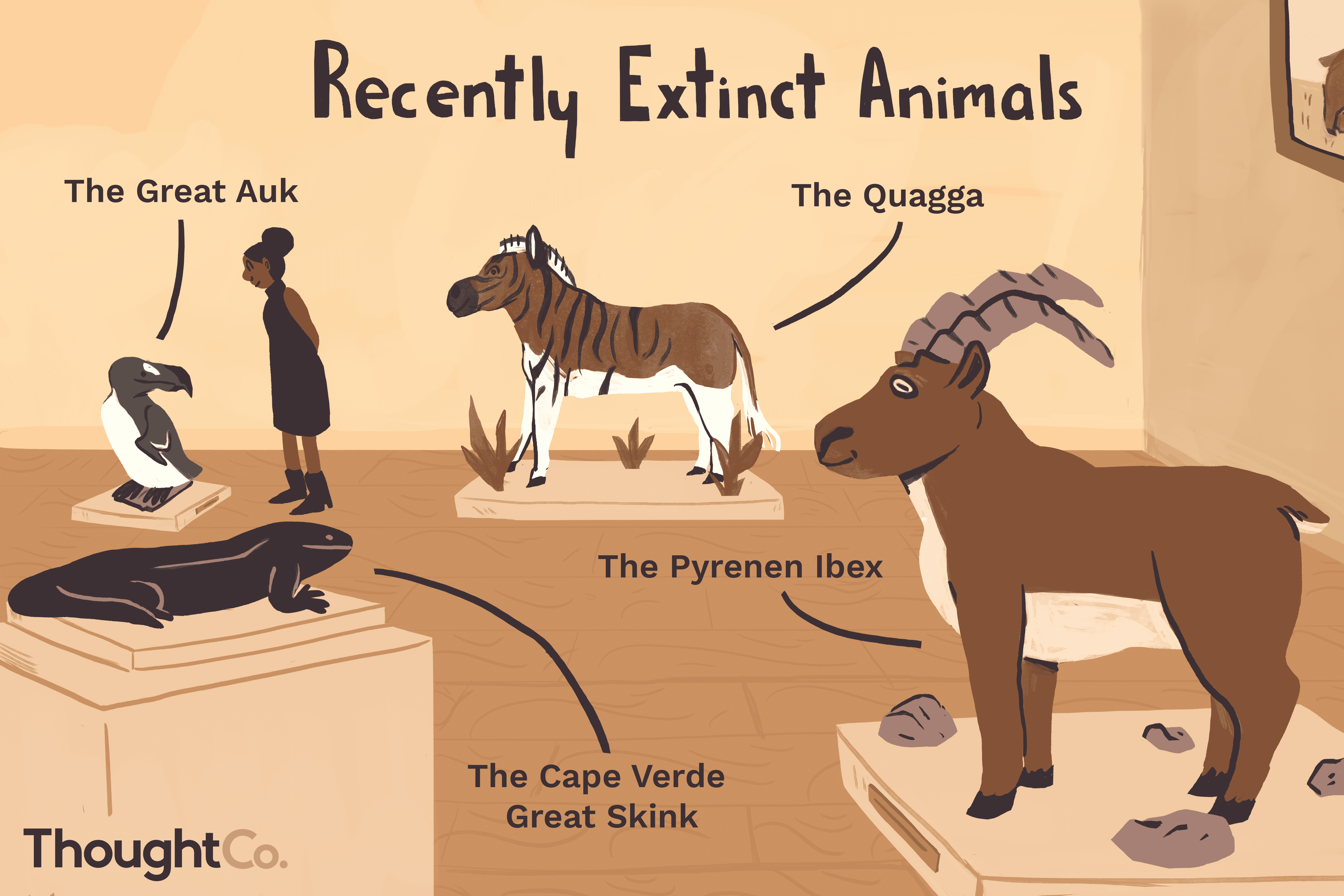
The greatness of a nation can be judged by the way its animals are treated

Humans can cause extinction of a species through overharvesting, pollution, habitat destruction, introduced of invasive species such as new predators and food competitors, overhunting, and other influences. … Several species have also been listed as extinct since 2004.

Diminished resources or introduction of new competitor species also often accompany habitat degradation. Global warming has allowed some species to expand their, range, bringing unwelcome competition to other species that previously occupied that area.

Extinctions happen when a species dies out from cataclysmic events, evolutionary problems, or human interference.

The truth is, scientists don’t know how many species of plants, animals, fungi, and bacteria exist on Earth. The most recent estimate put that number at 2 billion, and that will most likely change at some point.

One thing we do know : The western black rhinoceros, the Tasmanian tiger, and the woolly mammoth are among the creatures whose populations at one point dwindled to zero, and it’s possible that species extinction is happening a thousand times more quickly because of humans.

Extinction happens when environmental factors or evolutionary problems cause a species to die out.

The disappearance of species from Earth is ongoing, and rates have varied over time. A quarter of mammals is at risk of extinction, according to IUCN Red list estimates.

To some extent, extinction is natural. Changes to habitats and poor reproductive trends are among the factors that can make a species death rate higher than its birth rate for long enough that eventually, none are left.

Humans also cause other species to become extinct by hunting, over harvesting, introducing invasive species to the wild, polluting, etc..

Memory

Memory refers to the processes that are used to acquire, store, retain, and later retrieve information. There are three major processes involved in memory: encoding, storage, and retrieval. Human memory involves the ability to both preserve and recover information we have learned or experienced.

The term memory denotes a specific brain function of storing and retrieving of informations related to experiences.Tge duration of memory varies from few seconds or hours,to several years.

Types of memory

⭐Sensory memory:It means the ability to retain sensory signals in the sensory areas of the brain for a short interval of time following the actual sensory experience.This is the initial stage of memory process.

⭐ Primary memory:It is the memory of facts,words, numbers,letters,or other information.The information in this memory is instantaneously made available so that a person need not search through his or her mind for it.

⭐ Secondary memory:It is the storage in the brain of information that can be recalled at some later time(hours,days,months or years later).This is also called long term memory,fixed memory or permanent memory.

Physiology of memory: Certain anatomical, physical or chemical changes occur in the pre synaptic terminals or perhaps in whole neurons that permanently facilitated the transmission of impulses at the synapses.

All the synapses are thus facilitated in a thought circuit.This circuit can be re excited by any one of many diverse signals at later dates thereby causing memory.The overall facilitated circuit is called a memory engram or a memory trace.

Amnesia: Amnesia means memory loss.It is the inability to recall memories from the past.

GLOBAL WARMING

Glaciers are melting, sea levels are rising, cloud forests are dying, and wildlife is racing to keep pace. It has become clear that humans have caused the warmth of the last century by releasing greenhouse gases as we energize our modern life. Called greenhouse gases, their levels are now higher than at any other time in the past 800,000 years.

We often call the result global warming, but it causes a set of changes in the Earth’s climate, or patterns of long-term climate, varying from place to place. While many people think of global warming and climate change as synonymous, scientists use “climate change” when describing complex changes now affecting our planet’s climate and climate systems — in part because some areas are actually cooling off in the short term.

Climate change includes not only rising temperatures but also extreme weather events, displacement of wildlife and habitats, rising sea levels, and other impacts. All of these changes are emerging as humans continue to add warmer air to the atmosphere, changing the rhythm of the climate that all living things rely on.

What can we do – what can we do – to reduce this man-made global warming? How will we cope with the changes we have already made? While we find it hard to find everything, the future of the Earth as we know the beaches, forests, farms, and snow-capped mountains.

Doesn’t the temperature change naturally?


Human activities are not the only thing affecting the world’s climate. Volcanoes and solar eclipses from solar dots, solar eclipses, and solar panels also play a role. So do extreme weather conditions, such as El Niño.

But the climate models that scientists use to monitor Earth’s temperatures account for those things. Changes in solar radiation and minute particles suspended in the air from a volcanic eruption, for example, have contributed to only about 2 percent of the effects of recent warming. The balance comes from greenhouse gases and other human-caused factors, such as changes in land use.

The short term for this latest warmth is in unity again. A volcanic eruption, for example, releases particles that temporarily cool the earth’s surface. But their effect lasts only a few years. Events like El Niño also work in shorter and unpredictable cycles. On the other hand, global warming, which has had a profound effect on ice, occurs over hundreds of thousands of years.

For thousands of years now, greenhouse gases have been emitted by natural gas. As a result, the concentration of greenhouse gases and temperatures was not stable enough, which allowed human civilization to flourish within a more stable climate.

GLOBAL WARMING

Glaciers are melting, sea levels are rising, cloud forests are dying, and wildlife is racing to keep pace. It has become clear that humans have caused the warmth of the last century by releasing greenhouse gases as we energize our modern life. Called greenhouse gases, their levels are now higher than at any other time in the past 800,000 years.

We often call the result global warming, but it causes a set of changes in the Earth’s climate, or patterns of long-term climate, varying from place to place. While many people think of global warming and climate change as synonymous, scientists use “climate change” when describing complex changes now affecting our planet’s climate and climate systems — in part because some areas are actually cooling off in the short term.

Climate change includes not only rising temperatures but also extreme weather events, displacement of wildlife and habitats, rising sea levels, and other impacts. All of these changes are emerging as humans continue to add warmer air to the atmosphere, changing the rhythm of the climate that all living things rely on.

What can we do – what can we do – to reduce this man-made global warming? How will we cope with the changes we have already made? While we find it hard to find everything, the future of the Earth as we know the beaches, forests, farms, and snow-capped mountains.

Doesn’t the temperature change naturally?

Human activities are not the only thing affecting the world’s climate. Volcanoes and solar eclipses from solar dots, solar eclipses, and solar panels also play a role. So do extreme weather conditions, such as El Niño.

But the climate models that scientists use to monitor Earth’s temperatures account for those things. Changes in solar radiation and minute particles suspended in the air from a volcanic eruption, for example, have contributed to only about 2 percent of the effects of recent warming. The balance comes from greenhouse gases and other human-caused factors, such as changes in land use.

The short term for this latest warmth is in unity again. A volcanic eruption, for example, releases particles that temporarily cool the earth’s surface. But their effect lasts only a few years. Events like El Niño also work in shorter and unpredictable cycles. On the other hand, global warming, which has had a profound effect on ice, occurs over hundreds of thousands of years.

For thousands of years now, greenhouse gases have been emitted by natural gas. As a result, the concentration of greenhouse gases and temperatures was not stable enough, which allowed human civilization to flourish within a more stable climate.

Nebula

What is a Nebula?

A Nebula is named from the Greek word for “cloud”. Nebulae (plural) come in many shapes and sizes and have a way of captivating those that observe and photograph these deep sky objects in space.

Most nebulae are enormous in size. Some are even hundreds of light-years in diameter. Nebulae do contain some mass. They have a greater density than the space surrounding them. Yet many nebulae are less dense than any vacuum we have created on Earth.

Deep space nebula with vibrating colors and bright stars

“a nebula is a cloud of gas and dust in outer space, visible in the night sky either as an indistinct bright patch or as a dark silhouette against other luminous matter.”

Nebulae usually consist of Hydrogen and Helium, as these are the most common and stable compounds in the Universe. The formation of a nebula can occur when a star undergoes a significant change, such as excess fusion in its core.

Types of Nebulae

HII regions and dark nebulae are where stars can form. They are made mostly of hydrogen and helium, with traces of other gases and infusions of dust grains. hey are found largely in the spiral arms of our galaxy. Our own solar system was born in such a region more than 4.5 billion years ago. The best-known molecular clouds are the Orion Nebula, the Eta Carinae Nebula, The Eagle Nebula (also, known as the Pillars of Creation), the Tarantula Nebula in the Large Magellanic Cloud, the Horsehead Nebula, the Coal Sack, and the Lagoon Nebula. Most of them, except for the Coal Sack, are bathed in the light of the stars that formed within them. The Coal Sack is an example of a dark nebula that obscures nearby stars, and may be forming stars within.

Supernova remnants are the final remains of massive stars that have blown themselves apart at the ends of their lives. These are expanding clouds of gas and dust with neutron stars or even black holes marking the final resting place of the star. The most famous supernova remnant is the Crab Nebula in Taurus. Its explosion appeared in our skies in the year 1054 AD. It contains a pulsar — a spinning neutron star — surrounded by filamentary clouds of material blasted out when its progenitor star exploded.

Planetary nebulae are the leftovers of stars like the Sun. They consist of a cloud of gas and dust surrounding a slowly cooling white dwarf star. The best-known planetary nebula is the Ring Nebula in the constellation Lyra. It was once a sun-like star that gently blew its outer atmosphere to space as it aged. What’s left of that atmosphere is a ring-shaped cloud that glows from the radiation of the dwindling white dwarf star.

Facts About Nebulae

  • Most nebulae contain the “stuff of stars and planets”, including gases, dust, and complex molecules.
  • As stars die and lose their materials to space, their gases and dust mix with clouds of gas, creating the complex nebulae we see.
  • Nebulae are always in motion, even though they look quiescent in images. The clouds mix and churn, which creates magnetic fields.
  • There are several types of molecular clouds: dark globules, emission nebulae, and reflection nebulae. Emission nebulae glow as their gases are heated. Reflection nebulae are mostly dust which reflects the light from nearby stars.
  • Our Sun and planets formed in a nebula some 4.5 billion years ago.
  • Nebulae exist in other galaxies. Astronomers have observed them in all spirals as well as the nearby Magellanic Clouds.

Nebula

What is a Nebula?

A Nebula is named from the Greek word for “cloud”. Nebulae (plural) come in many shapes and sizes and have a way of captivating those that observe and photograph these deep sky objects in space.

Most nebulae are enormous in size. Some are even hundreds of light-years in diameter. Nebulae do contain some mass. They have a greater density than the space surrounding them. Yet many nebulae are less dense than any vacuum we have created on Earth.

Deep space nebula with vibrating colors and bright stars

“a nebula is a cloud of gas and dust in outer space, visible in the night sky either as an indistinct bright patch or as a dark silhouette against other luminous matter.”

Nebulae usually consist of Hydrogen and Helium, as these are the most common and stable compounds in the Universe. The formation of a nebula can occur when a star undergoes a significant change, such as excess fusion in its core.

Types of Nebulae

HII regions and dark nebulae are where stars can form. They are made mostly of hydrogen and helium, with traces of other gases and infusions of dust grains. hey are found largely in the spiral arms of our galaxy. Our own solar system was born in such a region more than 4.5 billion years ago. The best-known molecular clouds are the Orion Nebula, the Eta Carinae Nebula, The Eagle Nebula (also, known as the Pillars of Creation), the Tarantula Nebula in the Large Magellanic Cloud, the Horsehead Nebula, the Coal Sack, and the Lagoon Nebula. Most of them, except for the Coal Sack, are bathed in the light of the stars that formed within them. The Coal Sack is an example of a dark nebula that obscures nearby stars, and may be forming stars within.

Supernova remnants are the final remains of massive stars that have blown themselves apart at the ends of their lives. These are expanding clouds of gas and dust with neutron stars or even black holes marking the final resting place of the star. The most famous supernova remnant is the Crab Nebula in Taurus. Its explosion appeared in our skies in the year 1054 AD. It contains a pulsar — a spinning neutron star — surrounded by filamentary clouds of material blasted out when its progenitor star exploded.

Planetary nebulae are the leftovers of stars like the Sun. They consist of a cloud of gas and dust surrounding a slowly cooling white dwarf star. The best-known planetary nebula is the Ring Nebula in the constellation Lyra. It was once a sun-like star that gently blew its outer atmosphere to space as it aged. What’s left of that atmosphere is a ring-shaped cloud that glows from the radiation of the dwindling white dwarf star.

Facts About Nebulae

  • Most nebulae contain the “stuff of stars and planets”, including gases, dust, and complex molecules.
  • As stars die and lose their materials to space, their gases and dust mix with clouds of gas, creating the complex nebulae we see.
  • Nebulae are always in motion, even though they look quiescent in images. The clouds mix and churn, which creates magnetic fields.
  • There are several types of molecular clouds: dark globules, emission nebulae, and reflection nebulae. Emission nebulae glow as their gases are heated. Reflection nebulae are mostly dust which reflects the light from nearby stars.
  • Our Sun and planets formed in a nebula some 4.5 billion years ago.
  • Nebulae exist in other galaxies. Astronomers have observed them in all spirals as well as the nearby Magellanic Clouds.

APICULTURE

Apiculture is the rearing of honey bee for honey. It is also called Bee keeping. It is a profitable rural based industry. Honey bees are domesticated by farmers to produce honey.

Types of Honey Bee

There are three types of individuals in an honey bee colony namely the queen bee, the drones and the worker bees.

Queen Bee

The queen is the largest member and the fertile female of the colony. They are formed from fertile eggs. The queen is responsible for laying eggs in a colony.

Drones

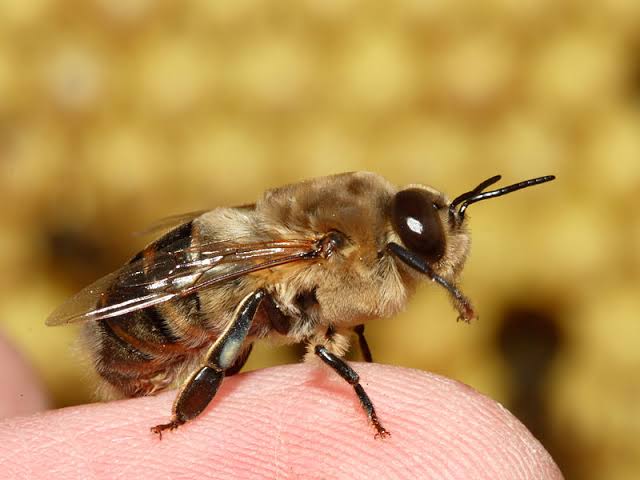
They are the fertile males. They develop from unfertilized eggs. They are larger than the workers and smaller than the queens. Their main function is to fertilize the eggs produced by the queen.

Worker Bees

They are sterile female bees and are the smallest members of the colony. Their function is to collect honey, look after the young ones, clean the comb, defend the hive and maintain the temperature of the bee hive.

Varieties of Honey Bee

Indigenous varieties
✓Apis dorsata (Rock bee or Wild bee)
✓Apis florea (Little bee)
✓Apis indica (Indian bee)

Exotic varieties
✓Apis mellifera (Italian bee)
✓Apis adamsoni (African bee)

Structure of Bee Comb

The comb of the bees is formed mainly by the secretion of the wax glands present in the abdomen of the worker bee. A comb is a vertical sheet of wax with double layer of hexagonal cells.

Formation of Honey

The honey bees suck the nectar from various flowers. The nectar passes to the honey sac. In the honey sac, sucrose present in the nectar mixes with acidic secretion and by enzymatic action it is converted into honey which is stored in the special chambers of the hive.

Quality of honey depends upon the flowers available to the bees for nectar and pollen collection.

Products from Honey Bee

Honey bees are used in the production of honey and bee wax. Other useful products obtained from honey bees are bee pollen, royal jelly, propolis and bee venom.

Uses of Honey

✓Honey has an antiseptic and antibacterial property. It is a blood purifier.
✓It helps in building up of haemoglobin content in the blood.
✓It prevents cough, cold, fever and relieves sore throat.
✓It is a remedy for ulcers of tongue, stomach and intestine.

APICULTURE

Apiculture is the rearing of honey bee for honey. It is also called Bee keeping. It is a profitable rural based industry. Honey bees are domesticated by farmers to produce honey.

Types of Honey Bee

There are three types of individuals in an honey bee colony namely the queen bee, the drones and the worker bees.

Queen Bee

The queen is the largest member and the fertile female of the colony. They are formed from fertile eggs. The queen is responsible for laying eggs in a colony.

Drones

They are the fertile males. They develop from unfertilized eggs. They are larger than the workers and smaller than the queens. Their main function is to fertilize the eggs produced by the queen.

Worker Bees

They are sterile female bees and are the smallest members of the colony. Their function is to collect honey, look after the young ones, clean the comb, defend the hive and maintain the temperature of the bee hive.

Varieties of Honey Bee

Indigenous varieties
✓Apis dorsata (Rock bee or Wild bee)
✓Apis florea (Little bee)
✓Apis indica (Indian bee)

Exotic varieties
✓Apis mellifera (Italian bee)
✓Apis adamsoni (African bee)

Structure of Bee Comb

The comb of the bees is formed mainly by the secretion of the wax glands present in the abdomen of the worker bee. A comb is a vertical sheet of wax with double layer of hexagonal cells.

Formation of Honey

The honey bees suck the nectar from various flowers. The nectar passes to the honey sac. In the honey sac, sucrose present in the nectar mixes with acidic secretion and by enzymatic action it is converted into honey which is stored in the special chambers of the hive.

Quality of honey depends upon the flowers available to the bees for nectar and pollen collection.

Products from Honey Bee

Honey bees are used in the production of honey and bee wax. Other useful products obtained from honey bees are bee pollen, royal jelly, propolis and bee venom.

Uses of Honey

✓Honey has an antiseptic and antibacterial property. It is a blood purifier.
✓It helps in building up of haemoglobin content in the blood.
✓It prevents cough, cold, fever and relieves sore throat.
✓It is a remedy for ulcers of tongue, stomach and intestine.

How to Increase Productivity? (For Work)

“Focus on being productive instead of busy.”

– Tim Ferris

Introduction

The definition of productivity is the effectiveness of productive effort or the rate at which a person, company, or country does useful work. In these times every single person has a lot of work on their plate, be it work from the office, school, college, or work related to the house, some extra project you might be working on, or be it just your mental health. To finish the numerous tasks, we need to be productive to finish these effectively and still be left with some time to relax and hang back from the rush of daily life. So we can say that productivity is about getting the required result in less time and effort. Increased productivity is directly related to improved time management. This article aims to list ways to increase productivity for work.

Plan Ahead

The practice of approaching work at random is one of the hindrances to productivity. When you attack work at random, you are not sure about how much more is left and by when you will be able to get to it. To deal with this, you must plan ahead, it can be daily, weekly or monthly planning. It puts you in control of how much work you have and till when you can complete it. Planning offers you clarity.

Set Realistic Goals

You should set goals in such a manner that you have set milestones that help you in knowing your destination. The best way to set goals is to follow SMART.
S – specific, significant, stretching
M – measurable, meaningful, motivational
A – agreed upon, attainable, achievable, acceptable, action-oriented
R – realistic, relevant, reasonable, rewarding, results-oriented
T – time-based, timely, tangible, trackable.

Track and Limit

If you implement a tracking system through which you monitor how much time you take to finish one task, you will be able to understand if you are using your time effectively or not, and if not, then where are you wasting it. Every person has a different productive golden hour. By tracking your day, you will be able to understand when your golden hour is and you can schedule your work accordingly.

Be Proactive, Not Reactive

Being proactive helps you in avoiding the time you waste around and then rush to react in time. When you are reactive, you let others call the shot and give you the work to be done but when you are proactive, you are a few steps ahead of others and you get to call the shots.

Minimize Distractions

Most of our time gets wasted on the number of distractions that put us off our work path. Everyone has become addicted to being online and that is one of the major distractions. It is important to work smarter and set boundaries such as setting work hours during which time you will not be available to others, silencing notifications, setting time slots to check social media and emails, and not doing it during the work hour.

Get Enough Sleep

It is a known fact that not getting enough sleep has negative effects on our performance in all aspects of life but work gets affected the most. This happens because when you are working, you need logical reasoning which is done by your prefrontal cortex which gets impacted by the lack of sleep. Therefore, it is important to get at least 7-9 hours of sleep a night.

Conclusion

Once you understand the importance of productivity, you will learn that it will become a huge part of your whole life, not only when it comes to your work life but also your personal life, as when you are on top of all your work is only when you can give enough time to your personal life as well.

References

THE AGRARIAN REVOLUTION

The term Agrarian Revolution implies the great changes that took place in the agricultural methods of England during the second half of the 17th century and the first half of the eighteenth century.

Causes of the Revolution:

  • The old open field system was wasteful of land because, according to this arrangement, every year one of the three fields was to be out of cultivation.
  • Secondly, come the old system of distribution of land was wasteful of time.
  • Thirdly, there was the necessity of confirming the customs of the village and thus made experiments in agriculture method possible.

In the 18th century, the population was increasing and so more food was needed. Owing to the scarcity of food materials there was a rise in prices. The old-fashioned farmers thought that they could get more money if they produce more. This idea was an incentive for them to improve their agricultural methods.

Reallocation of Lands:

Reallocation of lands in consolidated blocks which could be enclosed, several Enclosure Acts were passed in the reign of George II and George III. There were many cases of the poor peasants being not satisfied with the reallocation. Such people sold their small holdings to wealthy businessmen of the city who were eager to possess lands of their own. The final result of this tendency was that the class of rural inhabitants known as yeomen disappeared.

Advantages of enclosure system:

One of the advantages of the enclosure system was that it gave scope for many enterprising people to make experiments. Jethro Tull of Berkshire was the inventor of the drill for sowing seeds. He also emphasized the necessity of capital selection of seeds if good crops were to be obtained.

Another pioneer is Charles Townshend of Norfolk. He adopted Tull’s principles and paid much attention to the question of rotation of crops. He introduced the four-course rotation of turnips, barley, clover, and ryegrass, and wheat. These measures prevented an unprotective fallow. His innovation made Norfolk a leading agricultural country. With the result that in the thirty years the rental of the one farm rose from 180 pounds to 800 pounds a year.

The work of Townshend was continued by Thomas Cook. He followed the precepts of Tull and in addition fed the soil with manures including bones. In nine years he was able to grow excellent wheat crops. He also introduced new artificial foods such as oil cake under led the way in fattening cattle for the London markets. He held a yearly meeting for farmers at his house and these meetings farming topics were discussed and much advice was given and received. It is estimated that the annual rental of his estate Rose from 2,200 pounds in 1776 to 20,000 pounds in 1816.

Cattle farming:

While Norfolk landlords were thus making great improvements in arable farming, a Leicestershire farmer, Kama Robert Bakewell was revolutionizing English methods of stock breathing. Up to this time sheep had been valued chiefly for their wool, the production of mutton had been only secondary. Bakewell was the first to turn his attention to the production of meat as the main consideration of stock breeding. By patient choice and experiment, he succeeded in producing a new breed of sheep with fattened quickly and weighed heavy. His success attracted the attention of many. Farmers from far and wide visited his farm at Dishley and became converts to his new methods. Others who did pioneering work in this field were George Culley, Charles Colling, and John Salman.

Board of agriculture:

Royal patronage was also given to the moment of revolutionizing the agriculture methods. George III, affectionately known to his subjects as a farmer George, established a model farm at Windsor. The success of the moment was due to the writings of agriculture writers, the most famous was Arthur Young. When a board of agriculture was established in 1793. Young was made its secretary.

Conclusion:

With the advent of the enclosure system, the English banking system also grows, for even the wealthy landlords did not have money to do the fencing and other improvements. So they have to borrow money from the banks. Through all those methods was very desirable from the point of view of production, it had a harmful effect on the partition. The system deprived him of the privilege of grazing his cattle and cutting fuel from the commons.

What is a Novel

Picaresque Novel

THE AGRARIAN REVOLUTION

The term Agrarian Revolution implies the great changes that took place in the agricultural methods of England during the second half of the 17th century and the first half of the eighteenth century.

Causes of the Revolution:

  • The old open field system was wasteful of land because, according to this arrangement, every year one of the three fields was to be out of cultivation.
  • Secondly, come the old system of distribution of land was wasteful of time.
  • Thirdly, there was the necessity of confirming the customs of the village and thus made experiments in agriculture method possible.

In the 18th century, the population was increasing and so more food was needed. Owing to the scarcity of food materials there was a rise in prices. The old-fashioned farmers thought that they could get more money if they produce more. This idea was an incentive for them to improve their agricultural methods.

Reallocation of Lands:

Reallocation of lands in consolidated blocks which could be enclosed, several Enclosure Acts were passed in the reign of George II and George III. There were many cases of the poor peasants being not satisfied with the reallocation. Such people sold their small holdings to wealthy businessmen of the city who were eager to possess lands of their own. The final result of this tendency was that the class of rural inhabitants known as yeomen disappeared.

Advantages of enclosure system:

One of the advantages of the enclosure system was that it gave scope for many enterprising people to make experiments. Jethro Tull of Berkshire was the inventor of the drill for sowing seeds. He also emphasized the necessity of capital selection of seeds if good crops were to be obtained.

Another pioneer is Charles Townshend of Norfolk. He adopted Tull’s principles and paid much attention to the question of rotation of crops. He introduced the four-course rotation of turnips, barley, clover, and ryegrass, and wheat. These measures prevented an unprotective fallow. His innovation made Norfolk a leading agricultural country. With the result that in the thirty years the rental of the one farm rose from 180 pounds to 800 pounds a year.

The work of Townshend was continued by Thomas Cook. He followed the precepts of Tull and in addition fed the soil with manures including bones. In nine years he was able to grow excellent wheat crops. He also introduced new artificial foods such as oil cake under led the way in fattening cattle for the London markets. He held a yearly meeting for farmers at his house and these meetings farming topics were discussed and much advice was given and received. It is estimated that the annual rental of his estate Rose from 2,200 pounds in 1776 to 20,000 pounds in 1816.

Cattle farming:

While Norfolk landlords were thus making great improvements in arable farming, a Leicestershire farmer, Kama Robert Bakewell was revolutionizing English methods of stock breathing. Up to this time sheep had been valued chiefly for their wool, the production of mutton had been only secondary. Bakewell was the first to turn his attention to the production of meat as the main consideration of stock breeding. By patient choice and experiment, he succeeded in producing a new breed of sheep with fattened quickly and weighed heavy. His success attracted the attention of many. Farmers from far and wide visited his farm at Dishley and became converts to his new methods. Others who did pioneering work in this field were George Culley, Charles Colling, and John Salman.

Board of agriculture:

Royal patronage was also given to the moment of revolutionizing the agriculture methods. George III, affectionately known to his subjects as a farmer George, established a model farm at Windsor. The success of the moment was due to the writings of agriculture writers, the most famous was Arthur Young. When a board of agriculture was established in 1793. Young was made its secretary.

Conclusion:

With the advent of the enclosure system, the English banking system also grows, for even the wealthy landlords did not have money to do the fencing and other improvements. So they have to borrow money from the banks. Through all those methods was very desirable from the point of view of production, it had a harmful effect on the partition. The system deprived him of the privilege of grazing his cattle and cutting fuel from the commons.

What is a Novel

Picaresque Novel

How to Increase Productivity? (For Work)

“Focus on being productive instead of busy.”

– Tim Ferris

Introduction

The definition of productivity is the effectiveness of productive effort or the rate at which a person, company, or country does useful work. In these times every single person has a lot of work on their plate, be it work from the office, school, college, or work related to the house, some extra project you might be working on, or be it just your mental health. To finish the numerous tasks, we need to be productive to finish these effectively and still be left with some time to relax and hang back from the rush of daily life. So we can say that productivity is about getting the required result in less time and effort. Increased productivity is directly related to improved time management. This article aims to list ways to increase productivity for work.

Plan Ahead

The practice of approaching work at random is one of the hindrances to productivity. When you attack work at random, you are not sure about how much more is left and by when you will be able to get to it. To deal with this, you must plan ahead, it can be daily, weekly or monthly planning. It puts you in control of how much work you have and till when you can complete it. Planning offers you clarity.

Set Realistic Goals

You should set goals in such a manner that you have set milestones that help you in knowing your destination. The best way to set goals is to follow SMART.
S – specific, significant, stretching
M – measurable, meaningful, motivational
A – agreed upon, attainable, achievable, acceptable, action-oriented
R – realistic, relevant, reasonable, rewarding, results-oriented
T – time-based, timely, tangible, trackable.

Track and Limit

If you implement a tracking system through which you monitor how much time you take to finish one task, you will be able to understand if you are using your time effectively or not, and if not, then where are you wasting it. Every person has a different productive golden hour. By tracking your day, you will be able to understand when your golden hour is and you can schedule your work accordingly.

Be Proactive, Not Reactive

Being proactive helps you in avoiding the time you waste around and then rush to react in time. When you are reactive, you let others call the shot and give you the work to be done but when you are proactive, you are a few steps ahead of others and you get to call the shots.

Minimize Distractions

Most of our time gets wasted on the number of distractions that put us off our work path. Everyone has become addicted to being online and that is one of the major distractions. It is important to work smarter and set boundaries such as setting work hours during which time you will not be available to others, silencing notifications, setting time slots to check social media and emails, and not doing it during the work hour.

Get Enough Sleep

It is a known fact that not getting enough sleep has negative effects on our performance in all aspects of life but work gets affected the most. This happens because when you are working, you need logical reasoning which is done by your prefrontal cortex which gets impacted by the lack of sleep. Therefore, it is important to get at least 7-9 hours of sleep a night.

Conclusion

Once you understand the importance of productivity, you will learn that it will become a huge part of your whole life, not only when it comes to your work life but also your personal life, as when you are on top of all your work is only when you can give enough time to your personal life as well.

References

Digital Marketing

Businesses have used various ways to create awareness about their business and product. Marketing is an activity that has helped businesses to easily survive among a large market. To reach out to people is not an easy task for a new business. Marketing helps them to create a brand among already existing businesses, however marketing before was confined to TV and newspapers advertising. Now, electronic media has been a trend that has successfully attracted millions of people across the world to connect on different platforms. Brands are able to engage with customers on a more personal level. Digital marketing services are being utilized to create awareness about the latest trends and sales information on social media platforms.

What makes this new marketing gimmick widely popular among businesses today? Lets understand how digital services are the most preferred marketing strategies.

  1. Less Costlier

Marketing expenses can be a huge financial burden that a company will have to bear, especially for a growing business. Big companies may not have to go through trouble of marketing cost but new businesses had to think twice before investing in marketing services. Earlier, marketing services were costlier for new businesses, therefore new companies refrained from engaging in traditional marketing. Digital marketing is a similar marketing strategy that offers more affordable services. Its impact is equally powerful as traditional marketing yet less expensive.

2. Helps in Brand Development

These days, a company operating without a significant brand and reputation is less preferred compared to other companies. A brand attracts customers with quality social media website. To build a brand, social media channels feature the quality and recent trend followed by the business.

3. Global Presence

A campaign can be easily made viral among social media users across the world. Digital marketing provides an opportunity to promote a campaign on a global scale. Within a short period of time, digital platform can reach a large crowd by generating publicity. Global recognition is received by a business.

4. Targets specific consumers

Every consumer has a specific preference and according to that preference a campaign can be presented on their social media handles. Consumer preferences can be easily accessed through social media platforms. Only those ads will reach to the people that are interconnected to the previous ads they visited. This way reaching certain customers becomes simple.

5. Huge Returns

Returns on investments determine company’s future capability of investing in digital marketing. Lower returns discourage further investments. Traditional marketing provides variable returns as the reach of this type of marketing was limited to certain platforms. Digital marketing provides substantial return to a company without any heavy cost.

6. Purchasing becomes easier

A website allows a person to buy products online without visiting the store or calling to order. Anybody from anywhere can visit your site and order whatever they want and will be delivered at their doorstep. Digital platforms make purchasing fuss-free.

A business can reach globally without any extra efforts and costs. Brand creation is must for the growth of the business and this brand development can be achieved with global popularity that digital platforms extensively provide.

What Are The Five Love Language?

You might be showing affection to your partner on a daily basis, but do you take a moment to ensure that you’re conveying it in the manner that your spouse prefers to accept it? Whenever two couples have differing love languages, even love can be lost in translation.

Words of affirmation, quality time, receiving presents, acts of service, and physical contact are the five love languages, or means of expressing and receiving love. Not everybody expresses love in the same manner, and not everyone likes to accept love in the same way.

Gary Chapman, Ph.D., created the notion of love languages in his book The 5 Love Languages: The Secret to Lasting Love, in which he explains these five distinct methods of conveying love, categories he condensed from his expertise in marriage therapy and linguistics.

Here’s a rundown of each one of Chapman’s five love languages:

Words of affirmation

Those who use words of affirmation as a love language appreciate verbal expressions of affection, such as constant “I love yous,” praises, expressions of gratitude, vocal support, and often constant digital contact such as messages and social media involvement. These individuals value written and verbal expressions of love the most. They feel understood and valued when they hear these words.

Quality time

Those who have quality time as their love language feel the most appreciated when their spouse genuinely wants to spend more time with them and is always willing to hang out. They are especially fond of it when active listening, eye contact, and complete presence are stressed as relationship characteristics. 

This love language is all about providing your entire focus to that one particular person, without any of the distractions of television, phone displays, or any other outside interference. Individuals have a great desire to constantly spend some time with their loved one, holding deep talks or participating in leisure pastimes.

Acts of services

If acts of service are your love language, you appreciate it whenever your spouse goes out of their way to make your life simpler. It’s little gestures like getting you food when you’re ill, preparing your morning coffee, or going to pick up your laundry after a hard day at work.

This is the love language of those who think that gestures speak louder than words. People on this list, unlike those who want to hear how much they are cared for, desire to be shown how they’re being cherished. Such people value doing minor and large duties to make their life simpler or perhaps more pleasant.

Gifts

Gifts are a simple love language: you feel appreciated when others offer you “visual expressions of affection,” as Chapman puts it. It’s not so much about the monetary worth as it is about the emotional significance behind the gift. Those with this personality appreciate as well as acknowledge the gift-giving process: the thorough contemplation, the intentional selection of the gift to symbolize the connection, and the emotional rewards of getting the gift.

Individuals whose language of love involves getting presents like obtaining something both tangible and meaningful. The idea is to offer thoughtful gifts that are significant to them and represent their beliefs, rather than yours.

Physical touch

Physical touch as a love language makes a person feel cherished when they receive physical indications of love such as kissing, holding hands, snuggling on the sofa, and intimacy. For persons who use this love language, physical closeness and touch may be extremely encouraging and serve as a powerful emotional bond.

When they are hugged, kissed, or snuggled, those who convey their thanks in this language feel valued. They enjoy the sensations of warmth and protection that come from physical contact.

We all show and experience love in various ways. As a result, recognising such differences may have a significant influence on our relationships. Indeed, it is one of the easiest methods to strengthen your relationships.