Ethical Hacking and IT

Data Technology (IT) is one of the greatest and most mainstream businesses as far as building up a profession on the planet today. Industry 4.0 has invited various innovative headways because of which specific IT experts have discovered conspicuousness, in IT organizations as well as in different enterprises. Maybe, the most famous among them is a vocation in online protection.

More than 1 billion network safety experts are required to be sought after over the course of the following 2 years in this field, making it perhaps the most worthwhile profession ways on the planet today. Notwithstanding being a mammoth association, National Health Services couldn’t shield themselves from a huge scope hack. A main nourishment application, MyFitnessPal, likewise went through a monstrous security penetrate where the individual information of more than 150 million clients was taken. The recurrence of these assaults has expanded off-late, making network safety basic in each association.

Huge banks and gems stores regularly enlist proficient hoodlums to endeavor burglaries, to recognize provisos in their security frameworks. Through these preliminaries, these establishments can reliably redesign their security frameworks, to ultimately arrive at a phase of becoming invulnerable. Taking motivation from this interaction, the network protection space has likewise reversed the situation on hacking and made it a legitimized idea through moral hacking.

Moral hacking is a cycle through which experts are paid to hack into an association, to pinpoint weaknesses in the security framework that the association needs to fix. Ill-conceived programmers have likewise discovered lawful conspicuousness in the IT world today because of the developing significance of moral hacking as an idea.

Moral programmers are recruited and prepared to utilize a huge number of methods to attempt to penetrate various associations. They help in the identification of holes inside the security framework as well as during digital assaults.

Government associations wherein digital fighting holds extraordinary unmistakable quality, moral programmers are accustomed to balancing endeavors made by noxious programmers with the expectation of outmaneuvering them, and protecting the information. Another use of moral hacking is of supporting in the examination that follows a digital assault.

Law implementation offices frequently recruit moral programmers to follow the means of a programmer and distinguish the culprit.

Thinking about the incredibly specialized nature of the calling, a basic degree is for the most part insufficient to build up an effective vocation in the field a particular preparing is fundamental. Many driving IT organizations today offer affirmed courses in Ethical Hacking that involve the nuts and bolts of PC organizing as well as intricate methods and driving cycles for keeping up with digital protection.

Think inventively and out-of-the-box:

Aside from these specialized ideas, it is additionally fundamental for moral programmers to have the option to think imaginatively and out of the container. The explanation programmers are developing and can penetrate confounded security frameworks is that they are reliably attempting to concoct new ways and approaches for something very similar.

Another significant quality to have is critical thinking, as the expertise can be fortified after some time, and sharpened with experience and down to earth openness. In this manner, getting ready for a vocation in moral hacking needs to involve a decent blend of both, specialized and reasonable viewpoints.

Be that as it may, there is an exceptionally clear ability hole in the business today, and subsequently, an absence of qualified staff in the field. Attributable to the hole between the interest and supply of moral programmers, this vocation way has gotten very rewarding with monstrous extension later on.


Advent of Fast-food chain in Indian Market


We all are very much familiar with the fast-food chains. With the revolution in food, the world has become so fast-moving that it’s very difficult to keep a track. With the demand for fast-food came the entry of fast-food joints. It has garnered the market to a wide level.

(Photo: PMQ Pizza Magazine)

Increasing demand for fast food

Is there anyone who doesn’t like fast-food? It has become so inevitable and specially among children. The youth mainly crave for fast-food in everyday life. This increase in demand has benefitted the fast-food chains at a rapid pace. The children specially like burger and pizza more than dal or roti. Demand for McDonald’s, Subway, KFC has increased rapidly over the years. Who knew that they will capture the market at such a level?

Why they are so much in demand?

·       If we see from the customer’s view, we can say that it’s highly desirable.

·       The prices are also low as compared to dine in restaurants.

·       It is spread across many locations.

·       The taste is also good and it’s very convenient.

The fast-food has become very………Fast

If a fast-food restaurant wants to remain in business, then it has to be very fast. This pace has been very well maintained by the fast-food chains of Indian market. Many people after work grab their fast-food while going back to home.It’s everywhere and that’s why it is very convenient to order. The faster order arrives, the happier customer is. Delay in delivery should be prevented as it can cause dissatisfaction and it can also harm the goodwill of the fast-food chain.

Cuisines around the world under one roof

·       In this era of globalization, to be one step forward, this fast-food chain has turned towards different method to maintain its uniqueness.

·       It’s like a cat race. To be faster, you have to be better.

·       They think globally and apply it locally. The fast-food chain which offers more cuisine to its menu is more preferred by the customers.

·       Getting everything under one roof. What do you want more? For example, Haldiram offers south Indian, north Indian, street food, Chinese etc. It’s not just limited to one cuisine. There are many other examples too. Like Dunkin’ Donuts, KFC, McDonald’s. They aim at adding taste to your buds.

S   Smarter than You Think

     Fast-food chains adopt various approaches to target customers. They mainly target children as fast-food is more popular among children. They very well know how to sell their product and execute their plan accordingly. For example, the use of characters such as Ronald McDonald and The Trix Rabbit, it is a tactic to emotionally bond with the children. They also organize birthday parties and offer happy meal to give happiness to children. They keep kids hooked up on happy meals. This is what is called as “SMART PLAY”.

     The fast-food chain can be seen everywhere. It has increased rapidly around the globe. The demand for fast-food has also increased competition. In India, increase in disposable income has in turn increased the frequency of people going out for meals. India is now heavily dominated by global players. Despite of its potential growth, Indian food chain still faces many challenges due to the change in trend. So, we can say that India still has a long way to go.


<

p class=”MsoNormal”>

An Adventure in a ‘FOREST’.

My father’s ancestral village of Rampur, on the left bank of the Ganga at the Himalayan foothills, has a long stretch of forest which has not been afflicted by deforestation yet. Without exception, my vacations here have always been very exciting.

One cold December, my kid brother went missing. My father was at his wit’s end trying to get someone to accompany him to the forest.The village elders were divided in their opinion on the course of action. My mother was too shocked to speak. He was last seen playing near the trees at the end of the field in front of our house. Then some local boys saw him disappearing further into the area which had denser growth. It had been more than an hour since he had vanished. Nobody could have imagined such audacity from an eight year old who had been strictly instructed not to go beyond the field.

Ten of us left for the forest at three in the afternoon. My mother was most unwilling to let me go. While I managed to convince my mother, some elders were not too happy with my presence, but nothing discouraged my optimistic father. As we kept walking into the denser zones of the forest, ominous visions began to cloud our imagination. Calling out my brother’s name loudly had been futile.

The silence of the forest was punctuated by the shrill notes of various insects and distant growls. The approaching darkness was waking them up. Though we had both fire and torches along with guns, the village elders were becoming sceptical about proceeding further without more help. My father, though nervous by this time, refused to give up.

We had reached a small stream. Suddenly one of the elders asked us to stand still. The approaching dusk forced us to follow his example, and we witnessed a herd of elephants crossing the stream. The leader, to our horror, suddenly stopped and raised his trunk in the air, trying to locate us, I presumed! My father was sweating. Mahato, the shooter, was getting his gun into position almost without any obvious movement. For a moment I thought the leader of the herd was staring at me, but thankfully, they moved on and we heaved a sigh of relief.

Suddenly the shrill cry of a child pierced our ears along with the growl of some wild beast. Fearing the obvious fatal end, we rushed towards that direction. In about seven minutes, we reached an open area to find Ratan standing at a distance of barely five feet from a tigress. Handsomely built, the sinewy and powerful beast seemed to be more interested in sniffing my brother. My brother was speechless and was not even aware of our presence behind him. Before Mahato could get ready, the tigress, aware of and disturbed by our presence, snarled and disappeared into the deep forest.

My father rushed towards Ratan, who fainted at his mere touch. The tigress, perhaps a mother, had spared my brother. I hope, we men too, spare the tigresses.

So, this is my Adventurous experience in forest. Because you know what , Forests are essential for life on Earth. Three hundred million people worldwide live in forests and 1.6 billion depend directly on them for their livelihoods. Forests also provide habitat for a vast array of plants and animals, many of which are still undiscovered. They inspire wonder and provide places for recreation. They supply the oxygen we need to survive. They provide the timber for products we use every day.

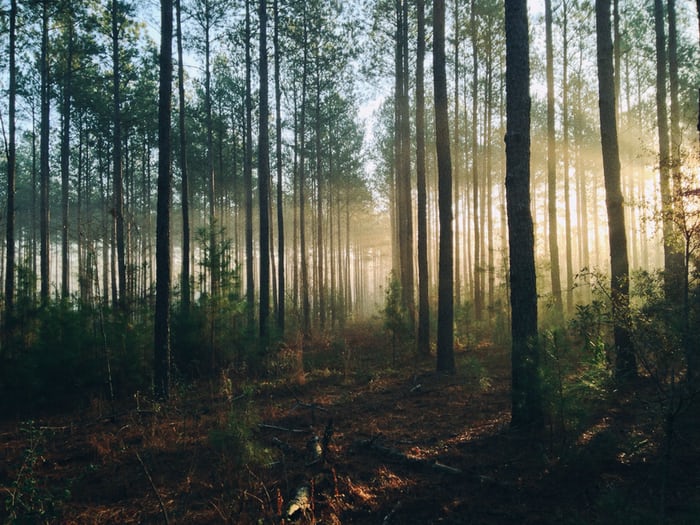
Photo taken in Rockerville, United States

Forest conservation act:
Forests are an important resource that nature can bestow upon mankind. Therefore, it is the duty of every citizen to preserve the ecosystems of forests. But due to rapid deforestation, the cycle of nature is itself being disrupted. Therefore, the need to bring about a law to ensure the preservation of forest was needed.

One of the first legal drafts to protect forest tracts was the Indian Forest Act, 1865 replaced by a 1927 version of the same act. However, it was more geared towards protecting the commercial interests of the British Empire in India.

The act gave authority to the British to restrict tribal activities by levying taxes on timber and forest services. In other words, it mainly regulated the cutting of timber and flow of raw materials rather than protecting forests.

Upon independence, the President of India enforced the Forest (Conservation) Ordinance in 1980 which was later repealed by virtue of Section 5 of the Forest (Conservation) Act, 1980. Under the 1980 Act, the restriction was made on the use of the forests for non-forest purposes.

An Adventure in a &#39;FOREST&#39;.

My father’s ancestral village of Rampur, on the left bank of the Ganga at the Himalayan foothills, has a long stretch of forest which has not been afflicted by deforestation yet. Without exception, my vacations here have always been very exciting.

One cold December, my kid brother went missing. My father was at his wit’s end trying to get someone to accompany him to the forest.The village elders were divided in their opinion on the course of action. My mother was too shocked to speak. He was last seen playing near the trees at the end of the field in front of our house. Then some local boys saw him disappearing further into the area which had denser growth. It had been more than an hour since he had vanished. Nobody could have imagined such audacity from an eight year old who had been strictly instructed not to go beyond the field.

Ten of us left for the forest at three in the afternoon. My mother was most unwilling to let me go. While I managed to convince my mother, some elders were not too happy with my presence, but nothing discouraged my optimistic father. As we kept walking into the denser zones of the forest, ominous visions began to cloud our imagination. Calling out my brother’s name loudly had been futile.

The silence of the forest was punctuated by the shrill notes of various insects and distant growls. The approaching darkness was waking them up. Though we had both fire and torches along with guns, the village elders were becoming sceptical about proceeding further without more help. My father, though nervous by this time, refused to give up.

We had reached a small stream. Suddenly one of the elders asked us to stand still. The approaching dusk forced us to follow his example, and we witnessed a herd of elephants crossing the stream. The leader, to our horror, suddenly stopped and raised his trunk in the air, trying to locate us, I presumed! My father was sweating. Mahato, the shooter, was getting his gun into position almost without any obvious movement. For a moment I thought the leader of the herd was staring at me, but thankfully, they moved on and we heaved a sigh of relief.

Suddenly the shrill cry of a child pierced our ears along with the growl of some wild beast. Fearing the obvious fatal end, we rushed towards that direction. In about seven minutes, we reached an open area to find Ratan standing at a distance of barely five feet from a tigress. Handsomely built, the sinewy and powerful beast seemed to be more interested in sniffing my brother. My brother was speechless and was not even aware of our presence behind him. Before Mahato could get ready, the tigress, aware of and disturbed by our presence, snarled and disappeared into the deep forest.

My father rushed towards Ratan, who fainted at his mere touch. The tigress, perhaps a mother, had spared my brother. I hope, we men too, spare the tigresses.

So, this is my Adventurous experience in forest. Because you know what , Forests are essential for life on Earth. Three hundred million people worldwide live in forests and 1.6 billion depend directly on them for their livelihoods. Forests also provide habitat for a vast array of plants and animals, many of which are still undiscovered. They inspire wonder and provide places for recreation. They supply the oxygen we need to survive. They provide the timber for products we use every day.

Photo taken in Rockerville, United States

Forest conservation act:
Forests are an important resource that nature can bestow upon mankind. Therefore, it is the duty of every citizen to preserve the ecosystems of forests. But due to rapid deforestation, the cycle of nature is itself being disrupted. Therefore, the need to bring about a law to ensure the preservation of forest was needed.

One of the first legal drafts to protect forest tracts was the Indian Forest Act, 1865 replaced by a 1927 version of the same act. However, it was more geared towards protecting the commercial interests of the British Empire in India.

The act gave authority to the British to restrict tribal activities by levying taxes on timber and forest services. In other words, it mainly regulated the cutting of timber and flow of raw materials rather than protecting forests.

Upon independence, the President of India enforced the Forest (Conservation) Ordinance in 1980 which was later repealed by virtue of Section 5 of the Forest (Conservation) Act, 1980. Under the 1980 Act, the restriction was made on the use of the forests for non-forest purposes.

Child Marriage: A Silent Health and Human Rights Issue

Marriages involving a kid under the age of 18 have place all over the world, but are most common in South Asia, Africa, and Latin America. Child marriage is a violation of human rights since it has a direct influence on girls’ education, health, psychologic well-being, and the health of their kids. It raises the chances of developing depression, sexually transmitted infections, cervical cancer, malaria, obstetric fistulas, and maternal mortality. Their children are at a higher risk of premature delivery and, as a result, neonatal or infant mortality. Poverty drives the custom, which is kept alive to secure the financial prospects of females and to strengthen social relationships. Mandating that girls stay in school is one of the most effective ways of preventing child marriage and its health effects. Child marriage, defined as marriage of a child under 18 years of age, is a silent and yet widespread practice.

Factors Driving Child Marriage

Child marriages are motivated by three factors: poverty, the desire to strengthen social relationships, and the idea that it provides protection. Child marriage is more common in impoverished communities. Parents confront two economic incentives: ensuring their daughter’s financial stability and reducing the financial burden girls impose on the family.

Child marriage is, first and foremost, a result of economic desperation. Feeding, clothing, and educating girls is expensive, and they eventually leave the home. The bride’s family receives a dowry as a result of her marriage. The larger the dowry, and the sooner the economic responsibility of rearing the daughter is relieved, the younger the girl.

By marrying their daughter to a “good” household, parents strengthen social links between tribes or clans and raise their social standing. Parents also think that marrying their daughters while they are young protects them against rape, premarital sexual activity, unwanted pregnancies, and sexually transmitted illnesses, including HIV and AIDS.

Causes Of Child Marriage:-

Previously, there was a custom of child marriage, in which children were wedded at a young age. Poverty and girls’ lack of education are the primary causes of child marriage.

When a parent receives a threat from another parent regarding the marriage of their children, they may prepare for child marriage. The illiteracy of the kid’s parents is a major reason of child marriage.

Health Consequences of Child Marriage

Isolation and Depression:-

Girls are transported to their husband’s home after marriage, where they undertake the roles of wife, domestic worker, and, eventually, mother. These new residences may be located in a separate village or town. Because of the large dowry, men are often considerably older than the girls (and so have nothing in common with them), and their new brides are expected to procreate. Polygamy may be permitted in some of these areas as well. As a result, the females experience rejection, isolation, and depression. Some females recognise that survival necessitates adapting to their new surroundings and demonstrating their fecundity. They miss out on their youth and the ability to play, make friends, and be educated.

Risk of Sexually Transmitted Infection and Cervical Cancer:-

Parents think that marrying their daughters at a young age shields them against HIV/AIDS. According to research, marriage before the age of 20 is a risk factor for HIV infection in females. 7 In Kenya, married females are 50% more likely than unmarried girls to contract HIV. The danger is considerably worse in Zambia (59 percent ). In Uganda, the HIV prevalence rate among married and unmarried females aged 15 to 19 years is 89 percent and 66 percent, respectively. These females were infected by their spouses. Because the females were attempting to demonstrate their fertility, they engaged in frequent, unprotected intercourse with their husbands. Their elder spouses had already had sexual relationships or were polygamous. Furthermore, the girls’ virginity and physical immaturity raise the danger of HIV transmission by hymenal, vaginal, or cervical lacerations. 5 Other sexually transmitted diseases, such as herpes simplex virus type 2, gonorrhoea, and chlamydia, are also more common and increase the girls’ susceptibility to HIV. According to research, child marriage increases the risk of human papillomavirus transmission and cervical cancer.

Risks During Pregnancy:-

Pregnant women in malaria-endemic areas were found to be at a greater risk of infection. Half of the 10.5 million girls and women who become infected with malaria die. During their first pregnancy, they are most vulnerable. Not only does pregnancy increase the chance of contracting malaria, but pregnant girls under the age of 19 have considerably greater malaria density than pregnant women over the age of 19. HIV and malaria coinfection rates are highest in Central African Republic, Malawi, Mozambique, Zambia, and Zimbabwe, where more than 90% of the population is malaria-exposed and more than 10% is HIV positive. The presence of both illnesses complicates their management and treatment. HIV-infected individuals are more likely to contract Plasmodium falciparum, a more severe form of the malaria parasite. They are less likely to respond to antimalarial treatment as well. Malaria increases the viral load of HIV and the rate of mother-to-child HIV transmission. Data show that the combination of these illnesses is lethal to a young pregnant woman.

Risks for Infants:-

Moms under the age of 18 have a 35% to 55% greater chance of having a preterm or low-birthweight baby than mothers over the age of 19. When the mother is under the age of 18, the infant death rate rises by 60%. Data show that even after surviving the first year, children under the age of five had a 28% higher death rate in the young moms group. This morbidity and mortality is due to the young mothers’ poor nutrition, physical and emotional immaturity, lack of access to social and reproductive services, and higher risk for infectious diseases.

Child Marriage: A Silent Health and Human Rights Issue

Marriages involving a kid under the age of 18 have place all over the world, but are most common in South Asia, Africa, and Latin America. Child marriage is a violation of human rights since it has a direct influence on girls’ education, health, psychologic well-being, and the health of their kids. It raises the chances of developing depression, sexually transmitted infections, cervical cancer, malaria, obstetric fistulas, and maternal mortality. Their children are at a higher risk of premature delivery and, as a result, neonatal or infant mortality. Poverty drives the custom, which is kept alive to secure the financial prospects of females and to strengthen social relationships. Mandating that girls stay in school is one of the most effective ways of preventing child marriage and its health effects. Child marriage, defined as marriage of a child under 18 years of age, is a silent and yet widespread practice.

Factors Driving Child Marriage

Child marriages are motivated by three factors: poverty, the desire to strengthen social relationships, and the idea that it provides protection. Child marriage is more common in impoverished communities. Parents confront two economic incentives: ensuring their daughter’s financial stability and reducing the financial burden girls impose on the family.

Child marriage is, first and foremost, a result of economic desperation. Feeding, clothing, and educating girls is expensive, and they eventually leave the home. The bride’s family receives a dowry as a result of her marriage. The larger the dowry, and the sooner the economic responsibility of rearing the daughter is relieved, the younger the girl.

By marrying their daughter to a “good” household, parents strengthen social links between tribes or clans and raise their social standing. Parents also think that marrying their daughters while they are young protects them against rape, premarital sexual activity, unwanted pregnancies, and sexually transmitted illnesses, including HIV and AIDS.

Causes Of Child Marriage:-

Previously, there was a custom of child marriage, in which children were wedded at a young age. Poverty and girls’ lack of education are the primary causes of child marriage.

When a parent receives a threat from another parent regarding the marriage of their children, they may prepare for child marriage. The illiteracy of the kid’s parents is a major reason of child marriage.

Health Consequences of Child Marriage

Isolation and Depression:-

Girls are transported to their husband’s home after marriage, where they undertake the roles of wife, domestic worker, and, eventually, mother. These new residences may be located in a separate village or town. Because of the large dowry, men are often considerably older than the girls (and so have nothing in common with them), and their new brides are expected to procreate. Polygamy may be permitted in some of these areas as well. As a result, the females experience rejection, isolation, and depression. Some females recognise that survival necessitates adapting to their new surroundings and demonstrating their fecundity. They miss out on their youth and the ability to play, make friends, and be educated.

Risk of Sexually Transmitted Infection and Cervical Cancer:-

Parents think that marrying their daughters at a young age shields them against HIV/AIDS. According to research, marriage before the age of 20 is a risk factor for HIV infection in females. 7 In Kenya, married females are 50% more likely than unmarried girls to contract HIV. The danger is considerably worse in Zambia (59 percent ). In Uganda, the HIV prevalence rate among married and unmarried females aged 15 to 19 years is 89 percent and 66 percent, respectively. These females were infected by their spouses. Because the females were attempting to demonstrate their fertility, they engaged in frequent, unprotected intercourse with their husbands. Their elder spouses had already had sexual relationships or were polygamous. Furthermore, the girls’ virginity and physical immaturity raise the danger of HIV transmission by hymenal, vaginal, or cervical lacerations. 5 Other sexually transmitted diseases, such as herpes simplex virus type 2, gonorrhoea, and chlamydia, are also more common and increase the girls’ susceptibility to HIV. According to research, child marriage increases the risk of human papillomavirus transmission and cervical cancer.

Risks During Pregnancy:-

Pregnant women in malaria-endemic areas were found to be at a greater risk of infection. Half of the 10.5 million girls and women who become infected with malaria die. During their first pregnancy, they are most vulnerable. Not only does pregnancy increase the chance of contracting malaria, but pregnant girls under the age of 19 have considerably greater malaria density than pregnant women over the age of 19. HIV and malaria coinfection rates are highest in Central African Republic, Malawi, Mozambique, Zambia, and Zimbabwe, where more than 90% of the population is malaria-exposed and more than 10% is HIV positive. The presence of both illnesses complicates their management and treatment. HIV-infected individuals are more likely to contract Plasmodium falciparum, a more severe form of the malaria parasite. They are less likely to respond to antimalarial treatment as well. Malaria increases the viral load of HIV and the rate of mother-to-child HIV transmission. Data show that the combination of these illnesses is lethal to a young pregnant woman.

Risks for Infants:-

Moms under the age of 18 have a 35% to 55% greater chance of having a preterm or low-birthweight baby than mothers over the age of 19. When the mother is under the age of 18, the infant death rate rises by 60%. Data show that even after surviving the first year, children under the age of five had a 28% higher death rate in the young moms group. This morbidity and mortality is due to the young mothers’ poor nutrition, physical and emotional immaturity, lack of access to social and reproductive services, and higher risk for infectious diseases.

Biomes

A biome is a geographical extensive ecosystem where all flora and fauna are found collectively. It is the total assemblage of plant and animal life interacting within the biosphere. Biomes are defined by abiotic factors like,relief, climate,soils and vegetation. They are classified into two broad categories,

  1. Terrestrial biomes
  2. aquatic biomes

Terrestrial Biomes

Terrestrial biomes is a group of living organisms that live and interact with one another on land. They are mainly determined by temperature and rainfall. Some of the major terrestrial biomes of the world are

A. Tropical Forest Biomes
B. Tropical Savanna Biomes
C. Desert Biomes
D. Temperature Grassland
E. Tundra Biomes

Classification of Biomes

A. Tropical Forest Biomes

The tropical forest biome is comprised of several sub-biomes, including evergreen rainforest, seasonal deciduous forest etc.

Tropical forest have the highest biodiversity and primary productivity of any of the terrestrial biomes. The Amazon basin, Congo basin and Indonesian islands are the major regions of this biome. These regions have very dense forests and so have great economic importance. Human settlements are found scattered here. They sustain their livelihood through food gathering, fishing, lumbering and shifting cultivation. Due to the humid nature of this biome, the people get afflicted to tropical diseases like malaria, yellow fever etc. The chief trees found here are rubber, bamboo, ebony,etc. Bats, pheasants, jaguars, elephants, monkeys etc. are the important birds and animals found here.

B. Tropical Savanna (Grasslands) Biomes

Tropical grasslands are generally found between tropical forests and deserts. Tropical Savanna biomes are found between 10° to 20°N and S latitudes. These grasslands are generally flat and are found in the Sahel, south of Sahara in East Africa and in Australia. This biome is generally hot and dry and experiences moderate to low rainfall. So, the grass which grow here are tall and sharp. Hence the chief occupation of the people found here is herding. The primitive people living here are nomadic. The common animals found here are the lion,leopard, tiger,deer, red oats grass, lemon grass etc. are found in this biome.

C. Desert Biomes

Deserts are usually found on the western margins of the continents between 20° and 30° N and S latitudes. The annual rainfall is less than 25cm in these regions. Due to the lack of rainfall and arid conditions, these regions do not possess any vegetaion but have special vegetaion type called Xerophytes. As the soil is sandy and saline, deserts remain agriculturally unproductive. Drought resistant throny scrubs and bushes, palms are found here.

Tribal people who live here practice food gathering and hurting. They move their temporary settlements frequently in search of pasters. Transportation becomes very difficult here and is carried on by camels. Reptiles like snakes, lizards, scorpions etc., are most commonly found here.

D. Temperate Grassland Biomes

Temperate Grasslands are usually found in the interior of the continents and are characterized by large seasonal temperature variations, with warm summer and cold winter. The type of grassland in these regions strongly depends upon precipitation. Higher precipitation leads to talk and short and soft grass. These regions favour wheat cultivation. Extensive mechanised agriculture is practised due to lack of farm labour. Pastrol industry becomes the main occupation, thereby facilitating slaughtering of animals, packing of raw and processed meat, dairy products etc. The common birds and animals are grass hopper, wolf, bison, prairie dog etc.

E. Tundra Biomes

These vast lowlands are found where the ground remains frozen. Greenland, Arctic and Antarctic regions and Northern parts of Asia, Canada and Europe fall in this biome. These regions are also called Barren lands. This biome experiences long severe winter and short cool summer. Due to the prevailing of low temperature and short growing seasons, the net primary productivity is very low in tundra. People are nomadic. Hunting and fishing are their major occupations. The population here is extremely sparse and the harsh environment makes them change their settlement frequently. They live in igloos in winter and in tents during summer. Arctic moss, Arctic willow, lichens etc. grow here. Fauna like the polar bear, wolverine, reindeer, snowly owl are found here.

Aquatic Biomes

Aquatic biome is a group of living organisms that live and interact with one another and its aquatic environment for nutrients and shelter. Like terrestrial biomes, aquatic biomes are influenced by a series of abiotic factors.

  1. Fresh water biomes
  2. Marine biomes

A. Fresh water Biomes:

It comprises lakes, ponds, rivers, streams, wetlands etc. It is influenced by various abiotic components such as the volume of water, water flow, composition of oxygen, temperature,etc. Humans rely on freshwater biomes for drinking water, crop irrigation, sanitation and industry. Water lily,lotus, duck weeds etc. are the common plants found here. Trout, salmon,turtles, crocodiles etc. are the animals found here.

B. Marine Biomes:

They are the largest aquatic biomes on earth. They are continuous bodies of salt water and provide a wide range of habitats for marine plants and animals. Coral reefs are a second kind of marine biomes within the ocean.Estuaries, coastal areas where salt water and fresh water mix, form a third unique marine biome. As water provides maximum mobility to marine organisms, nutrients are circulated more quickly and efficiently here than the terrestrial biomes. Apart from animals, plants such as kelp, algae, phytoplankton etc. also grow in water. Aquatic biomes are not only important for plants and animals, but also for humans. Humans use aquatic biomes for water, food and leisure activities. Some of the threats and issues to aquatic biomes are overfishing. Pollution and rise in sea level.

Conservation

The biosphere extends from the deep ocean trenches to lush rain forests. People play an important role in maintaining the flow of energy in the biosphere. At the same time, the primary cause of today’s loss of biodiversity is habitat alteration caused by human activities. The ever increasing population results in over exploitation of biological resources. This has an adverse impact on flora and fauna on earth. There are places on earth that are both biologically rich and deeply threatened. Hence it is man’s duty to conserve and care for the earth and make it a better place to live in.

Biomes

A biome is a geographical extensive ecosystem where all flora and fauna are found collectively. It is the total assemblage of plant and animal life interacting within the biosphere. Biomes are defined by abiotic factors like,relief, climate,soils and vegetation. They are classified into two broad categories,

  1. Terrestrial biomes
  2. aquatic biomes

Terrestrial Biomes

Terrestrial biomes is a group of living organisms that live and interact with one another on land. They are mainly determined by temperature and rainfall. Some of the major terrestrial biomes of the world are

A. Tropical Forest Biomes
B. Tropical Savanna Biomes
C. Desert Biomes
D. Temperature Grassland
E. Tundra Biomes

Classification of Biomes

A. Tropical Forest Biomes

The tropical forest biome is comprised of several sub-biomes, including evergreen rainforest, seasonal deciduous forest etc.

Tropical forest have the highest biodiversity and primary productivity of any of the terrestrial biomes. The Amazon basin, Congo basin and Indonesian islands are the major regions of this biome. These regions have very dense forests and so have great economic importance. Human settlements are found scattered here. They sustain their livelihood through food gathering, fishing, lumbering and shifting cultivation. Due to the humid nature of this biome, the people get afflicted to tropical diseases like malaria, yellow fever etc. The chief trees found here are rubber, bamboo, ebony,etc. Bats, pheasants, jaguars, elephants, monkeys etc. are the important birds and animals found here.

B. Tropical Savanna (Grasslands) Biomes

Tropical grasslands are generally found between tropical forests and deserts. Tropical Savanna biomes are found between 10° to 20°N and S latitudes. These grasslands are generally flat and are found in the Sahel, south of Sahara in East Africa and in Australia. This biome is generally hot and dry and experiences moderate to low rainfall. So, the grass which grow here are tall and sharp. Hence the chief occupation of the people found here is herding. The primitive people living here are nomadic. The common animals found here are the lion,leopard, tiger,deer, red oats grass, lemon grass etc. are found in this biome.

C. Desert Biomes

Deserts are usually found on the western margins of the continents between 20° and 30° N and S latitudes. The annual rainfall is less than 25cm in these regions. Due to the lack of rainfall and arid conditions, these regions do not possess any vegetaion but have special vegetaion type called Xerophytes. As the soil is sandy and saline, deserts remain agriculturally unproductive. Drought resistant throny scrubs and bushes, palms are found here.

Tribal people who live here practice food gathering and hurting. They move their temporary settlements frequently in search of pasters. Transportation becomes very difficult here and is carried on by camels. Reptiles like snakes, lizards, scorpions etc., are most commonly found here.

D. Temperate Grassland Biomes

Temperate Grasslands are usually found in the interior of the continents and are characterized by large seasonal temperature variations, with warm summer and cold winter. The type of grassland in these regions strongly depends upon precipitation. Higher precipitation leads to talk and short and soft grass. These regions favour wheat cultivation. Extensive mechanised agriculture is practised due to lack of farm labour. Pastrol industry becomes the main occupation, thereby facilitating slaughtering of animals, packing of raw and processed meat, dairy products etc. The common birds and animals are grass hopper, wolf, bison, prairie dog etc.

E. Tundra Biomes

These vast lowlands are found where the ground remains frozen. Greenland, Arctic and Antarctic regions and Northern parts of Asia, Canada and Europe fall in this biome. These regions are also called Barren lands. This biome experiences long severe winter and short cool summer. Due to the prevailing of low temperature and short growing seasons, the net primary productivity is very low in tundra. People are nomadic. Hunting and fishing are their major occupations. The population here is extremely sparse and the harsh environment makes them change their settlement frequently. They live in igloos in winter and in tents during summer. Arctic moss, Arctic willow, lichens etc. grow here. Fauna like the polar bear, wolverine, reindeer, snowly owl are found here.

Aquatic Biomes

Aquatic biome is a group of living organisms that live and interact with one another and its aquatic environment for nutrients and shelter. Like terrestrial biomes, aquatic biomes are influenced by a series of abiotic factors.

  1. Fresh water biomes
  2. Marine biomes

A. Fresh water Biomes:

It comprises lakes, ponds, rivers, streams, wetlands etc. It is influenced by various abiotic components such as the volume of water, water flow, composition of oxygen, temperature,etc. Humans rely on freshwater biomes for drinking water, crop irrigation, sanitation and industry. Water lily,lotus, duck weeds etc. are the common plants found here. Trout, salmon,turtles, crocodiles etc. are the animals found here.

B. Marine Biomes:

They are the largest aquatic biomes on earth. They are continuous bodies of salt water and provide a wide range of habitats for marine plants and animals. Coral reefs are a second kind of marine biomes within the ocean.Estuaries, coastal areas where salt water and fresh water mix, form a third unique marine biome. As water provides maximum mobility to marine organisms, nutrients are circulated more quickly and efficiently here than the terrestrial biomes. Apart from animals, plants such as kelp, algae, phytoplankton etc. also grow in water. Aquatic biomes are not only important for plants and animals, but also for humans. Humans use aquatic biomes for water, food and leisure activities. Some of the threats and issues to aquatic biomes are overfishing. Pollution and rise in sea level.

Conservation

The biosphere extends from the deep ocean trenches to lush rain forests. People play an important role in maintaining the flow of energy in the biosphere. At the same time, the primary cause of today’s loss of biodiversity is habitat alteration caused by human activities. The ever increasing population results in over exploitation of biological resources. This has an adverse impact on flora and fauna on earth. There are places on earth that are both biologically rich and deeply threatened. Hence it is man’s duty to conserve and care for the earth and make it a better place to live in.

Celebrity Worship Syndrome

Celebrity worship syndrome (CWS) is an obsessive addictive disorder in which a person becomes overly involved with the details of a celebrity’s personal and professional life.

Celebrity worship for purely entertainment purposes is a perfectly healthy past time for most people. This type of celebrity worship involves harmless actions such as knowing and reading about a celebrity and following them on social media to know about their upcoming movies, music albums or sporting events. But apart from this, there are many different levels of celebrity worship that is harmful to themselves and those around them. The different classifications include simple obsessional, entertainment-social, intense-personal, love obsessional, and borderline-pathological.

  • Entertainment-social

This level of admiration is linked to a celebrity’s ability to capture the attention of their fans. This can be following celebrities on social media, and knowing about their daily life. Although considered the lowest level of celebrity worship, it has been seen to have a number of negative effects like unhealthy eating tendencies, poor body image and low self-esteem.

  • Simple obsessional stalking

This is not necessarily between a common person and the famous person with whom they are obsessed with. This case happens when a person has social awkwardness or low self-esteem and they feel inferior seeing someone they know personally, or a celebrity, for the confidence that they have. Such people bolster their own self-esteem by dominating and intimidating their mates. Exercising power over another gives them some sense of power in a world where they otherwise feel powerless. This is the most common form of obsession and it results in domestic violence in many cases.

  • Intense-personal

This is an intermediate level of obsession that is associated with neuroticism and psychoticism. An example this would be, “I consider my favourite celebrity to be my soul mate”. It has been found that people who worship celebrities in this manner often have low self-esteem, especially if they think that the celebrity is physically attractive. People who have high levels of obsession are more accepting of cosmetic surgery than those who do not obsess over celebrities.

  • Love obsessional

Individuals who demonstrate this sort of stalking behavior develop a love obsession with somebody who they have no personal relation to. The people that demonstrate this form of obsession are likely to suffer from a mental disorder, mainly schizophrenia or paranoia. Individuals that are love obsessional stalkers often convince themselves that they are in fact in a relationship with the celebrity. These are the cases where people have imaginary conversations and discussions with the celebrity they admire.

  • Borderline-pathological

This classification is the most severe level of celebrity worship. It is characterized by pathological attitudes and behaviors. This includes spending tons of money on common items that were once used by the celebrity or even willingness to commit crime on behalf of the celebrity.

Although the media is not the only cause of CWS, it is the main reason for it to go to such dangerous extremes. The mass media is constantly bombarding people with images of glamorous lives of celebrities. The media is thankful for CWS and encourages it, as it gets more viewers, sells more products, and obtain more subscribers. In short, it makes money off of people who have CWS. Celebrity worship is not a new phenomenon. It is only reaching new terrible extremes because the media is coming up with innovative ideas to get people to obsess over celebrities.

Celebrity Worship Syndrome

Celebrity worship syndrome (CWS) is an obsessive addictive disorder in which a person becomes overly involved with the details of a celebrity’s personal and professional life.

Celebrity worship for purely entertainment purposes is a perfectly healthy past time for most people. This type of celebrity worship involves harmless actions such as knowing and reading about a celebrity and following them on social media to know about their upcoming movies, music albums or sporting events. But apart from this, there are many different levels of celebrity worship that is harmful to themselves and those around them. The different classifications include simple obsessional, entertainment-social, intense-personal, love obsessional, and borderline-pathological.

  • Entertainment-social

This level of admiration is linked to a celebrity’s ability to capture the attention of their fans. This can be following celebrities on social media, and knowing about their daily life. Although considered the lowest level of celebrity worship, it has been seen to have a number of negative effects like unhealthy eating tendencies, poor body image and low self-esteem.

  • Simple obsessional stalking

This is not necessarily between a common person and the famous person with whom they are obsessed with. This case happens when a person has social awkwardness or low self-esteem and they feel inferior seeing someone they know personally, or a celebrity, for the confidence that they have. Such people bolster their own self-esteem by dominating and intimidating their mates. Exercising power over another gives them some sense of power in a world where they otherwise feel powerless. This is the most common form of obsession and it results in domestic violence in many cases.

  • Intense-personal

This is an intermediate level of obsession that is associated with neuroticism and psychoticism. An example this would be, “I consider my favourite celebrity to be my soul mate”. It has been found that people who worship celebrities in this manner often have low self-esteem, especially if they think that the celebrity is physically attractive. People who have high levels of obsession are more accepting of cosmetic surgery than those who do not obsess over celebrities.

  • Love obsessional

Individuals who demonstrate this sort of stalking behavior develop a love obsession with somebody who they have no personal relation to. The people that demonstrate this form of obsession are likely to suffer from a mental disorder, mainly schizophrenia or paranoia. Individuals that are love obsessional stalkers often convince themselves that they are in fact in a relationship with the celebrity. These are the cases where people have imaginary conversations and discussions with the celebrity they admire.

  • Borderline-pathological

This classification is the most severe level of celebrity worship. It is characterized by pathological attitudes and behaviors. This includes spending tons of money on common items that were once used by the celebrity or even willingness to commit crime on behalf of the celebrity.

Although the media is not the only cause of CWS, it is the main reason for it to go to such dangerous extremes. The mass media is constantly bombarding people with images of glamorous lives of celebrities. The media is thankful for CWS and encourages it, as it gets more viewers, sells more products, and obtain more subscribers. In short, it makes money off of people who have CWS. Celebrity worship is not a new phenomenon. It is only reaching new terrible extremes because the media is coming up with innovative ideas to get people to obsess over celebrities.

In our foreseeable future do we have more forests or deserts?

Forests make up nearly 33% of the land area on our planet. 1.6 billion People rely on the benefits that forests offer, that include food, fresh water, medicinal herbs and shelter. Most o the world’s threatened and endangered animals live in forests.

Forests also counter the negative effects of climate change. They serve as carbon stores, taking in the carbon dioxide that would be left in the atmosphere.

Every year 58 thousand square miles are lost — the equivalent to one football field every two seconds. The study, from the nonprofit research organization Center for Global Development, predicts that as much as 2,890,000 square kilometers — or over a million square miles — of tropical forest could be lost to deforestation due to land being cleared for industrial agriculture. Jonah Busch, a coauthor on the report, said they found a pattern to the destruction.

“That amount of loss will have a big impact on the climate because trees store a lot of carbon,” Busch said, “and when they’re burned, and cleared for soy or beef pastures, or palm oil, all that the carbon that’s stored in the trees goes up to the atmosphere.” Busch and his colleagues estimated that 169 billion tons of carbon-di-oxide could be released, which is the annual quantity of pollution emitted from about fifty thousand coal-burning power plants. Busch also said that half of the projected deforestation could happen in Latin America, with the other half split between Asia and Africa.

The forest cover of the world will increase by at least 10 percent of its original value today in the next 5–10 years. A few countries will increase their forest cover drastically like northern parts of Africa and Mongolia. As far as the United States is concerned the forest cover has increased, at this point of time they have more trees now than what they had hundred years ago. The Indian and Chinese government will continue to implement their schemes unless they have reached their country’s goal. Hope other countries start to implement schemes and programs to improve their forest cover.

In our foreseeable future do we have more forests or deserts?

Forests make up nearly 33% of the land area on our planet. 1.6 billion People rely on the benefits that forests offer, that include food, fresh water, medicinal herbs and shelter. Most o the world’s threatened and endangered animals live in forests.

Forests also counter the negative effects of climate change. They serve as carbon stores, taking in the carbon dioxide that would be left in the atmosphere.

Every year 58 thousand square miles are lost — the equivalent to one football field every two seconds. The study, from the nonprofit research organization Center for Global Development, predicts that as much as 2,890,000 square kilometers — or over a million square miles — of tropical forest could be lost to deforestation due to land being cleared for industrial agriculture. Jonah Busch, a coauthor on the report, said they found a pattern to the destruction.

“That amount of loss will have a big impact on the climate because trees store a lot of carbon,” Busch said, “and when they’re burned, and cleared for soy or beef pastures, or palm oil, all that the carbon that’s stored in the trees goes up to the atmosphere.” Busch and his colleagues estimated that 169 billion tons of carbon-di-oxide could be released, which is the annual quantity of pollution emitted from about fifty thousand coal-burning power plants. Busch also said that half of the projected deforestation could happen in Latin America, with the other half split between Asia and Africa.

The forest cover of the world will increase by at least 10 percent of its original value today in the next 5–10 years. A few countries will increase their forest cover drastically like northern parts of Africa and Mongolia. As far as the United States is concerned the forest cover has increased, at this point of time they have more trees now than what they had hundred years ago. The Indian and Chinese government will continue to implement their schemes unless they have reached their country’s goal. Hope other countries start to implement schemes and programs to improve their forest cover.

Another Key to Success : Consistency


We all know, what maintaining consistency can do when it comes to bringing change or achieving something. Maintaining consistency for some time in any work or process can do wonders for you. 

But, What does it mean to be consistent? 

When we say an individual is consistent, it means, that individual is clear on what he/she wants to achieve and is taking crucial steps to achieve his/her goals. The level of consistency we maintain reflects our values and standards. Being consistent means doing things that are required today to achieve a better tomorrow. Consistency is simply about doing things on repetition over a while to achieve desired results. 

Then, Why many of us fail to maintain consistency? 

Well, there are numerous reasons why many of us fail to maintain consistency. Mentioned below are some of them:-

★ Lack of patience.

★ The desire for instant gratification.

★ Lack of clarity and focus.

★ Not having supporting habits or triggers.

★ Having a “all or nothing” mindset.

Anthony Jay Robbins (an American author, coach, speaker, and philanthropist) said, “It’s not what we do once in a while that shapes our lives. It’s what we do consistently.”

Why consistency is important? 

Knowing a few reasons will help you to give more attention to it. Mentioned below are five reasons why consistency is important:-

I) It will create accountability.

II) It will help you to stand out or be noticed. 

III) It develops discipline and self-control.

IV) It builds a higher level of trust.

V) It can help you fast-track your improvement or development in any area.

Ways to Develop Consistency

Although every individual has their their way of developing consistency. Mentioned below are some general ways to develop consistency:

I) Create a schedule or plan to stay on track.

II) Start with small steps.

III) Give yourself a break when you get off track.

IV) Start with small steps.

There are very low chances of achieving what we want without a proper strategy and consistency. In short, hard work and smart work together with consistency and the right attitude are the keys to success. 

Another Key to Success : Consistency


We all know, what maintaining consistency can do when it comes to bringing change or achieving something. Maintaining consistency for some time in any work or process can do wonders for you. 

But, What does it mean to be consistent? 

When we say an individual is consistent, it means, that individual is clear on what he/she wants to achieve and is taking crucial steps to achieve his/her goals. The level of consistency we maintain reflects our values and standards. Being consistent means doing things that are required today to achieve a better tomorrow. Consistency is simply about doing things on repetition over a while to achieve desired results. 

Then, Why many of us fail to maintain consistency? 

Well, there are numerous reasons why many of us fail to maintain consistency. Mentioned below are some of them:-

★ Lack of patience.

★ The desire for instant gratification.

★ Lack of clarity and focus.

★ Not having supporting habits or triggers.

★ Having a “all or nothing” mindset.

Anthony Jay Robbins (an American author, coach, speaker, and philanthropist) said, “It’s not what we do once in a while that shapes our lives. It’s what we do consistently.”

Why consistency is important? 

Knowing a few reasons will help you to give more attention to it. Mentioned below are five reasons why consistency is important:-

I) It will create accountability.

II) It will help you to stand out or be noticed. 

III) It develops discipline and self-control.

IV) It builds a higher level of trust.

V) It can help you fast-track your improvement or development in any area.

Ways to Develop Consistency

Although every individual has their their way of developing consistency. Mentioned below are some general ways to develop consistency:

I) Create a schedule or plan to stay on track.

II) Start with small steps.

III) Give yourself a break when you get off track.

IV) Start with small steps.

There are very low chances of achieving what we want without a proper strategy and consistency. In short, hard work and smart work together with consistency and the right attitude are the keys to success. 

Another Key to Success: Consistency


We all know, what maintaining consistency can do when it comes to bringing change or achieving something. Maintaining consistency for some time in any work or process can do wonders for you. 

But, What does it mean to be consistent? 

When we say an individual is consistent, it means, that individual is clear on what he/she wants to achieve and is taking crucial steps to achieve his/her goals. The level of consistency we maintain reflects our values and standards. Being consistent means doing things that are required today to achieve a better tomorrow. Consistency is simply about doing things on repetition over a while to achieve desired results. 

Then, Why many of us fail to maintain consistency? 

Well, there are numerous reasons why many of us fail to maintain consistency. Mentioned below are some of them:-

★ Lack of patience.

★ The desire for instant gratification.

★ Lack of clarity and focus.

★ Not having supporting habits or triggers.

★ Having a “all or nothing” mindset.

Anthony Jay Robbins (an American author, coach, speaker, and philanthropist) said, “It’s not what we do once in a while that shapes our lives. It’s what we do consistently.”


Why consistency is important? 

Knowing a few reasons will help you to give more attention to it. Mentioned below are five reasons why consistency is important:-

I) It will create accountability.

II) It will help you to stand out or be noticed. 

III) It develops discipline and self-control.

IV) It builds a higher level of trust.

V) It can help you fast-track your improvement or development in any area.

Ways to Develop Consistency

Although every individual has their their way of developing consistency. Mentioned below are some general ways to develop consistency:

I) Create a schedule or plan to stay on track.

II) Start with small steps.

III) Give yourself a break when you get off track.

IV) Start with small steps.

There are very low chances of achieving what we want without a proper strategy and consistency. In short, hard work and smart work together with consistency and the right attitude are the keys to success.