One of the most important benefits of female education is that the country’s future will be brighter and better. Similarly, our economy can grow faster if more and more women become financially strong thereby reducing poverty. Furthermore, women who are educated can take proper care of their children.
But sadly after a decade many female face problems regarding their education which is tragic not for some people but for the entire nation. Due to lack of female education, they get married at early age and face many problems due to early age pregnancy and health related problems.
Our government has taken many initiative for female education and actively working on it but people should understand that how important it is to educate a female. Educate a one girl child and they will educate the entire family and can build a beautiful future for them. Educated women make more money, are able to obtain better jobs, and invest their money for their families.
Problems faced by female in their education
Even in this 21st century. Many females face problems regarding their study. In many parts of the country female at their early ages get married and start managing their household chores and they don’t even get a chance to study
But females who got chance to study they get only their education at early age in their 20s.After that even when they want to pursue their study they don’t get the chance and start managing their household chores.
Many females get the chance to study but they don’t have permission from their family to do job, businesses etc. and become a financially independent. They cannot do what they want
But there is always pros over cons
Many NGOS and government scheme has led to development of education for females in our country. Their are many schemes for female education
Benefits of the Government Girl Child Schemes in India.
Beti Bachao, Beti Padhao.
Balika Saridhhi Yojana.
Sukanya Samriddhi Yojana.
Ladli Scheme and the Kanya Kosh Scheme.
National Scheme of Incentive for the Girls of Secondary Education.
Ladli Laxmi Yojana of Madhya Pradesh.
Karnataka Bhagyashree Scheme.
The Chief Minister’s Girl Child Protection Scheme of Tamil Nadu
Mazi Kanya Bhagyashree Scheme from the Government of Maharashtra
Female education is important for our society and for our country to grow. Devlopment will only take place if we give all the freedoms to females which only males benefits
Today in this 21st century a girl should be financially independent and for becoming financially independent they should get first their education
History have proven that female who get education even before 100 years ago they made the difference in the world. There are many examples of women empowerment in the world
Amazing women who have changed the world
Jane Austen: 1775 – 1817.
Florence Nightingale: 1820 – 1910.
Emmeline Pankhurst: 1858-1928.
Marie Curie: 1867 – 1934.
Coco Chanel: 1883 – 1971.
Katharine Hepburn: 1907 – 2003.
Mother Teresa: 1910 – 1997.
Margaret Thatcher: 1925 – 2013.
There are also many others examples of women extraordinary power and the work they did for the humankind.
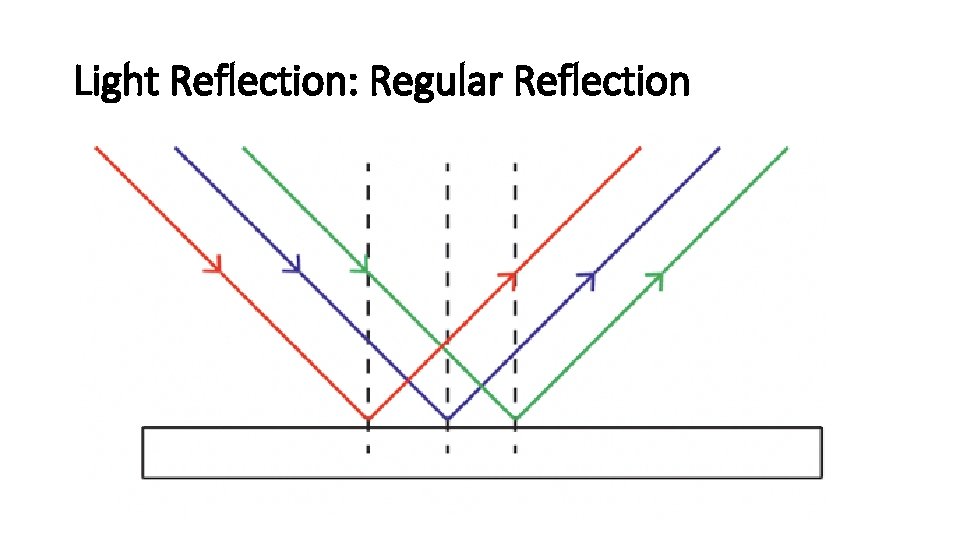
We have learnt that not all bodies can reflect light rays. The amount of reflection of light depends on the nature of the reflecting surface of the body. Based on the nature of the surface, reflection can be classified into two types namely, Regular reflection Irregular reflection
REGULAR REFLECTION When a beam of light (collection of parallel rays) falls on a smooth surface, it gets reflected. After reflection, the reflected rays will be equal. Here, the angle of incidence and the angle of reflection of each ray will be equal. Hence, the law of reflection is obeyed in this case and thus a clear image if formed. This reflection is called ‘regular reflection’ or ‘specular reflection’.
Example: Reflection of light by a plane mirror and reflection of light from the surface of still water.
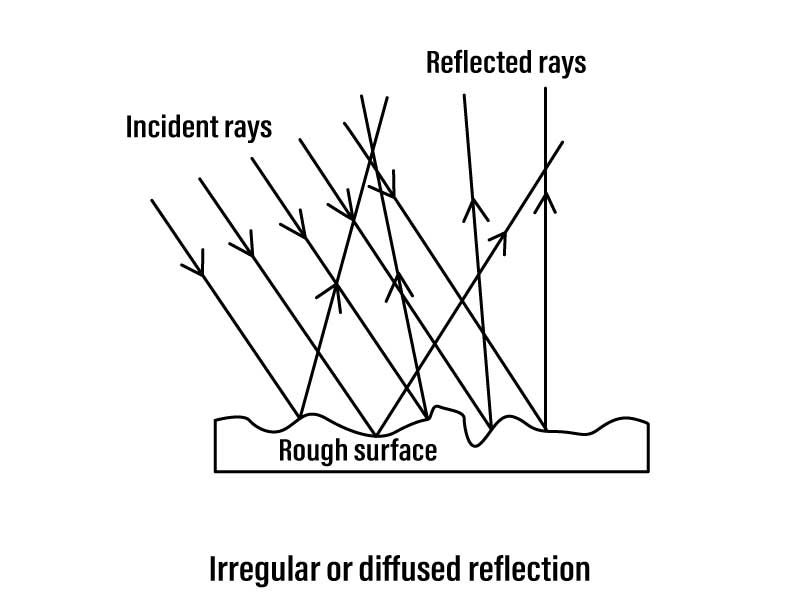
IRREGULAR REFLECTION In case of a body having a rough or irregular surface, each region of the surface is inclined at different angles. When light falls on such a surface, the light rays are reflected at different angles. In this case, the angle of incidence and the angle of reflection of each ray are not equal. Hence, the law of reflection is not obeyed in this case and thus the image is not clear. Such a reflection is called ‘irregular reflection’ or ‘diffused reflection’.
Example: Reflection of light from a wall.
When a beam of parallel light rays is scattered in all directions. Therefore the parallel rays incident on the surface will reflect in different directions. This type of reflection is called Irregular or Diffuse Reflection .
Mineral is a natural substance of organic or inorganic origin with definite chemical and physical properties.The process of extracting mineral from the earth is known as mining.The mines near the earth crust are known as open pit mines while the deep mines are known as shaft mines.
Types of Minerals
On the basis of chemical and physical properties, minerals are broadly grouped under two categories.They are metalic and non-metalic minerals.
a) Metalic Minerals
Metalic Minerals are the minerals which contain or more metalic elements in them.Metalic minerals oocur in race, naturally formed concentrations known as mineral deposits.These deposits consist of a variety of valuable metals such as iron,manganese, copper,bauxite,nickel,zinc,lead,gold etc.
i ) Iron ore
Iron ore is the most widely distributed elements of the earth crust,rarely occurs in a free state.It enters into the composition of many rocks and minerals especially from igneous and metamorphic rocks.The total recoverable reserves of iron ore in India are about 9602 million tons of haematite and 3408 million tons of magnitude.About 79% haematite deposits are found in Assam,Bihar, Chhattisgarh, Jharkhand,Odisha and Uttur Pradesh.About 93% magnitude deposits occur in Andhra Pradesh,Goa, Karnataka alone contributes about 72% of magnetite deposits of India. Jharkhand is the leading producer of iron ore with 25% the country’s production.Singhbhum,Hazaribagh,Dhanbad and Ranchi districts are its major producers.Odisha with 21% production ranks second.Sundargarh,Mayurbhanj,Sambalpur and Keonjhar districts are its major producers.The magnitude production of Chhattisgarh,Shimoga and (Chikmagalur, Chitradurga,Shimoga and Dharwad districts are its major producers). Andhrapradesh and Karnataka produce about 5% each.Kurnool,Guntur,Cuddapah and Anantapur districts in Andhra Pradesh and Salem, Namakkal,Thiruvannamalai, Tiruchirapalli, Coimbatore,Madurai and Tirunelveli districts in Tamil Nadu are notable for the production of iron ore.
ii) Maganese
Manganese is a silvery grey element.Ir is very hard and brittle in nature.Ir is always available in combination with iron and steel and serves as basic raw material for alloying.It is the most important mineral for making iron and steel.Nearly 10 kg maganese is required for manufacturing one ton of steel.It is also used in the manufacturing of bleaching powder, insecticides,paints and batteries.Manganese deposits oocur mainly as metamorphosed bedded sedimentary deposits.The largest deposits of manganese is found in Odisha (44%)followed by Karnataka (22%),Madhya Pradesh (12%), Maharashtra &Goa(7% each), Andhra Pradesh (4%) and Jharkhand (2%). Rajasthan, Gujarat, Telengana and west Bengal together constitute about 2% of the India’s manganese resource.Nagpur,Bhandara and Ratnagiri districts in Maharashtra and Balaghat and Chhindwara district mts in Odisha is the third largest producer with 24% Other producers are Andhra Pradesh (13%) and Karnataka (6%). Srikakulam, Visakhapatnam, Cuddapah and Guntur districts in Andhra Pradesh and the districts of Shimoga, Bellary, Chitradurga and Tumkur are the important districts mineral for making iron and steel.India is the fifth largest producer of manganese in the world.
iii) copper
Copper is the first metal that prehistoric man has started using for many purposes.Being flexible,it can be made into utensils of any shape.Brass and Bronze are obtained when the copper alloys with zinc and tin respectively.Copper has been commonly used for making cooking utensils and other objects of common utility.In modern days,it ia extensively used in vast variety of electrical machinery,wires and cables.Largest reserves of copper ore is in the state of Rajasthan (53.81%) followed by Jharkhand (19.54%) and Madhya Pradesh (18.75%).The states of Andhra Pradesh, Gujarat, Haryana, Karnataka, Maharashtra, Meghalaya, Nagaland,Odisha ,Sikkim, Tamilnadu, Telangana, Uttarakhand and West Bengal account for 7.9% of the total copper reserves of India. Jharkhand is the largest producer of copper with62% of India’s production.Singhbhum and Hazaribagh districts are its leading producers of copper.Odisha is the other major producer with 50.2% production.The districts of Khetei,Alwar and Bhilwara are notables in this state.The states of Uttarakhand (Dehradun and Garhwal districts),Andhra Pradesh (Guntur,Kurnool and Nellore districts ),and Tamil Nadu contributes about 7% of production each.
iv) Bauxite
Bauxite is an important ore from which aluminium is extracted.It is found in the rock consisting mainly of hydrated aluminium oxides.Bauxite is widely distributed as surface deposits in the areas of laterite soil.Being light in weight and tough, aluminium is used in the manufacture of aircraft and automobile engines.Bauxite is also used in the manufacture of cement and chemicals. The main bauxite deposits occur in Odisha-50.2%, Gujarat-15.8%(Junagadh Amreli and Bhavnagar districts), Jharkhand -11.9%(Ranchi and Gumila districts), Maharashtra-9.9%(Sindhu durg and Ratnagiri), Chhattisgarh-6.2%(Ballarpur and Durg districts),and Tamil Nadu-2.7%.Being light in the manufacture of aircraft and automobile engines.Bauxite is also used in the manufacture of cement and chemicals.Orissa is the largest producer of bauxite in India with appox.1,370.5 million tonnes.India’s state and central Government is very supportive in production of Bauxite and other Industrial Minerals in Orissa, Jharkhand,Tamil Nadu.
b) Non-Metalic Minerals
These minerals do not contain metal in them.Mica, limestone, gypsum, nitrate,potash, dolomite,coal, petroleum etc are the Non-Metalic Minerals.
I ) Mica
In ancient time,Mica was used in ayurvedic medicine.Mica became very popular with the development of electrical indusrtry.Abhrak is a good quality mica.It is translucent, easily splitable into thin sheets,flat,colourless, elastic and incompressible.Mica is used in making of insultating properties,as it withstands high voltage and has low power loss factor.Since it is a non conductor of electricity, it is exclusively used in electrical goods.It is also used in making of lubricants,, medicines, paints and Varnishes. The major deposits of mica are found in Andhra Pradesh (41%) with Nellore, Visakhapatnam,West Godavari and Krishna are its major districts.other important states in mica deposits are Rajasthan (21%) and Odisha(20%).Bhilwara, Jaipur and Ajmer are the notable districts in Rajasthan and , Rayagada, Bolangir and Sundargarh districts are the major producers in Odisha.Dhanbad,Palamu,Ranchi and Singhbhum districts are the major mica mines in Jharkhand state.
ii) Lime stone
Limestone is associated with rocks composed of either calcium carbonate or the double carbonate of calcium and magnesium or mixture of both.Limestone also contains small quantities of Silica,aluminia,iron oxides, Phosphorus and Sulphar.Limeatone is used in the industries of chemicals for soda ash, caustic soda, bleaching powder,paper, cement,iron and steel,glass and fertilizers.The major producing areas:Andhra Pradesh produces about 20% with major concentration in Cuddapah,Kurnool and Guntur districts.Telengana also accounts for about 20% of the country’s producion with the districts of Nalgonda,Abilabad,Warangal and Karimnagar as major producers.Rajasthan produces about 18% (Jodhpur and Santa districts)and Tamilnadu about 8.4% (Salem, Kanchipuram, Tiruchirapalli, Thoothukudi Thirunelweli and virudhunagar districts ) of limestone production of India.In terms of the reserves of limestone,the state of Karnataka leads with 27% followed by Andhra Pradesh and Rajasthan (12% each), Gujarat (10%), Meghalaya (9%), Telangana (8%), Chhattisgarh and Madhya Pradesh (5% each) and the remaining by other states.
iii) Gypsum
Gypsum is a hydrated of calcium which occurs as white ,Opaque or transparent minerals in beds of sedimentary rocks such as limestone, sandstone and shale.Gypsum is used in the manufacture of cement, fertilizers,wall board ,plaster of Paris and in soil conditioning.The state of Rajasthan alone accounts for 81% of its reserves.14% its reserves is found in Jammu and Kashmir and 2% in Tamil Nadu.The remaining 3% resources are found in the states of Gujarat, Himachal Pradesh, Karnataka, Uttarakhand, Andhra Pradesh and Madhya Pradesh. Rajasthan produces 82% of the country’s producion.Jodhpur , Bikaner and Jaisalmer are notable districts.Jammu and Kashmir produces 14% of country’s gypsum.Baramula,Doda and Uri districts are its major producers.The states of Gujarat, Uttarakhand, Andhra Pradesh and Tamilnadu are the other producers with about 4% each.
Most people who read these words immediately thing of people wielding light swords and fighting but star wars is much more complex. The movie order confuses a lot of people so lets just get the order straight, its just a numerical order that goes from 1 to 9. The story is divided basically into 3 different trilogies I-III, IV-VI and VII-IX we’ll be talking about I the phantom menace this time. I-III were released after IV-VI but stand at the beginning of the timeline. Star wars I-III kicks off a beautiful saga set in a galaxy far far away which is home to not just humans but a multitude of races. Some people in this world can harness an ability known as The Force and are known as being Force sensitive.
The Force is a mystery that few understand, member of one such groups are known as Jedi tasked with protecting the galaxy. The Jedi are primarily peacekeepers that use their abilities to help people in need. The galaxy is in turmoil with the trade federation that wishes to conquer planets using its droid armies. The Jedi Order dispatches Jedi Knight Qui-Gon Jin and his apprentice Obi-Wan Kenobi to convince the federation to not invade the planet Naboo. The negotiations fail and the secret benefactor of the trade federation, Darth Sidious orders the invasion to proceed as planned. The two Jedi fight back and escape with Padme Amidala the Queen of Naboo but in the escape their ship is damaged and they’re forced to stop on the desert planet of Tatooine for repairs.
On Tatooine Qui-Gon comes across a young force sensitive slave Anakin Skywalker, after freeing the young boy from his slavery Qui-Gon decides to train him in the way of the Force. On the way back to their ship Qui-Gon comes face to face with Darth Maul a Sith lord and after a short duel escapes. Sith are the opposite of the Jedi they use their connection with the Force for their own gain unlike the Jedi, Sith were believed to be extinct by the elder Jedi after long periods of inactivity. The Jedi travel to Coruscant so that Padme could plead her case to the galactic senate. Qui-Gon asks the Jedi council permission to train the young Skywalker but his requests are denied. Padme is convinced by senator Sheev Palpatine to call for a vote of no confidence in the current leader. Meanwhile Padme decides to lead a rebellion to save Naboo with the help of Gungans a race of amphibious creatures that live underwater on Naboo.
The Gungans agree to help out and lead the fight against the droid army on the ground and Padme with the two Jedi decides to search for the viceroy that leads the invasion, meanwhile Pilots attack the federations droid control ship to weaken the droids. Qui-Gon and Obi-Wan come face to face with Darth Maul again and fight him together, Maul however overpowers Qui-Gon and mortally wounds him. Obi-Wan avenges his master by defeating Maul, a dying Qui-Gon asks Obi-Wan to train Anakin as his apprentice. After the battle the viceroy is arrested and Palpatine replaces him as the chancellor, Grand Master Yoda promotes Obi-Wan to the rank of a Jedi Knight and accepts Anakin as Obi-Wan’s apprentice to respect Qui-Gon’s wishes.
The Sith have a rule known as the rule of 2 wherein only one Sith lord and one apprentice is allowed to exist. According to this logic, with Maul dead one Sith still remains. The Jedi order has to prepare themselves against the oncoming war against the Sith.
We shall pick up the next story soon so stay tuned until then, May the Force be with you.
The use of the Internet, mobile devices, social media, search engines, and other avenues to reach consumers is referred to as digital marketing. In comparison to traditional marketing, some marketing experts believe digital marketing to be a whole new undertaking that necessitates a fresh approach to clients and new means of understanding how customers behave. Various businesses are currently using web devices to promote their operations. They also offer excellent customer service and promote their company policies throughout the world. Digital marketing is the method by which they use technology to promote or market themselves. Digital marketing typically involves the use of online media such as social media, websites, mobile apps, and email. There is no doubt that digital marketing is superior than traditional marketing for a variety of reasons. It is now simple to reach out to customers or clients via digital marketing.
Digital marketing types:
Content marketing
Search engine optimization
Promotional Displays
Mobile Promotion
Marketing on Social Media
Email Marketing
Marketing Through Influencers
Affiliate marketing
Marketing using Video
Audio Marketing Techniques
Importance of digital marketing during Covid-19:
People all over the world are hunkering down to prevent getting into contact with the illness or transmitting the virus. Some countries even have strong rules that citizens must only leave their houses when absolutely required. As you might assume, the majority of people now use the internet to pass the time, and online usage statistics reflect this new reality. Since the spread of the new coronavirus, mobile data usage has increased, as has traffic to popular websites. Those use social media channels to stay in touch with loved ones and connect with people who live outside their homes. Over the previous few months, almost all social media sites have seen an upsurge in user activity. During the crisis, some firms saw an opportunity to give meaningful digital interaction to their customers. The number of organizations desiring to launch new e-commerce channels, create or update websites, create targeted social media campaigns for those working from home, and focus on leveraging SEO and influencers to reach new audiences has increased significantly, according to digital marketing experts. This is the ideal time to take advantage of the numerous digital marketing channels that are currently available. Getting started is easier than it appears after reallocating your budgets, and the best part is that the results are nearly instantaneous.
Conclusion:
Digital marketing refers to marketing ideas and strategies that are implemented through electronic media, particularly the Internet. E-marketing, internet marketing, digital marketing, and online marketing are all phrases that are regularly used interchangeably and are typically regarded equivalent. E-marketing is defined as the use of the internet to promote a brand or a product. It combines a wide range of current technology to connect businesses with their potential customers, combining direct response and indirect marketing features. For specialists in digital marketing, digital marketing is extremely crucial. For digital marketers, digital marketing is a fantastic business potential. To compete in the digital market, you must have a thorough awareness of the benefits and drawbacks of digital marketing. This is a rapidly expanding industry. Using new technologies to attain marketing goals is what digital marketing is all about. The marketing department and the digital marketing team are no different.
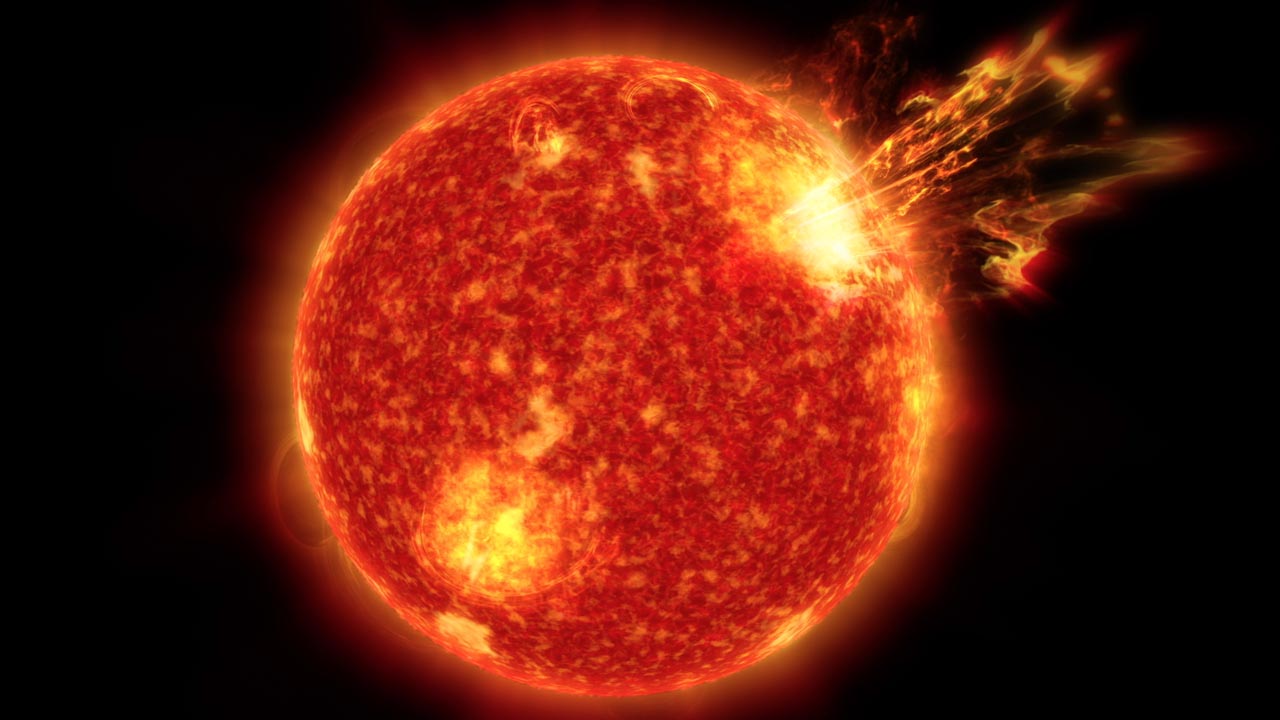
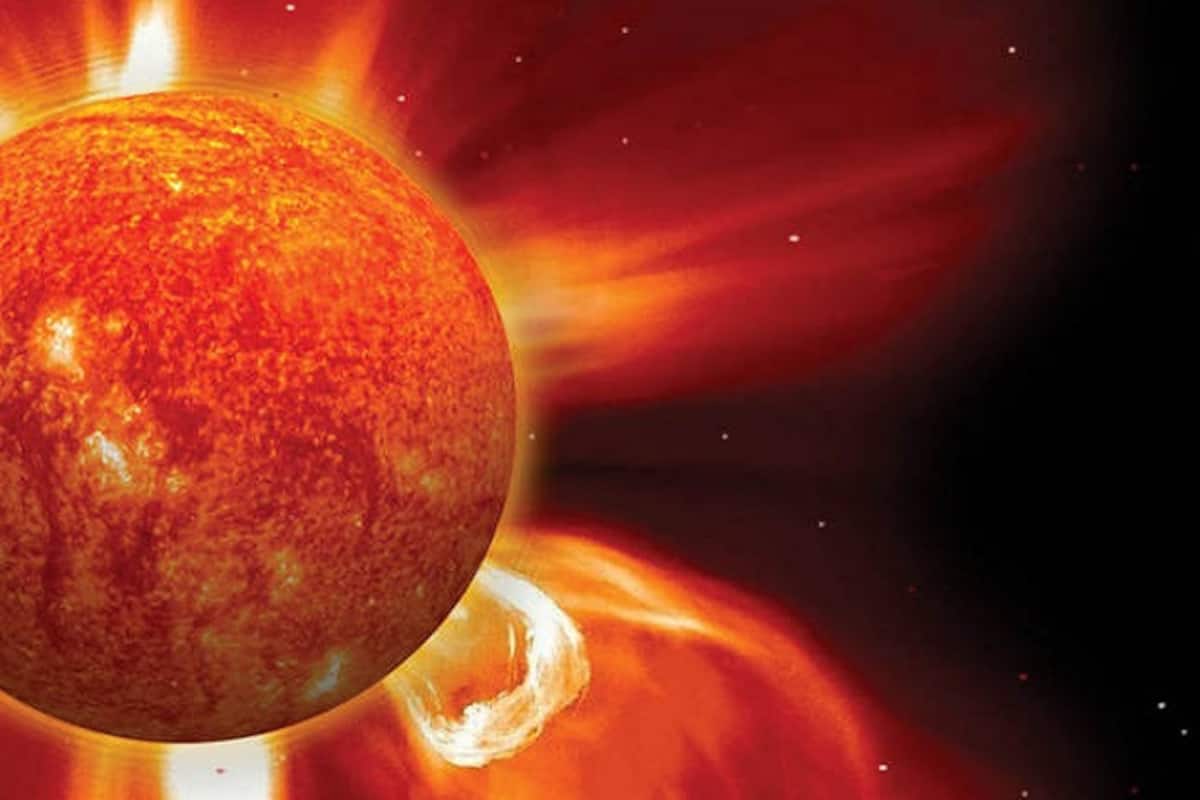
Huge charged particles ejected from the sun is called solar storm.
By NASA
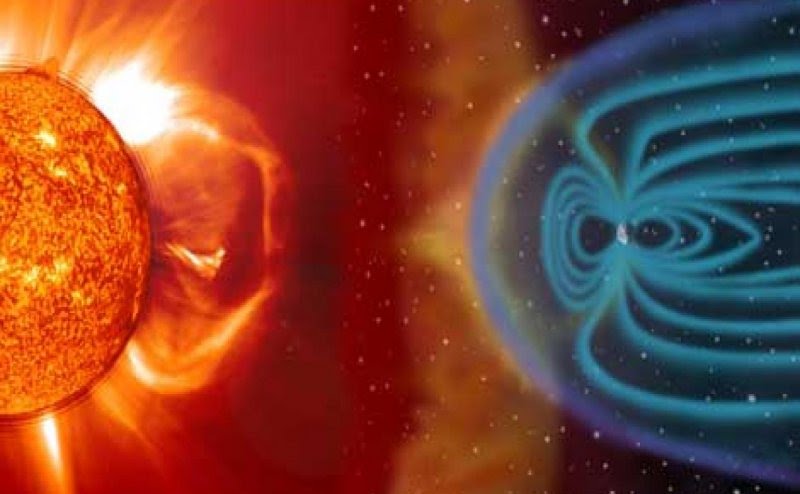
According to website Spaceweather.com, the storm that originated from the Sun’s atmosphere and can have a significant impact on a region of space dominated by Earth’s magnetic field.
A powerful solar storm is approaching the Earth at a speed of 1.6 million kilometers and this storm will hit the Earth either on Sunday or Monday.
According to the US space agency NASA, the solar storm is moving towards the Earth at a speed of about 1.6 million kilometers per hour and maybe its speed will increase further. NASA said that satellite signals can be interrupted by solar storms.
Scientists have feared that this great solar storm may hit our Earth in two days pic.twitter.com/MlWUeZ56aw
Effect of solar storm
The outer atmosphere of the Earth can be heated which can have a direct effect on satellites.
This can cause interference with GPS navigation, mobile phone signal and satellite TV. The current in power lines can be high, which can also blow transformers
Power lines can carry a lot of currents, which can blow transformers
There is also a possibility of blackout of HF (high frequency) radio communication that is dependent upon current X-ray Flux intensity. According to the latest prediction, the flare can cause a wide area blackout of HF (high frequency) radio communication for about an hour.
Due to the solar storm, there will be a view of beautiful celestial lighting for the people living at the North or South Pole. The people living closer to these areas can expect to see beautiful aurora at night.
Uttarakhand is also known as the ‘Devbhoomi’ or the land of God. Numerous religious processions, gatherings, and rituals are organized every year. One such gathering was the Kumbh Mela held in Haridwar in April; amidst the high positivity rate going on in the country at that time. The result was obvious.
Scores of devotees and naga babas with their forehead smeared with ashes took the ‘snan’ at Har Ki Pauri, providing a massive rise in the caseload.
Another such gathering, currently in news these days is the Kanwar Yatra. Let us first look at what the yatra is about.
The Kanwar Yatra – Itis an annual pilgrimage of devotees of Shiva, known as Kanvarias(कावड़िया) or “Bhole” (भोले), to Hindu pilgrimage places of Haridwar, Gaumukh and Gangotri in Uttarakhand and Sultanganj in Bihar to fetch holy waters of Ganges River. Millions of participants gather sacred water from the Ganga and carry it across hundreds of miles to dispense as offerings in their local Shiva shrines, or specific temples such as Pura Mahadeva and Augharnath temple in Meerut, and Kashi Vishwanath, Baidyanath, and Deoghar in Jharkhand.
The yatra was suspended last year due to the pandemic. Even this year, the Tirath Singh Rawat ( who held office for over four months) had suspended the yatra, keeping in mind the disastrous effects of it.
But UP CM Yogi Adityanath had been in talks with the newly appointed CM of Uttarakhand, Pushkar Singh Dhami, and requested the latter that kanwarias from the state be allowed to travel to the state to collect the holy water.
Pushkar Singh Dhami has taken a rather pragmatic approach to the issue and announced that Uttarakhand is only the host and that a good amount(crores) of people from states such as Haryana, Uttar Pradesh, Bihar will be a part of the gathering and has put the decision on a halt to constitute a meeting and then reach a decision which will favor the masses.
What experts have to say on the issue –
The Kumbh Mela had a devastating effect on the already burdened caseload. Keeping in purview the disastrous effect it had on the Covid cases and also the general footfall of the Kanwar Yatra, which is about two to four crore; experts warn that allowing the Yatra to take place will be hazardous to the extreme and will serve as a ‘catalyst’ for the third wave. It’s just like giving an open invitation to the third wave.
Another point to be remembered is that people(patients as well as covid warriors), economy, health facilities, and every aspect playing a pivotal role in the Covid management is at a recuperating stage from the deadly couple of months that just passed. So, allowing such an enormous number of people to gather, travel and carry out rituals would not be an appreciable idea.
Conclusion – India has already seen huge amounts of devastation. People have lost close kin, in many cases the sole breadwinners of the family. A good percentage of citizens haven’t yet taken the first dose of vaccine. In this situation, if the Kanwar Yatra is allowed to be held, it would be nothing but a knife stabbed in our abdomen, by ourselves, in complete consciousness.
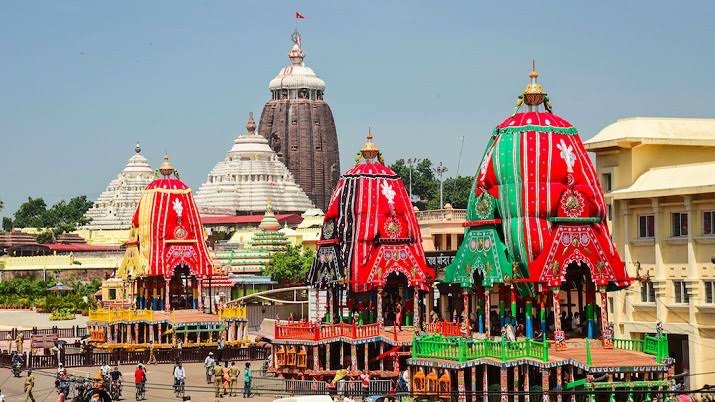
One of India’s biggest festivals, Rath Yatra begins today, July 12 and that is celebrated all across the world by millions of Indians. The festival has its primary significance in Indian states like Odisha, Jharkhand, West Bengal and Assam.
Picture Credits: India TV. Location: Puri Jagannath Temple.
As everyone has their eyes on Puri Jagannath Temple’s grand celebration for this festival, let us know some of the important facts about the temple.
1) Formation of Temple.
The temple was first built by the Ganga Dynasty ruler Anantavarman Chodaganga in 12 Century CE and was further developed by several other kings including that of the Ganga Dynasty as well as the Suryvamshi Dynasty.
2) Deities Worshipped
Lord Jagannath, Lord Balabhadra and Goddess Subhadra are worshipped inside the temple. The deities are adorned with different jewelleries and accessories according to different seasons.
3) Structure of the Temple.
The Temple has four distinct structures:
a) Deula, Vimana or Garba Griha where the triad deities are kept on the ratnavedi, the throne of pearls, in Deula Style.
b) Mukhashala, the frontal porch
c) Nata Mandir, Natamandapa which is known as Jagmohan, the audience hall or the dancing hall.
d) Bhoga Mandapa, the offerings hall.
The main temple is a curvilinear temple and crowning the top is the Srichakra, an eight spoked wheel of Lord Vishnu. It is also known as Nilachakra which is made out of Ashtdhatu and is considered sacrosanct.
4) The Food Offerings:
The food is offered to the Lord six times a day. The breakfast that is offered early morning is called Gopala Vallabha Bhog, the next offering at about 10 am is known as Sakala Bhog and another offering after some time is called the Sankhudi Bhoga which consists of Pakhala with curd and Kanji Payas.
The noon offering is known as Madhyanha Dhupa and that is followed by evening food at 8 pm known as Sandhya Dhupa. The last offering to Lord is called the Bada Simhara Bhoga.
5) Rosaighara- Temple’s Kitchen.
The temple’s kitchen is considered to be the largest in the world. About 56 varieties of food are produced which are purely vegetarian and prepared without the use of onions, garlic or chilies as prescribed by some Hindu Texts. Cooking is done only by using earthen pots with some water that comes from two nearby tube-wells known as Ganga and Yamuna. The most awaited food offering is known as Kotho Bhoga, offered during Mid-Day. After being offered to Lord Jagannath and other deities, the food is sold in a nearby market.
The Little Albert experiment was a famous psychology experiment conducted by behaviorist John B. Watson and graduate student Rosalie Rayner.
The participant in the experiment was a child that Watson and Rayner called “Albert B.” but is known popularly today as Little Albert. When Little Albert was 9 months old, Watson and Rayner exposed him to a series of stimuli including a white rat, a rabbit, a monkey, masks, and burning newspapers and observed the boy’s reactions.
The boy initially showed no fear of any of the objects he was shown.
The next time Albert was exposed to the rat, Watson made a loud noise by hitting a metal pipe with a hammer. Naturally, the child began to cry after hearing the loud noise. After repeatedly pairing the white rat with the loud noise, Albert began to expect a frightening noise whenever he saw the white rate. Soon, Albert began to cry simply after seeing the rat.
Watson and Rayner wrote: “The instant the rat was shown, the baby began to cry. Almost instantly he turned sharply to the left, fell over on [his] left side, raised himself on all fours and began to crawl away so rapidly that he was caught with difficulty before reaching the edge of the table.” After conditioning, Albert feared not just the white rat, but a wide variety of similar white objects as well. His fear included other furry objects including Raynor’s fur coat and Watson wearing a Santa Claus beard.
While the experiment is one of psychology’s most famous and is included in nearly every introductory psychology course it is widely criticized for several reasons. First, the experimental design and process were not carefully constructed. Watson and Rayner did not develop an objective means to evaluate Albert’s reactions, instead of relying on their own subjective interpretations. The experiment also raises many ethical concerns. Little Albert was harmed during this experiment—he left the experiment with a previously nonexistent fear. By today’s standards, the Little Albert experiment would not be allowed.
The question of what happened to Little Albert has long been one of psychology’s mysteries. Before Watson and Rayner could attempt to “cure” Little Albert, he and his mother moved away. Some envisioned the boy growing into a man with a strange phobia of white, furry objects.
The true identity and fate of the boy known as Little Albert was discovered. As reported in American Psychologist, a seven-year search led by psychologist Hall P. Beck led to the discovery. After tracking down and locating the original experiments and the real identity of the boy’s mother, it was suggested that Little Albert was actually a boy named Douglas Merritte.
The story does not have a happy ending, however. Douglas died at the age of six on May 10, 1925, of hydrocephalus (a build-up of fluid in his brain), which he had suffered from since birth. “Our search of seven years was longer than the little boy’s life,” Beck wrote of the discovery.
In 2012, Beck and Alan J. Fridlund reported that Douglas was not the healthy, normal child Watson described in his 1920 experiment.
They presented convincing evidence that Watson knew about and deliberately concealed the boy’s neurological condition. These findings not only cast a shadow over Watson’s legacy, but they also deepened the ethical and moral issues of this well-known experiment.
In 2014, doubt was cast over Beck and Fridlund’s findings when researchers presented evidence that a boy by the name of William Barger was the real Little Albert. Barger was born on the same day as Merritte to a wet-nurse who worked at the same hospital as Merritte’s mother. While his first name was William, he was known his entire life by his middle name, Albert.
While experts continue to debate the true identity of the boy at the center of Watson’s experiment, there is little doubt that Little Albert left a lasting impression on the field of psychology.
WHAT IS DIVORCE ? Divorce simply means the end of a marriage relationship between two person. It sounds simply , but it’s not easy for a husband and wife to decide to end a marriage. They spend a long time together and try to solve their problems , but they not successed and then they have to take the decision of divorce . Divorce is harder for everyone. WHAT IS UNIFORM CIVIL CODE? The Uniform Civil Code (UCC) calls for the formulation of one law for India, which would be applicable to all religious communities in matters such as marriage, divorce, inheritance, adoption. The code comes under Article 44 of the Constitution. The aim of such uniformity is meant to be ensuring equality and justice for women in particular, who are often denied their rights in marriage, divorce
CASE OF UNIFORM CIVIL CODE….. Pratibha M. Singh files a divorce case dated July 7. in Delhi high court to take divorce from her husband. On Wednesday, Justice Pratibha M Singh said that caste and religion-related barriers were gradually disappearing from the society. We are grown up now then why women have to face problems in marriage and divorce barriers related to religion . The High Court made the observations while hearing a petition related to the applicability of the Hindu Marriage Act to a couple belonging to the Meena community in Rajasthan. The husband had filed for divorce under Section 13(1) of the Act, but a family court quashed his petition on the grounds that the law did not apply to the Meena community, which is a notified Scheduled Tribe in Rajasthan, according to Live Law. The man challenged this order in the Delhi High Court.“The youth of India belonging to various communities, tribes, castes or religions who solemnise their marriages ought not to be forced to struggle with issues arising due to conflicts in various personal laws, especially in relation to marriage and divorce,” Singh said.Singh said that the Hindu Marriage Act applies to everyone practising the religion, whether they were “Virashaiva, Lingayat or a follower of the Brahmo”, according to Live Law. She added, “If members of a tribe voluntarily choose to follow Hindu customs, traditions and rites they cannot be kept out of the purview of the provisions of the HMA [Hindu Marriage Act], 1955. When this provision was being discussed during the Constituent Assembly debates, it faced resistance from several members. A few members demanded addition of exceptions to this provision, saying that any community “shall not be obliged to give up its own personal law in case it has such a law”. The members spoke about the right to freedom of religion, and also claimed that “such regimentation will bring discontent and harmony will be affected”. While referring to several decisions of the Supreme court on the need for UCC, including the historical Shah Bano case of 1985, the court said: “The hope expressed in Article 44 of the Constitution that the State shall secure for its citizens Uniform Civil Code ought not to remain a mere hope.”The court was dealing as to whether the marriage between the parties who belonged to the Meena community were excluded from the ambit of the Hindu Marriage Act, 1955 (HMA)
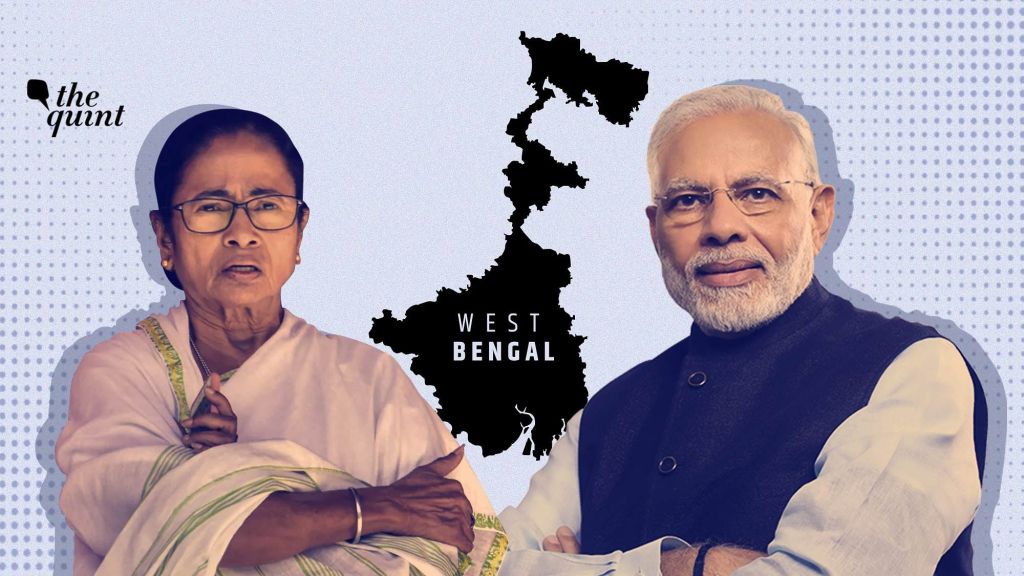
It seems that PM Narendra Modi had already started preparing for the Bengal elections long ago as he visited Kolkata on the occasion of Netaji Subhash Chandra Bose’s 125th anniversary in January. While he also dressed in a certain way where critics say that he impersonated Rabindranath Tagore. Despite there being elections in 4 states and 1 union territory, BJP seemed to have poured its maximum energy into the Bengal elections.
Some of BJP’s tactics:
Home Minister Amit Shas’s lunch: Mr. Amit Shah had lunch at one of his Adivasi party workers. It was seemed to be a move for tribal votes’ appeasement. He also had lunch at a farmer’s house and this one assumed significance in the wake of the ongoing farmers’ protest in Delhi. This was largely covered by media houses.
Anti-Incumbency centric campaign: The saffron party allured Bengalis for a change, while the PM quoted “Asol Parivartan” (real change). Bengal was ruled by the left (communist) parties for 34 years, succeeded by TMC for 10 years. In the 2016 assembly election, BPJ had won only 3 seats, so Bengalis and never tasted BJP’s governance, and hence creating excitement for a change (Parivartan) was BJP’s prime motive. Leader J P Nadda seemed to have been assigned with this task.
Modi brand and the 8 phase election: BJP demanded an unprecedented 8 phase election and the election commission of Indian, surprisingly, too agreed to it. Conducting elections in 8 phases gives more time for campaigning and Mr. Modi himself seemed to have vigorously campaigned in each phase. The Modi brand was effectively used. Also, BJP did not announce its CM candidate’s name. Suvendu Adhikari’s name was anticipated. But if the CM candidate’s name would have been announced, at the face value, it would have been Suvendu v/s Mamata but BPJ wanted to keep it Modi v/s Mamata, as Modi is a bigger brand.
Prime Minister’s visit to Bangladesh: The Prime Minister went to Bangladesh at the invitation of PM Sheikh Hasina. There, he visited the Matua Mahasangha temple. This place is the hometown of Matua Mahasangha. Many Matuas have migrates to India in 1947 and also in 1971 and have settled in a large population in Bengal.
The defection of TMC leaders: Many leaders, including TMC minister Suvendhu Adhikari, had abandoned their party and joined BJP. BJP exhorted that there is a split and desertion of leaders in TMC and portrayed that Mamata’s days are over. Also, their slogans “Do Mai, didi gai” (Didi will go on 2 May) as the election results were to be announced on 2 May. They ran large social media campaigns with top trends- #EbaarBJP (this time it is BJP), #Ebaar200paar (this time we will cross 200 seats). Last time it was TMC that had crossed 200 (out of 294 seats).
Visit of Union Ministers and other Leaders. Many leaders like Smriti Irani, Piyush Goyal, Narendra Singh Tomar, UP CM Yogi Adityanath had joined the campaign. They talked on issues related to Hinduism. Besides, they had emphasized and reminded that Mamata had banned Durga pooja in Bengal. This was no surprise as the saffron party uses Hindutva as its principal agenda in every election.
Also, Mithun Chakraborty joined had joined the campaign as the celebrity face for BJP.
Despite pouring all their resources, energy, and time into Bengal, why did BJP end up winning only 77 out of 292 seats? Mamata too gave befitting replies to each of BJP’s tactics.
Daughter of Bengal v/s the Outsiders: While BJP was stressing on anti-incumbency, to ouster Mamata and bring change; Mamata publicized herself as Bengal’s daughter and that Bengalis have to fight out the outsiders. Mamata fielded many popular Bengali singers and actors who took to the street to highlight that how the Baahaaris (outsiders) are destroying Bengal’s culture and communal inclusiveness. CM Mamata had earlier funded many female-centric schemes like Sabooj Sathi- bicycles for girls and education loans.
Muslim appeasement: While the saffron party goes ahead with its Hindutva narrative, Mamata turns up to be ultra-secular. During her tenure as the CM, she had introduced schemes like scholarships for Muslim students from classes 1 to 10, reservations for Muslim OBCs, etc. The Muslim population has a significant 28-30% vote share in the state. This time, she seemed to have an emerging threat from AIMIM’s Owaisi and also the head of one of the biggest shrines walking into the Indian Secular Front party. Despite this, almost all the Muslim-dominated constituencies had voted in favor of TMC.
SC/ST vote share. Amit Shah’s lunch tactic did not seem to have worked well as, in more than 50% SC/ST dominated constituencies, TMC candidates had won.
Broken leg- The Masterstroke: Mamata Banerjee had reported that while she visited Nandigram for the campaign, she was attacked and suffered a serious leg injury. However, out of hundreds of cameras focused on her, not one captured the alleged incident, making BJP immediately respond that she was bluffing. Mamata also responded to this by posting a picture of her lying on a hospital bed. Later she campaigned on a wheelchair with her leg wrapped with bandages. Evidently, she gained a lot of sympathy because of this.
Some of her party workers were disappointed with her nephew Abhishek Banerjee and political analyst Prashant Kishor controlling the entire campaign. Prashant Kishore had earlier helped Mr. Modi with his election strategy in the 2014 Lok Sabha election and is popularly known as an election magician. This time, he helped TMC and announced that he would quit politics if BJP crosses 100 seats.
While BJP was very confident and chanted ‘Ebaar 200 paar’, little did we know that they were actually talking about TMC! On 2nd May, as the results were announced, TMC had won the mandate with startling 213 seats out of 292. On one hand, BJP with PM, HM, CM Yogi, Mithun, and many other union leaders, Mamata seemed to have fought vigilantly and has shown everyone that the Modi brand can be defeated and is now being considered as the face of UPA in 2024 Lok Sabha elections by many.
Extinctions have been a natural part of the planet’s evolutionary history. 99% of the four billion species that have evolved on Earth are now gone. Most species have gone extinct.
Extinction may be defined as the termination of a lineage without issue or abrupt disappearance of specific groups of organisms without leaving descendents.Extinctions are of two types namely extinctions and pseudo extinction.In true extinctions a particular lineage totally disappears without any progeny or evolutionary descendents.
Pseudo extinction may also be called as phyletic extinction or phyletic transformation.In this type a group may disappear leaving descendents with evolutionary modifications.In horse evolution while the earliest ancestor Eohippus became extinct its descendent survived to produce the modern ‘Equus’.Extinctions can happen for the taxonomic groups such as a family or genus.Thus the extinction of dinosaurs as a group is a case of true extinction.Similar extinctions happened to tribolites.
The process of extinction is not always predetermined.It happens due to abrupt changes in environmental conditions or other biological factors.Through the use of computer models evolutionist can now examine the probability of extinction for large as well as small groups of organisms.From the fossil record it becomes that extinctions have occurred at regular intervals of time.
Pattern of extinction
Fossil record reveals a few patterns for extinction.Major groups of herbivorous vertebrates are more susceptible than the carnivorous vertebrates for extinction.Larger organisms easily became extinct.
Causes of extinction
Even though extinctions are regular events in the history of earth they are caused due to specific reasons
⭐A mass extinction may be due to drastic changes in the environmental conditions.
⭐Any adaptive advance in one species decreases the fitness of all other species.
⭐Over specialisation to a specific situation may cause extinction
⭐The spread of an epidemic disease without any control can cause extinction.
⭐An increase in the population strength of herbivorous animals can cause rapid food shortage and cause extinction for several inter related groups.
⭐A sudden cosmic radiation can cause the death of large organisms.
⭐A dust storm formed due to falling of a meteorite is commonly mentioned as a cause for the disappearance of dinosaurs.
Rural advancement is the way toward working on the personal satisfaction and monetary prosperity of individuals living in country regions. As per the 2011 Census, 68.84% of the populace lives in towns. The backwardness of the country area would be a significant obstacle to the general advancement of the economy. India is predominately a horticultural nation and cultivation is their primary occupation. As indicated by the 2011 Agricultural Census of India, an expected 61.5% ward on horticulture. Specialized improvements in the field of agribusiness have expanded the hole between the rich and poor, as the good ranchers embraced current homestead innovation to a more noteworthy degree than the little ranchers. The all India Rural Credit Review Committee in its report cautioned “If the products of improvement keep on being denied to the enormous segments of the provincial local area, while thriving gathers to a few, the strains social and financial may not just agitate the cycle of efficient and tranquil change in the rustic economy yet even baffle the public bears to set up horticultural creation.” Report of the All India Rural Credit Committee, New Delhi, 2003 has properly called attention to that a simply agrarian nation stays in reverse even concerning farming. The majority of the workforce in India relies upon farming, not because it is gainful but since there are no elective business openings. This is a significant reason for the backwardness of Indian horticulture. A piece of the workforce currently occupied with horticulture should be moved to non-farming occupations. Until the 1970s, country improvement was inseparable from the horticultural turn of events and subsequently centred around expanding farming creation. Today, Inclusive country advancement is a more explicit idea than the idea of rustic improvement of prior, in more extensive terms, comprehensive provincial advancement is tied in with working on the personal satisfaction of every single country individual. All the more explicitly, comprehensive country advancement covers three unique however interrelated measurements: Economic measurement, Social measurement and Political measurement. Financial measurement incorporates giving both limits and freedoms to poor people and low-pay families specifically, advantage from the monetary development. Social measurement upholds social advancement of poor and low-pay families, advances sexual orientation balance and ladies’ strengthening and gives social security nets to weak gatherings. Political measurement works on the chances for poor people and low pay individuals in country regions to viably and similarly partake in the political cycles at the town level.
Alacrity The GRE has a predilection for words that don’t really sound like what they mean. Alacrity is no exception. Many think the word has a negative connotation. Alacrity, however, means an eager willingness to do something. So imagine the first day at a job that you’ve worked really hard to get. How are you going to complete the tasks assigned to you? With alacrity, of course. An interesting correlation: the more alacritous (adjective form) you are when you’re learning GRE vocabulary, the better you will do.
Prosaic Prosaic conjures up a beautiful mosaic for some. For others, the pro- is clearly positive. So if somebody or something is prosaic, it must surely be good. Once again the GRE confounds expectations. Prosaic means dull and lacking imagination. It can be used to describe plans, life, language, or just about anything inanimate that has become dull (it is not used to describe people).
A good mnemonic: prose is the opposite of poetry. And where poetry, ideally, bursts force with imagination, prose (think of text-book writing), lacks imagination. Hence, prose-aic.
Veracity:- Veracity sounds a lot like voracity. Whereas many know voracity means full of hunger (the adjective form voracious is more common), few know veracity. Unfortunately, many confuse the two on the test. Veracity means truthful. The adjective form, veracious, sounds a lot like voracious. So be careful. Paucity Paucity is a lack of something. In honor of paucity, this entry will have a paucity of words.
Maintain The second definition of this word – and one the new GRE favors – is to assert. One can maintain their innocence. A scientist can maintain that a recent finding support her theory. The latter context is the one you’ll encounter on the GRE. Contrite Word roots are often misleading. This word does not mean with triteness (con- meaning with). To be contrite is to feel remorse.
Laconic Another word that sounds different from what it means. A person is described as laconic when he/she says very few words. I’m usually reminded of John Wayne, the quintessential cowboy, who, with a gravely intonation, muttered few words. As this allusion betrays may age more than anything else, think of Christian Bale in Batman.
Pugnacious Much like a pug dog, which aggressively yaps at things near it, a person who is pugnacious likes to aggressively argue about everything. Verbally combative is another good way to describe pugnacious. Disparate If two things are fundamentally different, they are disparate. For instance, verbal skills and math skills are disparate, and as such are usually tested separately, the GRE being no exception.
A computer virus is a piece of software that can “infect” other programs by modifying them; The modification includes injecting the original program with routine to make copies of the virus program, which can then go on to infect other programs. A virus can be prepended or postpended to an executable program, or it can be embedded in some other fashion. The key to its operation is that the infected program, when invoked, will first execute the virus code and then execute the original code of the program.
Viruses classified along two orthogonal axes: the type of target the virus tries to infect and the method the virus uses to conceal itself from detection by users and antivirus software.
A virus classification by target includes the following categories:
Boot sector infector: Infects a master boot record or boot record and spreads when a system is booted from the disk containing the virus.
File infector: Infects files that the operating system or shell consider to be executable.
Macro virus: Infects files with macro code that is interpreted by an application.
A virus classification by concealment strategy includes the following categories:
Encrypted virus: A portion of the virus creates a random encryption key and encrypts the remainder of the virus. The key is stored with the virus. When an infected program is invoked, the virus uses the stored random key to decrypt the virus. When the virus replicates, a different random key is selected..
Stealth virus: A form of virus explicitly designed to hide itself from detection by antivirus software. Thus, the entire virus, not just a payload is hidden.
Polymorphic virus: A virus that mutates with every infection, making detection by the “signature” of the virus impossible.
Metamorphic virus: As with a polymorphic virus, a metamorphic virus mutates with every infection.
Virus countermeasures
The ideal solution to the threat of viruses is prevention: Do not allow a virus to get into the system in the first place, or block the ability of a virus to modify any files containing executable code or macros.
This goal is, in general, impossible to achieve, although prevention can reduce the number of successful viral attacks.
The next best approach is to be able to do the following :
Detection: Once the infection has occurred, determine that it has occurred and locate the virus.
Identification : Once detection has been achieved, identify the specific virus that has infected a program.
Removal : Once the specific virus has been identified, remove all traces of the virus from the infected program and restore it to its original state. Remove the virus from all infected systems so that the virus cannot spread further.







 Eduindex
You must be logged in to post a comment.