Database Management System: DBMS- InShort

What is a DBMS (Database Management System)?

Database Management System (DBMS) is a software for storing and retrieving users’ data while considering appropriate security measures.In large systems, a DBMS helps users and other third-party software to store and retrieve data. DBMS allows users to create their own databases as per their requirement.The DBMS manages incoming data, organizes it, and provides ways for the data to be modified or extracted by users or other programs.

DBMS Softwares

  • MySQL
  • PostgreSQL
  • Microsoft Access
  • SQL Server
  • FileMaker
  • Oracle
  • RDBMS
  • dBASE
  • Clipper
  • FoxPro.

Types of Database Models

  1. Hierarchical Database Model

Hierarchical database model resembles a tree structure, similar to a folder architecture in your computer system. The relationships between records are pre-defined in a one to one manner, between ‘parent and child’ nodes. They require the user to pass a hierarchy in order to access needed data. Due to limitations, such databases may be confined to specific uses.

2. Network Database Model

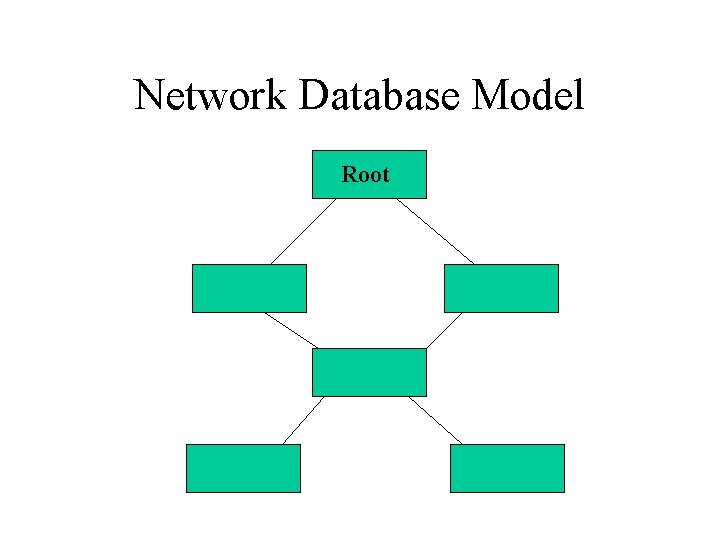
Network database models also have a hierarchical structure. However, instead of using a single-parent tree hierarchy, this model supports many to many relationships, as child tables can have more than one parent. 
3. Relational Database Model

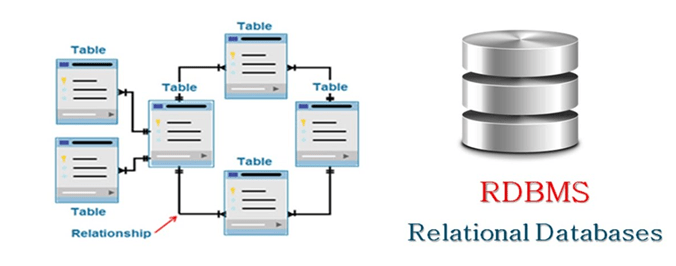
A relational database is a digital database based on the relational model of data, as proposed by E. F. Codd in 1970. A software system used to maintain relational databases is a relational database management system (RDBMS). Many relational database systems have an option of using the SQL (Structured Query Language) for querying and maintaining the database.
4. Object Oriented Database Model

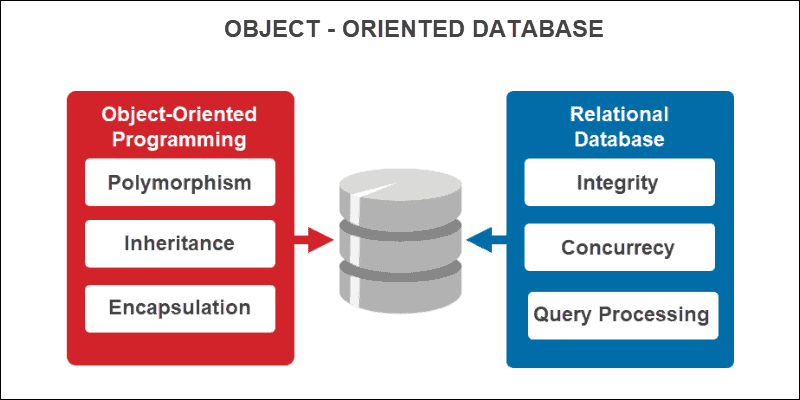
Object-oriented databases, the information is represented as objects, with different types of relationships possible between two or more objects. Such databases use an object-oriented programming language for development.
Functions of DBMS

The DBMS performs several important functions that guarantee the integrity and consistency of data in the database. The current generation DBMS supports many functions, such as the following:

  • Stores the definitions of data and their relationships (metadata) in a data dictionary, any changes made are automatically recorded in the data dictionary.
  • Creates the complex structures required for data storage.
  • Transforms entered data to confirm to the data structures.
  • Creates a security system and enforces security within that system.
  • Allow multiple user access to the data within the computer network environment.
  • Performs backup and data recovery procedures to ensure data safety.
  • Promotes and enforces integrity rules to maintain data consistency.
  • Provides access to the data via utility programs and from programming languages interfaces.

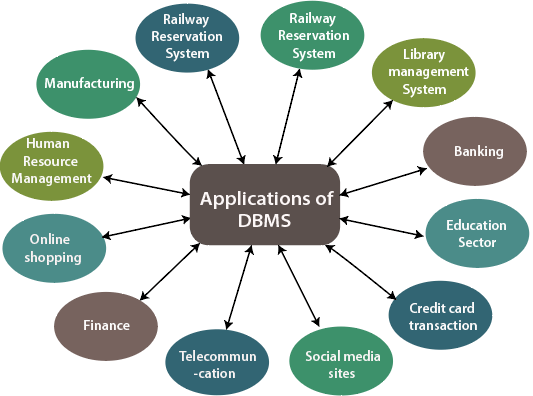
Applications of DBMS

  • Railway Reservation System
  • Library Management System
  • Banking
  • Universities and colleges
  • Credit card transactions
  • Social Media Sites
  • Telecommunications
  • Finance

Conclusion

Database implementation plan is essential for any organization that once to boost is sales or increase their customers experience, a good database implementation plan I supposed to have, all the factors and the significance value towards the organization, not forgetting the requirements that are needed. In my opinion, I could have recommended using a computerized, database management system. This is because it is faster to implement and also it requires less amount of time and finance to set up, the future of database lies on the power of the organization .and the funds that they can be able to set aside to implement new database management system.

National Recruitment Agency – Pros & Challenges

Theme:

  • In August 2020, Union cabinet approved the proposal of the ‘National Recruitment Agency‘ (NRA). This ‘One Nation – One Exam‘ concept was proposed in the budget speech in February 2020.
  • NRA will conduct the Common Entrance Test to select candidates for non-gazetted government jobs. The recruiting agencies such as SSC, RRB will conduct the next levels to finalize the candidates.
  • The test will be conducted twice per year.
  • At present, NRA will conduct CET for SSC, RRB & IBPS. In the coming days, it will be the common entrance test for all the 20 recruiting institutions of the central government.

Pros:

  • This will reduce the burden on students. It saves time & effort. And it also saves money, as there will no need to pay a fee for multiple exams, and travel expenses.
  • Single test in place of many individual tests will save time, money and human resources for the country.
  • As this will be an online test, the result will be displayed immediately. This will eliminate the need for waiting to apply for the second stage of the exam or for other jobs.
  • This test will reduce the burden to study different syllabuses for different exams. The single syllabus can save a lot of precious time for the government job aspirants.
  • The score cars will be valid for 3 years. And job aspirants can take the exam, again and again, to improve their score till they attain the maximum age limit.
  • There will be approximately 1000 centres in every district for the exam. Till now, applicants had to travel to cities to write these entrance tests. Some people couldn’t take the exam for this reason. Now, the increase in access will help many applicants in attending the exam.
  • Till now, central government exams are conducted in only English & Hindi languages. Applicants who are not comfortable with both of these languages were at a disadvantage. Now, with NRA the common entrance test will be conducted in 12 languages, and later it will be conducted in all the 22 languages that are mentioned in the 8th schedule of Indian constitution. This will be very beneficial to those who want to take an exam in their mother tongue.
  • It was mentioned that there will be a special focus on 117 Aspirational Districts that are in states with low social development indices. This will help in increasing their representation in central government jobs.
  • The score will also be available for private companies to help them with recruitments.
  • This Common entrance test will increase transparency in recruitments.

Challenges:

  • Due to pandemic, the unemployment rate is increasing and hence several youngsters are in the hope that through the NRA, the government will fill many vacancies. But at present, the number of government jobs is shrinking. And as private participation in some government sectors is increasing, the number of government jobs will be further reduced. Creating more government jobs is a challenge for the centre.

ATMANIRBHAR BHARAT

  • In May 2020, Indian Prime Minister Narendra Modi announced 20 lakh crore rupees economic stimulus package named ‘Atmanirbhar Bharat Abhiyan‘, with the slogan ‘Vocal for Local‘.
  • It was announced with the aim to make India self-reliant and also to provide a stimulus for the economy that was hit badly by COVID-19. This package is estimated to be 10% of GDP.
  • While announcing this package, Prime Minister said that this package focuses on land, labour, liquidity & laws. He also mentioned that this will benefit labourers, farmers, honest taxpayers, MSMEs & cottage industry.

Benefits:

  • Atmanirbhar Bharat Abhiyan package aimed to make local products global and thereby helps Indian companies in competing in the global supply chains.
  • This package allowed collateral-free loans to Medium, Small, Micro Enterprises (MSME) with a turnover of up to 100 crore rupees. In general, banks do not prefer giving loans to MSMEs due to fear of non-repayment. COVID-19 pandemic affected this sector badly. So, this package will help MSMEs very much. They can pay wages, buy raw goods with the money and so can run their businesses. Around 45 lakh companies will be benefited by these loans. Approximately 11 crore people are employed through MSMEs in India. So, their jobs can be saved.
  • Structural reforms and marketing reforms in agriculture are promised. 30,000 crore rupees to small farmers through Kisan credit cards, 20,000 crore rupees to the welfare of fishermen, 13,000 crore rupees for vaccination to livestock, 1 lakh crore rupees for Agriculture co-operative societies & Farmer producer organisations, funding to post-harvest management is also mentioned – agriculture and allied sectors will be benefited.
  • Space exploration to be opened for the private sector. This will benefit the Indian space industry.
  • Rs. 30,000 crores special liquidity facility is announced for stressed Non-banking Finance Companies (NBFCs).
  • Rs. 90,000 crores liquidity plan is announced to provide loans for power discoms.
  • Migrants workers are the worst hit during COVID-19 lockdown in India. So, free food supply to migrants is promised. ‘One Nation – One Card‘ was launched, which allows people to take ration from anywhere in India.
  • Shelter will be provided to migrants by the government.
  • 5000 crore rupees credit facility is provided for street vendors.
  • Additional 40,000 crore rupees were allotted for MGNREGA to provide employment to the returned migrants.
  • More health institutions & labs will be established.

Criticism:

  • The main criticism for Atmanirbhar Bharat Abhiyan package is – it is very similar to ‘Make in India’. Critics argue that a different name is given to the same scheme.
  • Most of these fundings are allotted just like a normal budget. So, including them in a special package has attracted criticism.
  • Many sectors are opened to private players.
  • There is no mention of research & development, which is very important to take important steps in revival of the economy.
  • Companies of other countries may perceive this as a protectionist policy.  They may feel apprehensive to invest in India.
  • This package may not be sufficient in reviving the economy.
  • Urban employment is ignored.

360 Wander Writer

Welcome to Book review

Books are if great friends to Human Kind. Reading Books is a healthier habit. There are different types of genres.

Divergent is the debut novel of American novelist Veronica Roth, published by Harper Collins Children’s Book in 2011.The book is trilogy . It consists of the parts Divergent, Insurgent and Allegiant. It was a debut novel of Veronica Roth. It can be best described as a young adult dystopian novel . Tris the main character of the book explores herself within a society of factions.

The world is divided into factions where the people ought to choose any one of the factions . The five factions include Candor, Abnegation, Dauntless,  Erudite, Amity. The people who does not belong to any category become faction less more or less the same as the untouchables. There comes a turn when Tris find herself as Divergent and opts for the Dauntless faction where her rest of the life belongs to. There comes the romantic chapter of her life with Four , her instructor.

Likewise her brother Caleb choose Erudite . Both choosing different factions broke their parents, out of which their father was a important person on the leadership of Abnegation. Though at first she struggles to fit in there , she strives through it through her perseverance . She also faces threat from her own co-fellows out of fear of her success. As the things move forward the Dauntless were subjected to serum made out of Erudite .The Erudite was under the leadership of Jeanine.

There comes the plot of Erudites attacking Abnegation with the soldier power of Dauntless . Being Dauntless For and Tris manages to avoid the compulsion from the serum and works out to find out what’s wrong out there. In the course field Tris looses her parents and she was also forced to shoot her own friend Will. On entering the Abnegation she comes to know about the truth behind the attack. They head back again to the Dauntless where they stop the attack of mind controlling on the Dauntless. The again move in search of rest of the survivors to Amity.

Theory of Cultural Lag

Culture is a term that refers to a large and diverse set of mostly intangible aspects of social life. According to sociologists, culture consists of the values, beliefs, systems of language, communication, and practices that people share in common.

Culture is the speed and direction of social change .
It not only influences our social relationship ,it also influences technological inventions .

The complex combination of technology and social values produce conditions that encourage further technological change .
Cultural factors play a positive as well as negative role in bringing about technological change .
Cultural factors such as habits , customs , traditions , conversation , values etc. can resist technological changes or diversification of social values can contribute to technological inventions .


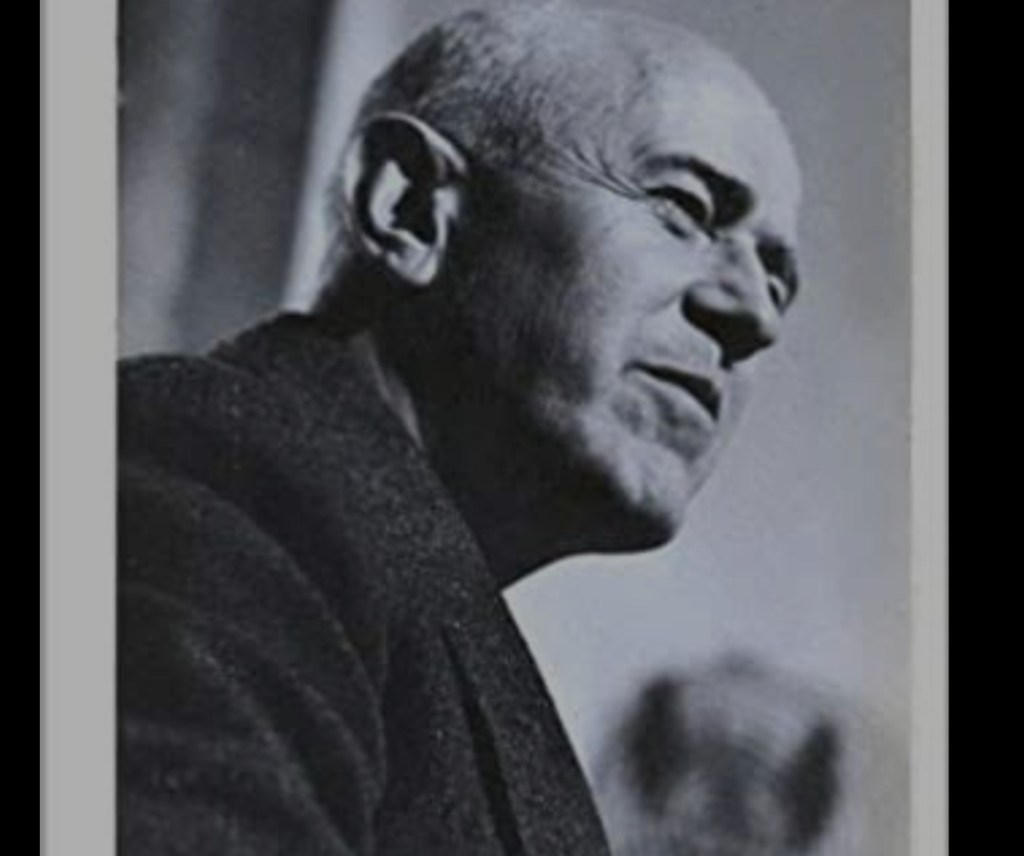
William F. Ogburn ,in his famous book , “Social change ” and his work Respect to Culture and Original Nature in 1922,
has formulated the hypothesis of ‘ cultural lag “.


Ogburn has divided culture into two parts namely :, material and non – material culture , and the difference between material culture and nonmaterial culture is known as cultural lag.
‘ Lag ‘, in its general term, denotes crippled movement .
Here culture means the faltering of one aspect of culture behind another .

In a more precise way , cultural lag occurs whenever there is an unequal rate of change between different parts of culture causing a gap between material and non-material culture.

By material culture Ogburn means civilization which includes tools , utensils , machines , dwelling , science ,means of transport and technology , in brief ,
the whole apparatus of life “

By non – material culture he means just ‘ culture’ in its ordinary sense which includes beliefs , practices , customs , traditions , morals , values and institutions like family , morality , religion , education n,etc.

According to Ogburn , referred cultural Lag as “imbalance in the rate and speed of change between these two parts of culture “

Cultural lag is a theory and explanation that identifies and explains social problems to predict future problems in society that are caused because of the difference between the two cultures during social changes.


According to Ogburn , changes are quick to take place in the material culture . These in turn stimulate changes in the non- material culture which are slower to respond giving rise a gap or a lag between both cultures

Cultural Lag theory resonates with the ideas of Technological Determinism which assumes that technology has independent effects on society at large.
Cultural Lag creates problems for a society in a multitude of ways .

When new technologies are considered,
For example , the development in the field of industry requires a corresponding change in the system of education . The failure of education to cater to the needs of modern industrial development leads to the cultural lag .

Ogburn’s classic example of cultural lag was the period of adaptation when automobiles became faster and more efficient. It took some time for society to start building infrastructure and development of new, more efficient, vehicles. This is because people are not comfortable with change and it takes them a little time to adapt.


According to sociologists William F. Ogburn, cultural lag is a common societal phenomenon due to the tendency of material culture to evolve and change rapidly and while non-material culture tends to resist change and remain fixed for a far longer period of time.


This happens due to the fact that ideals and values are much harder to change than physical things are.
Non-Material culture tends to lag behind material culture due to the fact that it is easier to create a physical object that people will use than it is to create a system of beliefs or ideals that people will use and follow.

Ogburn lists
and discusses six general reasons

1. Scarcity of invention in the adaptive culture.
2. Mechanical obstacles to adaptive changes
3. The heterogeneity of society-The need for change in the adaptive
culture may be felt by only one class, whereas the change must be made
by society as a whole.
4. The closeness of contact with material culture
5. The connection of the adaptive culture with other parts of culture.
6. Group valuations.


Non-material culture tends to be very different because people from different backgrounds and areas in the world were raised on different ideals and beliefs that help shape society and culture .


For example , India opposed technological innovations and refused to accept and use many of the technological products during the early stages of British rule .
On the other hand , America welcomed almost all kinds of technical inventions.

Technology is the creation of man . Men are always moved by ideas , thoughts , values, beliefs , etc. These are elements of culture .
These elements sometimes decide and influence the direction in which technology undergoes change

But due to the opposing nature of non material culture, adaptation of new technology becomes rather difficult.

Cultural Lag is a common societal phenomenon .
If the society is to maintain its equilibrium it has to seek ways and means of bridging this gap .

Hence, Ogburn concluded that , “the problem of adjustment in modern life is chiefly one of enabling the non +material aspects of culture to catch up , as it were ,with material aspects .”

Secrets of Area-51

Area-51 is a highly protected, secured and restricted part of the USA for many years. America didn’t accept that there is a place called Area-51 in their country until 2003. America didn’t reveal what actually happens inside that place. That place is highly protected from outside world. In September 20, 2019, a wierd thing happened in Area-51. People crowded in millions and protested against the government that Aliens should be protected from humans. They planned to get inside the Area-51 and see what was inside it. They said there should be aliens inside and humans were torturing the aliens and the people were going to save the aliens.

First of all, a funny Facebook event called ‘Storm Area-51’ was arranged to get into Area-51 and see what actually happens there. They believed that there were aliens inside Area-51.

What exactly is Area-51?

After World war1, the government of USA panned to test their weapons and bombs in a very big open place. They chose a desert called Nevada in the USA. They divided the desert into 30 areas each of square shape. In each area, they used to test specific weapon that they are preparing to use in World war 2. The advantage for the USA is that this place is located in the middle of a desert so that any nation can’t find that place and also even an American citizen has to travel many kilometres and cross high security to get into that place. So literary it was impossible for anyone to know what happens inside that place.

Even after the World war 2, there prevailed a cold war between the USA and Russia. The USA continued to test their weapons in that place and maintained their secretive nature. Among the areas from Area-1 to Area-30, there was Area-15. Near to Area-15, there was also a big lake initially. After the lake had gone dry, the government decided to build an underground place called Area-51 so that the inside of that area won’t be visible from outside. The interesting thing is, even when seeing from the top nothing will be visible except a flight landing strip. There are no road facility or train facility to go there. The only transport in and out is through flight.

People in the USA were gone mad to know what was inside Area-51. There was a hill called ‘Challenger cliff’ that was few kilometres far from Area-51. People tried to see Area-51 from the top of that hill. But no one knew what’s inside. They could see only the outside of it. Knowing this, the government made that hill as a restricted area. Nearly for a range of 30 kilometres around the Area-51, no one could enter there. The security was that high. Seeing that the government makes fights to go in and out of that area and keeping it that secured, people were curious to know what was inside. This continued for many years. The government keeps quiet about this till now.

We will continue this reading journey check “Secrets of Area-51 – Part2”. That’s our next blog.

E-LEARNING – A SUBSTITUTE FOR CLASSROOM LEARNING ?

Background:-

  • E-learning is essentially the computer and network-enabled transfer of skills and knowledge.
  • E-learning applications and processes include Web-based learning, computer-based learning, virtual classroom opportunities and digital collaboration.

In Favor:-

  • Through E-learning we can study from anywhere at anytime. All we need is just a computer and internet connection.
  • E-learning costs less than classroom learning.
  • Through E-learning we can continue studies while doing full – time job.
  • We can repeat the lesson for many times if we didn’t understand the concepts.
  • We can easily update new information / inventions.
  • We can e-mail the doubts, and can be clarified.
  • Student takes whole responsibility of himself in learning process. So that he becomes more confident.
  • Students will become more flexible with computer, which is much essential in present generation.
  • We can do the course in the university of foreign countries without going to there.
  • Students can become comfortable in face-face to conversations which is very important in career.

In Against:-

  • Through classroom learning, we can clarify our doubts immediately.
  • Through classroom learning, we can increase our presentation skills.
  • Through classroom learning, we can know how to behave with colleagues and superiors.
  • Teachers in classroom can know whether students understand the topic or not, and explains the topic clearly using general examples.
  • Unemployment increases, in result our nation’s GDP decreases.
  • In the classroom, students will not only learn the subject but also interacts with other students and thereby make friends. Classroom influences the overall personality development of students. With e-learning, students will be deprived of this opportunity.
  • As students have to look at screens continuously, it can strain their eyes.
  • With e-learning, teachers may not be able to focus on all the students, which will be possible in the classroom. Teachers may not also understand whether students could grasp the concept or not.
  • The classroom environment is lively in nature, whereas sitting in front of a computer or smartphone to listen to the classes will be boring.
  • Even in this 21st century, some people do not have internet facility. So, e-learning deepens the inequality between rich and poor.
  • E-learning may not create as much seriousness as classroom learning. So, students may not be motivated enough to listen to the class.
  • Not all parents are technologically educated to help their children in case of any issues.
  • If the device has other apps such as youtube, students may become distracted. Several students are already suffering from smartphone addiction. So, parents may not feel safe to leave the children unsupervised.

WORK FROM HOME CULTURE

Theme:

  • Due to COVID-19 pandemic, many companies allowed their employees to work from home (WFH). Some employees are happy with WFH option, but some are not comfortable with it. There are pros & cons with WFH option for both employees and companies.

Advantages for Employees:

  • Travel time to and from the office will be saved.
  • They can spend more time with family. This is beneficial for many especially for parents of young children.
  • Even in modern times, women are expected to take care of home and children. With this responsibility, several women are forced to leave their jobs. The rise in WFH culture is a boon for them. With this more women can join in jobs again.
  • The location will not be a barrier. Employees can get a job, even if the office is located in another city.
  • If they want to get to know their office and colleagues better, they can attend the office at regular intervals like once a week.

Disadvantages for Employees:

  • The line between work and home will be blurred. In general, employees leave work tensions at office and come home to relax. But this opportunity will be lost and it may cause anxiety. If work and personal life are not balanced well, work will extend to longer hours. This can create WFH burnout.
  • Employees have to set up a work environment at home, which will incur extra expense. Even then, some people may not focus on work due to the lack of a professional atmosphere.
  • Some companies are giving so much work just because their employees are working from home.
  • Teamwork is a bit difficult while working from home.
  • Working from home from a long periods of time can hamper social and interpersonal skills.
  • Continuously staying at home may make some people feel isolated.
  • For some people, setting up office space at home may not be an option due to lack of extra space in the home.
  • Some jobs may require employees to be online during work hours and the continuous power supply may not be available to many.
  • It can be difficult to establish connections with new colleagues because the opportunity to meet and talk with them during coffee breaks will be lost.

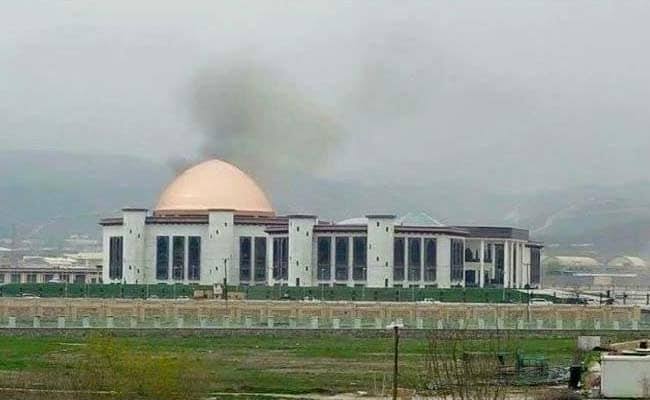
Afghanistan- A war-torn nation

With Al-Qaeda militants carrying out coordinated attacks on American soil,also known as 9/11 Attacks and Taliban government refusing to hand over the main culprit behind these attacks ‘Osama Bin Laden’. A war was declared by US and it’s allies against terrorism and Afghanistan was invaded in 2001.

US tried it’s best to avoid the mistakes done by British & Russia (then USSR),it gained some success by driving out the Taliban government and killing the Terrorists. This whole operation have costed US more than $800 billions and more than 2300 soldiers lives. While on the other side, Afghan civilians had been caught in between this war and have suffered at the hands of both US & Terrorists (Al-Qaeda & Taliban) .

There is a popular saying about Afghanistan – ‘The Graveyard Of Empires’ for those who have tried to conquer it. Afghanistan is tough to rule, not only because of its terrain but also of the hostilities between the different tribes present there.

US Navy seals carried out a mission code-named ‘Operation Neptune Spear’ and killed Laden on 2nd May 2011 in Pakistan. US thought that by killing Laden they had achieved their goal but they were mistaken.

India aided in the overthrow of the Taliban-led government and has been the largest regional provider of humanitarian and reconstruction aid in the country. India have provided over $3 billion in assistance and every year it continues to do so.

Challenges ahead for Afghanistan and it’s neighbours

Taliban is slowly gaining pace and have formed alliance with other terror outfits to overthrow the present government. Civil war is not far, after US withdrawal. Fight is going on between Afghan security forces supported by civilians against the Taliban.

There’s little hope that Taliban will agree on the terms mentioned in peace talks . War-torn Afghanistan is now at the same stage before US invasion and onus now is on China,india,pakistan,Iran to maintain peace and provide stability in the Afghanistan.

BALANCE BETWEEN PROFESSION AND FAMILY

  • Professionalism and family can be described as the two sides of the same coin as both are equally important in one’s life.
  • Profession gives us an individual identity and financial security and family gives us an emotional security.
  • In today’s hitech busy lifestyle it’s becoming difficult to find the time to spend with his/her family. This is causing lack of peace of mind.
  • Without profession there will be no meaning of our life in present generation. Profession is not just to earn money but for our identity and self satisfaction.
  • With the constant increase in the cost of living, job is a necessity for many.
  • Career is important but not as much as relationships.
  • Professionalism is not all about being a workaholic. It is all about knowing your priorities and acting professionally both at the workplace and at home.
  • Being too much workaholic causes frustration and other psychological problems.
  • Some people are not spending with their family even in holidays, to earn more money. They should remember that money is just a tool for happiness. Money can’t give loved ones.
  • If we concentrate only on career, we may get fame and money but we loose many sweetest moments in our life.
  • some people are settling in abroad leaving the old parents here.
  • Some people are not concentrating on their children because they are giving much more priority to their job. So children may feel insecure and it may lead them in a wrong way.
  • To achieve goals, sometimes we have to stay away from family. For example our soldiers are staying away from their families to protect our country. 
  • If both parents are working it’s better to stay in joint family. So that children will be taken care by their grand parents or relatives.
  • Plan the weekends with family by keeping the office matters aside.
  • Avoid procrastination. Prioritize the things and plan effectively. This can give us free time.
  • If we spend some time with family, obviously there will be no need to go to the psychiatrist for stress relief.
  • The ultimate goal of everyone is being happy. So, We must make ourselves and our family happy.
  • Make a habit of saying ‘no’ to the unimportant matters and spend that time with family.
  • Inner peace plays a big role in balancing professionalism and family.
  • If we learn to balance between career and family, our children will learn from us.

Conclusion:-

        The important thing to balance profession and family is saying no to unimportant events. By planning everything before, anyone can balance both. Only one of these can’t fulfill a person. We should remember the fact that the ultimate goal of anyone is happiness and peace.

PRIVATE TRAINS IN INDIA – BENEFITS AND CHALLENGES

Theme:

  • In July 2020, Indian Railways has invited private companies to run 151 passenger trains on 109 train routes. Government of India is expecting Rs.30,000 crores private investment with this move. It was announced that the private trains will start from April 2023.
  • India’s first private train is Lucknow – New Delhi Tejas Express, which was inaugurated in October 2019.

Benefits:

  • In general, with limited investment, developing countries give priority to the welfare of the citizens over providing world-class facilities for them. So, it’s better to transfer that responsibility to private players to create a win-win situation for all.
  • Passengers will get access to world-class trains with better facilities, less transit time and more safety. It was announced that these private are going to use modern technologies and require low maintenance. This is a win-win situation for both the companies and passengers.
  • At present, the demand for tickets is more than supply. Many times, people are forced to be in the waiting list to travel in trains, without the certainty of the confirmation of seat. With private trains, supply can meet the demand.
  • Government of India said that these trains will be manufactured in India under the ‘Make in India‘ program. If that really happens, it will create many jobs and will uplift the economy, which is desperately needed in the present time because of job losses due to pandemic.
  • This can end the monopoly of Indian Railways. Private players can instill a competitive spirit and can bring more facilities at affordable rates.

Challenges:

  • This step can deepen the already existing inequality between rich and poor. Indian Railways clarified that the fares in the upcoming private trains will be in the range of flight tickets. So the poor and middle class may feel excluded.
  • With the use of modern technologies, many jobs can become redundant. So, private trains may not provide employment opportunities as many as the government trains provide.
  • If they are not manufactured in India as promised, coaches and other equipment will be imported. In that case, it will be a loss to India as it can lead to neo-colonization.
  • Even though the announced private trains constitute only 5% for now, there is no guarantee that it won’t be increased. If it is increased in the coming years, Indian Railways can suffer like BSNL & Air India, which were pushed to near bankruptcy due to the competition from private players.

Conclusion:

Private investment will help in modernising railways. It will give us access to better facilities, less transit time and more safety in trains. And it’s the government’s responsibility to regulate the prices and make the journey in them affordable. It’s also important to upgrade the remaining trains too, so that common man will not feel neglected and discriminated.

STORY- Thinking Out of Box

Once upon a time, a merchant named Sohan owed a huge sum of money to Rohan, a money lender. The time came when the merchant ran out of the last chance given to him to give the money back.

Sohan had a beautiful daughter. Rohan asked the merchant to give all the money back failing which he will marry his beautiful daughter.

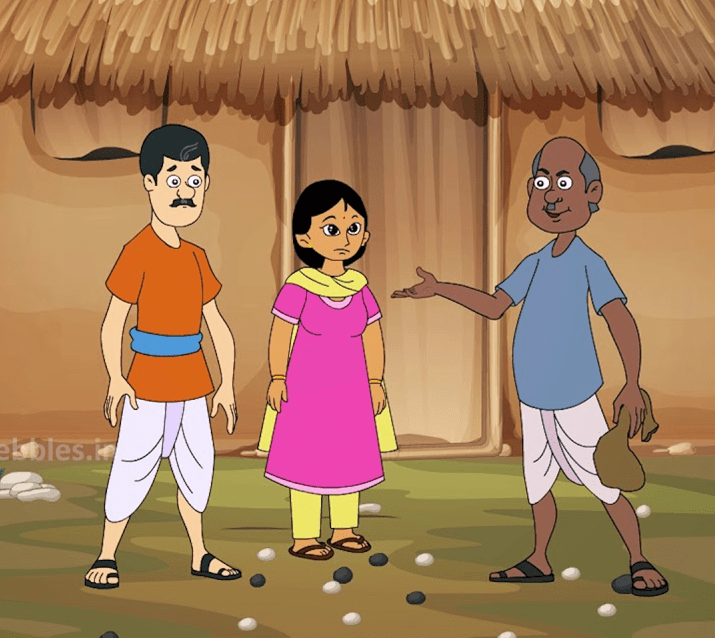
Rohan was not at all good looking and was ill minded, so the merchant was in dilemma. Rohan proposed a new condition. There was a mix of black and white pebbles on the ground where they were standing. He will take two pebbles on both the hands, one will be white and the other will be black.

If the daughter correctly chooses the white pebble, then Rohan will write off all the debt and leave the marriage proposal too. But if she chooses the black pebble, he will write off the debt but will marry the daughter.

Rohan bent down to pick the pebbles from the ground and the daughter noticed that he took black pebbles on both hands.

The girl had three choices- to notify the same to her father which may provoke Rohan, take the black pebble and sacrifice her life or simply refuse to take the pebble which might land her father into trouble. But what she did totally surprise Rohan.

She took the pebble from his hand and ‘accidentally’ the pebble fell off from her hand to ground. She then asked Rohan to see which color pebble was left in his hand to identify the color she picked. Rohan had no other choice but to show the black color pebble in his hand and set them both free.

Moral

Sometimes, life offers a person a situations which not only demands hard work and perseverance but some creative thinking and presence of mind which saves the situation.

IMPACT OF COVID-19 ON ENVIRONMENT

Theme:

  • In December 2019, the first coronavirus case was detected in Hubai province of China. From then, it has spread to the entire world and has affected everyone’s lives and also the environment.

Impact of COVID-19 on the environment:

Positive impact:

  • Due to lockdown, vehicular pollution dropped and most of the industries are forced to halt work for a few months. So, as a result, pollution reduced drastically. Fewer carbon emissions improved air quality. People could see clear skies in many areas, which were hitherto couldn’t see it. This made us think about the alternatives to the things that we are doing to our earth in the name of development.
  • It is expected that global carbon emissions from the fossil fuel industry could fall by 2.5bn tonnes this year, that means a reduction of 5%.
  • People are forced to stay in their homes and animals & birds are roaming freely as if they are reclaiming their space in the earth. And damaged rivers are recovering since industries are halted and hence no industrial waste and also people couldn’t get out to throw waste into the rivers. Even though all this phenomenon is temporary, this is making us ponder over the effect of people on the biodiversity in the world.
  • Due to COVID-19, many people are working from home, which is impacting the environment positively.
  • Consumer demand for non-essential items has reduced temporarily. So, the production of luxury goods was affected negatively. This is a plus for the environment because materialism is one of the biggest reasons for the pollution.

Negative impact:

  • COVID-19 made people wear masks and gloves. Medical professionals are wearing Personal protective equipment (PPE) to protect themselves. Single-use masks, gloves & PPE are contributing to plastic waste. And the increasing number of COVID-19 patients is resulting in tons of medical waste. In most cases, this waste is not being discarded in a proper manner and is becoming a health hazard.
  • Due to declining revenues in the oil & gas industry, some companies are not prioritising to fix gas leaks and hence methane emissions are increasing.
  • Countries may put climate talks aside to uplift economy at a faster pace. Leaders may ignore deadlines of lowering carbon emissions, and may not concentrate on switching to green energy, because restoring the economies is the number priority for many countries right now.

Conclusion:

Even though the environment became better during our fight against COVID-19, this change is not a happy one. It is caused by millions of job losses. But this phase made us realize that nature can bounce back if we are willing to take steps. We need to put more focus on sustainable development.

DOES NEPOTISM EXIST IN BOLLYWOOD?

Background :-

  • Bollywood or the Indian film industry based in Mumbai, Maharashtra is the huge entertainment industry with over millions of viewers. A lot of fandom comes along with such a massive count of viewers. Along with fandom, controversies among actors are always the hot topics for media and the viewers as well. The recent dispute about nepotism or favoritism has set in like wildfire into bollywood recently.

Yes:-

  • Movie stars of Bollywood often launch their children with much ease in the industry. Such acts serve as the roots of the debate for nepotism. This kind of act has been going on since ages. Hence, nepotism evidently exists in Bollywood.
  • A heated up conversation had taken place on a talk show few months back. Celebrities like Karan Johar and Kangana Ranaut had participated in the discussion. Being a successful actress herself with films in her pockets, she openly addressed the issue of favoritism going on. She had declared Karan Johar, the producer as ‘the flag-bearer of nepotism’ on his own talk show. This incident sparked up the fact which persisted for so many long years.
  • The standards of Indian cinemas fall at times because of nepotism. Producers and directors are pushing star kids to launch in their movies, failing to judge their acting skills and screen presence. This leads to flop movies and a loss of quality and standards of the Indian cinemas.
  • Some talented, non biased outsiders like Ayushmann Khurrana, Priyanka Chopra, Randeep Hooda, Richa Chadda and many more had years of continuous struggle. They had spent many years for recognition of their work, critics and opportunities. This is where nepotism becomes prominent. Star kids on the other hand, have it all ready for them.
  • The reason why a number of stars do not get leveled up after they start acquiring recognition is favoritism. There are a very few Bollywood stars with international recognition. Bollywood is more interested in profits and box office hits that comes in with famous faces rather than brushing raw talents.

No:-

  • Nepotism among the stars can give them their first films. The rest of their carrier lies in their talent and hard work. So we cannot blame nepotism for their fandom completely.
  • Actors like Alia Bhatt, Ranbir Kapoor, Kareena Kapoor Khan and a few more has never failed to entertain their viewers and win their hearts in movies. They proved that nepotism cannot bring success and awards. Hard work, dedication and talent is equally important.
  • As kids of actors, directors and producers grew up watching their parents’ work. They tend to be naturally inclined to the same work. Hence, we cannot blame it as nepotism when they want enter into the bollywood industry.
  • Star kids also have an upbringing which is surrounded by the Bollywood industry. This gives them an advantage of getting adjusted and having a clearer overview of the industry. This might help them learn faster and do better which an outsider might not be able to.

Conclusion:-

  • Implementation of an effective, unbiased and transparent system of selecting talents can avoid nepotism.
  • Nepotism on the counterpart does not always help an actor to acquire fame. Being a star kid brings in a lot of judgmental eyes and controversial effect on the actor. This might be an additional burden for her/him at times.
  • Sometimes nepotism goes unnoticed. Fame comes only when the actor has some real talent up their sleeves and had put in loads of hard work.

SHOULD MOTHER TONGUE BE MEDIUM OF INSTRUCTIONS IN SCHOOL ?

Theme:

  • According to the ‘National Education Policy’ 2020, which was launched in July 2020, the mother tongue or local/regional is to be the medium of instruction for students till class 5. Compulsory education in mother tongue sparked debates throughout the country.

In Favor:

  • Language represents the culture and lifestyle of society. Education is to prepare for life in society. Learning about our culture and other subjects in a foreign language can lead to confusion and lack of clarity.
  • The biggest loophole in our education system the rote learning,  i.e. byhearting the subjects. Having English as the medium of instruction will worsen the situation.
  • There are many English medium schools in India. But most of their teachers have no skills to teach in English, risking the children’s studies.
  • A survey by Oxford University revealed that children, who have their mother tongue as medium of instruction outperform the children, who have a foreign language as the medium of instruction.
  • Having good command over one language helps a lot in learning other languages. But the children that are having another language as the medium of instruction aren’t getting command either on their mother tongue or on their medium of instruction.

Against:

  • Switching the medium of instruction in the middle of the school or later may put stress on students.
  • As the world is increasingly globalized, children should be taught in the international language, i.e. English. So that they can grab more opportunities.
  • English is an official language of India. And most Indians can speak English. So, it’s not a totally new language to us.

Facts:

  • The trend of English medium as the medium of instruction is increasing continuously not just in India but in many other countries.
  • This phenomenon is mostly in private schools than in public schools.
  • In India, parents are enrolling their children in English medium schools to provide them with a better future and also because of the prestige associated with English.

The situation in other countries:

  • China, Japan, Germany and many other countries are doing very well without English education.
  • ‘Philippines’ revised its education system and started to implement the mother tongue as the medium of instruction. And the result is the drastic increase in enrollments in rural areas.
  • ‘Guatemala’ witnessed decreased dropouts and increased literacy rates, when it implemented the mother tongue as the medium of instruction. This step reduced their education expenditure.
  • ‘Mali’ did the same and witnessed increased creativity and innovative skills in children.

Conclusion:

To learn English, it’s not required to learn all the subjects through English. To get a good grip on the subjects and their mother tongue, children should be taught in their mother tongue at least in the primary school level. But the option should be voluntary.