

https://drive.google.com/file/d/1HbymUGtQMkEwtObzh6IMIvtINGiF6maK/view?usp=drivesdk
Month: July 2021
Korean beauty routine
When you think about home remedies, you’re definitely thinking about turmeric, coconut oil. But today I’ve got something different for you which is rice water. In Korean culture, rice water has been used through generation for skin and hair. Rice is one of the most popular beauty ingredients used by them. The Japanese and Korean women are known for their flawless, glowing skin. Fortunately you don’t have to make a trip to Korea to learn this best-kept beauty secret.
How to make a rice water? The type of rice which you use doesn’t matter. There are couple of methods to make rice water at home but this is the easiest one. You’ll need a half cup of uncooked rice after rinsing it atleast 3-4 times, one cup water and an air tight container. Then, place the rice into a glass bowl filled with water and soak for 30 minutes. Once the water become milky, store the water in an air tight container and it is ready to use. The reason rice water is so good for your skin is that it is rich in a lot of nutrients. Today rice water is gaining popularity for skin and hair care because of its large benefits.

Rice water is rich in antioxidants that keeps the skin. So if you’re looking to start an anti aging skincare journey. This will do wonders to your skin. There is limited evidence that rice water may reduce or slow skin aging but this will definitely help.Rice water helps in tightening the appearance of large pores and helps in reducing oilness and pimples. Soak a cotton pad in rice water and apply it over your face twice a day for it to work. Starch in rice water is beneficial in maintaining the natural barrier for the skin. Rice water have a cooling effect on mild sun damage. It lighten the skin or reduces dark patches and makes your skin glowing. You can also add rice water to your bath.
Rice water is comparatively safer to use than other kitchen DIY. There is no evidence that fresh rice water is harmful to the skin. Store the rice water in a spray bottle and you can directly use it on your skin. It can be used daily, has zero side-effects. Just make sure that it doesn’t smell sour.

Applying it to your skin and hair may bring positive benefits.
The Adivasis of India

India is a largely populated country with many different kinds of people. There are variations in culture, traditions, language, food, etc. But more importantly, there are people with different origins and roots. Some such people are the ‘Adivasis’ who we more commonly refer to as the ‘Tribes’ or ‘Tribal People’ of India. The word Adivasi comes from the Sanskrit term meaning ‘original inhabitants’ (Adi= original/from the beginning, Vasi= inhabitant/resident). Therefore, when we use the term Adivasi or categorize a group as Adivasis, it is generally understood to mean that they are the inhabitants of that area from the very beginning. It is a blanket term used to refer to the indigenous people and groups of India, and helps forge a sense of identity for them. Sometimes you may hear the term ‘Scheduled Tribes’ being used in a legal or constitutional sense, but this differs from State to State and may exclude some groups which may be considered indigenous.
Background
Adivasis make up a substantial minority of the Indian population, comprising about 8% of the total population. They are of great numbers especially in the states like Maharashtra, Madhya Pradesh, Jharkhand, Odisha and Andhra Pradesh. They are said to have arrived in India during the great human migration from Africa, and are believed to have been living in India from as early as 2000 BCE. As the name suggest, their presence pre-dates even the Dravidians and Aryans in our country, and they were the original hunter-gatherer, foragers and agriculturists of these lands. But today, they hold little to no political power and most of them are below the poverty line. They have seen a relegation of their status in the country, with a loss of land, wealth and political presence and representation. The Adivasis have been conferred a classification of tribes or tribal communities under Article 366 (25) of the Indian constitution, the criteria for this being ‘geographical isolation, backwardness, and having a distinct culture, religion and ‘shyness of contact’.
Examples of Adivasis or tribes in India are communities like the Bhil, Chenchu, Korwa, Lodha, and Bonda. Perhaps the most well-known tribes are those of the Andaman and Nicobar Islands, like the Jarawa, Onge and Sentinels, who have remained mostly untouched by modern civilization and continue to live like primitive tribes.
Modern Day Situation
Most of us today when we hear the word ‘Adivasi’ do not think of the people who first populated Indian territories and who possess ancient cultures and traditions tied to these lands. Instead, we think of those people living in rural and underdeveloped areas, living in poverty and struggling to make ends meet. While larger and more prominent tribal groups may survive as result of numbers, the destruction of their environmental and economic base will not allow them to continue their traditional way of life and may result in their cultural extinction. The primary reason for the Adivasis socioeconomic problems is that they have gradually been displaced from all their land and are constantly being denied land ownership. Today they are in a constant battle just to retain their economic and social identity. Today’s India is all about modernization and progress, and even government schemes only aim at integrating these tribes into normal society rather than allowing them to continue living by their distinctive way of life. Attempt are constantly being made to bring these tribes into mainstream Indian culture and integrate them into the national identity, disregarding their own unique and age-old cultures. Although they have been given schemes for reservation, the impact of the quota system upon Adivasis has remained negligible up until now. Also, many smaller tribal groups are quite sensitive to ecological degradation caused by modernization, and so government policies on forest reservation have also affected Adivasis profoundly. The 2006 Forest Rights Act (FRA) was enacted to secure the rights of Adivasis to their customary lands and forests, but they are still subject to encroachments on forest area.
Conclusion
It can be concluded that the Adivasis or tribal people of India represent an important cultural group of our country, but their modern-day situation is not good and not respected. The tribes in India are now under the impact of ‘mobility and change’. They have been subject to things like the caste system, and religions like Christianity and Hinduism which have transformed them completely. They have basically joined the ranks of peasantry in modern times, and have become wage-laborer’s in industries, plantations and mining. Hence, they are at the lowest point of the socioeconomic indicator, and are also subject to prejudice and oppression in mainstream Indian society. Furthermore, their issues are generally under reported, neglected or trivialized. We must try to change this situation for their betterment, and we as citizens must educate ourselves on who these people are and what they represent.
Gully Boy- A Movie that amplifies the voices of the streets
Zoya Akhtar’s film is a story about a guy who rises from the slums of Dharavi, Mumbai to become one of India’s best Rappers. It is loosely based on the underground street rappers Divine and Naezy. This movie is a delight to watch if you are a music lover or someone who is passionate about unconventional career paths, this will definitely move you and push you forward to make your dreams come true. The story revolves around a guy named Murad which is played by Ranveer Singh, whose dreams are bigger than his realities and someone who does not believe in Slumdog Millionaires. He believes in telling his story through his music, his rap. There are many layers to the film: its about Murad’s coming of age discovery of what he is and what he truly stands for. It’s about finding something that makes you alive, its about finding one’s expression, in this case which is poetry and rap. It also has a beautiful love story and in some ways a letter to the city of dreams – Mumbai, where skyscrapers overlook the slums of the city and everyone is rewarded in some way or the other.
Murad is a “slum-dog”. He is caught in a cycle of poverty. His rap defines his circumstances and his home as a hellhole. His snappish father (played by Vijay Razz) has brought home his second wife without considering his family’s feelings. He is a chauffeur who is in hope that education is the only medium which will set his son free, His principle conflict is his son’s “khwaab” – dream and his “ aaju baaju ki asliyat” the reality around him is something that he never stops reminding him, but his son has other ideas and aspirations which he wants to fulfill. He measures his life by waiting for his childhood friend and lover Safina (which is played by Alia Bhatt ) is a feisty yet ambitious girl who wants to break the barriers of the society and live on her own terms. While waiting for her to come he starts humming to himself “ Apna Time Aayega” . Away from his classes in college and responsibilities that his family has put on him, he pours his heart on sheets of papers, his escape from his reality and a doorway to his dreams. His rap is about his abusive father, his mother’s plight, seeking freedom, finding himself, rising from any circumstance, his dreams and his realities. The words are his. But the beat is missing.
Then enters MC Sher (which is played by Siddhant Chaturvedi). Murad falls head over heels in love with this rapper when he comes to his college. He starts to follow every moment of his on Facebook and goes underground. This is a place where rap battles take place in this world of fight club the only weapon is rap. Murad blends in this scene seamlessly and he knows his future is about to change. He knew this was his calling. He is also supported by Sky (played by Kalki Koechlin) who is a student in Berklee School of Music. She is the one who helps Murad and MC Sher to record their First Music Video.
Despite being overlong, this film is undeniably entertaining and is a portrait of a robust life forged by adversity, tenacity and the courage to dream. The dialogues, the lingo, punchlines, they’re real. The lyrics, the beats, all scream for revolution. Azadi. The makers of the film have done a great job at creating an immersive cinematic experience. Undoubtedly, the main star of the movie is its music. Many rappers and artists came together in this film to give the best soundtrack possible to showcase the lives of struggling rappers. If Ranveer Singh is life of the movie, then the Music is the soul of Gully Boy. Some sharp observations about the society and the minorities, the world we live in and the place that it is becoming for the people with lesser means, talks about beauty standards, dreams and feminism – This movie has a lot to offer and a Must Watch for people who think that their circumstances cannot limit their spheres of dreams!
UNION BUDGET
The union budget of india also referred to as the annual financial statement in article 112 of the constitution of india. is the annual budget of the republic of india. the government presents it on the first day of february so that it could be materialised before the beginning of new financial year in april. until 2016 it was presented on the last working day of the febraury by the finance minister in parliament. the budget which is presented by means of the finance bill and the appropriation bill has to be passed by loksabha before it can come into effect on 1 st april. union budget keeps the account of the government’s finances for the fiscal year that runs from 1st april to 31st march. union budget is classified into revenue budget and capital budget. revenue budget includes the governament’s revenue receipts and expenditure. there are two kinds of revenue receipts tax and non tax revenue. revenue expenditure incurred on day to day functioning of the government and on various services offered to citizens. if revenue expenditure exceeds revenue receipts, the government incures a revenue deficit.

TYPES OF UNION BUDGETS
The union budget is classified into 2 parts. revenue budget and capital budget. here is a look of those 2 budgets.
REVENUE BUDGET: Revenue budget comprises of the government’s revenue receipts and revenue expenditure. revenue receipts can be further classified into tax revenue and non tax revenue. revenue expenditure refers to the regular expenses incurred from the daily functioning of the government as well as for the range of services offered to public. in the event that the revenue expenditure is greater than the revenue receipts the government is said to incur a revenue deficit.
CAPITAL BUDGET: Capital budget whose components are of a long term nature consists of capital expenditure and capital receipts. some of the primary sources of government receipts include loans from citizens, reserve bank of india loans from citizens, and the foreign governments. capital expenditure, on the other hand, comprises of costs incurred on development and maintenance of equipment, machinery, health facilities, building, education, e.t.c. when the government’s expenditure is greater than the total revenue collected, a state of fiscal deficit occurs.
IMPORTANCE OF UNION BUDGET
The general objective of the union budget is to bring about a rapid and balanced economic growth of our country coupled with social justice and equality.
CHANGE TAX STRUCTURE: The union budget also dictates the possible changes in the direct and indirect taxes of the country. it brings about changes to income tax rates and tax brackets.
REDUCE WEALTH AND INCOME DISPARTIES: The budget Aids in influencing the distribution of income through subsidies and taxes. it helps to ensure that a high rate of tax is levied on the rich class, thereby reducing their disposable income. on the other hand a lower rate of tax is charged on the lower income group to ensure they have sufficient income in hand.
KEEP A CHECK ON PRICES: The union budget aids in controlling the economic fluctuations as well. it ensures proper handling of inflation and deflation, thus bringing about economic stability. during inflation, surplus budget policies are implemented which deficit budget policies are devised during deflation. this aids in maintaining a price stability in the economy.
Medieval English literature
Medieval literature is a broad subject, encompassing essentially all written works available in Europe and beyond during the Middle Ages (1000 years from the fall of the Western Roman Empire, Ad 500 to the beginning of the Renaissance in the 14th 15th Boss 16th century.)
English in the middle age
Concerns the history of England during the medieval period, from the end of the 5th century through to the start of the early modern period in 1485. A rich and artistic culture flourished under Anglo-Saxons producing Epic poems such as Beowulf. The Anglo-Saxons converted to Christianity in the 7th century and a network of monasteries and convents was built across England. In the 8th and 9th century England faced fierce Viking attacks, and the fight lasted for many decades, eventually established Wessex as the most powerful Kingdom and promoting the growth of an English identity. Despite the repeated crisis of succession and a Danish seizure of power at the start of the 11th century, it can also be argued that by the 1060s England was a powerful centralized state with a strong military and successful economy.
Invasion of England
The Norman invasion of England in 1066 led to the defeat and replacement of the Anglo-Saxon elite with Norman and French nobles and their supporters. The ruler introduced a feudal approach to governing England, eradicating the practice of slavery, but creating a much wider body to earn free laborers called serfs. The position of women in society changed as laws regarding land and lordship sifted. England’s population more than doubled during the 12th and 13th century fuelling an expansion of the town, cities, and trade. In the 14th century in England a great famine and the Black Death catastrophic events killed around half of England’s population throwing the economy into chaos and undermining the old political orders. Social unrest followed, resulting in the peasants’ revolt of 1381, while the changes in the economy resulted in the emergence of a new class of gentry and nobility who began to exercise power through the system term bastard feudalism. Nearly 1500 villages were deserted by their inhabitants and many men and women sought new opportunities in the town and cities.
End of Middle Age English
English king, in the 14th and 15th centuries, laid claim to the French throne resulting in a hundred-year war. At times England enjoyed its military success, with the economy beyond by profit from the international wool cloth trade, but by 1450 the country was in crisis, facing military failure in France and an ongoing recession. Social unrest broke out followed by the war of the Roses and fought between rival factions of the English nobility. Henry VII’s victory in 1485 conventionally marks the end of the Middle Age in England and the start of the early modern period
Delete Useless Emails, Save Environment
In our email id there are such emails which we’ve never opened. We know that these emails are not important to us so we ignored them. In fact every email is polluting our environment.
Emails are saved on servers and to run these servers huge amount of electricity is needed. Even now electricity is generated through fossil fuels. This shows that email generate carbon dioxide which is harmful for environment.

According to research, one spam email give rise to 0.3 grams of carbon dioxide, normal email 4 grams and attachment email can generate around 50 grams of carbon dioxide.
According to report around 60 billion spam emails are sent in a single day which produces 80,00,000 kilograms of carbon dioxide.
There are some simple steps which we can follow to save environment.
- Delete useless/unwanted emails so that the data will be deleted from from servers.
- Delete spams consistently.
- Unsubscribe unwanted emails.
- Turn off social media notifications.
- Clean your trash bin.
Lets take some simple steps towards cleaning environment by deleting useless emails.
DARWINISM AND THE THEORY OF ORGANIC EVOLUTION

WHO WAS DARWIN?
Charles Robert Darwin was an English Naturalist, born on February 12,1809 in Shrewsbury, England whose Scientific theory of evolution by natural selection became the foundation of modern evolutionary studies. An affable Country gentleman, Darwin at first shocked religious Victorian Society by suggesting that animals and humans shared a common ancestry. However, his non-religious biology appealed to the rising class of professional scientists, and by the time of his death evolutionary imagery had spread through all of science, literature and politics.

DARWIN’S JOURNEY THROUGH EVOLUTIONARY THEORIES:-
The belief that God had created mankind in his own image and likeness were shed by most western scientists until the middle of the 19th century when they thought that all the creatures of the planet had been conceived by a divine force that is until Charles Darwin arrived. Some researchers were already talking about an evolution of the species but the British Naturalist was the first to explain with evidence how evolution might occur by natural selection.
Darwin’s theory radically changed biology offering a new explanation of the origin of Human Beings. It also made him one of the most influential scientists and intellectuals in history but to get there he had to make an extraordinary journey, fighting all the odds before hundreds of experiments and spend 20 years of his life refining all his ideas. In 1831, when Darwin was 22 years old and studying at the University of Cambridge was invited as a Naturalist to a great expedition. He boarded the HMS BEAGLE and spent almost five years travelling several continents starting in South America from which he brought back dozens of life specimens illustrations and fossils. These fossils gave him one of the first clues about evolution, for example observing the remains of a Milodon– a giant animal similar to the sloth. He thought that those similarities were probably not a coincidence, there had to be some kind of link.

When he stopped at the Galapagos Island, Darwin also observed some giant tortoises which lived in nearby islands but showed unique physical characteristics in each island. In the humid areas where vegetation was abundant the turtles had a short neck and a dome-shaped shell whereas in the islands with a drier environment they had a saddle like shell along neck but he couldn’t explain that difference. Upon his return Darwin spent time observing how animal breeders and guards crossbred animals of species to create new varieties. For that creation to be successful the artificial selection made by man was key. Darwin realized that the natural world probably made the same kind of selection but he couldn’t explain how it happened until he read the work of Thomas Robert Malthus, a British intellectual from the 18th century. In an essay on demography, Malthus said that as the population in Europe was growing at one point it would increase much more than the food supplies available and that would cause a fight for survival. This idea helped Darwin explain how evolution works in nature. There is a struggle for survival in which the strongest individual is not necessarily the survivor instead it’s the one which best adapts to the environment where it lives. If a living being has any trait that helps them to survive it will be more successful at the reproduction. Those which don’t adapt will die without descendants. The creatures with the most success in reproducing, past their traits- their lineage and so on until these variations end up becoming a new species. That’s why the differences between the Galapagos Tortoises were a product of evolution.
Italy stuns Belgium
Italy progress to the semi-finals of Euro 2020 with an excellent 2-1 victory over Belgium, in a game full of chances. Barella and Insigne got the scoresheet for Italy, both producing superb finishes to fire Italy 2-0 ahead, but Lukaku pulled one back just before the break from penalty spot.
Belgium then pushed forward in search of goals in second half, with Lukaku going closest, but his effort was brilliantly blocked on the line by Spinazzola. The Italian defence then used all of their experience to stand firm and hold the win.

In the pic (Leonardo Bonucci and Giorgio Chiellini of Italy celebrate after defeating Belgium 2-1 in the quarters to set up a semi-final clash against Spain)
Visit the link below and have a look at the highlights of the match:
Culture and history


Culture and history is the main building block of our lifes
The Culture is the characteristics and knowledge of a particular group of people, encompassing language, religion, cuisine, social habits, music and arts.
The word “culture” derives from a French term, which in turn derives from the Latin “colere,” which means to tend to the earth and grow, or cultivation and nurture
History is the study of life in society in the past, in all its aspect, in relation to present developments and future hopes. It is the story of man in time, an inquiry into the past based on evidence.
As with any scholarly approach that boasts of being “new” when it bursts onto the scene, new cultural history was fairly well established as one among many ways of thinking about history by the twenty-first century. This is not to say that new cultural historians enjoyed the unanimous esteem of their more traditional colleagues, for the field still managed to draw the fire of critics from the left and the right who believed that after twenty years this approach still represented a mere “trend.” One could agree with Peter Novick that this attests to the fragmentation of the historical profession into a plethora of specializations that no longer cohered around shared principles and whose denizens had little common ground for discussion. Yet much has changed in cultural history since its heyday in the 1980s.
When new cultural history was actually “new” it provided innovations both in terms of the topics considered worthy of historical attention and in terms of the ways of theorizing such topics within their respective contexts. It is nevertheless apparent that a good portion of what was marketed in 2000 as “cultural history” reflected more of the topical rather than theoretical innovations entailed by this approach. In fact, some of these works even read more like conventional social histories with a few obligatory nods to one of many privileged theorists.
To some extent this state of affairs reflects the success of this approach in the academy and the willingness of historians to combine methodologies in a creative and eclectic manner. On the other hand, though, one might argue that cultural history lost much of its edge by becoming subsumed into a more or less nonreflective historical establishment. Some historians see less fragmentation than the cooptation of erstwhile radical approaches back into a surprisingly resilient mainstream.
“Whatever possibilities become evident,” notes Patrick Joyce, “something is needed to shake the hold of a history which continually reproduces itself, in the process sucking the erstwhile heterodox into its consensus, in much the way that ‘cultural history’ is slowly but surely becoming routinized as more methodology, yet one more subdiscipline in the house of history.” Joyce’s observation is astute, yet one wonders whether a historical approach that could successfully resist such cooptation is possible and, even if it were, whether it would still merit the name “history.” It seems evident that what makes history “history” has little to do with methodologies and innovations that are unique to it, and perhaps a more thoroughgoing interdisciplinarity would discourage the domestication of future innovations into mere additions to the mansion of conventional history.
CLASSIFICATION OF MARKETS
MARKET
A set up where two or more parties engaged in exchange of goods, services and information is called a market.
In economics, the term market refers to the shops for one commodity or a set of commodities. For example a market for rice, a market for cloth, a market for electronics goods, etc.,

Two classification of Markets. They are
✓The product market
✓The factor market
Other classification of Markets
✓On the Basis of Geographic Location
✓On the Basis of Time
✓On the Basis of Nature of Transaction
✓On the Basis of Regulation
✓On the Basis of Nature of Competition
On the Basis of Geographic Location
Local Markets
In such a market the buyers and sellers are limited to the local region or area. They usually sell perishable goods of daily use since the transportation of such goods can be expensive.

Regional Markets
These markets cover a wider are than local markets like a district, or a cluster of few smaller states.

National Market
This is when the demand for the good is limited to one specific country. Or the government may not allow the trade of such goods outside national boundaries.

International Market
When the demand for the product is international and the goods are also traded internationally in bulk quantities, we call it as an international market.

On the Basis of Time
Very Short Period Market
This is when the supply of the goods is fixed, and so it cannot be changed instantaneously. Say for example the market for flowers, vegetables, fruits etc. The price of goods will depend on demand.

Short Period Market
The market is slightly longer than the previous one. Here the supply can be slightly adjusted.
Long Period Market
Here the supply can be changed easily by scaling production. So it can change according to the demand of the market. So the market will determine its equilibrium price in time.

On the Basis of Nature of Transaction
Spot Market
This is where spot transactions occur, that is the money is paid immediately. There is no system of credit.

Future Market
This is where the transactions are credit transactions. There is a promise to pay the consideration sometime in the future.

On the Basis of Regulation
Regulated Market
In such a market there is some oversight by appropriate government authorities. This is to ensure there are no unfair trade practices in the market. Such markets may refer to a product or even a group of products. For example, the stock market is a highly regulated market.

Unregulated Market
This is an absolutely free market. There is no oversight or regulation, the market forces decide everything.

On the Basis of Nature of Competition
Monopoly
Monopoly refers to a market structure in which there is a single producer or seller that has a control on the entire market. This single seller deals in the products that have no close substitutes.

Monopolistic Competition
The term monopolistic competition was given by Prof Edward H. Chamberlin of Harvard University in 1933 in his book Theory of Monopolistic competition.
The term monopolistic competition represents the combination of monopoly and perfect competition. Monopolistic competition refers to a market situation in which there are a large number of buyers and sellers of products. However, the product of each seller is different in one aspect or the other.

Oligopoly
The term oligopoly has been derived from two Greek words, Oligoi means few and poly means control. Therefore, oligopoly refers to a market form in which there are few sellers dealing either in homogeneous or differentiated products.

Pardoning Power of President
Pardon
A pardon is a decision by the government or the executive branch to relieve a person of culpability for an alleged crime or other legal offence as though the act never happened.
Why do you need a pardon?
Individuals may be awarded pardons if they have proved that they have “paid their debt to society” or are otherwise deemed deserving.
Pardons are occasionally granted to people who were unfairly convicted or allege to have been wrongfully convicted.
Pardons are sometimes viewed as a means of combatting corruption, allowing a specific authority to bypass a broken legal procedure in order to release someone who has been wrongfully condemned.
The President of India has the right to give pardons, reprieves, respites, or remissions of punishment, as well as to suspend, remit, or commute the sentence of any person convicted of any offence if the sentence is a death sentence, according to Article 72 of the Constitution.
There are five main types of pardons that are legally required.
1. Pardoning someone means entirely absolving them of their wrongdoing and allowing them to go free. The pardoned felon will be treated as if he or she were a regular citizen.
2. Commutation refers to the process of changing the sort of punishment meted out to the guilty into a less severe one, such as a death sentence being commuted to a life term.
3. A guilty person is granted a reprieve from the execution of a punishment, usually a death sentence, to allow him time to ask for a Presidential Pardon or other legal remedy to show his innocence or effective rehabilitation.
4. Respite refers to a reduction in the severity or amount of a criminal’s sentence due to unusual circumstances such as pregnancy, mental illness, or other factors.
5. Remission refers to lowering the severity of a penalty without affecting its nature, such as decreasing a twenty-year sentence to ten years of hard incarceration.
Art. 72 specifies the kind of cases that can be made.
1. In all circumstances where the punishment or sentence is imposed by a court martial;
2. in all cases where the penalty or sentence is imposed for a violation of any law relating to an issue over which the Union’s executive power has jurisdiction;
3. in all cases when the sentence is a death sentence.
The Pardoning Power’s Characteristics
• The question is whether the President’s power to grant pardon is absolute or if it must be utilised on the suggestion of the Council of Ministers.
• The president’s power to pardon is limited. The Council of Ministers advises it.
• The constitution does not address this issue, yet it is a practical reality.
• Furthermore, there is no process under the constitution for challenging the constitutionality of decisions made by the President or governors exercising mercy power.
• However, in the Epuru Sudhakar case, the Supreme Court created a tiny window for judicial review of the President’s and governors’ pardon powers in order to rule out any arbitrariness.
• The court has previously decided that it retains the power of judicial review even when the matter is solely vested in the Executive by the Constitution.
Conclusions
The pardoning power is based on the consideration of the public interest and is to be used for the public good. In circumstances of wrongful conviction or miscarriage of justice, a pardon may be very helpful in preventing an innocent person from being punished. The prospect of being pardoned serves as an incentive for the criminal to conduct well in jail, and thus aids in the resolution of the prison discipline problem.
Concept of Gift (Hiba) Under Muslim Law
Introduction
A Muslim’s property can be devolved in a variety of ways. Property can be transferred inter vivos (gifted) or through testamentary dispositions under Muslim law (will). A disposition inter vivos is unconstrained in terms of quantum, and a Muslim can gift his entire estate during his lifetime, but only one-third of the total estate can be bequeathed by will. A gift, as a transfer of property, is traditionally controlled by the Transfer of Property Act of 1882.
Gift’s Definition and Meaning
A gift is a transfer of property ownership from one live person to another living person for no monetary payment. Gifts are referred to as ‘Hiba’ in Islamic law. To be more specific, the term “gift” has a broad connotation and refers to all types of non-monetary transfers of ownership. The term ‘Hiba,’ on the other hand, has a limited meaning. It is primarily transmitted inter vivos, or between living individuals.
Characteristics of a Hiba
Following an examination of the definitions and meanings, the following notable elements of Hiba emerge:
1. Hiba is a property transfer that occurs as a result of the parties’ actions rather than by operation of law. It means that any property transfer made by a court of law or any transfer of ownership made under Islamic law will not be considered Hiba.
2. A living Muslim can willingly transfer ownership of any property to another living individual under Hiba. As a result, it is an inter vivos transfer.
3. The transferor conveys absolute ownership of the property to the transferee, who receives full title to the property. Under Islamic law, the notion of Hiba is opposed to conditions, restrictions, or partial rights in a bestowed property.
4. Hiba goes into effect right away and takes away the transferor’s control and ownership of the property. Furthermore, because the property is instantly transferred to the transferee, it must exist at the time of the gift. The phrase “void” refers to a donation made for a future property.
5. A Hiba is a property transfer that takes place without any consideration. A transfer of property is not a gift if the transferor receives something of value in return or exchange.
Donor Competency: Capacity and Authority
The person who declares a donation is referred to as a donor. To make a gift, a person must be competent. A competent donor is any Muslim, male or female, married or single, who has reached the age of majority and is of sound mind. The age of majority for the purpose of making a gift is 18 years old, or 21 years old if he is under a certificated guardian.
Gift Types
Hiba-il-iwaz
Hiba ba Shart ul Iwaz
Hiba-il-iwaz
Hiba refers to a gift, while iwaz refers to a consideration in Islamic law. As a result, hiba-il-iwaz refers to a present offered in exchange for a previously provided consideration. There is no system in place under any of the laws that provides for a reward for a gift. However, there is a gift-exchange system in Muslim law.
Hiba-ba-Shart-ul-Iwaz
It refers to a gift that is given with the expectation of a return. In this situation, the donee does not pay the consideration of his own volition; rather, it is paid since it is a necessary requirement.
The following are the requirements for a valid Hiba-ba-Shart-ul-Iwaz:
1.First and foremost, the transfer of ownership is crucial; it is revocable until the iwaz is paid.
2.Second, once the iwaz is paid, it is no longer reversible.
3.Finally, when an Iwaz transaction is finalised, it takes on the character of a sale.
Conclusion
The concept of gifting is a long-standing tradition that dates back to our forefathers. When considering the 1882 Transfer of Property Act, the terms “Hiba” and “gift” have various meanings. Hiba is controlled by Islamic law. So, as we’ve established in this paper, there are three requirements for a legitimate gift:
The donor makes a gift declaration.
The donee’s acceptance of the gift.
The donor’s transfer of ownership and the donee’s acceptance of it.
The donor’s purpose to transmit the property must be genuine.
Bhangarh-The haunted fort
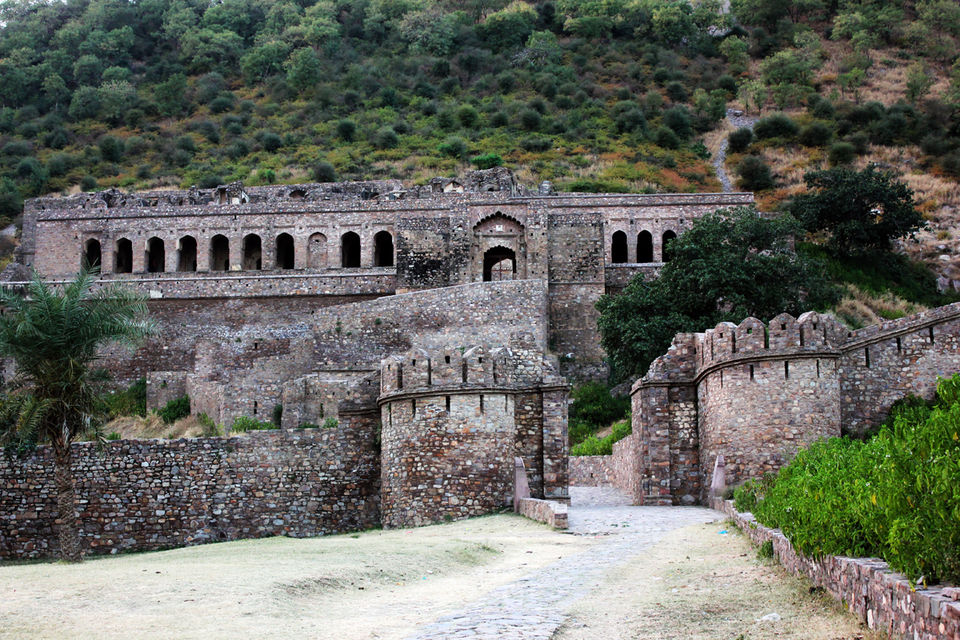
Bhangarh Fort is known as the most haunted place in India, and perhaps the greatest unsolved mystery. There is no doubting the fact that anything associated with the supernatural attracts a huge amount of attention and the deserted city of Bhangarh cashes in on that very idea. The many haunted stories of Bhangarh Fort have transformed it into a bucket list destination of sorts.
Curious travellers come in order to experience cheap thrills and while some go back disappointed, others simply cannot have enough of the suspense associated with the story of the Bhangarh Fort. If you happen to be one of those inquisitive travellers, it is imperative for you to visit this place and find out for yourself.
Is the Bhangarh Fort haunted? Here is the story of Bhangarh:
Most people are of the belief that Bhangarh Fort is haunted and there is no dearth of tales that help in amplifying the mystery that is Bhangarh. Venturing into the fort after sunset is nothing short of an act of bravery as it is supposed to be a centre for paranormal activity and the Archaelogical Survey of India therefore has prohibited people from visiting the Bhangarh Fort at night.
Of the many Bhangarh stories that the locals like to indulge in, the most popular is that of Emperor Madho Singh who built the city after attaining the approval of Guru Balu Nath, an ascetic who used to meditate there. The saint gave his approval on the condition that the shadow of the Emperor’s palace should never fall on his retreat.
If in case it did, the city would crumble into ruins. Once the construction was completed, the retreat of Guru Balu was unfortunately shadowed by the palace. Having incurred the saint’s wrath, Bhangarh immediately transformed into a cursed city and could never be rebuilt as no structures ever managed to survive in it. It is interesting to note that the tomb of Guru Balu Nath can still be found among the ruins.

Another Legend of Haunted Bhangarh Fort:
Another Bhangarh Fort story pertains to Princess Ratnavati. According to legends, her beauty was nonpareil and stories of her surpassing physical attractiveness even transcended kingdoms and borders. When she turned eighteen, suitors from several states asked for her hand in marriage. Of all these suitors was a sorcerer named Singhia who was aware of the fact that he was no match for the princess. However, he decided to entice her with the magical powers he possessed.
He was lucky enough to see Princess Ratnavati’s mistress in the market and enchanted the oil she was purchasing with black magic. He was of the hope that the princess would surrender herself to him upon touching the oil. However, his attempt was futile as Ratnavati witnessed his trick and poured the oil on the ground which then morphed into a rock, rolled towards the magician and crushed him.
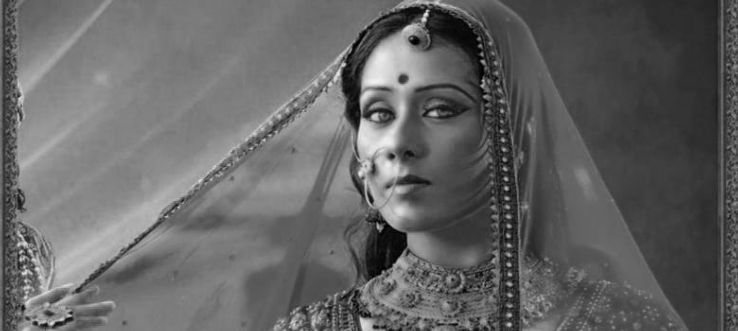
Before dying, Singhia cursed the city of Bhangarh to death and as a result, it never witnessed any rebirths. Moreover, in the battle between Ajabgarh and Bhangarh, princess Ratnavati was killed, thus adding more weight to his malediction. Hopes, however, never die as several locals are of the belief that she has returned in a different form and will ultimately come back to end the unfortunate spell on Bhangarh.
While Bhangarh fort story has been rubbished by scientists, nothing stops the villagers from believing that it is a sanctuary for ghosts. People have supposedly often heard noises that are unaccounted for. The locals claim to have heard women screaming and crying, bangles breaking and strange music emerging from the fort. There have been instances where a special perfume was emanating from the Bhangarh Fort along with ghostly shadows and inexplicable lights. Some people have felt the strange sensation of being followed and even slapped by an invisible entity. It is believed that if a person enters the fort after sunset, he/she will never ever come out of it. The doors are therefore always locked after dusk and entry into the Bhangarh Fort at night is absolutely forbidden. Are all of the Bhangarh Fort stories factual or just strange pieces of fiction? Is the Bhangarh Fort really haunted? Nobody can say. Ghost hunters perhaps can.
REFERENCE-https://www.tripoto.com/rajasthan/trips/bhangarh-fort-haunted-incidents-and-stories
360 Wander Writer
WELCOME TO ANIME WORLD


The world of anime has ruled everyone amidst various age group. In this article we are about to about look after best alternatives to the one of the best website of anime world ‘Kissanime’. Kissanime has won the race of anime world websites among its other competitors .But as of now it is currently shutdown due to various reasons like increasing popularity and overcrowding of website .
- 9 Animation
. The page is stream-lined with the latest movies and series on the set of their release. A major advantage of this website is the availability of the subtitles.
- Anime Watcher
It can be accessed by both children and people with nil computer knowledge thus making itself an user friendly webpage. HD quality is an extra advantage on this site.
- Interfaced A-Z
This site has an exclusive collection of comic books. This page also offers videos to stream on high quality. Rating and voting system to the cartoons and anime series is available on this website.
- Gogo Anime
It is a superlative site which is safe to watch. It makes the user aware of the current on air series . Your favorite or wished animes can be downloaded.
- Anime Lab
This site displays a normal design along with dubbed versions. It is a safe page and does not require and registration or login.
- Kim’s cartoons
It is similar to the ‘Kissanime’ but it requires Log in or to Register. All the video contents of this website is of HD quality.
- Kissmanga
This website also requires a login from the users but a safe site to use. It offers a different kinds of anime to their users. Is has a collection of new and popular series.

Welcome to Anime world…
 Eduindex
You must be logged in to post a comment.