Social network and its contemporary flow of language phraseology

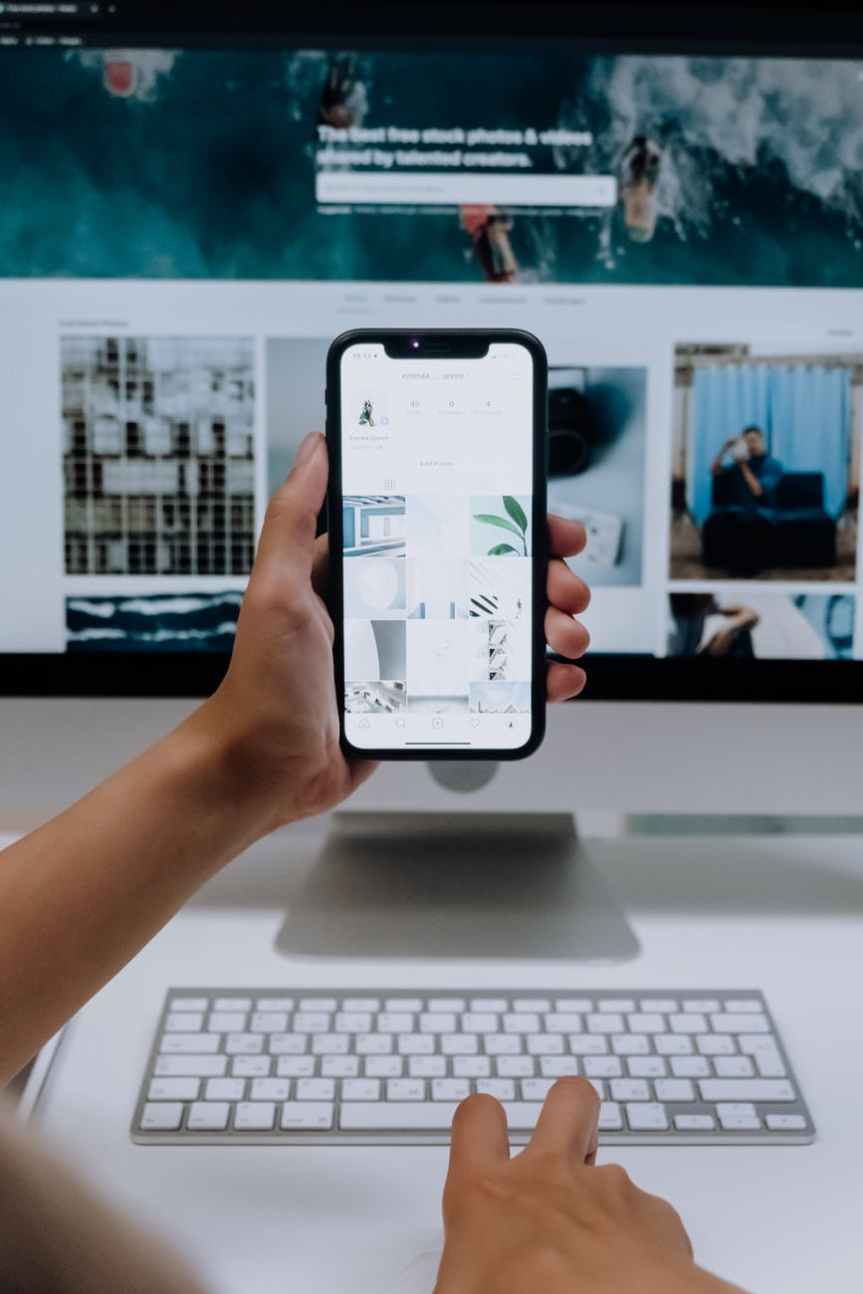
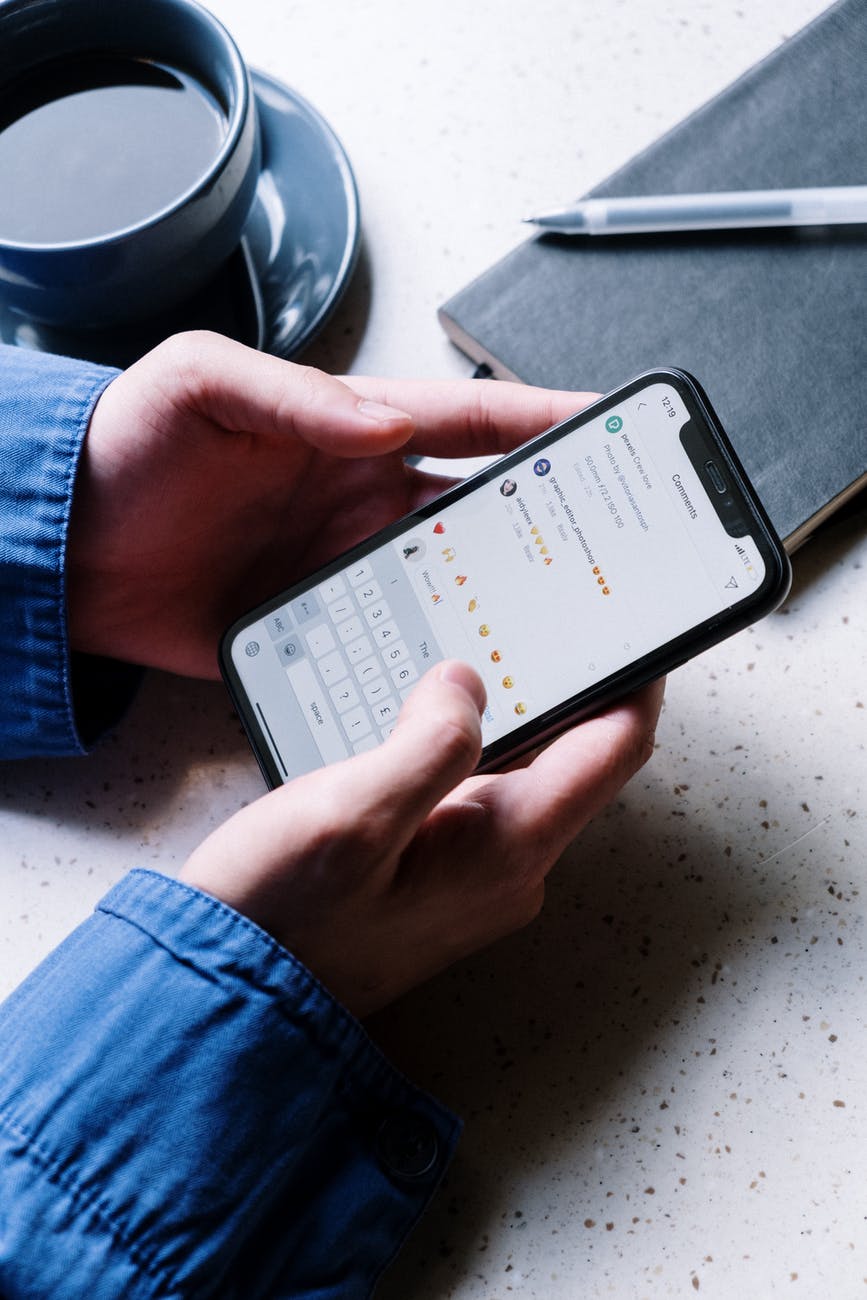
Photo by cottonbro on Pexels.com

With the rapid growth in the usage of social networks worldwide, uploading and sharing of generated content, both text and visual, has become increasingly prevalent.

Today, social media refers to a wide range of Web sites and Internet-based services that allow users to create content and interact with other users. Language is an evolving thing. It’s naive to think that the language of social media isn’t affecting the way we use English in day-to-day life. It’s more appropriate to consider just how much of an effect it’s having on the way we communicate. A whole host of words originating from social media and the wider Internet have become so commonplace that they’ve now slipped into popular usage, and we don’t even realize it.

 Just a few interesting words that have their origins in technology are blogosphere (the collective word for personal websites called blogs), troll (someone who creates conflict online by starting arguments or upsetting people)

Modern companies (like Adidas, mad over marketing or even celebrities) use their presence on social media platforms for diverse business goals. Social media present a new and unique way for direct interaction between the company and different users, right down to the customer as well. While most social media platforms offer some way to measure user engagement, many focus on customer conversion, rather than content.

The emphasis on linguistics and user-generated keywords on social sites

Multilingualism:

 As of now, and according to the data of http://www.internetworldstats.com, the Internet has eight-hundred fifty million English-speaking users out of one billion five hundred million total users. This means that the market for the English language is more or less than one-third of the total market. All this means that there is an enormous body of information being constantly generated which is also being constantly lost behind language usage this proves language diversity in Internet ecology is of paramount importance.

We consider linguistic features in two classes: variations of English, including spelling, and differences in emotive and personal language, including pronouns, interrogatives, and exclamations but emotive language, and personal informal language are used more frequently than the formal tone.

Variation in Lexical Conventions Tweets in the social chats are more likely to contain apostrophes commas and full stop  (such as “can’t”), with missing apostrophes (such as “cant” and “didn’t”) or abbreviations (e.g., “u” for “you” or “k” for “ok”)

Emotive and Personal Language The two collections also show striking differences in tone and the degree to which posts describe personal experiences or opinions. The social community collection has more instances of exclamations and questions, and more non-standard strings of exclamation and question marks. The abundance of exclamations suggests the messages are more likely to be strongly emotive.

Emotions of one kind are also suggested by the number of messages containing any of several dozen grammatically incorrect or swear words or and those all in upper case. Pronouns too are much more prominent in tweets that include the first-person pronoun, and sometimes include the abundance of “ and ” as a word is partly due because we treated “&” as a word boundary.

The infrequent use of the second person pronoun indicates people are not as involved in discussions. Users in this collection also make much greater use of Twitter hashtags to label their posts. We believe this points to more careful use of the posts and a curatorial intent, where hashtags serve to direct a tweet or post to the right audience when the two individuals do not know each other.

There are also instances of online brands becoming so powerful that words have crept into the English language based on them. ‘Google’ is the world’s leading search engine and it has become so universal in its usage that the phrase ‘Google it’ has virtually replaced the phrase  ‘search for it’ in common speech. There are examples of this lifted directly from social media too;  ‘tweet it’ refers to writing a message using Twitter, but has essentially come to mean ‘share it’

Colors are also being widely used to indicate the source of topics: Topics triggered by the page owners on Instagram or Twitter are highlighted through a light blue color. All data is available in an all-time overview.

To summarise, not all social media language is the same. In our collection, talk in the science or work arena is more formal, with more care taken to address an audience, and more concerned with passing on non-personal information, while the tweets or posts in the social environment are more on a personal note, expressing emotions, describing experiences and asking more questions. This mirrors what could be the equivalent genres in other media: a conversation, on the one hand, scientific writing on the other

The not so scientific techniques of language phrasing on social sites

 Some of these tools, such as multi-party chats, discussion forums, blogs, and online reviews, have been a focus of “natural language processing (NLP) research for quite some time now. But within the last decade, NLP work has expanded rapidly to cover an immense variety of new social media content—microblogs such as Twitter, social networks such as Facebook, comments on news articles, captions on user-contributed images such as on Instagram, and forums dedicated to specialized topics and needs (e.g., health and online education)”. Simultaneously, many other research communities are carrying out work using social media data information science, social science, psychology, and linguistics.

Today, a large number of businesses are also centered on or benefit from, analytics and language usage performed on social media. Given these vast research and commercial interests in the social media domain, we are at a time where we should seek to clearly understand what role language has in the field of social media analysis, both in terms of the key and interesting language questions, as well as contributions NLP had made to the research carried out in other fields.

Identifying patterns of usage:

People use the same language for different purposes; most of the time similar content or language used receives millions of views over a week or a course of few hours( likely because of the language which probably have been making the headlines) timing as well play a major role in deciding how fast that particular language or a keyword is being transferred across a particular location for example if there’s a news related to examination during the pandemic chances are the search engines related to that particular news topic will continue to be on the topmost chart among students on a wider range thus making these words ‘lockdown’, ‘online exams’, and covid, etc a specific headlines on Google or social media sites.

Social network and language impact on Cultural awareness

People using social media primarily collect cultural and language examinations through their own experiences and general mobility: by traveling, working, and studying. Nevertheless, they can also gain additional knowledge on languages, cultures, and cultural awareness through social media itself and through other collaborative virtual communities in which they participate.

From unfriend to selfies, social media is having an impact on language and cultural changes. As someone who writes about social media, I’m aware of not only how fast these online platforms change, but also of how they influence the language in which a person writes.

But how much can we trust different categories of social media, such as Instagram for example? The quality and certainty of available materials remain an open question. For that reason, Many researchers suggest the use of authorized materials already available over the Web and in different virtual communities, but not necessarily social media

Most social media users use social media tools for information gaining or cultural acknowledgment particularly through knowing the names of foods consumed by various people over the world, places or the type of clothes worn by people of different cultures and the everyday experiences of populations,  (e.g, cottage cheese which is a generic  term used around the world is known by a specific name in other world countries like Feta in Greece, Ricotta in Italy, and paneer in India so on )

Conclusion

What social media has done is enable us to communicate with a much larger number of people on a global scale in a way that we only really used to be able to do on a local level. It is a rich playground for experimenting, creating new words, and repurposing old ones; it also provides a platform for people who aren’t consumed by grammatical rules and syntax, giving the freedom to flout the usual maxims of conventional English Language and be innovative, creative and forward-thinking. Language is and always has been ever-evolving. Although the developments and trends we witness in language over time are significant, the foundation of the English language remains as strong and infallible as it always has been.

Fighting Corona with Humanity.

I still remember reading our history textbooks and pondering over the fact that how the people in those times had faced the draconian affects of epidemics. Having no vaccine or any scientific knowledge, made them quite helpless. Today in the 21st century, with all the technology in the world, when we are faced with yet another epidemic, it has become a little difficult for us to cope up with it too , but for all different reasons. I , for instance never expected rather never believed that history would repeat it’s one of the worst realities again.
“Just because things are the way they are , they’ll not remain the way they are.”
Bertolt Brecht
UN chief advisers have termed COVID19 as the worst thing to happen since World War II.


Corona virus or to be more specific COVID19 originated in Wuhan , a city in China. And before even the rest of the world could understand what was happening, the unwanted guest was already at their doors. Past these months, thousands of people have succumbed to it, and lakhs lay in the hope to recover. The situation in US had completely shattered the dogma that a superpower can conquer it all. And the eeriness in the’ Bel Pease’ (beautiful country) , Italy, has put the world in a shock. The world is suffering in all possible ways. But few positive outcomes of all this tragedy is the audible sound of birds chirping, the visible blue sky (which was not so visible, and not so blue before), the damaged ozone layer healing itself, and obviously the Earth finally getting a chance to breathe again. Sometimes I wonder how karma pays back and how maybe this situation is what we humans sort of had it coming.
The soldiers in this war, the doctors, police , cleaners and all those people who have been working these past months non stop have shown us that how humanity is the priority.

Novavax and J&J join the Covid-19 vaccine push | Evaluate

After many lives lost in the ongoing 2nd wave and the country preparing itself for the 3rd wave, we should all remember that to get vaccinated , wearing masks and following the social distancing guidelines is surely the key.

How can other people help in fighting the corona war you ask ?
Be Kind. This is a difficult time. Not a time to play the blame game but to play SAFE. Couple of days back I read that a girl from northeast was spat on by a person and called out as CORONA. This is so derogatory and discriminating. This difficult time is not only testing your patience but also testing to what level can you maintain your humane level.
A little help to the helpless please. Do whatever it is in your hands to help the needy. Donate food , money so that they can also get a fair chance at staying alive.
Who let the dogs out?! Well technically the lockdown has left them all alone. So please do take care of the animals out on the street. Don’t lock them out of your hearts.
Meditate the stress away I understand how this lockdown can be so stressful, so in order to keep calm , keep meditating.
Laugh it all out Stay happy and also try to keep your friends cheerful by calling them up. There might be plenty of your loved ones in different parts of the World, who must be waiting for a shoulder to lean on, so go ahead and give them a virtual shoulder to lean on to.
Being Munna bhai MBBS?! I agree that jaadu ki jhappi is all we need, but social distancing ,you know. Also don’t spread rumours and let the real doctors do the real work.
People all over the world are helping the needy with all their heart. Plenty of NGOs , business men, members of film fraternity, and many more have come forward to fight this war the humane way. Love,compassion, awareness and a sprinkle of humanity can help us to get through this war.


John F Kennedy rightly said ,
Ask not what your country can do for you , but what you can do for your country, and right now all you can do ,is Stay Inside.

Social network and its contemporary flow of language phraseology

Photo by cottonbro on Pexels.com

With the rapid growth in the usage of social networks worldwide, uploading and sharing of generated content, both text and visual, has become increasingly prevalent.

Today, social media refers to a wide range of Web sites and Internet-based services that allow users to create content and interact with other users. Language is an evolving thing. It’s naive to think that the language of social media isn’t affecting the way we use English in day-to-day life. It’s more appropriate to consider just how much of an effect it’s having on the way we communicate. A whole host of words originating from social media and the wider Internet have become so commonplace that they’ve now slipped into popular usage, and we don’t even realize it.

 Just a few interesting words that have their origins in technology are blogosphere (the collective word for personal websites called blogs), troll (someone who creates conflict online by starting arguments or upsetting people)

Modern companies (like Adidas, mad over marketing or even celebrities) use their presence on social media platforms for diverse business goals. Social media present a new and unique way for direct interaction between the company and different users, right down to the customer as well. While most social media platforms offer some way to measure user engagement, many focus on customer conversion, rather than content.

The emphasis on linguistics and user-generated keywords on social sites

Multilingualism:

 As of now, and according to the data of http://www.internetworldstats.com, the Internet has eight-hundred fifty million English-speaking users out of one billion five hundred million total users. This means that the market for the English language is more or less than one-third of the total market. All this means that there is an enormous body of information being constantly generated which is also being constantly lost behind language usage this proves language diversity in Internet ecology is of paramount importance.

We consider linguistic features in two classes: variations of English, including spelling, and differences in emotive and personal language, including pronouns, interrogatives, and exclamations but emotive language, and personal informal language are used more frequently than the formal tone.

Variation in Lexical Conventions Tweets in the social chats are more likely to contain apostrophes commas and full stop  (such as “can’t”), with missing apostrophes (such as “cant” and “didn’t”) or abbreviations (e.g., “u” for “you” or “k” for “ok”)

Emotive and Personal Language The two collections also show striking differences in tone and the degree to which posts describe personal experiences or opinions. The social community collection has more instances of exclamations and questions, and more non-standard strings of exclamation and question marks. The abundance of exclamations suggests the messages are more likely to be strongly emotive.

Emotions of one kind are also suggested by the number of messages containing any of several dozen grammatically incorrect or swear words or and those all in upper case. Pronouns too are much more prominent in tweets that include the first-person pronoun, and sometimes include the abundance of “ and ” as a word is partly due because we treated “&” as a word boundary.

The infrequent use of the second person pronoun indicates people are not as involved in discussions. Users in this collection also make much greater use of Twitter hashtags to label their posts. We believe this points to more careful use of the posts and a curatorial intent, where hashtags serve to direct a tweet or post to the right audience when the two individuals do not know each other.

There are also instances of online brands becoming so powerful that words have crept into the English language based on them. ‘Google’ is the world’s leading search engine and it has become so universal in its usage that the phrase ‘Google it’ has virtually replaced the phrase  ‘search for it’ in common speech. There are examples of this lifted directly from social media too;  ‘tweet it’ refers to writing a message using Twitter, but has essentially come to mean ‘share it’

Colors are also being widely used to indicate the source of topics: Topics triggered by the page owners on Instagram or Twitter are highlighted through a light blue color. All data is available in an all-time overview.

To summarise, not all social media language is the same. In our collection, talk in the science or work arena is more formal, with more care taken to address an audience, and more concerned with passing on non-personal information, while the tweets or posts in the social environment are more on a personal note, expressing emotions, describing experiences and asking more questions. This mirrors what could be the equivalent genres in other media: a conversation, on the one hand, scientific writing on the other

The not so scientific techniques of language phrasing on social sites

 Some of these tools, such as multi-party chats, discussion forums, blogs, and online reviews, have been a focus of “natural language processing (NLP) research for quite some time now. But within the last decade, NLP work has expanded rapidly to cover an immense variety of new social media content—microblogs such as Twitter, social networks such as Facebook, comments on news articles, captions on user-contributed images such as on Instagram, and forums dedicated to specialized topics and needs (e.g., health and online education)”. Simultaneously, many other research communities are carrying out work using social media data information science, social science, psychology, and linguistics.

Today, a large number of businesses are also centered on or benefit from, analytics and language usage performed on social media. Given these vast research and commercial interests in the social media domain, we are at a time where we should seek to clearly understand what role language has in the field of social media analysis, both in terms of the key and interesting language questions, as well as contributions NLP had made to the research carried out in other fields.

Identifying patterns of usage:

People use the same language for different purposes; most of the time similar content or language used receives millions of views over a week or a course of few hours( likely because of the language which probably have been making the headlines) timing as well play a major role in deciding how fast that particular language or a keyword is being transferred across a particular location for example if there’s a news related to examination during the pandemic chances are the search engines related to that particular news topic will continue to be on the topmost chart among students on a wider range thus making these words ‘lockdown’, ‘online exams’, and covid, etc a specific headlines on Google or social media sites.

Social network and language impact on Cultural awareness

People using social media primarily collect cultural and language examinations through their own experiences and general mobility: by traveling, working, and studying. Nevertheless, they can also gain additional knowledge on languages, cultures, and cultural awareness through social media itself and through other collaborative virtual communities in which they participate.

From unfriend to selfies, social media is having an impact on language and cultural changes. As someone who writes about social media, I’m aware of not only how fast these online platforms change, but also of how they influence the language in which a person writes.

But how much can we trust different categories of social media, such as Instagram for example? The quality and certainty of available materials remain an open question. For that reason, Many researchers suggest the use of authorized materials already available over the Web and in different virtual communities, but not necessarily social media

Most social media users use social media tools for information gaining or cultural acknowledgment particularly through knowing the names of foods consumed by various people over the world, places or the type of clothes worn by people of different cultures and the everyday experiences of populations,  (e.g, cottage cheese which is a generic  term used around the world is known by a specific name in other world countries like Feta in Greece, Ricotta in Italy, and paneer in India so on )

Conclusion

What social media has done is enable us to communicate with a much larger number of people on a global scale in a way that we only really used to be able to do on a local level. It is a rich playground for experimenting, creating new words, and repurposing old ones; it also provides a platform for people who aren’t consumed by grammatical rules and syntax, giving the freedom to flout the usual maxims of conventional English Language and be innovative, creative and forward-thinking. Language is and always has been ever-evolving. Although the developments and trends we witness in language over time are significant, the foundation of the English language remains as strong and infallible as it always has been.

Fighting Corona with Humanity.

I still remember reading our history textbooks and pondering over the fact that how the people in those times had faced the draconian affects of epidemics. Having no vaccine or any scientific knowledge, made them quite helpless. Today in the 21st century, with all the technology in the world, when we are faced with yet another epidemic, it has become a little difficult for us to cope up with it too , but for all different reasons. I , for instance never expected rather never believed that history would repeat it’s one of the worst realities again.
“Just because things are the way they are , they’ll not remain the way they are.”
Bertolt Brecht
UN chief advisers have termed COVID19 as the worst thing to happen since World War II.

Corona virus or to be more specific COVID19 originated in Wuhan , a city in China. And before even the rest of the world could understand what was happening, the unwanted guest was already at their doors. Past these months, thousands of people have succumbed to it, and lakhs lay in the hope to recover. The situation in US had completely shattered the dogma that a superpower can conquer it all. And the eeriness in the’ Bel Pease’ (beautiful country) , Italy, has put the world in a shock. The world is suffering in all possible ways. But few positive outcomes of all this tragedy is the audible sound of birds chirping, the visible blue sky (which was not so visible, and not so blue before), the damaged ozone layer healing itself, and obviously the Earth finally getting a chance to breathe again. Sometimes I wonder how karma pays back and how maybe this situation is what we humans sort of had it coming.
The soldiers in this war, the doctors, police , cleaners and all those people who have been working these past months non stop have shown us that how humanity is the priority.

Novavax and J&J join the Covid-19 vaccine push | Evaluate

After many lives lost in the ongoing 2nd wave and the country preparing itself for the 3rd wave, we should all remember that to get vaccinated , wearing masks and following the social distancing guidelines is surely the key.

How can other people help in fighting the corona war you ask ?
Be Kind. This is a difficult time. Not a time to play the blame game but to play SAFE. Couple of days back I read that a girl from northeast was spat on by a person and called out as CORONA. This is so derogatory and discriminating. This difficult time is not only testing your patience but also testing to what level can you maintain your humane level.
A little help to the helpless please. Do whatever it is in your hands to help the needy. Donate food , money so that they can also get a fair chance at staying alive.
Who let the dogs out?! Well technically the lockdown has left them all alone. So please do take care of the animals out on the street. Don’t lock them out of your hearts.
Meditate the stress away I understand how this lockdown can be so stressful, so in order to keep calm , keep meditating.
Laugh it all out Stay happy and also try to keep your friends cheerful by calling them up. There might be plenty of your loved ones in different parts of the World, who must be waiting for a shoulder to lean on, so go ahead and give them a virtual shoulder to lean on to.
Being Munna bhai MBBS?! I agree that jaadu ki jhappi is all we need, but social distancing ,you know. Also don’t spread rumours and let the real doctors do the real work.
People all over the world are helping the needy with all their heart. Plenty of NGOs , business men, members of film fraternity, and many more have come forward to fight this war the humane way. Love,compassion, awareness and a sprinkle of humanity can help us to get through this war.

John F Kennedy rightly said ,
Ask not what your country can do for you , but what you can do for your country, and right now all you can do ,is Stay Inside.

WHY IS THE "N" WORD PROHIBITED?

BY: VAIBHAVI MENON

It’s one thing to ban a word because it is a pitiless slur often used amid physical violence. That black people use it—and have forever—as a term of endearment among one another complicates matters somewhat, but whites who ask “Why can’t we use it if they do?” have always struck me as disingenuous. It isn’t rocket science to understand that words can have more than one meaning, and a sensible rule is that blacks can use the word but whites can’t. However, since the 1990s this rule has undergone mission creep, under which whites are not only not supposed to level the word as a slur, but are also not supposed to even refer to it. That idea has been entrenched for long enough now that it is coming to feel normal, but then normal is not always normal. It borders, as I suggested above, on taboo. There are societies—such as many in Australia—in which it is forbidden to use ordinary language with in-laws, and this taboo is often extended  even to referring to in-laws in conversation. Upon marrying, one must master a whole different vocabulary for talking to and/or about, for example, one’s mother-in-law. Many are familiar with the click sounds in Xhosa. However, clicks didn’t originate in Xhosa, but in lesser-known languages spoken by hunter-gatherers. Xhosa speakers, it is thought, adopted clicks from these other communities as part of an effort to create avoidance language, substituting them for ordinary sounds in Xhosa.

Practices like this sound neat to Americans—but also arbitrary. We understand that the practice is rooted in respect, but can’t help thinking that the official practice has drifted somewhat beyond what logic would dictate. The idea that nonblacks cannot even soberly refer to the N-word verges on this kind of thing. Note the word verges: The N-word is a slur and loaded in a way that, say, asking your mother-in-law what she’d like for dinner is not; sparing usage and serious caution are warranted. Respect, nevertheless, has morphed into a kind of genuflection that an outsider might find difficult to understand. There are matters of art involved, of course. Even when discussing rather than wielding the word, people—including black ones—might avoid barking out the word any more than necessary. (Or avoid writing it more than necessary, as in this very essay.) Surely, its history means that it provokes negative associations; it doesn’t sound good. Perhaps even the weird word niggardly ought to be let go. Accidentally, it just sounds too much like that other word to pass muster, especially when synonyms like stingy are so readily available. Those who use it should not be made to feel unfit for employment, as has actually happened.

But a white student so horrified at Sheck’s uttering the N-word within the context of its usage by a black, crusading anti-racist figure such as James Baldwin that the student reports her to the authorities? It surely felt like Doing the Right Thing—but the problem is that when Spike Lee’s film of (more or less) that title was playing in theaters, graduate students would have done no such thing. Some will object that we moderns are more advanced than those ‘80s troglodytes, or at least that the discussion has progressed, enrichened, that justice is being better served. And I am under no illusion that this is merely a matter of a certain kind of white performative wokeness. Quite a few black people, including authors of whole books on the word, would agree that Sheck should never utter that word at all for any reason. We might ask, though, what the reason for a diktat like that is. It conveys, certainly, a kind of power. Inevitably, here and there a nonblack person will either use the word in an unsanctioned way or, just as often, be revealed to have done so in the past. If the word is sinful even when referred to, then the ground is especially fertile for black Americans or white allies to express outrage. Enter the Teaching Moment, when we are reminded of black people’s plight in a racist nation, our history in savagery and dismissal, the power of even subliminal racist bias.

Migrant Labour

A person who migrates or who has migrated from one country to another with a view to being employed other than on his own account.India is a vast country with high percentage of uneducated, unemployed and unskilled labour suffering from acute poverty.Regional imbalances add to their problem.Many of them are unable to find means of livelihood within their habitat.

Frequent droughts,famines and other calamities force these poorest sections to migrate.These sections of people are constantly on the move seeking avenues of manual work.Such migrants are mostly employed by contractors in road works,quarry and brick works,mining works, clearing forests and in many hazardous works.A few of them become domestic help,and some become menials in hotels and other establishments.As migrant Labour,there is no protection to their person,no guarantee of a fair wage.They are forced to live in unhygienic transit slums without clean water and nutritious food.There is no guarantee for health care and no provision for care and education of their children.

Migrant labour,means,the labour who goes on moving from place to place seeking manual employment on temporary basis.They are constantly exploited by contractors.As they work in regions of different languages it becomes very difficult to become organised and to articulate on their needs and to demand and secure necessary remedies.In fact,most of the migrant labour are treated almost like bonded labour.

Wider highways,huge buildings for industries, business and institutions are coming up fast, however the conditions of the human labour involved in the expanding economy cannot be ignored.More than half of the labour involved in these developmental activities are migrant labour.

Migrant Labour

A person who migrates or who has migrated from one country to another with a view to being employed other than on his own account.India is a vast country with high percentage of uneducated, unemployed and unskilled labour suffering from acute poverty.Regional imbalances add to their problem.Many of them are unable to find means of livelihood within their habitat.

Frequent droughts,famines and other calamities force these poorest sections to migrate.These sections of people are constantly on the move seeking avenues of manual work.Such migrants are mostly employed by contractors in road works,quarry and brick works,mining works, clearing forests and in many hazardous works.A few of them become domestic help,and some become menials in hotels and other establishments.As migrant Labour,there is no protection to their person,no guarantee of a fair wage.They are forced to live in unhygienic transit slums without clean water and nutritious food.There is no guarantee for health care and no provision for care and education of their children.

Migrant labour,means,the labour who goes on moving from place to place seeking manual employment on temporary basis.They are constantly exploited by contractors.As they work in regions of different languages it becomes very difficult to become organised and to articulate on their needs and to demand and secure necessary remedies.In fact,most of the migrant labour are treated almost like bonded labour.

Wider highways,huge buildings for industries, business and institutions are coming up fast, however the conditions of the human labour involved in the expanding economy cannot be ignored.More than half of the labour involved in these developmental activities are migrant labour.

ACTUAL MEANING OF FEMINISM

BY: VAIBHAVI MENON

When they hear the word “Feminist,” most people think of a bunch of angry women who believe that they are better than men. By definition the word “feminist” means “the advocacy of women’s rights on the basis of the equality of the sexes.” Feminists are not just women who stand outside buildings demanding things. In reality they have revolutionized today’s society and have improved the lives of many. Most rights that women have today derived from true feminists fighting for equality. Feminism has lost its true meaning. Real feminists such as the Suffragettes, Eleanor Roosevelt, Barbara Walters, and so many more have made it possible for women to become news anchors, be more than just a housewife, or allow women to vote.

Today’s feminists have taken these remarkable women and twisted what they stood for. Women have turned against men. Past feminism changed society forever. Today, feminists believe that men are less superior and that women could live on the Earth without them, but that is not what true feminism is. True feminism allows women to be equal to men. True feminists make it possible for women to work the same jobs as men or have the right to own property like men. Although the basis of feminism is still the same, it has become a more aggressive movement. Instead of bringing men and women together as a united front, it has created an even bigger gap throughout the United States. Today’s feminism isn’t making the same progress or spreading the same message. There are still other problems that feminism could fix, but if we don’t use feminism the right way then we won’t be fixing anything. If we continue to misuse feminism then we really will be just a bunch of angry women protesting outside of buildings. The definition, as I have spent my life believing it to be, is the belief that men and women should have equal social, political, and economic rights and opportunities. I do think that that is the most inclusive definition of what feminism is about. It’s about equality for both men and women and a playing field that respects the voices of women. True equality, true feminism is recognition of the dynamics that each person brings to the table. And I say “each person” because women will have reached truest levels of equality when men also have truest levels of equality. As long as we stay and assign task and duty, responsibility and opportunity to a particular gender, then we are not actually striving for true feminism.

I think at that time there was such an imbalance of power that you had to recognize the need to at least get some balance of power to women, some recognition that women should have choices and opportunities outside of the home, and in the home itself. Today we recognize that true feminism is the true equality of both sexes, without it being limited or restricted. And we actually have more young men and young women growing up today that have been raised in more feminist households, where men and women do a share of work in the house. They both have opportunities for education and for job opportunities. Jobs are not labeled for men and for women. There’s still not true equality and there’s still true job segregation. But in that context, there was a time in the late 60’s and early 70’s when the term feminism started growing and when and the Ms. Foundation started that there was a true segregation. And now I think the feminist movement had to take on “the women’s movement,” the women’s perspective so that it could get to a mainstream conversation.

INTERIOR DESIGN CAREER

What is interior design?


Interior design is about our experience with places and shaping indoor spaces with beautiful aesthetics.

By definition, it is “the art and science of enhancing the interiors of a space to achieve a healthier and aesthetically pleasing environment.”

Related to architecture, interior design involves designing man-made spaces to make them pleasant and comfortable.

An interior designer is equipped with a professional degree and training in interior designing and has knowledge of colors, fabrics & furniture.

What does an interior designer do?

An interior designer makes the wish to have beautiful, plush homes come true and makes places worth living.

Interior design is all about research, conceptual development, efficient planning and creating a relaxed environment for the stakeholders.

Professional interior designers possess the working knowledge of space planning, textiles, color schemes and more.

They work with architects, engineers & builders to plan the look and function of indoor spaces.

Why build an interior design career?


Scope:

With an evolving lifestyle and fast-paced urbanization, the scope of interior design has grown significantly, making it one of the most sought after professions in India today.

The market trend shows a remarkable growth in the demand of interior designers.

Many people rely on professionals to design spaces to achieve a comfortable and happy living.

With booming property prices, Indian homes are becoming smaller and house owners seem to have found the solution to space crisis in the face of interior designing.

People are attracted to have theme-based interiors and styles to make their homes stand out, leading to the potential increase in interior design jobs in the coming years.

Demand:
The interior design market is expected to see an exponential growth by 2025 globally.

As per MarketWatch, in 2018, interior design market was valued at 130,100 million USD and can expect a potential (CAGR) growth rate of 8.5% between 2019-2024, leading the market to be valued at 212,300.

Talking about Indian Market, in a research conducted by CII, the number of designers in India was estimated at 36,387 out of which 10.17% were interior designers.

As per a report by Brandongaille , interior design jobs are expected to see an estimated increase by 13% in the next decade.

Going by the increasing number of people opting for interior design, the demand for interior designers is bound to significantly increase in the years to come.

Qualifications of an Interior designer:


Any creative and passionate person with basic knowledge of designing properties can become an interior decorator.

But an interior design career isn’t easy to build.

Here are some qualifications you need to become a professional interior designer:

10+2 with any stream: The individual should have passed 10+2 in any stream with minimum 50% marks to pursue a graduation course in interior design.

Take All India Entrance Examination for Design (AIEED): Some colleges select candidates based on their AIEED rank. It is conducted for students seeking admission to undergraduate courses in interior design.

Completion of a Bachelor’s of Science (B.SC) in Interior Design degree: To make a successful interior design career, a B.Sc. in Interior design degree from a recognized university would be helpful.

Diploma in interior design: An individual who has passed their 10+2 or equivalent exams with 50% marks can also opt for a Diploma in Interior Design.

Further, an individual can also pursue a Master’s of Science (M.SC) in interior Design

MBA in Interior Design: It is a 2-year course. The individual must have completed a Bachelor’s or Master’s from a recognized university with a minimum of 45% marks.

Tips to Get an Interior Design Job:


1) Research about the field:

Research well and learn everything there is to know about your field.

Understand the different aspects of interior designing and gather relevant information to choose a specific area of work.

2) Learn the necessary tools:
Make sure you are hands-on with important software like AutoCAD, Sketch Up, 3D Homeplanner, Vector works, etc.

All aspiring interior designers must learn these tools to help you start strong and grow early in your career.

3) Get a degree in interior designing:
Earn a formal degree to get well-versed with the technicalities and details of the profession before you set out to get a job in it.

4) Make a Portfolio:
A portfolio is an asset to your career. It is a collection of your best work.

Make a portfolio and include sketches of ideas, before and after images of work sites, fabric samples, etc.

A portfolio will help you take potential clients through the best of your work and will prove your credibility as an interior designer.

5) Intern to train:
In a profession like interior design, work experience really counts.

Before aiming for an interior design job, do intern for 6-12 months to understand the critical aspects of interior design.

INTERIOR DESIGN CAREER

What is interior design?

Interior design is about our experience with places and shaping indoor spaces with beautiful aesthetics.

By definition, it is “the art and science of enhancing the interiors of a space to achieve a healthier and aesthetically pleasing environment.”

Related to architecture, interior design involves designing man-made spaces to make them pleasant and comfortable.

An interior designer is equipped with a professional degree and training in interior designing and has knowledge of colors, fabrics & furniture.

What does an interior designer do?

An interior designer makes the wish to have beautiful, plush homes come true and makes places worth living.

Interior design is all about research, conceptual development, efficient planning and creating a relaxed environment for the stakeholders.

Professional interior designers possess the working knowledge of space planning, textiles, color schemes and more.

They work with architects, engineers & builders to plan the look and function of indoor spaces.

Why build an interior design career?


Scope:

With an evolving lifestyle and fast-paced urbanization, the scope of interior design has grown significantly, making it one of the most sought after professions in India today.

The market trend shows a remarkable growth in the demand of interior designers.

Many people rely on professionals to design spaces to achieve a comfortable and happy living.

With booming property prices, Indian homes are becoming smaller and house owners seem to have found the solution to space crisis in the face of interior designing.

People are attracted to have theme-based interiors and styles to make their homes stand out, leading to the potential increase in interior design jobs in the coming years.

Demand:
The interior design market is expected to see an exponential growth by 2025 globally.

As per MarketWatch, in 2018, interior design market was valued at 130,100 million USD and can expect a potential (CAGR) growth rate of 8.5% between 2019-2024, leading the market to be valued at 212,300.

Talking about Indian Market, in a research conducted by CII, the number of designers in India was estimated at 36,387 out of which 10.17% were interior designers.

As per a report by Brandongaille , interior design jobs are expected to see an estimated increase by 13% in the next decade.

Going by the increasing number of people opting for interior design, the demand for interior designers is bound to significantly increase in the years to come.

Qualifications of an Interior designer:

Any creative and passionate person with basic knowledge of designing properties can become an interior decorator.

But an interior design career isn’t easy to build.

Here are some qualifications you need to become a professional interior designer:

10+2 with any stream: The individual should have passed 10+2 in any stream with minimum 50% marks to pursue a graduation course in interior design.

Take All India Entrance Examination for Design (AIEED): Some colleges select candidates based on their AIEED rank. It is conducted for students seeking admission to undergraduate courses in interior design.

Completion of a Bachelor’s of Science (B.SC) in Interior Design degree: To make a successful interior design career, a B.Sc. in Interior design degree from a recognized university would be helpful.

Diploma in interior design: An individual who has passed their 10+2 or equivalent exams with 50% marks can also opt for a Diploma in Interior Design.

Further, an individual can also pursue a Master’s of Science (M.SC) in interior Design

MBA in Interior Design: It is a 2-year course. The individual must have completed a Bachelor’s or Master’s from a recognized university with a minimum of 45% marks.

Tips to Get an Interior Design Job:


1) Research about the field:

Research well and learn everything there is to know about your field.

Understand the different aspects of interior designing and gather relevant information to choose a specific area of work.

2) Learn the necessary tools:
Make sure you are hands-on with important software like AutoCAD, Sketch Up, 3D Homeplanner, Vector works, etc.

All aspiring interior designers must learn these tools to help you start strong and grow early in your career.

3) Get a degree in interior designing:
Earn a formal degree to get well-versed with the technicalities and details of the profession before you set out to get a job in it.

4) Make a Portfolio:
A portfolio is an asset to your career. It is a collection of your best work.

Make a portfolio and include sketches of ideas, before and after images of work sites, fabric samples, etc.

A portfolio will help you take potential clients through the best of your work and will prove your credibility as an interior designer.

5) Intern to train:
In a profession like interior design, work experience really counts.

Before aiming for an interior design job, do intern for 6-12 months to understand the critical aspects of interior design.

DOWRY SYSTEM

Meetali soni

As we all know that dowry system is the worst system in the world but still in most of the villages take dowry. The dowry system in India, refers to the durable goods, cash, and real or movable property that the bride’s family gives to the groom, his parents and his relatives as a condition of the marriage. Dowry is essentially in the nature of a payment in cash or some kind of gifts given to the groom’s family from the bride including cash, jewellery, electrical appliances, furniture, bedding, crockery, utensils, vehicles and other household items that help to set up their home. The dowry system can put great financial burden on the bride’s family. In some cases, the dowry system leads to crime against women, ranging from emotionally and injury to even deaths. The payment of dowry has long been restricted under specific Indian laws including the Dowry Prohibition Act 1961 and subsequently by Sections 304B and 498A of the Indian Penal Code. In ancient times, a dowry was given to the groom and his family in exchange for the bride as a way of ensuring that she is properly taken care of and comfortable. In those times, it was also expected that the bride would leave her family home to reside with or near her new husband’s family. Today the government has come up with many laws (The Dowry Prohibition Act 1961) and reforms, not only to eradicate the dowry system, but also to uplift the status of the girl child by bringing in many schemes. In order to get rid of this problem, appealing to the social and moral consciousness of the people, providing education and economic independence for women, and effective enforcement of legislation against the dowry system,

WHO STARTED THE DOWRY SYSTEM ?
Dowry system in England was introduced in the 12th century by the Normans. Earlier to this there was another kind of practice where the husband gave some kind of morning gift to his wife. Dowry was generally given at the wedding by the husband at the church door in front of all present public.

GIRLS KILLER BY THE NAME OF DOWRY…..

Dowry deaths are deaths of married women who are murded or driven to suicide by continuous harassment by their husbands and in-laws over a dispute about their dowry. They making the women’s homes the most dangerous place for them to be. Dowry deaths are found predominantly in India. India reports the highest total number of dowry deaths with 8,391 such deaths reported in 2020, meaning there are 1.4 deaths per 100,000 women. Female dowry deaths account for 40 to 50 percent of all female homicides recorded annually in India. The highest rate of dowry death at 2.45 per 100,000 women. Dowry death is considered one of the many categories of violence against women, alongside rape, bride burning , and acid throwing .

Women killed by the name of dowry is not in logical way . In INDIA , it is the worst system . It is the burden over the bride and his family . Marriage is such a beautiful ritual in the world , but people take this the way of getting much money by the other family .

DOWRY SYSTEM

Meetali soni

As we all know that dowry system is the worst system in the world but still in most of the villages take dowry. The dowry system in India, refers to the durable goods, cash, and real or movable property that the bride’s family gives to the groom, his parents and his relatives as a condition of the marriage. Dowry is essentially in the nature of a payment in cash or some kind of gifts given to the groom’s family from the bride including cash, jewellery, electrical appliances, furniture, bedding, crockery, utensils, vehicles and other household items that help to set up their home. The dowry system can put great financial burden on the bride’s family. In some cases, the dowry system leads to crime against women, ranging from emotionally and injury to even deaths. The payment of dowry has long been restricted under specific Indian laws including the Dowry Prohibition Act 1961 and subsequently by Sections 304B and 498A of the Indian Penal Code. In ancient times, a dowry was given to the groom and his family in exchange for the bride as a way of ensuring that she is properly taken care of and comfortable. In those times, it was also expected that the bride would leave her family home to reside with or near her new husband’s family. Today the government has come up with many laws (The Dowry Prohibition Act 1961) and reforms, not only to eradicate the dowry system, but also to uplift the status of the girl child by bringing in many schemes. In order to get rid of this problem, appealing to the social and moral consciousness of the people, providing education and economic independence for women, and effective enforcement of legislation against the dowry system,

WHO STARTED THE DOWRY SYSTEM ?
Dowry system in England was introduced in the 12th century by the Normans. Earlier to this there was another kind of practice where the husband gave some kind of morning gift to his wife. Dowry was generally given at the wedding by the husband at the church door in front of all present public.

GIRLS KILLER BY THE NAME OF DOWRY…..

Dowry deaths are deaths of married women who are murded or driven to suicide by continuous harassment by their husbands and in-laws over a dispute about their dowry. They making the women’s homes the most dangerous place for them to be. Dowry deaths are found predominantly in India. India reports the highest total number of dowry deaths with 8,391 such deaths reported in 2020, meaning there are 1.4 deaths per 100,000 women. Female dowry deaths account for 40 to 50 percent of all female homicides recorded annually in India. The highest rate of dowry death at 2.45 per 100,000 women. Dowry death is considered one of the many categories of violence against women, alongside rape, bride burning , and acid throwing .

Women killed by the name of dowry is not in logical way . In INDIA , it is the worst system . It is the burden over the bride and his family . Marriage is such a beautiful ritual in the world , but people take this the way of getting much money by the other family .

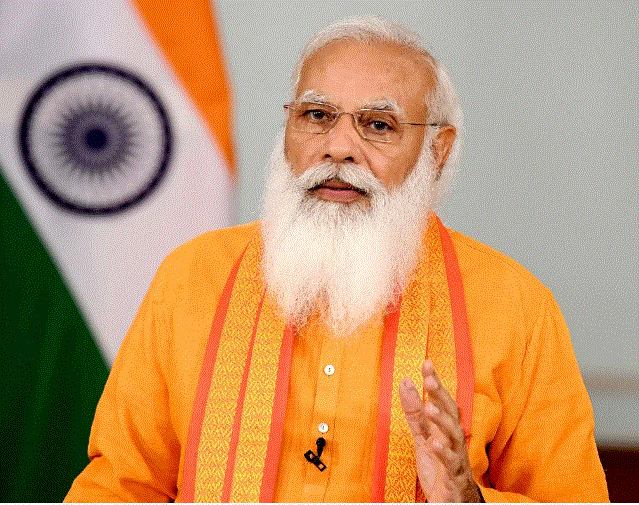
On Sunday, PM Modi talked about Independence Day Celebrations and Tokyo Olympics in Mann Ki Baat.

The Prime Minister in his Mann Ki Baat on Sunday urged the countrymen to be ready to celebrate India’s 74th Independence Day next month.
And asked to support the athletes in the Tokyo Olympics.

Addressing the state through his month-to-month radio program Mann Ki Baat on Sunday, Prime Minister Narendra Modi said that every Indian felt proud to see the contingent at the Tokyo Olympics and urged people to make Team India happy and requested help. “To guide our Olympic group on social media, the ‘Victory Punch Campaign’ has started. You support your team and share the victory. And the Prime Minister said that you also share the victory of the country. And cheer for India,

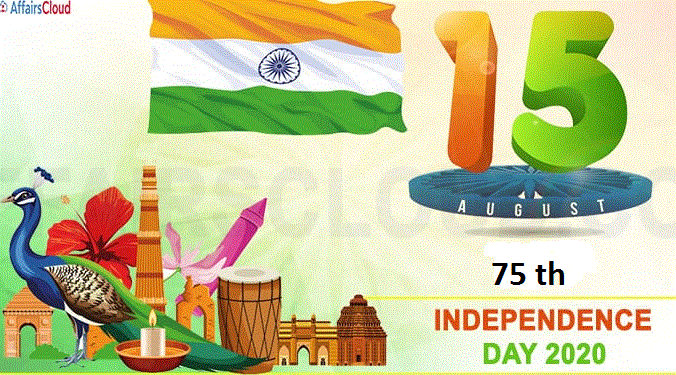
Referring to August 15, PM Modi said this year’s Independence Day is special since India is entering the 75th year of its independence. He said that a website called Rashtragaan.in has been created, and urged people across the nation to send a recording of singing the national anthem of India.

During the address, the prime minister also urged people to read the story of Kargil ahead of Kargil Vijay Diwas tomorrow. “Tomorrow is Kargil Vijay Diwas. Kargil war  is such a symbol of valour and discipline of our armed forces which the entire world has witnessed. I would like you to read the thrilling story of Kargil. Let us all salute the brave hearts of Kargil,” he said.

He also said that the Ministry of Culture had taken up a new initiative to mark Amrut Mahotsav. The idea behind this was to make people follow the path shown by the freedom fighters, he said.

Talking about the National Handloom Day which is celebrated on August 7, Modi spoke about the historical background, when the Swadeshi movement began in 1905. He urged people to support local entrepreneurs, artists, artisans, weavers by buying handloom and Khadi products. “Buy handloom products and share on social media with #MyHandloomMyPride,” Modi said.

PM Modi also spoke about how technology was being harnessed for the greater good, by speaking about the life journeys of two people from Andhra Pradesh and Odisha.

At the end of the speech, PM Modi said that the Covid – 19 pandemic was not over and asked the citizens to follow Covid-19 protocols and maintain social distancing.

On Sunday, PM Modi talked about Independence Day Celebrations and Tokyo Olympics in Mann Ki Baat.

The Prime Minister in his Mann Ki Baat on Sunday urged the countrymen to be ready to celebrate India’s 74th Independence Day next month.
And asked to support the athletes in the Tokyo Olympics.

Addressing the state through his month-to-month radio program Mann Ki Baat on Sunday, Prime Minister Narendra Modi said that every Indian felt proud to see the contingent at the Tokyo Olympics and urged people to make Team India happy and requested help. “To guide our Olympic group on social media, the ‘Victory Punch Campaign’ has started. You support your team and share the victory. And the Prime Minister said that you also share the victory of the country. And cheer for India,

Referring to August 15, PM Modi said this year’s Independence Day is special since India is entering the 75th year of its independence. He said that a website called Rashtragaan.in has been created, and urged people across the nation to send a recording of singing the national anthem of India.

During the address, the prime minister also urged people to read the story of Kargil ahead of Kargil Vijay Diwas tomorrow. “Tomorrow is Kargil Vijay Diwas. Kargil war  is such a symbol of valour and discipline of our armed forces which the entire world has witnessed. I would like you to read the thrilling story of Kargil. Let us all salute the brave hearts of Kargil,” he said.

He also said that the Ministry of Culture had taken up a new initiative to mark Amrut Mahotsav. The idea behind this was to make people follow the path shown by the freedom fighters, he said.

Talking about the National Handloom Day which is celebrated on August 7, Modi spoke about the historical background, when the Swadeshi movement began in 1905. He urged people to support local entrepreneurs, artists, artisans, weavers by buying handloom and Khadi products. “Buy handloom products and share on social media with #MyHandloomMyPride,” Modi said.

PM Modi also spoke about how technology was being harnessed for the greater good, by speaking about the life journeys of two people from Andhra Pradesh and Odisha.

At the end of the speech, PM Modi said that the Covid – 19 pandemic was not over and asked the citizens to follow Covid-19 protocols and maintain social distancing.

NEPOTISM

BY: VAIBHAVI MENON

Nepotism is a form of favoritism which is granted to relatives and friends in various fields, including business, politics, entertainment, sports, religion and other activities. The term originated with the assignment of nephews to important positions by Catholic popes and bishops. Nepotism has been criticized since the ancient times by several philosophers, including Aristotle, Valluvar, and Confucius, condemning it as both evil and unwise. Nepotism in India is common in politics, judiciary, business, the film industry, religious circles, arts, industry, and other types of organizations. Many judges and advocates of the high courts and the Supreme Court of India are alleged to be appointed by exercising casteism, nepotism, and favoritism, primarily due to the Supreme Court and the high court appointment process called Collegium which recommends to the President, in a legally binding manner, the names of judges to be appointed or promoted to the higher judiciary. The various judicial services exams are also infamous for these practices. Rahul Gandhi, Former President of the Indian National Congress party, is a descendant of Jawaharlal Nehru and Indira Gandhi, Rajiv Gandhi, Sonia Gandhi.

The Kapoor family, one of the most prolific generational families involved in Indian cinema, have been known for bringing their children into the industry with their endorsements and influence. In June 2020 a fresh debate on nepotism followed soon after the suicide of actor Sushant Singh Rajput, which fans believe was in reaction to efforts by Bollywood insiders to boycott him. Filmmaker Karan Johar, who Rajput had worked with in the Netflix film Drive, was quickly accused of nepotism by actress Kangana Ranaut, with Rajput’s fans calling for a boycott of Johar and his studio, Dharma Productions, as well as of actor Salman Khan and his brothers, who were accused of bullying outsiders in the past. Actors and actresses Alia Bhatt, Varun Dhawan, Janhvi Kapoor, Ishaan Khatter, Ananya Pandey, Athiya Shetty, Tiger Shroff, Arjun Kapoor and Sara Ali Khan, all of whom hail from film families, were also widely criticized. The term comes from Italian word nepotismo, which is based on Latin root nepos meaning nephew. Since the Middle Ages and until the late 17th century, some Catholic popes and bishops – who had taken vows of chastity and, therefore, usually had no legitimate offspring of their own – gave their nephews such positions of preference as were often accorded by fathers to sons.

Several popes elevated nephews and other relatives to the cardinalate. Often, such appointments were a means of continuing a papal “dynasty”. For instance, Pope Callixtus III, head of the Borgia family, made two of his nephews cardinals; one of them, Rodrigo, later used his position as a cardinal as a stepping stone to the papacy, becoming Pope Alexander VI. Alexander then elevated Alessandro Farnese, his mistress’s brother, to cardinal; Farnese would later go on to become Pope Paul III. Paul III also engaged in nepotism, appointing, for instance, two nephews, aged 14 and 16, as cardinals. The practice was finally limited when Pope Innocent XII issued the bull Romanum decet Pontificem, in 1692.The papal bull prohibited popes in all times from bestowing estates, offices, or revenues on any relative, with the exception that one qualified relative (at most) could be made a cardinal.