Origins of Common English Idioms

Ever wondered where some ever-present idioms originated from in the English language? Here are some interesting origins of common English idioms and their fascinating and sometimes bizarre history:

Always a bridesmaid, never a bride

Definition: Literally, always being a bridesmaid and never a bride. More figuratively, it is a forlorn saying for women when they can’t find love.

Origin: This gem of an idiom was first recorded in a Victorian music hall tune, “Why Am I Always A Bridesmaid?”, by Fred W. Leigh. However, the phrase garnered popularity after a retrospectively hilarious ad for Listerine mouthwash in 1924. The slogan, “Often a bridesmaid, but never a bride”, accompanied a picture of a forlorn ‘Edna’, who, because of her halitosis (bad breath), was never being able to find love. The solution: buying Listerine mouthwash in bulk.

Pull someone’s leg

Definition: Joking or fooling with someone.

Origin: To pull someone’s leg had much more sinister overtones when it first came in use. It was originally a method used by thieves to entrap their pedestrians and subsequently rob them. One thief would be assigned ‘tripper up’ duty, and would use different instruments to knock the person to the ground. Luckily, these days the saying is much more friendlier, though being on the end of a joke might not always be fun.

Meeting a Deadline

Definition: To finish something by a predetermined time.

Origin: This saying apparently stems from the prison camps during the Civil War, where a line was drawn to demarcate the boundaries for the prisoners. The line became to be known as a deadline because any prisoner who attempted to cross it was shot.

Basket Case

Definition: Someone who is unhinged.

Origin: According to undetermined reports, WW1 soldiers who had lost all their limbs were carried around in baskets. The actual term, ‘basket case’, however was coined by the US military – in denial of this practice – after WW1. In 1919, a bulletin was issued by the U.S. Command on Public Information, making use of the phrase:

“The Surgeon General of the Army … denies … that there is any foundation for the stories that have been circulated … of the existence of ‘basket cases’ in our hospitals.”

Close but no Cigar

Definition: Being near success, but just missing out.

Origin: Once upon a time, fairground stalls favored gifting cigars to winners rather than overstuffed, over-sized plush toys. Needless to say, winning was nearly impossible at the rigged carnival games and thus the idiom war born. The first evidence of the saying comes from a film script for Annie Oakley in 1935, after which it was frequently used in newspaper articles.

Bust your Balls

Definition: A slang term which can refer to a form of punishment, working hard, or being harassed or teased.

Origin: Believe it or not, the term actually comes from literally busting the balls of a calf. Rather than cutting them off or chemically sterilizing them, a method was developed to literally break a calf’s testicles to turn them from a bull to a steer. Thankfully, only the figurative version is used by humans.

Bark up the Wrong tree

Definition: To make the wrong choice or pursue the wrong course.

Origin: When hunting raccoons for fur was a popular sport, hunting dogs were used to sniff them out of trees. Being a nocturnal animal, the hunting party had to work at night, and the dogs would sometimes end up choosing the wrong tree, or as the idiom goes, ‘bark up the wrong tree”. The term was first printed in a book by Davy Crockett in 1833.


“BODY SHAMING”

A “real” women aren’t defined by their  height, weight & curves,

She should get the respect which she totally deserves!

No one’s perfect, not even the person himself who’s body shaming!

Everyone has come up with distinctive features so , NOW JUST STOP BLAMING!

– SUKHMANI PANESAR

“Body shaming” this word has broken many hearts out there. Body shaming is something disguise and disheartening one can ever feel in his her life. It is something which eats your out completely, it makes the person insecure, uncomfortable, not confident in their own skin or body, less motivated and every thing that can make a person to doubt on his/her body and to hate the body.

Body shaming is an act of mocking or criticizing one’s physical appearance. The culture of body-shaming is generation old and an ongoing social practice irrespective of social status, education, creed, etc. The reach of body shaming is wide and is not restrictive to only the shape of the body, it includes looks, the colour of the skin, height shaming, one’s muscularity or absence of masculinity, the list goes on and on. These clichés still dominate India’s mindset. This is a big part of our school and college life, and it will never mellow down however we educate ourselves. It is very common in family functions, in schools, the workplace, among close friend circles, relatives, and social media. This practice diminishes the love for our own body, love towards self and we struggle to be socially acceptable. Society has set artificial standards of beauty. It hampers one’s psychology of looking at self. Body shaming is not limited to only females, but males also do go through this trauma of body shaming. But it is more stressful for females in India since our society is patriarchal. Media plays a very notorious part in spreading this disease. We all are social media addicts, the way advertisements preach about looking perfect, has the power to affect someone’s mental health. The most recent and biggest example of media playing a key role in this aspect is the replacement of the word “Fair” to “Glow” and renaming it as “glow and lovely”. All these years they have promoted the concept that fair is beautiful. Body shaming carried on frequently affects the person’s mental health badly, it can cause depression, anxiety, lack of confidence, and social isolation. A person may suffer from panic attacks or depression disorders. Body shaming can lead to eating disorders. Body shaming is the act of suggesting that someone’s body isn’t good enough, and that they should not be satisfied or comfortable with its current composition, proportions, or exposure to the gaze of others. It is rude and disrespectful behavior, and there is no body type that creates an exception that would make body shaming less rude or less disrespectful (even if that body is, in fact, unheathy). A person’s body is their own. It is none of your business. You are not their medical practitioner, and you are neither assisting nor improving the lives of anyone by boorishly sharing your opinions and “helpful” intentions. There is no person on the planet that is not keenly aware of the ways in which their body does not meet the current standard. There is not one person who needs you to point it out.

Please choose kindness. Choose empathy. See the beauty in every body, and choose to spend your time bringing people and ideas together. We each have a staggering array of our own flaws on which to focus — let us not mock others for the state of their earthly form.

“Disadvantages of Reservations”

The word ‘reservation’ can be defined as an act of reserving or keeping back or holding something. It is a kind of process to provide facilities to the people belonging to the weaker sections of the societies in the areas of education, scholarship, jobs, and government service and in other spheres in which they are not being represented properly. The reservation system is under the control of constitutional laws, statutory codes, local rules and regulations.In India, this system is also known as ‘Quota System’, meant for the people attached to the reserved category. Reservation is a form of Affirmative Action a certain percentage of seats are reserved in Parliament, State Legislative Assembly, Central and State Services, Public Sector Units and in all Public and Private Educational Institutions except in the Minority and Religious Educational Institutions for the reserved categories. The Constitution of India provides three types of reservations i.e. Political, Educational and Employment and the percentage for the reservation of these has been fixed by them.

In India, the reservation is being provided by the Government on the following basis: (1) Caste (2)Religion (3) Domicile and (4) Gender (5)Economic Condition

India is one of the few countries of the world that offers job and educational reservations to the minor and backward communities of the country, so as to uplift them. This technique has received worldwide praise and generally positive views. However, this system has its own merits and demerits to offer. Firstly, our country is a developing one, and as a result, the people often tend to narrow-minded. Age-old traditions of not letting women be educated or work, and beliefs that originated from the infamous Varna system, still prevail. Therefore, strenuous and money-consuming efforts by the government often do not befit the minor citizens.

Disadvantages of Reservation System.

  1. It divides our country on the basis of caste, religion and gender and hence threatens our national unity. People often see benefits according to their caste, religion and gender and hence for the sake of benefits people often end up having disagreements and fights with each other. Being a secular country, this kind of behaviour can break our unity and the the respect for the nation. It totally divides our country and threatens the national unity, which always have its own consequences that can tear up the unity and the prosperity of the nation.

2.For the benefits, many people make their fake certificates of being an OBC, ST or SC. Which not only disrespects the castes but also it makes the system dirty and unfaithful. This is something terrible that can be done for the sake of advantages and benefits. Making fake certificates is something very disheartening to the respective castes and a kind of disrespecting their own religion and caste. This breaks the unity among the citizens and hence become the reason of discrimination among the citizens.

3. The attempt of goverment is that all the people in our country live without any discrimination on any basis, but reservation will not let that happen. It creates the feeling of superiority and inferiority among different class of people. Since SC, ST and OBC have their own respective advantages and benefits but on the other hand the general category always suffers. General category has become now the most inferior category as compared to all the categories. Being from a general category and still getting admission is a very extreme accomplishment that an adult can praise for the rest of his/her lives.

4.Beneficiaries of reservation are largely from dominant class in backward castes.Marginalised section still remains marginalised. The real benefits and advantages usually got prevailed only by the dominant classes in the backward castes and on the other hand the lower section of people remains the same. This shows how much the discrimination is their in every part of the castes and society and how only the extreme weaker section people always suffers.

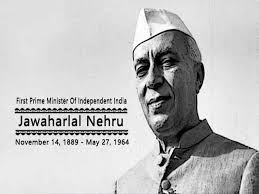
Pandit Jawaharlal Nehru Biography


By: Astha Raghav 

Jawaharlal Nehru :  (14 November 1889 – 27 May 1964) was an Indian independence activist and later the first prime minister of India. Considered one of the greatest statesmen of India and of the twentieth century, he was a central figure in Indian politics both before and after independence. He emerged as an eminent leader of the Indian independence movement, serving India as prime minister from its establishment in 1947 as an independent nation, until his death in 1964. He was also known as Pandit Nehru because of his roots in the Kashmiri Pandit community, while Indian children knew him better as Chacha Nehru.

Failure comes only when we forget our ideals, objective and principles”

                                  – Jawarharlal Nehru 


          The son of Swarup Rani and Motilal Nehru, a prominent lawyer and nationalist statesman, Nehru was a graduate of Trinity College, Cambridge, and the Inner Temple, where he trained to be a barrister. Upon his return to India, he enrolled at the Allahabad High Court and took an interest in national politics, which eventually replaced his legal practice. A committed nationalist since his teenage years, he became a rising figure in Indian politics during the upheavals of the 1910s. He became the prominent leader of the left-wing factions of the Indian National Congress during the 1920s, and eventually of the entire Congress, with the tacit approval of his mentor, Mahatma Gandhi. As Congress president in 1929, Nehru called for complete independence from the British Raj and instigated the Congress’s decisive shift towards the left.

Nehru and the Congress dominated Indian politics during the 1930s as the country moved towards independence. His idea of a secular nation-state was seemingly validated when the Congress swept the 1937 provincial elections and formed the government in several provinces; the separatist Muslim League fared much poorer. However, these achievements were severely compromised in the aftermath of the Quit India Movement in 1942, which saw the British effectively crush the Congress as a political organisation. Nehru, who had reluctantly heeded Gandhi’s call for immediate independence, for he had desired to support the Allied war effort during World War II, came out of a lengthy prison term to a much altered political landscape. The Muslim League under his old Congress colleague and now opponent, Muhammad Ali Jinnah, had come to dominate Muslim politics in India. Negotiations between the Congress and the Muslim League for power sharing failed and gave way to the independence and bloody partition of India in 1947.

The Congress elected Nehru to assume office as independent India’s first prime minister, although the question of leadership had been settled as far back as 1941, when Gandhi acknowledged Nehru as his political heir and successor. As Prime Minister, he set out to realise his vision of India. The Constitution of India was enacted in 1950, after which he embarked on an ambitious program of economic, social and political reforms. Chiefly, he oversaw India’s transition from a colony to a republic, while nurturing a plural, multi-party system. In foreign policy, he took a leading role in the Non-Aligned Movement while projecting India as a regional hegemon in South Asia.

Under Nehru’s leadership, the Congress emerged as a catch-all party, dominating national and state-level politics and winning consecutive elections in 1951, 1957 and 1962. He remained popular with the people of India in spite of political troubles in his final years and failure of leadership during the 1962 Sino-Indian War. In India, his birthday is celebrated as Children’s Day.

Thank You !

The importance of public transport


By: Astha Raghav 

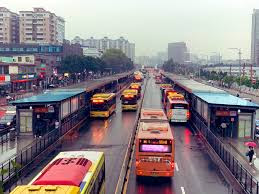
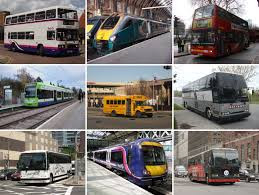
Public transportation contributes to a healthier environment by improving air quality and reducing oil consumption, and through better land-use policies. It also helps to expand business development and work opportunities. And, it is critical for emergency situations requiring safe and efficient evacuation. In terms of energy consumption, public transportation is better than individualtransport in a personal vehicle. In England, bus and rail are popular methods of public transportation, especially in London.

Public transportation is reducing energy consumption and harmful carbon dioxide (CO2) greenhouse gas emissions that damage the environment. Traveling by public transportation uses less energy and produces less pollution than comparable travel in private vehicles.

The increase in the number of cars and bikes has added to various pollution problems. The smoke emitted from vehicles has made the cities living gas chambers. The new policies of economic liberalisation has opened doors for the multinationals and the cars of various companies have become status symbols of the upper middle class. The amount of harmful gases in the air is alarmingly on the rise. They affect our eyes and lungs, giving rise to all kinds of cardiovascular and respiratory diseases.

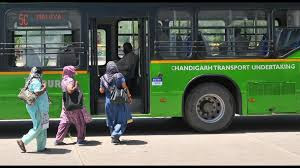
We, as the responsible citizens of India, must take steps to reduce these man-made problems and start using public transport as much as possible. The introduction of Metro Rail is a boon to the commuters as it saves time and money. These days, public transport have been made safe and secure. They are comfortable, clean and a cheaper alterative to personal vehicles for all office goers. Even the services of the Government road transport is good with GPS and A.C. installed for the convenience of the passengers.

Using public transport would definitely save fuel, reduce harmful gas emissions, further reducing one’s carbon footprint and eventually the causes and effects of global warming.

Thank You!

“Journaling”

For some of you, journaling may seems something old fashioned, or something that the people of 1960 may had done. Even a lot of us might have had a habit of putting down their thoughts, feelings in a dairy, but then eventually when we grew up we stopped writing. But now again, journaling is making a huge comeback. It’s filling Pinterest boards and also making headlines. You can even see on the explore feed on Instagram, about how journaling is now getting popular again. Many people have made their journal accounts on Instagram in order share their thoughts, and how aesthetically they decorate that diary page with lots of stickers, aesthetic tapes, stamps, flowers, leaves, novel pages and what not! Seeing such beautiful and aesthetic pages can make you fall in love with the idea of journaling even more.. back then in 1900s people were soo into journaling, they had a habit of doing it so. Even most of the mysteries or some real facts were discovered only through the journal books that were written by the people back then, the facts which we study in our books or the theories, the history everything that we read today was deciphered in the light brown pages of the dairies back then. Journaling affects you mentally & physically, writing down important events of life, your personal feelings, your experiences, the lessons you’ve learned leaves a permanent impact on your mind and on your personality. The experiences that you’ve faced in your life , and what you’ve learned from them makes you even stronger and stronger with more and more experience ahead. Journaling and writing notes soothes you, it takes all the heaviness your heart has, it gives you a shoulder to lean and cry on to the extent by writing only half of the problems always disappear.


  1. Journaling helps your injuries to heal faster.

Journaling helps older adults heal faster after a medically necessary biopsy, researchers in New Zealand have shown. Researchers noted that writing about stressful events helped patients make sense of tragedy and reduced their distress. Long-term upset can increase your body’s level of stress hormones like cortisol, which weakens your immune system. So writing about distressing experiences lowers your cortisol levels and allows you to heal quicker.

3. Journaling reduces your stress and Anxiety.

Journaling lets you work through your anxious feelings and obsessive worries before you descent into rumination and stress. When you ask yourself how likely the worst-case scenario is, you gain a more realistic perspective on life. Getting your thoughts down on paper helps you identify stress-inducing thoughts and beliefs that are distortions of reality. You begin to notice when you’re in a bad mood or when you overgeneralize with words like “always” or “never” to describe your experiences.

3. Journaling helps you learn from your experiences.

When you journal and reflect on the day, you’re more likely to draw lessons from what you’ve gone through. And in this digital age when you’re consuming massive news and information, journaling lets you step back and actively engage with ideas you’ve encountered. It connects you with complicated concepts when you’re able to phrase them in your own words.

4. Benefits of journaling for students

The practice of writing can enhance the brain’s intake, processing, retaining, and retrieving of information. Through writing, students can increase their understanding of complex material, overcome their insecurities, unfamiliar concepts and subject-specific vocabulary. Vocabulary can definitely be improved by writing daily. Vocabulary is something that should always be up to mark and through journaling through writing you can use different words, and can also get to know about more and more words daily.

5. Journaling improves your communication skills.

When you journal, you learn to better express yourself. And this lets you better communicate your feelings with others. The more self-aware you become, the more you can make yourself understood to others. Writing leads to clear thinking – which in turn leads to clear communication. Journaling can also benefit you in relationships and marriage, where so many problems come from misunderstandings. Journaling is used in classrooms to help students learn to better express themselves. Writing increases self-efficacy and promotes a healthy sense of control over one’s life, which is vital for child and adolescent development. Journaling is an incredible tool for people of all ages to learn to label their thoughts and emotions, which in turn makes it easier to communicate with others.

6. Journaling improves your memory too.

It’s proven that students who take notes during lectures retain information better. Just writing something down improves your ability to remember it. Journaling is also a great way to remember specific moments in time and phases of your life. When you write by hand, it stimulates a collection of cells called the Reticular Activating System (RAS). Your mind then puts whatever you’re focusing on at the forefront and processes it at a deeper level. The physical act of writing brings information centerstage and lets your brain know it should pay close attention. When you’re writing, you’re letting your brain know your words are important.

7. Journaling boosts your creativity.

Journaling lets you explore uncharted thoughts and emotions. Writing about your recurrent thoughts gets them out of the way and clears your mind to make room for other ideas. Writing on paper also lets you examine your ideas from various perspectives. Journaling helps you keep track of your ideas, inspirations, quotes and sketches. They may be just scribbles when they stand alone, but they add up to powerful insights over time. A journal is a safe space for honesty that will free you from thinking about what you should be writing. It also frees you from endlessly comparing yourself to others. Writing puts you into your own lane and boost your self-esteem. It makes you less likely to worry about pleasing others. Journaling is also great for brainstorming, dreaming out loud and just letting your mind wander. Journaling can also be used to record your ideas and take notes on inspirations. These notes give you content to inspire your own work.