A.P.J. Abdul Kalam biography

 
By: Astha Raghav 

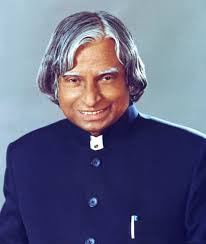
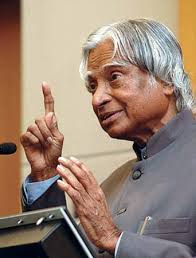
A.P.J. Abdul Kalam , in full Avul Pakir Jainulabdeen Abdul Kalam, (born October 15, 1931, Rameswaram, India—died July 27, 2015, Shillong), Indian scientist and politician who played a leading role in the development of India’s missile and nuclear weapons programs. He was president  of India from 2002 to 2007.

Kalam earned a degree in aeronautical engineering  from the Madras Institute of Technology and in 1958 joined the Defence Research and Development Organisation (DRDO). In 1969 he moved to the Indian Space Research Organization, where he was project director of the SLV-III, the first satellite launch vehicle that was both designed and produced in India. Rejoining DRDO in 1982, Kalam planned the program that produced a number of successful missiles, which helped earn him the nickname “Missile Man.” Among those successes was Agni, India’s first intermediate-range ballistic missile, which incorporated aspects of the SLV-III and was launched in 1989.

From 1992 to 1997 Kalam was scientific adviser to the defense minister, and he later served as principal scientific adviser (1999–2001) to the government with the rank of cabinet minister. His prominent role in the country’s 1998 nuclear weapons tests solidified India as a nuclear power  and established Kalam as a national hero, although the tests caused great concern in the international community . In 1998 Kalam put forward a countrywide plan called Technology Vision 2020, which he described as a road map for transforming India from a less-developed to a developed society in 20 years. The plan called for, among other measures, increasing agricultural productivity, emphasizing technology as a vehicle for economic growth , and widening access to health care and education.

Thank You!

Goods and Services Tax


By: Astha Raghav 

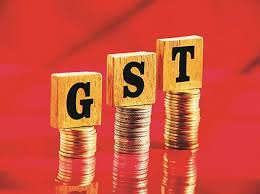
The goods and services tax (GST) is a value-added tax levied on most goods and services sold for domestic consumption. The GST is paid by consumers, but it is remitted to the government by the businesses selling the goods and services.

The goods and services tax (GST) is an indirect federal sales tax that is applied to the cost of certain goods and services. The business adds the GST to the price of the product, and a customer who buys the product pays the sales price inclusive of the GST. The GST portion is collected by the business or seller and forwarded to the government. It is also referred to as Value Added Tax( VAT) in some countries.

Most countries with a GST have a single unified GST system, which means that a single tax rate is applied throughout the country. A country with a unified GST platform merges central taxes (e.g., sales tax, excise duty tax, and service tax) with state-level taxes (e.g., entertainment tax, entry tax, transfer tax, sin tax, and luxury tax) and collects them as one single tax. These countries tax virtually everything at a single rate.

Only a handful of countries, such as Canada and Brazil, have a dual GST structure. Compared to a unified GST economy where tax is collected by the federal government and then distributed to the states, in a dual system, the federal GST is applied in addition to the state sales tax. In Canada, for example, the federal government levies a 5% tax and some provinces/states also levy a provincial state tax (PST), which varies from 7% to 10%. In this case, a consumer’s receipt will clearly have the GST and PST rate that was applied to their purchase value.

More recently, the GST and PST have been combined in some provinces into a single tax known as the Harmonized Sales Tax(HST). Prince Edward Island was the first to adopt the HST in 2013, combining its federal and provincial sales taxes into a single tax. Since then, several other provinces have followed suit, including New Brunswick, Newfoundland and Labrador, Nova Scotia, and Ontario. 

France was the first country to implement the GST in 1954; since then, an estimated 160 countries have adopted this tax system in some form or another. Some of the countries with a GST include Canada, Vietnam, Australia, Singapore, United Kingdom, Monaco, Spain, Italy, Nigeria, Brazil, South Korea, and India.

India established a dual GST structure in 2017, which was the biggest reform in the country’s tax structure in decades. The main objective of incorporating the GST was to eliminate tax on tax, or double taxation, which cascades from the manufacturing level to the consumption level.

For example, a manufacturer that makes notebooks obtains the raw materials  for, say, Rs. 10, which includes a 10% tax. This means that they pay Rs. 1 in tax for Rs. 9 worth of materials. In the process of manufacturing the notebook, the manufacturer adds value to the original materials of Rs. 5, for a total value of Rs. 10 + Rs. 5 = Rs. 15. The 10% tax due on the finished good will be Rs. 1.50. Under a GST system, the previous tax paid can be applied against this additional tax to bring the effective tax rate to Rs. 1.50 – Rs. 1.00 = Rs. 0.50.

In turn, the wholesaler purchases the notebook for Rs. 15 and sells it to the retailer at a Rs. 2.50 markup value for Rs. 17.50. The 10% tax on the gross value of the good will be Rs. 1.75, which the wholesaler can apply against the tax on the original cost price from the manufacturer (i.e., Rs. 15). The wholesaler’s effective tax rate will, thus, be Rs. 1.75 – Rs. 1.50 = Rs. 0.25.

Similarly, if the retailer’s margin is Rs. 1.50, his effective tax rate will be (10% x Rs. 19) – Rs. 1.75 = Rs. 0.15. Total tax that cascades from manufacturer to retailer will be Rs. 1 + Rs. 0.50 + Rs. 0.25 + Rs. 0.15 = Rs. 1.90.

India has, since launching the GST on July 1, 2017, implemented the following tax rates: 

  • A 0% tax rate applied to certain foods, books, newspapers, homespun cotton cloth, and hotel services.
  • A rate of 0.25% applied to cut and semi-polished stones.
  • A 5% tax on household necessities such as sugar, spices, tea, and coffee.
  • A 12% tax on computers and processed food.
  • An 18% tax on hair oil, toothpaste, soap, and industrial intermediaries.
  • The final bracket, taxing goods at 28%, applies to luxury products, including refrigerators, ceramic tiles, cigarettes, cars, and motorcycles.                                                          Thank You!                                                        

Say No To Crackers


By: Astha Raghav 

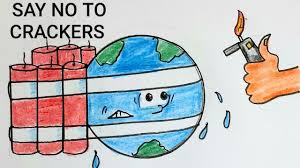
DIWALI and one can hear the sounds of firecrackers exploding from all directions. People of all age groups are fascinated with firecrackers, which form a prominent part of the Diwali celebrations. Firecrackers are known to cause air pollution as well as noise pollution and are extremely harmful for senior citizens and small children.   Pets such as dogs and cats also suffer on account of firecrackers as animals have a more sensitive sense of hearing than humans. 

Firecrackers can cause hearing loss, high blood pressure, sleeping disturbances and sudden exposure to loud noise can cause temporary or permanent deafness or even result in heart attack. 

Diwali is the biggest festival of India and its sanctity should not be blown away in smoke. This festival of goodwill can be celebrated in a number of ways other than bursting firecrackers.

Let each one of us take a pledge THIS DIWALI to “SAY NO TO CRACKERS” and invest in a safer and greener future. Diwali is the festival of lights and we must enlighten our lives with the sparkle of joy and goodwill, forget past grievances and look ahead towards a brighter and happier future.

Over the years several Bollywood celebrities have vowed against bursting crackers during Diwali and some have made good use of social media to raise awareness regarding the ills they cause not just to the environment but also humans and animals. In 2017, actress Alia Bhatt started the #PoochOverPataka campaign as she couldn’t bear to see her pet suffer due to the noise pollution. Anushka Sharma followed it with #PAWsitive. Each year, several artists speak of their concerns over health, pollution and the amount of waste bursting crackers causes.

“I remember as a boy I used to love firecrackers and I’m not going to be ashamed of that. But now I believe the time of crackers is over,” actor Boman Irani told MAIL TODAY. “One should understand that. Environmentally, for older people, for dogs, for your own lungs, for all the money that could have been put to better use Even the noise I can’t stand anymore. I find it tough to find a positive, except for the sparkling colours they give.”

Actress Isha Koppikar agreed and said celebrating a “green” Diwali is an excellent idea. “Instead donate your old stuff to the needy people, avoid plastic for gifts packaging, make rangoli with flowers, flour or rice products, gift herbal products or a plant. Buy earthen lamps or diyas and avoid using decorative electric lights. This Diwali let the Earth breathe,” she said.

But as they say charity begins at home and The Family Man actor Sunny Hinduja makes sure he doesn’t burst crackers and encourages his nephew and niece not to do it either.

“I was in Indore one Diwali with my brother and bhabhi, and I came home from the hostel to celebrate with them. I remember we were trying to burst what was known as the Laxmi Bomb’ but it wouldn’t light and we were scared because we had heard horror stories of it suddenly bursting when you went near it. So we waited for a long time and when I did go to check, it literally burst in my face,” recalled Hinduja. “If you don’t burst crackers on Diwali, it doesn’t mean you are breaking tradition. Traditions are made by us and it’s time we evolve, considering pollution, cutting down trees global warming, so much is happening. So even if it’s not such a big contribution from our side, we shouldn’t burst crackers and tell others not to do it either. That’s our responsibility as good citizens.”

Thank You!

Take Care of Stray Animals


By: Astha Raghav 

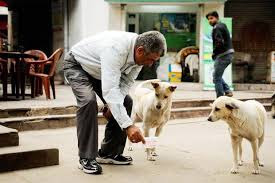
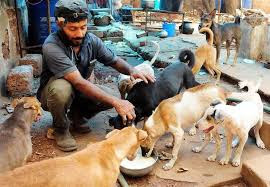
Every year, millions of animals end up in shelters all across the globe. These animals are either rescued from the streets or dropped off at the shelter. Though a lot of these shelters provide outstanding care and attention, there are still limitations to what they can do.

As an individual, you can contribute to these efforts in a lot of different ways. Running a shelter involves a ton of work and they will need all the help they can get. Offering even a small donation or volunteering a short amount of your time can make a huge difference.

Animals, whether we are aware or not, play a huge role in our lives and in the environment. Therefore, it’s in our best interest to help them however we can.

Altruism aside, there are quite a few key reasons we should care for them. One reason is to prevent the spread of disease.

Diseases, such as rabies, pose a huge threat to humans. The disease is fatal to humans, as well as to the animals who carry it. Infected animals become aggressive and bite without provocation.

Rescuing animals helps prevent the spread of rabies by reducing the population of potential carriers in the wild. This reduces the chance of infected animals harming other people and animals in the community.

The best and most effective way to help homeless animals is to raise awareness in the community.

Talking to people in the community can bring about the changes that will dramatically improve the welfare of these animals.

Spay and neuter your own pets, if you have them, and tell your friends to spay and neuter their pets. Spaying and neutering help control the population of strays in the community.

Advocate for adopting pets instead of shopping. There are a lot of pets in shelters today that are eager to find their forever homes. Adopting helps improve their lives and allows shelters to accommodate more pets that need their help. Some shelters even give you a starter kit of blankets, toys, and other things you may need to care for your new pet.

You can also consider donating your time and skills to your local centers. Volunteering to help out in the shelter for a few hours a week will surely be appreciated by the staff. If you have other skills such as carpentry, accounting, or graphic design, you can offer your services to the shelter. You can help build things for the animals, balance the shelter’s books, or design advertisements and print ads for the shelter.

If you see a stray dog in your area, you can help them, but you should do so with caution.

Never approach stray dogs, especially if they look scared. You may have the best intentions, but they don’t know that and could bite if you get too close. Instead, call your local animal control or animal rescue center for assistance.

Stray dogs are easily spooked and can become aggressive when cornered. It is best to let the experts handle the situation for the safety of the dog and everyone involved. Once in custody, the dogs will be tested for various diseases and their overall health is checked.

Just like dogs, stray and feral cats can be very aggressive when approached.

For you and the cat’s safety, it is best to call for professionals to deal with the situation. Until proper testing is done, one can’t be sure if the animal is free from diseases like rabies which pose a serious threat to humans.

Once in custody, you can help the cat by visiting them often once. Donating some supplies such as blankets and a litter box would be a great way to help as well.

Once fully recovered and tested for any diseases, fostering cats until they find a forever home is a possibility. Who knows, you might find a furry friend that you’d like to adopt yourself!

<

p style=”background-color: white;color: #444444;font-family: Roboto, sans-serif;font-size: 15px;margin: 0px 0px 20px;padding: 0px”>Thank You!