

Confidence isn’t walking into a room thinking that you’re better than anyone. It’s walking in knowing. That you don’t want to COMPARE yourself to anyone. Comparing yourself to another person that isn’t even in your system. There’s no thought of comparisons. There is no competition with any other human. You are not below anyone that’s confidence. When you can get to the place in your life. Where comparison is dead. When you are good enough not to others. But to yourself that is confidence and you can be good enough right now. Because you are good right now. You might just need to change your mindset.” CONFIDENCE “can be developed in many ways. You can start with your physiology, your posture. If I asked you what a confident person looked like would you be able to tell me? Of course you would they look strong, sure of themselves. How are they standing? They are standing TALL. How are their shoulders? They are BACK, upright. They make eye contact their head is up, not down. Now a SHY or introverted person might say. Yeah, well that’s all good for outgoing people but I will never be confident. Anyone can develop confidence. Some might have to work on it harder than others because they have conditioned themselves into a lack of confidence for much of their life but anyone can develop confidence. Even the majority of shy people have moments where they aren’t shy like around people they trust may be family, friends or their partner. Moments where they can be themselves fully. So the shyness is selective which means you can make confidence permanent. If you CONSCIOUSLY decide to be the person and do the things you do not just around those you trust the most, but all the time. Being confident doesn’t mean you are LOUD. It isn’t about being the one that has to be noticed. I’s the opposite, it’s knowing you’re great, without having to be seen. It’s the silent winner. It’s the humble champion. If you lack confidence, you can change. If you lack anything, YOU CAN CHANGE. You can be anything in life including radical personality change. IF you are COMMITTED to finding the answers. “UNLOCK THE GREATEST VERSION OF YOURSELF”. Your true nature of confidence of pure positive energy. Unlock your authentic power today.
Day: November 5, 2021
CALCULATING DAYS OF A DATE
You must have seen several talent-shows where people
would guess the day of a given dates. Some of you must have thought they do it
by memorizing the entire calendar. Well, it somewhat does require memorizing,
not the entire calendar though, and the rest is basic calculation. Let’s jump
right into it.

The method that
we are gonna discuss about is called Doomsday Rule. This algorithm was devised
by John Conway, inspired by Lewis Carroll’s perpetual calendar algorithm, in
the year 1973. By using this method anyone can calculate the day of any date in
any given year.
In this method one need to remember these special
dates also known as doomsday, these days include:
4/4,6/6,8/8,10/10, 12/12, 7/11,11/7, 9/5,5/9
[ Note- Every dates in this article are in the format
of month/day/year]
The date for the month of January and February differs
according to the leap year.
The special dates of January are the 3rd
and 4th (for leap year) and for February, it is 28th and 29th
(leap year). So, it is 1/3 and 2/28 for three years and ¼ and 2/29 the other.
For March, the special date is the pi day, that is,
3/14.
Other notable special dates are 10/31- Halloween and
12/26- boxing day.
Now, one may ask what’s special about these dates, to
that, these days in a given year appears on the same day. For example, if you
know the 12/12 is Friday, then the rest of the dates mentioned will also be on Fridays.
Now that we know the trick let’s learn about how to apply
them. For example, let’s find out the day of 11/26/2023.
For every question we need a reference date, which
could be any of the doomsday. For this case let’s take the pi day as the reference.
Once we know about pi day we will automatically know about the rest of the days.
And that’s when we face the question that how do we know that. There is a
simple trick to that as well. All you need to remember is that the pi day was a
Tuesday in the year 2000.
2000 – Tuesday
2001- Wednesday
2002- Thursday
2003- Friday
2004- Sunday
As you can see, that every year the day increments by
one and in the leap year it is incremented by 2.
When you need to find out about past dates, those of
before 2000, all you need to remember is this pattern,
1700- Sunday
1800- Friday
1900- Wednesday
2000- Tuesday
And this pattern repeats, which means 2100 pi day
would be on Sunday, 2200 on Friday and so on.
Now let’s get back to the question. So, the year is
2023. We know on 2000 pi day was in Tuesday, all we gotta do is add the number
of years plus the number of leap years to Tuesday,
Tuesday + 23 + 23/4(=no. of leap years)
Tuesday + 23 + 5 (ignoring the decimal, which is to be
done in every case, since years can’t be in decimal)
Tuesday + 28= Tuesday (*since 28 is a multiple of 7)
(*when days are added with numbers which 7 or multiple
of 7, you would get the same day)
So, pi day in 2023 is a Tuesday. After this step you
need to find the nearest doomsday to the date in question. Here, it would be
11/7. 11/7 is also Tuesday. To find 11/26 we gotta add
Tuesday + (26-7) = Tuesday + 19 = Sunday
Hence 11/29/2023 will be a Sunday.
You can go to the calendar and check if the results
are correct. You can try this method on any date and year and see it for
yourself.
MAKE HAY WHILE THE SUN SHINES
The work of the farmer depends almost entirely on the weather which is an uncertain factor; he has accordingly, bright sunshine. So the farmer has to be on the alert to get his hay in, while the weather is favorable, lest it should be ruined by rain and mist.

In an extended sense, the difficulties of the farmer are like the difficulties of all people, no matter what their walks of life ( maybe ). Like the weather, life and health are uncertain; opportunities rarely occur and never repeat themselves.

When an opportunity offers itself, man must seize it and use it to the best advantage. Otherwise, he gets ruined like the negligent farmer whose hay is destroyed by a change in weather. The man who takes things easy postpones till tomorrow what he should do today, suffers heavily like the one who does not strike while the iron is hot. It is, therefore, necessary to make use of favorable opportunities. While we have health & the means, against a day when we may be deprived of one or the other, or both.
Death Anniversary of Dr Bhupen Hazarika:Tribute to ‘Bard of Brahmaputra’
Dr. Bhupen Hazarika was a genius person, a great human being, a legendary music maestro, lyricist, writer, composer, film director, and producer. He is popularly known as the “Bard of Brahmaputra”. Although he left for heavenly abode on 5 November 2011 in Mumbai at the age of 85, he is the heart of millions in the world through his melodious songs as well as versatile activities. He was an erudite scholar also as he won a scholarship from Columbia University, New York and completed his Ph.D. in Mass Communication. He completed his doctoral degree on thesis “Proposals for Preparing India’s Basic Education to use Audio-Visual Techniques in Adult Education’. And later on from Chicago University, USA, he received the Lisle Fellowship.
Born at Sadia, in upper Assam on 8 September 1926, Bhupen Hazarika was influenced by his father Nilakanta Hazarika (school teacher) and mother Shantipriya Hazarika in singing with high moral value and character. The eldest of ten children, Bhupen Hazarika (as also his siblings) was exposed to music by his mother. At the age of 10 years, he sang a Borgeet (Assamese devotional songs) which greatly impressed Jyotiprasad Agarwala, the noted Assamese lyricist, playwright and Assamese filmmaker. And in 1936, Bhupen Hazarika recorded his first song at the age of 10 years at Aurora Studio in Kolkata then Calcutta. Later on Hazarika sang two songs in Agarwala’s film Indramalati, at the age of 12 years. It is pertinent to mention that Indramalati (released in 1939) is the second Assamese language film, directed by the great Assamese poet Jyotiprasad Agarwala.
Dr. Bhupen Hazarika completed his matriculation in 1940; Intermediate in Arts (IA) from Cotton College in 1942 and then joined Banaras Hindu University for higher study and subsequently completed his B.A. (1944) and M.A. (1946). And already mentioned he was awarded a Ph. D in 1952 from U.S.A.
From his early life, he was against the caste system as initially people talked about his caste, but he simply ignored them. It has to be agreed that one cannot great by caste. Greatness is proved only activities. Dr. Hazarika was singer, lyricist, musician, poet and film-maker and popularly known as ‘Sudhakantha’. His songs, written mainly by himself, are marked by humanity and universal brotherhood. While I was in Bangladesh I observed he was popular among the local Bangladeshis for his Bengali songs.
Dr. Bhupen Hazarika composed music in the renowned films directed by Kalpana Lajmi, inter alia of which are ‘Rudali’, ‘Daman’, ‘Darmiyaan’ and also MF Hussain’s directed ‘Gaja Gamini’.
Dr. Hazarika directed seven Assamese films, one Bengali and one Hindi film and composed music for 31Assamese, 14 Hindi, 15 Bengali and some Karbi, Bodo and Mising films. The first film directed by Dr. Bhupen Hazarika was Erabator Sur which was released in Calcutta in 1956. He also published books for the children viz., Bhupen Mamar Geete-Mate, A, Aa, Ka, Kha and a transcript autobiography — Moi eti jajabor. He was the architect to set up a film studio in Guwahati, the first full-fledged film studio in Assam.
Dr. Hazarika’s activities were rightly recognized time to time by conferring various awards such as Dada Saheb Phalke, Sangeet Ratna, Padma Bhusan, Asam Ratna, Srimanta Sankardev etc. In 2019 conferring Bharat Ratna to him albeit posthumously even then a very factual decision as Dr. Bhupen Hazarika was a versatile person in all respects and without an inch of doubt the decision is praiseworthy. It is pertinent to mention that Assam Assembly had passed a resolution in 2010 urging the Centre to confer Bharat Ratna to him.
Women in Indian Politics

Women In Indian Politics
India is the largest democracy in the world and to sustain its democracy, it has undergone various struggles. As soon as it was freed from the clutches of colonialism, it was faced with the challenges of social and economic development of the country. The Constitution of India has bestowed various rights to its citizens to ensure equal rights and equality, liberty, gender justice etc. Though the constitutional provisions allowed the women to leave the relative calm of the domestic sphere to enter the male-dominated political sphere, the involvement of women in politics has been low key (Khanna, 2009). Khanna has classified the factors which affects the political participation of women in politics into three categories-psychological variables, socio-economic variable and political variable. The questions of reservation for women in representative institutions has long been debated in India. The issue of reservations for women had come up in the Constituent Assembly had been rejected by women representative as it was felt to be unnecessary, since the working of democracy in the normal course would ensure the representation of all sections of Indian society. The suggestions were also seen to underestimate the strength of women to compete as equals (Menon, 2000).
Reservation as a strategy for enhancing women’s status within the new polity had been rejected very early on by women leaders as a retrograde step (Rai & Sharma, 2000). But by 1996, women had emerged as a significant force in politics and almost the same representative of women’s movement who rejected any such demand, demanded reservations. Women had been at the forefront of the movements against corruption and price-rise that preceded the imposition of Emergency. The 1980s saw the emergence of the vocal and visible autonomous women’s groups (Menon, 2000). The question that looms before these is-if increase in the number of women in parliament will bring any socio-economic benefits to them. However, while the political ground in India is shifting with regard to women participation in politics, this is a slow and difficult process, which needs constant vigilance by movements and groups within and outside of state institutions (Rai and Sharma, 2000).
The debate regarding women’s reservations in parliament has taken various shapes. There have been number of arguments for and against it. But a fact that cannot be ignored is that women in India have climbed the ladder too. Although they are not huge in number but they are there. But being a woman, they have faced many brickbats and mud slung. The criticisms that they faced carried an ingrained sexism reflecting the very nature of a male dominated politics.
Access to politics for women has never been a bed of roses. Participation of women anywhere has never been easy but politics being a male bastion traditionally, makes it difficult for the presence of women in it. To penetrate this highly male dominated arena, women have to go through various struggles to consolidate one’s position in it. While it becomes relatively easier for some as compared to others, but it’s never without any struggle or completely easy for any woman.
If we analyse the journey of three women i.e., Indira Gandhi, Jayalalitha and Sushma Swaraj to politics, it will come to view that – initially, these women were not into politics either because they wanted to pursue some other career or they had no one to guide them to it but eventually as in the case of Indira Gandhi, the atmosphere (her house being the centre of freedom movement) during her time as well the pursuance of her father got her into politics. In case of Jayalalithaa, her mentor and guide MGR introduced her to politics while Sushma Swaraj after the pursuance of law developed an interest in politics with moral support from her family. Though Indira Gandhi had a background – involvement of her family in freedom struggle as well as in Parliamentary politics and Jayalalithaa was introduced into politics by the most loved figure of his time MGR and Sushma Swaraj dug her own well, none of these women had an easier path. Being a woman, they had to fight to consolidate their positions in the party. The path through which they got into politics and the intensity of struggle faced by them though differ, but nevertheless, they had to work twice as men to stay, to establish themselves. Jayalalithaa’s modesty had been violated in the Assembly Hall; Indira Gandhi had been dubbed as ‘only man in the politics’ and Sushma Swaraj had been the target of derogatory online trolls. Evaluating the leaders on the basis of their decisions in a democracy is one thing while criticism based on sexism is an entirely different thing.
Being from different family background, lives of every woman is bound to differ, the only common thing is that they are ‘woman’. Being a woman is all that takes for people to throw harsh comments. Indira Gandhi’s tenure was termed as authoritarian while Jayalalithaa was termed as irresponsible and inconsistent. It was so because they were able to keep in check their male counterparts. Any action by a women minister is judged by a gendered perspective and the online trolls faced by Sushma Swaraj while she was the Minister of External Affairs points to this. Jayalalithaa claimed that baseless questions were asked to her because she is a self- made woman.
Why is it that the corruption case of Jayalalithaa has been in the talk for a long time and not that of Mr. Karunanidhi (Jayalalithaa was condemned for arresting him on corruption case just because he was an old ‘man’)? Why is it that the decisions of Indira Gandhi have been equated with an authoritarian rule and not that any other male counterparts? Why the evaluation against every women politician involves threats of rape and beating? Is it because in this highly male dominated politics, participation of women is not accepted for it seems to threaten the authority of men?
The point is that it is not at all unfair evaluating any leader-women or men on the basis of their decisions but criticising them with ingrained sexism in it doesn’t seem to be compatible with the values that we cherish in our democracy. Women continue to be target of sexist remarks but it doesn’t mean that they have stopped asserting themselves with force. Women have taken very active part in various political activism. It doesn’t apply only to urban areas but also to rural women. They have been engaged in political acumen from protesting against the British rule to demands for equal wages. Feminist issues usually appear something else in public discourse (Menon, 2000) be it Uniform Civil Code or Women’s Reservation Bill. While women participation in politics is improving overtime but they constantly have to fight for their presence to be felt. They have to constantly engage in negotiations to consolidate their positions. India, though largest democracy in the world has long way to go to sustain its democratic principles and rights. It still lacks in many ways in terms of gender parity, not only in politics but in many other spheres. But participation of women in politics become important because until and unless women are in decision making position, safe and sustainable cities or lifestyle will be out of reach. Though, legally women have been granted rights but only with social development as well as change in the mind-set will bring life to these rights!
P.S. This is an opinionated piece – believing that everyone is entitled to opinions!
Image Credit: Google
Major Somnath Sharma – The Hero of Battle of Badgam
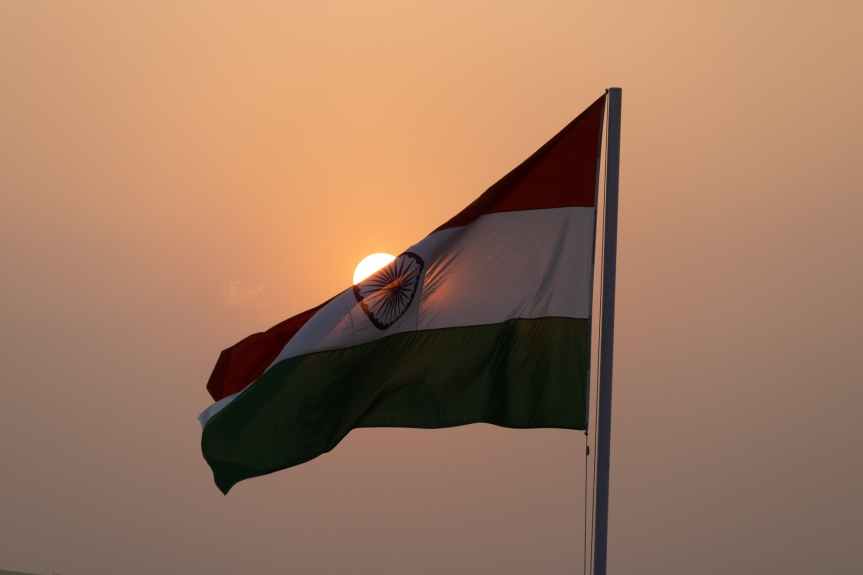
The day November 3rd 2021, marked the 75th anniversary of the Battle of Badgam. This battle was one of the most prominent defensive encounters which took place at Badgam in Kashmir valley, between troops of the Indian Army and Pakistani tribal raiders, on the 3rd of November 1947.
On this occasion, let’s take a look at the life of the legendary war hero, Major Somnath Sharma whose name has become synonymous with the Battle of Badgam. Major Sharma was martyred in action during the battle, while repulsing the infiltrators. He made history by becoming the first recipient of Param Vir Chakra, India’s highest military decoration, for his exemplary leadership and gallantry.
Early life
Major Somnath Sharma was born on 31st January 1923 at Dadh, Kangra (present day Himachal Pradesh).He was a second generation army officer. His father Amar Nath Sharma was an Army Medical Corps Officer and several of siblings have also served in the military services. His uncle Captain K. D Vasudeva, who had died during the Malayan Campaign in World War II, was also a great influence throughout his career.
Somnath, fondly called as Somi, and his brother, called as Tindy in the army circles, were sent to Hampton Court Convent Mussoorie at a young age, as their father was sent to England for a medical course. The brothers then went on to pursue their studies together in Sherwood College, Nainital. Somnath was enrolled in Prince of Wales Royal Military College in Dehradun after his schooling. After passing out from there, he joined the Indian Military Academy, in 1941 but the military training program had to be stopped in between due to the World War.
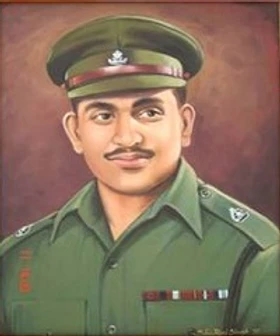
“The enemies are only 50 yards from us. We are heavily outnumbered. We are under devastating fire. I shall not withdraw an inch but will fight to our last man and our last round.”
Param Vir Chakra Citation
Military Life
After a rigorous training of 9 months, in February 1942, he was assigned to the 8th Battalion, 19th Hyderabad Regiment(which later came to be known as 4th Battalion, Kumaon Regiment), at the age of 19.
Arakan Campaign
Under the command of Col. K.S. Thimmayya, he saw action against the Japanese in Burma. Once during a deadly combat with Japan, when a saw a wounded Kumaoni soldier who was stranded on the field due to his injury, Somnath picked him up and carried him on his back through the Japanese shelling to a safe place. He was mentioned in dispatches for many such acts of bravery exhibited during the Arakan campaign.
Battle of Badgam
On the 22nd of October 1942 the Kashmir valley was invaded by Pakistan. In response to that, on 27th October 1942, a contingent of troops of the Indian army was airlifted to Srinagar. Around this time, Major Somnath Sharma had returned to India and was an adjutant in 4 Kumaon, where he had picked up his duty to ensure internal security of Punjab. That and his experience in working with the police and administration during the 1947 unrest, qualified him to be chosen as a commander of D company of the 4th Battalion of Kumaon Regiment. Somnath at this time, was recovering from an injury sustained previously on the hockey field and his left hand was still in plaster cast and hence initially, the commanding officer of 4th Battalion Kumaon was hesitant in sending Somnath along with the troops, but ultimately had to give in to Somnath’s persistence.On 31st October, D Company of 4 Kumaon Regiment was flown to Srinagar.
On November 3rd 1942, a batch of 3 companies – A and D company of 4 Kumaon, led by Major.Sharma and 1 Para Kumaon commanded by Captain Ronald Wood – was deployed to Badgam to search for the infiltrators and stem their advance towards Srinagar.
Major Somnath’s company had taken position and dug trenches on a hill west of the village and 1 Para Kumaon had positioned themselves in the south east part of the village. According to the Major’s report, the village seemed calm and eerily quiet. Detecting no enemy movements, 1 Para Kumaon was instructed to take a round of the east and go back to the airbase in Srinagar. By around 2 p.m, A company was also removed from the field and D company was instructed to stay in position until 3 p.m.
Meanwhile, on the other side of the border, the Lashkar, under the leadership of a Pakistani major was planning an attack on the Indian soldiers patrolling the area and was accumulating in small units, to avoid suspicion.
Half an hour after the withdrawal of A company, a group of villagers who had gathered around a nala (water body), began to move around and disperse in different directions. Little did the Kumaonis know that these were the infiltrators disguised as civilians with their weapons hidden inside their loose cloaks.The company was hence shocked when firing commenced from the houses in the village. In order not to endanger the lives of innocent civilians, counter-fire was not ordered. While Major Sharma was reporting the changed situation in the village, a large group of around 700 odd raiders barged in and surrounded the company from three sides. The enemy opened heavy mortar fire on the company.
The company suffered heavy casualties from the attack and were vastly outnumbered by a ratio 7:1. Realising that the city of Srinagar and the airfield would be vulnerable if they failed to engage the raiders, Major Sharma held onto his position and urged his men to fight tenaciously. Even when he knew that his company wouldn’t be able to stop the enemy for long, he and men fought ferociously. It was a real challenge to keep up the spirits of his men alive in the given circumstances. This is when he displayed his exemplary leadership skills by rushing from one post to another boosting the team’s morale and motivating them to put up a brave defense. He laid out panels to guide the Indian aircrafts, which were coming for their aid, to the enemy targets. On realising that his company’s firing power had been adversely affected as a result of the heavy casualties suffered, he took up the task of filling the magazines and issuing them to his men operating on light machine guns. While he was at it, a mortar shell exploded on a pile of ammunition right next to him, leading to his death.
His exceptional courage set an example for his men, who continued to fight even after his death with all the vigour that they had. However, by the time reinforcements arrived, the company had suffered severe damage including the death of Major Somnath Sharma, one Junior Commissioned Officer and 20 other soldiers. Sharma’s company was successful in inflicting much heavier losses on the enemy. The raiders had lost over 200 men and their leader had been incapacitated, which resulted in their movement losing its momentum. The fierce resistance of Sharma’s company delayed the enemy for 6 crucial hours, thus giving the Indian Air Force enough time to get into position and thus preventing the infiltrators from gaining the airfield.
For his exceptional valour, exemplary leadership and supreme sacrifice, Major Somnath Sharma was awarded the Param Vir Chakra posthumously, on June 21st 1950.
On the 75th ‘Battle of Badgam Day’, November 3rd 2021, the Indian Army paid tribute to this brave son of India who laid down his life to defend his motherland.
 Eduindex
You must be logged in to post a comment.