The Awe-Inspiring Journey of Captain Lakshmi

The era of Indian Independence Struggle is one of the most painful and shattering phases in the country’s history. But it was also a period which saw the emergence of some of the finest leaders of the country.

Captain Lakshmi Sehgal is one such leader who ardently fought for the freedom of India. At a time when most Indian women rarely stepped outside of their society approved roles, here was a woman who not only broke all the social conventions but also aced her roles as a firebrand revolutionary and a medical practitioner.

Source: thetalentedindian.com

Early Life

Born to a progressive family in Madras, to S.Swaminathan, a criminal lawyer at Madras High Court and A.V Ammukutty, a renowned social worker and activist, Lakshmi Sehgal aka Captain Lakshmi was an iron lady who dedicated her entire life to public service in various capacities. She wore many hats: she was the commander of Rani of Jhansi regiment – the all-women regiment of the Indian National Army, a doctor,  social activist and a member of the Communist Party of India (Marxist).

Right from her childhood, she never missed a chance to voice her opinions or rebel against the social evils. She came from a family of active Gandhi supporters who had strong nationalist leanings, so it was only natural that she was drawn into the ongoing freedom struggle.

Lakshmi Swaminathan to Captain Lakshmi – The Journey

In 1940, she left for Singapore, where she set up a clinic with a focus on making medical treatment and facilities available for people from all walks of life. Meanwhile, she also joined the Indian Independence League, formed by Rashbehari Bose. It was around this time, in 1942, that an army for Indian independence was formed by Captain Mohan Singh and a few other Indian war prisoners in Singapore. The army was slowly losing its initial momentum due to the lack of a firm commitment from the Japanese side regarding their participation in the war. It was the arrival of Subhash Chandra Bose which proved to be a real game changer for the Indian independence movement in Singapore.

Captain Lakshmi was one among the many who had gathered to listen to Bose while he addressed the crowd in 1943 at Singapore. He was keen on forming an army not only composed of Indian war prisoners but also of civilian Indians settled in Malaysia, Singapore and Thailand. He also wanted to create an all-women regiment.

Rani of Jhansi Regiment

The turning point in Lakshmi Sehgal’s life came when she was asked by Netaji to form and lead the all-women regiment. Whether it was healing wounds or holding firearms, she always put her heart and soul into whatever she did. This young woman took charge and managed to mobilise around 25-30 women for the regiment. These were mostly second or third generation Indian women who had grown up in South East Asia, who were fighting for the freedom of their motherland that they hadn’t even seen. Her ability to galvanize such a group of civilians, train them and form a regiment speaks volumes about her determination and charisma.That was the beginning of the Rani of Jhansi regiment and her life as Captain Lakshmi.
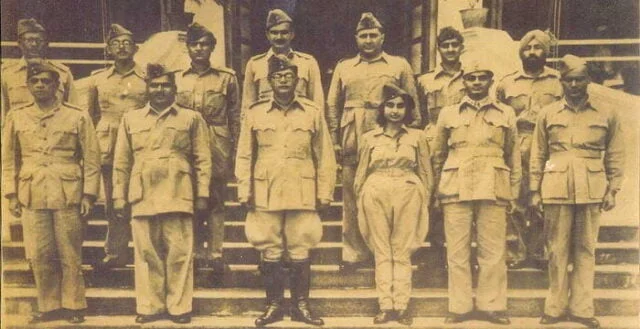
Source:edtimes.in

The INA marched to Burma in 1944, but before they could enter Imphal they had to beat a retreat and she, along with others, was captured by the British army. She was placed under house arrest in Burma and was later sent to India in 1946. 

She was a woman of mettle and nothing could ever dampen her spirits. She continued to fight for the freedom of the country once she was back in India and actively campaigned for the release and rehabilitation of the imprisoned INA personnel. Her fight for freedom continued even after the release of the war prisoners, including Col.Prem Kumar Sehgal, in March 1947. Later she got married to Col.Prem Kumar Sehgal and moved to Kanpur.

Later Life 

For a person as enthusiastic and passionate as her, every day was a new opportunity to serve her country and its people. She continued her medical practice in Kanpur and was actively involved in providing aid for the refugees pouring into the country following the partition.

In the early 1970s, through her daughter Subhashini who had joined CPI(M), it was brought to her attention the need for doctors and medical supplies for the refugees from  Bangladesh. She didn’t have to think twice before packing up enough supplies, clothes and medicines and leaving for Calcutta to provide her service in the Bangladesh refugee camps along the border areas.Her ideologies were inherently communist, and hence, she joined the Communist Party of India (Marxist) in 1971 and represented the party in Rajya Sabha.
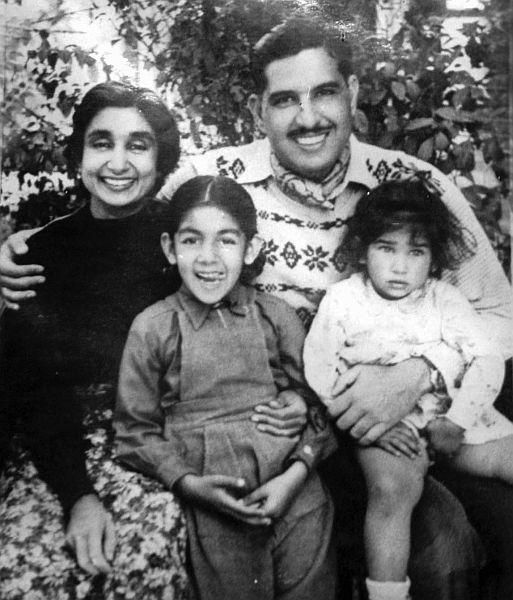
Source: penbugs.com

She never shied away from going out onto the streets of Kanpur during the anti-Sikh riots of 1984,  to confront the anti-Sikh mobs and to ensure the safety of the Sikhs and Sikh establishments near her clinic. She participated actively in the restoration of peace during the riots.

She was rightly called Captain Lakshmi for she was a born leader. Be it leading the campaigns and activities of the All India Democratic Women’s Association or the medical camps in Bhopal  following the Gas Tragedy, she conducted it all with ardent passion and dedication. 

Her charisma, dedication and undying spirit to fight for what she believes in were a few of the many reasons why she was selected jointly by all four leftist parties as the sole opponent of Dr. APJ Abdul Kalam in the 2002 Presidential elections. In spite of knowing that her chances of winning are slim, she took that as a golden opportunity to scrutinise a political system that allowed the weeds of poverty and injustice to grow by feeding divisive and irrational thoughts to the society.

At an age when most people retired to the comforts of their homes,  she regularly treated patients at her clinic. Service to humanity was the motto of her life and she never let her age get in the way of service.

She was honoured with Padma Vibhushan in 1998 and was also bestowed with an honorary doctorate by Calicut University.
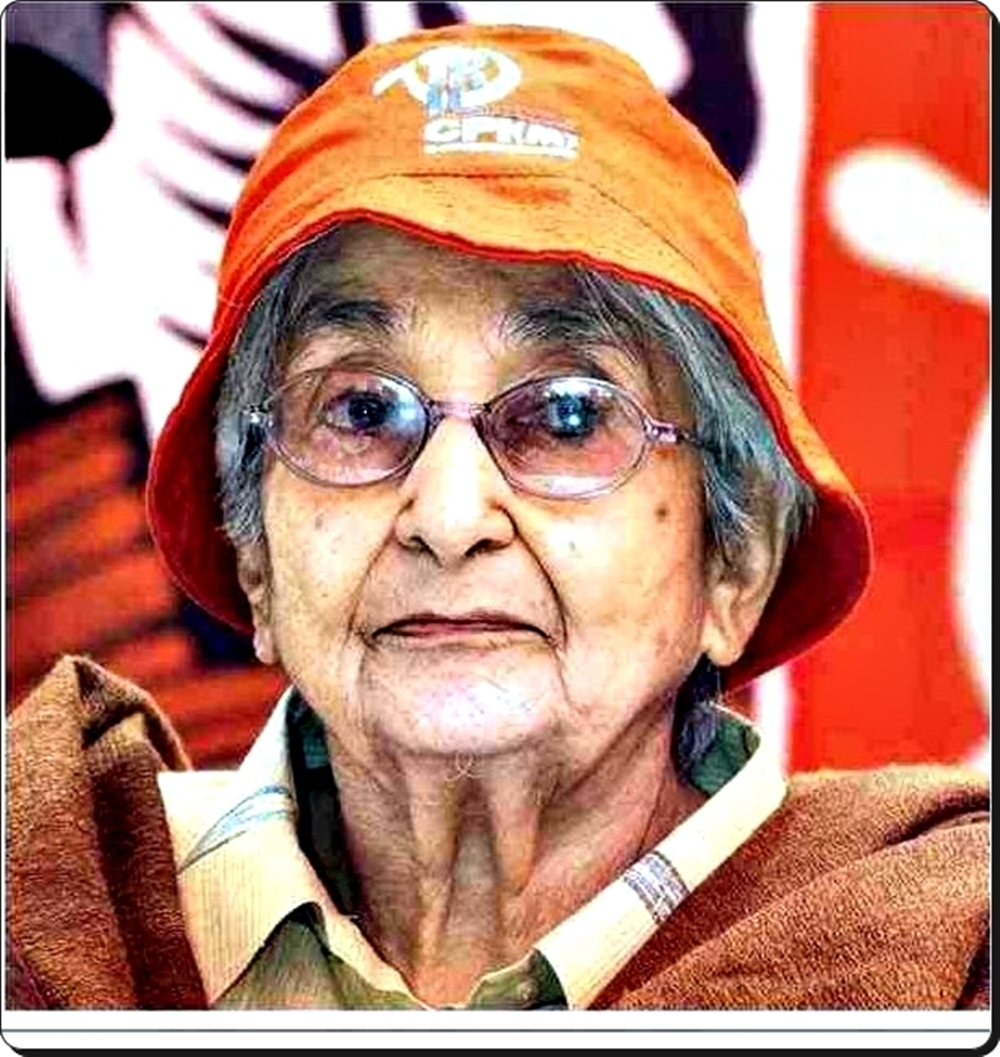
source:thebetterindia.com

Captain Lakshmi was one such person who was hard to box in by the conventions of the society. During the course of her entire life, which was only a couple of years short of a century, she had seen it all – the colonial rule, India’s struggle for independence and the post-independence nation building and transformation of the country. And through it all, she had been an active contributor to the society, who always positioned herself firmly on the side of the oppressed and needy. 

Captain Lakshmi passed away on 23rd July 2012 following a cardiac arrest, but not before leaving behind her a legacy of sheer will, compassion and valour, which continues to inspire thousands of people across the country.

ACCIDENTAL INVENTIONS

 The history is full of stories about the great
inventions of man-kind. These are the inventions that now make our life easier as
well as convenient. But some of these came into existence accidentally. Despite
that they made a huge change in fields of science and also our life-style. Below
is six- great inventions that were accidentally invented.


Saccharin-Artificial sweetener

 Constantin Fahlberg,
a Russian chemist, was working in his lab right after which he went to have sandwiches
without washing his hands. He realized that the usual sandwich is sweeter. Upon
realizing that he discovered that his hand was covered with the compound,
benzoic sulfinide, formed after reaction of o-sulfobenzoic acid with phosphorus
chloride and ammonia is the one he tasted. Under different circumstances this
could have been a health hazard, but luckily he invented something edible.

Pace maker

Wilson Greatbatch, a professor of engineering at the
University of Buffalo, in the year of 1956 accidentally invented the pacemaker.
He was working on building a device that would record the heart beats and ended
up finding the device is giving off electric pulses, similar to that of a heartbeat.
Later Greatbatch then introduced his invention to a surgeon, William Chardack, with
whom he was to successfully abled control a dog’s heartbeat. And after few
years, in 1960, it was able to work on humans too.

Penicillin

One of the man-kinds best invention, Penicillin was invented
on accident. In the year of 1928, DR. Alexander Fleming left out his culture
Staphylococcus aureus in his lab two week. He was about to throw it away before
finding that its growth had being prevented by the mold called Penicillium
notatum. From there he isolated the mold and ran tests to determine that penicillin
has antibacterial effect on staphylococci and other gram-positive pathogens.

Champagne

The monks of the champagne, having the best access to
grapes, decided to make white wine. Since it was cold it hindered the fermentation
process and when the spring came, wine containers were filled with carbon
dioxide. The excess of carbon dioxide caused carbonation in the drink. To fix
this, French monk named Dom Pierre Perigon came over to champagne handle it. But
later people decide that the carbonation made the drink fizzy and hence tastier.


Popsicles

When Frank Epperson was 11-years old, he mixed some
soda power with water and left it in the freezer overnight completely by
accident. The next day he decided to lick the frozen soda solution and was delighted
by its taste. The young boy originally named it as ‘epsicle’, combining icicles
and his name, but later he changed it into what we know it as popsicles.

Superglue

Harry Coover, in the year of 1942, was searching for a
material that he could use to build clear plastic gun sights for the war, but
ended up with a chemical substance that would stick to everything it made
contact with. Despite that, his invention was rejected since the researcher
didn’t find any use of the sticky substance. Later in the 1951, the formulation
was innovated by Cooper and Fred Joyner as ‘alcohol-catalyzed Cyanoacrylate
Adhesive compositions’ or as we know superglue. And from the on the superglue
was embraced as one of the most useful invention.

SELF-IMAGE AND PERSONALITY

Self-image and personality are two inseparable parts. Actually self is about the impression that we pose on others about ourselves. It is the central dominating and influencing component of one’s personality. Self-image is the concrete conscious awareness of our own self concerning all phases of one’s life, i.e., personal, social, intellectual, mental, and spiritual phases.

Our personality directly or indirectly depends on our acceptance of our image. If we accept and love ourselves, then we will possess a warm and pleasing personality, resulting in adjusting and being able to survive in society. Bernard Shaw once observes, “keep yourself clean and bright for you are the window through which you see the world.”

Because Self-acceptance is IMPORTANT

Society, the people around us, the people with us all impose their identity, feelings, emotions, and mentality into our individuality which may prove beneficial or fatal for our personality. A well-balanced self-image is one of the essentials of a well-balanced personality.

We all are different, we all are unique and that uniqueness of ours makes us beautiful and perfect incorporated with imperfections. We need to accept ourselves more than we focus on others’ validation.

Social Evils that prevail in India

Photo by Nothing Ahead on Pexels.com

India is a country which is known for its diverse heritage and mesmerizing culture. However, it also has some unavoidable rigid belief systems or evils which, if not reformed, can be really harmful for the Indian society. Such social evils can also be harmful for the growth and progress of the society.

Social evils can be defined as the toxic beliefs due to which the societal progress is hindered. Such evils can be born out of sheer ignorance or blind faith in religion or culture or both. These evils are not only harmful for the believers themselves but for the society as a whole.

There have been several personalities who, in order to bring reforms in the society, tackled and attempted to remove the practices of some rigid belief systems which, in turn, brought reforms in the society.

Here are some evils that either prevailed or still prevail in India due to the stiff nature of the society:

The Caste system:

The caste system has its roots in the ancient Indian society where the common folks were divided into four categories on the basis of their skills and abilities. Those categories consisted of Brahmin, Kshatriya, Vaishya and Shudra.

But as the time passed, this system became so rigid that the people belonging to the higher castes were seen as superior to those of the lower castes. Brahmins were known to be next to God and were respected by almost everybody. On the other hand, the Shudras were discriminated and were considered as ‘Untouchables’. Although the Indian Constitution has outlawed the practice of Untouchability, it still exists in some parts of the Indian Society.

The Dowry system:

The word ‘dowry’ means payment (of property or money) from the bride’s parents to the groom or his family at the time of marriage. This stems from the belief that a daughter is a liability for her parents and for her bright future she has to be married off to a decent groom. In order to get a good marriage prospect, the bride’s family starts saving money as soon as the daughter is born. This puts an unimaginable of amount of burden on the bride’s family.

This system has also made many Indian women victims of the atrocious crimes by the groom and his family. There have been many cases where crimes against women were committed by their husbands or their in-laws. In such cases, women had to go through unimaginable physical and emotional abuse.

Although we have laws in the constitution against the practice of the Dowry System, it is still practised in some of India. The government is taking measures to eradicate this system by bringing in policies to educate and the girls and parents of the country. They have also started schemes to aware the parents about the negative outcomes of the Dowry system.

Female Infanticide:

Female infanticide is the intentional and deliberate killing of a baby girl once she is born due to the preference for a baby boy. Even though this is an illegal practice, people in some parts of India still practice it. According to a census in 2001, there are only 933 females to every 1000 men. Another census in the year 2011 showed a decline in the Child Sex Ratio (CSR) where there were only 918 females to every 1000 men.

Female infanticide is more prevalent than male infanticide in south Asian countries like India and China due to cultural reasons. In the Indian Society, some families kill their new born daughters to avoid the burden of paying Dowry to the groom or his family. For families with several daughters, it can be a huge financial burden and hence, killing the baby girl seems like an easier option to them.

The Indian government has tried to take several initiatives to tackle and eradicate this issue. In several Indian states, the government took the responsibility of educating the girl child which, in turn, freed the parents from their financial burden.

These are some of the dreadful evils in the Indian society which need to be tackled and solved so that a better and more reformed society can be created. However, there are more such evils like Poverty, superstitions and corruption. These issues have become pretty common in the Indian Society.

With the years passing by, these issues have risen instead of coming to an end. Therefore, proper action must be taken by the government and the society to change the mindset of the existing society.