Cyclone Risk Assessment – cas eof Andhra Pradesh

A disaster is a sudden, calamitous event that seriously disrupts the functioning of a community or society and causes human, material, and economic or environmental losses that exceed the community’s or society’s ability to cope using its own resources. Though often caused by nature, disasters can have human origins. The combination of hazards, vulnerability and inability to reduce the potential negative consequences of risk results in disaster.

The Disaster Management Act of India defines disaster as: “A catastrophe, mishap, calamity or grave occurrence in any area arising from natural or man-made causes or by accident or negligence, which results in substantial loss of life or human suffering or damage to and destruction of property or damage to, or degradation of environment and is of such a nature or magnitude as to be beyond the coping capacity of the community of the affected area.

Andhra Pradesh is the second most vulnerable state to cyclone after Odisha. The state risks being battered by cyclones of moderate to severe intensity every two to three years. In the past 40 years, there may not be a single year in which the state did not experience either a storm, a cyclone or heavy rains and floods. The deadliest cyclone in the past 40 years was the one that struck Andhra’s coast in November 1977, killing about 10,000 people. About 250,000 cattle heads perished, one million houses were damaged and crops on 1.35 million hectares (ha) were destroyed that year. According to the State Disaster Management Department, about 44 per cent of the state is vulnerable to tropical storms and related disasters. Vulnerability to storm surges is not uniform along the coast of Andhra. The stretch between Nizampatnam in Guntur district and Machilipatnam in Krishna district is the most prone to storm surges. East and West Godavari districts, with vast stretches of paddy fields and irrigation, drainage canals always bear the brunt of cyclones accompanied by strong winds and pounding rains. In the aftermath of cyclones, these areas get flooded, leading to huge crop losses besides other damage. More than one cyclone in the same season is not unusual for Andhra Pradesh. The vulnerability also increases manifold given its location and the demographic structure of the state. The decrease of alertness in disaster management that often occurs after a few years’ lull in occurrence of cyclones, known as the “fading memory syndrome,” also contributes to increases in loss of lives and property damage.

Proneness or to be prone means ‘likely to do’ or in this case, the districts most likely to be affected by cyclone. Out of 9 districts prone to cyclones, 4 districts i.e., Nellore, Guntur, East Godavari and Srikakulam fall in the category of very highly prone to cyclones. The remaining 5 districts i.e., Prakasam, Krishna, West Godavari, Vishakhapatnam and Vizianagaram fall in the category of highly prone to cyclones. It can be noticed that the coastal districts range from very highly to highly prone to cyclone without any in-between.  Apart from these, the non-coastal districts such as Chittoor and Cuddapah also at times experience the wrath of cyclones in the form of heavy and torrential rainfall or the landfall of cyclones.

All the coastal districts of Andhra Pradesh except one fall in the very highly vulnerable category, which is not a surprise given the density of population in the districts. The density map of Andhra Pradesh shows that out of 9 coastal districts, 4 districts i.e., Srikakulam, East Godavari, West Godavari and Krishna fall in the category of high density of population; 3 coastal districts i.e., Vizianagaram, Vishakhapatnam and Guntur fall in the category of moderate density of population. The reasons for low density districts such as Nellore and Prakasam still being highly vulnerable can be due to high rate of poverty, transport and infrastructure vulnerability.

The density map of Andhra Pradesh shows that out of 9 coastal districts, 4 districts i.e., Srikakulam, East Godavari, West Godavari and Krishna fall in the category of high density of population; 3 coastal districts i.e., Vizianagaram, Vishakhapatnam and Guntur fall in the category of moderate density of population. The reasons for low density districts such as Nellore and Prakasam still being highly vulnerable can be due to high rate of poverty, transport and infrastructure vulnerability.

Over last few decades, NGOs have become important players in the development process across the globe, engaged in wide ranging activities starting with community development to training, policy research, and advocacy. Their organisational flexibility, informal work style, and close engagement with grassroots communities enable them to deliver services to people at lower costs.  Their ability to mobilise people and understand people’s concerns enables them to better articulate problems encountered by people. Thus, they play a very important role in preparedness and mitigation process. For instance, Indian Red Cross Society – New Delhi and other charitable organisations were involved in helping people in Titli cyclone-affected areas. As per the article in The Hindu, IRCS has distributed relief materials, including 1594 kitchen sets, 800 saris, 700 dhotis, 440 buckets, 400 towels, 700 mosquito nets and 405 tarpaulins in selected villages, according to IRCS Srikakulam wing chairperson P. Jaganmohana Rao, Further, after studying the severe damage in 1,145 villages, IRCS-New Delhi, IRCS-A.P. and Telangana units sent relief material worth more than Rs. 62 lakhs. Given such an important role played by voluntary organisations, APSDMA is developing a database of interested volunteers from various governmental and non-governmental agencies and offer them training programs on interesting aspects under Disaster management, preparedness, mitigation and awareness building. This will provide the volunteers with an on-ground experience of the situation and also provide them with an opportunity to learn and teach others what they have observed.

It is equally important for risk assessment to take from time to time so that it comes to light where the improvement is needed the most, where are the loopholes as regular risk assessment will enable to support the development of effective cyclone mitigation policies and implementation of specific measures. Studies have suggested that new developments in the terms of embankments, cyclone shelters, and roadways should be in the places with high and very-high-risk zone. Though successful early warning system reduced the loss of life, false information and lack of awareness claimed many human lives. It has been recommended that Incorporating the spatial distribution of vulnerable people in warning messages may increase trust of people to the warning signals. One of the studies brought in the “fading memory syndrome” in which not being the target of cyclone and cyclonic storms for more than a couple of years makes people forget about the disastrous affect and a reduction has been observed. Thus, the government needs to focus on this aspect too and conduct mock drills among the coastal population at regular intervals, keep them aware about the impact and train the evacuation process. It is equally important to impart education to the population regarding the same. With the proper involvement of the civil bodies and local people, a vastly informed citizens can be placed.

References:

Ahameed, B. K. (2019). Coastal Social Vulnerability and Risk Analysis for Cyclone Hazard Along the Andhra Pradesh, East Coast of India. KN-Journal of Cartography and Geographic Information. doi:DOI: 10.1007/s42489-019-00029-9

GOI-UNDP. (n.d.). Severe Cyclone Storm Titli’s Impact on State of Andhra Pradesh .

Government of Andhra Pradesh. (Accessed 2021). Andhra Pradesh State Disaster Management Authority. Retrieved from Google: https://apsdma.ap.gov.in/

Raghavan, S. &. (2003). Trends in Tropical Cyclone Impact: A Study in Andhra Pradeh, India. American Meterological Society, 635-644. doi:10.1175/BAMS-84-5-635

Rao, A. D. (2005). Vulnerability from Storm Surges and Cyclone Wind Fields on the Coast of Andhra Pradesh, India. Nat Hazards, 515-529. doi:10.1007/s11069-006-9047-4

Image Credit: Google

5 Ways to Continuously Attract New Audiences on Instagram

Admin's avatarInternational Journal of Research (IJR)

Now, more people use Instagram than Facebook or Snapchat combined. People of a younger age are attracted to Instagram’s stories feature, while others like the ability to post long-form material that gives a clear picture of their identity and the goals they have for the future of the platform.

In this post, we will share 5 ways that you can use right now to continuously attract more users to follow your account on Instagram. Of course, you can buy Instagram followers if you want to quick growth. But if you are looking for organic ways, you can not miss out on the following content.

Posting Regularly and Consistently

Even if you just update once or twice a week, you should maintain a consistent posting schedule. Decide on a time when you’ll have lots of possibilities to interact with your listeners and share your thoughts. Make every effort to publish on…

View original post 984 more words

5 Ways to Continuously Attract New Audiences on Instagram

Admin's avatarInternational Journal of Research (IJR)

Now, more people use Instagram than Facebook or Snapchat combined. People of a younger age are attracted to Instagram’s stories feature, while others like the ability to post long-form material that gives a clear picture of their identity and the goals they have for the future of the platform.

In this post, we will share 5 ways that you can use right now to continuously attract more users to follow your account on Instagram. Of course, you can?buy Instagram followers?if you want to quick growth. But if you are looking for organic ways, you can not miss out on the following content.

Posting Regularly and Consistently

Even if you just update once or twice a week, you should maintain a consistent posting schedule. Decide on a time when you’ll have lots of possibilities to interact with your listeners and share your thoughts. Make every effort to publish on…

View original post 984 more words

Assertiveness – An Essential Life Skill Everyone Should Master

Have you ever wondered how some people have a natural ability to express their opinions and views confidently, politely turn down the things that they don’t want to do and still manage to maintain a good rapport with people ? Do you think it is some superpower that they are born with ? Well, this superpower that they possess is called Assertiveness. And the good news is that with the help of the right strategies and dedicated practice, you too can develop this superpower.

What is assertiveness ?

Assertiveness is a healthy behaviour that helps you  express your views, feelings, needs and desires  in a calm, clear and reasonable way without  disrespecting the other person.It is a crucial life skill that enables you to stand up for your rights without undermining those of others’. Assertiveness doesn’t come naturally to most people. Often, they tend to respond passively or end up responding aggressively. At times people may also choose to respond in a passive-aggressive manner, which can be considered as a combination of these two types.

Photo by Rebrand Cities on Pexels.com

Why do you need to be assertive ?

Passive people often end up doing things that they really don’t want to do in an attempt to please others and eventually it takes a toll on their self esteem and confidence. On the other hand, the aggressive ones, though most of the time manage to get their ways, often find their insecurities getting worse due to their behaviour and end up being lonely and dissatisfied in life. In the case of passive aggressive responses, it may work well initially, but in the long run, the guilt of not being open and honest with people starts weighing them down and affects their relationships with people adversely.

By being assertive, you are honest in your thoughts and words and express yourself clearly, while remaining empathetic and fair. An assertive person knows how to strike a balance between speaking up for himself and respecting the rights and beliefs of the other person. They are firm without being rude and also adept at handling their emotions. 

Well, it all sounds good in theory, but putting it into practice requires a lot of effort. Be prepared for the numerous sighs, eye rolls, I-Can’t-Believe-You-Said-No lectures, rants on how disrespectful and rude you are etc., that are bound to come your way during this journey of being assertive. But trust me once you have passed the initial phase of discomfort, you will find that it’s way less stressful and a lot easier to express yourself effectively.

How to be assertive ?

Have a clear idea about your core values and beliefs

Only if you have a clear understanding about yourself and your core values, will you be able to express yourself clearly and confidently. A good place to start is by assessing your behaviour, style and thought pattern. Identify those beliefs that prevent you from standing up for yourself. Look out for the triggers that blow your fuse. Dig deeper into your mind and identify your core values. Ask yourself  whether your actions and responses align with your core values. This understanding of yourself and your values is the foundation of self confidence which in turn is the cornerstone of assertiveness.

Speak up even if your voice shakes

Whenever you find yourself in a situation where you don’t particularly agree on the thing that the majority agrees with, instead of nodding along or yelling at them, try putting across your views honestly in a clear and composed tone. It might be difficult in the beginning and you might have a hard time controlling your emotions and tone. But with practice you’ll find your confidence and ability to articulate your thoughts gradually improving. Trust the process and keep practicing.

Accept both the bricks and bouquets gracefully

Whenever you are starting out on something new, you are bound to face criticisms and if you are lucky you might end up winning a few compliments as well. Accept both with an open mind. Graciously accept the compliments and train yourself to handle criticisms positively.

I.Wish.I.Could.But.I.Don’t.Want.To 

If you were to ask a people pleaser what scares him the most – dealing with Dracula or saying No – chances are high that his answer would be the latter. Well, saying No can be hard not just for people pleasers but for everyone. But it is one of the crucial skills to master on your journey of becoming an assertive person. Acknowledge the request and then give a short but clear and honest reply. Remember that neither do you owe anybody a justification nor an apology for your decision. In any relationship, people generally appreciate transparency and by being open and honest about your feelings you are doing yourself as well as the other person a favour.

Practice Active Listening

Active listening is a skill that helps you better understand the other person’s perspective. While being assertive, respecting and considering the other person’s opinions and views is as important as articulating your thoughts. So it is important that you pay attention to what the other person says. Don’t shy away from asking questions if you need further information or clarification. By giving the other person room to explain himself, you are laying the basis for a constructive discussion and by attentively listening to him you are giving yourself a chance to view things from his perspective.

Watch your tone and body language

To have the desired impact, it’s not enough that you express yourself respectfully and honestly but you also need to maintain an assertive body language and tone while you speak. A relaxed open posture, good eye contact and the perfect mix of firmness and composure in the tone play a vital role in projecting your confidence. And this applies both when you are speaking as well as listening. 

‘I’ vs ‘You’

While expressing yourself, one thing that you need to keep remaining yourself is that your focus should be on the issue and not on pulling the other person down. To get your points across firmly and respectfully, use phrases like ‘I feel’, ‘In my opinion’, ‘I would like’  etc . The impact the expression  ‘I feel that my choice would be better in this case’  makes is way different from the one  the expression ‘Your choice is terrible’ makes . The latter points fingers at the other person and ridicules his choice whereas the former gets your point across without engaging in the blame game. 

Take a moment to reflect on your progress

Every time, after you’ve faced a situation where you acted assertively or at least tried to do so,  take a moment to reflect on what went well and what did not. Remember not to be too hard on yourself. Taking time out to review your progress helps you in understanding how far you have come in this journey of being assertive. It also gives you an opportunity to identify your weak points and the areas you need to work on. Also, helps you in identifying your behavioural patterns and thought process better. Consistent practice, along with periodic reflection, makes sure that your ride ahead is safe and smooth

Final Thoughts

Assertiveness may be a natural trait for a lucky few, but for most people it is a skill that needs practice and time to develop. During this journey, if you find yourself slipping to aggressive or passive modes, at times, just keep in mind that even the person who has won the ‘The Most Assertive Person of the Year’ award may not respond assertively 100% of the time. Instead of beating yourself up for such occasional goof ups, focus your attention on learning from them and fine tuning your assertiveness skills. Good Luck !

Global Surge in Domestic Violence During Covid-19 Crisis!

“O Janneman”, she increased her pace on hearing a stranger calling. She reached the bus stop but could still feel eyes on her. It was dreadful. She wanted to reach home as soon as possible. She wanted to cover herself in the safety that only a home could provide.

About 95% of women feel unsafe in public places (UN Women, 2013) and about 50% of women face harassment during commutation (Pan India Study, 2015)[1]. Though women are considered most vulnerable while commuting, their entrapment during the lockdown tells a different story. While protecting themselves from the pandemic, women face another terminal problem. Though cases such as rape, catcalling, stalking and other forms of molestation have decreased due to restrictions on movement, a rise in the cases of domestic violence is seen, which is horrendous. Even before the lockdown, 243 million females of 15-49 years have faced physical abuse (UN Women reported). National Family Health Survey 2016 reveals that 30% of women of 15-49 years’ experience physical violence. About 31% of married women experience abuse by their spouses.

Given the already sheer violation of basic human rights, the world is now experiencing a surge in such crimes! Where are we moving to?

[i]France has reported a 30% increase in such case[2]. In UK, calls to the national abuse hotline went up by 65%[3]. Spain has registered calls to 144 gender violence hotline increase by 25%[4]. In Singapore, AWARE’s Women Helpline number has registered an increase in calls by 33%.[5] In Australia 40% of frontline workers reported increase in the calls to domestic violence helpline[6]. National Commission for Women registered over 587 complaints between March 27-April 16 2020[7].

Many countries/places have registered a drop in such calls, like the Delhi Commission for Women. This trend is more frightening since it indicates the inability of victims to reach for help. A lot of women might not be able to make phone calls due to the constant presence of the abuser. A lack of help increases the chance for their abusers to coerce them and inculcate greater fear in their relationships.

The lockdown has also compromised the care and support services provided by various NGOs and counseling centers- clinical management, mental health and psycho-social support to the survivors. To free oneself from the clutches of an abuser, women need to be financially independent but given the situation of a recession of the global economy, the solution is covered by clouds.

These statistics do not tell the whole story. A lot of cases are not even reported! Women belonging to poor households find it difficult to reach out for help due to lack of access to phones and the internet while many do not report marital rapes and domestic violence due to the fear of society. UN Women reported that only about 40% of women facing domestic violence call domestic abuse hotlines and only about 10% go to the police. In the current situation, it has become even more difficult for them to reach for help.

A lot of reasons can be put forward for such an abusive behavior of men but these can never be taken as excuses to set them free. With everything that is going on, this world requires a change in mindset which certainly cannot be achieved overnight. So, there is a need for proper counseling of men too to help them get through the situation without inflicting pain on others. During the lockdown, ways should be formulated to help NGOs to reach both the victims and the abusers. There is a need for the allocation of more resources to enable these centers to reach a wider section of the population. Also, every country should have stringent laws in place and practice. It has been reported that about 1 in 4 countries do not have any laws to serve justice to the victims of domestic violence.

For a dignified life, safety and security are basic human rights. The status of women in society determines their safety. Women being the target of violence and rapes in their own homes makes me question the very core of humanity, the very idea of ‘home’. It seems that humanity has gotten lost somewhere in space- unable to find its way back to earth. As rightly pointed by the UN chief, “peace is not just the absence of war”[8]. It is indeed necessary that we come together to fight the battle to keep women safe as we fight COVID-19. For a sustainable, inclusive and resilient society, every section must live a dignified life.


[1] Bhatt, A. Women’s Safety in Public Transport-A Pilot Initiative in Bhopal. 2015. Embarq India


[2] Domestic violence cases jump 30% during lockdown in France.23rd March, 2020. https://www.euronews.com/2020/03/28/domestic-violence-cases-jump-30-during-lockdown-in-france

[3] Megha Mohan. Coronavirus: I’m in lockdown with my abuser. 31st March, 2020. https://www.bbc.com/news/world-52063755

[4] During quarantine, calls to 144 for gender violence increased by 25%. 21st March, 2020. http://www.diario21.tv/notix2/movil2/?seccion=desarrollo_nota&id_nota=132124

[5] Commentary: Isolated with your abuser? Why family violence seems to be on the rise during COVID-19 outbreak. 26 March, 2020. https://www.channelnewsasia.com/news/commentary/coronavirus-covid-19-family-violence-abuse-women-self-isolation-12575026


[6] Domestic Violence Spikes During Coronavirus As Families Trapped At Home. 27 March, 2020. https://10daily.com.au/news/australia/a200326zyjkh/domestic-violence-spikes-during-coronavirus-as-families-trapped-at-home-20200327


[7] Coronavirus cases: No Lockdown for Domestic Violence. 26 April, 2020. https://www.deccanherald.com/specials/insight/coronavirus-crisis-no-lockdown-for-domestic-violence-829941.html

[8] UN Chief calls for Domestic Violence ‘Ceasefire’ amid ‘horrifying global surge’. 6th April, 2020. https://news.un.org/en/story/2020/04/1061052


[i] The data pertains to the month of April – June (when lockdown was in full force everywhere)

Image Credit: Google
HISTORY OF INDIAN FLAG

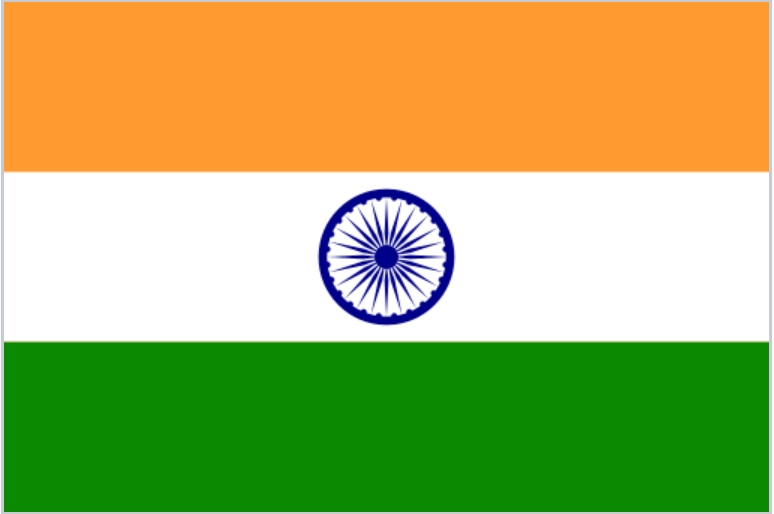
Gandhi first proposed a flag to the Indian National Congress in 1921. The Indian flag was designed by Pingali Venkayya.In the flag the deep saffron colour is for courage and sacrifice white colour is for honesty, peace, and purity dark green colour is for faith and chivalry and the chakra in the middle is for vigilance, perseverance, and justice.This flag was accepted in 1947.Bhikaji Rustom Cama, the fiery lady who unfurled the first version of the Indian national flag—a tricolour of green, saffron, and red stripes—at the International Socialist Congress held at Stuttgart

The Indian flag was designed as
A horizontal triband of India saffron, white, and India green; charged with a navy blue wheel with 24 spokes in the centre.The flag was proposed by Nehru at the Constituent Assembly on 22 July 1947 as a horizontal tricolour of deep saffron, white and dark green in equal proportions, with the Ashoka wheel in blue in the centre of the white band. From 26 January 2002, allowing private citizens to hoist the flag on any day of the year, subject to their safeguarding the dignity, honour and respect of the flag.

Physical Hardware: Every Business’ Cybersecurity Blind Spot

Admin's avatarInternational Journal of Research (IJR)

2021 has been a busy year for hackers, with?data breaches worldwide?now costing an average of £3.03 million per incident. One of the reasons for this dramatic increase is the rapid shift to cloud-based activities to accommodate remote working.

Fortunately, AI and automation are thwarting the surge in cybersecurity threats. However, the pace in which digitisation across industries is happening means that there may be weaknesses in your network infrastructure, particularly in cybersecurity practices that focus on physical hardware — including storage devices, printed circuit boards (PCB), and tap access points, to name but a few. Hardware is actually a huge cybersecurity blind spot.

Why is physical hardware the biggest blind spot in cybersecurity?

A major factor that makes physical hardware more vulnerable to cybersecurity threats than software is that hardware programming is?‘uneditable’. This means that because?PCB layouts?are permanent once they leave the factory, any vulnerabilities found…

View original post 390 more words

Stop Blogger From Redirecting Blogspot To Country Specific URLs

  Let’s say you’re from France and have set up – just for examples sake – a blog called frenchlitgeek.blogspot.com where you share your thoughts and insights on French literature. Now, with Google’s country specific redirection in Blogger, you might be redirected to frenchlitgeek.blogspot.fr when you try to access your site. The thing is, you perfectly liked the .com and didn’t sign up for the .fr but you find yourself being directed there. Sure, your blog works and all but you also wonder why.

Why Did Google Do This?

Google has always supported the expression of views, and they stated as much on their official blog. In the post Free expression and controversial content on the web, which was published in 2007, it said “Our world would be a very boring place if we all agreed all the time. So, while people may strongly disagree with what someone says, or think that a particular newspaper is total nonsense, we recognize that each of us have the right to an opinion.”

The post continued, “We also know that letting people express their views freely has real practical benefits. Allowing individuals to voice unpopular, inconvenient or controversial opinions is important. Not only might they be right (think Galileo) but debating difficult issues in the open often helps people come to better decisions”.

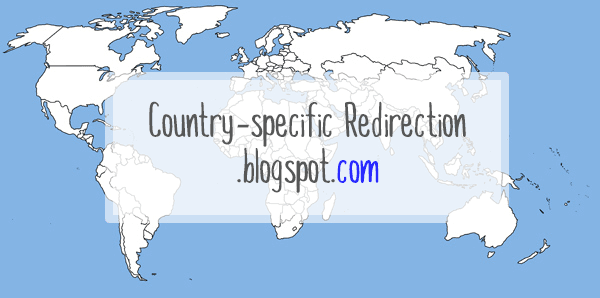
blogspot country redirection

While the company is clearly on the side of people freely expressing their opinions, they also believe that a line has to be drawn somewhere. Then again, for a company providing services in over 100 countries around the world and each with their own national laws and cultural norms, it’s surely difficult for a company like Google to decide where to draw boundaries.

However, there are cases like child pornography which is illegal in just about any country where decisions are clear cut.

For a company whose products are “specifically designed to help people create and communicate, to find and share information and opinions across the world”, how does Google deal with this challenge?

One of the most challenging areas where Google deals with issues regarding free expression is in Blogger, their content generation platform. Since Google can’t check what you’ve written before you publish, they rely on active vocal users who are diligent in alerting the proper if a post borders on offensive. Then again, that in itself is a tricky issue as well because what one person may view as offensive, another might not.

In other words, it’s always a work in progress with Google.

Fast forward to January 9, 2012 when Google announced it was making changes to the Blogger platform with regards to censorship. That said change would make use of a country specific domain to the Blogger platform. Doing this would allow Google to censor and remove content specific to a certain country.

In their announcement, Google said: “Migrating to localized domains will allow us to continue promoting free expression and responsible publishing while providing greater flexibility in complying with valid removal requests pursuant to local law. By utilizing ccTLDs, content removals can be managed on a per country basis, which will limit their impact to the smallest number of readers.”

The move by Google come after pressure from countries like India that are working on hunting down content on social media sites which are considered inappropriate. Also, the move followed closely on the heels of Twitter’s new censorship policies.

Since Google aims to “help people create and communicate, to find and share information and opinions across the world”, it would be strange to take down a post that was just banned in a certain area. In essence, with country specific redirection, a piece of content can still be accessible by the world save for the country where it was blocked.

How Would Country Specific Redirection Affect Your Site?

Of course, not all site owners greeted the country specific URL change with open arms. A few of the issues brought up in regard to the change include:

1. A reduction in social stats. These are your Facebook Likes, Google +1s and so on from your blog posts. They might be reduced because the URLs from one blog post will be different depending on where your readers are from.

2. A problem with external commenting platforms. If you use Disqus – for example – for your comments section, then you might run into trouble because blog URLs will be different even if essentially the page being accessed is just the same.

3. A slight problem with AdSense earnings. Some users have complained about seeing a dip in their earnings when their pages are served through country specific domains.

4. An issue with link juice. You want external sites to link to you and not your country specific URL. But the issue here is that you can’t control how others link to your page. They might use the top level domain or they might use the country code top-level domain.

Stop Blogger from Redirecting to Country-Specific Domains

If country specific redirection affects important factors such as traffic and link juice, and you need those in order to rank well, what can you possibly do? Well, thankfully, Google has provided a way to get around this. All you have to do is add an ncr/ to the end of the URL – ncr here stands for No Country Redirect. So basically, it goes frenchlitgeek.blogspot.com/ncr/.

That solution is great but do you want your users to always have to do that every time they visit your blog? To eliminate that hassle, and for the good of your site statistics, a simple redirection script will do the trick. Here’s how:

1. Log in to your Blogger account.

2. Click on Template → Edit HTML.

3. Find the  tag in the HTML editor by opening the search box using Ctrl + F.

blogger country redirection

4. Copy the redirection code seen below after the tag.

var blog = document.location.href.toLowerCase();
if (!blog.match(/\.blogspot\.com/)) {
blog = blog.replace(/\.blogspot\..*?\//, “.blogspot.com/ncr/”);
window.location.replace(blog);
}

5. Click on “Save Template”.

Credit: labnol.com

And that’s it! Whenever someone accesses your Blogger, they’ll be taken to the top level domain rather than the country specific one.

Mega Menu With Images Or Thumbnails For Blogger

  Visual content holds a certain appeal that websites integrate images to every page, or even operate solely through photos. Now, with the new AJAX navigation menu widget, images can be added to the drop-down menu as well.

The AJAX navigation menu for blogger is a widget designed specifically for the Blogger platform. It is inspired from the Mashable website long before it was given a makeover. Despite the plain and simple inspiration, the drop down menu with images is a huge hit.

It works based on the jQuery library and Blogger JSON Feed API. Function-wise, it works just like a normal drop-down menu when JavaScript is disabled. For it to work online, a blog must be for public visitors, so the Blogger JSON Feed API will function as designed.

Features

Multi-Level Menu Support

The AJAX menu is a multi-level drop-down menu that is based on the standard unordered list of HTML. When a menu contains a sub-menu, it loads on the fly when a user rolls over the main menu. What is great about this is that it saves outgoing traffic, especially on a website that uses a large navigation.

Cross-browser Compatibility

Most AJAX applications will work across different browsers even with other plugins or proprietary technology already installed.  The menu with images works in the same premise, instead of being designed for a specific browser. Because there is no telling which browser you or your blog readers would use, the new AJAX drop-down mega menu with images is the ideal option.

Some of the Windows browser supported includes IE5+, Firefox, Google Chrome, Safari Netscape 7+ and Opera 8+. When you’re using a Mac, the AJAX menu is supported on Firefox, IE and Safari. If JavaScript is disabled, however, the menu is still accessible, but only as pure CSS menu.

Automatic Sub-Menu Display

With the new AJAX menu, you only need to roll over a menu item and sub-menus will automatically load. No need to click on a menu to get the sub-menu to drop down. This not only saves users’ valuable navigation time, but also outgoing traffic.

Menu Styling

AJAX menus can be styled by simply changing the megamenu.js and the CSS style. The former is used when javaScript is turned on, while the latter is when it is turned off. You can adjust the menu parameters manually or you can use ready-to-use templates.

There are plenty of other features, but you would not be able to use or experience them if you do not install the new mega menu with images. What do you need to do then to implement it in your blog or website?

Adding Mega Menu with Images/Thumbnails in Blogger

Step 1. Log in to your Blogger account, then go to the Dashboard. Select the blog where you want to install the new mega menu.

CSS

Step 2. Click on Template, then press the Edit HTML button. Press anywhere inside the code area and use the CTRL + F function to make your search quicker and easier. Type the following tag and hit Enter to find it:

]]>

Once you find the tag, add the code below just above/before it:

.megamenu *{margin:0;padding:0;font-family:’PT Sans Narrow’}ul.megamenu{list-style:none;line-height:1;overflow:visible !important}ul.megamenu:after{margin:0;padding:0;content:’ ‘;display:block;height:0px;clear:both}ul.megamenu li{float:left;display:inline;position:relative;text-transform:uppercase}ul.megamenu li a.menu-target:after{content:””;width:0;height:0;border-left:3px solid transparent;border-right:3px solid transparent;border-top:3px solid #fff;font-size:0;line-height:0;bottom:22px;right:5px;position:absolute}ul.megamenu li a{display:block;line-height:50px;padding:0px 20px;text-decoration:none;border-left:1px solid #000;box-shadow:1px 0 0 0 rgba(255, 255, 255, 0.1) inset;color:#d9d9d9;font-size:14px;transition:all 0.3s ease-in-out}ul.megamenu li a:hover{background:#111111;color:#fff}ul.megamenu ul{position:absolute;display:none;top:100%}ul.megamenu li:hover > ul{display:block}ul.megamenu ul li{z-index:72;min-width:149px;float:none;background:#000;text-shadow:none}ul.megamenu ul li a{text-transform:none;font-weight:normal}ul.megamenu ul li a:hover,ul.megamenuid ul li a.hover{background:#E0E0E0;color:#444}ul.megamenu ul ul{display:none;left:100%;top:0}ul.megamenuid li div.megasubmenu{background:#F9F9F9;position:absolute;width:830px;z-index:90;left:0;top:100%;overflow:hidden;min-height:150px;-moz-transform:translate(0,30px);-webkit-transform:translate(0,30px);-o-transform:translate(0,30px);transform:translate(0,30px);transform-origin:50% 0;visibility:hidden;opacity:0;color:#888;box-shadow:0 10px 7px -7px rgba(0,0,0,0.1);transition:all 0.3s ease-in-out}ul.megamenuid li:hover div.megasubmenu{visibility:visible;opacity:1;-moz-transform:translate(0,0);-webkit-transform:translate(0,0);-o-transform:translate(0,0);transform:translate(0,0)}ul.megamenuid ul,ul.megamenuid ul li{display:block !important;border:0 none !important;margin:0 !important;padding:0 !important}ul.megamenuid ul li{background:none !important;float:left !important}ul.megamenuid ul.leftmenulist{position:absolute;width:18%;left:0;top:0;bottom:0;background:#EEEEEE;border-right:1px dashed #e5e5e5 !important}ul.megamenuid ul.leftmenulist a{border-left:none !important;color:#555}ul.megamenuid ul.rightmenulist{position:relative;display:block;width:81%;float:right;margin:0px 0px 0px !important;background:none}ul.megamenuid ul.rightmenulist li{display:block;overflow:hidden;position:relative;min-height:210px;padding:5px 17px 5px 0px !important}ul.megamenuid ul.rightmenulist li .thumb-container{left:0;width:100%;height:100%;position:absolute;overflow:hidden;font-size:0;line-height:0}ul.megamenuid ul.rightmenulist li .thumb-container img{position:relative;top:10px;padding:0;width:100%;height:100%;display:block}ul.megamenuid ul.rightmenulist li a{display:block;border-left:none !important;padding:0px 5px !important;line-height:1.4;color:#777;font-weight:bold;font-size:14px}ul.megamenuid ul.rightmenulist li a:hover{color:#000;background:transparent}ul.megamenuid .loading-icon{background:url(‘https://blogger.googleusercontent.com/img/b/R29vZ2xl/AVvXsEjfZ8wBvrJIMtJdvyvmRTaB9QoJib-msI2FYsmd7xTtId4mOwNs4OR6Dq6lGAeRlelCA5Bjulf9IKb1jbDh7vHhSvlCm8lkoVrdAW2mBZgB2iAE0UaUf1dWS5FoHtGU59RytAHiOaueKq0/s1600/wait.gif’) no-repeat scroll 0 0 transparent;width:22px;height:22px;position:absolute;top:50%;margin-top:-11px;right:5px}ul.megamenuid .menu-icon{border-bottom:4px solid transparent;border-top:4px solid transparent;border-left:4px solid #777;display:block;height:0;margin-top:-4px;position:absolute;right:11px;top:50%;width:0}#megamenuid{background:rgba(0, 0, 0, 0) -moz-linear-gradient(center top , #3d3d3d, #212121) repeat scroll 0 0;background:-webkit-linear-gradient(top,#3d3d3d,#212121);background-color:#3d3d3d;box-shadow:1px 1px 0 0 rgba(255, 255, 255, 0.1) inset;height:50px;width:100%;position:relative;max-width:1000px;margin:0 auto;padding:0px}#megamenuid h5{font-size:16px;margin-top:70px;text-align:center}#megamenuid h5:before{content:””;position:absolute;top:50px;left:50%;width:5px;height:2px;margin-left:-4px;border-left:2px solid black;border-right:2px solid black}#megamenuid h5:after{content:””;position:absolute;top:55px;left:50%;width:10px;height:5px;margin-left:-7px;border-top:2px solid black;border-left:2px solid black;border-right:2px solid black;border-radius:8px 8px 0px 0px}li.search-box{float:right !important;line-height:35px;margin:7px 10px 0 0}li.search-box .search-field{border:none;padding:3px;background:#3F3F3F;color:#fff;width:135px;font-size:13px}li.search-box .search-field:focus{border:none;outline:none;background:#4C4C4C;color:#fff}li.search-box .search-button{background:url(‘https://blogger.googleusercontent.com/img/b/R29vZ2xl/AVvXsEj8xQL9E3fxE3lH1FvPPilnqWPo0xyVwn8v9Ia1nwsZ8F5MCpTBtoE-FMKM5j-cuxosO_VBJ3ieJV7RBltacQvxafrXxPk73Z0pH4_o-7cUfbmjAKISj_0jwpe0pzE9bueBViR8exufgyM/s1600/search.png’) no-repeat;border:none;cursor:pointer;padding:5px 10px;transition:all 0.3s ease-in-out}li.search-box .search-button:hover{opacity:0.9}.search-alert{background:#E84C3D url(https://blogger.googleusercontent.com/img/b/R29vZ2xl/AVvXsEjBZuWpvGN8vbLv56V1DKU84U7d15FDyyR8SdhJ77342SnjLW2NewGtN5X5tF9r0nPEERNxsiiZF3VE-BqKbn1whcFLIWQYuStKcec-ddVTf0GSf1LkKi_zMD-DOhpUBi0rMFz2bTBt-0Q/s1600/search-info.png) no-repeat;background-position:5px;text-transform:capitalize;color:#fff;margin:-5px;padding:0px 15px 0px 40px;display:none;border-radius:5px}

JavaScript

Step 3. Check if your blog has the jQuery plugin already installed. If not, you need to add a few lines of code before the  tag (CTRL + F to find it). See the code below:

http://ajax.googleapis.com/ajax/libs/jquery/1.8.2/jquery.min.js

jQuery(document).ready(function($) {
 $('#megamenuid').megaBloggerMenu({
  postsNumber : 4,
  noThumbnail : 'https://blogger.googleusercontent.com/img/b/R29vZ2xl/AVvXsEjGC5pcTcRShr8PMXRjWLD47DzJ5UeUaVVVc-2qPFdlkFiGgTcg5dsb5VgklR69H1Dn8yIOk7ALZQJfdc9Y5yMIzZ3BC-bFgzUuQQCzfvkD2xzjdnSfx7Lh6zTQdIOXMvS81iZloSV1Q8Y/s1600/no_image_available.png'
 });
});

$(function(){
  $('.search-here').submit(function(e){
    if($('.search-box .search-field').val().length==0){
       $('.search-box .search-alert').fadeIn().css('display','inline-block');
      e.preventDefault();
    }
  });
});

Note

– If jQuery plugin already exist, remove the line in red.
– To change the number of posts, change the 4 value from:

postsNumber : 4

– To add a different thumbnail when a post has no image, replace the url in blue from:

noThumbnail : 'https://blogger.googleusercontent.com/img/b/R29vZ2xl/AVvXsEjGC5pcTcRShr8PMXRjWLD47DzJ5UeUaVVVc-2qPFdlkFiGgTcg5dsb5VgklR69H1Dn8yIOk7ALZQJfdc9Y5yMIzZ3BC-bFgzUuQQCzfvkD2xzjdnSfx7Lh6zTQdIOXMvS81iZloSV1Q8Y/s1600/no_image_available.png'

HTML

Step 4. Carefully add the HTML code to ensure that the drop down menu with images will work as designed. There are only three types of URLs that the AJAX Menu accepts and they must be used accordingly.

Label URL: http://yourblogurlblogspot.com/search/label/LABELNAME
Search Query: http://yourblogurl.blogspot.com/search?q=SEARCHQUERY
Label w/ Search Query: http://yourblogurl.blogspot.com/search/label/LABELNAME?q=SEARCHQUERY

Among the three URLs, the Search Query has to be URL encoded using a specific tool.

Step 5. Search the following line using CTRL + F:

Just above this line, add the following HTML code:

Note: replace the text in blue with the label url and the text in red with the name of the label. This is the label that you have added to the Labels settings of your post editor:

Step 6. Click on Save template for all the changes to take effect.

If you can’t find the line from step 5, access the Layout tab, click on Add Gadget, and then choose HTML/JavaScript Gadget. Copy the HTML code and paste it inside the box… then press the Save button.

That’s it!

Once that is done, your AJAX menu with images will be implemented and ready for you to use. Make sure to choose photos that are relevant to the menu and sub-menus so your website will have cohesive look and appeal. Research shows, however, that text accompanied by any image, even if completely irrelevant, can grab attention. 

Which Hashtag Instagram Widget Should You Choose?

  There are apps and widgets for almost everything, but one thing that is lacking is a widget that connects one of the most popular image-based social network to your website. Unfortunately, Instagram has yet to design an official widget that will allow you to easily and quickly embed grams on your website.

A widget is like a desk accessory that allows an end user to execute a particular function within a webpage. It fetches information from a particular source and then display it on an intended area. It can be designed to provide easy accessibility to weather, maps, sports updates, calendar and many others. Android and WordPress are two of the biggest contributors of web and mobile widgets, but Instagram still has to catch up.

While they’re still trying to figure out how to make an Instagram widget, take advantage of any of the third-party widgets for Instagram. But because there are plenty of them out there, choosing the right one can be tough. Well, we did the sorting and guesswork out for you and presented you with the top 3 options:

Instansive

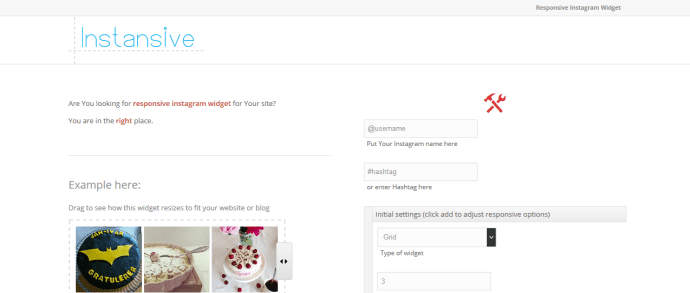
Instansive is a widget generator for Instagram that you can use for free or for a fee. Both versions practically have the same features, except for the number of times that the photos refreshes. It only happens once per day with the free version, but is always up to date with the premium version. If you want to do away with the restrictions of this Instagram widget, be ready to make a tiny investment.

instagram widget instansive

Instansive Features

  • Display photos and hashtags in grid, slideshow or column.
  • Customize the number of columns and rows
  • Add a hover effect
  • Show or hide image captions
  • Photos are linked directly to Instagram
  • Offers native support for Drupal and WordPress

For a one-time fee of $5, you can upgrade to the premium version.

Instansive, however, is not perfect compared to other third-party widgets for Instagram, because it has limited features in terms of customization, display, and refresh frequency. Even if you pay the minimal fee, only the photos will be kept up-to-date, but no other features will be added. But look on the bright side, it is responsive.

Intagme

Intagme is pretty simple and straightforward, which can be a bonus if you have to manage plenty of social media accounts and widgets. Its features also get the job done.

instagram widget intagme

Intagme Features

  • Pull photos or hashtags and display them in grid or slideshow
  • Get to customize the layout, thumbnail, size and image padding
  • Edit photos by adding borders and/or background color

On top of all these, Intagme is 100% free, which would probably put all other third-party widgets at the bottom of your list. Before you make a final decision, however, know that Intagme lacks one display feature – column, similar to what you will see on Pinterest. It is not responsive and has limited customization options. Moreover, photos are linked to a page on Intagme.com, instead of directly to Instagram.

Related: How to Add an Instagram Widget in Blogger

SnapWidget

Among Instagram widgets, snap widget is the most popular and is used by more than 100,000 websites daily. It can be used free or for a monthly fee of $6.99.

instagram widget snapwidget

SnapWidget Features

  • Pull photos or hashtags, then display them in grid, board, slideshow, map or scrolling.
  • Thumbnail size and layout can be customized
  • Background color hover effect layout and photo padding can be used to customize photos
  • Show or hide sharing buttons

Features of Premium Version

  • All of the above
  • Create up to 10 widgets
  • Filter photos by username & hashtag
  • Link photos to Instagram or any other page add custom CSS if so desired
  • Has more advanced customization options, such as pagination controls integration of Google Analytics and photo pop-up functionality

For a price of $6.99 per month, this Instagram widget is a worthy investment, especially because the free version is ad supported. This means thumbnails are linked to a SnapWidget page where photos appear alongside ads. An added bonus is that whether free or paid, there is an option available that lets you make the widget responsive for mobile use.

Which Instagram Widget Should You Choose?

Even if only 3 options were presented, making a choice is still not a walk in the park, but at least you don’t need to shuffle through tons of widgets. From the information above, you can make an informed decision as to which Instagram widget to use. Or, you can narrow down your options based on your budget – whether you have one or not, the features you need, and how much customization control you want to have.

You should also think about how an Instagram widget can affect your SEO efforts. If you want it to be SEO friendly as the rest of your website, find out how it was developed or rendered, as some of the platforms used may not be visible to search engines. Consider all the factors above and your work will be easier.

International Relations

Introduction

The term ‘international relations’ was first used by Jeremy Bentham in the 18th century, although its Latin equivalent, ‘intergentes‘, was used a century earlier by Rijehare Zouche. Both of them had used the term in the context of what later came to be known as international law. Today, nation states have become highly interdependent, and relations between them, political or economic, have developed into an essential area of knowledge.

The term ‘international relations’ (IR) may be used both for a ‘condition’ and a ‘discipline’ Quincy Wright, for example, makes such a distinction. The official relations between sovereign countries are described as international relations, though according to Wright, ‘… the word “interstate” would have been more accurate because in political science, the state came to be the term applied to such societies’. Viewed thus, international relations, as a condition, refers to the facts of international life, that is to say, the actual conduct of relations among nations through diplomacy based on foreign policy. It also includes actual areas of cooperation, conflict and war. According to Quincy Wright, IR should tell the ‘truth about the subject’, i.e., how such relations are conducted and, as a discipline, IR should treat them in a systematic and scientific manner.

Meaning Of International Relations

International relations as a subject is concerned with the relationships among the governments of various sovereign states. Many people may think that relations among nations are regulated and conducted by presidents, prime ministers, foreign ministers, officials of the foreign offices and diplomats. This is partially true. The scope of international relations is not merely political. Today, economic activities such as international trade, role of multinational corporations, terrorist activities and impact of environment are all embraced in the fold of relations among nations.

Most scholars agree that the term ‘international politics’ is used to describe official political relations between governments acting on behalf of their states. The term ‘international relations’ is broader. According to Stanley Hoffman, ‘The discipline of international relations is concerned with the factors and activities which affect the external policies and power of the basic units into which the world is divided.’

International Relations As A Field Of Study

As a field of study, international relations analyses a wide range of political activities. These include war, peace, diplomacy, trade relations, treaties, alliances, cultural, exchanges, participation in international organizations, etc. Each of these activities makes up distinct issue areas on which scholars and foreign policy makers focus attention.

The scope of international relations is often defined by subtitles, like ‘questions of war and peace’ as a subtitle of international security. Joshua S Goldstein wrote, ‘the movements of armies and of diplomats, the crafting of treaties and alliances, the development and deployment of military capabilities – these are the subjects that dominated the study of IR in the past… and they continue to hold central position in the field.’

Besides these, religious groups and movements working in two or more countries also act as non-state actors in the international relations. These may include large followers as the Catholic Church has, or a spread out population as sought to be represented by the Vishwa Hindu Parishad.

References

International Relations By V N KHANNA and LESLIE K KUMAR

Global Warming

Global warming’ is the term used to describe the rise in global surface temperatures. The term is often used interchangeably with ‘climate change’. The phenomenon revolves around the rise in surface temperatures – over land and oceans – that have led to an accelerated increase in temperatures. This has in turn led to the progressive shrinkage of the glaciers and polar ice caps, leading to rise in sea level. Another observed effect has been the disruption of cyclical weather patterns and the rising number of freak natural disasters.

The rise in temperatures has been attributed to the build-up of greenhouse gases, such as carbon dioxide and methane, at especially accelerated levels as a result of the industrialisation of the past 100 years. A concerted global effort to counter and mitigate the effects of this phenomenon has been elusive, with developed nations and developing countries facing off over the respective levels of emission cuts they would have to effect domestically.

However, there is also a considerable minority, especially in the US, that holds the assumption that global warming as a hoax perpetrated by certain countries for their own benefit.

Dhamaka’ movie review: Sound of social implosion

The disturbing thoughts swim in the conscience as one could clearly hear the sound of social implosion in Ram Madhvani’s compelling thriller, lined with commentary on media ethics


In the week of big public apology, comes a film where a common man seeks repentance from a powerful minister for not being able to do his duty. A gutsy idea that fills you with nervous energy, the film is an official remake of a Korean flick but, closer home, it reminds you of the angry common man of ‘A Wednesday’.

In the Neeraj Pandey film, the desperate everyman threatened to bomb Mumbai, here the despairing migrant crosses the line. The film makes you wonder what has changed in the last decade. Perhaps, the trust of the marginalised has been breached. Perhaps, it was reflected during the mass exodus from big cities to villages during the pandemic. It is not that the last man standing in the row was getting attention earlier but he was not being fed hope by a section of rapacious media. His trust was not being played with 24×7.

What seems like a ‘usual’ terror attack/ hostage situation to him that he intends to milk, quickly turns personal as his estranged wife (Mrunal Thakur) is reporting from ground zero. Even as the threat lurks into the newsroom, the remnant of journalism left in his system is smoked out by a hard-nosed producer Ankita Malaskar (Amruta Subhash). For her, truth and news are two different things.

In the ensuing moral battle, it becomes increasingly clear who is the bigger villain of the piece. But, at the same time, the narrative also becomes increasingly predictable. As the taut thriller starts getting flaccid, you start picking up faults in the plot. When a film takes a high moral ground, the margin to slip also reduces. When a film that seeks to expose the artifice of prime-time news starts looking staged, it pains.


The set design and cinematography are top-notch but the functioning of the newsroom, the motivations of the ‘villain’, and the actions of the officer of the anti-terror unit (Vikas Kumar) leave you unsated. After taking you to the edge of the seat, the climax is a tad disappointing. A few more drafts, a little more sharpness would have helped. No such issue with Amruta who excels in a minutely observed character that exemplifies the state of a section of electronic news media.


Karthik has been astutely cast in the role of the hollow television anchor fattened by opportunism, teleprompter, and TRPs. Like in ‘Love Aaj Kal’, he plays the ‘straying’ part well but when it comes to the transformation, he fumbles. Thankfully, that portion is short here.

Dhamaka is currently streaming on Netflix.

Human-wildlife conflict has Climate Change as an emerging Factor

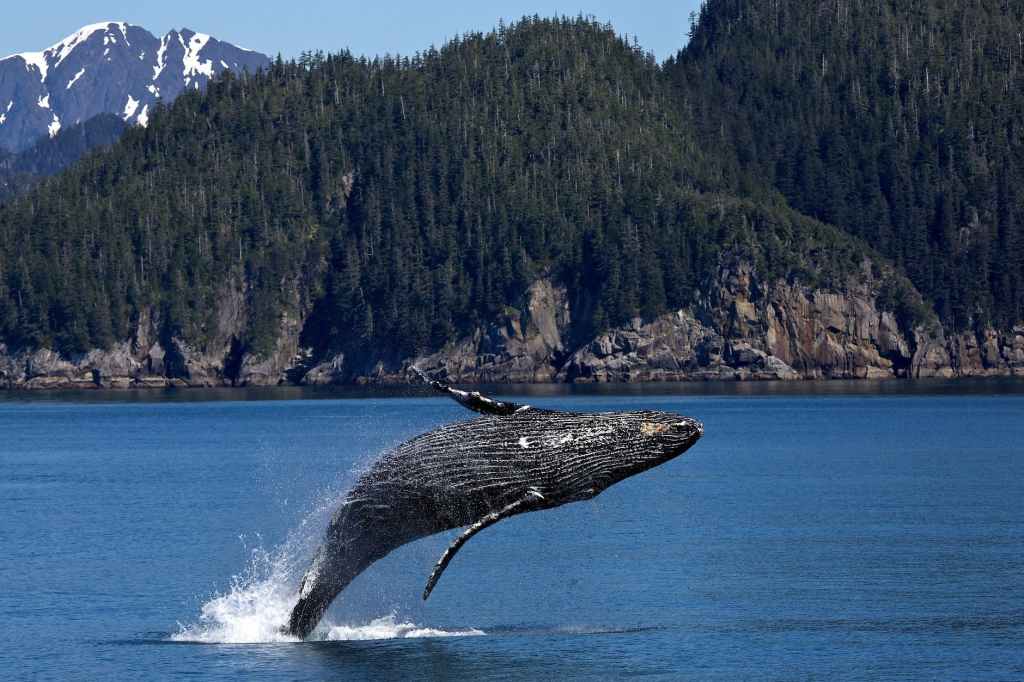
In 2015, the largest marine heat wave in the U.S. hit the Pacific Coast. Whales moved closer to shore to find prey, but they came across something dangerous—they were getting entangled in crab fishing gear.

Crab fishermen and women wouldn’t usually be out at that time of year. But the change in climate was also causing an algal bloom, toxic to crabs. So the fisheries delayed their timing by several months—the same time migrating whales were on the coast.


“It was this double-whammy,” said Briana Abrahms, an assistant professor in the Department of Biology and Center for Ecosystems Sentinels at the University of Washington.

This was one of the topics Abrahms was studying when she realized there hadn’t been much published research on how climate change is exacerbating human-wildlife conflicts. Looking at scientific literature and government reports, she came across only a few dozen. And many of those were either buried in obscure journals or just anecdotal mentions.


In a paper published in Science, she delved deeper into this area and wrote a call to action for managers and researchers to focus on this issue.Abrahms was working on another project at the same time as her whale research that was on completely different species in a completely different area, but seemed to have some similarities when it came to climate and conflict.

In Botswana, a government report cited some of the highest numbers of human-wild conflicts on record, mostly large carnivores preying on livestock. That happened to be during an extreme drought in 2018. “It struck me how different these systems were, but the story was the same,” she said. “I felt like it was really important to tell this story and draw attention since these climate changes and conflicts are likely to increase in the future.”


As part of her paper, Abrahms applauded a new, proactive risk assessment developed by the state of California to help managers figure out when and where to close fisheries under different climate and ocean conditions. “If you understand what the underlying driver is, in this case climate is a factor in these dynamics, you can better prepare to make management decisions and reduce conflict—or avoid it in the first place,” she said.


Abrahms also pushes for more research in these areas, especially where there are geographic and taxonomic gaps. “We definitely need more research and also need to be synthesizing research across everything already out there to understand how much we should be more worried about long-term changes,” she said.