
Top 5 books to read at least once in your life. 

This is an image of Top 5 books to read at least once in your life.
Photo by rikka ameboshi on Pexels.com

Reading is an immersive experience that often rewards you with a great story and good vocabulary. There are books across several genres one can choose from to indulge in a wonderful reading experience. But there are some books that fall under the category of ‘classics’ as their themes, characters, and plot lines become relevant for ages to come. These are written by some of the brilliant literary minds that became popular and they went on to influence many modern works of literature. 

Animal Farm- a satirical allegory
This is an image of Animal Farm
Photo by Amelie Lachapelle on Pexels.com

The story begins with a typical farm being run by a human with a variety of animals living in it. The farm animals are often mistreated, overworked and ignored by the human which agitates them. Hoping to overthrow the human race and reaping all the benefits of their work, they drive the human out of the farm. What follows is a satirical allegory to the events that happened during and after the Russian Revolution of 1917. 

Although the story revolves around farm animals, its  themes of corruption, slavery, dicatorship, class distinction, and characters, makes the readers draw parallels with the current political scenario. It is a must-read for a better understanding of the Russian revolution and an engaging experience. 

The Great Gatsby- The Jazz age novel

The Great Gatsby is a 1925 novel written by F. Scott Fitzgerald. It follows the life of a self-made millionaire named Jay Gatsby who is in pursuit of his long lost lover named Daisy Buchanan. The novel however, has little scope for romance and represents America in the 1920s. It highlights the era of unrivalled wealth and materialistic access. 

The novel upon its release didn’t gain commercial success. Critics believed that it did not amount to Fitzgerald’s earlier novels. However, it began to gain popularity during World War II as free copies were distributed among American soldiers who were serving overseas. The Great Gatsby went on to become an important part of America’s educational curriculum and pop culture. 

The novel continues to attract scholarly attention and is a contender for the title of ‘The Great American Novel’. 

Harry Potter and the Philosopher’s stone- You Know Who

This is an image of Harry Potter and the Philosopher's stone
Photo by Dzenina Lukac on Pexels.com

This book can be considered as J.K Rowlings’ stepping stone to success. After being rejected by 11 publications and finally being published by Bloomsbury publication, upon the request of the chief executive’s 8 year old daughter. Harry Potter and the Philosopher’s stone went on to be translated into 73 languages and sold 120 million copies. Becoming the second best-selling novel of all time. 

The story follows Harry Potter and the readers’ introduction to the world of magic, following Harry’s discovery of his magical heritage and acceptance into the Hogwarts School of Witchcraft and Wizardry. As the readers alongside Harry manage to grasp the  revelation of a whole new world of possibilities, worthy opponents and dangers show up on whom magic must be used to defeat and protect. 

The Book Thief- Narrated by death.

Photo by Ingo Joseph on Pexels.com

Reading is an immersive experience that often rewards you with a great story and good vocabulary. There are books across several genres one can choose from to indulge in a wonderful reading experience. But there are some books that fall under the category of ‘classics’ as their themes, characters, and plot lines become relevant for ages to come. These are written by some of the brilliant literary minds that became popular and they went on to influence many modern works of literature. 

The book thief is a 21st century novel that uses the Nazi regime in Germany as its background. Although it has its fair share of horror and despair. The Book Thief delivers hope to its readers through love and tranquility among family and friends. 

The novel follows the life of Liesel, who moves into her new foster parents’ home following her brother’s death. As she goes on to witness the dangers posed by the Nazi regime, Liesel adopts her newly found passion for reading by stealing books from the rubbles and also the Mayor’s house. One of the pivotal characters in the novel is death itself as it narrates the entire story. 

The Lion, The Witch, and The Wardrobe- A world of fantasy

This is an image of The Lion, The  Witch and The Wardrobe
Photo by Pixabay on Pexels.com

Open the book to a whole new world of fantasy, mythical creatures and magic. When 4 siblings are relocated to a large house in the countryside due to wartime evacuation. They discover a wardrobe in the house which had more than just clothes hanging inside. The 4 siblings venture into the world of dreams upon entering the wardrobe. They go on to encounter the witch and the lion, and participate in an impending war to end the evil’s oppression over the good. 

This fantasy novel was the first to be published among the 7 volumes known as The Chronicles of Narnia. C.S Lewis wrote this novel as a dedication to his goddaughter named Lucy Barfield. 

Here are some of the classic novels from the 20th century across different genres to enhance your reading pleasure. 

Happy Reading.

Buy books on Amazon

References

Anna Chui, 26th  January 2021, lifehack.org

goodreads.com

wikipedia.org

Problem of population

 India became free on 15th  August, 1947. Since the dawn of independence, we have been facing many problems. The problem of rapid increase in population is one of them. Ten million are added to our population every year. We are more than one hundred crore ill-fed, ill-nourished and ill-housed human beings. Packed class rooms, over crowded compartments and a heavy traffic on the road are a common sight.

The effect of over population is that it has caused a number of difficulties. It has made the daily life of a common man full of worries. The problems of housing, unemployment, under employment and scarcity of foodgrains are connected with it. Population would not be a problem if we have enough jobs, enough schools and houses as well. They are increasing daily. Labourers agitate. There is a call for strike. Mill owners lock out. So, there is a conflict between the employers and employees.

The best solution of these problems is to  keep the population under control. We cannot improve in general without limiting the size of the family. This is known as family planning. It is curse to have a big family now a days. A couple should have two or three children. In these days of soaring prices, a man does not earn enough to support a big family. We have no right to have children whom we cannot bring up with love and care. It is the duty of wise parents to give a proper education and nourishing food to their children.

There are many methods of birth control. The best method is to lead a controlled life. We should lead a pious life. The second way is the operation, use of medicines and contraceptives. Generally, people do not like to undergo operations. Right type of education is very necessary.

Our government is paying full attention to it. Family planning centres, where we can get all sorts of advice on family planning, have been started.

Importance of games

 Health is very necessary for success. If a man is unhealthy, he cannot work well. No body likes a sick man, as he cannot work hard. Constant pouring over books is hard and weary. It makes a man dull. Games are a part and parcel of education. Games and education must go hand in hand. A sound mind resides in a sound body.

Games are of two kinds. Indoor games, such as, chess and playing cards are played inside the house. Outdoor games, such as hockey, football, and cricket are played in the open field.

Outdoor games are very useful. They are a part of our education. Without them no education is complete. They are us strong, active and healthy.

They help us to form good habits. We learn to obey the captain. We observe discipline in the field. We are prompt and active in the field. When we get interest in them, we become regular and punctual. We do not puff up at the victory and are not nervous at the defeat. All these things help us to form a good character.

Over indulgence in games is positively harmful. Games at the cost of studies is ruinous. Games are good when they are well regulated and played within a reasonable limit. Over-exercise damages our physical and mental system and consequently impairs our health and shortens our life.

Games provide re-creation to the mind. When we are tired of our work, they refresh us. They remove the dullness. We also learn the spirit of team work. We learn to work together for a common cause. A true player is never selfish. He plays for the team. He looks to the interest of the team.

The importance of games cannot be over emphasized.

The need for discipline

 Indiscipline is the most pressing problem of our country. Corruption comes in when there is no discipline. Aristotle once said,”Discipline is, therefore, the habits of acting according to rules. It is a prompt obedience to the orders of the authority. Whenever we go, we have to follow certain rules.

Man lives in society. He can make progress only in the society. So  the well being of society must be the good of an individual. Sometimes an individual has to sacrifice his personal interest for the good of the society. This is done by discipline.

Discipline is necessary in every field of life. Without it, there will be chaos in life. If the members of a family do not obey the head of the family, they will never be happy. They will not decide anything as everyone of them will like to force his choice.

Discipline is necessary in the playground. Players must obey the captain, if they want to win. If every player plays according to his own will then the team will easily lose the game. They can put up a good fight if they remain united and act as a single unit. They can put up a good fight if they remain united and act as a single unit. This is only possible when there is discipline.

Discipline is very necessary in schools and colleges. If the students do not obey the rules of the school framed by the headmaster, in consultation with the teachers, for the common good, results cannot improve. In the long run, the students will suffer. In my opinion, such education is useless which does not inculcate discipline.

Discipline is very essential in an army. Military discipline is known to everybody. A soldier has to obey his commander. He cannot argue and reason. It is his duty to obey and die, if necessary.

In the administrative sphere, the value of discipline is no less important. It is the duty of the peon to obey the clerk who has to obey his immediate officer. In this way, the whole system works and runs, everybody has to follow certain rules.

Today we find the condition of our country pitiable. The officers do not care for government property. The clerks have no time to work honestly and sincerely. Markets are full of adulterated goods. Villages have been deserted and cities are overcrowded. All these are the result of indiscipline. Unless it os checked, unless the people are disciplined, all talks of a better world are meaningless.

Satellite T.V.

 Life without monotonous and dull. In order to remove the drudgery, boredom and dullness from life we need recreation. The modern methods like radio, transistor and T.V. provide a variety of programmes. Satellite T.V. is one of them.

Satellite T.V. is a system in which signals are sent along the wires to the T.V. sets attached to the different houses after they have been transmitted to a central receiver. One can see  virtual air  invasion in the modern age of television media. We have MTV, Zee TV, Star TV, BBC TV, sports TV etc. and with special access to a special antenna that is dish antenna either directly or via a cable operator. In this TV, a three metre  dish antenna is wired  to several hundred houses with a monthly fee of rupees 300 to 400 depending upon the locality you live in. The popular programmes are thus relayed via a communication satellite which is caught by adjustment through the dish of the antenna. In this way one can enjoy the programmes based on entertainment, science, education, sports, general knowledge, hot news excetra round the clock.

Previously it was T.V. and now the satellite T.V. the choicest but the worst gift of science to man. It is a good servant but a bad master. It is like a double edged sword. It is becoming popular day by day and has reached even remote villages. The reason is not too far to seek. It caters to the demands of both the common and influential people. So far as educational programmes or current issues or scientific programmes are concerned, it is a very useful media. The innovative programmes can be specially prepared and telecast to the exclusive viewers. If rightly used this medium can bring about a silent constructive revolution. However it is a matter of grave concern that it is rather sickening the society. Many a times satellite T.Vs cater to the cheap demands of the masses. There is an overdose of vulgar programmes and advertisements. It is spoiling the whole, specially the young generation. The sublime and decent ideas are being trampled underfoot. Children are becoming satellite TV addicts. It has become a status symbol too. Children hardly explore life in their own way. They are merely passive spectators. Their mind is being brain washed by this media. The cheap entertainment and the dazzling colours spoil their character and affects their eye sight too. It teaches many wrong and vicious habits.

The government should put a check on vulgar programmes so that the boon of science does not turn out to be a bane.

Odisha and Agriculture – A Literature Review

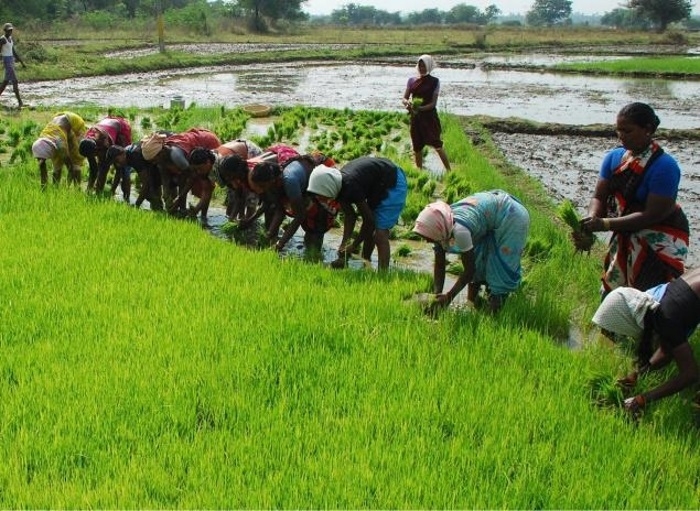
Odisha is primarily an Agrarian State. Agriculture is the mainstay of the majority of the population. Though agriculture sector contributes only about 26 per cent to the Gross State Domestic Product (GSDP), almost more than 70% of the population is dependent on it. In spite of such low contribution, the labour force has not yet move out of this sector which ultimately results in low per capita income in this sector.

Agriculture in Odisha is characterized by low productivity due to sporadic rainfall, disrupted irrigation facilities as well as due to the fact that the state is prone to various natural calamities (Pattanayak & Nayak, 2003). Various literatures have studied cropping pattern of the state and have indicated that the cropping pattern of the state is changing over the years. Various studies have also confirmed that Odisha have not only experienced low productivity but also declining productivity. Agriculture plays a major role in providing a source of livelihood to a large proportion of population. Its development becomes important as it still remains the sector where majority of the workers are concentrated. It provides raw materials to various agro-based industries and also ensures food security-the basic necessity of life.

A number of studies have examined and analysed the agrarian structure and conditions of the country in terms of cropping pattern, determinants of cropping pattern, conditions of the agricultural labourers among many others. Given below is the review of few studies that have discussed various aspect of agrarian conditions in their work. The relevance of these works increase keeping in mind the point that they have brought out successfully many key issues in agriculture and how cropping pattern of a region or the country reflects the infrastructure of a place. The study of these literature have been undertaken to get a clear picture of the subject concerned and an insight of different lenses through which agrarian conditions of the country have been looked upon, before embarking on the study.

Despite the changes made in the macroeconomic policy framework and trade liberalisation, Bhalla and Singh (2009: 34, 43, 44), argued that the agricultural sector in India neither experienced any significant growth subsequent to the initiation of economic reforms in 1991 nor did it derive the expected benefits from trade liberalisation. They further asserted that, when compared with the immediate pre-liberalisation period (1980-83 to 1990-93), agricultural in India recorded a visible deceleration in its growth rates of aggregate yield and output and the process of agricultural diversification during the post-liberalisation period (1990-93 to 2003-06). There are different reasons for its slowdown but decline in public investment in irrigation and water management and thus limited irrigation facilities can be said to affect it the most.

Mruthynajay and Praduman (2003: 159) argued that the cropping pattern strategy followed in post green revolution period has led to narrowing down the base of agricultural production. In terms of allocation of acreage, the cropping pattern in the agricultural scenario of India has been skewed towards food grain. Though area under non- food grain has increased, food grains are still dominant (Ghosh, 2011: 115). The cropping pattern changes revealed that area under different crops was strongly linked with decline in cost of production due to-government subsidies, improved irrigation facilities-hence increase in cropping intensity of certain crops such as that of rice and wheat (Mruthynajay and Praduman, 2003: 163). High yield of crops and subsequent expansion and substitution are also the major reasons for such a change post green revolution with rice, wheat, mustard and cotton emerging as main crops for the farmers with area under coarse cereals declining (Ghosh, 2011: 119). The expansion of area under such crops as well as substitution of coarse cereals resulted in narrowing of the base of production, and crops such as pulses and oilseeds were not given due attention. Thus, the success attained in food crop production post green revolution has also caused serious crop imbalances in the cropping pattern, widened regional disparities, increased instability in production and unplanned import of commodities. So, there is a need to re-examine green revolution strategy keeping in mind the crops and areas that were bypassed so far (Mruthynajay and Praduman, 2003: 165).

The cropping pattern in Orissa is such that most of the districts of Orissa are experiencing a lateral movement towards crop specialisation and crop diversification, but over the years, crop specialisation can be noticed, where about 50% of Gross Cropped area is under paddy due to high yield, improved irrigation facilities and changes in the food habits of people (Pattanayak and Nayak 2004: 6, 13). The adoption of modern varieties of rice (HYV) in Orissa, its degree of adoption is inversely related to the farm size while its intensity of adoption is proportional to its farm size and varies with access to modern inputs. These are positively associated with borrowing since lack of investible cash retard the process of diffusion of modern technologies while tenancy is negatively associated, for the moneylenders feel that the adoption of HYVP would reduce the dependency of tenants on them (Sarap and Vashisht,1994: 90, 92).

However, holding other factors constant, Pattanayak and Nayak (2004: 5, 10, 19) argued that the contribution of agriculture in primary sector and in Gross State Domestic Product has declined but the labour force has not move out of the primary sector in post- reform period in Orissa. The districts are diverging as far as agricultural productivity is concerned and asserted that this variation is due to variation in the use of inputs amongst the districts. The skewed distribution of land, small size of operational holding, high incidence of share tenancy and rural poverty are few of many factors which negatively affect the agricultural productivity. The long-term solution lies in improved agricultural productivity and conscious policy decisions to reduce inter district disparity.

Regarding change in labour demand, Lahiri (1970: A-111, A-114) confirms the general belief that demand for agricultural labour has increased due to High Yielding Varieties Programme (HYVP). There was a high variability amongst different states with respect to total labour required and hired labour as well as contribution to labour days was quite low in pre HYVP days; but on the basis of the data gathered, figures revealed that the introduction of HYVP led to the increase in demand for labours. He further makes a point that changes in the demand for agricultural labour are unable to completely explain the changes in the wage levels of agricultural workers. Since demand for agricultural labours are seasonal, season-wise analysis of wage level would to an extent give a picture of wage-demand relation. Post HYVP, demand for labour has increased; and regarding the changes in cropping pattern- it has been noticed that the tendency has been to shift towards only few crops such as that of paddy and wheat and ignoring other crops. Thus, the study of these literature brings forth the point that post green revolution, many new technologies came forth, but the strategy followed was concentrated to few crops and few developing regions causing regional imbalances. Another major debate that came forth is that the post reform period instead of witnessing growth in agricultural output as it was meant to, have faced declining productivity and growth. These phenomena were observed both at all India level as well as in Odisha.

Image credit: News Bharti

Retrieved from: Google

Corruption

 Corruption,these days, is a very common and frequently used word. Even children are well aware of the word. Corruption is prevalent in the society in every facet of life. It is the gift of modern society and has been accepted by all.

It is true that no one likes to live in a world of corruption, bit the society has become too much corrupt that there is no escape from it. There is no department or aspect of life that is devoid of corruption or corrupt practices. Most of the government, semi Government and private organisations are in efficient and corrupt.

 Previously people were afraid or ashamed of following corrupt practices. Now it is a part of life and accepted by most people. One is  very fortunate if he can get his legitimate  work done without resorting to corrupt practices. He has to persuade or bribe the man concerned. No work can be undertaken without adopting back door and corrupt practices.

At times the government announces its wish to curb malpractices and corruption from the society. Initially there can be some success, but later the corrupt practices prevail. The entire society is fully aware of corruption and knows that they have to bow to the corrupt administration. The administration is weak and implementation of government laws are defective. Most people do not wait to get a work done. Instead of wasting time and energy, they adopt corrupt practices for having the work done, hence it is called speed money.

Corruption eats into the society and ultimately ruins the economy. Besides the society, the nation gets weaker and weaker. A corrupt society has no morality. It has the dangers of internal weakness and external aggression. Sincere efforts are to be made to root out corruption from the government administration and society.


Health is wealth

 Health is wealth. It is an old  proverb which has deep significance. It means that a healthy man can enjoy the gifts of nature. The coarsest food tastes sweet to  him. Ordinary clothes lend charm to his personality. On the other hand, an unhealthy man is sick of his life and has no interest in his work.

Of we desire to enjoy the sweetness of life, we should do our best to preserve our health at every cost. A sound mind can never dwell in an unsound body. 

It is generally seen that an unhealthy man cannot keep the balance of his mind. An unkind word is enough to provoke him. He feels insulted at the slightest joke. He remains alone and become unsocial.

Health is a blessing. It is the greatest boon of God. Regulated food is the first requisite for health. Our diet should be simple and wholesome. Green vegetables,milk and well cooked food should be taken at fixed hours. Spices, fat and heavy food should be avoided as far as possible.

Physical exercise is also very necessary. We have a good appetite if we get accustomed to exercises. Sometimes a long walk in the early hours is sufficient.

Student should take part in sports and games. A grown up man keep himself fit by means of exercise is that we can easily digest our food. So our body gets pure blood in abundance.

Self control and confidence are also useful. If we waste our energy, we cannot become healthy.

The cause of bad health is anger,worry, jealousy or greed. If we are subject to these we can never be healthy. If we want to be healthy, we should have good ideas and loving thoughts.

If we desire to be healthy,we should practice the old rule of ‘early to bed and early to rise’. Good company and carefree life will help us to be cheerful. Without health, there is no joy in life.

Honesty is the best policy

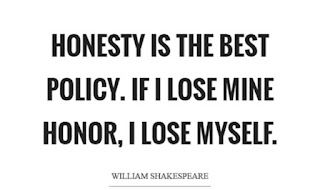
 Generally, people say that honesty is the best policy. It means if we want to succeed in life we should be honest and straightforward. Nothing succeeds like honesty in life. It is possible that dishonesty may be successful for some time, but in the long run honesty is sure to succeed.

This can be seen if we consider the cases of students and businessmen. The student who tries to copy in the examination hall may get some more  marks than he would have otherwise got. But he learns a lesson to neglect honest work 6in the long run, he is sure to suffer the consequences of dishonesty, as he will find himself below the standard.

Let us examine the case of a student who tries to use foul means in the examination hall and is caught red handed by the invigilator. The least punishment he gets is that the paper is snatched from him and he is asked to promise not to copy again. When he reaches home, he gets rebuke from his father and other. In the company of his friends, he is put to shame. When he goes to his class for his daily lessons, he is hated by the teacher and the principal. For a single act of dishonest deed, he finds the whole of the little world against him. He comes to repentance. But it is too late.

If a businessman is found to be dishonest even in a si no hle transaction, people try to avoid him. His sales goes down. People refuse to believe him even when his prices are the least. He loses his customers and goodwill. There are only two courses open to him, either to wind up the business orr to be honest.

The effect of dishonesty is much the same in the case of clerks, teachers, government servants and others. It is possible that a maay become rich by adopting dishonest means. But he generally squanders the money. He again adopts dishonest means to earn more. In this way, his whole life become a vicious circle.

It is necessary for us to be honest if we want to succeed in life. Dishonesty leads to failure. A dishonest person is bound to fall in the long run. Without hard work and honesty none has succeeded in the world so far.

Unity is strength

 Everyone of us must have heard the well known proverb “unity is strength”. No country which is torn by internal dissensions and divisions can stand against her enemies.

Division and lack of unity always ends in disaster. In the same way, differences among brothers ruins the family. Take the case of Ravana, the king of Lanka. He was fated to die when his brother left him and joined his enemy. Jealousy between Prithvi Raj and Jaichand gave an opportunity to Mohammad Ghori to conquer India. The quarrels among the Rajputs brought their downfall and humiliation. Rajputana was conquered by Muslim rulers in spite of the fact that Rajputs were matchless in bravery. If they had gathered under one banner, the history of India would have been different.

Everybody knows perfectly well that one thread is easily broken and when threads are united into a rope, they cannot be broken easily. It is correct to say that we cannot face our enemy single handed as successfully as we can when we are united and are the members of a group or an association; for example the workers association, the clerks association and the motor drivers’ association etc.

What is true in the case of kings and states is also true in the case of an ordinary man. Everybody knows well the famous story of an old man whose sons could not break a bundle of sticks but we’re successful in breaking the sticks when they were separated. This clearly proves that unity is strength or united we stand and divided we fall. No imperial country can continue to keep the subjects of a country under control, if the people of the country can continue to keep the subjects of a country under control, if the people of the country are united.

It is, therefore, necessary to remain united if we want to be free and self respecting citizens of the world. Division will lead us to our downfall. We become weaker when we are divided and strong when united.

Education of women and her position

 In the ancient days the position of women was very high. They were held in great esteem. Most of them were very learned and intelligent. So some of them even attained the position of Rishis. There have been many Indian women who are still respected for their learning and culture. They are Sita, Draupadi, Apala and Gargi. But Muslim rule was ruinous to female education. The cause was the purdah system.

At present, the problem before the country is what type of education should be imparted to women. The subject is very controversial. Some of the very old and orthodox people are of the opinion that women should not receive any education for they are not to do office work.

On the other hand, there are people who say that women should receive education in the three ‘Rs’. The say that their literary knowledge should be such as will enable them to read books like the Ramayana or the Gita and to write letters etc. 

The third category of persons are those who are in favour of female education. They say that in a democratic country everybody has equal rights. So women should also receive their due share in the field of education and culture. In this category, there are two types of persons. Some of them are in favour of educating the girls upto high school standard. In their opinion the importance of Algebra, geometry, geography,economics etc. Is not very great. They say that women should know the three ‘R’s, Home Science, Music, Dancing, Cooking, Sewing etc.

But there are other people in this category who are in favour of imparting education to women upto the university standard. They say why only boys should become lawyers, teacher, doctors, officers, etc. In their opinion happiness does not lie in the management of household affairs only but it lies in working according to ability and capacity.

At present our government is bent upon educating women. Every kind of facility is being provided. So far as their course of studies is concerned, stress should be given on Home Science, Nursing and Music. Thus the status of women will rise in the society.

Some common Indian superstitions

 India is a land of strange things. It is a store house of many old things. Superstitions are very deep rooted in this country. They are due to ignorance and lack of scientific knowledge. For example a sneeze, an empty vessel, a one eyed man, cat and owl are the things that are considered to bring a bad day. Vessel full of milk or water, cow, a cheerful child and an appearance of the Shyama bird predict success on a particular day. Amongst the Hindus, marriages cannot be held in certain months.

It is believed that if a person sneezes when any other man is leaving his house, the work can never be finished successfully. Sneeze is a symbol of hardship and failure. As soon as there is a sneeze, people postpone their journey. They return to their houses silently for sometime, drink water or have some light refreshment and then go out to complete their work.

The appearance of a one eyed man is no less horrible. As soon as we see a one eyed man coming before us, we think we are doomed. We become helpless and curse the man. If we have to continue our journey, we do it half-heartedly and unwillingly. The result is that we meet failure and disappointment.

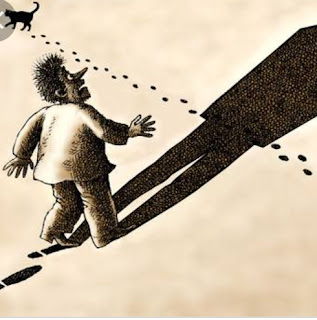
In the same way, if we see a cat when we leave our bed in the morning or the cat happens to cross the way we are passing through, we think ourselves unfortunate. A big failure is stamped on our forehead for some time, we do not feel zeal, joy and satisfaction.

Just as bad symbol make us sorry and disappointed, good symbols make us highly optimistic and enthusiastic. As soon as we see a lady coming before us with pots full of water or a man bringing milk,we believe that somehow or the other work will be done.

Conclusion: Our belief in superstitions is due to our ignorance, lack of scientific knowledge, influence of religious people and pandits. If our life is guided by reason and sound judgement,we can never be influenced by them. I know one case last year. I left the house and there was an empty vessel before me. I got a second class. But, my friend HariRam failed, though he saw a man coming with a vessel full of milk when he reached the school. Since then, I do not reach any importance to these things.

Students and social service

 Great things are expected of students as they are the citizens of tomorrow. On their broad shoulders rests the responsibility of eradicating illiteracy and ignorance and uplifting the society. India expects them to do their duty and to donate willingly and smilingly, blood, toil, hard work and labour. The aim before students should not be strikes and hooliganism but selfless social service. Students are not mercenaries bit missionaries. They are the torch bearers. They are to burn other lamps with their light. They are to go out to serve their country fellow men. They are to inject their blood into the dry bones of the nation. They are to spread light and laughter wherever they go.

Students get long vacation. It is criminal to let them go waste. Students from vital areas can help the villagers in agriculture. They can turn the fallow lands into smiling fields with their own hands. Students can demonstrate to the villagers the scientific methods of agriculture. They can teach them how to collect village refuse and turn it 8nto manure which doubles the yield of crops per acre. They can impress the villagers that to burn cow dung is to burn gold. It is the students who can do immense social service in the community projects and national extension services. They can brings about a revolution in the villagers and completely change the face of the country.

Illiteracy is rampant in India. It prevails in every nook and corner. Students owe a debt to society. It is their duty to impart education to their illiterate brethren. They must give in the same measure as they have received and are still receiving. The villagers cannot exercise their right to vote intelligently and correctly if they cannot read a book or a newspaper. The students can do a lot in this respect and they must not shirk off their responsibility.

True social service lies in learning the dignity of labour, learning to do things with our own hands. Students must serve the masses as a matter of national duty and as a in labour of love. It would be in the interest of the country if social service is made compulsory for the award of a university degree.

To sum up, every one must work hard to raise india. More work falls to the share of the students as they are more energetic than others. Students must have a burning desire to serve India. They must not expect any reward in return. A good action is its own reward 

Dr. Rajendra Prasad

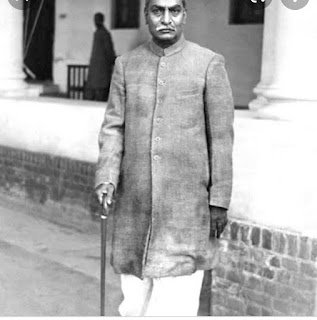
 Dr. Rajendra Prasad was born on 3rd December, 1884 in a small village named Ziradai in Saran district of Bihar. He was the youngest child of his parents. He was a student of Chapra Zilla school. In 1902, he appeared for the Entrance Examination of Calcutta University and got the first position. 

Then he joined the Presidency College, Calcutta. There he worked very hard and stood first in the intermediate and B.A. examinations. It was his desire to go to England for higher education. But he had to give up his idea as his father died. So he passed M.A. in 1907 and B.L. in 1910.

After completing his education, he started his practice as a lawyer in the Calcutta High court. In 1916, he came to Patna High court when it began to function. Due to his hard work and knowledge he was the most favourite advocate of his time in his province.

He was much influenced by the non cooperation movement of Gandhiji. The English landlords were very cruel towards the indigo farmers of Champaran. When Gandhiji went to Bihar and started his satyagraha to make their conditions better, Rajendra Prasad left his practice and joined him. He toured and organised meetings in the interest of the common people.

In 1934, an earthquake created havoc in Bihar. Rajendra Prasad did his best to help the victims and the sufferers. He did his best to raise funds for the help of the suffering millions. By his selfless work, he became very popular in the country. So he was called the Desh Ratna.

He joined the Quit India movement of Gandhiji. He suffered much for the freedom of his country. He was an honest and simple man. He had immense sympathy for the poor and the downtrodden. He was a man of life upright. In Indian politics, he was known as an Ajat Shatru. Even his opponents admired him for his sense of justice, fair play, integrity and sincerity.

Dr.S.Radhakrishnan

 Dr.Sarvapalli Radhakrishnan was one of the greatest philosophers of modern times. He was born at Tiruttani now in Tamilnadu on September 5, 1888. His father’s name was Sarvapalli Vira Swami and mother’s name was Sattima. Sarvapalli was the name of his ancestral village in Andhra Pradesh. Born in an orthodox brahmin family, it was not very difficult for him to study epics and puranas at an early age.

He had his early education at Tiruchani. He did his Intermediate (F.A.) at the Voorhees College, Vellore and degree at the Christian College, Madras(now Chennai) at the age of 17 years. While studying at the Christian College, he came under the influence of the Bible but he could never tolerate the criticism on Hindu Religion and culture. He analysed the truths in both the Hindu and the Christian religions and was convinced that truth is the same in all religions. Hence his interest in Indian philosophy, religion and culture grew more and more. He was a very intelligent and brilliant student and had a keen interest in studies right from the beginning, consequently he got scholarships at various stages of his student life. In 1908 he wrote a paper, Moral Principles of Vedanta. After securing his Masters degree in philosophy he was appointed first as Assistant Professor and later as Professor of Philosophy in the Presidency College, Madras. During this time he read thoroughly the Upanishads, Vedanta, the Bhagwat Geeta and books on Buddhism and widened his knowledge on these subjects. He also read Western Philosophy of Plato, Plutinus and many other eminent philosophers.

He was a great orator. He could critically analyse and explain philosophical truths. Students liked his lectures and simplicity. He was considered as a model teacher. He often used to say,”Teaching gives me satisfaction and peace of mind.”

He served as a Junior Professor in government training college, Rajahmundry for sometime. In 1918, he joined the Maharaja college,Mysore as a professor of Philosophy. He was a prolific writer.He hot published his lectures and speeches in a book entitled”The Essentials of Psychology.” This added to his fame. He also wrote the books – Reason of religion in contemporary philosophy, Indian philosophy (in 6wo volumes). These books made him world famous. In 1926 he went abroad for the first time, and delivered lectures on Indian philosophy, Vedanta, civilization and Indian culture. The intelligentsia over the were greatly influenced by him. He was  a visiting  professor of philosophy to many western universities including Oxford University, England. He served as vice chancellor of many universities notably 1931-1936 ad vice chancellor of Andhra University,1939, Banaras Hindu University. He served at the same post for some time even in Calcutta.

He brought about many administrative reforms in these universities. While serving at Banaras he came under the influence of Gandhiji.

He had an ‘exceptional style’ in delivering lectures which was his forte. After independence from 1949-1952 he served as an Ambassador of India in Moscow and he was the first one to be received in person by the great leader Stalin. In 1952 he became the vice President of India. During his tenure as vice President he visited many countries eg Peru, China, Belgium, Poland, Czechoslovakia, Hungary, Bulgaria, Japan, and Africa. From 1953-1962 he served as vice chancellor of Delhi University. He was made head of the sahitya academy, Delhi. In 1954 he was honoured with the”Bharat Ratna” the highest award of the country. He also received many other awards eg ‘German order of merit’ , ‘ Goethe prize’,’Master of Wisdom’, ‘Templeton Award’ etc.

He served as Vice President of India upto 1962. In 1962 die to the illness of Dr. Rajendra Prasad the then President of India, he became the acting president and later succeeded as the 2nd President of India. 

Dr. Radhakrishnan relinquished his office as President in 1967 and he died in April, 1975. His birthday is being celebrated as Teacher’s Day throughout the country every year on 5th of September. On this occasion the talented teachers are felicitated by the President of India. This is the greatest honour and tribute being paid to the great philosopher by the nation.