Distance learning and its usefulness

what is distance learning?

Distance learning can truly be defined as the way of getting an education without visiting a school or attending a class physically.

Adaptability and Freedom

One of the main advantages of distance learning can be the personalized approach to getting an education regardless of the channels or mediums you are using for this purpose. Whether you are getting study materials online or through posts you can learn only when a connection is developed between the material of the course and you. You get the freedom to deal with the study material in the distance learning process. You can plan your learning process at your convenience instead of sticking with a fixed schedule.

Self-inspiration

Distance learning encourages you to motivate yourself to learn due to the absence of a traditional teacher to guide you. You will have to create a learning environment and control it effectively so that a band of self-motivation develops in you to inspire you to learn for your personal growth. You can cultivate this band in you by engaging yourself in distance learning methods.

Flexibility to Choose

You will have to follow a set schedule of learning as per the curriculum of the school if you are following traditional ways of learning. But different types of distance learning allows you to set your learning schedule as per your convenience without following a regular schedule of learning. Even if you are out of touch with the learning process, a distance learning program offers you the flexibility to choose your course of learning.

Easy to Access

If you cannot attend regular classes due to various reasons like time constraints and distance etc. then distance learning can be the best option for you to access the benefits of your education. If you opt for a correspondence course for distance learning then you will have to make postal delivery as a connection between you and your distance learning centre. But if you have a computer and internet connection then you can opt for an online learning method by using some video conferencing software like ezTalks Cloud Meeting etc. It will allow you to interact with your teachers face-to-face to resolve your problems. Moreover, you can continue learning even without taking leave from your job.

Earn While You Learn

For those who want to improve their resume by getting a higher education and without breaking their existing job then distance learning can be the best option for them. You can go on earning your livelihood along with improving your qualification as distance learning will accommodate both, learning as well as earning.

Saves Money and Time Both

By joining a distance learning course you can save money and time spent travelling to a nearby educational institution. Distance learning allows you to access your learning centre online without any additional cost. Moreover, the course offered at distance learning centres is cheaper than the courses provided at traditional education centres.

Virtual Trips

Another important advantage for distance learning is to plan virtual trips if your budget does not allow you to go on trips from an actual school. Video conferencing allows the students of distance learning courses to visit the location important for them and experience the enjoyment even better than an actual trip. These virtual trips allow you to visit locations that you might have never thought of. Moreover, such trips can enable your teachers or lecturers to make your ordinary lessons more interesting than ever.

Reference

https://eztalks.com/elearning/benefits-of-distance-learning.html

Is Homework Good or Bad for students?

Why Homework Is Good

Here are 10 reasons why homework is good, especially for the sciences, such as chemistry:

  • Doing homework teaches you how to learn on your own and work independently. You’ll learn how to use resources such as texts, libraries, and the internet. No matter how well you thought you understood the material in class, there will be times when you’ll get stuck doing homework. When you face the challenge, you learn how to get help, how to deal with frustration, and how to persevere.
  • Homework helps you learn beyond the scope of the class. Example problems from teachers and textbooks show you how to do an assignment. The acid test is seeing whether you truly understand the material and can do the work on your own. In science classes, homework problems are critically important. You see concepts in a whole new light, so you’ll know how equations work in general, not just how they work for a particular example. In chemistry, physics, and math, homework is truly important and not just busywork.
  • It shows you what the teacher thinks is important to learn, so you’ll have a better idea of what to expect on a quiz or test.
  • It’s often a significant part of your grade. If you don’t do it, it could cost you, no matter how well you do on exams.
  • Homework is a good opportunity to connect parents, classmates, and siblings with your education. The better your support network, the more likely you are to succeed in class.
  • Homework, however tedious it might be, teaches responsibility and accountability. For some classes, homework is an essential part of learning the subject matter.
  • Homework nips procrastination in the bud. One reason teachers give homework and attach a big part of your grade to it is to motivate you to keep up. If you fall behind, you could fail.
  • How will you get all your work done before class? Homework teaches you time management and how to prioritize tasks.
  • Homework reinforces the concepts taught in class. The more you work with them, the more likely you are to learn them.
  • Homework can help boost self-esteem. Or, if it’s not going well, it helps you identify problems before they get out of control.
Sometimes Homework Is Bad

So, homework is good because it can boost your grades, help you learn the material, and prepare you for tests. It’s not always beneficial, however. Sometimes homework hurts more than it helps. Here are five ways homework can be bad:

  • You need a break from a subject so you don’t burn out or lose interest. Taking a break helps you learn.
  • Too much homework can lead to copying and cheating.
  • Homework that is pointless busywork can lead to a negative impression of a subject (not to mention a teacher).
  • It takes time away from families, friends, jobs, and other ways to spend your time.
  • Homework can hurt your grades. It forces you to make time management decisions, sometimes putting you in a no-win situation. Do you take the time to do the homework or spend it studying concepts or doing work for another subject? If you don’t have the time for the homework, you could hurt your grades even if you ace the tests and understand the subject.
Reference

https://www.thoughtco.com/why-homework-is-good-sometimes-bad-607848

BORED at Hostel?, Watch these web-series with your friends.

In this Pandemic, People are afraid to go out in public places especially students who are living in Hostels and PGs. They have no options other than to stay in the hostel. I assure you in this post you will come to know about some of the best web-series to watch and add some spice and flavors to the boring hostel life.

Photo by Adrienn on Pexels.com

Bored at hostel? Here are some of the shows which you can watch with your friends.

1.Hostel Daze

Images @Primevideo.com

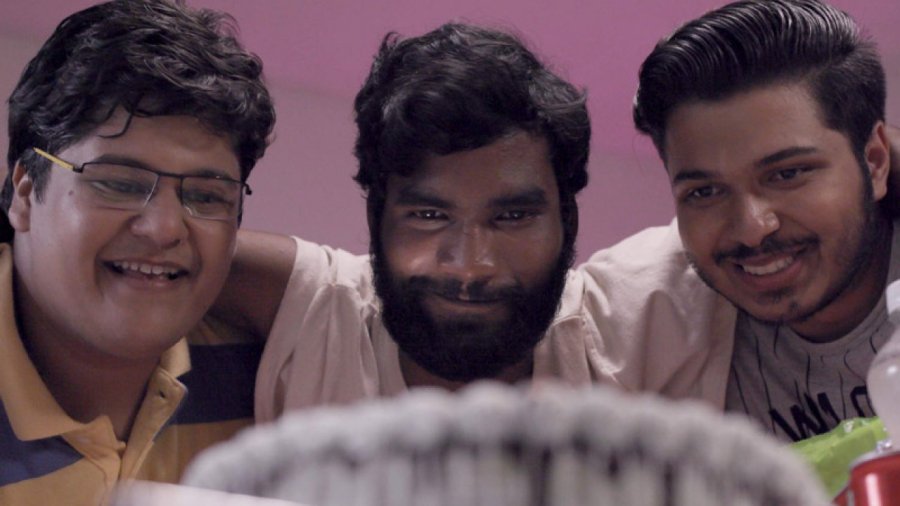
Hostel Daze is the Accurate Depiction of Hostel Life. It is a comedy genre series which is available to watch on Amazon Prime. Hostel Daze is a story which connects us to the life of Three hostel inmates who have just joined the college. Hostel Daze Shares with us challenges of freshers which they face from seniors , Believe me your stomach will hurt a lot from laughing right from the first episode. The First Season revolves around Ankit who struggles and wants to create an identity of himself in the college. In the second season, All the MCs Ankit, Chiraag and Jaat become seniors and go to their home for Vacations and miss having fun with each other. It received huge love from the audience when it was released. There are 2 seasons to this incredible show and has 9 episodes in total for 2 seasons and You can watch it on Amazon Prime.

2. College Romance

College Romance | TVF

COLLEGE ROMANCE, Another treasure from the house of TVF Originals. College Romance is not any ordinary story about falling in love or falling out of love. College romance is a package which includes comedy, serious drama, suspense and perfect characters for their roles. It is a story about 5 friends who pull pranks on each other get into fights with and for each other but ultimately choose to stay together like real friends would. There is a lot of cussing and swearing in it and this is the best part about this show. A character from the show ‘Bagga’ is the center pillar of this show. The show can be watched on TVF Originals and on Sony Liv. It has 2 seasons.

3. Immature

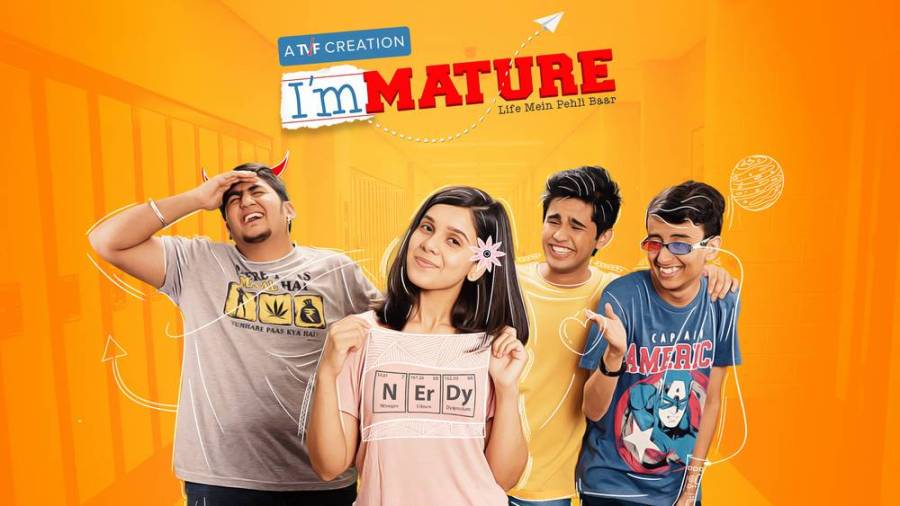
TVF has mastered the art of making eminently watchable shows. Immature is like an instant noodles formula: quick to make, easy and scrumptious . Immature follows the story of a boy in his adolescence who has a crush on a girl from her class. It depicts the teenage years of the boys where Parents are the obstacle to fun and Bunking and Bike riding with friends is freedom. This show will guarantee you lots of laughs. Each episode is like a door which opens a new set of challenges in his life as the show progresses towards end. This show can be watched on Mx player for free.

THE END..

At the end I would just like to say Life can get pretty boring but do not let it keep you from sharing loud laughs with your friends…

Growth Profile of an Indian Startup- CRED

CRED is an Indian Fintech Company which offers rewards to customers who use its platform to pay their bills of credit card.

CRED is a Bengaluru Based startup found by Kunal Shah who also happens to be the CEO of the Company. Kunal is an Indian Entrepreneur who has been recognized for launching new ventures for the second time. Kunal graduated in Philosophy from Wilson College and later pursued MBA from Narsee Monjee Institute of Management Studies, but he had to drop in the middle to pursue his dreams as an Entrepreneur. Kunal started his entrepreneurial journey with PaisaBack, a website for cashback, coupons, and other offers for the users along with Sandeep Tandon. However, They had to shut down its operations in order to find FreeCharge in 2010. FreeCharge was acquired by Snapdeal in April 2015 but the company still continued as an independent entity led by Shah. He left the firm the next year and eventually founded Cred in 2018, which has successfully turned into an unicorn on April 6, 2021.

BUSINESS MODEL – CRED

The plan of action of the organization comprises of four sections :

•   The Cred application

The Cred application is a flawless looking, wonderfully planned application, which the clients can visit assuming they need to go through the offers that are accessible after they cover their charge card bills. They can without much of a stretch sign up on the application and view every one of the offers that they can profit.

Businesses that give offers on the application

The clients of Cred can likewise track down a wide scope of offers from various organizations. For this, CRED carries organizations locally available and works together with them. Alongside helping CRED and its clients, who can benefit of the restrictive offers given by the organizations, it is likewise a mutually beneficial arrangement for the organizations. This is on the grounds that they are likewise immensely profited from the perceivability they get.

• Users who take care of their Mastercard bills –

CRED additionally fills in as a smooth and remunerating stage for the clients who use it to take care of their Visa bills. In contrast with banking or other applications, the end-clients can pick CRED as an application to take care of their charge card bills and get various offers and advantages. Then again, the clients who like the application likewise share CRED with their loved ones.

Cred Mint

Cred uncovered its new element, Cred Mint on August 20, 2021, which is planned as a distributed loaning stage assist that with willing assistance Cred clients loan their inactive cash to trustworthy individuals. It is a somewhat straightforward interaction that just permits the dependable Cred individuals bragging an insignificant FICO rating of 750 or higher to be the borrowers. Besides, the banks can likewise pull out their cash at whatever point they need with the premium that they have aggregated for the period.

GROWTH OF CRED-

Cred has shown a consistent development consistently. Being a startup that was established in 2018, it effectively joined the unicorn club on April 6, 2021, shutting its Series D round where the organization had wiped up $215 million. CRED controls “22% of all charge card installments in India consistently,” said Kunal Shah in his assertion delivered in April 2021.

Kunal Shah further took to his Linkedin profile on July 10, 2021, and shared features of the achievements came to by CRED in the long stretch of June:

Cred presented Cred Mint on August 20, 2021, which will fill in as a distributed loaning highlight that can be utilized by the clients of CRED. Cred Mint has been dispatched by Cred in a joint effort with RBI-supported P2P Non-Banking Financial Company.

With this component, the Cred individuals would now be able to loan cash to the reliable individuals from Cred dependent on the predefined financing costs. Cred Mint can be utilized to loan one more reliable client to assist them with acquiring around 9% per credit. In any case, it is likewise announced that Cred Mint may be accessible for clients with nice FICO assessments.

CONCLUSION-

Cred is one of the best examples of this how a brand born in India of an idea to provide users to make credit card payments through its app for which they get rewarded. Others have also been able to provide value to other countries, This is the power of globalization and this was achieved because of an entrepreneur who had a vision in his mind.

Understanding Pubs – Decoding the Spaces We Love

Going out after a day of stress or during the weekends has never been a more integral part of human history, or at least that is what we think now. On the contrary, pubs have been around for a very long time, functioning as the pivoting point for communities and socializing. Casual and welcoming these spirited social spaces have evolved into what we see now as ‘PUBS’. Once humble places with the sole intention to provide basic alcoholic beverages with a skewed food offering they have now been transformed into their new polished, glossy, gourmet avatars. Looking at the historical aspects and tracking its evolution through the changing markets and preferences adds a fresh perspective of differentiating them from Bars & Restaurants. 

Creating a pub is a meticulous affair with many design, market, and business considerations. The book aims to ease the process of ‘Understanding Pubs’ by highlighting the concept of such a distinct space with various requirements and a clear focus on setting up some standards that can be handpicked in various permutations to result in a pub space that people are going to love coming to, repeatedly. The further decoding of the elements necessary to execute these spaces from a design point of view i.e. elements and themes, space planning, technical considerations, business considerations, etc. will be value addition.

Right to Education

By – Supriya

The Right to Education is a fundamental right and is accepted the same legal status as the right to life as provided by Article 21A of the Indian Constitution . The Right of Children to Free and Compulsory Education Act,2009 is ” An act to provide for free and Compulsory Education to all children of the age of six to fourteen years”. The right of children to free and compulsory education came into force from April 1,2010. According to the act, every child in the age group of 6-14 years will be provided 8 years of elementary education in an age appropriate classroom in the vicinity of his/ her neighbourhood. According to the act , any cost that prevents a child from accessing school will be borne by the state which shall have the responsibility of enrolling the child as well as ensuring completion of 8 years of schooling. No child shall be denied admission for want of documents ; or shall be turned away if the admission cycle in the school is over and no child shall be asked to take an admission test. Section 2(o) along with section 13(2)(b) prohibits any of these screening procedures and calls for only random procedures to be used for admitting a child to school. This prohibition would apply to all schools , private or even Navodaya schools . The act restricts schools to claim special category status because it indulges in screening procedures at the elementary level. Moreover, if the number of children applying to a school exceeds the available seats, an open lottery system shall be used to fill the seats. This applies to all categories of schools. Children with disabilities will also be educated in the mainstream schools. Section (10) of the Act makes it the duty of the parents to ensure that their children go to schools, without prescribing any punishment . Special provisions are laid for children not admitted to or who have not completed elementary education; a child so admitted to elementary education will be entitled to completion of elementary education even after fourteen years. However, the implementation of the act will be arduous one as the promise to ensure education for all the children between 6 and 14 , would mean educating a whopping 22 crore children ,out of which nearly 1.1 crore are out of school. For child labour and Street children, the government would have to ensure that they are not compelled to work and provide schools for them, along with residential facilities to provide them with an appropriate environment to enable them to continue their education. This means parents and communities who traditionally forbid their adolescent girls from going to school , or indulge in child marriage would have to be persuaded , or the child marriages act would need to be invoked against them.
On the basis of the Act, no school , governmental or private , can detain , fail or expel any child at the elementary stage. On April 7,2010 , the Delhi High Court gave a verdict against St. Xavier’s School , Delhi , which had to take back all the children they had declared failed and expelled from the school. Moreover, all private schools shall be required to enroll children from weaker sections and disadvantaged communities in their class to the extent of 25% of their enrollment , by simple random selection. While no seats in this quota can be left vacant , these children will be treated on par with all the other children in the school and would be subsidized by the state at the rate of average per learner costs in the government schools. The National Commission for Protection of Child Rights (NCPCR) has been mandated to monitor the implementation of this right. As per Model Rule 25, The State Commission for Protection of Child Rights (SCPCR) shall set up child helplines , accessible by SMS , telephone and letter for receiving and registering complaints . NCPCR also welcomes the formal notification of this Act and looks forward to playing an active role in ensuring its successful implementation. NCPCR is also expected to carry forward its initiatives of linking and networking with civil society organisations for monitoring , appointing state commissioner for the enforcement of the Act, networking with other Commission like Human Rights , Women and Minorities ,to set up helplines and set up a separate division for enforcing the Right to Education. It is important for the country to nurture their children and young talent with the right education, so that India emerges as a strong and prosperous country.

THANKYOU !

Scholarship scheme under AICTE to encourage girls students

 To encourage girl students to pursue Technical Education, the All India Council for Technical Education (AICTE) has been implementing scholarship scheme namely AICTE Pragati Scholarship Scheme since 2014-15. Under the scheme, a sum of Rs. 50,000/- per annum is disbursed to selected girl students as per the following criteria.

  • Students admitted in AICTE approved institutions in 1st year of Degree/ Diploma level course or 2nd year of Degree/ Diploma level course through lateral entry.
  • Maximum two girls per family.
  • Total income of the family less than Rs. 8 lakh per annum.
  • 10,000 scholarships per annum from 23 States/UTs (5000 for Diploma and 5000 for Degree).
  • All eligible girl students from remaining 13 States/UTs (including North Eastern Region, Jammu &Kashmir etc.)
  • Reservation-7.5% for ST, 15% for SC, and 27% for OBC candidates/applicants.

Initiatives for affordability of education

 The Government continuously endeavours to make education more affordable and prevent commercialization of it. In this regard, All India Council for Technical Education (AICTE) has accepted the recommendations of National Fee Committee for the maximum Tuition and Development Fee for the Programme(s) and requested all the State/ UT Governments to adhere to these recommendations. These recommendations have also been included in the Approval Process Handbook of AICTE.

To provide financial assistance to the students, Ministry of Education is implementing schemes namely Central Sector Scheme of Scholarship for Colleges and University Students (CSSS), Special Scholarship Scheme for Jammu & Kashmir (SSS for J & K) and Central Sector Interest Subsidy Scheme (CSIS). The AICTE is also implementing a number of scholarship schemes namely Post Graduate (PG) Scholarship, Saksham Scholarship Scheme for specially abled students, Pragati Scholarship Scheme for Girl Students, AICTE Doctoral Fellowship (ADF), etc.  In addition to it, University Grants Commission (UGC) also provides scholarship under different schemes namely “IshanUday” Special Scholarship Scheme for North Eastern Region, P.G. Scholarship for University Rank Holders, Junior Research Fellowship in Science, Humanities and Social Sciences, BSR Fellowship and Emeritus Fellowship etc.

Accessibility of higher education

 The government is committed to make higher education accessible to all sections of the society including the poor. The department is implementing the following schemesto assist meritorious students from poor financial background and to ensure that no one from the Economically Weaker Sections (EWS)is denied access to higher education, only for the reason that he or she is poor:

  1. Central Sector Scheme of Scholarship for College and University Students (CSSS)
  2. Special Scholarship Scheme for Jammu & Kashmir (SSS for J&K).
  3. Central Sector Interest Subsidy Scheme (CSIS)

Besides the above, tuition fee is Waived by Indian Institutes of Technology (IITs) and National Institutes of technology (NITs) whereby the students whose family income is less than a specified level get full/partial remission of the fee.

Promotion of research and innovation in schools

 Samagra Shiksha is an integrated programme which envisages  all round development of children. With the focus on connecting school-based knowledge to life outside the school, making learning of Science and Mathematics a joyful and meaningful activity and to bring focus on innovation and use of technology, Rashtriya Avishkar Abhiyan (RAA) has been set up by Ministry of Education as a convergent framework that aims at nurturing a spirit of inquiry and creativity, love for Science and Mathematics and effective use of technology amongst children of the age group of 6 to 18 years Some of the major objectives are to enable children to become motivated and engaged in Science, Mathematics and Technology (SMT) through observation, experimentation, drawing inferences, model building, rational reasoning and testability and to create curiosity, excitement and exploration among school children in Science, Mathematics and Technology.

The details of expenditure of funds under RAA for the last three years and provision for 2021-22 are as given below.

(Rs.in lakh)

2018-19

2019-20

2020-21

2021-22

11172.342

15963.22

14253.74

15748.72


The School Innovation Ambassador Training Program (SIATP) was launched on 16th July 2021 by Ministry of Education’s Innovation Cell (MIC), CBSE and AICTE in collaboration with Ministry of Tribal Affairs to strengthen the mentoring capacity of teachers for nurturing and handholding innovative and creative ideas from students. The Objectives of the SIATP are(i) to create a culture of innovation, creativity and entrepreneurship in schools; (ii) Preparing teachers to handhold the ideas and innovative thoughts from students; (iii) Creating the in-house pool of mentors in schools to mentor the students; (iv) Creating awareness on innovation and start-ups among the students and faculties; (v) Prepare teachers to conduct idea competitions, hackathons and enable them to act as an evaluator for Idea Competitions conducted for students; and (vi) Create the foundation and capable human resource for School Innovation Council (SIC), a council of teachers, students and experts from industry and academia to conduct round the year activities for students and teachers on Innovation and Entrepreneurship.

The Department of Science & Technology started a unique programme ‘Vigyan Jyoti’ for meritorious girls with the aim to address the under representation of women in different fields of Science Technology Engineering and Mathematics (STEM) in the country. As a first step, the “VigyanJyoti” has been introduced in the year 2019-20 at the school level wherein meritorious girl students of Class 9-12 are being encouraged to pursue higher education and career in STEM field. The VigyanJyoti envisaged hand-holding and interventions right from the school level i.e., Class IX and which will continue till the PhD level to encourage girls to pursue a career in under represented areas of STEM. Various activities such as science camps, special lectures/ classes, counselling of students and parents, interaction with role models, tinkering activities, visit to Knowledge Partners/ Research Labs/ Industries/ NGOs are being conducted in the programme in order to motivate girls.

Under the ‘Aatma Nirbhar Bharat Abhiyan’ initiated by the Hon’ble Prime Minister of India, Toycathon-2021 is conceived to challenge India’s innovative minds to conceptualize novel Toy and Games based on Bharatiya civilization, history, culture, mythology and ethos.

Toycathon 2021 is an inter-ministerial initiative organized by Ministry of Education’s Innovation Cell with support from All India Council for Technical Education, Ministry of Women and Child Development, Ministry of Commerce and Industry, Ministry of MSME,  Ministry of Textiles and Ministry of Information and Broadcasting.

Toycathon 2021 is a unique opportunity for Students, Teachers, Start-ups and Toy experts/professionals in India to submit their innovative toys/games concepts and win large number of prizes worth Rs. 50 lakhs.

Through conceptualizing new and innovative toys by students using local materials which are economical, affordable, safe, environment friendly, and of exceptionally high quality for both Indian and global markets, it has kindled the innovative and creative spirit of students. Winning Teams efforts will be made to commercialize the exceptional toy concepts will support from Industry and investors.

Indian sign language dictionary policy under the new education policy

 The National Education Policy 2020 at para 4.22, inter-alia,recommends for standardization of the Indian Sign Language (ISL) across the country and development of National and State curriculum materials for use by students with hearing impairment.  The National Council of Educational Research and Training (NCERT) has signed a Memorandum of Understanding (MoU) with the Indian Sign Language Research and Training Centre (ISLRTC) for developing NCERT textbook based videos in Indian Sign Language.ISLRTC has prepared and launched 10,000 words ISL Dictionary in video format. The dictionary is available on DIKSHA Portal for wider access and dissemination among stakeholders. NCERT is strengthening this dictionary by embedding audio and sub titles in the videos so that the reach of 10,000 words dictionary is not restricted to the hearing impaired only. In addition, NCERT is also collaborating with ISLRTC to add new terms and words based on school curriculum to the existing ISL Dictionary of 10,000 words.  So far, NCERT has developed 800 plus ISL videos from classes I to VI and uploaded on DIKSHA for its use by hearing impaired (HI) persons. These videos are also disseminated through PM eVidya (One Class, One Channel), DTH TV Channels, on regular basis to ensure coherent access of these e-contents.

Developing audio and talking books scheme under new education policy

 The National Education Policy – 2020 has mentioned the role of Technology in Education. NEP – 2020 envisions that a rich variety of educational software, for the purposes of teaching-learning and evaluation will be developed and made available for students and teachers at all levels (para 23.4, NEP-2020). All such software will be available in all major Indian languages and will be accessible to a wide range of users including students in remote areas and Divyang students (NEP 2020 23.6, Chapter 23).

The CIET-NCERT is providing books in multiple formats, such as audio, video and accessible format for Divyang students that includes text books in Indian Sign Language (ISL) and talking books. Till date 3211 audio book chapters from NCERT text books for classes 1 to 12 have been developed as audio/talking books and are uploaded on DIKSHA portal, for wider dissemination, free of cost. In addition, the audio content is also available on 230 audio stations (Gyanvani FM stations – 18, Community Ratio Stations – 80, All India Radio Stations – 132 and Internet Radio).

Vocational education to increase employability of students

 Education being in the concurrent list of the Constitution, majority of the schools are under the domain of the respective State and UT Governments. Hub and Spoke model of vocational education has been introduced under the Centrally Sponsored Scheme ‘Samagra Shiksha’ from the year 2021-22. A total number of 136 hub schools and 241 spoke schools have been approved during 2021-22. Under this model, it has been envisaged to utilize the existing vocational infrastructure of hub schools for providing vocational education in nearby spoke schools. No targets were set during the last three years as the hub and spoke modelhas been introduced from the year 2021-22. Employability skills module has been made an integral part of vocational courses.

Advisory to Parents and Teachers on Children’s Safe Online Gaming

 In the new era of technology, online gaming is very popular with children because of the challenges it brings to the players which excite them and making them play more which can lead to addiction. Online games can either be played on the internet itself or from another computer network. Online games can almost be found anywhere on any gaming platforms such as PC’s, consoles, and mobile devices. Online gaming can be accessed with the use of a phone or a tablet which is a common factor in online game addiction because children can easily play games anywhere anytime affecting their time for their school and social life. Furthermore, the closure of schools due to pandemic has increased use of mobile and internet by children.

However, online gaming has many downsides. Playing online games leads to a serious gaming addiction which has been considered as a gaming disorder. The game is designed in a way that each level is more complicated and complex than the previous one. This causes a player to push themselves to the limit in order to progress in the game. Therefore, playing online games with no restriction and self-limits leads many players to become addicted and are eventually diagnosed with gaming disorder. The gaming companies also emotionally compel the child to buy more levels and almost force in-app purchases.

In view of the same, advisory to parents and teachers has been recommended for wider circulation and educating them for necessary action ensuring effective use in overcoming all online gaming downsides with the associated mental and physical stress to children.


Don’ts:


  • Do not allow in-game purchases without parental consent. To avoid in app purchases; OTP based payment methods may be adopted as per RBI’s guidelines.
  • Avoid credit/debit cards registration on apps for subscriptions. Place an upper limit on expenditure per transaction.
  • Do not let children buy directly from the laptop or mobile they use for gaming.
  • Advise children not to download software and games from unknown websites.
  • Tell them to be beware of clicking links, images and pop-ups in the websites as they may contain a virus and harm the computer, and may contain age-inappropriate content.
  • Advise them not to give personal information over the Internet while downloading games.
  • They should never share personal information with people in games and on gaming profile.
  • Advise them not to communicate with strangers, including adults, through web cam, private messaging or online chat, as it increases the risk of contact from online abusers, or bullying from other players.
  • Advise them against engaging in game for long hours without taking a break considering health aspects and addiction.


Do’s:


  • While playing online games, if something wrong happened, stop immediately and take a screenshot (using the “print screen” button on the keyboard) and report it.
  • Help your child to protect their privacy online, get them to use a screen name (avatar) that does not reveal their real name.
  • Use antivirus/spyware programs and configure web browsers securely using firewall.
  • Activate parental controls and safety features on the device or in the app or browser as it helps restrict access to certain content and limit spending on in-game purchases.
  • Notifyif a stranger tries to start a conversation about something inappropriate or requests personal information.
  • Check the age rating of any games your child is playing.
  • In case of a bullying, encourage not to respond and keep a record of the harassing messages and report the behaviour to the game site administrator/block, mute or ‘unfriend’ that person from their players list, or turn off the in-game chat function.
  • Play alongside your child to get a better sense of how they are handling their personal information and whothey are communicating with.
  • Help your child understand that some features in online games are used to encourage more play and spending. Talk to them about gambling, what it is and its consequences both online and in the physical world.
  • Always ensure that your child accesses internet from a computer placed in the family

space.

  • Keep your eyes open for:
    • Unusually secretive behaviour, mostly related to their online activity
    • A sudden increase in the time they spend online, especially social media
    • They seem to change screens on their device when approached
    • They become withdrawn or angry, after using the internet or sending text messages
    • Their device suddenly has many new phone numbers ·and email contacts.
  • Install internet gateway at home which has features like monitoring, logging and controlling the types of content that the children can access.
  • Teachers need to keep an eye on falling grades and social behaviour of the students.
  • If teachers observe something that may seem suspicious or alarming, they should inform the school authorities immediately.
  • Teachers should ensure that children are sensitized about the pros and cons of the internet from time to time.
  • Teachers should train students for secure configuration of web browsers & web applications.


TO REPORT ANY UNTOWARD INCIDENT, USE THE FOLLOWING LINKS:


National Helpline- https://cybercrime.gov.in/Webform/Helpline.aspx

Statewise Nodal Officers- https://cybercrime.gov.in/Webform/Crime_NodalGrivanceList.aspx

Online Education in Backward Areas

 Covid-19 was an unprecedented crisis across the world and has affected all the countries. The pandemic has led to severe disruption in normal life, including closure of schools.

Education is in the concurrent list of the Constitution and majority of the schools are under the domain of respective State and UT Governments. However, in order to ensure that every student including those residing in rural and educationally backward districts of the country, gets continued access to education, a multi-pronged approach has been adopted. A comprehensive initiative called PM e-VIDYA has been initiated as part of Atma Nirbhar Bharat Abhiyan on 17th May, 2020, which unifies all efforts related to digital/online/on-air education to enable multi-mode access to education. The initiative includes:

  • DIKSHA (one nation, one digital platform) is the nation’s digital infrastructure for providing quality e-content for school education in states/UTs and QR coded Energized Textbooks for all grades are available on it. 35 of the 36 states and UTs have on boarded on DIKSHA platform and contextualised the content as per the local need.
  • One earmarked Swayam Prabha TV channel per class from Class 1 to 12 (one class, one channel).
  • Extensive use of Radio, Community radio and CBSE Podcast- Shiksha Vani.
  • Special e-content for visually and hearing impaired developed on Digitally Accessible Information System (DAISY) and in sign language on NIOS website/YouTube.

Further, an Alternate Academic Calendar has been prepared for providing learning solutions for grade 1 to 12 and ‘Students’ Learning Enhancement Guidelines’ prepared by NCERT suggest models for the following three types of scenarios to ensure that no child is deprived of reach of education:

a)         Learning Enhancement during COVID-19 for students without digital devices;

b)         Learning Enhancement during COVID-19 for students with limited accessibility to digital devices &

c)         Learning Enhancement during COVID-19 for students with digital devices.

Also, PRAGYATA guidelines issued to States/UTs to facilitate continued education through various modes. The guidelines inter-alia includes situations where internet connectivity is not available or available with very less bandwidth where resources are shared through various platforms like television, radio etc that do not depend on internet.

Besides, the Ministry has undertaken a proactive initiative, named, ‘MANODARPAN’ covering a wide range of activities to provide psychosocial support to students, teachers and families for Mental Health and Emotional Wellbeing during the COVID outbreak and beyond.

The Ministry had conducted a survey in the month of July, 2020 with the help of Kendriya Vidyalaya Sangathan (KVS), Navodaya Vidyalaya Samiti (NVS) and Central Board of Secondary Education (CBSE) to understand the scenario of Online Learning of school students in COVID-19 pandemic situation. The details of the survey and findings are given in Chapter – 3 of the Learning Enhancement guidelines, which may be accessed at the following links:

1.  https://www.education.gov.in/sites/upload_files/mhrd/files/Learning_Enhancement_0.pdf

2. https://seshagun.gov.in/sites/default/files/update/Learning_Enhancement.pdf

3https://ncert.nic.in/pdf/announcement/Learning_%20Enhancement_Guidelines.pdf

National Achievement Survey (NAS) is conducted to enable States/UTs to identify gaps in learning outcomes, and take remedial steps. NAS 2021 has been conducted on 12th November 2021.

 The Central Government is constantly advising States/UTs through guidelines and meetings with respect to interventions for reducing impact of pandemic on education. The guidelines issued so far are given below:

Sl.

Intervention

Links of Guideline

1.

Guidelines for Children of Migrant Labourers

https://www.education.gov.in/sites/upload_files/mhrd/files/Migrant%20labour%20guideline.pdf

2.

Guidelines for Out of School Children and Mitigation of Loss of Learning

https://www.education.gov.in/sites/upload_files/mhrd/files/guidelines_oosc.pdf

3.

PRAGYATA Guidelines on Digital Education

https://www.education.gov.in/sites/upload_files/mhrd/files/pragyata-guidelines_0.pdf

4.

Learning Enhancement Guidelines for Continuous Learning

https://ncert.nic.in/pdf/announcement/Learning_%20Enhancement_Guidelines.pdf

5.

Covid-19 Related Health and Safety Sop/Guidelines for School Re-Opening

https://www.education.gov.in/sites/upload_files/mhrd/files/SOP_Guidelines_for_reopening_schools.pdf

6.

Covid Action Plan for School Education

https://www.education.gov.in/sites/upload_files/mhrd/files/Covid_Action_Plan.pdf

7.

Alternate Academic Calendar

Secondary- https://www.education.gov.in/sites/upload_files/mhrd/files/Academic%20Calender%20-%20Secondary%20-%20Eng.pdf Primary- – https://www.education.gov.in/sites/upload_files/mhrd/files/Eight_Weeks_AAC_Primary_%28English%29%5B1%5D_0.pdf

8.

Guidelines for JNV –Residential Schools

https://drive.google.com/file/d/1LAc4iKQTqTJkNVDGc5glEDsrDGdAXwC8/view

9.

Guidelines for parents on Home Based Education

https://www.education.gov.in/sites/upload_files/mhrd/files/MoE_Home_Learning_Guidelines.pdf

10.

Guidelines for orphaned Children

In this regard, a joint DO letter No. 13-10/2021-IS-11 dated 16.06.2021 from Secretary DoSEL, MoE and Secretary, MWCD has been issued to all States and UTs.

11.

Guidelines for developing E-content for CWSN

https://www.education.gov.in/sites/upload_files/mhrd/files/CWSN_E-Content_guidelines.pdf

12.

CBSE competency-based assessment framework

http://cbseacademic.nic.in/web_material/Manuals/Safal_handbook.pdf

13.

NCTE Guidelines for TEIs

https://ncte.gov.in/WebAdminFiles/RecentAnnouncement/0_20_08_2020_637335320672297662.pdf