Non-Fungible Tokens (NFTs)

What are Non-Fungible Tokens?

NFTs (Non-Fungible Tokens) are units of data that are stored on a blockchain.  They are non-fungible, which means they cannot be replaced by another identical item, which means they are unique.

 For example, if an artist wishes to sell digital art online, he or she can convert it to NFT and then sell it. People can buy this artwork using cryptocurrency.  They will be the official owners of digital artworks if they buy them as NFTs. They can resell it to someone else for a higher price. So, there will be only one official owner for NFT at a time.

Any digital work/art can be converted into NFTs. Music, video clips, photos, URLs, tickets, and metaverse virtual lands are just a few examples of the things that are being converted into NFTs.

Ethereum was the first blockchain to support NFTs. That’s why the Ethereum blockchain is mostly used for NFTs. Because of their growing popularity, several other blockchains are now adding support for NFTs.

The present situation

People are buying and selling NFTs through NFT marketplaces.Currently, the majority of NFTs are digital arts.

Bitcoin and Ethereum are cryptocurrencies that cannot be used for regular purchases. Only a few platforms, such as Xbox games and Overstock, accept cryptocurrency as a payment method. At present, cryptocurrencies are mostly used for trading.  So, people who own cryptocurrencies now have something to invest in: NFTs. So, some NFTs were sold for millions of dollars.  In February 2021, a Nyan cat gif that had been converted to NFT was sold for $58000. Another example is Jack Dorsey, the co-founder of Twitter, who sold his first tweet for $2.9 million. In August 2021, clip art of rock was sold for 400 ether  ($1.3 million).

They are digital assets, according to some. Several people who have bought NFTs have stated that they bought these as an investment in the hope that their value will increase in the coming days.

Benefits of Non-Fungible Tokens

  • NFTs enable artists to sell their paintings, music, and other works for a high price, which may not be possible before NFTs.
  • Even though at present NFTs are mostly used to sell digital artworks and video clips, they can also be used for a variety of other reasons such as preserving important documents.

Problems with Non-Fungible Tokens

  • The transaction of selling or buying an NFT consumes a lot of electricity. Because we are already fighting against climate change, this massive energy consumption is a serious problem.
  • The copies of digital artworks that were sold as NFTs are now available online and can be seen for free by anyone.
  • In the hope of becoming rich, many people are burning money to buy these overhyped digital artworks. Many will lose money when people lose interest in buying these NFTs. According to some, NFTs are a bubble that is going to burst.
  • The non-financial-transactions sector is mostly unregulated.
  • Hackers are stealing NFTs. They’re also sending malicious NFTs to steal cryptocurrencies. Recently, hackers stole $150k worth of crypto from Twitch co-founder’s Fractal NFT project.

The future of Non-Fungible Tokens

The technology offers a wide range of applications for storing and transferring digital assets. NFTs are still new and the technology is still in its early phases. So, with the new developments, the energy consumption of NFT transactions may also be reduced.  Furthermore, the use of NFTs may increase.

Conclusion

Non-fungible tokens are unique pieces of data that are stored on a blockchain. Digital art, music, video clips, and tickets are just a few examples of the digital assets that are being transformed into NFTs. Some believe that this is a bubble  that will burst, while others believe that NFTs will drive the digital economy. The technology is still in its early phases, so we must wait and see how it evolves.


IGNORANTIA JURIS NON EXCUSAT

Ignorantia juris non excusat is maxim of law which in Latin term means ignorance of the law is no excuse. In terms of law, ignorance of fact can be excused but ignorance of law can never be excused. The main motive behind the maxim is that if any accusation of offence is made against an individual, then the person cannot avoid the accountability by claiming that he was not familiar with the law.

In accordance to the maxim, if the law is ignored, it cannot be considered as an excuse to not comply it. If there is lack of facts in a case, one can ignore it but in case of ignorance of law. Every individual must be well acquainted by the laws of the particular inhabitant country and if the individual is unknown to the laws then it cannot be regarded as a cause to not follow it. If an individual is living in a different country, not his inhabitant one, then he is also required to be familiar with the country laws in which he is temporarily living and obey them accordingly. In criminal law, this maxim is often in use. As a warning, this maxim states that if the law is violated by any person then that particular person is liable to be punished irrespective of the fact of whether he knew or was unaware of the particular law and this would be considered as a criminal offence.

In order to avoid the consequences of unlawful actions, ignorance of law cannot be put into application as a protection. The basis logic behind the doctrine of ignorance was that if it was to be considered as an excuse, then a person charged under any criminal offence or issue related to civil suit of law would have successfully been able to escape the liability claiming that he was not aware of the law. If ignorance of law would have been used as defence, then the individual though being completely familiar to the law and its consequences yet could use the maxim effortlessly. The machinery of the enforcement of law would have been immobilized. As the maxim lacks many properties, it is thus a negative fact and evidences cannot be appealed by the court. In such case, a rigorous evaluation of the state of mind of the wrongdoer is required, which in itself is a challenging task to perform. If there is relaxation of the maxim, then it would be pleaded on the part of every accused that the law was unknown to him. Thus, taking into consideration the stated reasons, the claims under the ignorance of law is rejected by the legal authorities.

In India, we have a variety of laws such as contract, family, civil, criminal etc. If any individual ignores any of the following laws, he is held responsible under the law. For example, a wild buffalo is shot by a man in India. The man assumed it to be a domestic buffalo and was unaware of the law of wild protection which states that hunting of wild buffalo is considered illegal in India. Thus, the man is said to be portraying in ignorance of law. Thus, the claim under the ignorance of law is rejected by the legal authorities. Ignorance of law simply means lack of understanding of the general laws which are supposed to be known to everyone not taking into account whether the whole fact is known to him or not. Every individual must be well acquainted by the laws of the particular inhabitant country and if the individual is unknown to the laws than it cannot be regarded as a cause to not follow it. The main motive behind the maxim is that if any accusation of offence is made against an individual, then the person cannot avoid the accountability by claiming that he was not familiar with the law.

For example, a rifle is owned by a woman without license. She is caught by the police as possession of any weapon without license is illegal. She claims her defence by stating that she was unaware of the law. However, she was held liable for the same because it is assumed that every individual of a particular country should be acquainted by the rules of its nation.

Therefore, it can be inferred that from the maxim “ignorantia juris non excusat’ that an individual who disobeys the law shall be held liable irrespective of whether they are familiar to the laws or not. The people are also warned by this maxim. The main principle is the effective judicial administration that is enable by the good in common.

SINGLE USE PLASTIC BAN

Apart from water and environmental pollution, single use of plastic is also one of the most common causes of pollution. The use of plastic has been proved to have highly destructive impact on water bodies especially on hydrophytes and sea animals. Thus, ban on single use plastic has become a beneficiary need today. In many countries including India, the government has started a number of campaigns to cease the single use of plastic and initiated the use of carry bags which are environment friendly.

Every year, million of tons of single use plastic are produced, out of which many cannot ne reused or reprocessed. Polythene, plastic bags, plastic glass, straws, water bottles, etc. are included in single use plastics. Single use plastics are meant to be used only once and then thrown away as trash or waste for recycle. Most of such single use plastics that are thrown away as trash are not recycled. These plastics are not capable of decomposing by bacteria or any other organism and are usually buried in the dumping ground or sometimes it gets into the water and at times it also reaches the ocean, polluting the water bodies. They come in contact with water and soil and crumble up into small fragments but remain undecomposed. They remain intact in the soil and water for hundreds of years releasing lethal chemicals and causing damage to the surrounding environment. Thus, it is considered to be non environment friendly. The major cause of the water pollution is the lodging of plastic bags in the water bodies. The ecology and the surrounding environment is greatly affected by these plastics in every possible way.

The use of single plastics has been proved to be hazardous to animals, human beings, hydrophytes and marine organisms. Highly toxic chemicals are released by the the plastic bags as well as plastic items which causes grave diseases to those involved in its production. At times, the aquatic creatures in a mistaken way consume particles of plastic along with food. Plastics are also found sometimes inside the stomach of marine animals like, turtles, fishes etc. These plastics block the digestive system and the organs of the animals are also perforated resulting in serious health issues and death at the end. The use of plastics also affect the environmental imbalance causing pollution. The single use plastics when burnt releases smoke which increases the risk of heart disease and make worse the ailments of respiration such as emphysema and asthma. Nausea, rashes, headaches and damage to nervous system are also caused by it.

Various measures have been taken by the government to prevent the use of plastics. A multi-ministerial plan has been laid out by the government of India to prevent the use of single use of plastics across the nation to make India free of plastics by 2022. In order to eliminate the use of single use plastics in urban as well as rural areas, the ban on plastic bags, water bottles, plates, straws and all plastic items have already began on October 2, 2019.

A great number of serious problems are caused by the single use plastics. Thus, it becomes essential to take effective measures to terminate the use of plastics and look forward towards a healthy and friendly environment. In order to protect the living creature and the environment, it is our duty to come up with advance technologies with time to recycle the plastics more efficiently so that the wastes of plastics are recycled and reused.

Benefits of Apple Cider vinegar

Apple cider vinegar is mostly apple juice, but adding yeast turns the sugar in the juice into alcohol. This is a process called fermentation. Bacteria turn the alcohol into acetic acid. That’s what gives vinegar its sour taste and strong smell.

Apple cider vinegar has a long history as a home remedy, used to treat things like sore throat and varicose veins. There isn’t much science to support the claims. But in recent years, some researchers have been taking a closer look at apple cider vinegar and its possible benefits.

Some people say the “mother,” the cloud of yeast and bacteria you might see in a bottle of apple cider vinegar, is what makes it healthy. These things are probiotic, meaning they might give your digestive system a boost, but there isn’t enough research to back up the other claims.

Apple Cider Vinegar Uses and Dosage

Vinegar is used in cooking, baking, and salad dressings and as a preservative. There’s a lot of acid in it, so drinking vinegar straight isn’t recommended. It can cause problems, like eroding the enamel of your teeth, if you get too much.

If you’re looking to use it for health reasons, most people say to add 1 to 2 tablespoons to water or tea.

Apple Cider Vinegar Benefits

Vinegar has been used as a remedy for centuries. The ancient Greeks treated wounds with it. In recent years, people have explored apple cider vinegar as a way to lose weight, improve heart health, and even treat dandruff.

Research doesn’t back most of these claims. But some studies have found that acetic acid may help with a variety of conditions:

  • Japanese scientists found that drinking vinegar might help fight obesity.
  • One small study found that vinegar improved blood sugar and insulin levels in a group of people with type 2 diabetes.

Vinegar also has chemicals known as polyphenols. They help stop the cell damage that can lead to other diseases, like cancer. But studies on whether vinegar actually lowers your chances of having cancer are mixed.

Lowering blood sugar

One of the biggest health claims for apple cider vinegar is related to diabetes and blood sugar control. A few small studies found that consuming apple cider vinegar after a meal could lower your blood glucose (sugar). This could be helpful for people with Type 2 diabetes or prediabetes.

But don’t expect vinegar alone to keep your blood sugar levels in check. “Apple cider vinegar might lower your glucose a little, but not enough,” says Czerwony. “To prevent or manage diabetes, follow a healthy diet and exercise plan.”

Calming acid reflux

Gastroesophageal reflux disease, GERD, acid reflux — no matter what you call it, it’s unpleasant. Many people swear by apple cider vinegar as an acid reflux remedy.

There’s no science to back up apple cider vinegar’s anti-heartburn power. But if your doctor says it’s OK, there’s likely no harm, either. Read what a gastroenterologist says about using apple cider vinegar for acid reflux. 

Weight loss

If you’re trying to lose weight, every little boost can help. And apple cider vinegar may help with weight loss.

One small study showed that adding apple cider vinegar to a healthy diet might help people lose more weight. But these findings haven’t been proven with large, controlled studies. Find out what a Czerwony says about the apple cider vinegar diet.

To make all purpose cleaner

Apple cider vinegar is often a popular choice for a natural alternative to commercial cleaning agents. This is because of its antibacterial properties.

Mix 1 cup of water with half a cup of apple cider vinegar, and you’ll have a natural all-purpose cleaner.

However, it’s worth noting that although vinegar, including apple cider vinegar, can kill some bacteria, they aren’t as effective at killing harmful bacteria as commercial cleaning agents.

To soothe a sore throat

Gargling with apple cider vinegar is a popular home remedy for sore throats.

It’s anecdotally thought that its antibacterial properties could help kill off the bacteria that could be causing the sore throat. However, there is no evidence to support its use in this way.

If you try this at home, make sure you mix the vinegar with water before gargling.

This is because apple cider vinegar is very acidic and has been known to cause throat burns when consumed undiluted.

As a facial toner

Anecdotally, apple cider vinegar is claimed to help remedy skin conditions and provide graceful ageing support.

As such, many people like to use apple cider vinegar to make a skin tonic.

The general recipe is 1 part apple cider vinegar to 2 parts water. You can then apply this to your skin using a cotton pad. However, if you have sensitive skin, you may want to make a more diluted solution by adding more water.

There’s an insufficient amount of research supporting the safety of using apple cider vinegar for this purpose.

To trap fruit flies

Fruit flies can be pests, and it’s really easy to use apple cider vinegar to make a cheap fruit fly trap.

Simply pour some apple cider vinegar into a cup, add a few drops of dish soap (so that any trapped flies sink), and you’re good to go.

To boil better eggs

Adding vinegar to the water you use to boil or poach eggs can help you produce consistently good eggs. This is because the protein in egg whites firms up more quickly when exposed to a more acidic liquid.

When you’re poaching eggs, you want the egg whites to firm up as quickly as possible so the eggs keep their shape.

Using vinegar when boiling eggs can also speed up the coagulation, or clotting, of the egg whites. This can be useful if the shell cracks while the egg is being boiled.

How to start preparing for UPSC Civil Services Examination?

Indian Administrative Service (IAS) is a dream career for lakhs of aspirants in India. Who doesn’t want to work in the largest bureaucratic network in the world! More than 8 lakh students apply for the exam yet merely a thousand get their dream job. The difference? UPSC Preparation Strategy! Hence, one difficult question that every fresh aspirant has in his mind – How to start preparing for UPSC – needs to be answered!

In this article, we have tried explaining everything that a fresher must do to kickstart their preparation journey. And if you think you’re faint-hearted, well start EARLY! Need a tip? Start off with reading this article on “How to prepare for UPSC 2022”!

How to start preparing for UPSC CSE 2022?

Here’s a list of things that you should do BEFORE beginning your preparation journey!

Step 1: Know the dates of the exam: 

It’s no surprise that you should ideally know the dates beforehand. It will help you organize your study schedule in terms of the number of hours that you want to dedicate. Decide on when you want to appear for the exam. A maximum of 6 attempts for general category candidates is allowed. Hence, don’t sit for the exam unprepared. Have at least 12-14 months of time to study rigorously if you’re a fresher. 

Step 2: Contemplate on WHY you want to prepare

It takes about a year to prepare for UPSC and another year to complete the UPSC exam process! So, even if you crack it on the first attempt, it will be a two-year-long process. Hence it is important to have enough reasons to keep yourself motivated throughout the preparation journey.

Step 3: How much time is required for UPSC preparation? 

It is a very subjective question and will depend on how well you strategize, what is your IAS preparation strategy, who you choose to be your mentor, whether you’re completely new to the preparation scenario or have a fair bit of idea about different subjects and how much time can you devote per day to the preparation! Ideally, 12-14 months of time is more than enough for preparation for this coveted exam.

Step 4:  Do a SWOT Analysis

It is pertinent that you do a SWOT analysis before you begin with your UPSC  exam preparation. It will help you in identifying your strengths and weaknesses; the opportunities that you will be able to tap and the threats that may be there. It will allow you to know the stakes that are associated with your preparation.

Once you have done all of these and you are ready to take the plunge, here’s a concrete IAS Preparation Strategy that you can take inspiration from to devise your own. Always remember that all the experts, mentors, toppers or your friends who may already be in the preparation phase can only tell you what they think should be done. It is YOU  who should devise your own IAS Preparation Strategy for a simple reason – Nobody knows you better than YOU!

IAS Preparation Strategy For UPSC CSE 2022

Here’s a list of basic things that all the toppers and mentors swear by in order to prepare the foundation for UPSC CSE. Let’s how to start preparing for UPSC:

Step 1: Build The Foundation – Read NCERTs

NCERTs from 8th to 12th are wonderful sources of information, especially for beginners. They are an-important not only because questions are asked directly from them but also because they are very introductory yet very informative. So, start out with reading and re-reading NCERTs and get an outline of every subject. You can either purchase NCERT books or get them from the NCERT website. If you are running short on time or don’t have that much time to go through the NCERT’s you can check out this basic NCERT course that Career Launcher offers.

Step 2: Stay Updated – Start reading newspapers

Newspapers such as The Hindu or The Indian Express should be a must-read! It will help you in keeping a tab over the recent happenings and will also enhance your reading, writing and comprehending skills. Hence, do not skip reading newspapers. You can read the important news article in the linked article. Monthly magazines in the likes of Kurukshetra and Yojna must make a place in your reading list. Even if you’re not getting time to read it cover to cover, go for reading its analysis or synopsis to not miss out on any important article!

Step 3: Build On the Foundation – Standard Books

Once you’re done reading NCERTs, start reading the prescribed UPSC standard booklist Make sure you do not increase the number of resources, rather focus on revising one resource multiple times. While preparing for Geography, it is crucial to study maps. Maps are yet another important scoring area when it comes to IAS Preparation. Map-based questions are asked both in UPSC Prelims and Mains. Hence, always keep in mind to prepare maps in your IAS Preparation journey. If you find it confusing, you can check out the Map-focussed Course that is entirely dedicated to preparation through maps.

Step 4: Understanding of Union Budget

UPSC Prelims is always scheduled around the last week of May or the first week of June. And questions related to the budget that is announced in February always find their way in the Prelims. If you’re thorough with the understanding of the budget, you can also include the snippets to make your answers look more informative and substantive in the Mains.

Step 5: Practice for CSAT

Although CSAT is qualifying in nature, don’t take it for granted. You still need to get above 33% or 66 marks in the CSAT to be able to write Mains. Hence keep practising for CSAT simultaneously. Alternatively, you can enrol yourself in a CSAT course or test series from a trusted test-prep institution like Career Launcher to ensure you qualify for the CSAT paper.

Apart from this answer-writing practice and revision are two important pillars of UPSC preparation. No IAS preparation strategy can be complete without mock-test based preparation and answer-writing practice.

Why You Should Know IAS Preparation Syllabus Beforehand?

Knowing the exam pattern and syllabus will help you in making a proper study schedule. Keep in mind the time that you have for the exam and plan accordingly.

We hope that we have answered “How to start preparing for UPSC” for you! For further guidance on our courses and preparation strategy that you must employ to make your aspirations come true, get in touch with our course counsellors for free! Career Launcher offers extensive online programs that will help you in starting your preparation for UPSC seamlessly.

Review of the book ‘Homecoming’ by Cathy Kelly

Homecoming by Cathy Kelly is a book written by an Irish author. It felt so good to finally read a good book. This is the kind of book that I would take to the couch with me on a rainy Friday night with a hot mug of goodness (mostly tea these days, not so much coffee anymore) and a plate of cookies. Or perhaps to the nearest cafe with a steaming cup of green tea latte.

Sometimes the only way forward . . .

They say you can’t go home again, and truth be told, Eleanor Levine never planned to. Yet here she is, back in Ireland after a lifetime in New York, moving her treasured possessions—including her mother’s handwritten book of recipes for living—into a cozy Dublin apartment. With its picturesque Georgian villas, redbrick houses, and central garden, the Golden Square is just large enough for anonymity. At least, that’s what actress Megan Bouchier hopes, when a tabloid scandal sends her fleeing the paparazzi, back to the place she felt safest as a child.

. . . is the road that takes you home.

Rae, manager of the local cafÉ, has noticed the lovely, sad-eyed girl. There’s little Rae doesn’t notice, and every customer feels nourished by her food and her kindness, yet Rae’s own secret remains hidden. Connie O’Callaghan—with her fortieth birthday looming—has a secure teaching job, an abundance of blessings . . . and a deep-seated loneliness only her new neighbor Eleanor understands. And as the lives of the four women intertwine, each in her own way is learning about love, letting go—and that finding your way can lead to the last place you expected.

The story began with Eleanor Levine, a retired psychoanalyst who returned to Ireland on a whim in a bid to escape the death of her husband, Ralf, from New York. She left behind their daughter, Naomi, and granddaughter, Gillian, in hopes of searching for herself and recovering from the shock of her husband’s death, while trying to come to grips with reality.

It then follows the journey made by Megan Bouchier, an actress who had everything – fame and fortune – only to throw it away when she messed up big time. Her affair with one of Hollywood’s leading actors shattered her career and she had to make herself scarce in Ireland by hiding in her aunt’s home.

Rae Kerrigan and Connie O’Callaghan were naturally Irish by birth and they have no reason to run from anything. Except that they had their own share of personal problems that were already there with them. Rae Kerrigan, having been pregnant at the age of sixteen had given up her daughter for adoption because she was unable to care for her. She felt as though her world had crumbled and tore herself into pieces ever since then. Connie O’Callaghan, on the other hand, had her happily-ever-after shredded when her then-fiance, Keith, had called off the engagement and left her broken-hearted. Closing in on her forties, she was worried that she would never find another man who could mend the broken heart.

Each chapter tells the tale of each woman, with ample space for her background story to grow. There is the occasional flashback brought forward so the reader will know what had transpired in the past and why the woman was nowhere in Golden Square. This is good because I don’t like books that don’t care to tell me what happened in the past and why. I don’t particularly enjoy wracking my brains and trying to solve the puzzle. If I wanted a book like that, I’d have gone for mysteries and thrillers.

These four women have vastly different backgrounds, yet at some point in the story, they all end up coming together and getting very involved in each other’s lives. They start off as strangers before moving on to being acquaintances and then becoming fast friends. Each of them will find that neither is immune to the challenges that life is about to throw at them and that the only way to move forward is to stop thinking about the past. What’s done is done.

Author Cathy Kelly even managed to find a way to weave a lesson amidst the tale that tells you this: You can never run away from your problems because no matter where you go, your problem(s) will go with you too. Which is true. You can’t just sweep it under the carpet and pretend it never existed. You have to either stay and face the music or forever be someone else by making a permanent change. Even so, there is no way that you can find peace with yourself unless you acknowledge and accept the mistake(s) that you have made and take the first step to make amends.

How to crack JEE Main in a month?

It is that time of year when the JEE aspirants are wondering if it is possible to prepare for jee mains in 1 month. It is nothing short of magic for JEE fraternity if a student can crack JEE mains by 1-month preparation. A number of Students on the internet looking for the answer to one question: “How to crack JEE Mains in 1 Month” in this piece of writing let’s try and decode how to prepare for JEE Mains in 1 Month what is that you can include in your preparing recipe and what to avoid. Without further delay, let’s find out how to crack JEE Main in 1 month.

Preparing by the Chunks

The first point we need to take into consideration while our JEE mains preparation in 1 month is that we have a disadvantage of a short time. And the cleverest thing to do to answer the question of how to crack JEE mains in 1 month is to prepare by chunks, now what you mean by that and how to do it. While planning for JEE mains preparation in 1 month make it a habit or mindset that one chapter a day will not work out or is certainly not the answer to the question of how to prepare for JEE Mains in 1 Month. Failing to establish this habit will not complete our goal of JEE mains Preparation in 1 month. The syllabus to be covered for JEE Mains is overwhelming and if the preparation is not planned according to the volume of the syllabus it will hamper the JEE Mains preparation in a 1-month plan. Hence the first and basic tip to answer the question: How to prepare for JEE Mains in 1 month is to prepare in large chunks.

Skimming Skills

The next important skill that we need to complete JEE Mains preparation in 1 month is skimming. it may come as a surprise to many JEE aspirants, but it is the demand of the time and an important tool to answer how to crack JEE Mains in 1 month. It is imperative to skim wisely though, before sitting train your brain to focus only on necessary information while JEE mains preparation in 1 month, physics, maths as well as in chemistry you will find a lot of chapters which are skimming friendly, meaning quick scan is enough to identify the important topic in that chapter and increase your learning speed. You can achieve this easily if you had done a thorough research of NCERT Books earlier with a proper set of  NCERT Solutions handy. This is again very important to know how to prepare for JEE Mains in 1 month as time is very limited.

Sprint Time-Table

Learning is upgraded in speed, but the timetable is not coping up will generate a situation similar to a ship without a caption. While JEE mains preparation in 1 month it is very necessary to trim your timetable hours according to the amount of syllabus. Students who want to know how to prepare for JEE mains in 1 month will certainly have to know how to trim their timetable for JEE Mains preparation in 1 month. One way to do it while skimming and preparing by chunks you can note down the amount of time required for both exercises while JEE Mains preparation in 1 month. And after a day or two observations adjust the timetable accordingly. However, it is imperative to sync your timetable with the number of exact days and categorically divide time for each subject. Hence, to answer the question How to prepare for JEE Mains in 1 Month one of the main elements is a customized time-table or better a sprint time-table.

Procrastination will Cost You

Students often face the issue of procrastination while JEE Mains preparation in 1-month mission, the reason behind this is the JEE Main syllabus is too comprehensive and for our mind, it is easier to procrastinate than to seek the answer to the question of how to crack JEE Mains in 1 Month? Then while your JEE preparation is in 1 month how do we maintain our focus? one way to avoid procrastination is writing it down, writing down all the random and irrelevant thoughts that occur while JEE mains preparation in 1 month and getting them out of your head. It will eliminate distractive thoughts and might also work as a study break activity. On How to prepare for JEE Mains in 1 month we advise to imitate the feeling of success, try to feel the happiness of achieving a JEE AIR 1, this will stop many distractive thoughts while JEE preparation in 1 month.

Train Your Mind

The question How to crack JEE Mains in 1 Month in itself is stressful as it is lucrative, isn’t it? Hence it is imperative to develop a strategy that will help us avoid all the stress and negativity which comes with the answer to the question of how to prepare for JEE Mains in 1 Month. As the syllabus is comprehensive and time is limited if JEE Aspirants waste their time in stress they will end up foiling their plan of JEE Mains Preparation 1 Month. Then how do we crack this nut? Stress is caused when we are unable to achieve a sizeable objective in a given time. In our case, How to prepare for JEE mains in 1 month is the sizeable objective we need to achieve. Hence what we can do here is reinforce that through JEE mains preparation in 1 month is possible and you are going to make it possible. This will eventually lead you to the answer to the question – “How to crack JEE Mains in 1 month?”.

Revision is the King

Limited-time revisions are not effective however JEE Aspirants who are on uncover the secret of How to prepare for JEE Mains in 1 month should tie revision to their sprint timetable without fail. How much ever you skim or prepare by chunk if there is an absence of revision


Weak Concepts First

As a rule of thumb, always make sure you start with weak concepts while JEE Mains preparation in 1 month. if you keep revising or learning the concepts you are good at, the time you are going to spend on weaker concepts will decrease drastically which means JEE aspirants will attempt the paper with half the preparation. Hence our objective question of how to prepare for JEE Mains in 1 Month will lose all its merit. Make a list of all the concept you feel needs extra attention and devise a skimming and chunk preparing a plan for the same.

From the above-mentioned points, what we can infer is, though the IIT JEE appears an uphill battle to students, proper preparation with a blend of all the necessary points can really make a significant difference in your rankings. Try to implement all of them and see the difference!

Free Trade Agreement Between The Republic of India and The United Kingdom

 the Republic of India and the United Kingdom concluded the first round of talks for an India-UK Free Trade Agreement (FTA). Both sides acknowledge the importance of ensuring this first round – held virtually over 2 weeks – could proceed despite the challenges presented by the COVID pandemic.

During this round, technical experts from both sides came together for discussions in 32 separate sessions covering 26 policy areas including: Trade in Goods, Trade in Services including Financial Services & Telecommunications, Investment, Intellectual Property, Customs and Trade Facilitation, Sanitary and Phytosanitary Measures, Technical Barriers to Trade, Competition, Gender, Government Procurement, SMEs, Sustainability, Transparency, Trade and Development, Geographical Indicators and Digital.

The negotiations were productive and reflected our shared ambition to secure a comprehensive deal to boost trade between the 5th and 6th largest economies in the world. The positive discussions in round one have laid the groundwork for the UK and India to make positive and efficient progress.

The second round of negotiations is due to take place on 7-18 March 2022. Both teams maintain a shared ambition to conclude negotiations by the end of 2022 – as part of both sides’ efforts to secure a comprehensive agreement, Chief Negotiators will continue to consider the benefits of an Interim Agreement.

*****

CBSE Assessment Framework for Science, Maths and English classes

 Union Education Minister launched CBSE Assessment Framework for Science, Maths and English classes as part of CBSE Competency Based Education Project in New Delhi today.

Speaking at the launch, the Minister said, “The core objective of the NEP is to guide the transition to an education system that enables our youth to have a better future. Schools have a very important role to play in shaping our youth and I am happy that through this launch, the vision of the NEP will be translated into action. My heartiest congratulations to the CBSE and British Council teams for working towards this’’.

He further said that the competency-based assessment framework to strengthen India’s existing school education system for secondary level (classes 6-10) and improve the overall learning outcomes of students across India, mainly covering three subjects: English (reading), Science, and Maths. The framework is a part of the CBSE Competency Based Education Project that aims to replace the existing rote learning model with a competency-based framework as directed in the NEP 2020 over the next 2-3 years, he added. The Minister highlighted that the Framework is aligned with the NEP vision of achieving global standard in assessments.

CBSE Chairperson Shri Manoj Ahuja, said, “The New National Education policy 2020 envisages a significant shift in the education ecosystem in India. It aims at preparing students for the 21st century and lays emphasis on competency-based education rather than an education which tests rote learning.

Barbara Wickham OBE, Director India, British Council, said “Education and research collaboration is central to the India-UK relationship. We are honoured to be a part of this ground breaking initiative led by the CBSE. The reformed assessment framework will support high quality teaching for both an improved learning experience and outcomes for all students in CBSE schools. Our extensive work with government agencies in India over the past few decades and our links across the whole UK education network, meant we were able to propose a framework that will not only bring international assessment standards to Indian schools, but accompany it with an implementation roadmap tailored for India. We are committed to working closely with the CBSE and Indian school system stakeholders in the last mile delivery of the project.”

The framework is the basis for a larger project exercise currently underway where 40 Assessment Designers, 180 Test Item writers and 360 Master Trainer Mentors are being trained in using this framework to create Model Question bank and collection of Ideal Lesson Plans. In the first phase selected Kendriya Vidyalayas, Navodaya Vidyalayas, UT Chandigarh and private schools across the country will participate in the programme which will be rolled out to all 25,000 CBSE schools in India by 2024.

The suggested Assessment framework has been put in place to drive improvement in quality of teaching and implementation of changes recommended in the National Education Policy 2020. British Council along with AlphaPlus as the UK knowledge partner, designed and developed this framework after extensive research and analysis of the current learning and assessment model in Indian schools. British Council has a global track record of supporting governments and education departments in teacher trainings, building institutional capacity, and contributing to long-term systemic change in school ecosystems. For this initiative, the British Council is currently working with select UK partners:

  • Cambridge are developing and delivering teachers’ Continuing Professional Development (CPD) module on competency-based approach to pedagogy, and lesson plan bank.
  • UK NARIC has worked with the CBSE team to review and identify the scope of competency-based approaches to be integrated in the assessment system.
  • Alphaplushas created the competency-based learning assessment framework and are delivering capacity building workshops for 40 assessment designers, 180 master test item writers.


This project will directly support 15 education leaders, 2,000 school principals; 15 senior govt leaders; 180 test item writers; 360 master trainers which will further impact 25,000 CBSE schools that include 2,000 JNV’s and KV’s, 132,000 teachers and 20 million learners by 2024. 

*****

3rd convocation of the Central University of Gujarat

 Educational institutions should try to make students capable citizens of the modern world community, said the President of India, Shri Ram Nath Kovind. He was addressing the 3rd Convocation of the Central University of Gujarat at Gandhinagar today. The Governor of Gujarat Shri Acharya Devvrat, Union Education Minister Shri Ramesh Pokhriyal ‘Nishank’, and Gujarat Deputy Chief Minister Shri Nitinbhai Patel, along with other dignitaries of the University were present on the occasion.

The President said that under the new National Education Policy, efforts are being made to encourage education of modern knowledge-science based on Indian values ​​with the aim to make our country a ‘knowledge super power’. Creating awareness among students about their duties in the changing world is also a major objective of the new education system. Our educational institutions should try to make students capable citizens of the modern world community. There is also a need to give special emphasis on the importance of public interest and morality by higher educational institutions. He stated that only by giving special emphasis on Indian values; we would be able to differentiate between our educational institutions and foreign educational institutions -based on western ideas.

Addressing the students, the President said that building a strong and self-reliant India is at the heart of our global thinking. Local resources, experiences and knowledge should be used for self-reliance. Students can make their education useful in the true sense by empowering local development through research and innovation with utilization of local resources. He said that we should always remember that our education should benefit the development of our society and country apart from personal benefit. By making efforts for the upliftment of the people who were relatively left behind in the development journey, they would be able to contribute towards building a better society, he added.

The President happily noted that about 55 percent of the students getting education in the Central University of Gujarat, are girls and in today’s Convocation ceremony out of 21 medals 13 were won by girl students. He said that this is a great achievement of this university. It shows a glimpse of change in our society and a picture of a new India.

The President noted that students from about 30 states are getting education in the Central University of Gujarat. He also noted that 85 percent students are from other states and union territories. He said that in this way the University campus is like a mini-India and is strengthening our national unity. He urged to the students from other states studying in the University to imbibe the culture of self-reliance, entrepreneurship and self-employment from the people of Gujarat.

Speaking on the occasion the Minister said that the National Education Policy 2020 is a vision document that will take education system to newer heights.  He said that Universities are not only educational institutions but are laboratories of nation building. Highlighting the importance of synergy between Industry and Academia, he said that the gap between both will be bridged through research and innovation. The Minister congratulated all the students who have received their degrees at the convocation. Students who have graduated today should follow the ideals of Sardar Patel and contribute to the society and to the nation.

A total of 244 degrees were conferred to the graduating students at the convocation. Of these 73 are Ph.D. degrees recipients, 26 are M.Phil. degree recipients, 121 are post-graduate recipients, and 24 are undergraduate recipients. A total of 21 CUG medals was also awarded to the students for securing highest marks in respective UG and PG programmes. Specifically, six students namely Ms. Nikita Goel (M.A. in English), Mr. Prajnadipta Panda (M.Sc. in Life Sciences), Ms. Asmita Nandi (M.Sc. in Chemical Sciences), Mr. Saumyadeep Bora (M.Sc. in Nanotechnology), Ms. Maithuma Narzary (M.A. in Economics), and Mr. Vijay Anand Minj (Master of Library and Information Science) have received their CUG Medal directly from President of India. Raval Prachi Umeshkumar (M.A. in Economics) also received the Smt. Vidyadevi Agrawal Medal from President of India for securing highest marks in the final semester examination for MA Economics.     

*****


Benefits of Game-Based Learning

What is Game-Based Learning?

Game-based learning (GBL) is a teaching method that is designed to help students learn and explore certain subjects and acquire skills while playing the game. This type of game has defined learning outcomes and is designed to help students in remembering and applying the learning in the real world. Game-based learning defies the old school method of ‘rote memorization’, in which the focus is on learning by memorization and recall of information.

The core concept behind game-based learning is repetition, failure and the achievement of goals. Students work toward a goal. During the process, they choose actions and experience the consequences of those actions. While doing so, they actively participate, learn and practice the right way to do things.

Benefits of Game-Based Learning

1. Boost self-confidence

Motivation is one of the core benefits of game-based learning.  As students progress through the game’s various stages, they feel a sense of accomplishment. Game-based learning has been shown to increase student’s self-confidence by 20%.

2. Sharpen Memory

According to studies, game-based learning sharpens memory by 90%. Because the principles are taught visually, this leads to better retention power.

3. Better Analytical Skills

Game-based learning encourages students to think critically and logically, allowing them to increase their analytical skills by four times more. 

4. Better Conceptual Knowledge

Game-based learning improves student’s conceptual understanding and knowledge by 11%. The game’s interactive aspects boost their degree of involvement and promote better learning.

5. Simplifies Complex Concepts

Theoretical concepts might be difficult to propagate. Games can be used to break them down into more manageable chunks. This trait of Game Based learning is also useful for students writing an expository essay as a college assignment.

6. Motivate towards completing tasks

Game-based learning keeps students engaged and allows them to accomplish three times as many activities as they would with traditional learning techniques.

7. Enhance real-world skills

Game-based learning encourages students to “learn by doing.” The learner gains a 20% better understanding of real-world applications through hands-on experience.

8. Inquiry-based learning

By performing certain actions and then understanding and facing the consequences of those actions, the learner takes an active role in acquiring knowledge.

9. Encourages Teamwork

Since game-based learning involves complex activities, the entire group can  team up in the learning environment, conceptualize the potential results and offer their plans in solving the problems.

10. Provide immediate feedback

Students feel motivated when they get their scores immediately, pushing themselves to play until they get the perfect scores.

Conclusion

Game-based learning improves a student’s ability to acquire and retain new information. It helps students in learning new concepts, remembering them, and applying them when needed.

As a student, you can try to find games that are related to the subjects you are studying. You will notice a big change in your learning abilities as you dive deep into the virtual world of knowledge.

EMOTIONAL INTELLIGENCE

MEANING:

Emotional intelligence refers to the ability to perceive, control and evaluate emotions. Some researches suggest that emotional intelligence can be learned as well as strengthened, while others claim that it can only an inborn characteristic.

The ability to express and control emotions is essential, but so is the ability to understand, interpret, and respond to the emotions of others. Imagine a world in which you could not understand when a friend was feeling sad or when a co-worker was angry. Psychologists refer to this term as Emotional Intelligence and some experts even suggest that it can be more important than IQ in ones overall success in life.

MEASURING EMOTIONAL INTELLIGENCE:

There are different assessments which have emerged to measure levels of emotional intelligence. Such tests generally fall into one of two types: Self report tests and ability tests.

1.SELF REPORT TESTS:

These are the most common tests because they are the easiest to administer and score. On such tests respondents respond to questions or statement by rating their own behaviour. For example,”I often handle things with utmost patience,” a test taker might describe the statement a true or false or strongly agree or disagree.

2.ABILITY TESTS:

It involves having people respond to situations and then assessing their skills. Such tests often require people to demonstrate their abilities, which are then rated by a third party.

USE OF EI:

Emotional Intelligence can be used in many ways in our daily life. Some different ways to practice emotional intelligence include:

  • Being able to accept criticism and responsibility
  • Being able to move on after making a mistake
  • Being able to say no when you need to
  • Being able to share your feelings with others
  • Being able to solve problems in a way which works for everyone
  • Having empathy for others
  • Having great listening skills
  • Knowing why you would the things you do
  • Not being judgemental of others

Emotional Intelligence is essential for good interpersonal communication. Some experts believe that this ability is more important in determining life success than IQ alone. Fortunately, there are things that you can do to strengthen your own social and emotional intelligence.

TIPS FOR IMPROVING EI:

Being emotionally intelligent is important therefore here are some tips:

1.LISTEN:

If you want to understand what other people are feeling, the first step is to pay attention. Take time to figure out what people are trying to tell you both verbally and non verbally. Body Language can carry a great deal of meaning.

2.EMPATHIZE:

Picking up on emotions is critical but you also need to be able to put yourself in someone else’s shoes in order to truly understand their point of view. Practice empathising with other people. Try to get how you would feel in their situation. Such practices can help you understand the other persons situation better and give you stronger emotional skills in the long term.

3.REFLECT:

The ability to reason with someones emotions is important part of Emotional Intelligence. Consider how your own emotions influence your decisions and behaviours. When you are thinking about how other people respond, assess the role that their emotions play.

IMPACT OF EMOTIONAL INTELLIGENCE:

There are many examples of how Emotional Intelligence can play a role in daily life:

THINKING BEFORE REACTING:

Emotionally Intelligent people know that emotions can be powerful, but also temporary. When a highly charged emotional incident happens, the ideal response of Emotional Intelligent people would lets take a moment to respond. This allows them to calm their emotions and think more rationally about all the factors surrounding the argument.

GREATER SELF-AWARENESS:

Emotionally Intelligent people are not only good at understanding other peoples feelings but they are also great at understanding their own feelings. Self awareness allows people to consider the many different factors that contribute to their emotions.

EMPATHY FOR OTHERS:

A large part of Emotional Intelligence is being able to think about and empathise with how other people are feeling. This often involves considering how you would respond if you were in the same situation.

CONCLUSION:

Interest in teaching and learning social and emotional intelligence has grown in recent years. Social and Emotional Learning programs have become a standard part of the curriculum for many schools. Learning more about Emotional Intelligence should be encouraged more and more in Schools and workplaces as study states that it’s what gives you more success than your Intelligent Quotient. The goal of learning Emotional Intelligence is that it gives ways to improve your health and well-being but it also helps students to succeed academically.

What She Wants

Do not lie, we know you are kinda tired of the same boring gifts you receive or give to your beloved on special occasions. I mean, a teddy bear or a box of chocolates? How predictable. Don’t get me wrong, these are nice gifts but quite overrated. You need to up your game!

Well to help you out, we have a list of things your beloved might just love a little too much!

  1. Skincare Products

Gone are the times giving your significant other skincare products meant they were aging: in this era, skincare is given utmost importance, regardless of age and gender. From a good Clinique moisturizer to a basket full of Laneige face masks, investing in a good skincare product from a great and reputable company does wonders. A side note though — please make sure it’s something your partner wants and is good for their skin!

2. Perfumes

Another long time investment is a good perfume. You can go for Chanel N°5 Eau De Parfum, Paco Rabanne Lady Million Eau De Parfum, Dior J’adore Eau De Parfum etc., to name a few. They are a few cult favorites. They sure are expensive, but they last a long time! If you want something lighter for the wallet, you can go for Bath and Works, Victoria’s Secret, Pink, and The Body Shop.

3. Shoes

Whether it be red Bottoms or good old Converse All Star, a pair of shoes are a sure shot. You can gift them Uggs. Yes you read it right, Uggs are trending again and we love comfy shoes. You simply cannot go wrong with the evergreen Air force 1s, it is a basic need. You may check out H&M, Zara, Forever21 etc., for other options. The possibilities are endless.

4. D.I.Y Box

Gifting a do it yourself box is hands down a spectacular idea and super budget-friendly and touching. From a D.I.Y charm bracelet to a sundae box, the sky is the limit. People can actually spend time on their gift and making it on their own is, in itself, a treat!

5. A Getaway

A getaway ticket to your better half’s favourite place might just be the answer for you if you are still lost on what you want to gift them. It doesn’t have to be expensive, it can be a bonfire night under the stars, a resort retreat , a beach resort and so on. If you both are homebodies do not worry we have got you covered, a cool fort, some delicious comfort food and a nice movie should do the trick!

And lastly, shower lots of love to them not only on special occasions or specific days but till death do its part because nothing is a greater gift than the gift of sincere love!

Industry-Academia Cooperation is crucial to channelize the young talent and human resources

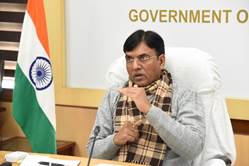
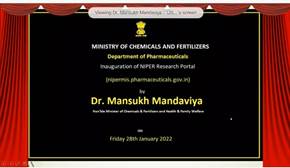
 Union Minister for Chemicals and Fertilizers Shri Mansukh Mandaviya today launched NIPER Research Portal along with Shri Bhagwanth Khuba, Minister of State for Chemicals and Fertilizers in presence of Dr V. K Paul, Member (Health), Niti Aayog. National Institute of Pharmaceutical Education and Research (NIPER) Research Portal has been created with the aim to disseminate the information about all the NIPERs and their research activities, patents filed and Publication information at one place so that a industry and other stakeholders know about them.

Reiterating the vision of the Prime Minister Shri Narendra of Jai Jawan, Jai Kisan, Jai Vigyan and Jai Anusandhaan, Dr Mansukh Mandaviya said that Research & Development is one of the crucial pillars for a country’s economy. He said that we need to harness this energy of aspirations of all stakeholders and create a holistic ecosystem. Our expertise in generics can also be further expanded to other sectors, he added.

Pointing towards the importance of healthy competition both in Industry and Academia, the Union Minister noted that competition and demand is a necessity of research and innovation as this promotes quality ideas and solutions for our citizens. He stressed that Research and Innovation is a necessity for the sustained growth of pharmaceuticals sector.

The Minister stated that the country already has young talent and human resources, but we need to channelize them effectively through Industry-Academia cooperation. To enhance this industry–Academia collaboration, the Department of Pharmaceuticals has created this Research Portal to capture the research activities of all seven NIPERs, he informed. He said that that the platform inaugurated today would help us in promoting this synergy and would be a boon for our industries, especially the MSME sector.

Shri  Bhagwanth Khuba said India is the third-largest pharmaceutical manufacturing country and our vaccine development story is an example of effective cooperation among stakeholders.  He said that the platform will track the research and tasks of all NIPERS. He further said that the Government is committed to promote research and innovation and this portal is a step in that direction.

Dr VK Paul recollected the key role played by NIPERs in India’s health ecosystem. He requested the government to streamline the funding pipeline and expedite the budgets allocated. He urged the industry to provide support like the NIPERs research fund for priority areas. He also encouraged NIPERs to create a vibrant scientific community by engaging with stakeholders and mobilizing ideas of the young generation, promoting academic autonomy and delivering on their research goals.

Accentuating the importance of NIPER’s Research Program, which focuses on the needs of the hour, the Secretary, Department of Pharmaceuticals, Ms S. Aparna said that the importance of Research and Innovation has never been more important and more apparent than in the last two years of the global pandemic. We have seen the need for new drugs, re-purposed drugs, safer drugs, more efficacious drugs and the most affordable drugs to help mankind, she added.  Shri highlighted that the portal will promote research work that is more relevant to the current evolving need of the sector and the requirements of the patient community.

The purpose of this portal is to authenticate availability of the research work that is ongoing. It will help other researchers and especially the industry to get in touch with the relevant organization so that they can work together and make the research more purposeful and meaningful. For long, research institutes have been working in silos or isolation. The research portal will try to bring together research institutions spread across different departments within government and also these institutions with industries. The Ministry of Chemicals and Fertilizers also requested all relevant research institutions like the Department of Biotechnology, Department of Scientific and Industrial Research, Ministry of AYUSH, ICMR etc., and even DRDO, where a lot of pharmaceuticals sector-related research takes place to join this portal.

Kindly click the link below to see the portal:

http://nipermis.pharmaceuticals.gov.in/

*****


Apprentices trained in railway establishments are given preference in appointment over others

 Indian Railways has been providing training to applicants in designated trades under the provisions of the Apprentices Act since August 1963. These applicants are taken as apprentices based on their academic qualification without any competition or selection. Though the railways were obligated to provide only training to such candidates, those who completed their training were being engaged as Substitutes against level 1 posts, since 2004.

  • Substitutes are temporary appointees who can be engaged to meet any exigencies and operational requirements. While such appointees are given benefits, due to temporary railway servants, they are not entitled to be absorbed in permanent employment without undergoing due process.
  • In view of the ongoing transformation of Indian Railways and with a view to bringing fairness, transparency and objectivity in all railway recruitments, the railways centralized the process for all recruitments to level 1 in 2017, which would henceforth be conducted through a common nationwide computer based test (CBT)
  • The Apprentices Act was amended in 2014 whereby section 22 of the Act provided that an employer shall formulate a policy for recruiting apprentices trained in its establishment. Pursuant to such amendment, Indian Railways made a provision to give preference to apprentices trained in railway establishments in open market recruitment to level 1 posts, to the extent of 20% of the posts advertised.
  • While these apprentices appear for written test along with other candidates, they are given preference in appointment over others, subject to obtaining minimum qualifying marks and meeting and medical standards.
  • Accordingly, 12504 Level 1 posts out of 63202 advertised vide CEN 02/2018 were earmarked for such candidates in the first common recruitment held in 2018. Similarly, 20734 Level-1 posts, out of 103769 posts advertised under CEN RRC 01/2019 have been earmarked for these apprentices. Recruitment for this notification is to be held.
  • These apprentices are demanding for appointment in the railways without undergoing the prescribed recruitment process, namely written test and physical efficiency test that all other candidates are required to undergo as per extant rules. This demand is not feasible for acceptance as it is violative of Constitutional provisions and Apex Court judgment in matters of public employment whereby any employment cannot be provided except through a procedure involving fair selection.