Throne of Glass Novellas: Throne of glass

The second book in the series, Throne of Glass, is chaotic but beautiful. It tells the story of the gorgeously vicious assassin Celaena Sardothien, whom we have already been familiar with in the previous book. But this tale is nothing like its former, a fresh world if you ask me. Not like the next page of a book, which is new but familiar, this book mirrors a whole new story, though a few points are mentioned from the past in the second half, don’t expect anything from me, I don’t like the idea of me giving you readers any significant spoilers. After all the drama and catastrophes and tragedies in the past book, two things about our protagonist stay the same, her charming sarcasm and her intoxicating personality, which somehow catches up on every character in the book. Literally.

It is usual for Sarah to stop our hearts once or twice as we flip the pages, for this book does exactly that, and every other in the series as well. Nevertheless the tension, drama, and riot of climaxes, this whole book is perfect for a vacay-read, at least for me. If you are just beginning to enter the world of fantasy, or even books as well, this series is perfect for you. It will, somehow, amidst all the suspense, give you purpose. It gave me, I enjoyed my days more, especially during a time like the quarantine, It helped me cope through the days where I felt most lonely and almost on the verge of falling apart. Celaena’s courage, her iridescent confidence, made me a greater person. I started to see beauty in things usually undermined, things considered fallacious. Before reading this series, if anyone told me that an assassin could be the kindest person you’ll ever see, I’d have laughed straight in their face. But, I don’t know-how, this cruel vicious assassin is kind, loving, and almost frustratingly emotional.

Lastly, It’s not a tome with arid, bland, dreary text spit all over the pages, but a heart-throbbing story, of which you’ll surely savor every word.

Right to Information

By – Supriya

Right to Information Act (RTI) 2005 mandates timely response to citizen requests for government information. Since every citizen pays taxes, therefore he is entitled to know how the government is functioning . The Act empowers every citizen to seek any information from the government, obtain copies of any government documents , inspect any government documents , works and records , and take certified samples of materials of any government work. According to Act No . 22 of 2005 , The Right to Information Act is ” An Act to provide for setting out the practical regime of right to information for citizens to secure access to information under the control of public authorities , in order to promote transparency and accountability in the working of every public authority , the constitution of a Central Information Commission and State Information Commissions and for matters connected therewith or incidental thereto”. This law was passed by Parliament on 15 June 2005 and came fully into force on 13 October 2005. The RTI Act extends to the whole of India except the state of Jammu and Kashmir . All bodies, which are contributed under the Constitution or are under any government notification ,or all bodies , including NGO’s , which are owned, controlled or substantially financed by the government are covered under the Act. All authorities covered must appoint their Public Information Officer (PIO) . In addition, every public authority is required to designate Assistant Public Information Officers (APIOs) to receive RTI requests and appeals for forwarding to the PIOs of their public authority. Any person may submit a requests and appeals for forwarding to the PIOs of their public authority .
Any person may submit a request to the PIO for information in writing along with the application fees, which is ₹ 10 for Central Government Departments and different for different states.The application fees can be deposited either in cash, demand draft , cheque or money order. In the case of all Central Government Departments ,629 post offices have been designed as APIOs. This means that one can go to any of these post offices and submit his/her fee and application at the RTI counter in these post offices. A receipt will be issued as an acknowledgement and it is the responsibility of that post office to deliver it to the right PIO. It is the PIO’s obligation to provide information to citizens of India who request information under the Act. However, in case, one has problems locating their PIO/ APIO , one can address their RTI application to the PIO C/o Head of Department and send it to the concerned public authority with the requisite application fee. The Head of Department will have to forward his/her application to the concerned PIO. The PIO cannot refuse to accept application for information under any circumstances . Even if the information does not pertain to his/her department / jurisdiction, the PIO has to accept it and would have to transfer it to the right PIO within 5 days under sec 6(2). If the PIO or the concerned Department does not accept the application , it can also be sent by post. Moreover, the applicant can also make a formal complaint to the respective Information Commission under Section 18. The Information Commission has the power to impose a penalty of ₹25000 on the concerned officer who refused to accept the application. The Act also casts a direct accountability on the officer for non – performance . If the concerned officer does not provide information in time , a penalty of ₹ 250 per day of delay can be imposed by the Information Commissioner and if the information provided is false , a penalty of a maximum of ₹ 25000 can be imposed. The applicant is not required to disclose any information or reasons other than his name and contact particulars to seek the information . The Act specifies time limits for replying to the request. If the request has been made to the PIO, the reply is to be given within 30 days of receipt ; in case of an APIO , the reply is to be given within 35 days of receipt , and information concerning corruption and Human Rights violations is to be provided within 45 days. However, if life or Liberty of any person is involved , the PIO is expected to reply within 48 hours.
If the applicant does not receive information or is dissatisfied with the information received , s/he can file an appeal with the first appellate authority under Section 19 (1) of the Right to Information Act . One can file their first appeal within 30 days of receipt of information or within 60 days of filing RTI application, if no information is received. Even after the first appeal , if no information is received , then one can take the matter forward to the second appeal stage with the Information Commission, without paying any additional fees and within 90 days of disposal of first appeal . A second appeal is the last option under the RTI Act to get the information requested . For appeals against Central Government Departments, there is Central Information Commission (CIC) and for State Government Departments , there is State Information Commission.

THANKYOU !

Peer Pressure

More Harm Than Good
Peer pressure is the direct influence on people by peers, or an individual who gets encouraged to follow their peers by changing their attitude, values or behaviour just for the sake of acceptance. The section of society which is most vulnerable to the effects of peer pressure is teenagers. The fact of peer pressure is that when your peers start trying to get you do things which you otherwise wouldn’t do. For instance, in our society we have people who pressurise us to do things we don’t want to do, hence causing us to not being able to think for ourselves. If you neglect being able to think for yourself and let others do that job then it could have a good outcome for them, but for your well being and for you as a person it can turn out to be a disaster.

Ill effects and Impact

Peer pressure can harm the group by making it too uniform. When all the members think and act alike, the group does not have access to alternative opinions creating a barrier in solving problems.

Peer pressure is a rite of passage that all of us go through but its impact varies from person to person. Some are able to brush it off without any issues while it negatively impacts others. Peer pressure affects the lives of teenagers in a number of ways. It can take a self-confident child and make him or her someone who is not sure about themselves and has a low self esteem. It affects their academic skills too because despite being capable of performing well, they choose not to because in the eyes of their peers, it would seem uncool. In an effort to fit in with their peer group, they place more emphasis on being social rather than working on their academics.

Adolescence and Peer Pressure

The desire to be accepted by their peer group is one of the strongest motivating forces during adolescence. The reason that negative peer pressure happens, especially during adolescence, is because humans are social beings and ‘WE’ want to belong. We do what we believe others want us to do for the sake of acceptance and to ‘fit in’. Extreme peer pressure may lead you to follow what your peers feel right, thereby, you end up losing your own identity.

Conclusion
It honestly depends on the people you surround yourself with. Peer pressure is influenced from a members peers. So it is up to you who you hang around with. It is only a bad thing if you make it one.

Foods with preventive powers

There are a lot of benefits some foods serve us. Like mustard contains manganese and phosphorus, which contribute to strong bones and teeth so help prevent osteoporosis. Many other foods have similar preventive powers such as:

Asparagus for high blood pressure.

Image result for asparagus
Asparagus contains the natural diuretic asparagine, which helps your body get rid of excess salt and fluid. For people with oedema caused by high blood pressure, eating asparagus can be very helpful. Asparagus also has B-vitamins that help fight early cognitive decline and depression.

Onions For lung cancer

Image result for onion
Studies have found that dietary flavonoids that are found in onions, reduce risk of lung cancer. Onions may also help boost your good cholesterol.

Cheese for dental health.

Image result for cheese
The fat that is naturally present in cheese coats your teeth and acts like a natural barrier against bacteria. Cheese also contains caesin, a protein that provides protection.

Lemons and limes for kidney stones

Lemons and lime contain citric acid that helps reduce the excretion of calcium in urine so it prevents kidney stones from forming. Lemon rinds are also rich in a component called rutin, which helps strengthen the walls of the capillaries, potentially reducing the pain and severity of varicose veins.

Papayas for arthritis

Image result for papaya
Papaya is an excellent source for vitamin C. Thus help prevent the ailment, if consumed regularly.

Beets for a better brain.

Beets produce nitric oxide, which helps blood flow throughout your body and brain. Which decreases the risk of developing Alzheimer’s disease and vascular dementia.

This Too Shall Pass

Exam Dp For WhatsApp | Downlaod Exam Images | Exam quotes, Exam dp for  whatsapp, Exam quotes funny

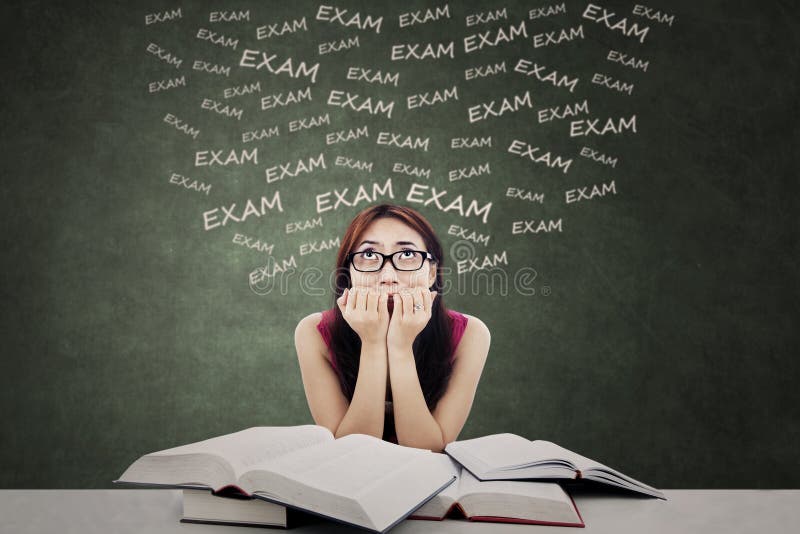
As the new year of 2022 has arrived after a long triumphant journey of 2021, we all now have the opportunity to write a new story for ourselves. As we start with the first month of January, we all are at the same time gearing up for exams that are going to start very soon. I do not know how many are feeling the stress the moment I say the word “exams” but I for sure feel it every time I think about it. Now that everyone is aware of what I am going to talk about let, we get straight to it. The article is going to be about exam stress and the things we can do to make the situation of exams better for ourselves as individuals.

Why do we stress during exams?

To be very frank and I am not here to blame any government the past or the present, the problem of stress with exams is not just limited to the individual’s ideas and perspectives but the system of education also plays a very important role in it. Today the situation has come to such that if one mug up everything from the textbook and do not understand what they are reading and score well, then people see these individuals with the presumption that they are smart and intelligent. The stress of exams comes from a place of scoring well and not from the place of understanding the subject. I have often heard people saying that if the person has done their entire studying well, then they will not stress about exams. This is not at all true. Every child will stress about exams and it is natural with the competition they are constantly dealing with but what people forget is that each child is different; therefore, the intensity of stressing about exams will also be different. A little amount of stress is good. It helps us be alert and makes sure that we do not take things for granting and put our effort and hard work towards our exams. On the other hand, too much stress about the exam is not good for anybody. It not only affects us emotionally but, also physically and mentally. It might seem very conventional but even till today across the world under so many circumstances students feel a sense of identification with the marks that they score. Therefore, the stress of doing well in exams to meet the expectation of society still exists in the minds of people. I am not saying that people should fail or people should not do well in their exams. What I am saying is that the stress of performing well in exams should not be so much that it creates a sense of fear or over-expectation that will result in something negative. There are several other reasons why one stresses during an exam. It could be personal, familial, cultural, environmental, and so many more. I am not blaming anybody. I am just stating things that are still present in society while we can see slow change and improvement in it. Not many people will agree with what I say and that is completely understandable but it does not mean that this does not exist. It is important for people preparing for exams to understand that exams are not their final ones. We have so much more to learn, understand, and face practically in the real world.

There are so many exams one is going to write in their lives. One cannot be stressing about every exam excessively as it will be harmful to their health not just during that time but in the future as well.

326,783 Exam Photos - Free & Royalty-Free Stock Photos from Dreamstime

Things individuals can do to reduce their stress during exams

  1. Understanding the concept: It is very important to understand and learn the concept while reading any subject. Be it math, English, or science. When an individual understands the concept, they will not only be able to answer the direct questions that come during exams but also the twisted or indirect questions that come from the topic. When you understand the concept, you do not learn it only for the period rather you will always remember it and be able to use it practically in the real world.
  2. Clear your doubts beforehand: Make it a point to clear all your doubts before the exams. This way the stress of exams reduces because there is very little space for confusion. When all the clarifications are done the concept becomes clear and easy to understand. Do not ask a doubt because everyone is asking and if you do not ask then you will look like a fool. Do not stop yourself from asking doubts because no one is asking and if you do then you will like a fool. It is time we get past these notions.
  3. Take small breaks: Exams can be very hectic and stressful. Therefore, we must remove the notion that taking small breaks is waste of time because that is not true. Small gaps of break are necessary for our brains to grasp the information and retrieve everything that we understand and learn. A small break helps us to relax and stretch our bodies a little before we start studying again. It has been under the recommendation that taking a 20-minute break during our long hours of study helps us a lot.
  4. Do not skip your meals: Often when people are stressing about something their appetite decreases and they tend to eat less. This factor should come to such a level where people do not eat their meals on time or skip the meal and stressfully study for their exams. Three meals a day is very important because we as individuals tend to use more energy when we are studying. Therefore, to study efficiently we must provide enough amount of food to our bodies.
  5. Do things that you like and make you confident: when a person does things they like and makes, them confident regarding their exams it tends to reduce their stress about it. For example, some people like to write and learn which makes them confident about what they learn for exams while some people like to listen to calming music so that they can learn things peacefully which makes them confident about their exams thereby reducing stress about it. I leave it to the individual of doing the things they like, which makes them confident for their exams and reduces their stress regarding it.

I have mentioned some of the things people can do to reduce their stress during exams. There are so many more things that people can do to make exams less stressful for themselves.

Before I end this article, I would like my readers to remember that many exams shall come and go. Even if you do not do well in one exam, it is not the end of the world. I am not asking you to fail your exams, but even if by chance you do then it is completely okay. As long as you as an individual know that, you have put in your hard work and 100 percent that is that matters. I would like to conclude with a quote that is very important and it says, “Do not be afraid to fail. Be afraid not to try.”

References

  1. Google search for quotes and images